






Editor's letter



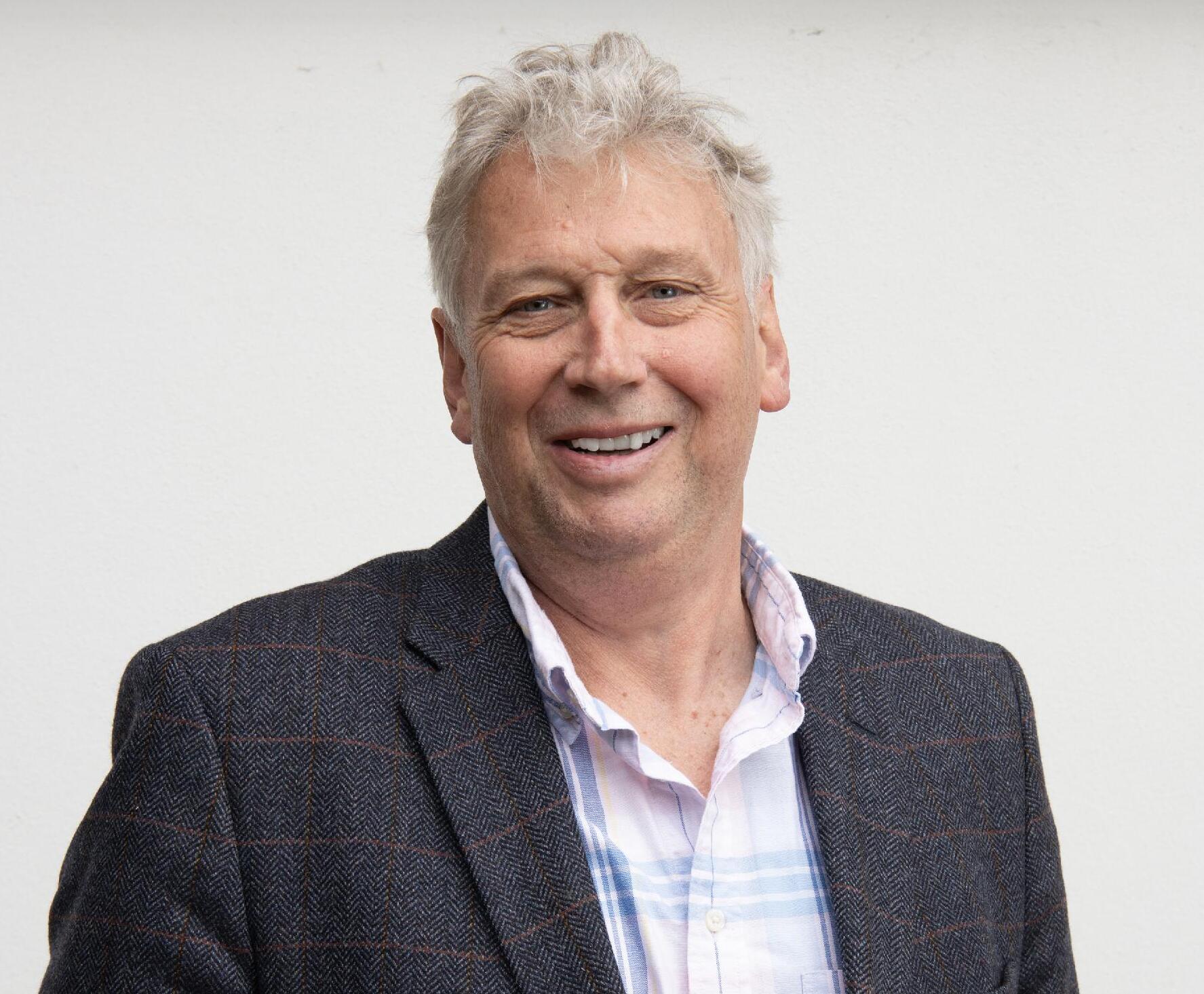
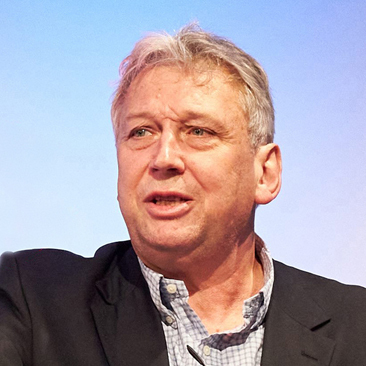
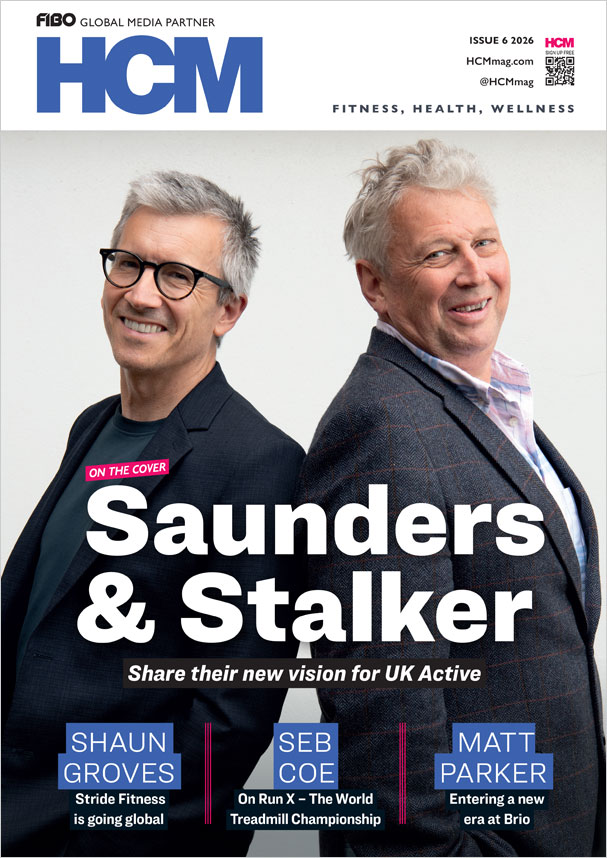
It would be hard to find someone in the UK fitness sector who hasn’t heard of David Stalker. CEO of UK Active from 2008 to 2015 – during which time he led the rebranding of the organisation from the Fitness Industry Association (FIA).
Stalker subsequently joined EuropeActive, spending five years as its president and remains an ambassador today.
Other highly visible roles have included acting as CEO of Myzone and chair of CIMSPA, while his portfolio today includes a raft of 11 other non-executive and advisory roles across the sector.
Stalker is a passionate advocate of the industry who practises what he preaches, the second person ever to achieve Myzone Hall of Fame ‘Legend’ status following 14 years of hitting WHO guidelines every month.
Each time he handed over the reins at a trade association, both UK Active in 2015 and EuropeActive in 2025, it was with an adamant “never again”! Yet on 6 October 2025, Stalker was announced as the new chair of UK Active.
HCM catches up with him to find out what’s tempted him to return.
Where once there was division between trade bodies, there must now be collaboration, creating a global platform for growth
What motivated your return to UK Active?
Having led the transition from the Fitness Industry Association to UK Active in 2012 – a move that redefined the organisation’s relevance, reach and resonance – in some ways I feel as though I’m UK Active’s surrogate father. I’m also enormously passionate about the importance of the sector having a trade association.
However, it was only when people started approaching me, urging me to apply for the role of chair, that I seriously considered it. With almost 100 applicants and the role most recently held by political heavyweights Mike Farrar and, before him, Baroness Tanni Grey-Thompson, I didn’t expect to be appointed, but I was certainly determined to give it my best shot.
I was clear throughout the interview process that if UK Active wanted a political big-hitter, that wasn’t me. However, if the requirement was for someone who would do everything possible to help from an industry perspective, I believed I was absolutely the right choice.
How did you feel you could help?
UK Active must be a bold, forward-facing trade organisation with a clear purpose: to unite, support and amplify every part of the physical activity ecosystem, from public to private, start-up to stalwart. It must be a rallying point for everyone who believes in the power of movement to change lives.
When I look back to my time as UK Active CEO, one of my strengths was that I made a point of personally talking to chief executives and leaders on a regular basis. That dialogue was critical in uniting disparate groups – not to mention some very strong voices – behind one mission: more people, more active, more often.
With the sector now facing some of its biggest challenges but also biggest opportunities yet, I believe my ability to unite the sector will be vital.
Why is this unifying force needed?
UK Active has built a strong governance structure over the last few years, with five councils – one each for private, public and independent operators, one for suppliers and another for wider activity providers. These are chaired by the likes of Sarah Watts and Dave Courteen and are supported by myriad industry stalwarts who provide huge value, helping keep everyone connected and pulling in the same direction on the big issues.
I think the next step is making sure this representation is felt and recognised by all UK Active members, especially groups such as the smaller independent operators, for example, so everyone sees the opportunity for input and support. This will result in the continued dialogue that’s so critical in uniting disparate groups and strong opinions. This is something I believe I’m well-placed to support as chair.
I want to be sure everyone in our sector can be confident UK Active is really speaking to them and serving them. We must continue to work towards a united voice, harnessing the collective potential of the sector.
I want to be sure everyone in our sector can be confident UK Active is really speaking to them and serving them
What was your pitch to UK Active?
In my application letter, I explained why I believed I was uniquely placed to lead this next phase of evolution, having lived and led through almost every corner of our sector’s diverse ecosystem.
I explained how the next chair needed to do more than guide governance and deliver visibility. They needed to inspire reconnection. To listen rather than narrate. To help rally the entire physical activity landscape – from public and private operators to suppliers, educators, independents, community groups and consultants – into one cohesive movement.
I also shared my vision for the association and explained how, for me, leadership isn’t simply about steering the ship. It’s about setting a course others believe in and want to follow. It’s about uniting disparate voices and ensuring everyone feels listened to and represented. It’s about leading with conviction and passion.
At the time, I didn’t really know, Huw Edwards, [former UK Active CEO] but he impressed me every time we spoke and he continues to do so now. I felt our skillsets would complement each other well – he’s extraordinarily knowledgeable when it comes to politics – and I felt that ours would be a good partnership. A similar partnership certainly worked well when I was CEO of UK Active and Steve Ward was public affairs and policy director.
In the end, however, that partnership hasn’t transpired, as Huw announced he was leaving shortly after my appointment.
What’s next for UK Active?
We’ve got a new business plan for this financial year, as part of our Vision 2030 strategy, so the foundations are in place, and with Cameron Saunders in place as our new CEO, we can write the next chapter together.
We have some really good people in the business and it’s important they are supported in their growth and development, so they can excel in their roles.
Crucially, we need to be consistently delivering what UK Active members want and need, so I’m out there talking to people and – along with the team – gathering information. So far, what members are primarily saying is that they want robust information, transparency around strategic progress and clear timelines.
Our sector is continuing to grow and we’re seeing ever-increasing demand for our services across all ages, demonstrated by record numbers of gym and leisure facility members: 11.5 million in 2025.
However, the economic landscape continues to pose operational challenges for businesses of all sizes, so it’s essential we continue to represent our members with a united voice, so we can improve operating conditions and grow even further to meet our full potential as a sector.
Continuing the shift from fitness to being recognised and trusted as a viable health delivery partner also needs to be a priority. Standards for the profession are crucial to this agenda, so UK Active’s close relationship with CIMSPA remains key, as does the continued rollout of The Active Standard, which is helping to raise standards in facilities across the UK.
Importantly, I don’t think the industry wants hundreds of agenda points. It wants clarity and focus around key opportunities as we broaden from fitness into health. This might include how the sector provides greater support in areas such as mental health, ageing populations, community engagement and for those on GLP-1 medications, for example.
There are no quick fixes here and we need to bring the whole sector with us on this journey. I see myself contributing to this work in my role
Talk to us about GLP-1s
These drugs represent an enormous opportunity for our sector; UK Active has recently partnered with Les Mills to produce one of the world’s first reviews of global academic evidence, looking at how weight loss medication works, the potential side-effects and how to protect against the loss of lean muscle mass. This is the type of resource the trade association needs to be collating, providing delivery partners with the intelligence they need to create effective, evidence-based programmes that support the wider public health agenda.
I believe the opportunity probably lies in understanding the inner workings of the health industry, collaborating closely with the Department of Health and Social Care and the manufacturers of health and longevity products to create and deliver effective, physical activity-driven health interventions that support individuals. At the same time, we should be collecting outcomes data to clinical standards, evidencing the programmes’ successes. If we’re to step into the health space, we absolutely have to step up and deliver.
Of course, change requires time and time requires patience. There are no quick fixes here and we need to bring the whole sector with us on this journey. I see myself contributing to this work in my role.
What are UK Active’s priorities?
One of its most important roles is influencing stakeholders beyond the sector – including Sport England, the Department of Culture, Media and Sport and the Department of Health and Social Care – to ensure they’re aware of and invested in the role we can play in tackling inactivity and improving health. This will drive partnerships and investments.
UK Active needs to collate data and evidence to prove the importance and relevance of the sector. Last year, it partnered with Deloitte to publish the first UK Health & Fitness Market Report. This provided the reliable, credible evidence that UK Active’s members were asking for, to demonstrate the continued growth of the sector over recent years to government, partners and investors. Produced annually, this will become a key benchmark for growth and development (NB: The UK Health & Fitness Market Report 2026 being produced by Grant Thornton.
The aim is for it to run in parallel with EuropeActive’s market report, enabling meaningful international comparison and a more joined-up approach to market analysis. UK Active needs to be looking at both domestic and global trends, from longevity and healthspan to new operating models, collating insights and feeding information back to members that can be used at a national, regional and local level.
I genuinely feel this is a unique moment where – if we get it right – we can have a huge impact on the health and wellbeing of our nation
What other goals are there?
UK Active should be growing its membership, by encouraging new stakeholders to join from the worlds of wearables, longevity and so on. At the very least, we should be building active partnerships with these organisations.
Finally, UK Active must continue to grow its visibility, getting important messages out in the mainstream media and working in partnership with the likes of EuropeActive and the Health and Fitness Association for greater impact. Where once there was division between some trade bodies globally, there must now be collaboration, so we work together to create a global platform for growth.
How is your role unfolding?
At the moment, being chair of UK Active is almost a full-time role: meeting members, attending meetings and events, interacting on LinkedIn and speaking directly to both supporters and critics of UK Active to understand their concerns.
In the longer term, my challenge is to control my passion and focus my energy on doing what I can to help the sector as a whole.
I’m hugely excited to be back at UK Active. I’ve been in this industry for longer than I care to mention and I have a massive passion for and belief in it.
I care deeply about people being healthy and happy – I’m now 62 and it’s what I want for myself – and I believe wholeheartedly in so many of the people who work in our sector.
I’ve banged this drum for so long, but I do genuinely feel this is a unique moment where, if we get it right, we can have a huge impact on the health and wellbeing of our nation.
What would you like your legacy to be?
By the time I step down as UK Active chair, I’d like people to be saying ‘this is an association that’s getting it right’. I want members to be proud of UK Active. I want organisations to believe that being part of the collective is far more powerful than standing outside it.
On a personal level, I’d love it if people were to say of me: ‘David Stalker gave everything to developing and growing our industry. He didn’t just say it. He got out there and did it.’
Restoring
a sense of shared purpose and strength built on the collective spirit that powered the transition of the organisation from being FIA to being UK Active. Together, we’re most definitely stronger and can achieve more.
Reestablishing the UK as a core voice in the European sector, forging meaningful partnerships that enable learning, alignment and ambition.
Listening first. Leading second Building trust by engaging with every stakeholder via steering groups and outreach, responding with bold, inclusive action.
Delivering more clarity and visibility for members when it comes to how their subscriptions are invested.
Working with elected steering groups to define a clear, inclusive mission rooted in ‘health’, not just physical activity. Communicate the mission boldly, consistently and transparently.
Ensuring inclusion is a foundation across leadership, media, funding and focus, providing a perception of equal value to big operators and grassroots champions alike.
Celebrating the wins, not in soft metrics or conference applause, but in lives changed, communities reached, businesses grown, outcomes achieved.
Turning challenges such as those presented by GLP-1 drugs into collective opportunity, by coordinating a sector-wide response that combines innovation, evidence and shared delivery models.
Editor's letter
Feedback
HCM People
HCM People
Profile

Opinion
Sponsored

Data
Obituary
Healthspan

Liability
First person

Tech
Profile
Profile

Research












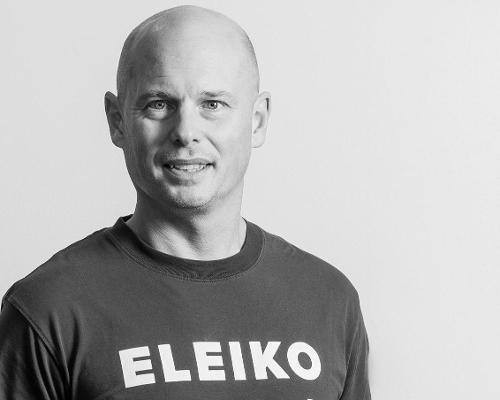









It would be hard to find someone in the UK fitness sector who hasn’t heard of David Stalker. CEO of UK Active from 2008 to 2015 – during which time he led the rebranding of the organisation from the Fitness Industry Association (FIA).
Stalker subsequently joined EuropeActive, spending five years as its president and remains an ambassador today.
Other highly visible roles have included acting as CEO of Myzone and chair of CIMSPA, while his portfolio today includes a raft of 11 other non-executive and advisory roles across the sector.
Stalker is a passionate advocate of the industry who practises what he preaches, the second person ever to achieve Myzone Hall of Fame ‘Legend’ status following 14 years of hitting WHO guidelines every month.
Each time he handed over the reins at a trade association, both UK Active in 2015 and EuropeActive in 2025, it was with an adamant “never again”! Yet on 6 October 2025, Stalker was announced as the new chair of UK Active.
HCM catches up with him to find out what’s tempted him to return.
Where once there was division between trade bodies, there must now be collaboration, creating a global platform for growth
What motivated your return to UK Active?
Having led the transition from the Fitness Industry Association to UK Active in 2012 – a move that redefined the organisation’s relevance, reach and resonance – in some ways I feel as though I’m UK Active’s surrogate father. I’m also enormously passionate about the importance of the sector having a trade association.
However, it was only when people started approaching me, urging me to apply for the role of chair, that I seriously considered it. With almost 100 applicants and the role most recently held by political heavyweights Mike Farrar and, before him, Baroness Tanni Grey-Thompson, I didn’t expect to be appointed, but I was certainly determined to give it my best shot.
I was clear throughout the interview process that if UK Active wanted a political big-hitter, that wasn’t me. However, if the requirement was for someone who would do everything possible to help from an industry perspective, I believed I was absolutely the right choice.
How did you feel you could help?
UK Active must be a bold, forward-facing trade organisation with a clear purpose: to unite, support and amplify every part of the physical activity ecosystem, from public to private, start-up to stalwart. It must be a rallying point for everyone who believes in the power of movement to change lives.
When I look back to my time as UK Active CEO, one of my strengths was that I made a point of personally talking to chief executives and leaders on a regular basis. That dialogue was critical in uniting disparate groups – not to mention some very strong voices – behind one mission: more people, more active, more often.
With the sector now facing some of its biggest challenges but also biggest opportunities yet, I believe my ability to unite the sector will be vital.
Why is this unifying force needed?
UK Active has built a strong governance structure over the last few years, with five councils – one each for private, public and independent operators, one for suppliers and another for wider activity providers. These are chaired by the likes of Sarah Watts and Dave Courteen and are supported by myriad industry stalwarts who provide huge value, helping keep everyone connected and pulling in the same direction on the big issues.
I think the next step is making sure this representation is felt and recognised by all UK Active members, especially groups such as the smaller independent operators, for example, so everyone sees the opportunity for input and support. This will result in the continued dialogue that’s so critical in uniting disparate groups and strong opinions. This is something I believe I’m well-placed to support as chair.
I want to be sure everyone in our sector can be confident UK Active is really speaking to them and serving them. We must continue to work towards a united voice, harnessing the collective potential of the sector.
I want to be sure everyone in our sector can be confident UK Active is really speaking to them and serving them
What was your pitch to UK Active?
In my application letter, I explained why I believed I was uniquely placed to lead this next phase of evolution, having lived and led through almost every corner of our sector’s diverse ecosystem.
I explained how the next chair needed to do more than guide governance and deliver visibility. They needed to inspire reconnection. To listen rather than narrate. To help rally the entire physical activity landscape – from public and private operators to suppliers, educators, independents, community groups and consultants – into one cohesive movement.
I also shared my vision for the association and explained how, for me, leadership isn’t simply about steering the ship. It’s about setting a course others believe in and want to follow. It’s about uniting disparate voices and ensuring everyone feels listened to and represented. It’s about leading with conviction and passion.
At the time, I didn’t really know, Huw Edwards, [former UK Active CEO] but he impressed me every time we spoke and he continues to do so now. I felt our skillsets would complement each other well – he’s extraordinarily knowledgeable when it comes to politics – and I felt that ours would be a good partnership. A similar partnership certainly worked well when I was CEO of UK Active and Steve Ward was public affairs and policy director.
In the end, however, that partnership hasn’t transpired, as Huw announced he was leaving shortly after my appointment.
What’s next for UK Active?
We’ve got a new business plan for this financial year, as part of our Vision 2030 strategy, so the foundations are in place, and with Cameron Saunders in place as our new CEO, we can write the next chapter together.
We have some really good people in the business and it’s important they are supported in their growth and development, so they can excel in their roles.
Crucially, we need to be consistently delivering what UK Active members want and need, so I’m out there talking to people and – along with the team – gathering information. So far, what members are primarily saying is that they want robust information, transparency around strategic progress and clear timelines.
Our sector is continuing to grow and we’re seeing ever-increasing demand for our services across all ages, demonstrated by record numbers of gym and leisure facility members: 11.5 million in 2025.
However, the economic landscape continues to pose operational challenges for businesses of all sizes, so it’s essential we continue to represent our members with a united voice, so we can improve operating conditions and grow even further to meet our full potential as a sector.
Continuing the shift from fitness to being recognised and trusted as a viable health delivery partner also needs to be a priority. Standards for the profession are crucial to this agenda, so UK Active’s close relationship with CIMSPA remains key, as does the continued rollout of The Active Standard, which is helping to raise standards in facilities across the UK.
Importantly, I don’t think the industry wants hundreds of agenda points. It wants clarity and focus around key opportunities as we broaden from fitness into health. This might include how the sector provides greater support in areas such as mental health, ageing populations, community engagement and for those on GLP-1 medications, for example.
There are no quick fixes here and we need to bring the whole sector with us on this journey. I see myself contributing to this work in my role
Talk to us about GLP-1s
These drugs represent an enormous opportunity for our sector; UK Active has recently partnered with Les Mills to produce one of the world’s first reviews of global academic evidence, looking at how weight loss medication works, the potential side-effects and how to protect against the loss of lean muscle mass. This is the type of resource the trade association needs to be collating, providing delivery partners with the intelligence they need to create effective, evidence-based programmes that support the wider public health agenda.
I believe the opportunity probably lies in understanding the inner workings of the health industry, collaborating closely with the Department of Health and Social Care and the manufacturers of health and longevity products to create and deliver effective, physical activity-driven health interventions that support individuals. At the same time, we should be collecting outcomes data to clinical standards, evidencing the programmes’ successes. If we’re to step into the health space, we absolutely have to step up and deliver.
Of course, change requires time and time requires patience. There are no quick fixes here and we need to bring the whole sector with us on this journey. I see myself contributing to this work in my role.
What are UK Active’s priorities?
One of its most important roles is influencing stakeholders beyond the sector – including Sport England, the Department of Culture, Media and Sport and the Department of Health and Social Care – to ensure they’re aware of and invested in the role we can play in tackling inactivity and improving health. This will drive partnerships and investments.
UK Active needs to collate data and evidence to prove the importance and relevance of the sector. Last year, it partnered with Deloitte to publish the first UK Health & Fitness Market Report. This provided the reliable, credible evidence that UK Active’s members were asking for, to demonstrate the continued growth of the sector over recent years to government, partners and investors. Produced annually, this will become a key benchmark for growth and development (NB: The UK Health & Fitness Market Report 2026 being produced by Grant Thornton.
The aim is for it to run in parallel with EuropeActive’s market report, enabling meaningful international comparison and a more joined-up approach to market analysis. UK Active needs to be looking at both domestic and global trends, from longevity and healthspan to new operating models, collating insights and feeding information back to members that can be used at a national, regional and local level.
I genuinely feel this is a unique moment where – if we get it right – we can have a huge impact on the health and wellbeing of our nation
What other goals are there?
UK Active should be growing its membership, by encouraging new stakeholders to join from the worlds of wearables, longevity and so on. At the very least, we should be building active partnerships with these organisations.
Finally, UK Active must continue to grow its visibility, getting important messages out in the mainstream media and working in partnership with the likes of EuropeActive and the Health and Fitness Association for greater impact. Where once there was division between some trade bodies globally, there must now be collaboration, so we work together to create a global platform for growth.
How is your role unfolding?
At the moment, being chair of UK Active is almost a full-time role: meeting members, attending meetings and events, interacting on LinkedIn and speaking directly to both supporters and critics of UK Active to understand their concerns.
In the longer term, my challenge is to control my passion and focus my energy on doing what I can to help the sector as a whole.
I’m hugely excited to be back at UK Active. I’ve been in this industry for longer than I care to mention and I have a massive passion for and belief in it.
I care deeply about people being healthy and happy – I’m now 62 and it’s what I want for myself – and I believe wholeheartedly in so many of the people who work in our sector.
I’ve banged this drum for so long, but I do genuinely feel this is a unique moment where, if we get it right, we can have a huge impact on the health and wellbeing of our nation.
What would you like your legacy to be?
By the time I step down as UK Active chair, I’d like people to be saying ‘this is an association that’s getting it right’. I want members to be proud of UK Active. I want organisations to believe that being part of the collective is far more powerful than standing outside it.
On a personal level, I’d love it if people were to say of me: ‘David Stalker gave everything to developing and growing our industry. He didn’t just say it. He got out there and did it.’
Restoring
a sense of shared purpose and strength built on the collective spirit that powered the transition of the organisation from being FIA to being UK Active. Together, we’re most definitely stronger and can achieve more.
Reestablishing the UK as a core voice in the European sector, forging meaningful partnerships that enable learning, alignment and ambition.
Listening first. Leading second Building trust by engaging with every stakeholder via steering groups and outreach, responding with bold, inclusive action.
Delivering more clarity and visibility for members when it comes to how their subscriptions are invested.
Working with elected steering groups to define a clear, inclusive mission rooted in ‘health’, not just physical activity. Communicate the mission boldly, consistently and transparently.
Ensuring inclusion is a foundation across leadership, media, funding and focus, providing a perception of equal value to big operators and grassroots champions alike.
Celebrating the wins, not in soft metrics or conference applause, but in lives changed, communities reached, businesses grown, outcomes achieved.
Turning challenges such as those presented by GLP-1 drugs into collective opportunity, by coordinating a sector-wide response that combines innovation, evidence and shared delivery models.
Editor's letter
Feedback
HCM People
HCM People
Profile
Opinion
Sponsored
Data
Obituary
Healthspan
Liability
First person
Tech
Profile
Profile
Research