







Editor's letter



Some 10,000 consumers across five continents have been questioned about their fitness habits for the 2026 Global Fitness Report commissioned by Les Mills, revealing deep insights about consumer behaviour.
Regular exercisers now make up 61 per cent of the addressable market – up from 44 per cent in 2018 – a real milestone for the sector.
During this time the share of those not interested in exercise has fallen from 25 per cent to 10 per cent, confirming the relentless rise of the sector.
While ‘being healthy’ is the most popular motivator for exercising (57 per cent), achieving better mental health continues to be an important motivator, with the report finding a sharp rise in people training to ‘manage their thoughts and feelings’ (45 per cent).
The vibe of a facility is now also an important decision-driver, with 64 per cent saying this is important to them and 20 per cent say they find their gym too crowded.
These findings show we remain social animals when it comes to working out
Interestingly, 76 per cent aren’t interested in GLP-1 medications for weight loss.
One of the key findings was that despite the buzz around AI, only 10 per cent of respondents said they would prefer an AI workout over a human-led experience, because of a strong desire for human connection and feeling part of a community.
“Technology is shaping fitness in countless ways, but nothing beats the buzz of a live class and these findings show we remain social animals when it comes to working out,” says Les Mills’ head of research, Bryce Hastings.
“Exercising with others maximises the ‘group effect’, which our research has shown leads to increases in enjoyment, satisfaction and exertion.
The instructor is a vital part of this equation, as they’re armed with the knowledge, skills and experience to connect with the individuals in the group
“The instructor is a vital part of this equation, as they’re armed with the knowledge, skills and experience to connect with the individuals in the group and create a sense of ‘we’ in a class that produces a very positive overall experience,” continues Hastings. “They take what we know from science and bring it to life for participants.”
Fun and community
While the use of wearables and tracking data is undoubtedly on the rise – with 78 per cent of gym-goers using devices to track progress – the report revealed some consumers feel that this can detract from the fun of a workout by making it all about hitting targets.
This is a potential challenge, as the report revealed that 41 per cent of people see fitness as a chore and the share of younger consumers who view working out this way has risen by 10 per cent over the past three years. Only 31 per cent said they ‘simply enjoy’ exercising and 24 per cent consider it ‘fun’.
By expanding mind/body offerings, health clubs can position themselves as one-stop shops for wellness
The power of joy
With other research showing that joy is a major motivator in making a fitness habit stick, the report says “this presents operators with an opportunity to capture a new generation of members by dialling up the social aspect of their clubs.”
Seeking a community at the gym is a strong trend, especially as many young people are now regarding health clubs as alternative places to socialise. There’s also an uptick in interest in joining other types of exercise clubs, such as running and walking clubs and dance is making a comeback for its feelgood nature.
Gymtimidation
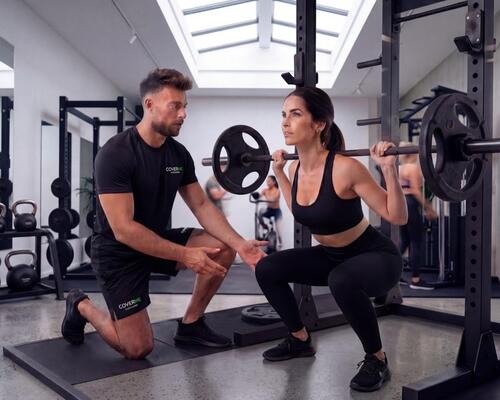
There are still too many barriers to joining a gym and keeping up memberships according to consumer feedback: 50 per cent are intimidated by the weights areas and 37 per cent say they’re not confident working out. Prospects say they’re put off by busy gym floors and not knowing how to use equipment.
The report suggests putting the teams at the front and centre of marketing, especially on social, to demonstrate that help is at hand and doing intentional marketing that addresses the fact that health clubs can nurture nervous prospects.
While strength training is definitely having a moment, more people need help doing it. Of those already training, 58 per cent say they’re confused by conflicting advice and 30 per cent have hit plateaus causing them to lose motivation.
In addition, 54 per cent of aspiring lifters don’t know where to start and 23 per cent have injury concerns, indicating a need for more support.
Demand for variety and wellness
Fifty four per cent of people are keen to try new ways to get fit and the report says this suggests there’s latent demand for greater variety. More workout options being offered creates more ways for people to connect with a mode of exercise that works for them and also with like-minded people.
Once members find a workout that clicks, 51 per cent encourage their friends to take part and the report also finds that people prefer to work out with a buddy.
As people take a holistic approach to their health, the report also revealed a strong desire for more wellness – 59 per cent said they’d like to see more yoga, meditation and breathwork programming.
By expanding mind/body offerings and adding wellness-themed digital content, gyms can engage members more on their rest days, as well as positioning themselves as a one-stop shop for all their members’ wellness needs. l
• The Les Mills Global Fitness Report 2026 is available to download free: HCMmag.com/LesMills2026
• From the archive: Les Mills’ Global Fitness Report 2022: HCMmag.com/LesMills2022
Editor's letter

Feedback

HCM People

HCM People

Interview

Inclusion

DMCC

Insight

Talking point

Insight

Tech

Research



































Some 10,000 consumers across five continents have been questioned about their fitness habits for the 2026 Global Fitness Report commissioned by Les Mills, revealing deep insights about consumer behaviour.
Regular exercisers now make up 61 per cent of the addressable market – up from 44 per cent in 2018 – a real milestone for the sector.
During this time the share of those not interested in exercise has fallen from 25 per cent to 10 per cent, confirming the relentless rise of the sector.
While ‘being healthy’ is the most popular motivator for exercising (57 per cent), achieving better mental health continues to be an important motivator, with the report finding a sharp rise in people training to ‘manage their thoughts and feelings’ (45 per cent).
The vibe of a facility is now also an important decision-driver, with 64 per cent saying this is important to them and 20 per cent say they find their gym too crowded.
These findings show we remain social animals when it comes to working out
Interestingly, 76 per cent aren’t interested in GLP-1 medications for weight loss.
One of the key findings was that despite the buzz around AI, only 10 per cent of respondents said they would prefer an AI workout over a human-led experience, because of a strong desire for human connection and feeling part of a community.
“Technology is shaping fitness in countless ways, but nothing beats the buzz of a live class and these findings show we remain social animals when it comes to working out,” says Les Mills’ head of research, Bryce Hastings.
“Exercising with others maximises the ‘group effect’, which our research has shown leads to increases in enjoyment, satisfaction and exertion.
The instructor is a vital part of this equation, as they’re armed with the knowledge, skills and experience to connect with the individuals in the group
“The instructor is a vital part of this equation, as they’re armed with the knowledge, skills and experience to connect with the individuals in the group and create a sense of ‘we’ in a class that produces a very positive overall experience,” continues Hastings. “They take what we know from science and bring it to life for participants.”
Fun and community
While the use of wearables and tracking data is undoubtedly on the rise – with 78 per cent of gym-goers using devices to track progress – the report revealed some consumers feel that this can detract from the fun of a workout by making it all about hitting targets.
This is a potential challenge, as the report revealed that 41 per cent of people see fitness as a chore and the share of younger consumers who view working out this way has risen by 10 per cent over the past three years. Only 31 per cent said they ‘simply enjoy’ exercising and 24 per cent consider it ‘fun’.
By expanding mind/body offerings, health clubs can position themselves as one-stop shops for wellness
The power of joy
With other research showing that joy is a major motivator in making a fitness habit stick, the report says “this presents operators with an opportunity to capture a new generation of members by dialling up the social aspect of their clubs.”
Seeking a community at the gym is a strong trend, especially as many young people are now regarding health clubs as alternative places to socialise. There’s also an uptick in interest in joining other types of exercise clubs, such as running and walking clubs and dance is making a comeback for its feelgood nature.
Gymtimidation
There are still too many barriers to joining a gym and keeping up memberships according to consumer feedback: 50 per cent are intimidated by the weights areas and 37 per cent say they’re not confident working out. Prospects say they’re put off by busy gym floors and not knowing how to use equipment.
The report suggests putting the teams at the front and centre of marketing, especially on social, to demonstrate that help is at hand and doing intentional marketing that addresses the fact that health clubs can nurture nervous prospects.
While strength training is definitely having a moment, more people need help doing it. Of those already training, 58 per cent say they’re confused by conflicting advice and 30 per cent have hit plateaus causing them to lose motivation.
In addition, 54 per cent of aspiring lifters don’t know where to start and 23 per cent have injury concerns, indicating a need for more support.
Demand for variety and wellness
Fifty four per cent of people are keen to try new ways to get fit and the report says this suggests there’s latent demand for greater variety. More workout options being offered creates more ways for people to connect with a mode of exercise that works for them and also with like-minded people.
Once members find a workout that clicks, 51 per cent encourage their friends to take part and the report also finds that people prefer to work out with a buddy.
As people take a holistic approach to their health, the report also revealed a strong desire for more wellness – 59 per cent said they’d like to see more yoga, meditation and breathwork programming.
By expanding mind/body offerings and adding wellness-themed digital content, gyms can engage members more on their rest days, as well as positioning themselves as a one-stop shop for all their members’ wellness needs. l
• The Les Mills Global Fitness Report 2026 is available to download free: HCMmag.com/LesMills2026
• From the archive: Les Mills’ Global Fitness Report 2022: HCMmag.com/LesMills2022
Editor's letter
Feedback
HCM People
HCM People
Interview
Inclusion
DMCC
Insight
Talking point
Insight
Tech
Research