







Editor's letter



Physical activity among children and young people is at the highest level since Sport England started the Active Lives Survey in 2017-18.
The survey recorded a 5.8 per cent increase, representing 580,000 more active children since 2017-18, as well as being a 1.3 per cent improvement on last year’s results.
Levels of social trust are higher among active children
The number of less active children has also decreased by 4.4 per cent to 28.4 per cent when compared with the years 2017-18.
“We’re not just bouncing back, we’re seeing real progress,” said Sport England’s chief strategy officer, Nick Pontefract, in announcing the findings.
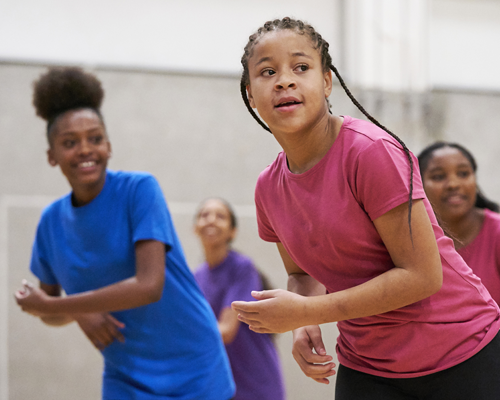
Other highlights include a small increase in activity levels among both boys and girls in the last year and a narrowing of the gender gap due to more girls being active.
Boys are still more active than girls, at 52 per cent active, compared to 46 per cent, however, in the last year this gap has narrowed from 6.4 per cent to 5.9 per cent.
The challenges ahead
The data shows that significant inequalities still remain, however, with not quite half of children – 49.1 per cent – meeting the CMO guidelines of an average of 60+ minutes of sport and physical activity per day across the week.
Children and young people from white and mixed backgrounds are the most likely to be active. Those with two or more characteristics of inequality are least likely to be active, at 40 per cent. Forty nine per cent of those with one characteristic of inequality are active and 54 per cent with no characteristics.
Children who come from White Other (53 per cent active), White British (51 per cent) and Mixed (52 per cent) backgrounds are more likely to be active than those from Asian (43 per cent), Black (41 per cent), or Other ethnic (42 per cent) backgrounds.
There’s little difference in activity levels between children and young people with and without a disability or long-term health condition and 50 per cent of disabled children or those with a long-term health condition are active, compared to 49 per cent of children without these challenges.
Children’s activity levels are now the highest since the Active Lives survey began
Children from the least affluent families are the least likely to be active (45 per cent active) compared to children from mid-affluence (49 per cent) – a four per cent difference – and the most affluent families (58 per cent).
Changing priorities
There’s been a gradual upward trend in gym and fitness since 2020-21, with an increase of 12.7 per cent or 976,000 more children taking part.
When looking at ‘activities undertaken in the last week’, the survey found that in those aged 5-7 years, 42 per cent took part in gymnastics, trampolining or cheerleading. This went to 36 per cent in those aged 7-11, when activity levels generally drop. In the age group 11-16-years-of-age, 33 per cent then report having taken part in ‘gym or fitness’ in the last week. Sport England does not report on gymnastics, trampolining or cheerleading for this age range (see page 48 of the survey results).
The most popular activities highlighted are active play (64 per cent); active travel (61 per cent) and team sports (58 per cent).
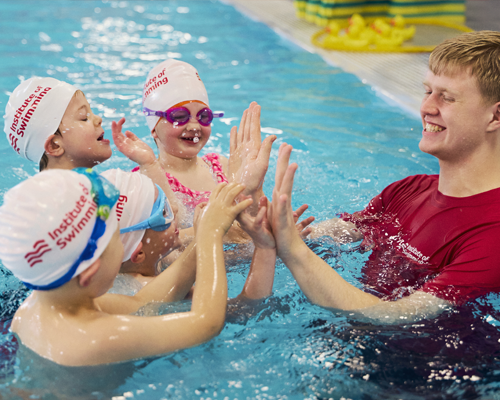
Going for a walk, dancing and swimming are popular for younger children but as they get older, team sports, active travel and informal activity become more of a priority.
Stark inequalities mean too many amongst the poorest in our society miss out. We need a national effort to change this
Sport England says its Place Partnerships are also working for children and young people who go to school in the places supported – all areas of inequality – with them recorded as being as active as those in other areas (www.hcmmag.com/PlacePartnerships).
Sport England chief executive, Simon Hayes said: “The fact that children’s activity levels are the highest since the Active Lives Survey began, reflecting the positive impact that clubs, community organisations operators, schools and many others are having across the country.
“More than half a million additional children are now meeting the Chief Medical Officers’ guidelines,” he said. “That’s real progress and something the sport and physical activity sector can be proud of, especially after the huge disruption of the pandemic.
“But the report also makes clear how much more we must do. It cannot be right that fewer than half of children are moving as much as recommended and that stark inequalities mean too many among the poorest in our society miss out. We need a renewed national effort to change this.”
Essential sector role
Huw Edwards, CEO of UK Active, welcomed the results, saying: “These figures are a reminder of the essential role gyms, pools and leisure centres are playing in driving children’s activity levels, with UK Active’s Next Generation strategy setting an ambition to reach one million more children through our members’ facilities by 2030 (www.hcmmag.com/UKAnextgen).
“But we cannot ignore the fact that almost a third of children and young people are doing less than 30 minutes of physical activity a day,” he continued. “This survey also shows a decline in swimming participation, which should be an alarm bell for the government.
“Our sector has been working tirelessly to improve children’s activity levels and the government must work with our sector to leverage the popularity of these services to reach every child and young person in the UK.
Despite the success, government funding was not renewed
“Our Opening School Facilities programme helped more than quarter of a million pupils to be active outside school hours within schools and local community facilities such as gyms, pools and leisure centres over a three-year period,” said Edwards.
“Despite the success of this programme, funding for it was not renewed by the government, representing a lost opportunity to improve the health and happiness of our children and young people,” he said. “We need to see bolder ambition to tackle inactivity levels and our sector is ready to work with the government to co-create a clear strategy and implement a plan to get more children and young people active.”
Changing attitudes
Ali Oliver MBE, Youth Sport Trust CEO said: “It’s hugely significant that this latest Active Lives Children and Young People data shows an increase in physical activity levels. It gives us hope that progress is being made and the work of charities and organisations such as ours are helping increase opportunity, improve experience and foster changing attitudes about the importance of movement, play and sport in children’s education and development.
“However, there is still work to be done. Our recent Class of 2035 report (see HCM 2 2026) contains a warning about the impact of increasingly sedentary lifestyles leading to developmental delays, rising rates of obesity, mental health issues and chronic disease among young people. Despite the increase reported by Active Lives, far too many children still remain inactive and are suffering as a consequence.
“Inactive children need more than encouragement; they need support and opportunities to make movement part of their everyday lives, safe environments to play in, healthy and active schools which prioritise PE, sport and play and communities empowering them to live active lifestyles,” he said.
Positive experiences are key to setting children up with healthy lifelong habits
“Positive experiences are key to getting more children engaged with being active and setting them up with healthy lifelong habits. Every day we delay action, the economic and social costs increase” he continued.
“With government plans for a refreshed curriculum, enrichment framework and a national network of PE and School Sport Partnerships, we have an opportunity to deliver change, giving every child access to the life-changing benefits of play and sport. It is imperative this opportunity is not missed.”
Place Partnerships results
Mental wellbeing scores are higher for those who are ‘active’ than those who are ‘fairly active’ which – in turn – are higher than for those who are ‘less active’. These have also improved over the last 12 months, averaging 6.9 out of 10, although they still remain 0.18 points down when compared to academic year 2017-18, before the impact of the pandemic.
Levels of social trust are also higher among ‘active’ children, with 26 per cent reporting the top score, against 24 per cent for ‘fairly active’ and 23 per cent for ‘less active’.
The UK government has announced a National Youth Strategy, called Youth Matters, backed by £500m, to rebuild youth services, train youth workers and other professionals to support them.
Youth Matters has been co-produced with more than 14,000 young people across England through a landmark State of the Nation survey.
The survey revealed the reality of young people, whose childhoods were shaped by the pandemic, the cost of living crisis, an always-on digital world and ongoing global uncertainty.
They voiced stark concerns about a lack of mental health support, growing social isolation and an absence of youth services in their communities. Find out more at
www.HCMmag.com/youthstrategy
Editor's letter
Feedback
HCM People

HCM People

Interview

Inclusion

DMCC
Insight

Talking point
Insight
Tech
Research

































Physical activity among children and young people is at the highest level since Sport England started the Active Lives Survey in 2017-18.
The survey recorded a 5.8 per cent increase, representing 580,000 more active children since 2017-18, as well as being a 1.3 per cent improvement on last year’s results.
Levels of social trust are higher among active children
The number of less active children has also decreased by 4.4 per cent to 28.4 per cent when compared with the years 2017-18.
“We’re not just bouncing back, we’re seeing real progress,” said Sport England’s chief strategy officer, Nick Pontefract, in announcing the findings.
Other highlights include a small increase in activity levels among both boys and girls in the last year and a narrowing of the gender gap due to more girls being active.
Boys are still more active than girls, at 52 per cent active, compared to 46 per cent, however, in the last year this gap has narrowed from 6.4 per cent to 5.9 per cent.
The challenges ahead
The data shows that significant inequalities still remain, however, with not quite half of children – 49.1 per cent – meeting the CMO guidelines of an average of 60+ minutes of sport and physical activity per day across the week.
Children and young people from white and mixed backgrounds are the most likely to be active. Those with two or more characteristics of inequality are least likely to be active, at 40 per cent. Forty nine per cent of those with one characteristic of inequality are active and 54 per cent with no characteristics.
Children who come from White Other (53 per cent active), White British (51 per cent) and Mixed (52 per cent) backgrounds are more likely to be active than those from Asian (43 per cent), Black (41 per cent), or Other ethnic (42 per cent) backgrounds.
There’s little difference in activity levels between children and young people with and without a disability or long-term health condition and 50 per cent of disabled children or those with a long-term health condition are active, compared to 49 per cent of children without these challenges.
Children’s activity levels are now the highest since the Active Lives survey began
Children from the least affluent families are the least likely to be active (45 per cent active) compared to children from mid-affluence (49 per cent) – a four per cent difference – and the most affluent families (58 per cent).
Changing priorities
There’s been a gradual upward trend in gym and fitness since 2020-21, with an increase of 12.7 per cent or 976,000 more children taking part.
When looking at ‘activities undertaken in the last week’, the survey found that in those aged 5-7 years, 42 per cent took part in gymnastics, trampolining or cheerleading. This went to 36 per cent in those aged 7-11, when activity levels generally drop. In the age group 11-16-years-of-age, 33 per cent then report having taken part in ‘gym or fitness’ in the last week. Sport England does not report on gymnastics, trampolining or cheerleading for this age range (see page 48 of the survey results).
The most popular activities highlighted are active play (64 per cent); active travel (61 per cent) and team sports (58 per cent).
Going for a walk, dancing and swimming are popular for younger children but as they get older, team sports, active travel and informal activity become more of a priority.
Stark inequalities mean too many amongst the poorest in our society miss out. We need a national effort to change this
Sport England says its Place Partnerships are also working for children and young people who go to school in the places supported – all areas of inequality – with them recorded as being as active as those in other areas (www.hcmmag.com/PlacePartnerships).
Sport England chief executive, Simon Hayes said: “The fact that children’s activity levels are the highest since the Active Lives Survey began, reflecting the positive impact that clubs, community organisations operators, schools and many others are having across the country.
“More than half a million additional children are now meeting the Chief Medical Officers’ guidelines,” he said. “That’s real progress and something the sport and physical activity sector can be proud of, especially after the huge disruption of the pandemic.
“But the report also makes clear how much more we must do. It cannot be right that fewer than half of children are moving as much as recommended and that stark inequalities mean too many among the poorest in our society miss out. We need a renewed national effort to change this.”
Essential sector role
Huw Edwards, CEO of UK Active, welcomed the results, saying: “These figures are a reminder of the essential role gyms, pools and leisure centres are playing in driving children’s activity levels, with UK Active’s Next Generation strategy setting an ambition to reach one million more children through our members’ facilities by 2030 (www.hcmmag.com/UKAnextgen).
“But we cannot ignore the fact that almost a third of children and young people are doing less than 30 minutes of physical activity a day,” he continued. “This survey also shows a decline in swimming participation, which should be an alarm bell for the government.
“Our sector has been working tirelessly to improve children’s activity levels and the government must work with our sector to leverage the popularity of these services to reach every child and young person in the UK.
Despite the success, government funding was not renewed
“Our Opening School Facilities programme helped more than quarter of a million pupils to be active outside school hours within schools and local community facilities such as gyms, pools and leisure centres over a three-year period,” said Edwards.
“Despite the success of this programme, funding for it was not renewed by the government, representing a lost opportunity to improve the health and happiness of our children and young people,” he said. “We need to see bolder ambition to tackle inactivity levels and our sector is ready to work with the government to co-create a clear strategy and implement a plan to get more children and young people active.”
Changing attitudes
Ali Oliver MBE, Youth Sport Trust CEO said: “It’s hugely significant that this latest Active Lives Children and Young People data shows an increase in physical activity levels. It gives us hope that progress is being made and the work of charities and organisations such as ours are helping increase opportunity, improve experience and foster changing attitudes about the importance of movement, play and sport in children’s education and development.
“However, there is still work to be done. Our recent Class of 2035 report (see HCM 2 2026) contains a warning about the impact of increasingly sedentary lifestyles leading to developmental delays, rising rates of obesity, mental health issues and chronic disease among young people. Despite the increase reported by Active Lives, far too many children still remain inactive and are suffering as a consequence.
“Inactive children need more than encouragement; they need support and opportunities to make movement part of their everyday lives, safe environments to play in, healthy and active schools which prioritise PE, sport and play and communities empowering them to live active lifestyles,” he said.
Positive experiences are key to setting children up with healthy lifelong habits
“Positive experiences are key to getting more children engaged with being active and setting them up with healthy lifelong habits. Every day we delay action, the economic and social costs increase” he continued.
“With government plans for a refreshed curriculum, enrichment framework and a national network of PE and School Sport Partnerships, we have an opportunity to deliver change, giving every child access to the life-changing benefits of play and sport. It is imperative this opportunity is not missed.”
Place Partnerships results
Mental wellbeing scores are higher for those who are ‘active’ than those who are ‘fairly active’ which – in turn – are higher than for those who are ‘less active’. These have also improved over the last 12 months, averaging 6.9 out of 10, although they still remain 0.18 points down when compared to academic year 2017-18, before the impact of the pandemic.
Levels of social trust are also higher among ‘active’ children, with 26 per cent reporting the top score, against 24 per cent for ‘fairly active’ and 23 per cent for ‘less active’.
The UK government has announced a National Youth Strategy, called Youth Matters, backed by £500m, to rebuild youth services, train youth workers and other professionals to support them.
Youth Matters has been co-produced with more than 14,000 young people across England through a landmark State of the Nation survey.
The survey revealed the reality of young people, whose childhoods were shaped by the pandemic, the cost of living crisis, an always-on digital world and ongoing global uncertainty.
They voiced stark concerns about a lack of mental health support, growing social isolation and an absence of youth services in their communities. Find out more at
www.HCMmag.com/youthstrategy
Editor's letter
Feedback
HCM People
HCM People
Interview
Inclusion
DMCC
Insight
Talking point
Insight
Tech
Research