






Editor's letter



What’s your background?
I’ve been in medical wellbeing for 25 years.
It all started with the founding of an integrated private medical wellbeing club on the King’s Road called Stephen Price at Jubilee Place.
The clinic supported everyone from royalty and government officials to elite performers and people recovering from serious illness.
The clientele was made up of people requiring a deeper level of multi-disciplinary support, whether for elite performance or recovery from serious injury and illness.
From that foundation, I launched the SP&Co Group to expand into consultancy, operations and the development of integrated models of care.
Tell us more about the organisation
The SP&Co Group is a portfolio of health and wellbeing businesses that’s evolved over the last 20 years.
A lot of our work has sat between clinical and non-clinical environments, spanning supportive care, rehabilitation, preventative health and premium wellness.
One of the best-known brands is BodySPace, which I co-founded with David Higgins. The idea was to create a more integrated approach to health and wellbeing, bringing together movement coaching, rehabilitation principles and supportive-care systems.
BodySPace went on to partner with Mandarin Oriental Hyde Park to deliver a lifestyle performance model designed around long-term health optimisation and preventative wellbeing.
Another one of our brands – Movementum – is the public-health and supportive-care arm of the SP&Co Group. It was founded in 2020 to scale a model known as ‘movement capacity’.
Originally developed through work in oncology, rehabilitation and premium wellness environments, the concept combines exercise science, sports rehabilitation, behavioural support and long-term wellbeing coaching to bridge the gap between acute healthcare and community-based recovery.
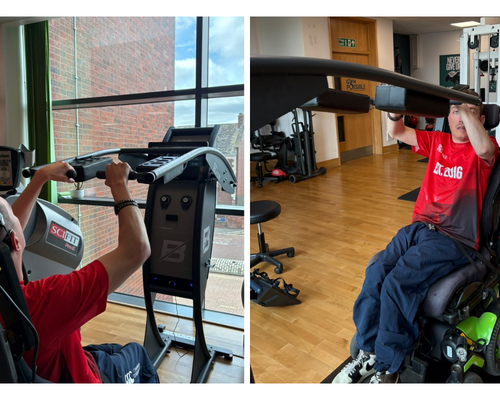
Movementum is now leading work connected to the National Rehabilitation Centre (NRC) project.

What is the National Rehabilitation Centre?
It’s a specialist NHS rehabilitation facility being built on the Stanford Hall Rehabilitation Estate near Loughborough, UK
The £105m, 70-bed development forms part of the government’s New Hospital Programme and is expected to open to patients later this year.
The centre has been designed to develop rehabilitation models that can eventually be scaled across wider healthcare systems.
It sits alongside the Defence Medical Rehabilitation Centre, where many rehabilitation principles have been refined through military recovery programmes
What interventions are you delivering at the National Rehabilitation Centre?
I’m responsible for creating a bridge from acute care to community support systems.
Looking more broadly at the current set-up, we see amazing community wellbeing roles being established and strong clinical specialisms in place, but we haven’t properly joined them together. Health and fitness should play a much bigger role in that community transition.
We’re establishing a bridge between hospital discharge and long-term community wellbeing to tackle what we call the discharge cliff – where patients lose structure and support once their acute rehabilitation stage comes to an end.
We’re developing a formal discharge programme designed to support patients long after they leave acute rehabilitation.
‘Movement-capacity’ professionals who deliver this support will sit alongside existing teams. They won’t replace anyone, but will be an additional resource.
Working in oncology changed how I thought about long-term support and survivorship
During a patient’s stay at the National Rehabilitation Centre these teams will focus on supporting long-term recovery and then – once someone is discharged – that support will continue in the community.
Patients will have access to this service for three years post-discharge. Their families will get help as well, because we want to influence the wider environment around them.
We’ve decided on three years because we have to shift mindsets and support long-term behavioural change and you can’t do that in 10 or 12 weeks.
What exactly is ‘movement capacity’?
Movement capacity combines sports rehabilitation, exercise science, behavioural support and long-term wellbeing coaching.
It’s adapted from the World Health Organization’s framework around intrinsic capacity and is about future potential and future capacity, not simply how someone presents today.
Who will deliver these interventions?
We’re merging disciplines to create the role of ‘movement-capacity’ professional by bringing existing disciplines together in a more coordinated way.
Ultimately the model can extend beyond rehabilitation into oncology, musculoskeletal health, obesity, diabetes and wider population health.
Supportive care is the missing layer in the current system. Acute healthcare systems are designed to save lives, but there’s a major need for long-term support once people return to everyday life.
How did Movementum evolve to deliver this work with the NRC?
Movementum was developed within premium wellness and hospitality environments, such as the Mandarin Oriental Hyde Park – as mentioned – where we explored how movement, supportive care and long-term wellbeing can be integrated into spa and wellness settings within a five-star hotel.
Working in luxury wellness environments such as this allowed us to test integrated models of care before scaling them into public health.
A lot of the lessons we’re now applying in public health and rehabilitation were refined in those luxury settings because the set-up in the luxury market allowed us to test more intensive and integrated models of care.

What other experiences have informed your approach?
Rolling back 20 years, we were involved in oncology care in areas such as nutritional support, coping strategies and supportive-care modalities.
Much of the work we did back then highlighted the importance of physical activity – from diagnosis onwards – and demonstrated the role it can play in long-term survivorship.
This work shaped many of the professional standards we still use in our work across the business and working in oncology also changed how I think about long-term support and survivorship.
Why is the discharge cliff such an issue?
Rehabilitation support is often very comprehensive during the acute care phase, but once people return home they suddenly lose structure and support.
The military already understands the dangers this discharge cliff presents and how it can stall full recovery. The challenge is what happens after people leave structured rehabilitation environments and head out into in the community.
If health and fitness interventions can overcome issues around this discharge cliff and help reduce hospital readmission rates then we clear bottlenecks, free up beds and amplify specialist care.
We’ve got extraordinary specialisms in the NHS, but we need to create support systems around them.
How important is technology to this new model?
It’s important for measurement, analysis and reporting, but long-term supportive care has to be human-led.
There’s huge potential to collect data and use AI as part of the process, but supportive care by definition, is fundamentally a human field.
At the National Rehabilitation Centre we’ll use technologies that haven’t previously been used clinically, including AI biomechanical analysis and digital recovery systems.
We need to validate our value not just through health outcomes, but through economic impact and job creation. That’s what moves policy
The digital programme will operate across three levels: self-service, semi-supported and specialist support pathways.
We’re also developing a digital portal that supports patients long-term and an AI risk-model designed to track factors such as the velocity of recovery, which has never been measured before.
But the local community centre won’t need all of that technology to operate the model. The framework and the human support are the important parts.
Why is workforce development such a major focus?
In the health and fitness sector, we need a more defined and progressive career pathway to enable people to reach the highest levels.
We have thousands of graduates in sports science, rehabilitation and exercise-related disciplines leaving university every year without there being any obvious career opportunities for them in the health and fitness sector. I see an opportunity to engage with them.
We want these opportunities to be accessible beyond traditional clinical pathways, which is why we’re also working with organisations such as CIMSPA to help shape standards, professional development and wider access into movement-capacity roles for relevant graduates.
A key part of the ambition is also to create clearer vocational pathways for people who are already working in health and fitness, so they can build their careers alongside the graduates who are entering the sector for the first time.
My remit at the National Rehabilitation Centre is to create 50 new jobs within three years – and hopefully many more beyond that – across healthcare, education, corporate wellbeing and sport.
These roles won’t replace existing healthcare professionals, they’ll create a new workforce around secondary prevention and long-term supportive care.
What’s the bigger picture here?
When you look someone in the eye and care for them for life, that’s a very different skill set and the health and fitness industry should have that capability.
I believe that if we support younger professionals properly, they’re capable of extraordinary things.
The Health and fitness sector has an opportunity to create meaningful long-term careers where experience, empathy and the ability to give supportive care become increasingly valuable and valued over time.
Experience should also count and people should become more respected as they gain experience.

Why is there so much international interest in this new model?
Other countries often move faster in delivering outcomes, because they’re less fragmented and although the NHS has a terrible PR problem domestically, what’s interesting is that internationally, it’s incredibly respected. Stakeholders abroad are excited by the possibility of collaborating with UK rehabilitation and healthcare systems.
There’s also interest in the workforce and job-creation aspects of this initiative and to foster this, I’ve created an organisation called the Global Coalition of Movement Capacity to create bridges for knowledge-sharing.
Tell us more about the Global Coalition of Movement Capacity
It’s a think tank and collaborative network bringing together stakeholders from healthcare, sport, academia and wellbeing to develop frameworks around secondary prevention and long-term supportive care.
I created it to encourage collaboration around movement capacity and community-based rehabilitation.
My remit at the NRC is to create 50 new jobs within three years and hopefully many more beyond that across healthcare, education, corporate wellbeing and sport
There’s growing interest around the world in how health and fitness can play a more formal role in healthcare systems, particularly in supporting people after discharge and helping reduce long-term pressure on acute services.
We’ve already established relationships with organisations in Bahrain, Saudi Arabia, Singapore and Australia, including a co-operation agreement with the Bahraini Olympic Committee.
A lot of the discussion internationally is around workforce creation, human capital and how physical activity can become part of wider preventative-health infrastructure.
What impact does the health and fitness industry have on the health of nations?
There’s a strong argument that it’s not enough.
Clinicians understand the value of health and fitness, but as an industry we haven’t created models of care that consistently prove and deliver that value day to day.
I don’t think I’ve met anyone in clinical settings who doesn’t understand the role of physical activity. The real disconnect is that health and fitness hasn’t fully established its place within healthcare.
What role should the sector play?
I think the health and fitness industry should become the guardian of secondary prevention. Delivering this would give us a clear and meaningful role.
At the moment there’s incredible work happening, but it’s fragmented – there isn’t enough collaboration or shared infrastructure around long-term supportive care.
The sector has become heavily brand-led in terms of the operators. What’s needed is a more coordinated model.
The NHS is there to save lives and once they’ve done this, communities and supportive-care systems need help sustain these patients’ long-term wellbeing.
Health and fitness has a huge role to play in delivering that service, but we don’t currently direct our workforce to support people for life and that’s where the opportunity lies.
Why do you describe physical activity as a Trojan horse?
Physical activity is a Trojan horse because it creates positive momentum and allows wider changes around nutrition, behaviour and mental wellbeing to follow.
You see this in mental-health strategies: ‘do first, think later’. Movement can create momentum before motivation arrives: physical activity allows us to de-medicalise quickly and then – once positivity and momentum exist – we can layer in behaviour science, nutrition and supportive care.
Long-term wellbeing is ultimately underpinned by behavioural science, psychology and supportive care.
What should the industry do differently?
We need to validate our value not just through health outcomes, but through economic impact and job creation. That’s what moves policy. We also need stronger governance, clearer professional pathways and more evidence-based messaging.
The real infrastructure is human capital. That’s what ultimately supports long-term change
At the moment we don’t operate like a profession with structured progression and long-term career development and this needs to change.
What do you ultimately want to achieve?
Working more in public health over the last few years has lit up parts of my brain again.
Earlier in my career I was excited by elite environments and premium clubs, but what motivates me now is impact more than prestige – creating jobs, supporting younger professionals and helping people live better for longer.
When you work in supportive care, you realise there are situations you can’t fix, but you can still support people. That sense of purpose is what drives me.
I think the industry has an extraordinary opportunity sitting in front of it and if we get this right, health and fitness can become one of the major supportive-care systems in healthcare.
Our younger generation are perfectly equipped to do this if we support them properly. We just need to give them the environment, governance and support structures.
And I genuinely think the UK can lead the way.


Editor's letter
HCM People
HCM People
Sponsored
Interview
Sponsored
Talking point

Sponsored

Research
Sponsored
Life Lessons
Sponsored
Strength
Supplier Showcase
Sponsored

Research



















What’s your background?
I’ve been in medical wellbeing for 25 years.
It all started with the founding of an integrated private medical wellbeing club on the King’s Road called Stephen Price at Jubilee Place.
The clinic supported everyone from royalty and government officials to elite performers and people recovering from serious illness.
The clientele was made up of people requiring a deeper level of multi-disciplinary support, whether for elite performance or recovery from serious injury and illness.
From that foundation, I launched the SP&Co Group to expand into consultancy, operations and the development of integrated models of care.
Tell us more about the organisation
The SP&Co Group is a portfolio of health and wellbeing businesses that’s evolved over the last 20 years.
A lot of our work has sat between clinical and non-clinical environments, spanning supportive care, rehabilitation, preventative health and premium wellness.
One of the best-known brands is BodySPace, which I co-founded with David Higgins. The idea was to create a more integrated approach to health and wellbeing, bringing together movement coaching, rehabilitation principles and supportive-care systems.
BodySPace went on to partner with Mandarin Oriental Hyde Park to deliver a lifestyle performance model designed around long-term health optimisation and preventative wellbeing.
Another one of our brands – Movementum – is the public-health and supportive-care arm of the SP&Co Group. It was founded in 2020 to scale a model known as ‘movement capacity’.
Originally developed through work in oncology, rehabilitation and premium wellness environments, the concept combines exercise science, sports rehabilitation, behavioural support and long-term wellbeing coaching to bridge the gap between acute healthcare and community-based recovery.
Movementum is now leading work connected to the National Rehabilitation Centre (NRC) project.
What is the National Rehabilitation Centre?
It’s a specialist NHS rehabilitation facility being built on the Stanford Hall Rehabilitation Estate near Loughborough, UK
The £105m, 70-bed development forms part of the government’s New Hospital Programme and is expected to open to patients later this year.
The centre has been designed to develop rehabilitation models that can eventually be scaled across wider healthcare systems.
It sits alongside the Defence Medical Rehabilitation Centre, where many rehabilitation principles have been refined through military recovery programmes
What interventions are you delivering at the National Rehabilitation Centre?
I’m responsible for creating a bridge from acute care to community support systems.
Looking more broadly at the current set-up, we see amazing community wellbeing roles being established and strong clinical specialisms in place, but we haven’t properly joined them together. Health and fitness should play a much bigger role in that community transition.
We’re establishing a bridge between hospital discharge and long-term community wellbeing to tackle what we call the discharge cliff – where patients lose structure and support once their acute rehabilitation stage comes to an end.
We’re developing a formal discharge programme designed to support patients long after they leave acute rehabilitation.
‘Movement-capacity’ professionals who deliver this support will sit alongside existing teams. They won’t replace anyone, but will be an additional resource.
Working in oncology changed how I thought about long-term support and survivorship
During a patient’s stay at the National Rehabilitation Centre these teams will focus on supporting long-term recovery and then – once someone is discharged – that support will continue in the community.
Patients will have access to this service for three years post-discharge. Their families will get help as well, because we want to influence the wider environment around them.
We’ve decided on three years because we have to shift mindsets and support long-term behavioural change and you can’t do that in 10 or 12 weeks.
What exactly is ‘movement capacity’?
Movement capacity combines sports rehabilitation, exercise science, behavioural support and long-term wellbeing coaching.
It’s adapted from the World Health Organization’s framework around intrinsic capacity and is about future potential and future capacity, not simply how someone presents today.
Who will deliver these interventions?
We’re merging disciplines to create the role of ‘movement-capacity’ professional by bringing existing disciplines together in a more coordinated way.
Ultimately the model can extend beyond rehabilitation into oncology, musculoskeletal health, obesity, diabetes and wider population health.
Supportive care is the missing layer in the current system. Acute healthcare systems are designed to save lives, but there’s a major need for long-term support once people return to everyday life.
How did Movementum evolve to deliver this work with the NRC?
Movementum was developed within premium wellness and hospitality environments, such as the Mandarin Oriental Hyde Park – as mentioned – where we explored how movement, supportive care and long-term wellbeing can be integrated into spa and wellness settings within a five-star hotel.
Working in luxury wellness environments such as this allowed us to test integrated models of care before scaling them into public health.
A lot of the lessons we’re now applying in public health and rehabilitation were refined in those luxury settings because the set-up in the luxury market allowed us to test more intensive and integrated models of care.
What other experiences have informed your approach?
Rolling back 20 years, we were involved in oncology care in areas such as nutritional support, coping strategies and supportive-care modalities.
Much of the work we did back then highlighted the importance of physical activity – from diagnosis onwards – and demonstrated the role it can play in long-term survivorship.
This work shaped many of the professional standards we still use in our work across the business and working in oncology also changed how I think about long-term support and survivorship.
Why is the discharge cliff such an issue?
Rehabilitation support is often very comprehensive during the acute care phase, but once people return home they suddenly lose structure and support.
The military already understands the dangers this discharge cliff presents and how it can stall full recovery. The challenge is what happens after people leave structured rehabilitation environments and head out into in the community.
If health and fitness interventions can overcome issues around this discharge cliff and help reduce hospital readmission rates then we clear bottlenecks, free up beds and amplify specialist care.
We’ve got extraordinary specialisms in the NHS, but we need to create support systems around them.
How important is technology to this new model?
It’s important for measurement, analysis and reporting, but long-term supportive care has to be human-led.
There’s huge potential to collect data and use AI as part of the process, but supportive care by definition, is fundamentally a human field.
At the National Rehabilitation Centre we’ll use technologies that haven’t previously been used clinically, including AI biomechanical analysis and digital recovery systems.
We need to validate our value not just through health outcomes, but through economic impact and job creation. That’s what moves policy
The digital programme will operate across three levels: self-service, semi-supported and specialist support pathways.
We’re also developing a digital portal that supports patients long-term and an AI risk-model designed to track factors such as the velocity of recovery, which has never been measured before.
But the local community centre won’t need all of that technology to operate the model. The framework and the human support are the important parts.
Why is workforce development such a major focus?
In the health and fitness sector, we need a more defined and progressive career pathway to enable people to reach the highest levels.
We have thousands of graduates in sports science, rehabilitation and exercise-related disciplines leaving university every year without there being any obvious career opportunities for them in the health and fitness sector. I see an opportunity to engage with them.
We want these opportunities to be accessible beyond traditional clinical pathways, which is why we’re also working with organisations such as CIMSPA to help shape standards, professional development and wider access into movement-capacity roles for relevant graduates.
A key part of the ambition is also to create clearer vocational pathways for people who are already working in health and fitness, so they can build their careers alongside the graduates who are entering the sector for the first time.
My remit at the National Rehabilitation Centre is to create 50 new jobs within three years – and hopefully many more beyond that – across healthcare, education, corporate wellbeing and sport.
These roles won’t replace existing healthcare professionals, they’ll create a new workforce around secondary prevention and long-term supportive care.
What’s the bigger picture here?
When you look someone in the eye and care for them for life, that’s a very different skill set and the health and fitness industry should have that capability.
I believe that if we support younger professionals properly, they’re capable of extraordinary things.
The Health and fitness sector has an opportunity to create meaningful long-term careers where experience, empathy and the ability to give supportive care become increasingly valuable and valued over time.
Experience should also count and people should become more respected as they gain experience.
Why is there so much international interest in this new model?
Other countries often move faster in delivering outcomes, because they’re less fragmented and although the NHS has a terrible PR problem domestically, what’s interesting is that internationally, it’s incredibly respected. Stakeholders abroad are excited by the possibility of collaborating with UK rehabilitation and healthcare systems.
There’s also interest in the workforce and job-creation aspects of this initiative and to foster this, I’ve created an organisation called the Global Coalition of Movement Capacity to create bridges for knowledge-sharing.
Tell us more about the Global Coalition of Movement Capacity
It’s a think tank and collaborative network bringing together stakeholders from healthcare, sport, academia and wellbeing to develop frameworks around secondary prevention and long-term supportive care.
I created it to encourage collaboration around movement capacity and community-based rehabilitation.
My remit at the NRC is to create 50 new jobs within three years and hopefully many more beyond that across healthcare, education, corporate wellbeing and sport
There’s growing interest around the world in how health and fitness can play a more formal role in healthcare systems, particularly in supporting people after discharge and helping reduce long-term pressure on acute services.
We’ve already established relationships with organisations in Bahrain, Saudi Arabia, Singapore and Australia, including a co-operation agreement with the Bahraini Olympic Committee.
A lot of the discussion internationally is around workforce creation, human capital and how physical activity can become part of wider preventative-health infrastructure.
What impact does the health and fitness industry have on the health of nations?
There’s a strong argument that it’s not enough.
Clinicians understand the value of health and fitness, but as an industry we haven’t created models of care that consistently prove and deliver that value day to day.
I don’t think I’ve met anyone in clinical settings who doesn’t understand the role of physical activity. The real disconnect is that health and fitness hasn’t fully established its place within healthcare.
What role should the sector play?
I think the health and fitness industry should become the guardian of secondary prevention. Delivering this would give us a clear and meaningful role.
At the moment there’s incredible work happening, but it’s fragmented – there isn’t enough collaboration or shared infrastructure around long-term supportive care.
The sector has become heavily brand-led in terms of the operators. What’s needed is a more coordinated model.
The NHS is there to save lives and once they’ve done this, communities and supportive-care systems need help sustain these patients’ long-term wellbeing.
Health and fitness has a huge role to play in delivering that service, but we don’t currently direct our workforce to support people for life and that’s where the opportunity lies.
Why do you describe physical activity as a Trojan horse?
Physical activity is a Trojan horse because it creates positive momentum and allows wider changes around nutrition, behaviour and mental wellbeing to follow.
You see this in mental-health strategies: ‘do first, think later’. Movement can create momentum before motivation arrives: physical activity allows us to de-medicalise quickly and then – once positivity and momentum exist – we can layer in behaviour science, nutrition and supportive care.
Long-term wellbeing is ultimately underpinned by behavioural science, psychology and supportive care.
What should the industry do differently?
We need to validate our value not just through health outcomes, but through economic impact and job creation. That’s what moves policy. We also need stronger governance, clearer professional pathways and more evidence-based messaging.
The real infrastructure is human capital. That’s what ultimately supports long-term change
At the moment we don’t operate like a profession with structured progression and long-term career development and this needs to change.
What do you ultimately want to achieve?
Working more in public health over the last few years has lit up parts of my brain again.
Earlier in my career I was excited by elite environments and premium clubs, but what motivates me now is impact more than prestige – creating jobs, supporting younger professionals and helping people live better for longer.
When you work in supportive care, you realise there are situations you can’t fix, but you can still support people. That sense of purpose is what drives me.
I think the industry has an extraordinary opportunity sitting in front of it and if we get this right, health and fitness can become one of the major supportive-care systems in healthcare.
Our younger generation are perfectly equipped to do this if we support them properly. We just need to give them the environment, governance and support structures.
And I genuinely think the UK can lead the way.
Editor's letter
HCM People
HCM People
Sponsored
Interview
Sponsored
Talking point
Sponsored
Research
Sponsored
Life Lessons
Sponsored
Strength
Supplier Showcase
Sponsored
Research