






Editor's letter



What are you working on?
There are two overarching projects I dedicate my time to: firstly, the Oxford Value and Stewardship Programme and secondly, Live Longer Better.
The former is a longstanding initiative focused on how we get more value out of the money spent on the National Health Service (NHS). It’s about creating a culture of stewardship to ensure the NHS will still be there in the future.
The aim of Live Longer Better is to increase healthy life expectancy – or healthspan – and close the gap between the least and the most deprived sections of the population.
The headline in the Oxford Value programme is that we know at least 15 per cent of what’s spent on the NHS does no good; some of the money spent on drugs even does harm. So as we look to minimise waste, the question we’re asking is: ‘What else could we do with that money?’
One answer is to shift some of it from clinical to non-clinical care, from prescribing drugs to prescribing non-drug therapy, including activity.
For example, eight million people are on antidepressants, but what many of them really need is walking, football, dancing or the gym. So we need to think in a different way about the wellbeing problems people have. ‘More NHS’ – more doctors, nurses, psychologists – is not the answer.
Of course, the NHS is important for diagnosis, acute care and starting the right treatment. If you develop cancer, rheumatoid arthritis or inflammatory bowel disease, you absolutely need the NHS. It also offers a few preventative services: screening, for example and immunisation. But if we’re trying to clarify what the job of the NHS is, we have to conclude that it’s a disease service.
It isn’t very good at wellbeing and is not the most important service for preventing disease.
For many problems, we therefore need other opportunities alongside the NHS to improve our wellbeing – including how we feel and how we relate to others, which in contrast to ‘health’ is something we can measure.
When it comes to preventing long-term conditions and also living well with long-term conditions, we also need to look at how communities – including the fitness industry – can better help one another. And we need to look at self-care: I think every 18-year-old should be given a contract that sets out not only their rights but also their responsibilities around their own health.
This is where Live Longer Better comes in, as the umbrella for a number of initiatives designed to increase healthy life expectancy.

Tell us more about Live Longer Better
Live Longer Better is a system within the NHS, but crucially, the NHS is not the major player. Rather, it's organised through a network approach that brings together charities and faith organisations, social care and housing, pensions and government, libraries, parks, populations and local businesses to create activities that deliver against a set of 10 common objectives.
These objectives are deliberately broad, because although the NHS has created the system, it will be neighbourhoods that deliver it – local groups that best know what their community needs.
By opening up the invitation and handing over the authority to create these neighbourhoods, we believe people will step forward to lead the charge – quite often, I expect, this will be local GPs. They will then report annually on their progress against the 10 objectives, so we can all learn from each other.
This is a really important shift in focus, because numerous NHS reorganisations over the years haven’t really made any difference.
The prevention message – namely, that activity is of vital importance – has hit home. For every long-term condition, from cancer to mental health problems to dementia prevention, the evidence of the benefits of activity continues to strengthen. The message is becoming ever-clearer and acceptance is rising steadily.
However, the 'therapy message' – namely, that everyone needs an activity prescription as well as (and sometimes instead of) a drug prescription – has not yet landed.
How do you see this happening?
I’m hopeful things are now changing firstly with the new NHS 10-Year Health Plan, which emphasises the role of activity in improving population health. Secondly, with the return of programme budgeting, which will clearly break down what’s being spent on each health condition and thirdly, with two love affairs coming to an end.
The first of these is the love affair with the gene. Yes genes are important, particularly for rare diseases, but for common problems, the genes you inherit only contribute probably 10 per cent of the outcome. The rest is down to how you adapt to your physical and social environment – your exposome – such as having had a job that required you to sit down for 40 years.
The second love affair that’s ending is the love affair with professionals, which goes back to ‘more NHS’ not being the answer to today’s challenges, instead, we need support for self-care and community care, getting people and volunteers together to help each other – and to help themselves.

Can you share any examples of Live Longer Better initiatives?
One great example is a programme we launched in south-west Hertfordshire in March, led by a Tring-based GP, where activity prescriptions are being automated.
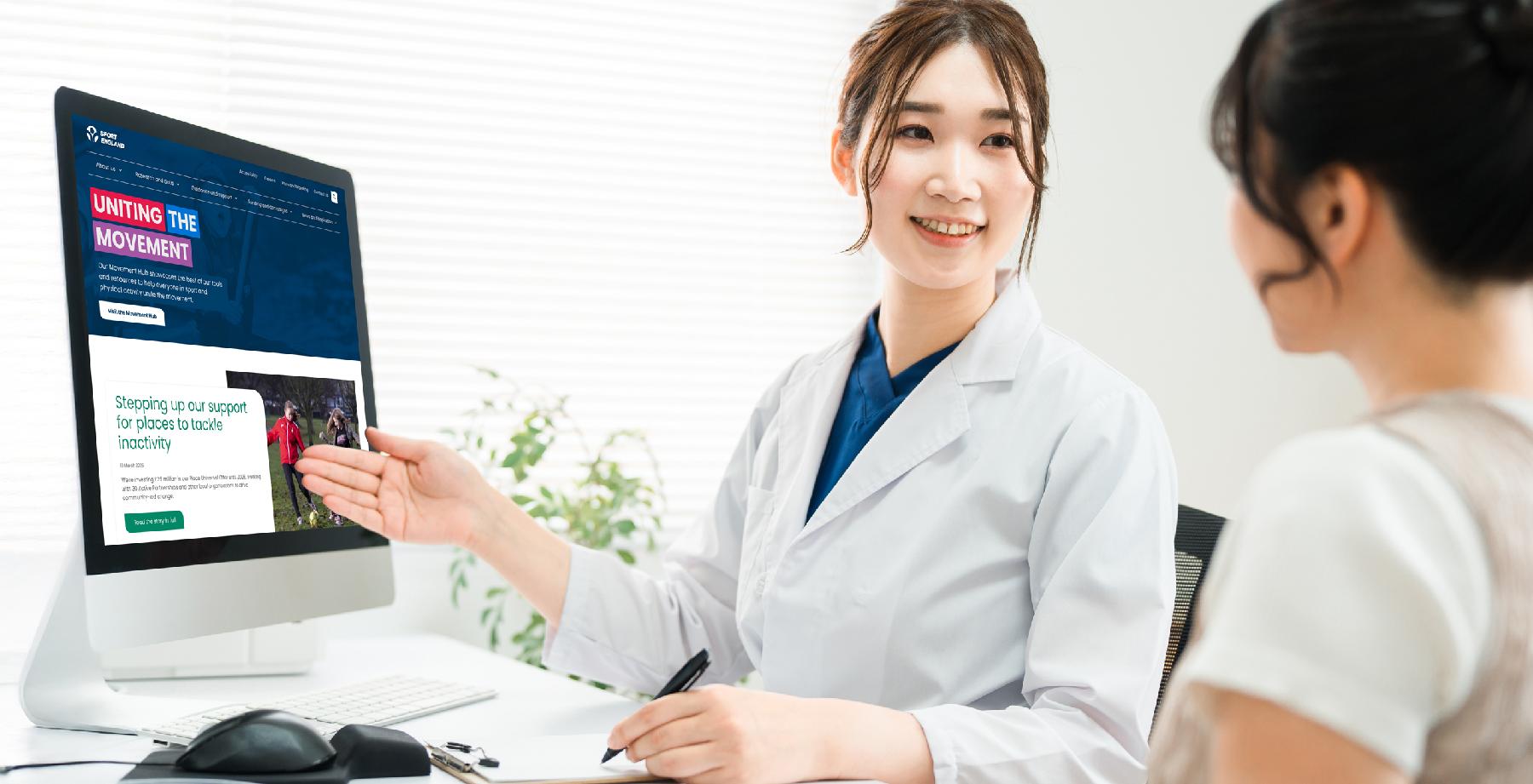
Imagine a doctor is seeing a patient with Type 2 diabetes. They will start to create a prescription by typing in the drug name ‘metformin’ and software called W:ISH will instantly recognise the prescription, link the diagnosis to the patient’s postcode and automatically search local databases – provided by Sport England, local gyms, charities, health walks and so on – to issue a suitable activity prescription through the NHS app.
That activity prescription will also be reiterated and reinforced, with a dose of encouragement from the pharmacist, with each repeat drug prescription.
Alongside the initiative in Tring, we already have 40 more neighbourhoods lined up for the phase one roll-out of the W:ISH programme.
Your focus has always been on active ageing…
Yes, and 60+ remains my primary focus, even though a number of the initiatives I’m involved in – such as Let’s Walk More and Let’s Dance! with Angela Rippon – have a broader benefit.
Things are improving when it comes to extending healthspan, but there’s still a cultural problem to address – people are confused about what's happening to them as they live longer – and there’s a pressing need to tackle ageism, which I define as the mistaken belief that all problems are due to ageing. This simply isn’t true.
You do need a bit of luck to avoid, say, Parkinson’s disease, but it’s important to understand that ageing by itself is not a cause of major problems until you reach your late 90s.
There are three other things that affect us as we live longer: firstly, loss of mental and physical fitness; secondly, disease, most of which is caused not by genetics but by our environment; and thirdly, the actual environment itself, including environmental and social problems, deprivation and ageism, as well as the 40+ years people have probably spent sitting down since they started work.
The solution – the elixir of life – is knowledge. At the Oxford Longevity Project, whose board I joined in 2024, we want to rebrand retirement as a ‘renaissance’, empowering retirees with knowledge via the various organisations that already communicate with them on a regular basis, such as pension providers, charities, faith organisations, chemists and so forth. They don’t need the expertise themselves: we can provide all the materials. They just need to be the trusted messengers, ensuring that pre-retirement (pre-renaissance) planning includes wellbeing planning, as well as financial planning.
We’re also working on getting weights into every church and mosque in the country.
With strength training being vital as we age, there’s no reason why chemists couldn’t sell simple home gym equipment, either.

Tell us about Let’s Walk More
Walking is a great way to build stamina and something I’ve long advocated, not only for older people but for all ages; for many people, the problem starts at the age of 22 when they get their first desk job.
The scientific evidence in support of walking has continued to grow, so I’ve recently published Dr Gray’s Walking Cure – a new edition of one of my earliest books – and we’ve also launched Let’s Walk More, which encourages people to walk briskly for 30 minutes a day.
There’s strong evidence that brisk walking affects the disease process directly in some conditions, such as Type 2 diabetes; prevents the loss of fitness and accelerated decline that often follows diagnosis; reduces the risk of other long-term conditions such as heart disease and dementia; and makes people feel better. The NHS Active10 app is free to download and measures minutes of brisk walking.
Of course, walking can’t do everything: you also need strength, suppleness and skill in a daily dozen.
What future would you like to paint?
We haven’t evolved to live in the environment we live in at present, sitting all the time and with calories everywhere we turn. I would like to see a far greater understanding of this and of the need to take action individually and as communities.
Self-care is the most important type of healthcare, so we need education and insight into the new facts of life, including the greatest danger we face in the modern world being the chair. We need to help individuals develop new daily routines – 30 minutes of brisk walking plus 10 minutes of strength, suppleness and skill – plus the gym, pilates or dance classes twice a week. Everyone needs a plan to live longer better; the Oxford Longevity Project’s Personalised Plan could also be built into every gym or fitness centre membership.
We need communities to think about how they can enable more activity: making walking safer, supporting local football clubs, putting exercise equipment such as Swing Fitness weights into parks and so on. And we need the NHS to play a leading role in changing the culture, helping us realise the challenges we face can’t be met simply by ‘more NHS’.
I’d like to see the NHS giving people clear information, first in a contract at age 18 and then on every birthday, presenting the latest scientific evidence about what we can do for ourselves both mentally and physically.
When we do see a doctor or primary care team, we should get an activity prescription as well as a drug prescription – sometimes instead of a drug prescription – with a little booster dose of knowledge and encouragement with every repeat prescription. And in hospital, there should be a pair of pedals and a resistance band beside every bed to help prevent the deconditioning of muscle mass.
How important is the language we use?
I would point to Benjamin Lee Whorf’s theory of linguistic relativity, which asserted that language conditions the way we think and creates the reality we live in, rather than vice versa.
We don’t need language for items such as tables and chairs – that's pretty obvious – but our understanding of ‘independence’, ‘disability’, ‘wellbeing’, ‘dependence’ and so on is shaped by the language we use.
Language is therefore of fundamental importance, which is why we’re producing a new glossary of terms including ‘fitness’, ‘disease’, ‘rehabilitation’ and many more.
At the moment, you could ask 20 GPs for their definition of fitness and they’d each say something different. To create new ways of thinking, you have to write it down and you have to reinforce it: we’d like this glossary to be given to everyone in the NHS.
We also need to look at the word ‘care’, which is very broad. We might consider changing it to a series of other words including ‘therapy’ and even ‘partnership’. Because care needn’t only be about doing things for people. It can be about doing things with people, shifting them away from being patients to become partners in their own healthcare.
While we’re on this topic, I never use the term ‘physical activity’ but simply ‘activity’. ‘Physical activity’ significantly undersells the benefits, which are also cognitive and emotional. ‘Leisure’ is also a dreadful word. I would suggest ‘wellbeing centres’ as a preferable term.
Whether ‘fitness’ is even the right word is up for debate, but I certainly believe this industry – with its wonderful professionals and off-peak capacity – has a vital role to play in shifting the paradigm. It’s undoubtedly part of the disease service, but it’s also the wellbeing service.
And there’s a strong commercial argument here; I would suggest all parts of the industry think more systematically about population ageing as a major opportunity.
At 81, what continues to drive you?
My mother certainly had an influence on me. She was a gym teacher in Glasgow and on her badge were the words ‘physical education’ and ‘hygiene’. This was 1928 and there was already an acknowledgement that physical education teachers were in the hygiene business – effectively the health business.
Above all, though, intellectual interest is my driving force. I can see the knowledge is there but not yet put into practice. This is what continues to spur me on.
1 To prevent and mitigate isolation
2 To increase physical ability, resilience and healthspan and prevent frailty and falls
3 To reduce the risk of, and to delay or prevent dementia
4 To prevent and minimise the effects of disease and multi-morbidity
5 To promote knowledge and understanding about living longer better among older people and the wider population to counteract the detrimental effects of ageism
6 To create an environment in which people can fulfil their potential
7 To enable strengthening of purpose
8 To support carers better
9 To minimise and mitigate the effects of deprivation
10 To enable dying well as well as living well
✻ Let’s Walk More
https://letswalkmore.weebly.com
✻ Live Longer Better
✻ Living Longer Better course
www.learningwithexperts.com/products/living-longer-better
✻ Oxford Value and Stewardship Programme
✻ Oxford Longevity Project
https://oxfordlongevityproject.org
✻ Let’s Dance!
✻ Swing Fitness
Books
✻ How to increase your Brainability and reduce the risk and impact of dementia
✻ Dr Gray’s Walking Cure
✻ Sod 70! – How to live well in your 70s, 80s and 90s
Editor's letter
HCM People
HCM People
Sponsored
Interview
Sponsored

Talking point

Sponsored

Research

Sponsored
Life Lessons
Sponsored
Strength
Supplier Showcase
Sponsored

Research




















What are you working on?
There are two overarching projects I dedicate my time to: firstly, the Oxford Value and Stewardship Programme and secondly, Live Longer Better.
The former is a longstanding initiative focused on how we get more value out of the money spent on the National Health Service (NHS). It’s about creating a culture of stewardship to ensure the NHS will still be there in the future.
The aim of Live Longer Better is to increase healthy life expectancy – or healthspan – and close the gap between the least and the most deprived sections of the population.
The headline in the Oxford Value programme is that we know at least 15 per cent of what’s spent on the NHS does no good; some of the money spent on drugs even does harm. So as we look to minimise waste, the question we’re asking is: ‘What else could we do with that money?’
One answer is to shift some of it from clinical to non-clinical care, from prescribing drugs to prescribing non-drug therapy, including activity.
For example, eight million people are on antidepressants, but what many of them really need is walking, football, dancing or the gym. So we need to think in a different way about the wellbeing problems people have. ‘More NHS’ – more doctors, nurses, psychologists – is not the answer.
Of course, the NHS is important for diagnosis, acute care and starting the right treatment. If you develop cancer, rheumatoid arthritis or inflammatory bowel disease, you absolutely need the NHS. It also offers a few preventative services: screening, for example and immunisation. But if we’re trying to clarify what the job of the NHS is, we have to conclude that it’s a disease service.
It isn’t very good at wellbeing and is not the most important service for preventing disease.
For many problems, we therefore need other opportunities alongside the NHS to improve our wellbeing – including how we feel and how we relate to others, which in contrast to ‘health’ is something we can measure.
When it comes to preventing long-term conditions and also living well with long-term conditions, we also need to look at how communities – including the fitness industry – can better help one another. And we need to look at self-care: I think every 18-year-old should be given a contract that sets out not only their rights but also their responsibilities around their own health.
This is where Live Longer Better comes in, as the umbrella for a number of initiatives designed to increase healthy life expectancy.
Tell us more about Live Longer Better
Live Longer Better is a system within the NHS, but crucially, the NHS is not the major player. Rather, it's organised through a network approach that brings together charities and faith organisations, social care and housing, pensions and government, libraries, parks, populations and local businesses to create activities that deliver against a set of 10 common objectives.
These objectives are deliberately broad, because although the NHS has created the system, it will be neighbourhoods that deliver it – local groups that best know what their community needs.
By opening up the invitation and handing over the authority to create these neighbourhoods, we believe people will step forward to lead the charge – quite often, I expect, this will be local GPs. They will then report annually on their progress against the 10 objectives, so we can all learn from each other.
This is a really important shift in focus, because numerous NHS reorganisations over the years haven’t really made any difference.
The prevention message – namely, that activity is of vital importance – has hit home. For every long-term condition, from cancer to mental health problems to dementia prevention, the evidence of the benefits of activity continues to strengthen. The message is becoming ever-clearer and acceptance is rising steadily.
However, the 'therapy message' – namely, that everyone needs an activity prescription as well as (and sometimes instead of) a drug prescription – has not yet landed.
How do you see this happening?
I’m hopeful things are now changing firstly with the new NHS 10-Year Health Plan, which emphasises the role of activity in improving population health. Secondly, with the return of programme budgeting, which will clearly break down what’s being spent on each health condition and thirdly, with two love affairs coming to an end.
The first of these is the love affair with the gene. Yes genes are important, particularly for rare diseases, but for common problems, the genes you inherit only contribute probably 10 per cent of the outcome. The rest is down to how you adapt to your physical and social environment – your exposome – such as having had a job that required you to sit down for 40 years.
The second love affair that’s ending is the love affair with professionals, which goes back to ‘more NHS’ not being the answer to today’s challenges, instead, we need support for self-care and community care, getting people and volunteers together to help each other – and to help themselves.
Can you share any examples of Live Longer Better initiatives?
One great example is a programme we launched in south-west Hertfordshire in March, led by a Tring-based GP, where activity prescriptions are being automated.
Imagine a doctor is seeing a patient with Type 2 diabetes. They will start to create a prescription by typing in the drug name ‘metformin’ and software called W:ISH will instantly recognise the prescription, link the diagnosis to the patient’s postcode and automatically search local databases – provided by Sport England, local gyms, charities, health walks and so on – to issue a suitable activity prescription through the NHS app.
That activity prescription will also be reiterated and reinforced, with a dose of encouragement from the pharmacist, with each repeat drug prescription.
Alongside the initiative in Tring, we already have 40 more neighbourhoods lined up for the phase one roll-out of the W:ISH programme.
Your focus has always been on active ageing…
Yes, and 60+ remains my primary focus, even though a number of the initiatives I’m involved in – such as Let’s Walk More and Let’s Dance! with Angela Rippon – have a broader benefit.
Things are improving when it comes to extending healthspan, but there’s still a cultural problem to address – people are confused about what's happening to them as they live longer – and there’s a pressing need to tackle ageism, which I define as the mistaken belief that all problems are due to ageing. This simply isn’t true.
You do need a bit of luck to avoid, say, Parkinson’s disease, but it’s important to understand that ageing by itself is not a cause of major problems until you reach your late 90s.
There are three other things that affect us as we live longer: firstly, loss of mental and physical fitness; secondly, disease, most of which is caused not by genetics but by our environment; and thirdly, the actual environment itself, including environmental and social problems, deprivation and ageism, as well as the 40+ years people have probably spent sitting down since they started work.
The solution – the elixir of life – is knowledge. At the Oxford Longevity Project, whose board I joined in 2024, we want to rebrand retirement as a ‘renaissance’, empowering retirees with knowledge via the various organisations that already communicate with them on a regular basis, such as pension providers, charities, faith organisations, chemists and so forth. They don’t need the expertise themselves: we can provide all the materials. They just need to be the trusted messengers, ensuring that pre-retirement (pre-renaissance) planning includes wellbeing planning, as well as financial planning.
We’re also working on getting weights into every church and mosque in the country.
With strength training being vital as we age, there’s no reason why chemists couldn’t sell simple home gym equipment, either.
Tell us about Let’s Walk More
Walking is a great way to build stamina and something I’ve long advocated, not only for older people but for all ages; for many people, the problem starts at the age of 22 when they get their first desk job.
The scientific evidence in support of walking has continued to grow, so I’ve recently published Dr Gray’s Walking Cure – a new edition of one of my earliest books – and we’ve also launched Let’s Walk More, which encourages people to walk briskly for 30 minutes a day.
There’s strong evidence that brisk walking affects the disease process directly in some conditions, such as Type 2 diabetes; prevents the loss of fitness and accelerated decline that often follows diagnosis; reduces the risk of other long-term conditions such as heart disease and dementia; and makes people feel better. The NHS Active10 app is free to download and measures minutes of brisk walking.
Of course, walking can’t do everything: you also need strength, suppleness and skill in a daily dozen.
What future would you like to paint?
We haven’t evolved to live in the environment we live in at present, sitting all the time and with calories everywhere we turn. I would like to see a far greater understanding of this and of the need to take action individually and as communities.
Self-care is the most important type of healthcare, so we need education and insight into the new facts of life, including the greatest danger we face in the modern world being the chair. We need to help individuals develop new daily routines – 30 minutes of brisk walking plus 10 minutes of strength, suppleness and skill – plus the gym, pilates or dance classes twice a week. Everyone needs a plan to live longer better; the Oxford Longevity Project’s Personalised Plan could also be built into every gym or fitness centre membership.
We need communities to think about how they can enable more activity: making walking safer, supporting local football clubs, putting exercise equipment such as Swing Fitness weights into parks and so on. And we need the NHS to play a leading role in changing the culture, helping us realise the challenges we face can’t be met simply by ‘more NHS’.
I’d like to see the NHS giving people clear information, first in a contract at age 18 and then on every birthday, presenting the latest scientific evidence about what we can do for ourselves both mentally and physically.
When we do see a doctor or primary care team, we should get an activity prescription as well as a drug prescription – sometimes instead of a drug prescription – with a little booster dose of knowledge and encouragement with every repeat prescription. And in hospital, there should be a pair of pedals and a resistance band beside every bed to help prevent the deconditioning of muscle mass.
How important is the language we use?
I would point to Benjamin Lee Whorf’s theory of linguistic relativity, which asserted that language conditions the way we think and creates the reality we live in, rather than vice versa.
We don’t need language for items such as tables and chairs – that's pretty obvious – but our understanding of ‘independence’, ‘disability’, ‘wellbeing’, ‘dependence’ and so on is shaped by the language we use.
Language is therefore of fundamental importance, which is why we’re producing a new glossary of terms including ‘fitness’, ‘disease’, ‘rehabilitation’ and many more.
At the moment, you could ask 20 GPs for their definition of fitness and they’d each say something different. To create new ways of thinking, you have to write it down and you have to reinforce it: we’d like this glossary to be given to everyone in the NHS.
We also need to look at the word ‘care’, which is very broad. We might consider changing it to a series of other words including ‘therapy’ and even ‘partnership’. Because care needn’t only be about doing things for people. It can be about doing things with people, shifting them away from being patients to become partners in their own healthcare.
While we’re on this topic, I never use the term ‘physical activity’ but simply ‘activity’. ‘Physical activity’ significantly undersells the benefits, which are also cognitive and emotional. ‘Leisure’ is also a dreadful word. I would suggest ‘wellbeing centres’ as a preferable term.
Whether ‘fitness’ is even the right word is up for debate, but I certainly believe this industry – with its wonderful professionals and off-peak capacity – has a vital role to play in shifting the paradigm. It’s undoubtedly part of the disease service, but it’s also the wellbeing service.
And there’s a strong commercial argument here; I would suggest all parts of the industry think more systematically about population ageing as a major opportunity.
At 81, what continues to drive you?
My mother certainly had an influence on me. She was a gym teacher in Glasgow and on her badge were the words ‘physical education’ and ‘hygiene’. This was 1928 and there was already an acknowledgement that physical education teachers were in the hygiene business – effectively the health business.
Above all, though, intellectual interest is my driving force. I can see the knowledge is there but not yet put into practice. This is what continues to spur me on.
1 To prevent and mitigate isolation
2 To increase physical ability, resilience and healthspan and prevent frailty and falls
3 To reduce the risk of, and to delay or prevent dementia
4 To prevent and minimise the effects of disease and multi-morbidity
5 To promote knowledge and understanding about living longer better among older people and the wider population to counteract the detrimental effects of ageism
6 To create an environment in which people can fulfil their potential
7 To enable strengthening of purpose
8 To support carers better
9 To minimise and mitigate the effects of deprivation
10 To enable dying well as well as living well
✻ Let’s Walk More
https://letswalkmore.weebly.com
✻ Live Longer Better
✻ Living Longer Better course
www.learningwithexperts.com/products/living-longer-better
✻ Oxford Value and Stewardship Programme
✻ Oxford Longevity Project
https://oxfordlongevityproject.org
✻ Let’s Dance!
✻ Swing Fitness
Books
✻ How to increase your Brainability and reduce the risk and impact of dementia
✻ Dr Gray’s Walking Cure
✻ Sod 70! – How to live well in your 70s, 80s and 90s
Editor's letter
HCM People
HCM People
Sponsored
Interview
Sponsored
Talking point
Sponsored
Research
Sponsored
Life Lessons
Sponsored
Strength
Supplier Showcase
Sponsored
Research