























GET HCM
magazine
Sign up for the FREE digital edition of HCM magazine and also get the HCM ezine and breaking news email alerts.
Not right now, thanksclose this window I've already subscribed!
Follow Health Club Management on Twitter Like Health Club Management on Facebook Join the discussion with Health Club Management on LinkedIn
FITNESS, HEALTH, WELLNESS

features

What do 10,000 members say?

Do you know what your members do in your club, what their experience is, and how this impacts retention?

By Dr Melvyn Hillsdon , University of Exeter | Published in Health Club Handbook 2015 issue 1
Encourage members to do classes: gym-only members are 56 per cent more likely to cancel / photo: www.shutterstock.com/ breakwavemedia
Prioritising fun and friendship over fitness and thinness would lead to higher levels of retention

What is TRP 10,000?
The TRP 10,000 study examines a range of possible determinants of membership retention in a sample of members of different ages and genders, with a range of experiences of health club membership, and at different stages of their membership. A total of 10,062 members aged 16–84 years, from nearly 200 clubs, completed an online survey between July and September 2013. They answered a wide range of questions covering everything from why they joined, how the club communicates with them, how they use their club, their club experiences, their motives and recent progress. Retention rates were calculated from the questionnaire completion date to the end of January 2014.

Why do people join?
Members cited convenience from home and work, price and opening times as the primary reasons for selecting their current club. Less common reasons given for club selection were type of equipment available and class availability. Only one in 20 members chose their current club because they trusted the brand.

What do they do when they come to the club?
Three-quarters of members stated that their main reason for attending their club was to work out in the gym. Four in 10 attended mainly to do an exercise class, and of those, 74 per cent were female. Just under half of the members attended for a single activity, while a third usually did two activities (typically gym and class). Younger members, those new to the club, or those with a history of multiple club membership were most likely to attend for the gym only.

The risk of cancelling during the seven months of follow-up was 56 per cent higher among gym-only members compared to members who did classes only or who combined gym and classes. This equates to an extra 10 cancelled memberships each month for every 1,000 members.

How do we communicate with them, and what do they value?
The most common forms of member communication are face-to-face via reception or gym staff and through email correspondence. Phone calls, SMS and social media interactions were reported by fewer than 10 per cent of members.

However, fewer than half of members said reception staff spoke to them during their last visit, and only 37 per cent said fitness staff did – this in spite of the fact that nearly 90 per cent of members say they value fitness staff speaking to them.

For all types of communication, only a small proportion of members are receiving the type of communication they say they value, suggesting a lot of unmet demand. In the meantime, around a third of members said they were receiving emails they did not value, indicating that communication strategies need to be better matched to members’ preferences.

Only face-to-face communication was associated with member retention: over 90 per cent of members who reported they regularly received both reception and fitness staff communication retained their membership for the whole of the follow-up period, compared to 80 per cent of members who reported no face-to-face communication.

What are members motivated by, and do they progress?
Nearly six out of 10 members reported being equally motivated to exercise for fitness, appearance, enjoyment and social (friendship) outcomes. Appearance motivation was mainly restricted to younger females, with more males than females being motivated by enjoyment and friendship. Overall, motivation was higher among more frequent club users and younger rather than older members.

Most members reported making at least some progress in the last three months, with feeling fitter and enjoying exercise the most frequently reported measures of progress. Around half of members reported losing weight, with just over a third reporting making a new friend.

Making any progress versus none was associated with better retention, but the most important measure of progress was friendship. Compared to members who did not make a friend, those who did were 40 per cent less likely to cancel their membership.

When all the measures of progress were considered together, making a friend and attending the club as planned were the most important factors. Improved appearance, having more energy and feeling fitter were not related to the risk of cancelling at all. More important was whether members perceived they had made progress on the things they said motivated them to exercise; failure to do so was associated with a considerable increase in the risk of cancelling.

Members who are motivated by the enjoyment of exercise, but who did not find it enjoyable, were 2.3 times more likely to cancel than members who did find it enjoyable, even though they were not motivated by enjoyment. Failure to make progress in fitness and appearance when motivated by these two factors was also associated with an increase in cancellations. Strikingly, members who said they were motivated by appearance, and who perceived improved appearance, still had a higher cancellation rate than members who were not motivated by appearance and did not perceive it had improved.

The findings suggest that failing to achieve one’s goals significantly increases the risk of cancelling, while prioritising fun and friendship over fitness and thinness would lead to higher levels of retention.

Club experiences, both good and bad
Around 45 per cent of members report experiencing ‘hassles’ during their club visits, with just over half of members reporting positive uplifting experiences.

The most commonly reported hassle is not being spoken to by reception or fitness staff. Although less commonly reported (fewer than 15 per cent of members), the most annoying hassles members report are queuing for equipment, cancelled classes, broken down equipment, unclean changing facilities and no parking space.

By contrast, the things members say are most uplifting about their visits are completing a challenging workout, achieving fitness goals, and interaction with reception and fitness staff.

Of all the hassles that members find annoying, just three significantly increase the risk of cancelling: fitness staff not speaking, reception staff not speaking, and queuing for equipment. Members who frequently have to queue for equipment and are not spoken to by fitness staff are more than twice as likely to cancel as members who do not have to queue for equipment and who regularly interact with fitness staff.

Positive uplifts that reduce the risk of cancelling are interaction with reception and fitness staff, along with making new friends at the gym. For every 1,000 members, 16 fewer cancel every month if reception and fitness staff speak to them regularly and they make a friend, compared to members who do not report this – representing a 53 per cent reduction in the risk of cancellation.

Top 10 recommendations

Develop a marketing strategy that conveys fun and friendliness, and prioritise these aspects over fitness and thinness throughout the club.

• Help new members develop realistic expectations and try to focus on intrinsic motivations such as enjoyment and social engagement. Set out a realistic plan for achieving them.

• Encourage and support members to experiment with a wide range of exercise types, and especially group exercise.

• Regularly review members’ progress and revise plans if progress is not being made.

• Ensure exercise programmes are enjoyable above all else.

• Develop a targeted communication strategy that maximises opportunities to interact with members in and out of the club.

• Create a conversation culture in the club: implement methods to maximise and monitor face-to-face communications.

• Minimise the time members queue to use equipment.

• Encourage staff to be aware of member hassles and to understand that they can either compound the problem by ignoring people or alleviate it by simply conversing with members.

• Encourage staff to be aware that the power to delight a customer lies in their willingness to hold a conversation that in turn extends the life of the membership.

FIND OUT MORE

Dr Melvyn Hillsdon is associate professor of exercise and health at the University of Exeter, where he researches physical activity and population health. He’s also a leading authority on retention in the fitness sector, and was responsible for the landmark Winning the Retention Battle report in 2001.

To find out more about TRP 10,000, visit: www.theretentionpeople.com/research/trp-10000

Sign up here to get HCM's weekly ezine and every issue of HCM magazine free on digital.
Members who made a friend at the gym were 40 less likely to cancel than those who didn’t / photo: www.shutterstock.com/ StudioFI
No room at the inn: Having to queue for kit significantly increases the risk of cancelling / photo: www.shutterstock.com/ LuckyImages
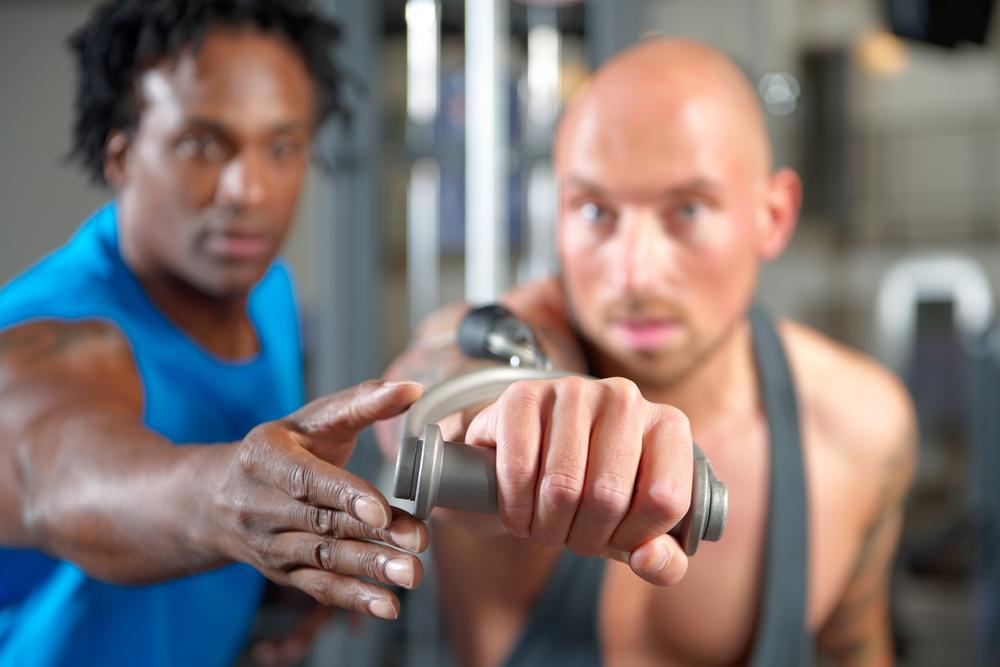
Nearly 90 per cent of all members say they value fitness staff interacting with them / photo: www.shutterstock.com/ Corepics VOF
https://www.leisureopportunities.co.uk/images/392477_58079.jpg
What do your members experience in your club, and how does this impact retention? Dr Melvyn Hillsdon reports
DR MELVYN HILLSDON, ASSOCIATE PROFESSOR OF EXERCISE & HEALTH, EXETER UNIVERSITY,Member experience, retention, Dr Melvyn Hillsdon, TRP 10,000, communication, progress, friend, social
HCM magazine
For every member with a tripod and a big following, there are others irritated at the way equipment is being hogged or wary they’ll be in the background on someone’s Insta feed. Do influencers offer valuable, free marketing or are they just a nuisance? Kath Hudson finds out how operators are responding
HCM magazine
Raphael Cuomo explores the powerful link between addiction, health and behaviour change
HCM magazine
HCM People

Stephen Price

Founder, SP&Co Group
Working in public health over the last few years has lit up parts of my brain again
HCM magazine
Strength training is evolving, driven by changing consumer preferences. Julie Cramer talks to innovators about how their products are meeting this demand
HCM magazine
If the health service is to survive, we must recognise that it is a disease service – and that wellbeing rests with us, says the activity advocate and healthy ageing champion. He talks to Kate Cracknell
HCM promotional features
Sponsored
Find out how your gym can tap into the corporate wellness boom
HCM promotional features
Sponsored
Greg Bradley looks at the shift towards strength training in gyms and advises on how operators can create the ultimate training environment
HCM promotional features
Sponsored
Starpool supports Olympic champion Marcell Jacobs, says Riccardo Turri
HCM promotional features
Sponsored
Third Space partnered with IndigoFitness to deliver a bespoke training space for its new club at The Whiteley
HCM promotional features
Sponsored
SnowDome Fitness has added 50 per cent more space with cutting-edge Technogym solutions
HCM promotional features
Sponsored
David Lloyd is stepping up its commitment to women’s health as it continues to explore what fit-for-purpose looks like for the female population
HCM promotional features
Sponsored
EGYM has opened a new HQ in Paternoster Square, London and revealed a range of new launches
HCM promotional features
Sponsored
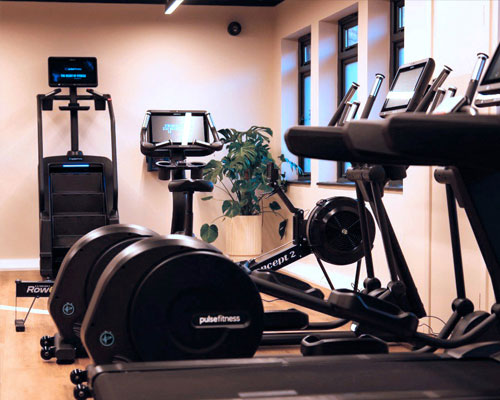
Pulse Fitness has created a new health club delivering an elevated wellness experience
HCM promotional features
Sponsored
Active IQ is calling for greater accountability in online fitness advice with the launch of a new trustmark
HCM promotional features
Latest News
An ambitious women’s only strength and lifting studio concept is set to launch in Dallas this ...
Latest News
Finnish outdoor fitness equipment specialist, Omnigym, has partnered with charity, Emmaüs Solidarité, to launch an ...
Latest News
Virgin Active has officially opened its redesigned Mayfair club, unveiling its latest Social Wellness Club ...
Latest News
Europe’s largest low-cost operator, Basic-Fit, has agreed to acquire 41 Wellyou clubs in Germany for ...
Latest News
Longevity is the most important motivator for today’s exercisers and social connection is key, according ...
Latest News
Until has opened its fourth club at Canary Wharf, in the iconic YY London building. ...
Latest News
Ben Allen has been appointed managing director at Common Bond. Having set the company up ...
Latest News
Les Mills, whose name became synonymous with one of the world's leading fitness brands, has ...
Opinion
promotion
Strength training has moved from the margins to the mainstream.
Opinion: Building smarter strength spaces for today’s operators
Featured supplier news
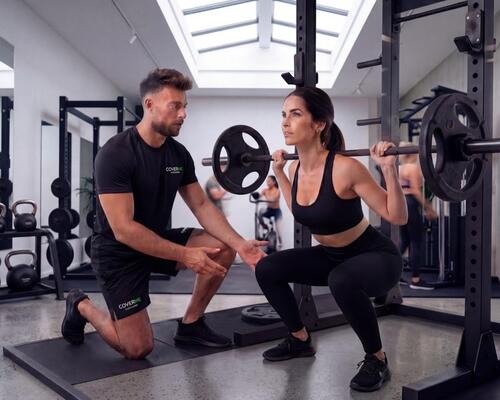
Featured supplier news: CoverMe extends matching service to personal training, rewriting how members and personal trainers connect
CoverMe, the global leader in fitness workforce management, today launches CoverMe PT, an on-demand personal training platform that connects the right personal trainer to the right client in under 10 seconds.
Featured supplier news
Featured supplier news: Cornerstone Connect helps Active Blackpool tackle health inequalities
Active Blackpool is deploying Cornerstone Connect, a new digital interface allowing disparate information from multiple systems to be aggregated into one dataset, to support its focus on reducing health inequalities and improving healthy life expectancy.
Company profiles
Company profile: Everyone Active
Everyone Active's aim is to get communities active, engaged and entertained through our wide-ranging activities ...
Company profiles
Company profile: Pure Energy Music
Pure Energy Music is a specialist music service built specifically for the fitness industry. Our ...
Supplier Showcases
Supplier Showcase - From nightclub to health club
Supplier Showcases
Supplier Showcase - Future-proofing
Catalogue Gallery
Click on a catalogue to view it online
Featured press releases
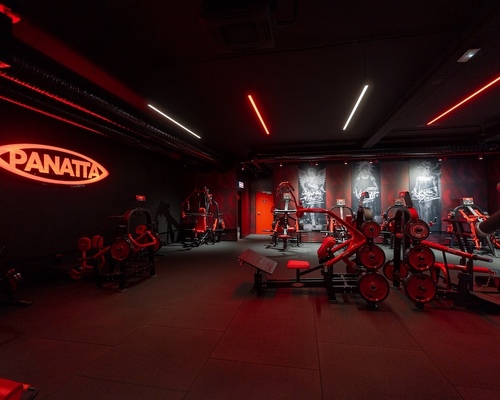
Panatta press release: On Air Fitness chooses Panatta and its Made in Italy fitness equipment
French fitness chain On Air Fitness, with 113 clubs across France and internationally (Spain, Morocco and Portugal) and more than 430,000 members, has chosen to introduce Panatta equipment — a 12-machine circuit from the premium Free Weight Special line —
Featured press releases
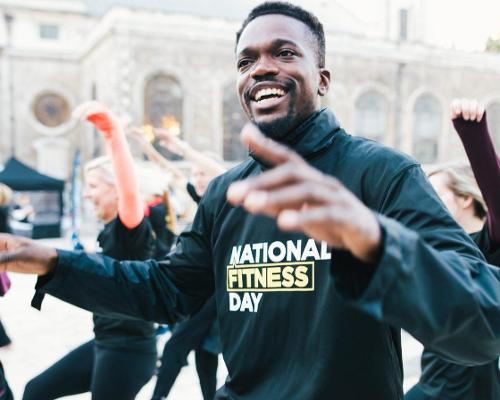
ukactive press release: UK Active announces plans for National Fitness Day 2026
UK Active has announced the details of National Fitness Day 2026, with the flagship campaign set to take place on Wednesday 16 September 2026.
Directory
Fitness tracking platform
SpiviTech: Fitness tracking platform
Lockers
Crown Sports Lockers: Lockers
Spa and beauty equipment
Oakworks Inc: Spa and beauty equipment
Water experiences and hydrotherapy solutions
Aquaform s.r.l.: Water experiences and hydrotherapy solutions
Hot tubs
MSpa International Ltd: Hot tubs
Industrial washing machines
Miele Company Limited: Industrial washing machines
Property & Tenders
Stratford, East London.
Lee Valley Regional Park Authority
Property & Tenders
Y Felinheli, LL56 4QN
Newmark
Property & Tenders
Diary dates
21-24 Sep 2026
The Langham Huntington Pasadena , Pasadena, United States
Diary dates
06-08 Oct 2026
Messe Stuttgart, Stuttgart, Germany
Diary dates
22-22 Oct 2026
QEII Conference Centre, London,
Diary dates
26-29 Oct 2027
Koelnmesse Exhibition Centre, Cologne, Germany
Diary dates

features

What do 10,000 members say?

Do you know what your members do in your club, what their experience is, and how this impacts retention?

By Dr Melvyn Hillsdon , University of Exeter | Published in Health Club Handbook 2015 issue 1
Encourage members to do classes: gym-only members are 56 per cent more likely to cancel / photo: www.shutterstock.com/ breakwavemedia
Prioritising fun and friendship over fitness and thinness would lead to higher levels of retention

What is TRP 10,000?
The TRP 10,000 study examines a range of possible determinants of membership retention in a sample of members of different ages and genders, with a range of experiences of health club membership, and at different stages of their membership. A total of 10,062 members aged 16–84 years, from nearly 200 clubs, completed an online survey between July and September 2013. They answered a wide range of questions covering everything from why they joined, how the club communicates with them, how they use their club, their club experiences, their motives and recent progress. Retention rates were calculated from the questionnaire completion date to the end of January 2014.

Why do people join?
Members cited convenience from home and work, price and opening times as the primary reasons for selecting their current club. Less common reasons given for club selection were type of equipment available and class availability. Only one in 20 members chose their current club because they trusted the brand.

What do they do when they come to the club?
Three-quarters of members stated that their main reason for attending their club was to work out in the gym. Four in 10 attended mainly to do an exercise class, and of those, 74 per cent were female. Just under half of the members attended for a single activity, while a third usually did two activities (typically gym and class). Younger members, those new to the club, or those with a history of multiple club membership were most likely to attend for the gym only.

The risk of cancelling during the seven months of follow-up was 56 per cent higher among gym-only members compared to members who did classes only or who combined gym and classes. This equates to an extra 10 cancelled memberships each month for every 1,000 members.

How do we communicate with them, and what do they value?
The most common forms of member communication are face-to-face via reception or gym staff and through email correspondence. Phone calls, SMS and social media interactions were reported by fewer than 10 per cent of members.

However, fewer than half of members said reception staff spoke to them during their last visit, and only 37 per cent said fitness staff did – this in spite of the fact that nearly 90 per cent of members say they value fitness staff speaking to them.

For all types of communication, only a small proportion of members are receiving the type of communication they say they value, suggesting a lot of unmet demand. In the meantime, around a third of members said they were receiving emails they did not value, indicating that communication strategies need to be better matched to members’ preferences.

Only face-to-face communication was associated with member retention: over 90 per cent of members who reported they regularly received both reception and fitness staff communication retained their membership for the whole of the follow-up period, compared to 80 per cent of members who reported no face-to-face communication.

What are members motivated by, and do they progress?
Nearly six out of 10 members reported being equally motivated to exercise for fitness, appearance, enjoyment and social (friendship) outcomes. Appearance motivation was mainly restricted to younger females, with more males than females being motivated by enjoyment and friendship. Overall, motivation was higher among more frequent club users and younger rather than older members.

Most members reported making at least some progress in the last three months, with feeling fitter and enjoying exercise the most frequently reported measures of progress. Around half of members reported losing weight, with just over a third reporting making a new friend.

Making any progress versus none was associated with better retention, but the most important measure of progress was friendship. Compared to members who did not make a friend, those who did were 40 per cent less likely to cancel their membership.

When all the measures of progress were considered together, making a friend and attending the club as planned were the most important factors. Improved appearance, having more energy and feeling fitter were not related to the risk of cancelling at all. More important was whether members perceived they had made progress on the things they said motivated them to exercise; failure to do so was associated with a considerable increase in the risk of cancelling.

Members who are motivated by the enjoyment of exercise, but who did not find it enjoyable, were 2.3 times more likely to cancel than members who did find it enjoyable, even though they were not motivated by enjoyment. Failure to make progress in fitness and appearance when motivated by these two factors was also associated with an increase in cancellations. Strikingly, members who said they were motivated by appearance, and who perceived improved appearance, still had a higher cancellation rate than members who were not motivated by appearance and did not perceive it had improved.

The findings suggest that failing to achieve one’s goals significantly increases the risk of cancelling, while prioritising fun and friendship over fitness and thinness would lead to higher levels of retention.

Club experiences, both good and bad
Around 45 per cent of members report experiencing ‘hassles’ during their club visits, with just over half of members reporting positive uplifting experiences.

The most commonly reported hassle is not being spoken to by reception or fitness staff. Although less commonly reported (fewer than 15 per cent of members), the most annoying hassles members report are queuing for equipment, cancelled classes, broken down equipment, unclean changing facilities and no parking space.

By contrast, the things members say are most uplifting about their visits are completing a challenging workout, achieving fitness goals, and interaction with reception and fitness staff.

Of all the hassles that members find annoying, just three significantly increase the risk of cancelling: fitness staff not speaking, reception staff not speaking, and queuing for equipment. Members who frequently have to queue for equipment and are not spoken to by fitness staff are more than twice as likely to cancel as members who do not have to queue for equipment and who regularly interact with fitness staff.

Positive uplifts that reduce the risk of cancelling are interaction with reception and fitness staff, along with making new friends at the gym. For every 1,000 members, 16 fewer cancel every month if reception and fitness staff speak to them regularly and they make a friend, compared to members who do not report this – representing a 53 per cent reduction in the risk of cancellation.

Top 10 recommendations

Develop a marketing strategy that conveys fun and friendliness, and prioritise these aspects over fitness and thinness throughout the club.

• Help new members develop realistic expectations and try to focus on intrinsic motivations such as enjoyment and social engagement. Set out a realistic plan for achieving them.

• Encourage and support members to experiment with a wide range of exercise types, and especially group exercise.

• Regularly review members’ progress and revise plans if progress is not being made.

• Ensure exercise programmes are enjoyable above all else.

• Develop a targeted communication strategy that maximises opportunities to interact with members in and out of the club.

• Create a conversation culture in the club: implement methods to maximise and monitor face-to-face communications.

• Minimise the time members queue to use equipment.

• Encourage staff to be aware of member hassles and to understand that they can either compound the problem by ignoring people or alleviate it by simply conversing with members.

• Encourage staff to be aware that the power to delight a customer lies in their willingness to hold a conversation that in turn extends the life of the membership.

FIND OUT MORE

Dr Melvyn Hillsdon is associate professor of exercise and health at the University of Exeter, where he researches physical activity and population health. He’s also a leading authority on retention in the fitness sector, and was responsible for the landmark Winning the Retention Battle report in 2001.

To find out more about TRP 10,000, visit: www.theretentionpeople.com/research/trp-10000

Sign up here to get HCM's weekly ezine and every issue of HCM magazine free on digital.
Members who made a friend at the gym were 40 less likely to cancel than those who didn’t / photo: www.shutterstock.com/ StudioFI
No room at the inn: Having to queue for kit significantly increases the risk of cancelling / photo: www.shutterstock.com/ LuckyImages
Nearly 90 per cent of all members say they value fitness staff interacting with them / photo: www.shutterstock.com/ Corepics VOF
https://www.leisureopportunities.co.uk/images/392477_58079.jpg
What do your members experience in your club, and how does this impact retention? Dr Melvyn Hillsdon reports
DR MELVYN HILLSDON, ASSOCIATE PROFESSOR OF EXERCISE & HEALTH, EXETER UNIVERSITY,Member experience, retention, Dr Melvyn Hillsdon, TRP 10,000, communication, progress, friend, social
Latest News
An ambitious women’s only strength and lifting studio concept is set to launch in Dallas this ...
Latest News
Finnish outdoor fitness equipment specialist, Omnigym, has partnered with charity, Emmaüs Solidarité, to launch an ...
Latest News
Virgin Active has officially opened its redesigned Mayfair club, unveiling its latest Social Wellness Club ...
Latest News
Europe’s largest low-cost operator, Basic-Fit, has agreed to acquire 41 Wellyou clubs in Germany for ...
Latest News
Longevity is the most important motivator for today’s exercisers and social connection is key, according ...
Latest News
Until has opened its fourth club at Canary Wharf, in the iconic YY London building. ...
Latest News
Ben Allen has been appointed managing director at Common Bond. Having set the company up ...
Latest News
Les Mills, whose name became synonymous with one of the world's leading fitness brands, has ...
Latest News
People taking GLP-1 weight loss medications such as Ozempic, Wegovy, Mounjaro and Zepbound may be ...
Latest News
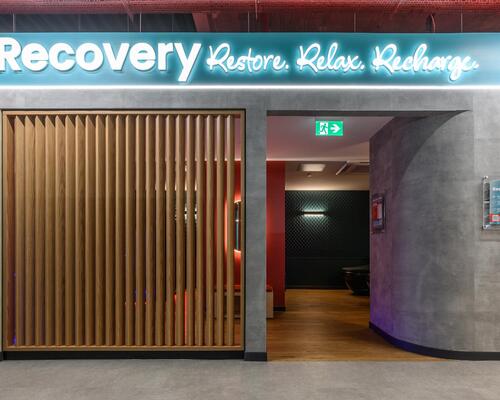
Low-cost gym operator, PureGym, is trialling recovery zones at two of its UK sites, democratising ...
Latest News
In a milestone moment, mental health has become a core part of CIMSPA’s occupational professional ...
Opinion
promotion
Strength training has moved from the margins to the mainstream.
Opinion: Building smarter strength spaces for today’s operators
Featured supplier news
Featured supplier news: CoverMe extends matching service to personal training, rewriting how members and personal trainers connect
CoverMe, the global leader in fitness workforce management, today launches CoverMe PT, an on-demand personal training platform that connects the right personal trainer to the right client in under 10 seconds.
Featured supplier news
Featured supplier news: Cornerstone Connect helps Active Blackpool tackle health inequalities
Active Blackpool is deploying Cornerstone Connect, a new digital interface allowing disparate information from multiple systems to be aggregated into one dataset, to support its focus on reducing health inequalities and improving healthy life expectancy.
Company profiles
Company profile: Everyone Active
Everyone Active's aim is to get communities active, engaged and entertained through our wide-ranging activities ...
Company profiles
Company profile: Pure Energy Music
Pure Energy Music is a specialist music service built specifically for the fitness industry. Our ...
Supplier Showcases
Supplier Showcase - From nightclub to health club
Supplier Showcases
Supplier Showcase - Future-proofing
Catalogue Gallery
Click on a catalogue to view it online
Featured press releases
Panatta press release: On Air Fitness chooses Panatta and its Made in Italy fitness equipment
French fitness chain On Air Fitness, with 113 clubs across France and internationally (Spain, Morocco and Portugal) and more than 430,000 members, has chosen to introduce Panatta equipment — a 12-machine circuit from the premium Free Weight Special line —

Featured press releases
ukactive press release: UK Active announces plans for National Fitness Day 2026
UK Active has announced the details of National Fitness Day 2026, with the flagship campaign set to take place on Wednesday 16 September 2026.
Directory
Fitness tracking platform
SpiviTech: Fitness tracking platform
Lockers
Crown Sports Lockers: Lockers
Spa and beauty equipment
Oakworks Inc: Spa and beauty equipment
Water experiences and hydrotherapy solutions
Aquaform s.r.l.: Water experiences and hydrotherapy solutions
Hot tubs
MSpa International Ltd: Hot tubs
Industrial washing machines
Miele Company Limited: Industrial washing machines
Property & Tenders
Stratford, East London.
Lee Valley Regional Park Authority
Property & Tenders
Y Felinheli, LL56 4QN
Newmark
Property & Tenders
Diary dates
21-24 Sep 2026
The Langham Huntington Pasadena , Pasadena, United States
Diary dates
06-08 Oct 2026
Messe Stuttgart, Stuttgart, Germany
Diary dates
22-22 Oct 2026
QEII Conference Centre, London,
Diary dates
26-29 Oct 2027
Koelnmesse Exhibition Centre, Cologne, Germany
Diary dates
Search news, features & products:
Find a supplier:
Partner sites