





















Follow Health Club Management on Twitter Like Health Club Management on Facebook Join the discussion with Health Club Management on LinkedIn
FITNESS, HEALTH, WELLNESS

features

Statistics: World changing

More than 65,000 people responded to a survey designed to gauge what members want and expect from the sector after lockdown, as Leisure-net’s Dave Monkhouse reports

Published in Health Club Management 2020 issue 5
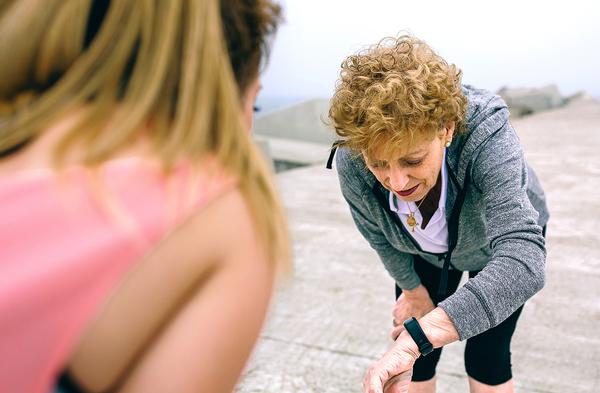
Members ranked motivation provided by staff as the thing they miss the most about their clubs and centres / Friends Stock/shutterstock
People in younger age groups say they are four times more likely to use their centres and clubs more when they open

With the UK’s gym sector closed for business, researchers at Leisure-net set out to establish the impact of the closures on consumers.

Working in partnership with Max Associates and 4Global’s Datahub, the Leisure-net team has produced The National Post Lockdown Recovery Survey, with insight from a sample of over 65,000 consumers, gathered through numerous channels.

The research has thrown up a number of key findings that will orientate operators as we head out of lockdown.

Background
The lockdown has been an unprecedented event for the leisure, health and fitness sectors, and presented major challenges financially and operationally.

The next stage in this fast moving situation is how and when centres and clubs reopen to a public cautious about what is safe and what isn’t, and unsure about their next steps.

This research aims to help inform the sector as to how their customers are feeling. The results will help the sector understand what customers were doing before lockdown, how their activity levels have changed and their desires and views for re-opening.

It also offers considerable insight to assist local authorities and industry organisations who are supporting the sector to reopen, as well as informing challenging decisions about services and provision going forward.

The sample
Of the 65,000 people surveyed, 44.1 per cent reported being gym or fitness users (27,915); 27.8 per cent said they favour group exercise (17,589), 21 per cent reported swimming (13,730), 1.375 per cent sports such as football and squash (1,375). The ‘other’ category was 4.2 per cent (2,647).

Activity during lockdown
When questioned, 21.6 per cent of members and customers reported being more active or significantly more active during lockdown and 26.5 per cent ‘about the same’, making a score on the positive side of 48.1 per cent.

In the other camp, 33 per cent said they had been less active and 19 per cent significantly less active, making a negative score of 52 per cent, and with this inactivity being weighted more towards gym users and swimmers.

In the ‘more active’ camp, most of the additional activity was undertaken by people in the 45-64 year old age groups.

Women have been more active than men with 24 per cent of them saying they’ve undertaken more activity compared to 18 per cent of men.

Attendance and expenditure
In a major headline figure for operators, 88 per cent of people said they will use facilities more or the same when they reopen, with only 8 per cent saying they will use them less and 4 per cent saying they will not return. it seems absence has made the heart grow fonder.

Given the likely state of the economy, responses to the question on spending show a solid 82.3 per cent are prepared to spend the same on being active and 7.5 per cent are prepared to spend more, making a total of 89.8 per cent. Only 10.2 per cent said they intend to spend less money. However, this may not mean a full cut of that goes to facility operators.

While men and women are very similar in terms of reporting, people in younger age groups are four times more likely to use centres and clubs more when they open, compared to the oldest age groups.

Changing behaviours
There are a number of other analyses to be gained from looking at the data.

While 5.6 per cent of respondents say they are significantly more active now, 69 per cent of them state that they will use facilities the same or more upon their return.

However, 22 per cent of this group say they will spend less money on activity.

By contrast, although 19 per cent of respondents say they are significantly less active now, 92 per cent of these people say they will return to use centres at the same regularity or possibly more after lockdown is lifted. 

It appears those that are more active now are finding alternative forms of exercise, by undertaking their own activity either indoors or outside and intending to continue this in the future, while those who have been less active are waiting for their leisure centres and clubs to re-open.

Lisa Forsyth, director of Max Associates, says: “In the period after reopening with social distancing, operators will have to consider how they facilitate this additional demand from members.

“Capacities are likely to be reduced, while operators are also working to ‘regrow’ income from those members that cancel.

“Local authorities that can activate their parks and green spaces and provide good routes for active transport may be able to entice the self-motivated outdoors, providing space for those who prefer motivation from instructors and social aspects of the gym and classes.”

Responses by social groups
People from more deprived socio-economic groups report that they are going to value and use their leisure centres and clubs more than customers from higher socio-economic groups.

When comparing responses, they stated they’re significantly likely to use their leisure centre or health club more when it reopens.

This is a real area of opportunity, as these groups are currently under-represented in most leisure centres and health clubs.

If we can turn this sentiment into action and keep these people motivated and using facilities, then something positive will have come out of this pandemic.

The importance of staff
Staff guidance and support is going to be even more important going forward. This is particularly true for customers in older age groups, where 70 per cent stated this is ‘very important’.

Combine this with the fact that ‘motivation from staff’ is the number one element that customers are missing while away from their centres and clubs and it shows that the sector really needs to focus on getting the customer experience spot on during the return and recovery period.

In fact the team is the biggest thing members and customers missed by quite some margin when you combine ‘missing motivation from gym and class instructors’ at 45.8 per cent with ‘missing instruction from sports and swimming coaches’ at 11.1 per cent, making a total of 59.6 per cent.

This number is followed by socialising at 33.3 per cent and competitive sport at 12.8 per cent.

Sex differences
Gender differences are very clear. Women are much more cautious about coming back and particularly concerned about cleanliness. When they do come back they’ll be looking for motivation, support and instruction, while for men the return to the gym is much more about the opportunity to socialise again.

Age differences
This lockdown and shutdown period seems to have strengthened differences between the attitudes and perceptions of younger and older age groups in relation to their clubs and centres – they have different feelings about coming back and whether they will value their centres/clubs more and use them more.

They’re also worried about different things when coming back and looking for very different experiences. For example 93 per cent of 65-74-year-olds stated that cleanliness was ‘very important’ to them, compared to only 86 per cent of 15-24 year olds. This means our ‘age-related’ offerings need to be even more targeted.

Summary
There’s no disputing the numbers. According to 76.1 per cent of respondents to The National Post Lockdown Recovery Survey, the value of facilities to communities, including the social interaction and motivation provided is fundamental.

However, with a new focus on health, as well as physical activity, it’s up to us now to deliver. Programming needs to reflect this changing environment and a combination of virtual, online, in person and wider community-based activities now need to be part of the total offer.

As Chris Philips from 4Global explained: “Data will be critical in the new physical activity sector we’re gearing up to open.

“Local data, sector scenario models, shared best practice and informed intelligence will help us all to make smart, data driven-decisions for our sector.”

One thing is clear, opening with the same offering we had before COVID-19 is not an option. We need to take this opportunity to re-think what we provide, and when and how we deliver it, to ensure we engage not only with our current customers, but also with a new and more diverse customer base going forward.

Get the report:
To get a free copy of the summary report or order a copy of the full report (£100 + VAT) – or to find out about Bounce Back services provided by Leisure-net and its partners, contact [email protected]

The National Post Lockdown Recovery Survey
How much will they use clubs?

89% more
8% less

What they missed

45.8% motivation
30.3% socialising

What’s important on returning?

31% cleanliness
25% social distancing
22% friendly staff
22% staff guidance

Activity levels in lockdown

52% less
48% same or more

Source: http://www.Leisure-net.org

Sign up here to get HCM's weekly ezine and every issue of HCM magazine free on digital.
Around 70 per cent of consumers said they were more likely to join a club if it had a digital offering / Jacob Lund/shutterstock
Operators can harness the outdoors by organising running clubs and outdoor workouts to increase capacity / Prostock-studio/shutterstock
Women in the 45-64 year old age group were the most physically active cohort during lockdown / David Pereiras/shutterstock
https://www.leisureopportunities.co.uk/images/2020/294801_527525.jpg
In a recent survey of 65,000, members ranked motivation provided by staff as the thing they miss the most about their clubs and centres
Leisure-net, National post lockdown recovery survey, 4Global, Max Associates,fitness industry, COVID-19
HCM magazine
Small improvements to sleep, diet and physical activity have major benefits for the heart, according to new research from the University of Sydney
HCM magazine
If the health service is to survive, we must recognise that it is a disease service – and that wellbeing rests with us, says the activity advocate and healthy ageing champion. He talks to Kate Cracknell
HCM magazine
HCM People

Stephen Price

Founder, SP&Co Group
Working in public health over the last few years has lit up parts of my brain again
HCM magazine
I experienced a blissful feeling of joy I hadn’t felt since I was a kid
HCM magazine
Raphael Cuomo explores the powerful link between addiction, health and behaviour change
HCM promotional features
Sponsored
Starpool supports Olympic champion Marcell Jacobs, says Riccardo Turri
HCM promotional features
Sponsored
Greg Bradley looks at the shift towards strength training in gyms and advises on how operators can create the ultimate training environment
HCM promotional features
Sponsored
SnowDome Fitness has added 50 per cent more space with cutting-edge Technogym solutions
HCM promotional features
Sponsored
Third Space partnered with IndigoFitness to deliver a bespoke training space for its new club at The Whiteley
HCM promotional features
Sponsored
David Lloyd is stepping up its commitment to women’s health as it continues to explore what fit-for-purpose looks like for the female population
HCM promotional features
Sponsored
Find out how your gym can tap into the corporate wellness boom
HCM promotional features
Sponsored
EGYM has opened a new HQ in Paternoster Square, London and revealed a range of new launches
HCM promotional features
Sponsored
Active IQ is calling for greater accountability in online fitness advice with the launch of a new trustmark
HCM promotional features
Sponsored
New launch, Salus House, elevates boutique wellness with high service levels and a partnership with Technogym
HCM promotional features
Latest News
People taking GLP-1 weight loss medications such as Ozempic, Wegovy, Mounjaro and Zepbound may be ...
Latest News
Low-cost gym operator, PureGym, is trialling recovery zones at two of its UK sites, democratising ...
Latest News
In a milestone moment, mental health has become a core part of CIMSPA’s occupational professional ...
Latest News
US high-value, low-price chain, Eos Fitness, has announced plans to pilot reformer Pilates in three ...
Latest News
Preventive healthcare company Neko Health has added body composition analysis to its full-body health scan ...
Latest News
Chequan Lewis is the new CEO of Crunch Fitness, taking over from Jim Rowley, who ...
Latest News
Sea Lanes Canary Wharf has officially opened. The 50-metre, six-lane pool, which uses the natural ...
Latest News
London-based high-performance fitness club, ONE LDN, is raising funds for a multi-site expansion across London, ...
Opinion
promotion
Strength training has moved from the margins to the mainstream.
Opinion: Building smarter strength spaces for today’s operators
Featured supplier news
Featured supplier news: Supporting long-term health: why whole body vibration belongs in clinical settings
As healthcare continues to shift towards prevention, there’s a growing focus on helping people stay active, independent and feeling good for longer.
Featured supplier news
Featured supplier news: Reaching the people most gyms miss: Bedford Gym & Swim Campaign delivers 410 new members
One of the biggest mistakes the fitness industry still makes is advertising almost exclusively to people who already look and live like gym members.
Company profiles
Company profile: Fold
Fold is the company behind the UK's leading at home foldable reformer pilates bed, bringing ...
Company profiles
Company profile: GLL
GLL
As the UK’s leading provider of both leisure centres and libraries we operate 379 locations ...
Supplier Showcases
Supplier Showcase - From nightclub to health club
Supplier Showcases
Supplier Showcase - Future-proofing
Catalogue Gallery
Click on a catalogue to view it online
Featured press releases
Swim England press release: Swim England launches new Learn to Swim Growth Plan to support aquatic programme expansion
Swim England has strengthened its sector-leading Business Solutions offer with the launch of its Learn to Swim Growth Plan, designed to help aquatic providers unlock sustainable programme growth.
Featured press releases
CoverMe Ltd press release: CoverMe and Jobs In. Fitness partner to create end-to-end talent solution
CoverMe, the UK’s leading fitness workforce management and recruitment platform, has partnered with Jobs In. Fitness, the specialist executive search and advisory firm for the fitness and wellbeing sector, to give operators a single route to talent at every level – from frontline staffing to C-suite.
Directory
Water experiences and hydrotherapy solutions
Aquaform s.r.l.: Water experiences and hydrotherapy solutions
Lockers
Crown Sports Lockers: Lockers
Hot tubs
MSpa International Ltd: Hot tubs
Spa and beauty equipment
Oakworks Inc: Spa and beauty equipment
Industrial washing machines
Miele Company Limited: Industrial washing machines
Fitness tracking platform
SpiviTech: Fitness tracking platform
Property & Tenders
Stratford, East London.
Lee Valley Regional Park Authority
Property & Tenders
Y Felinheli, LL56 4QN
Newmark
Property & Tenders
Diary dates
21-24 Sep 2026
The Langham Huntington Pasadena , Pasadena, United States
Diary dates
06-08 Oct 2026
Messe Stuttgart, Stuttgart, Germany
Diary dates
22-22 Oct 2026
QEII Conference Centre, London,
Diary dates
26-29 Oct 2027
Koelnmesse Exhibition Centre, Cologne, Germany
Diary dates

features

Statistics: World changing

More than 65,000 people responded to a survey designed to gauge what members want and expect from the sector after lockdown, as Leisure-net’s Dave Monkhouse reports

Published in Health Club Management 2020 issue 5
Members ranked motivation provided by staff as the thing they miss the most about their clubs and centres / Friends Stock/shutterstock
People in younger age groups say they are four times more likely to use their centres and clubs more when they open

With the UK’s gym sector closed for business, researchers at Leisure-net set out to establish the impact of the closures on consumers.

Working in partnership with Max Associates and 4Global’s Datahub, the Leisure-net team has produced The National Post Lockdown Recovery Survey, with insight from a sample of over 65,000 consumers, gathered through numerous channels.

The research has thrown up a number of key findings that will orientate operators as we head out of lockdown.

Background
The lockdown has been an unprecedented event for the leisure, health and fitness sectors, and presented major challenges financially and operationally.

The next stage in this fast moving situation is how and when centres and clubs reopen to a public cautious about what is safe and what isn’t, and unsure about their next steps.

This research aims to help inform the sector as to how their customers are feeling. The results will help the sector understand what customers were doing before lockdown, how their activity levels have changed and their desires and views for re-opening.

It also offers considerable insight to assist local authorities and industry organisations who are supporting the sector to reopen, as well as informing challenging decisions about services and provision going forward.

The sample
Of the 65,000 people surveyed, 44.1 per cent reported being gym or fitness users (27,915); 27.8 per cent said they favour group exercise (17,589), 21 per cent reported swimming (13,730), 1.375 per cent sports such as football and squash (1,375). The ‘other’ category was 4.2 per cent (2,647).

Activity during lockdown
When questioned, 21.6 per cent of members and customers reported being more active or significantly more active during lockdown and 26.5 per cent ‘about the same’, making a score on the positive side of 48.1 per cent.

In the other camp, 33 per cent said they had been less active and 19 per cent significantly less active, making a negative score of 52 per cent, and with this inactivity being weighted more towards gym users and swimmers.

In the ‘more active’ camp, most of the additional activity was undertaken by people in the 45-64 year old age groups.

Women have been more active than men with 24 per cent of them saying they’ve undertaken more activity compared to 18 per cent of men.

Attendance and expenditure
In a major headline figure for operators, 88 per cent of people said they will use facilities more or the same when they reopen, with only 8 per cent saying they will use them less and 4 per cent saying they will not return. it seems absence has made the heart grow fonder.

Given the likely state of the economy, responses to the question on spending show a solid 82.3 per cent are prepared to spend the same on being active and 7.5 per cent are prepared to spend more, making a total of 89.8 per cent. Only 10.2 per cent said they intend to spend less money. However, this may not mean a full cut of that goes to facility operators.

While men and women are very similar in terms of reporting, people in younger age groups are four times more likely to use centres and clubs more when they open, compared to the oldest age groups.

Changing behaviours
There are a number of other analyses to be gained from looking at the data.

While 5.6 per cent of respondents say they are significantly more active now, 69 per cent of them state that they will use facilities the same or more upon their return.

However, 22 per cent of this group say they will spend less money on activity.

By contrast, although 19 per cent of respondents say they are significantly less active now, 92 per cent of these people say they will return to use centres at the same regularity or possibly more after lockdown is lifted. 

It appears those that are more active now are finding alternative forms of exercise, by undertaking their own activity either indoors or outside and intending to continue this in the future, while those who have been less active are waiting for their leisure centres and clubs to re-open.

Lisa Forsyth, director of Max Associates, says: “In the period after reopening with social distancing, operators will have to consider how they facilitate this additional demand from members.

“Capacities are likely to be reduced, while operators are also working to ‘regrow’ income from those members that cancel.

“Local authorities that can activate their parks and green spaces and provide good routes for active transport may be able to entice the self-motivated outdoors, providing space for those who prefer motivation from instructors and social aspects of the gym and classes.”

Responses by social groups
People from more deprived socio-economic groups report that they are going to value and use their leisure centres and clubs more than customers from higher socio-economic groups.

When comparing responses, they stated they’re significantly likely to use their leisure centre or health club more when it reopens.

This is a real area of opportunity, as these groups are currently under-represented in most leisure centres and health clubs.

If we can turn this sentiment into action and keep these people motivated and using facilities, then something positive will have come out of this pandemic.

The importance of staff
Staff guidance and support is going to be even more important going forward. This is particularly true for customers in older age groups, where 70 per cent stated this is ‘very important’.

Combine this with the fact that ‘motivation from staff’ is the number one element that customers are missing while away from their centres and clubs and it shows that the sector really needs to focus on getting the customer experience spot on during the return and recovery period.

In fact the team is the biggest thing members and customers missed by quite some margin when you combine ‘missing motivation from gym and class instructors’ at 45.8 per cent with ‘missing instruction from sports and swimming coaches’ at 11.1 per cent, making a total of 59.6 per cent.

This number is followed by socialising at 33.3 per cent and competitive sport at 12.8 per cent.

Sex differences
Gender differences are very clear. Women are much more cautious about coming back and particularly concerned about cleanliness. When they do come back they’ll be looking for motivation, support and instruction, while for men the return to the gym is much more about the opportunity to socialise again.

Age differences
This lockdown and shutdown period seems to have strengthened differences between the attitudes and perceptions of younger and older age groups in relation to their clubs and centres – they have different feelings about coming back and whether they will value their centres/clubs more and use them more.

They’re also worried about different things when coming back and looking for very different experiences. For example 93 per cent of 65-74-year-olds stated that cleanliness was ‘very important’ to them, compared to only 86 per cent of 15-24 year olds. This means our ‘age-related’ offerings need to be even more targeted.

Summary
There’s no disputing the numbers. According to 76.1 per cent of respondents to The National Post Lockdown Recovery Survey, the value of facilities to communities, including the social interaction and motivation provided is fundamental.

However, with a new focus on health, as well as physical activity, it’s up to us now to deliver. Programming needs to reflect this changing environment and a combination of virtual, online, in person and wider community-based activities now need to be part of the total offer.

As Chris Philips from 4Global explained: “Data will be critical in the new physical activity sector we’re gearing up to open.

“Local data, sector scenario models, shared best practice and informed intelligence will help us all to make smart, data driven-decisions for our sector.”

One thing is clear, opening with the same offering we had before COVID-19 is not an option. We need to take this opportunity to re-think what we provide, and when and how we deliver it, to ensure we engage not only with our current customers, but also with a new and more diverse customer base going forward.

Get the report:
To get a free copy of the summary report or order a copy of the full report (£100 + VAT) – or to find out about Bounce Back services provided by Leisure-net and its partners, contact [email protected]

The National Post Lockdown Recovery Survey
How much will they use clubs?

89% more
8% less

What they missed

45.8% motivation
30.3% socialising

What’s important on returning?

31% cleanliness
25% social distancing
22% friendly staff
22% staff guidance

Activity levels in lockdown

52% less
48% same or more

Source: http://www.Leisure-net.org

Sign up here to get HCM's weekly ezine and every issue of HCM magazine free on digital.
Around 70 per cent of consumers said they were more likely to join a club if it had a digital offering / Jacob Lund/shutterstock

Operators can harness the outdoors by organising running clubs and outdoor workouts to increase capacity / Prostock-studio/shutterstock
Women in the 45-64 year old age group were the most physically active cohort during lockdown / David Pereiras/shutterstock
https://www.leisureopportunities.co.uk/images/2020/294801_527525.jpg
In a recent survey of 65,000, members ranked motivation provided by staff as the thing they miss the most about their clubs and centres
Leisure-net, National post lockdown recovery survey, 4Global, Max Associates,fitness industry, COVID-19
Latest News
People taking GLP-1 weight loss medications such as Ozempic, Wegovy, Mounjaro and Zepbound may be ...
Latest News
Low-cost gym operator, PureGym, is trialling recovery zones at two of its UK sites, democratising ...
Latest News
In a milestone moment, mental health has become a core part of CIMSPA’s occupational professional ...
Latest News
US high-value, low-price chain, Eos Fitness, has announced plans to pilot reformer Pilates in three ...
Latest News
Preventive healthcare company Neko Health has added body composition analysis to its full-body health scan ...
Latest News
Chequan Lewis is the new CEO of Crunch Fitness, taking over from Jim Rowley, who ...
Latest News
Sea Lanes Canary Wharf has officially opened. The 50-metre, six-lane pool, which uses the natural ...
Latest News
London-based high-performance fitness club, ONE LDN, is raising funds for a multi-site expansion across London, ...
Latest News
A new brain clinic has opened in London, which uses non-invasive brain stimulation to treat ...
Latest News
Good Boost’s digital exercise programmes are helping adults with MSK at a lower cost than ...
Latest News
With Prime Minister, Keir Starmer, announcing his resignation this morning and Andy Burnham as a ...
Opinion
promotion
Strength training has moved from the margins to the mainstream.
Opinion: Building smarter strength spaces for today’s operators
Featured supplier news
Featured supplier news: Supporting long-term health: why whole body vibration belongs in clinical settings
As healthcare continues to shift towards prevention, there’s a growing focus on helping people stay active, independent and feeling good for longer.
Featured supplier news
Featured supplier news: Reaching the people most gyms miss: Bedford Gym & Swim Campaign delivers 410 new members
One of the biggest mistakes the fitness industry still makes is advertising almost exclusively to people who already look and live like gym members.
Company profiles
Company profile: Fold
Fold is the company behind the UK's leading at home foldable reformer pilates bed, bringing ...
Company profiles
Company profile: GLL
GLL
As the UK’s leading provider of both leisure centres and libraries we operate 379 locations ...
Supplier Showcases
Supplier Showcase - From nightclub to health club
Supplier Showcases
Supplier Showcase - Future-proofing
Catalogue Gallery
Click on a catalogue to view it online
Featured press releases
Swim England press release: Swim England launches new Learn to Swim Growth Plan to support aquatic programme expansion
Swim England has strengthened its sector-leading Business Solutions offer with the launch of its Learn to Swim Growth Plan, designed to help aquatic providers unlock sustainable programme growth.
Featured press releases
CoverMe Ltd press release: CoverMe and Jobs In. Fitness partner to create end-to-end talent solution
CoverMe, the UK’s leading fitness workforce management and recruitment platform, has partnered with Jobs In. Fitness, the specialist executive search and advisory firm for the fitness and wellbeing sector, to give operators a single route to talent at every level – from frontline staffing to C-suite.
Directory
Water experiences and hydrotherapy solutions
Aquaform s.r.l.: Water experiences and hydrotherapy solutions
Lockers
Crown Sports Lockers: Lockers
Hot tubs
MSpa International Ltd: Hot tubs
Spa and beauty equipment
Oakworks Inc: Spa and beauty equipment
Industrial washing machines
Miele Company Limited: Industrial washing machines
Fitness tracking platform
SpiviTech: Fitness tracking platform
Property & Tenders
Stratford, East London.
Lee Valley Regional Park Authority
Property & Tenders
Y Felinheli, LL56 4QN
Newmark
Property & Tenders
Diary dates
21-24 Sep 2026
The Langham Huntington Pasadena , Pasadena, United States
Diary dates
06-08 Oct 2026
Messe Stuttgart, Stuttgart, Germany
Diary dates
22-22 Oct 2026
QEII Conference Centre, London,
Diary dates
26-29 Oct 2027
Koelnmesse Exhibition Centre, Cologne, Germany
Diary dates
Search news, features & products:
Find a supplier:
Partner sites