

























EGYM
EGYM
EGYM
Follow Health Club Management on Twitter Like Health Club Management on Facebook Join the discussion with Health Club Management on LinkedIn
FITNESS, HEALTH, WELLNESS

features

Research: The lay of the land

Five months after the start of lockdown, Leisure-net did a survey to gauge how public sector operators and industry suppliers are faring

Published in Health Club Management 2020 issue 8
Trusts and external partner organisations have cut services significantly more than local authorities / Dmytro Zinkevych/shutterstock
Perhaps a ‘federal’ approach that sees local trusts retained, but with shared back of house services is the way forward?

The UK’s public leisure sector has faced unprecedented challenges this year. Lockdown and social distancing measures since government restrictions eased have placed immense financial pressure on local authority leisure, sport and activity providers.

In an attempt to understand just how the public sector is faring, Leisure-net Solutions surveyed operators across the UK as part of its Industry Confidence Survey series.

An inaugural survey had been undertaken at the start of lockdown in March and provided insight into how the sector was feeling. Five months on, this follow-up survey once again gauged views to determine how confident public sector operators feel about the future and whether their situation is improving or deteriorating now facilities are starting to reopen.

The second survey elicited twice as many responses as the first, so when comparing the March survey results with the latest one, it’s important to note that the results will be affected by the different samples, however, the analysis shows useful trends.

Trusts hit harder than councils
Public sector operators have been significantly affected by the pandemic, with 88 per cent of them saying the impact has been extreme.
They’ve adopted a number of measures in response, the most common of which are reducing capacity, moving to online-only booking systems and cutting opening hours.

The data shows that three quarters (75 per cent) of external partners – organisations operating more than two contracts on behalf of local authorities – and just over half (56 per cent) of leisure trusts have made staff redundancies, compared to only 13 per cent of local authorities.

Adopting technology
External partners and leisure trusts have been much more active in reducing opening hours and permanently closing sites/services than local authorities. They are also more ready to adopt new digital offerings, with 75 per cent of external partners and 72 per cent of trusts looking to invest in technology, compared to just 38 per cent of local authorities.

The majority of operators (83 per cent) believe the impact of COVID-19 will be extremely significant in the short-term, up from just 17 per cent in March, while 48 per cent believe this impact will be sustained in the medium term, compared to 34 per cent in March.

Long term prospects
In the long-term, 76 per cent of operators believe the pandemic will significantly impact business. Leisure trusts appear to be most worried about the impact of COVID-19 in the short- to medium-term, although only a third (33 per cent) believe it will be extremely significant in the long term, leaving 67 per cent who feel more positive about longer-term prospects.

The majority of public sector operators – around 60 per cent – are confident their business will survive the next 12 months, with 40 per cent less certain.

Suppliers are more optimistic
With their ability to trade with the more buoyant private sector and also direct to consumers – in some cases – Leisure-net found suppliers far more optimistic.

Only 39 per cent reported the impact of the pandemic had been extreme, while 75 per cent said they didn’t think it would have a long-term impact on their business. In addition, 89 per cent said they still expect to be in business next year.

To order a copy of the report, email: [email protected]

A call to action #WorkOutToHelpOut
Survey respondents say it’s time for government to act

The Leisure-net UK research surveyed happiness levels among public sector operators and commercial suppliers in relation to the support and advice received from industry organisations and also from government, throughout the crisis.

In relation to support from industry associations, operators are much happier than suppliers with the support, with 40 per cent saying they’re extremely happy, compared with just 21 per cent of suppliers.

By contrast, levels of happiness with the support and advice received by government have declined steeply, with 67 per cent of both operators and suppliers saying they are not at all happy – from 19 per cent in March.

The sector believes the government needs to provide support to ensure its survival. Some suggest support packages such as an equivalent to the UK government’s campaign, #EatOutToHelpOut – with incentives encouraging people to get fit and boost their immunity to protect against the virus.

Whatever this support is, it needs to happen soon, say operators.

"We need government to step up and save recreation, leisure and health buildings"

"Government support for the industry needs swift commitment and longevity in the event of future lockdown situations, to enable businesses to plan properly for the longer term and be realistic about what products, services and assets are viable"

"Sport and physical activity need to be identified as a preventative measure – for physical and mental health conditions – and awarded recognition in terms of funding, priority and status"

Some learn to swim lessons may be lost, say operators / Shutterstock
Precarious position
Leisure-net found some public sector operators are facing tough challenges

The qualitative feedback received from respondents provides greater insight into the status of public leisure operators.

One of their chief concerns is their ability to withstand any future outbreaks of COVID-19 while they also report that a lack of investment in community facilities is likely to result in the loss of key services, hitting those who depend on these services the hardest.

One of the few positives to come out of the situation is that it has encouraged the sector to think differently, with one operator saying: “Whilst the impact has been severe, one upside is that it has challenged us to bring in new ways of working and technology that will be a positive for the future.

“The pressure is to get through the here and now before we start rebuilding again.”

Another commented,“We will have to invent our own ‘new norm’ and build from there.”

Lockdown and government restrictions implemented since centres have reopened have left them in a vulnerable position, as these comments show:

"We have a plan that will work for the time being, but there is no certainty that the government interventions will get us back to a normal situation. Thus, our fiscal situation will be unlikely to improve"

"I worry that operating under social distancing restrictions will continue for much longer than we anticipated – perhaps to mid-2021. Operating in these conditions is fundamentally a massive shrink in our business, and we still lose money every month in this scenario. It’s not viable to carry current levels of fixed costs for this length of time"

"We’ve been fortunate that we held some reserves and this money has been used to cover ongoing costs. However, we own our building and any repairs and breakdowns must be funded by ourselves. We feel that we have survived so far, but if we have a major structural problem in the next six months, we could face significant issues"

"The lockdown and heavy financial costs mean our contributions towards replacing a swimming pool have had to cease and delays will mean increased costs and potentially a threat of not being able to replace the pool before its scheduled closure in 2025"

"The ongoing fiscal situation will mean capital sums are harder to get and this may jeopardise plans"

"This is going to affect ordinary people and our grassroots organisations and may permanently alter or diminish their purpose in communities. When it comes to things like sports clubs, the options for learning to swim and back to health and health referral schemes, we’ll have to focus on the commercial work that underpins these first, to the detriment of those services"


Respondents say commercial work will need to be the priority, to the detriment of community initiatives
Why leisure trusts feel more vulnerable than other operators
Andy King, CEO of Link4Life gives insights into the pressures being felt by trusts running local authority contracts

Many leisure trusts have reached the bottom of the well after making efficiencies and focusing on reducing management fees, instead of building up reserves.

We’re acutely aware of the local situation and the demographics we serve and with some people losing what were often already low-paid jobs, users will be hard pressed to pay for leisure in the future, even with the generous targeted subsidies we all offer.

Research such as the Quest NBS (National Benchmark Survey) has shown that trusts often out-perform other providers in terms of efficiencies, but when a trust stands its ground and says it cannot do any more without capital investment, it’s tempting for the client to reach for the procurement toolkit, because bigger must be better, right?

The drive to be ever more efficient means that development teams, nutritionists and outreach workers are sometimes jettisoned, despite the ‘method statements’ submitted as part of a bid. Prices creep up, clubs are squeezed out and the people who need access to our services suffer most.

I believe passionately that there’s a place for larger organisations, and that collaboration is essential – not just between trusts but the entire public leisure sector – as we do across GM Active (Greater Manchester).

Having been a regional director of GLL, a director of Serco, the CEO of two trusts that merged and now the CEO of a standalone, single local authority partner, I can say that all models have strengths and weaknesses.

Local authorities decide which model they want and we have to respect their choices and work together across the public leisure sector to be more efficient and effective. Perhaps a ‘federal’ approach that sees local trusts retained but with shared back of house services is the way forward?
Sign up here to get HCM's weekly ezine and every issue of HCM magazine free on digital.
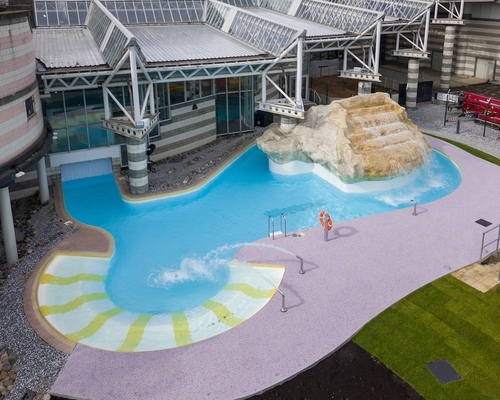
External partners and trusts are more likely to adopt digital offerings / Everyone on demand/everyone active
https://www.leisureopportunities.co.uk/images/2020/408849_307286.jpg
Five months after the start of lockdown, Leisure-net Solutions surveyed the public leisure sector to gauge how its faring
Leisure-net, survey, lockdown,covid-19, Andy King, Link4Life,public sector, leisure trusts
HCM magazine
HCM People

Jamie Clements

The Breath Coach
I experienced a blissful feeling of joy I hadn’t felt since I was a kid
HCM magazine
Raphael Cuomo explores the powerful link between addiction, health and behaviour change
HCM magazine
HCM People

Stephen Price

Founder, SP&Co Group
Working in public health over the last few years has lit up parts of my brain again
HCM magazine
Strength training is evolving, driven by changing consumer preferences. Julie Cramer talks to innovators about how their products are meeting this demand
HCM magazine
If the health service is to survive, we must recognise that it is a disease service – and that wellbeing rests with us, says the activity advocate and healthy ageing champion. He talks to Kate Cracknell
HCM promotional features
Sponsored
SnowDome Fitness has added 50 per cent more space with cutting-edge Technogym solutions
HCM promotional features
Sponsored
Starpool supports Olympic champion Marcell Jacobs, says Riccardo Turri
HCM promotional features
Sponsored
Greg Bradley looks at the shift towards strength training in gyms and advises on how operators can create the ultimate training environment
HCM promotional features
Sponsored
David Lloyd is stepping up its commitment to women’s health as it continues to explore what fit-for-purpose looks like for the female population
HCM promotional features
Sponsored
Third Space partnered with IndigoFitness to deliver a bespoke training space for its new club at The Whiteley
HCM promotional features
Sponsored
Find out how your gym can tap into the corporate wellness boom
HCM promotional features
Sponsored
EGYM has opened a new HQ in Paternoster Square, London and revealed a range of new launches
HCM promotional features
Sponsored
New launch, Salus House, elevates boutique wellness with high service levels and a partnership with Technogym
HCM promotional features
Sponsored
Active IQ is calling for greater accountability in online fitness advice with the launch of a new trustmark
HCM promotional features
Latest News
PureGym Group has announced that group chief financial officer, Alex Wood, is taking over the ...
Latest News
Independent operator, Fitness Worx Gyms, is introducing private blood testing as a service to members. ...
Latest News
International industry lobbying associations are calling for physical activity and strength training to be deeply ...
Latest News
Global group exercise specialist, Les Mills, is inviting operators to sign up to its Workout ...
Latest News
Global luxury hospitality brand, Six Senses, has partnered with longevity healthcare provider, HUM2N, to launch ...
Latest News
Premium London health club, KX Chelsea, is gearing up to unveil its most significant redevelopment ...
Latest News
Researchers in the US have identified an antibody which could greatly reduce the loss of ...
Latest News
Peloton has made the strategic acquisition of Pilates start-up, Skōp, to support the expansion of ...
Opinion
promotion
Strength training has moved from the margins to the mainstream.
Opinion: Building smarter strength spaces for today’s operators
Featured supplier news
Featured supplier news: Reaching the people most gyms miss: Bedford Gym & Swim Campaign delivers 410 new members
One of the biggest mistakes the fitness industry still makes is advertising almost exclusively to people who already look and live like gym members.
Featured supplier news
Featured supplier news: CoverMe extends matching service to personal training, rewriting how members and personal trainers connect
CoverMe, the global leader in fitness workforce management, today launches CoverMe PT, an on-demand personal training platform that connects the right personal trainer to the right client in under 10 seconds.
Company profiles
Company profile: Myzone
Myzone is a global pioneer of Motivation Technology (MoTech), redefining fitness by turning behavioural science ...
Company profiles
Company profile: GymNation
Ranging from 25,000 to 60,000 square feet, GymNation is open 24/7, 365 days a year ...
Supplier Showcases
Supplier Showcase - Future-proofing
Catalogue Gallery
Click on a catalogue to view it online
Featured press releases
Alliance Leisure Services (Design, Build and Fund) press release: Alliance Leisure completes £15m transformation at Doncaster Dome
Alliance Leisure are excited to announce the completion of works to the Lagoons at Doncaster Dome, on behalf of Doncaster Culture and Leisure Trust, funded by City of Doncaster Council.
Featured press releases
BLK BOX press release: Inside the build: Aberdeen Sports Village
When Aberdeen Sports Village set out to upgrade its gym offering, the goal was to create a more motivating, versatile and high-performing training environment for its diverse member base.
Directory
Hot tubs
MSpa International Ltd: Hot tubs
Industrial washing machines
Miele Company Limited: Industrial washing machines
Spa and beauty equipment
Oakworks Inc: Spa and beauty equipment
Lockers
Crown Sports Lockers: Lockers
Water experiences and hydrotherapy solutions
Aquaform s.r.l.: Water experiences and hydrotherapy solutions
Fitness tracking platform
SpiviTech: Fitness tracking platform
Property & Tenders
Stratford, East London.
Lee Valley Regional Park Authority
Property & Tenders
Y Felinheli, LL56 4QN
Newmark
Property & Tenders
Diary dates
22-23 Jun 2026
WX Wakefield , Wakefield, United Kingdom
Diary dates
21-24 Sep 2026
The Langham Huntington Pasadena , Pasadena, United States
Diary dates
06-08 Oct 2026
Messe Stuttgart, Stuttgart, Germany
Diary dates
22-22 Oct 2026
QEII Conference Centre, London,
Diary dates
26-29 Oct 2027
Koelnmesse Exhibition Centre, Cologne, Germany
Diary dates

features

Research: The lay of the land

Five months after the start of lockdown, Leisure-net did a survey to gauge how public sector operators and industry suppliers are faring

Published in Health Club Management 2020 issue 8
Trusts and external partner organisations have cut services significantly more than local authorities / Dmytro Zinkevych/shutterstock
Perhaps a ‘federal’ approach that sees local trusts retained, but with shared back of house services is the way forward?

The UK’s public leisure sector has faced unprecedented challenges this year. Lockdown and social distancing measures since government restrictions eased have placed immense financial pressure on local authority leisure, sport and activity providers.

In an attempt to understand just how the public sector is faring, Leisure-net Solutions surveyed operators across the UK as part of its Industry Confidence Survey series.

An inaugural survey had been undertaken at the start of lockdown in March and provided insight into how the sector was feeling. Five months on, this follow-up survey once again gauged views to determine how confident public sector operators feel about the future and whether their situation is improving or deteriorating now facilities are starting to reopen.

The second survey elicited twice as many responses as the first, so when comparing the March survey results with the latest one, it’s important to note that the results will be affected by the different samples, however, the analysis shows useful trends.

Trusts hit harder than councils
Public sector operators have been significantly affected by the pandemic, with 88 per cent of them saying the impact has been extreme.
They’ve adopted a number of measures in response, the most common of which are reducing capacity, moving to online-only booking systems and cutting opening hours.

The data shows that three quarters (75 per cent) of external partners – organisations operating more than two contracts on behalf of local authorities – and just over half (56 per cent) of leisure trusts have made staff redundancies, compared to only 13 per cent of local authorities.

Adopting technology
External partners and leisure trusts have been much more active in reducing opening hours and permanently closing sites/services than local authorities. They are also more ready to adopt new digital offerings, with 75 per cent of external partners and 72 per cent of trusts looking to invest in technology, compared to just 38 per cent of local authorities.

The majority of operators (83 per cent) believe the impact of COVID-19 will be extremely significant in the short-term, up from just 17 per cent in March, while 48 per cent believe this impact will be sustained in the medium term, compared to 34 per cent in March.

Long term prospects
In the long-term, 76 per cent of operators believe the pandemic will significantly impact business. Leisure trusts appear to be most worried about the impact of COVID-19 in the short- to medium-term, although only a third (33 per cent) believe it will be extremely significant in the long term, leaving 67 per cent who feel more positive about longer-term prospects.

The majority of public sector operators – around 60 per cent – are confident their business will survive the next 12 months, with 40 per cent less certain.

Suppliers are more optimistic
With their ability to trade with the more buoyant private sector and also direct to consumers – in some cases – Leisure-net found suppliers far more optimistic.

Only 39 per cent reported the impact of the pandemic had been extreme, while 75 per cent said they didn’t think it would have a long-term impact on their business. In addition, 89 per cent said they still expect to be in business next year.

To order a copy of the report, email: [email protected]

A call to action #WorkOutToHelpOut
Survey respondents say it’s time for government to act

The Leisure-net UK research surveyed happiness levels among public sector operators and commercial suppliers in relation to the support and advice received from industry organisations and also from government, throughout the crisis.

In relation to support from industry associations, operators are much happier than suppliers with the support, with 40 per cent saying they’re extremely happy, compared with just 21 per cent of suppliers.

By contrast, levels of happiness with the support and advice received by government have declined steeply, with 67 per cent of both operators and suppliers saying they are not at all happy – from 19 per cent in March.

The sector believes the government needs to provide support to ensure its survival. Some suggest support packages such as an equivalent to the UK government’s campaign, #EatOutToHelpOut – with incentives encouraging people to get fit and boost their immunity to protect against the virus.

Whatever this support is, it needs to happen soon, say operators.

"We need government to step up and save recreation, leisure and health buildings"

"Government support for the industry needs swift commitment and longevity in the event of future lockdown situations, to enable businesses to plan properly for the longer term and be realistic about what products, services and assets are viable"

"Sport and physical activity need to be identified as a preventative measure – for physical and mental health conditions – and awarded recognition in terms of funding, priority and status"

Some learn to swim lessons may be lost, say operators / Shutterstock
Precarious position
Leisure-net found some public sector operators are facing tough challenges

The qualitative feedback received from respondents provides greater insight into the status of public leisure operators.

One of their chief concerns is their ability to withstand any future outbreaks of COVID-19 while they also report that a lack of investment in community facilities is likely to result in the loss of key services, hitting those who depend on these services the hardest.

One of the few positives to come out of the situation is that it has encouraged the sector to think differently, with one operator saying: “Whilst the impact has been severe, one upside is that it has challenged us to bring in new ways of working and technology that will be a positive for the future.

“The pressure is to get through the here and now before we start rebuilding again.”

Another commented,“We will have to invent our own ‘new norm’ and build from there.”

Lockdown and government restrictions implemented since centres have reopened have left them in a vulnerable position, as these comments show:

"We have a plan that will work for the time being, but there is no certainty that the government interventions will get us back to a normal situation. Thus, our fiscal situation will be unlikely to improve"

"I worry that operating under social distancing restrictions will continue for much longer than we anticipated – perhaps to mid-2021. Operating in these conditions is fundamentally a massive shrink in our business, and we still lose money every month in this scenario. It’s not viable to carry current levels of fixed costs for this length of time"

"We’ve been fortunate that we held some reserves and this money has been used to cover ongoing costs. However, we own our building and any repairs and breakdowns must be funded by ourselves. We feel that we have survived so far, but if we have a major structural problem in the next six months, we could face significant issues"

"The lockdown and heavy financial costs mean our contributions towards replacing a swimming pool have had to cease and delays will mean increased costs and potentially a threat of not being able to replace the pool before its scheduled closure in 2025"

"The ongoing fiscal situation will mean capital sums are harder to get and this may jeopardise plans"

"This is going to affect ordinary people and our grassroots organisations and may permanently alter or diminish their purpose in communities. When it comes to things like sports clubs, the options for learning to swim and back to health and health referral schemes, we’ll have to focus on the commercial work that underpins these first, to the detriment of those services"

Respondents say commercial work will need to be the priority, to the detriment of community initiatives
Why leisure trusts feel more vulnerable than other operators
Andy King, CEO of Link4Life gives insights into the pressures being felt by trusts running local authority contracts

Many leisure trusts have reached the bottom of the well after making efficiencies and focusing on reducing management fees, instead of building up reserves.

We’re acutely aware of the local situation and the demographics we serve and with some people losing what were often already low-paid jobs, users will be hard pressed to pay for leisure in the future, even with the generous targeted subsidies we all offer.

Research such as the Quest NBS (National Benchmark Survey) has shown that trusts often out-perform other providers in terms of efficiencies, but when a trust stands its ground and says it cannot do any more without capital investment, it’s tempting for the client to reach for the procurement toolkit, because bigger must be better, right?

The drive to be ever more efficient means that development teams, nutritionists and outreach workers are sometimes jettisoned, despite the ‘method statements’ submitted as part of a bid. Prices creep up, clubs are squeezed out and the people who need access to our services suffer most.

I believe passionately that there’s a place for larger organisations, and that collaboration is essential – not just between trusts but the entire public leisure sector – as we do across GM Active (Greater Manchester).

Having been a regional director of GLL, a director of Serco, the CEO of two trusts that merged and now the CEO of a standalone, single local authority partner, I can say that all models have strengths and weaknesses.

Local authorities decide which model they want and we have to respect their choices and work together across the public leisure sector to be more efficient and effective. Perhaps a ‘federal’ approach that sees local trusts retained but with shared back of house services is the way forward?

Sign up here to get HCM's weekly ezine and every issue of HCM magazine free on digital.
External partners and trusts are more likely to adopt digital offerings / Everyone on demand/everyone active
https://www.leisureopportunities.co.uk/images/2020/408849_307286.jpg
Five months after the start of lockdown, Leisure-net Solutions surveyed the public leisure sector to gauge how its faring
Leisure-net, survey, lockdown,covid-19, Andy King, Link4Life,public sector, leisure trusts
Latest News
PureGym Group has announced that group chief financial officer, Alex Wood, is taking over the ...
Latest News
Independent operator, Fitness Worx Gyms, is introducing private blood testing as a service to members. ...
Latest News
International industry lobbying associations are calling for physical activity and strength training to be deeply ...
Latest News
Global group exercise specialist, Les Mills, is inviting operators to sign up to its Workout ...
Latest News
Global luxury hospitality brand, Six Senses, has partnered with longevity healthcare provider, HUM2N, to launch ...
Latest News
Premium London health club, KX Chelsea, is gearing up to unveil its most significant redevelopment ...
Latest News
Researchers in the US have identified an antibody which could greatly reduce the loss of ...
Latest News
Peloton has made the strategic acquisition of Pilates start-up, Skōp, to support the expansion of ...
Latest News
Crunch Fitness has announced the launch of Crunch Reform Pilates – its own reformer concept ...
Latest News
The 20th State of the Industry Report from LeisureDB has revealed a resilient, expanding and ...
Latest News
Purpose Brands has announced its entry into the Italian market, having sold the franchise rights ...
Opinion
promotion
Strength training has moved from the margins to the mainstream.
Opinion: Building smarter strength spaces for today’s operators
Featured supplier news
Featured supplier news: Reaching the people most gyms miss: Bedford Gym & Swim Campaign delivers 410 new members
One of the biggest mistakes the fitness industry still makes is advertising almost exclusively to people who already look and live like gym members.
Featured supplier news
Featured supplier news: CoverMe extends matching service to personal training, rewriting how members and personal trainers connect
CoverMe, the global leader in fitness workforce management, today launches CoverMe PT, an on-demand personal training platform that connects the right personal trainer to the right client in under 10 seconds.
Company profiles
Company profile: Myzone
Myzone is a global pioneer of Motivation Technology (MoTech), redefining fitness by turning behavioural science ...
Company profiles
Company profile: GymNation
Ranging from 25,000 to 60,000 square feet, GymNation is open 24/7, 365 days a year ...
Supplier Showcases
Supplier Showcase - Future-proofing
Catalogue Gallery
Click on a catalogue to view it online
Featured press releases
Alliance Leisure Services (Design, Build and Fund) press release: Alliance Leisure completes £15m transformation at Doncaster Dome
Alliance Leisure are excited to announce the completion of works to the Lagoons at Doncaster Dome, on behalf of Doncaster Culture and Leisure Trust, funded by City of Doncaster Council.
Featured press releases
BLK BOX press release: Inside the build: Aberdeen Sports Village
When Aberdeen Sports Village set out to upgrade its gym offering, the goal was to create a more motivating, versatile and high-performing training environment for its diverse member base.
Directory
Hot tubs
MSpa International Ltd: Hot tubs
Industrial washing machines
Miele Company Limited: Industrial washing machines
Spa and beauty equipment
Oakworks Inc: Spa and beauty equipment
Lockers
Crown Sports Lockers: Lockers
Water experiences and hydrotherapy solutions
Aquaform s.r.l.: Water experiences and hydrotherapy solutions
Fitness tracking platform
SpiviTech: Fitness tracking platform
Property & Tenders
Stratford, East London.
Lee Valley Regional Park Authority
Property & Tenders
Y Felinheli, LL56 4QN
Newmark
Property & Tenders
Diary dates
22-23 Jun 2026
WX Wakefield , Wakefield, United Kingdom
Diary dates
21-24 Sep 2026
The Langham Huntington Pasadena , Pasadena, United States
Diary dates
06-08 Oct 2026
Messe Stuttgart, Stuttgart, Germany
Diary dates
22-22 Oct 2026
QEII Conference Centre, London,
Diary dates
26-29 Oct 2027
Koelnmesse Exhibition Centre, Cologne, Germany
Diary dates
Search news, features & products:
Find a supplier:
EGYM
EGYM
Partner sites