
























Les Mills
Les Mills
Les Mills
Follow Health Club Management on Twitter Like Health Club Management on Facebook Join the discussion with Health Club Management on LinkedIn
FITNESS, HEALTH, WELLNESS

features

Member research: Stay or leave?

Why do people leave health clubs, and how are they treated during the leaving process? Mike Hill shares the findings from research carried out exclusively for Health Club Management

By Mike Hill, Leisure-net Solutions | Published in Health Club Management 2014 issue 1
Evidently the health clubs and leisure centres our focus group used felt no obligation to make members feel valued

What happens when people leave our health clubs and leisure centres? We know retention is an issue, but what we don’t know is how well we handle the leaving process. With anecdotal evidence suggesting it’s nothing short of terrible, we asked a focus group of 12 ex-members to share their experiences.

Before the focus group took place, we set the scene by surveying 50 different leavers about their experiences. The results reveal that, despite the many personal explanations why people leave, the main reasons can be grouped into ‘cost’, ‘moved’ and ‘no time’.

We then asked how these leavers felt their decision to cancel was handled. Just over half (51 per cent) said it had been handled reasonably well, but more than a third (36 per cent) thought it had not been handled at all well.

Lastly, just under two-thirds said they would consider rejoining a health club or leisure centre, but almost a third said they wouldn’t.

Why do members leave?
The focus group then explored in more depth the 12 ex-members’ experiences of leaving a gym. All had recently left one of three clubs in the Norwich area of the UK: a private hotel-based club, a university-based gym, and a local authority management contractor site.

The group was first asked to reflect on why they’d decided to cancel their membership. The answers related to a wide range of personal reasons, most of which – on the surface – were beyond the centre’s control. For example, several talked about lack of motivation and ‘being lazy’. Jordan, a 17-year-old student, was typical of this view: “I joined with good intentions, but after just the second visit I just couldn’t be bothered. It’s not the gym’s fault I’m just lazy!”

General lack of motivation and perceived lack of time are issues that come up regularly in Leisure-net surveys, with ‘time’ the number one reason people give for not being more active. Operators need to be more proactive in addressing this, providing tailored support to help maintain members’ motivation and working with them to find time to fit in exercise sessions.

Perceived value for money
Two of the leavers had specific issues that seemed to be major factors in their decisions to leave. Neil, 44, a quantity surveyor, said: “I was really annoyed by how they treated customers. Some new equipment arrived which I’d been using for weeks. One day, while I was working out, a member of staff asked if my induction had included this new equipment. As it was prior to the equipment’s arrival I said no. The staff member told me I could therefore no longer use it until I’d had another induction. I asked if I could have this immediately and was told no, so I asked for the manager, who was also very unhelpful and said I would have to wait.”

In Neil’s case, this led to an immediate decision: “I told them I would like to cancel my membership immediately. They let me leave and I will not go back.”

But there were other underlying reasons for his decision to leave. He mentioned that the gym was very crowded, and that he would prefer to pay a higher membership fee for a better level of service and the advantages of a more exclusive gym. For Neil, it’s about perceived value for money rather than absolute cost.

But for many of our leavers, cost made all the difference – and in most cases, their reasons for leaving were directly linked to frequency of usage. For example Ray, 32, a student paramedic, said: “I just wasn’t using the gym enough. My financial situation is difficult at the moment and gym membership seemed an easy saving. I was only a member for four months. I work near the gym but didn’t attend as much as I hoped I would.”

Apparent indifference
Once the group had decided to leave, how was their decision taken by the club, and how was the process handled?

None of the 12 members felt their request to leave was used as an opportunity to recover the situation. Not one was asked to discuss why they were leaving, and only two went through any sort of exit process.

Mark, 54, a retired office manager, was typical: “I rang and told them I wanted to cancel and they just said I would have to come in to sign a cancellation document. This annoyed me. I thought they would try and make me change my mind, but in fact the whole process only took a minute and was a waste of my time as well as theirs!”

Neil was even more amazed by his club’s response. “I didn’t receive any contact from anyone – just a letter accepting my cancellation. Considering the reasons why I was leaving, this made me even more angry.”

Dianne, 55, a recently retired teacher, was asked to go through her reasons for leaving, but as she explains, even this didn’t feel like an attempt to dissuade her: “The young instructor was really pleasant, and just said he needed to fill in a form before he could organise my cancellation. I answered about six questions, but he didn’t address any of the points I raised. It seemed a bit of a box-ticking exercise really.”

One member of the group – Ben, aged 45 – actually felt obstacles were put in his way to try and prevent him from leaving. He had a back problem and wanted a six-month break: “If they’d offered me a membership freeze I would have accepted, as I do intend to start again, but they seemed to want to make it quite difficult for me to cancel. That just made me more determined.”

The main feeling shared by the entire group was one of indifference. Sarah, 32, a radiologist, said: “They really didn’t seem to mind one way or another, and they certainly didn’t see it as a personal comment on them or their facility.”

Evidently the clubs and centres our focus group used felt no obligation to make members feel valued, or treat them as individuals – both factors proven to drive customer loyalty.

Future intentions
So did their treatment during the leaving process affect the group’s thoughts about joining a gym again in the future? Opinion was split: a third said they probably wouldn’t consider re-joining; the others had varying views.

Steve, a 38-year-old IT programmer, explained: “I don’t think I would go back to the same gym, but it hasn’t put me off joining another. To be honest, I wasn’t looking for them to change my mind – I just wanted them to make it as easy as possible for me to go.”

Annie, a 19-year-old student, disagreed: “The whole experience has put me off gyms altogether. I didn’t feel like I was valued as a member, and leaving just confirmed that. I’m going to give gyms a miss and just buy a bike instead!”

In conclusion, the focus group represented the findings of the wider survey fairly well. While people give a lot of reasons for leaving, most boil down to a lack of motivation (or should that be support?) leading to infrequent visits and therefore a feeling that the membership lacks value.

For some people, these feelings are precipitated by external events which truly are out of the club’s control, but for most they are issues that operators could address if they wanted to, with interaction strategies put into place and appropriately trained staff to implement them.

Hold on tight
People aren’t generally looking for an exit process designed to change their minds, but considering that most leavers have only been members for a short time, surely the factors that encouraged them to join couldn’t have changed so dramatically?

It’s therefore highly likely that a reasonable proportion of leavers could, with the right approach, be persuaded to stay and give it another go. An approach that recognised a member’s motivation levels, and acknowledged that life situations do change, would be a good start. It must be possible to treat every member’s request individually and seriously, seeing it as an opportunity to re-engage with them and recover the situation.

What is certain is that most other industries would not accept such a high turnover of customers without investing time trying to recover the potential loss – and, if the member did decide to leave, at least make sure the experience was as good as possible to encourage them to come back when they were ready.

What happened last time you tried to cancel your mobile phone contract, for example? Chances are you were put through to a dedicated team member whose specific role it was to keep your business at almost any cost. While I’m not advocating that we take mobile phone companies as our role model, their dedication to keeping your business with new offers and packages designed around your individual needs is surely something we can aspire to.

Mike Hill is Managing Director of customer insight specialist Leisure-net Solutions, which conducted this ex-member research exclusively on behalf of Health Club Management. Leisure-net also conducts HAFOS, call-Focus and the Fitness Industry Confidence Survey, as well as bespoke research for individual companies.
Email: [email protected]
Tel: +44 (0)1603 814233

Sign up here to get HCM's weekly ezine and every issue of HCM magazine free on digital.
Handled correctly, a reasonable proportion of potential leavers could probably be persuaded to stay and give it another go / Photo: shutterstock.com
One respondent was so disillusioned she bought a bike instead of joining a new gym / all Photos: Shutterstock.com
https://www.leisureopportunities.co.uk/images/HCM2014_1stay.gif
In exclusive research for Health Club Management, Leisure-net MD Mike Hill asks why people leave their club or leisure centre, and how they're treated during the leaving process
Mike Hill,Leisure-net, ex-members, leaving process, retention, attrition, research
HCM magazine
Strength training is evolving, driven by changing consumer preferences. Julie Cramer talks to innovators about how their products are meeting this demand
HCM magazine
Collaborations with the medical profession and greater aspirations around wellbeing are creating a need for more experts in our sector. It’s time to reboot our thinking around the workforce
HCM magazine
For every member with a tripod and a big following, there are others irritated at the way equipment is being hogged or wary they’ll be in the background on someone’s Insta feed. Do influencers offer valuable, free marketing or are they just a nuisance? Kath Hudson finds out how operators are responding
HCM magazine
Raphael Cuomo explores the powerful link between addiction, health and behaviour change
HCM magazine
HCM People

Stephen Price

Founder, SP&Co Group
Working in public health over the last few years has lit up parts of my brain again
HCM promotional features
Sponsored
Find out how your gym can tap into the corporate wellness boom
HCM promotional features
Sponsored
Greg Bradley looks at the shift towards strength training in gyms and advises on how operators can create the ultimate training environment
HCM promotional features
Sponsored
David Lloyd is stepping up its commitment to women’s health as it continues to explore what fit-for-purpose looks like for the female population
HCM promotional features
Sponsored
Starpool supports Olympic champion Marcell Jacobs, says Riccardo Turri
HCM promotional features
Sponsored
SnowDome Fitness has added 50 per cent more space with cutting-edge Technogym solutions
HCM promotional features
Sponsored
Third Space partnered with IndigoFitness to deliver a bespoke training space for its new club at The Whiteley
HCM promotional features
Sponsored
EGYM has opened a new HQ in Paternoster Square, London and revealed a range of new launches
HCM promotional features
Sponsored
Active IQ is calling for greater accountability in online fitness advice with the launch of a new trustmark
HCM promotional features
Promotion
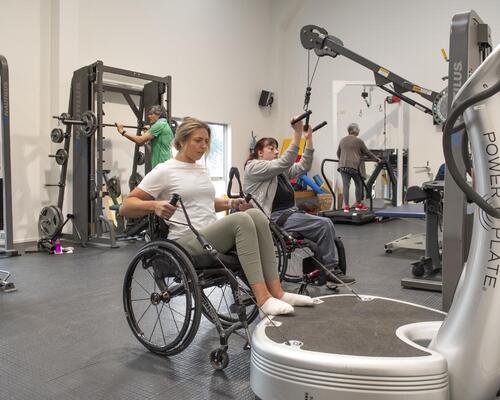
Performance Health Systems, manufacturer of Power Plate, has a new CEO, with an ambitious vision for the company
HCM promotional features
Latest News
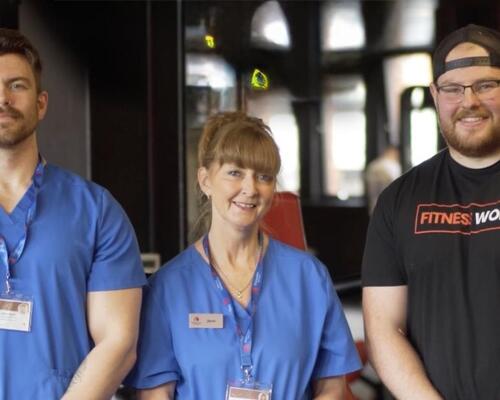
Independent operator, Fitness Worx Gyms, is introducing private blood testing as a service to members. ...
Latest News
International industry lobbying associations are calling for physical activity and strength training to be deeply ...
Latest News
Global group exercise specialist, Les Mills, is inviting operators to sign up to its Workout ...
Latest News
Global luxury hospitality brand, Six Senses, has partnered with longevity healthcare provider, HUM2N, to launch ...
Latest News
Premium London health club, KX Chelsea, is gearing up to unveil its most significant redevelopment ...
Latest News
Researchers in the US have identified an antibody which could greatly reduce the loss of ...
Latest News
Peloton has made the strategic acquisition of Pilates start-up, Skōp, to support the expansion of ...
Latest News
Crunch Fitness has announced the launch of Crunch Reform Pilates – its own reformer concept ...
Opinion
promotion
Strength training has moved from the margins to the mainstream.
Opinion: Building smarter strength spaces for today’s operators
Featured supplier news
Featured supplier news: Elevate 2026 to mark 10-year anniversary with biggest ever waterfront drinks reception
Elevate is set to celebrate its 10th anniversary in style this June, with organisers confirming the event’s largest-ever drinks reception as registrations continue to run more than 10% ahead of last year.
Featured supplier news
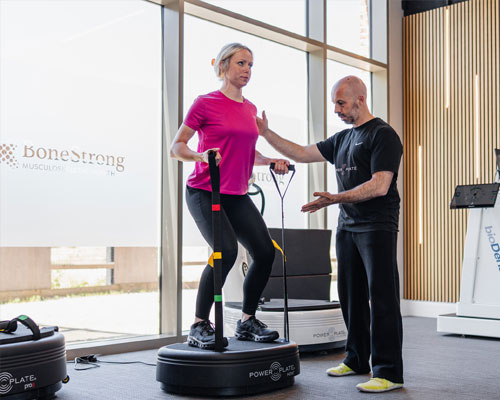
Featured supplier news: Supporting long-term health: why whole body vibration belongs in clinical settings
As healthcare continues to shift towards prevention, there’s a growing focus on helping people stay active, independent and feeling good for longer.
Company profiles
Company profile: Core Health & Fitness
Driven by innovation, Core Health & Fitness delivers top-quality products, exceptional service, and ongoing support. ...
Company profiles
Company profile: Swim England
Swim England was the only governing body of swimming in the world when it was ...
Supplier Showcases
Supplier Showcase - Future-proofing
Catalogue Gallery
Click on a catalogue to view it online
Featured press releases
Alliance Leisure Services (Design, Build and Fund) press release: Trowbridge pupils create lasting legacy at time capsule event
Pupils from schools across Trowbridge have come together to bury a time capsule at the site of the town’s new leisure centre, capturing a snapshot of life in 2026 for future generations.
Featured press releases
BLK BOX press release: Inside the build: Aberdeen Sports Village
When Aberdeen Sports Village set out to upgrade its gym offering, the goal was to create a more motivating, versatile and high-performing training environment for its diverse member base.
Directory
Lockers
Crown Sports Lockers: Lockers
Hot tubs
MSpa International Ltd: Hot tubs
Fitness tracking platform
SpiviTech: Fitness tracking platform
Industrial washing machines
Miele Company Limited: Industrial washing machines
Spa and beauty equipment
Oakworks Inc: Spa and beauty equipment
Water experiences and hydrotherapy solutions
Aquaform s.r.l.: Water experiences and hydrotherapy solutions
Property & Tenders
Stratford, East London.
Lee Valley Regional Park Authority
Property & Tenders
Y Felinheli, LL56 4QN
Newmark
Property & Tenders
Diary dates
22-23 Jun 2026
WX Wakefield , Wakefield, United Kingdom
Diary dates
21-24 Sep 2026
The Langham Huntington Pasadena , Pasadena, United States
Diary dates
06-08 Oct 2026
Messe Stuttgart, Stuttgart, Germany
Diary dates
22-22 Oct 2026
QEII Conference Centre, London,
Diary dates
26-29 Oct 2027
Koelnmesse Exhibition Centre, Cologne, Germany
Diary dates

features

Member research: Stay or leave?

Why do people leave health clubs, and how are they treated during the leaving process? Mike Hill shares the findings from research carried out exclusively for Health Club Management

By Mike Hill, Leisure-net Solutions | Published in Health Club Management 2014 issue 1
Evidently the health clubs and leisure centres our focus group used felt no obligation to make members feel valued

What happens when people leave our health clubs and leisure centres? We know retention is an issue, but what we don’t know is how well we handle the leaving process. With anecdotal evidence suggesting it’s nothing short of terrible, we asked a focus group of 12 ex-members to share their experiences.

Before the focus group took place, we set the scene by surveying 50 different leavers about their experiences. The results reveal that, despite the many personal explanations why people leave, the main reasons can be grouped into ‘cost’, ‘moved’ and ‘no time’.

We then asked how these leavers felt their decision to cancel was handled. Just over half (51 per cent) said it had been handled reasonably well, but more than a third (36 per cent) thought it had not been handled at all well.

Lastly, just under two-thirds said they would consider rejoining a health club or leisure centre, but almost a third said they wouldn’t.

Why do members leave?
The focus group then explored in more depth the 12 ex-members’ experiences of leaving a gym. All had recently left one of three clubs in the Norwich area of the UK: a private hotel-based club, a university-based gym, and a local authority management contractor site.

The group was first asked to reflect on why they’d decided to cancel their membership. The answers related to a wide range of personal reasons, most of which – on the surface – were beyond the centre’s control. For example, several talked about lack of motivation and ‘being lazy’. Jordan, a 17-year-old student, was typical of this view: “I joined with good intentions, but after just the second visit I just couldn’t be bothered. It’s not the gym’s fault I’m just lazy!”

General lack of motivation and perceived lack of time are issues that come up regularly in Leisure-net surveys, with ‘time’ the number one reason people give for not being more active. Operators need to be more proactive in addressing this, providing tailored support to help maintain members’ motivation and working with them to find time to fit in exercise sessions.

Perceived value for money
Two of the leavers had specific issues that seemed to be major factors in their decisions to leave. Neil, 44, a quantity surveyor, said: “I was really annoyed by how they treated customers. Some new equipment arrived which I’d been using for weeks. One day, while I was working out, a member of staff asked if my induction had included this new equipment. As it was prior to the equipment’s arrival I said no. The staff member told me I could therefore no longer use it until I’d had another induction. I asked if I could have this immediately and was told no, so I asked for the manager, who was also very unhelpful and said I would have to wait.”

In Neil’s case, this led to an immediate decision: “I told them I would like to cancel my membership immediately. They let me leave and I will not go back.”

But there were other underlying reasons for his decision to leave. He mentioned that the gym was very crowded, and that he would prefer to pay a higher membership fee for a better level of service and the advantages of a more exclusive gym. For Neil, it’s about perceived value for money rather than absolute cost.

But for many of our leavers, cost made all the difference – and in most cases, their reasons for leaving were directly linked to frequency of usage. For example Ray, 32, a student paramedic, said: “I just wasn’t using the gym enough. My financial situation is difficult at the moment and gym membership seemed an easy saving. I was only a member for four months. I work near the gym but didn’t attend as much as I hoped I would.”

Apparent indifference
Once the group had decided to leave, how was their decision taken by the club, and how was the process handled?

None of the 12 members felt their request to leave was used as an opportunity to recover the situation. Not one was asked to discuss why they were leaving, and only two went through any sort of exit process.

Mark, 54, a retired office manager, was typical: “I rang and told them I wanted to cancel and they just said I would have to come in to sign a cancellation document. This annoyed me. I thought they would try and make me change my mind, but in fact the whole process only took a minute and was a waste of my time as well as theirs!”

Neil was even more amazed by his club’s response. “I didn’t receive any contact from anyone – just a letter accepting my cancellation. Considering the reasons why I was leaving, this made me even more angry.”

Dianne, 55, a recently retired teacher, was asked to go through her reasons for leaving, but as she explains, even this didn’t feel like an attempt to dissuade her: “The young instructor was really pleasant, and just said he needed to fill in a form before he could organise my cancellation. I answered about six questions, but he didn’t address any of the points I raised. It seemed a bit of a box-ticking exercise really.”

One member of the group – Ben, aged 45 – actually felt obstacles were put in his way to try and prevent him from leaving. He had a back problem and wanted a six-month break: “If they’d offered me a membership freeze I would have accepted, as I do intend to start again, but they seemed to want to make it quite difficult for me to cancel. That just made me more determined.”

The main feeling shared by the entire group was one of indifference. Sarah, 32, a radiologist, said: “They really didn’t seem to mind one way or another, and they certainly didn’t see it as a personal comment on them or their facility.”

Evidently the clubs and centres our focus group used felt no obligation to make members feel valued, or treat them as individuals – both factors proven to drive customer loyalty.

Future intentions
So did their treatment during the leaving process affect the group’s thoughts about joining a gym again in the future? Opinion was split: a third said they probably wouldn’t consider re-joining; the others had varying views.

Steve, a 38-year-old IT programmer, explained: “I don’t think I would go back to the same gym, but it hasn’t put me off joining another. To be honest, I wasn’t looking for them to change my mind – I just wanted them to make it as easy as possible for me to go.”

Annie, a 19-year-old student, disagreed: “The whole experience has put me off gyms altogether. I didn’t feel like I was valued as a member, and leaving just confirmed that. I’m going to give gyms a miss and just buy a bike instead!”

In conclusion, the focus group represented the findings of the wider survey fairly well. While people give a lot of reasons for leaving, most boil down to a lack of motivation (or should that be support?) leading to infrequent visits and therefore a feeling that the membership lacks value.

For some people, these feelings are precipitated by external events which truly are out of the club’s control, but for most they are issues that operators could address if they wanted to, with interaction strategies put into place and appropriately trained staff to implement them.

Hold on tight
People aren’t generally looking for an exit process designed to change their minds, but considering that most leavers have only been members for a short time, surely the factors that encouraged them to join couldn’t have changed so dramatically?

It’s therefore highly likely that a reasonable proportion of leavers could, with the right approach, be persuaded to stay and give it another go. An approach that recognised a member’s motivation levels, and acknowledged that life situations do change, would be a good start. It must be possible to treat every member’s request individually and seriously, seeing it as an opportunity to re-engage with them and recover the situation.

What is certain is that most other industries would not accept such a high turnover of customers without investing time trying to recover the potential loss – and, if the member did decide to leave, at least make sure the experience was as good as possible to encourage them to come back when they were ready.

What happened last time you tried to cancel your mobile phone contract, for example? Chances are you were put through to a dedicated team member whose specific role it was to keep your business at almost any cost. While I’m not advocating that we take mobile phone companies as our role model, their dedication to keeping your business with new offers and packages designed around your individual needs is surely something we can aspire to.

Mike Hill is Managing Director of customer insight specialist Leisure-net Solutions, which conducted this ex-member research exclusively on behalf of Health Club Management. Leisure-net also conducts HAFOS, call-Focus and the Fitness Industry Confidence Survey, as well as bespoke research for individual companies.
Email: [email protected]
Tel: +44 (0)1603 814233

Sign up here to get HCM's weekly ezine and every issue of HCM magazine free on digital.
Handled correctly, a reasonable proportion of potential leavers could probably be persuaded to stay and give it another go / Photo: shutterstock.com
One respondent was so disillusioned she bought a bike instead of joining a new gym / all Photos: Shutterstock.com
https://www.leisureopportunities.co.uk/images/HCM2014_1stay.gif
In exclusive research for Health Club Management, Leisure-net MD Mike Hill asks why people leave their club or leisure centre, and how they're treated during the leaving process
Mike Hill,Leisure-net, ex-members, leaving process, retention, attrition, research
Latest News
Independent operator, Fitness Worx Gyms, is introducing private blood testing as a service to members. ...
Latest News
International industry lobbying associations are calling for physical activity and strength training to be deeply ...
Latest News
Global group exercise specialist, Les Mills, is inviting operators to sign up to its Workout ...
Latest News
Global luxury hospitality brand, Six Senses, has partnered with longevity healthcare provider, HUM2N, to launch ...
Latest News
Premium London health club, KX Chelsea, is gearing up to unveil its most significant redevelopment ...
Latest News
Researchers in the US have identified an antibody which could greatly reduce the loss of ...
Latest News
Peloton has made the strategic acquisition of Pilates start-up, Skōp, to support the expansion of ...
Latest News
Crunch Fitness has announced the launch of Crunch Reform Pilates – its own reformer concept ...
Latest News
The 20th State of the Industry Report from LeisureDB has revealed a resilient, expanding and ...
Latest News
Purpose Brands has announced its entry into the Italian market, having sold the franchise rights ...
Latest News
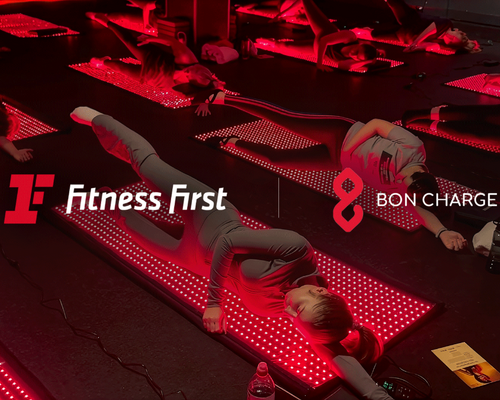
Fitness First UK is integrating red light therapy into its yoga and Pilates classes through ...
Opinion
promotion
Strength training has moved from the margins to the mainstream.
Opinion: Building smarter strength spaces for today’s operators
Featured supplier news
Featured supplier news: Elevate 2026 to mark 10-year anniversary with biggest ever waterfront drinks reception
Elevate is set to celebrate its 10th anniversary in style this June, with organisers confirming the event’s largest-ever drinks reception as registrations continue to run more than 10% ahead of last year.
Featured supplier news
Featured supplier news: Supporting long-term health: why whole body vibration belongs in clinical settings
As healthcare continues to shift towards prevention, there’s a growing focus on helping people stay active, independent and feeling good for longer.
Company profiles
Company profile: Core Health & Fitness
Driven by innovation, Core Health & Fitness delivers top-quality products, exceptional service, and ongoing support. ...
Company profiles
Company profile: Swim England
Swim England was the only governing body of swimming in the world when it was ...
Supplier Showcases
Supplier Showcase - Future-proofing
Catalogue Gallery
Click on a catalogue to view it online
Featured press releases
Alliance Leisure Services (Design, Build and Fund) press release: Trowbridge pupils create lasting legacy at time capsule event
Pupils from schools across Trowbridge have come together to bury a time capsule at the site of the town’s new leisure centre, capturing a snapshot of life in 2026 for future generations.
Featured press releases
BLK BOX press release: Inside the build: Aberdeen Sports Village
When Aberdeen Sports Village set out to upgrade its gym offering, the goal was to create a more motivating, versatile and high-performing training environment for its diverse member base.
Directory
Lockers
Crown Sports Lockers: Lockers
Hot tubs
MSpa International Ltd: Hot tubs
Fitness tracking platform
SpiviTech: Fitness tracking platform
Industrial washing machines
Miele Company Limited: Industrial washing machines
Spa and beauty equipment
Oakworks Inc: Spa and beauty equipment
Water experiences and hydrotherapy solutions
Aquaform s.r.l.: Water experiences and hydrotherapy solutions
Property & Tenders
Stratford, East London.
Lee Valley Regional Park Authority
Property & Tenders
Y Felinheli, LL56 4QN
Newmark
Property & Tenders
Diary dates
22-23 Jun 2026

WX Wakefield , Wakefield, United Kingdom
Diary dates
21-24 Sep 2026
The Langham Huntington Pasadena , Pasadena, United States
Diary dates
06-08 Oct 2026
Messe Stuttgart, Stuttgart, Germany
Diary dates
22-22 Oct 2026
QEII Conference Centre, London,
Diary dates
26-29 Oct 2027
Koelnmesse Exhibition Centre, Cologne, Germany
Diary dates
Search news, features & products:
Find a supplier:
Les Mills
Les Mills
Partner sites