






Editor's letter


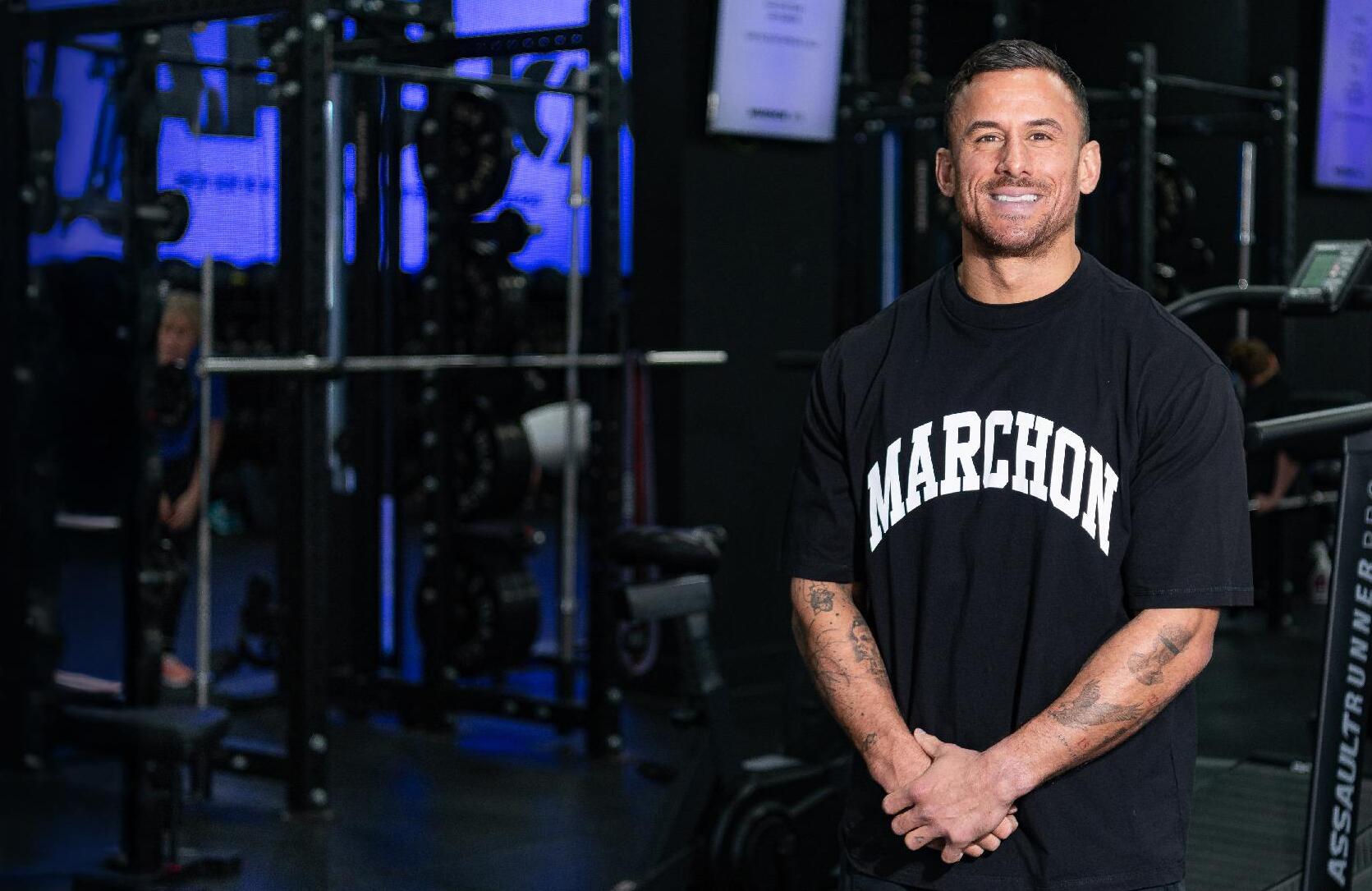
How did rugby shape your path?
The idea of being paid to play sport lit a fire in me and from a very young age, I wanted to be a professional sportsman and was willing to do anything to get that tagline for myself.
Aged 14, I was picked up by Saracens Rugby Club and progressed through its academy to secure my first professional contract at the age of 18. Already, I’d learned a great deal about the value of the gym in terms of its impact on me and my confidence as a young male, as well as my performance on the pitch.
Unfortunately, nine months into that contract – before I’d really had a chance to prove myself – I tore my cruciate and lateral collateral ligaments, stopping my rugby career in its tracks.
My family had always been successful in business – my dad was an orthopaedic surgeon, A&E consultant and a firm believer in academia – and some of that must have been instilled in me and with my rugby career on hold, I decided to study Sports Science at Nottingham Trent University.
The idea of being paid to play sport lit a fire in me and from a young age, I wanted to be a professional sportsman
By my second year, I had rehabbed myself and won a rugby scholarship, unlocking access to the university’s Strength and Conditioning Unit, which looked after all the scholarship athletes.
Graduating with a first-class degree, I then had an opportunity to do an internship within that unit, working as an apprentice strength and conditioning coach. It was in many ways a practical master’s degree, including an NASM personal training qualification, a corrective exercise specialist course and so on.
For a couple of days a week, I worked with the university’s scholarship athletes across various sports. For the rest of the week, I was back home in Hertfordshire working as a self-employed personal trainer and progressing towards my UKSCA qualifications.
At this point, aged 22, it was all about getting back into professional rugby: I saw personal training as a good set-up to allow me to eat well, train right and fight my way back into contention. Aged 23, I was selected to play for the England Sevens rugby team.
When did you double down on fitness?
Even while I was playing Sevens, training with England from Sunday to Thursday every week, I still had my PT business. Where other players went home to rest, I’d come home and train clients from Thursday to Sunday.
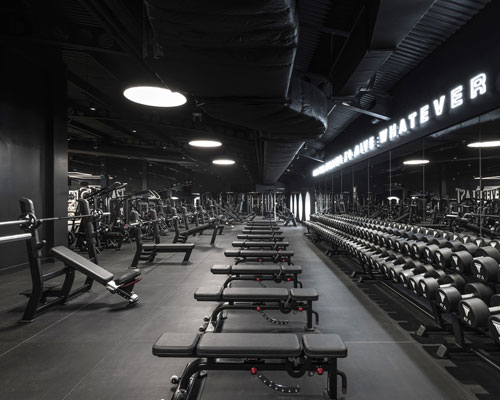
I opened my first studio in a cattle shed on a farm: a functional training space with sled tracks, power racks, lifting platforms and so on. It was essentially a budget version of the American collegiate gyms and the rugby gyms that had inspired me as a younger lad.
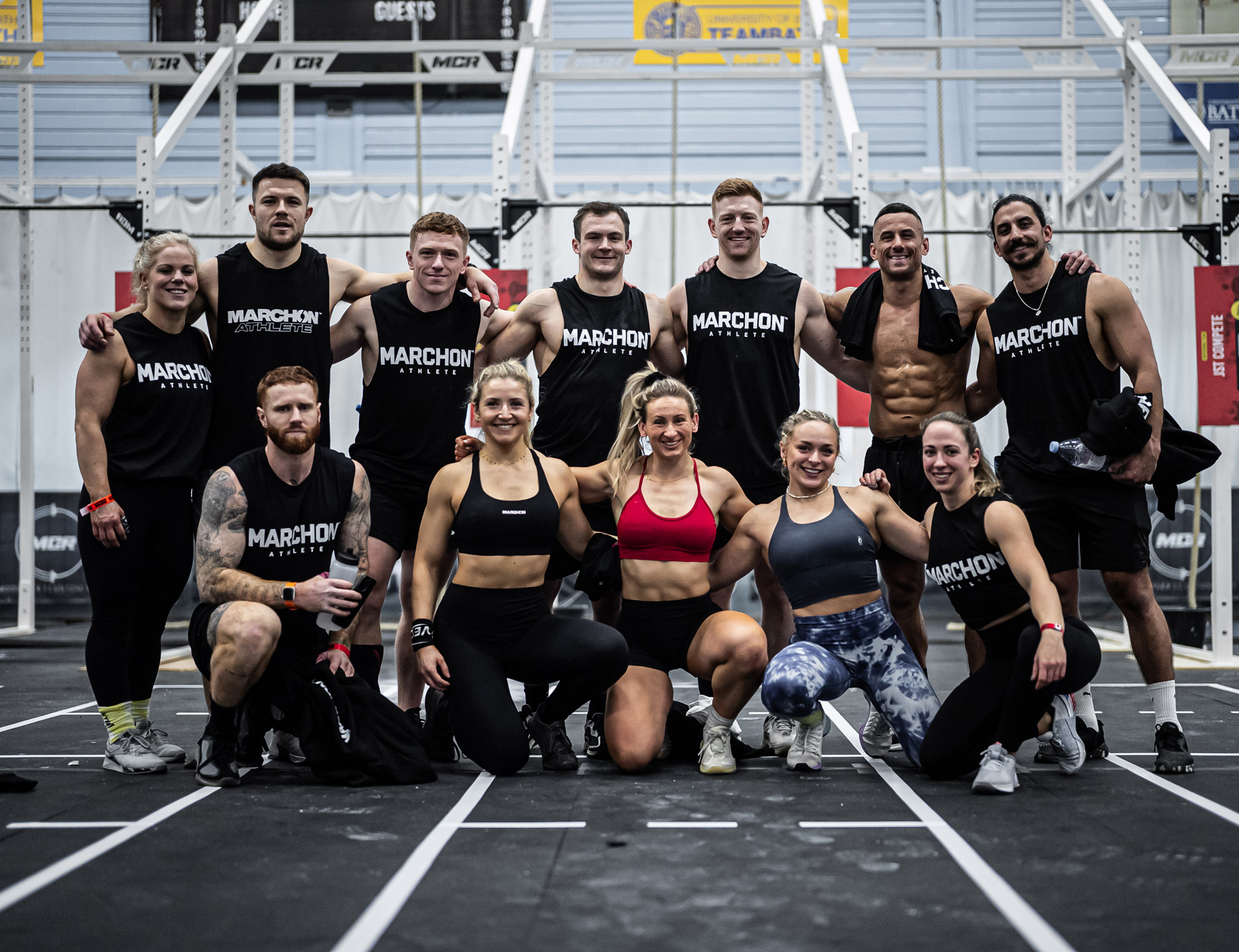
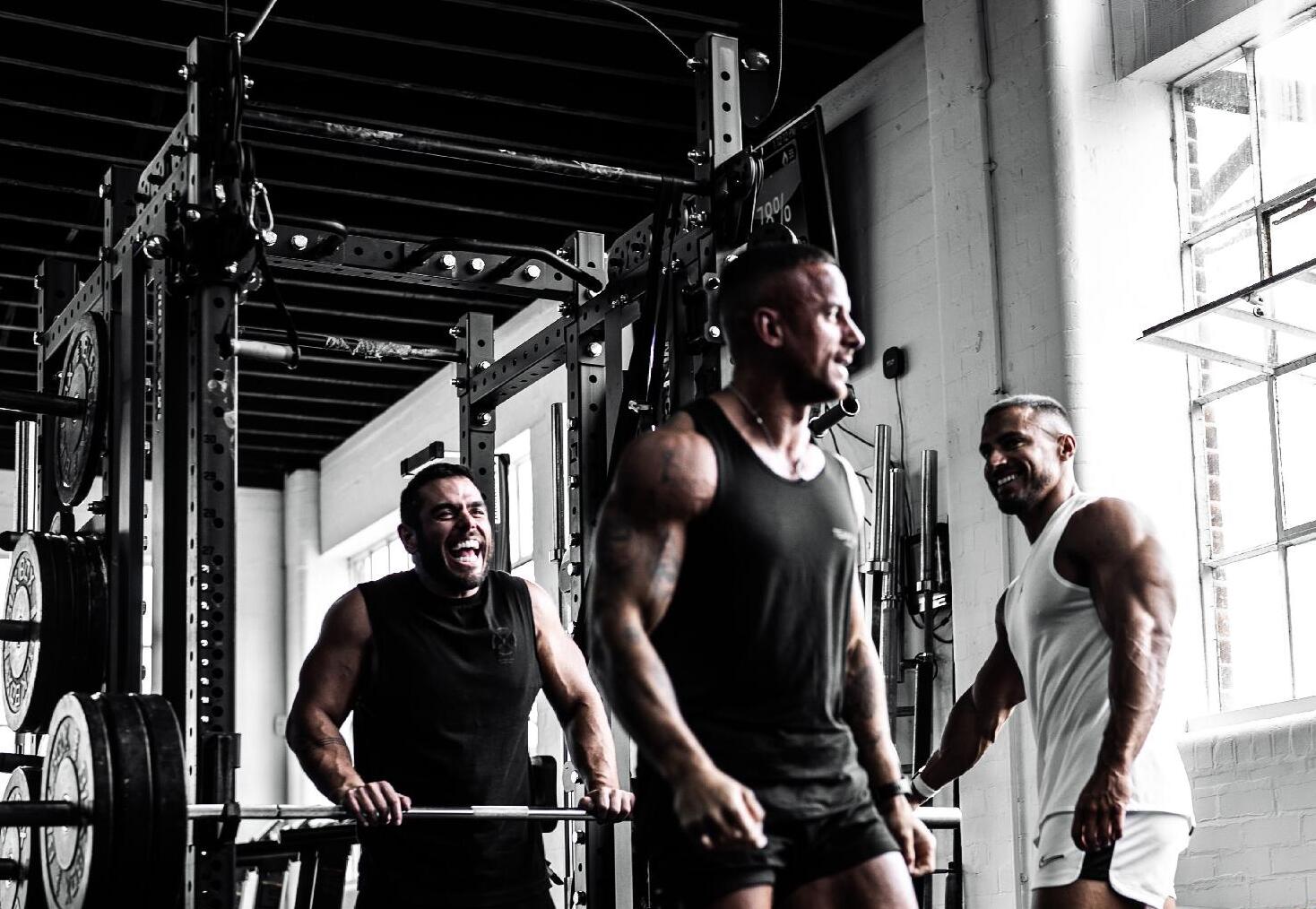
Ours was a strong unit, built on trust, aligned mindsets and close personal relationships and I think that’s a big part of why we were successful so quickly
I now believe that doing both at the same time – building a fitness business and being a professional sports player – was fundamental to the results I’ve achieved since. When, aged 27, my contract with England wasn’t renewed and I found myself at a crossroads, I no longer felt the need to chase the professional sports tagline. I’d already built a robust, exciting, profitable business in the increasingly dynamic fitness industry – an industry that was fast moving towards the functional style of training I’d always favoured and that I was using to achieve great results with a wide range of clients.
This was 2016 and I saw a chance to go all-in on my fitness brand, MARCHON. I knew I had a great product. I’d lived in the US for four months when I finished rugby, exploring the west coast gyms to really understand what was emerging. Combined with my pro sports experience, I felt I had a product that could lead the market.
What I still needed to work out was how to scale my business, taking what I’d done as a one-to-one personal trainer and amplifying it so I could serve more people, drive consistent cashflow and employ people.
At the time, the semi-private small group training model was establishing itself, popularised by Thomas Plummer in America and, in the UK, Jean-Claude Vacassin, founder of W10 gyms – now The Foundry.
Jean-Claude was very influential in the first year of building MARCHON: I did a fair amount of work with him on scalability, gym operating systems and so on. It set me up for success and allowed me to scale the brand in a way that felt authentic to me.
Was MARCHON all about physical gyms?
Not at all. The summer I spent in LA, I was already coaching clients online, well before COVID accelerated that agenda. However, although my longer-term vision was still evolving at this point, I already knew my definition of success would involve more physical locations.
I was guilty of coming out of COVID with a little too much enthusiasm, but there were some good deals to be had
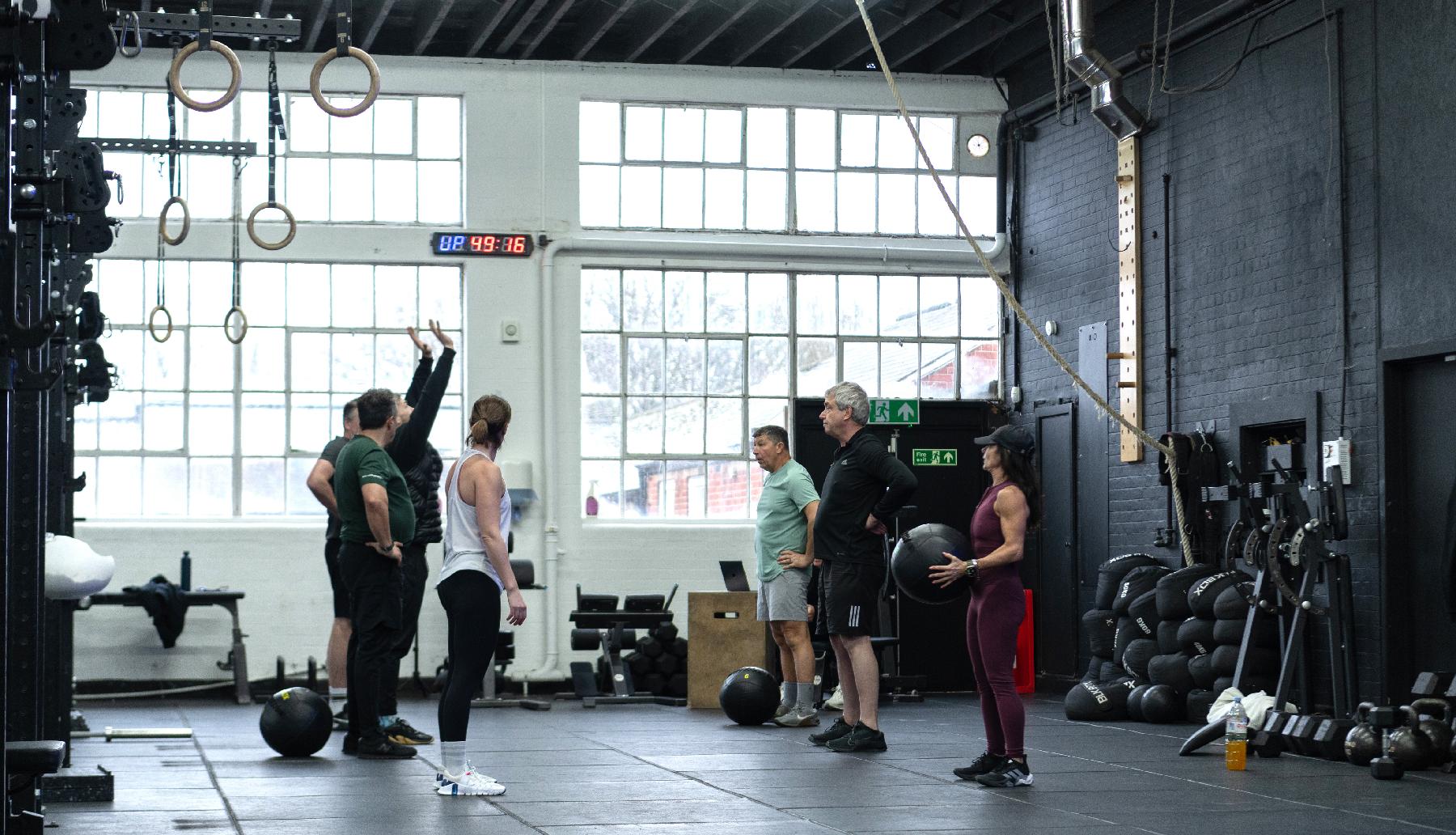
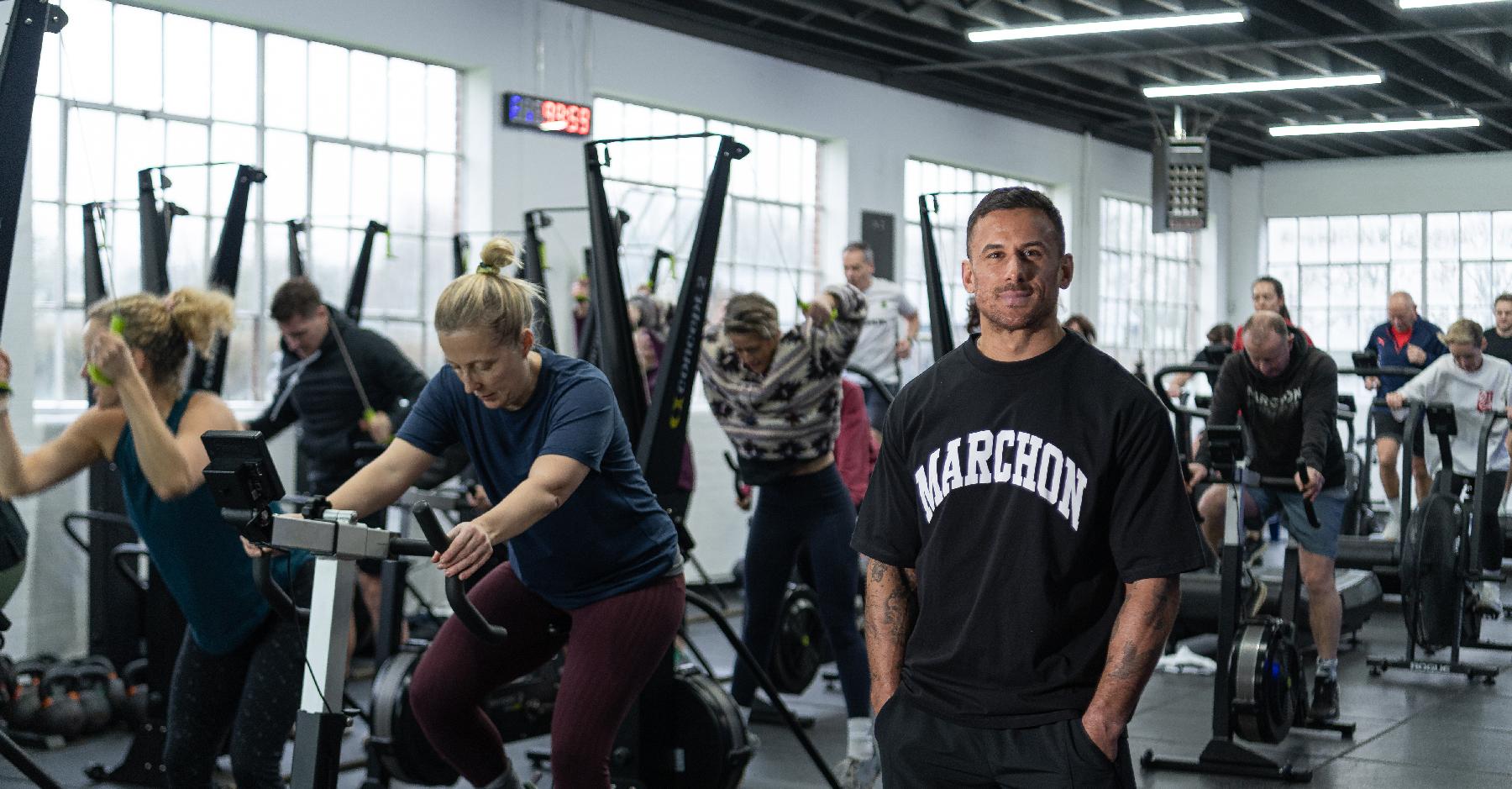
In 2016, I had one 1,200sq ft small group training gym in Harpenden. The model was four clients to one PT, with three great coaches – me, my brother and my best friend, who was a strength and conditioning coach at Saracens – all running sessions throughout the day. Ours was a strong unit built on trust, aligned mindsets and close personal relationships and I think that’s a big part of why we were successful so quickly. For 10 hours a day, six or seven days a week, we filled the gym.
Our in-person subscription model provided us with consistent cashflow, but we also filmed our sessions, so the volume of content we were able to put out across social media was really high.
This strong online voice and successful physical presence, combined with my own profile – not only through rugby but through roles such as being a Nike master trainer during COVID – brought credibility and authority to the online training programmes we created. We sold these across the UK and around the world, simultaneously building a digital as well as an analogue business.
What was the plan at this point?
From a personal perspective, the vision was about forging a career for myself that would see me through to retirement. I saw so few older PTs in the sector – no-one to really inspire me – and was very aware of the short average PT lifetime.
I didn’t want to be one of those statistics. I wanted to ensure longevity for myself and, at the same time, to elevate the status of, and respect for, personal trainers.
This led to the launch of the Stronger Coaches Association, now the Professional Fitness Coaches Association (PFCA) – an education business that set out to professionalise the personal training industry, which I launched in partnership with Jenz Robinson in 2018.
A separate business – and one in which I’m now a silent partner – the PFCA links back to my goal of establishing an enduring career for myself and the team of MARCHON coaches.
Tell us more about your gyms
We now have four gyms: Harpenden, which was relocated in 2019 to a 5,500sq ft space, as well as Stratford in east London, Bath and London Victoria.
I was guilty of coming out of the post-COVID gates with a little too much enthusiasm, but remote working meant there were good deals to be had on commercial buildings. It was fairly low-risk for us to open our second gym in Stratford, so we’d already signed the lease and were opening by the time we came out of the pandemic in 2022.
We then opened in Bath and London Victoria in 2025. Bath is similar to Harpenden in its feel and its community and it has gone like wildfire. And with Victoria I wanted a central London gym as a flagship. I see it as a real stake in the ground, proving that we stand up against any other gym brand and securing the credibility I believe we deserve.
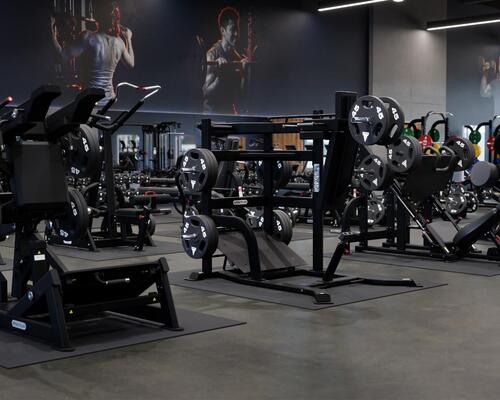
All our gyms measure 5,000–6,000sq ft with a capacity of around 350 members. Depending on the location, break-even is around 150–200 members, with a £250 average monthly yield. We typically charge around £220 for three sessions a week, but many members want more than that and £250 is the sweet spot we aim for.
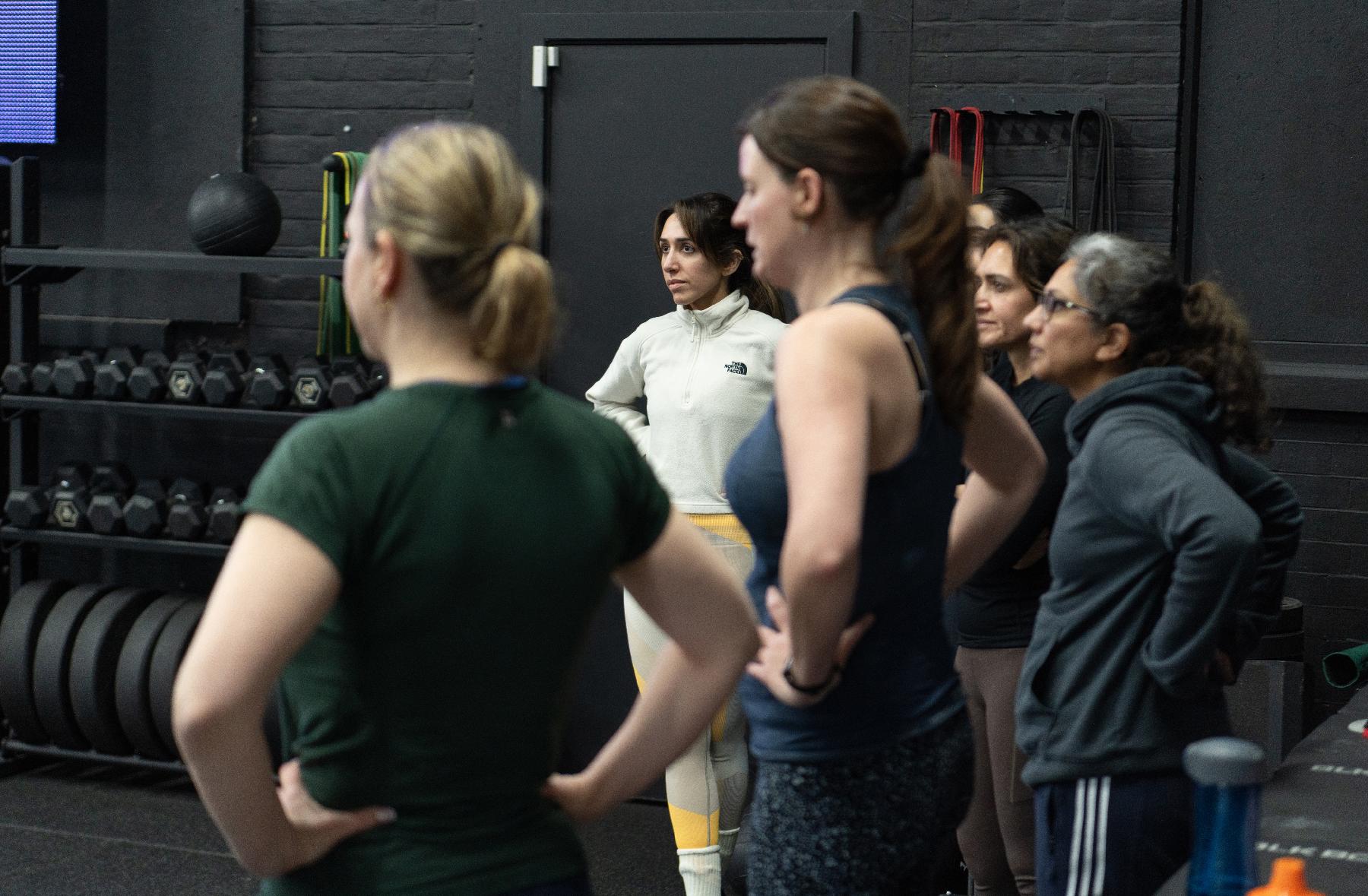
In Harpenden, the model is now 6:1, operating at peak times, as this is a commuter town. For the newer clubs, to ensure we can resource the gyms and maintain quality, it’s 15:1 on strength days and 30:1 on conditioning days. Crucially, we’ve structured our programmes so everyone, from newbies to very experienced exercisers, is challenged within the same session.
Bigger picture, we want to be the Strava of fitness, with a wide-scale impact that simply can’t be achieved in person.
Tell us about your online training and app
In-person, we knew that people who trained with us three times a week rather than once were getting better results. In fact, that figure dates back to 2016. Today, most people train with us four or five times a week.
We structured our online programmes around similar principles, creating training with accountability and progression. We also mirrored our in-person training model, forming groups of people with similar profiles and goals to train ‘together’ online. This sense of community is further reinforced through our new app, where a virtual locker room offers a space to chat to the coach as well as to peers – not only in your group, but the hundreds of people doing the same programme as you around the world.
Obviously being able to assess someone and write an individualised programme is the gold standard, but that limits the number of people you can impact and adds a price point as a further barrier. Instead, we’ve created group programmes – typically running in 10-week cycles – that are tightly geared around specific goals and experience levels.
For example, our Hyrox programme is different for those training for their first event, versus those who’ve competed a few times. It’s different again for those trying to get to the World Championships.
Other programmes include training for the ATHX Games, which is another of my companies – a fitness event very much outside MARCHON, with Adidas just signed as the headline sponsor.
We’ve announced 14 locations for ATHX events across Europe for 2026 and will be announcing the US and the Middle East soon as well.
Other online MARCHON programmes include marathon training, 5k, 10k, half marathon, CrossFit, female aesthetics and training for life.
Three or four times a year, we run a six-week Shred programme that includes education and communication to help people establish new habits in their nutrition and more discipline in their training.
I don’t get too caught up in what we’ve built so far, because we’re still a long way from where I think we can take MARCHON
We believe it’s important to have something to point your training towards and, with a strapline of ‘Training for a life without limits’, we attract people who want a challenge – people who want to achieve more from their fitness and their life.
You mention a new app...
We developed our own training app during COVID. Up until that point, we’d been using third-party apps and had built an online community of around 700 people. Then someone asked me a really important question: “Have you ever thought about what your business would be worth if you built your own technology?”
I’d been so focused on opening my second gym that I hadn’t really thought about this.
Doing the app required me to make my first major investment as a business owner, including bringing in a full engineering team and in 2022, we launched the first iteration of our app and became a tech company.
I believe our app is truly best-in-class and we currently have an online community of around 4,500 people using it. There are hundreds of PTs and gyms wanting to use it, but we’re not sharing it for now.
Our suite of templated programmes covers all bases, with an AI coach you can speak to if you require any modifications – if you’re injured and can’t do a particular exercise, for example.
There are leaderboards and a strong sense of community, with links to wearables for objective data that we’ll combine with subjective data from users to create individual workout prescriptions.
Bigger picture, we want to be the Strava of fitness, with a wide-scale impact that simply can’t be achieved in person and we continually review our pricing with this in mind.
When we launched the app, it was as an extension of our gyms, used by those who knew us and were willing to spend up to £79 a month on it. Now, with AI accelerating and a desire on our part to use tech to unlock scale, we charge £19–39 a month and still continue to review this price point. Even if this triggers a short-term loss, we’re confident revenues will thrive as we accelerate our global reach.
Once we have all four elements of the MARCHON portfolio in each market, we’ll be big enough for it to be exciting for everyone
You’ve also developed a line of supplements
COVID taught me the value of a diverse ecosystem for a more robust business. We were very lucky to have started our digital wrap-around four years prior, allowing us to double down on this during lockdown. However, in that same period I was the face of Maximuscle and saw other businesses able to send physical product to their customers even when gym doors were closed. I wanted to be able to do the same and saw a real gap in the market for a modern performance nutrition company.
In practice, launching supplements, a second gym and an app all within six months of each other in 2022 was a terrible thing to do! My focus was really on the app, meaning the gym and the supplements didn’t get the attention they deserved.
In 2023–24, we became more sophisticated across each of our businesses, hiring experts such as Liam Holmes, our head of nutrition. He was previously head of nutrition at Celtic Football Club and was at Tottenham Hotspur and Fulham FC prior to that – the first Premiership football club to develop its own supplement range. He has vast experience in product formulation, innovation and ingredient sourcing.
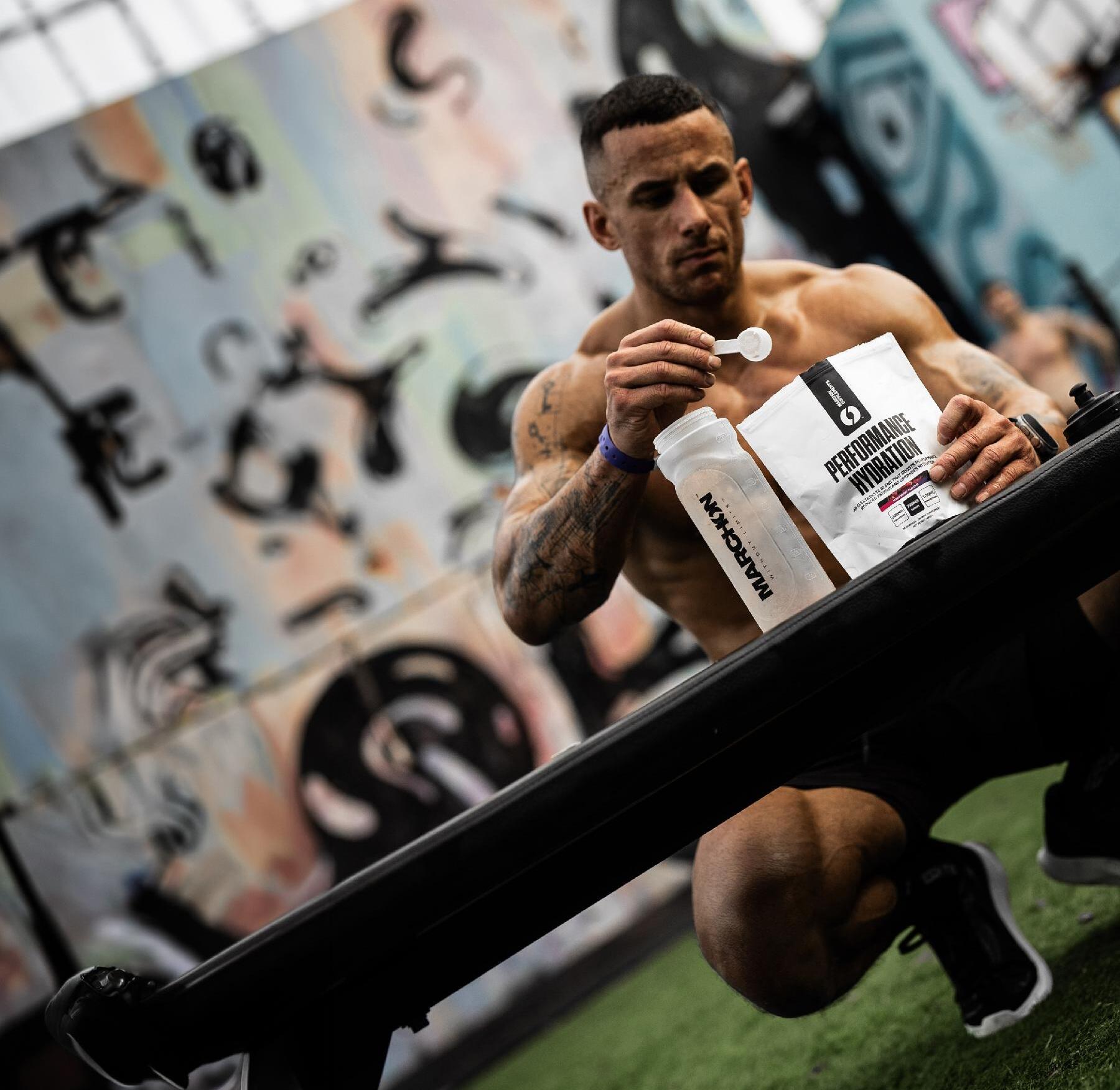
The quality of our sourcing is an important USP for us. Not every brand actually includes efficacious levels of every ingredient listed. We do. Every batch of every one of our products is third-party lab tested, proving that what we say on the pack is what’s in the product and that it’s also tested for banned substances.
And our range is extensive, spanning health and wellness, training and recovery and endurance. I believe it covers most of what today’s performance-based consumer is looking for. We’re stocked in 700 independent gyms across the UK and are the supplement partner for Soho House.
What’s the vision for MARCHON now?
It’s about the ecosystem, looking at how we get a daily touchpoint in a person’s life that’s authentically MARCHON – and then how we grow that into multiple touchpoints.
This is where MARCHON apparel also comes in, which is ready to have its first big year in 2026. We’re working with a fantastic manufacturer in Portugal and, in the latter half of 2025, recruited our first full-time hire: Ash Bellis, who joined us from Gymshark.
Now – with gyms, nutrition, apparel and our app – we have multiple opportunities for daily touchpoints. That might see someone waking up and putting on a pair of MARCHON socks or the latest T-shirt, drinking our pre- or post-workout shake, going to one of our gyms or using the PT in their pocket. This is our vision now.
In terms of physical locations, my original vision of gyms in UK commuter towns changed during COVID, when we saw how quickly digital can accelerate global visibility: we can become a household name in markets where we don’t even have bricks and mortar.
Nevertheless, there’s still a part of me that really wants lots of gyms. I realise it doesn't make strong business sense when we’re able to build technology and distribute supplements all across the world, regenerating capital far quicker than we can through gyms, where payback is typically two-and-a-half to three years. However, at its heart, MARCHON is about a real-life coaching experience and operating gyms maintains our authority in this space.
So now, my aspiration is for gyms in global fitness hubs. We’re already in London, but we’re eyeing Dubai, Australia, the US, as well as Manchester in the UK. The model is still to be confirmed, but for new markets, franchising through carefully selected partners feels like a strong contender.
Using our ecosystem, we’ll first enter a market via technology to build trust in the brand, then we’ll add supplements and apparel, digital advertising and in-person events – run clubs and so on, to build MARCHON communities, driving subscription revenues and creating daily touchpoints. Once we have confidence in a market, we can look to build a physical gym.
We’ve already started this work, launching distribution in Dubai six months ago via a local fulfilment partner, both direct to consumers and via local gyms. I expect to have a gym there within 12–18 months. Meanwhile, our first shipment to Australia will arrive in February, at which point we’ll begin to employ a local team.
How big can MARCHON get?
We’ve had some pretty cool partnerships – a track meet event in 2025 with Adidas as our headline partner, a clothing collaboration with 247 By Represent and so on – and we speak on many of the biggest stages in this space. We have people around the world wearing our brand. But I don’t get too caught up in what we’ve built so far, because we’re still a long way from where I think we can take MARCHON.
I don’t yet know what the measures will be for our success – how we quantify what being a truly global brand means – but I do know that if we put arbitrary numbers on what it should look like, there’s a risk that we attach ourselves to that, which in turn might change how we show up each day.
I’d rather keep focusing on our vision of multiple touchpoints. Once we have all four elements of the MARCHON portfolio in each market, I think we’ll be big enough for it to be exciting for everyone. Until then, it’s about bringing in the right talent across the business as we scale. That will be a key focus in 2026.
What drives you personally?
With three young kids, my sense of purpose now comes from my family. In the end, that’s who I do everything for.
However, I’m still super-competitive, including with myself. Physical challenge is a big part of that: last year I ran three marathons and I’ve done ultras too. I think it’s important to always have a physical goal in mind.
The ethos I inherited from my dad is still very important. He came to the UK as a foreigner and always pushed himself and us, his kids, to achieve more. That still drives me. I’m a solutions-thinker with the confidence to attack situations, although I am now learning to harness my energy and delegate more so I don’t burn out.
Ultimately, though, our tagline is ‘without limits’. That’s how I feel about my own life. I’m glass half full and want challenges at every stage that will help me grow in the way I think, move, conduct my relationships and embrace life.
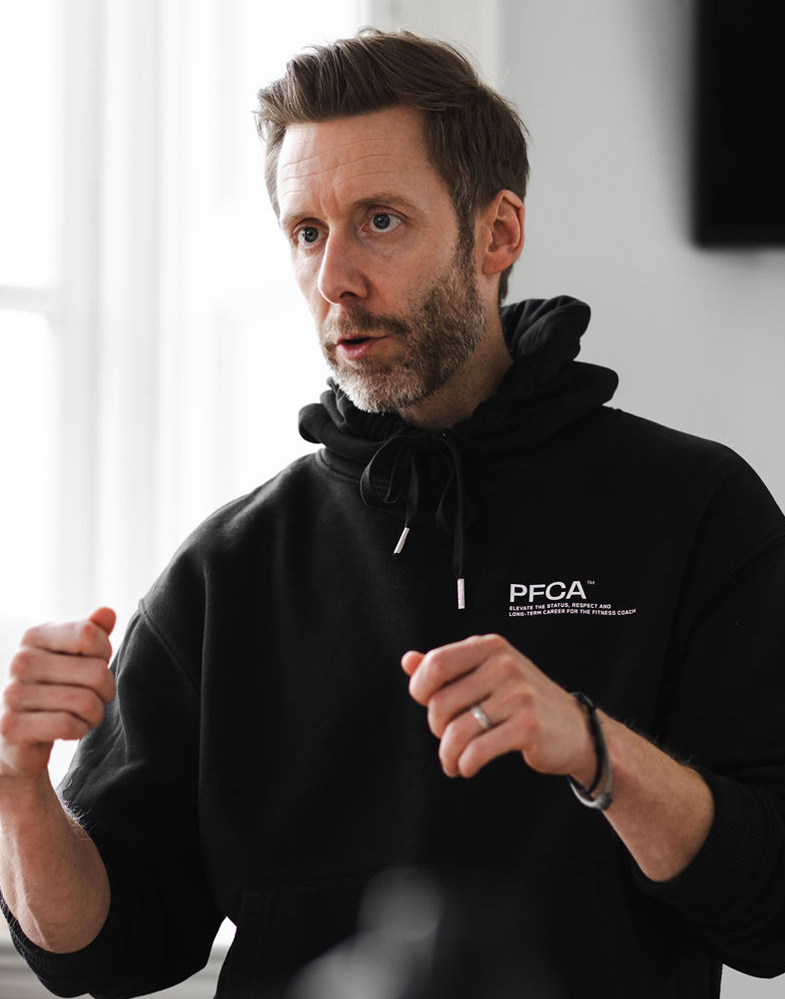
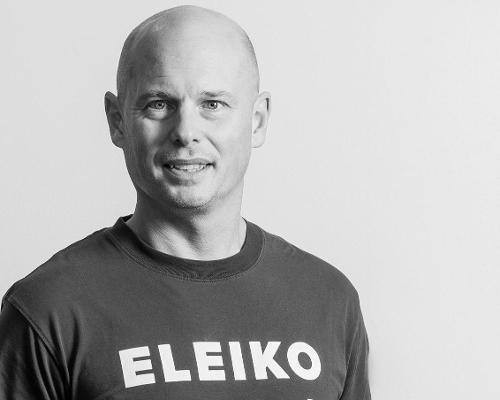
“Jenz Robinson and I launched the Stronger Coaches Association (SCA) when we realised the personal training qualifications we’d gone through weren’t fit for purpose,” says Ollie Marchon.
“In fact, the reasons I and some others had excelled were that we had the degree and the sporting experience. In my case, my entrepreneurial mindset and the soft skills acquired through my upbringing were also a factor. But a lot of people don’t have access to those things. So, the SCA was basically a mentorship programme that we built and delivered to other coaches.
“Over time, it evolved into the Professional Fitness Coaches Association (PFCA). I believe we’re the only personal training qualification provider in the UK that’s been able to write and deliver its own syllabus, because CIMSPA has granted us permission to do so.
The PFCA and the Gym Owners’ Network are our way of paying forward, helping others experience the successes we’ve enjoyed
“We now qualify hundreds of personal trainers at Level 2 and Level 3 every year.
“Alongside that, we’ve also developed further education courses, such as the Functional Fitness Coach certification, and we run seminars on topics such as small group personal training, programme design and so on. We have a brilliant head of education and it’s a really cool business – one that sets out to redefine the long-term career prospects for a personal trainer and elevate the status of the fitness coach.”
He continues: “The evolution of this business also saw the creation of the Gym Owners’ Network, which is a mentorship business for other independent operators; we work with around 150 gyms domestically and across the world.
“All our learnings from MARCHON – around hiring staff, building our product, building a commercial model that works, opening new sites and so on – we now teach to other gym owners. They maintain their uniqueness, but they get to apply the learnings from our wins and our mistakes.
“The PFCA and the Gym Owners’ Network are our way of paying forward, helping others experience the successes we’ve enjoyed.”
Editor's letter
Feedback

HCM People

HCM People
Interview

Sponsored

Talkback
Insight
Life lessons

Sponsored
Specifier
Sponsored

Health

Trends
Supplier Showcase

Research








Midtown Athletic Club has launched a new community tennis initiative honouring the legacy ...
Urban Gym Group has entered the Irish market with the acquisition of Iconic ...
Total Fitness has released new research revealing how the expectations and motivations of ...














How did rugby shape your path?
The idea of being paid to play sport lit a fire in me and from a very young age, I wanted to be a professional sportsman and was willing to do anything to get that tagline for myself.
Aged 14, I was picked up by Saracens Rugby Club and progressed through its academy to secure my first professional contract at the age of 18. Already, I’d learned a great deal about the value of the gym in terms of its impact on me and my confidence as a young male, as well as my performance on the pitch.
Unfortunately, nine months into that contract – before I’d really had a chance to prove myself – I tore my cruciate and lateral collateral ligaments, stopping my rugby career in its tracks.
My family had always been successful in business – my dad was an orthopaedic surgeon, A&E consultant and a firm believer in academia – and some of that must have been instilled in me and with my rugby career on hold, I decided to study Sports Science at Nottingham Trent University.
The idea of being paid to play sport lit a fire in me and from a young age, I wanted to be a professional sportsman
By my second year, I had rehabbed myself and won a rugby scholarship, unlocking access to the university’s Strength and Conditioning Unit, which looked after all the scholarship athletes.
Graduating with a first-class degree, I then had an opportunity to do an internship within that unit, working as an apprentice strength and conditioning coach. It was in many ways a practical master’s degree, including an NASM personal training qualification, a corrective exercise specialist course and so on.
For a couple of days a week, I worked with the university’s scholarship athletes across various sports. For the rest of the week, I was back home in Hertfordshire working as a self-employed personal trainer and progressing towards my UKSCA qualifications.
At this point, aged 22, it was all about getting back into professional rugby: I saw personal training as a good set-up to allow me to eat well, train right and fight my way back into contention. Aged 23, I was selected to play for the England Sevens rugby team.
When did you double down on fitness?
Even while I was playing Sevens, training with England from Sunday to Thursday every week, I still had my PT business. Where other players went home to rest, I’d come home and train clients from Thursday to Sunday.
I opened my first studio in a cattle shed on a farm: a functional training space with sled tracks, power racks, lifting platforms and so on. It was essentially a budget version of the American collegiate gyms and the rugby gyms that had inspired me as a younger lad.
Ours was a strong unit, built on trust, aligned mindsets and close personal relationships and I think that’s a big part of why we were successful so quickly
I now believe that doing both at the same time – building a fitness business and being a professional sports player – was fundamental to the results I’ve achieved since. When, aged 27, my contract with England wasn’t renewed and I found myself at a crossroads, I no longer felt the need to chase the professional sports tagline. I’d already built a robust, exciting, profitable business in the increasingly dynamic fitness industry – an industry that was fast moving towards the functional style of training I’d always favoured and that I was using to achieve great results with a wide range of clients.
This was 2016 and I saw a chance to go all-in on my fitness brand, MARCHON. I knew I had a great product. I’d lived in the US for four months when I finished rugby, exploring the west coast gyms to really understand what was emerging. Combined with my pro sports experience, I felt I had a product that could lead the market.
What I still needed to work out was how to scale my business, taking what I’d done as a one-to-one personal trainer and amplifying it so I could serve more people, drive consistent cashflow and employ people.
At the time, the semi-private small group training model was establishing itself, popularised by Thomas Plummer in America and, in the UK, Jean-Claude Vacassin, founder of W10 gyms – now The Foundry.
Jean-Claude was very influential in the first year of building MARCHON: I did a fair amount of work with him on scalability, gym operating systems and so on. It set me up for success and allowed me to scale the brand in a way that felt authentic to me.
Was MARCHON all about physical gyms?
Not at all. The summer I spent in LA, I was already coaching clients online, well before COVID accelerated that agenda. However, although my longer-term vision was still evolving at this point, I already knew my definition of success would involve more physical locations.
I was guilty of coming out of COVID with a little too much enthusiasm, but there were some good deals to be had
In 2016, I had one 1,200sq ft small group training gym in Harpenden. The model was four clients to one PT, with three great coaches – me, my brother and my best friend, who was a strength and conditioning coach at Saracens – all running sessions throughout the day. Ours was a strong unit built on trust, aligned mindsets and close personal relationships and I think that’s a big part of why we were successful so quickly. For 10 hours a day, six or seven days a week, we filled the gym.
Our in-person subscription model provided us with consistent cashflow, but we also filmed our sessions, so the volume of content we were able to put out across social media was really high.
This strong online voice and successful physical presence, combined with my own profile – not only through rugby but through roles such as being a Nike master trainer during COVID – brought credibility and authority to the online training programmes we created. We sold these across the UK and around the world, simultaneously building a digital as well as an analogue business.
What was the plan at this point?
From a personal perspective, the vision was about forging a career for myself that would see me through to retirement. I saw so few older PTs in the sector – no-one to really inspire me – and was very aware of the short average PT lifetime.
I didn’t want to be one of those statistics. I wanted to ensure longevity for myself and, at the same time, to elevate the status of, and respect for, personal trainers.
This led to the launch of the Stronger Coaches Association, now the Professional Fitness Coaches Association (PFCA) – an education business that set out to professionalise the personal training industry, which I launched in partnership with Jenz Robinson in 2018.
A separate business – and one in which I’m now a silent partner – the PFCA links back to my goal of establishing an enduring career for myself and the team of MARCHON coaches.
Tell us more about your gyms
We now have four gyms: Harpenden, which was relocated in 2019 to a 5,500sq ft space, as well as Stratford in east London, Bath and London Victoria.
I was guilty of coming out of the post-COVID gates with a little too much enthusiasm, but remote working meant there were good deals to be had on commercial buildings. It was fairly low-risk for us to open our second gym in Stratford, so we’d already signed the lease and were opening by the time we came out of the pandemic in 2022.
We then opened in Bath and London Victoria in 2025. Bath is similar to Harpenden in its feel and its community and it has gone like wildfire. And with Victoria I wanted a central London gym as a flagship. I see it as a real stake in the ground, proving that we stand up against any other gym brand and securing the credibility I believe we deserve.
All our gyms measure 5,000–6,000sq ft with a capacity of around 350 members. Depending on the location, break-even is around 150–200 members, with a £250 average monthly yield. We typically charge around £220 for three sessions a week, but many members want more than that and £250 is the sweet spot we aim for.
In Harpenden, the model is now 6:1, operating at peak times, as this is a commuter town. For the newer clubs, to ensure we can resource the gyms and maintain quality, it’s 15:1 on strength days and 30:1 on conditioning days. Crucially, we’ve structured our programmes so everyone, from newbies to very experienced exercisers, is challenged within the same session.
Bigger picture, we want to be the Strava of fitness, with a wide-scale impact that simply can’t be achieved in person.
Tell us about your online training and app
In-person, we knew that people who trained with us three times a week rather than once were getting better results. In fact, that figure dates back to 2016. Today, most people train with us four or five times a week.
We structured our online programmes around similar principles, creating training with accountability and progression. We also mirrored our in-person training model, forming groups of people with similar profiles and goals to train ‘together’ online. This sense of community is further reinforced through our new app, where a virtual locker room offers a space to chat to the coach as well as to peers – not only in your group, but the hundreds of people doing the same programme as you around the world.
Obviously being able to assess someone and write an individualised programme is the gold standard, but that limits the number of people you can impact and adds a price point as a further barrier. Instead, we’ve created group programmes – typically running in 10-week cycles – that are tightly geared around specific goals and experience levels.
For example, our Hyrox programme is different for those training for their first event, versus those who’ve competed a few times. It’s different again for those trying to get to the World Championships.
Other programmes include training for the ATHX Games, which is another of my companies – a fitness event very much outside MARCHON, with Adidas just signed as the headline sponsor.
We’ve announced 14 locations for ATHX events across Europe for 2026 and will be announcing the US and the Middle East soon as well.
Other online MARCHON programmes include marathon training, 5k, 10k, half marathon, CrossFit, female aesthetics and training for life.
Three or four times a year, we run a six-week Shred programme that includes education and communication to help people establish new habits in their nutrition and more discipline in their training.
I don’t get too caught up in what we’ve built so far, because we’re still a long way from where I think we can take MARCHON
We believe it’s important to have something to point your training towards and, with a strapline of ‘Training for a life without limits’, we attract people who want a challenge – people who want to achieve more from their fitness and their life.
You mention a new app...
We developed our own training app during COVID. Up until that point, we’d been using third-party apps and had built an online community of around 700 people. Then someone asked me a really important question: “Have you ever thought about what your business would be worth if you built your own technology?”
I’d been so focused on opening my second gym that I hadn’t really thought about this.
Doing the app required me to make my first major investment as a business owner, including bringing in a full engineering team and in 2022, we launched the first iteration of our app and became a tech company.
I believe our app is truly best-in-class and we currently have an online community of around 4,500 people using it. There are hundreds of PTs and gyms wanting to use it, but we’re not sharing it for now.
Our suite of templated programmes covers all bases, with an AI coach you can speak to if you require any modifications – if you’re injured and can’t do a particular exercise, for example.
There are leaderboards and a strong sense of community, with links to wearables for objective data that we’ll combine with subjective data from users to create individual workout prescriptions.
Bigger picture, we want to be the Strava of fitness, with a wide-scale impact that simply can’t be achieved in person and we continually review our pricing with this in mind.
When we launched the app, it was as an extension of our gyms, used by those who knew us and were willing to spend up to £79 a month on it. Now, with AI accelerating and a desire on our part to use tech to unlock scale, we charge £19–39 a month and still continue to review this price point. Even if this triggers a short-term loss, we’re confident revenues will thrive as we accelerate our global reach.
Once we have all four elements of the MARCHON portfolio in each market, we’ll be big enough for it to be exciting for everyone
You’ve also developed a line of supplements
COVID taught me the value of a diverse ecosystem for a more robust business. We were very lucky to have started our digital wrap-around four years prior, allowing us to double down on this during lockdown. However, in that same period I was the face of Maximuscle and saw other businesses able to send physical product to their customers even when gym doors were closed. I wanted to be able to do the same and saw a real gap in the market for a modern performance nutrition company.
In practice, launching supplements, a second gym and an app all within six months of each other in 2022 was a terrible thing to do! My focus was really on the app, meaning the gym and the supplements didn’t get the attention they deserved.
In 2023–24, we became more sophisticated across each of our businesses, hiring experts such as Liam Holmes, our head of nutrition. He was previously head of nutrition at Celtic Football Club and was at Tottenham Hotspur and Fulham FC prior to that – the first Premiership football club to develop its own supplement range. He has vast experience in product formulation, innovation and ingredient sourcing.
The quality of our sourcing is an important USP for us. Not every brand actually includes efficacious levels of every ingredient listed. We do. Every batch of every one of our products is third-party lab tested, proving that what we say on the pack is what’s in the product and that it’s also tested for banned substances.
And our range is extensive, spanning health and wellness, training and recovery and endurance. I believe it covers most of what today’s performance-based consumer is looking for. We’re stocked in 700 independent gyms across the UK and are the supplement partner for Soho House.
What’s the vision for MARCHON now?
It’s about the ecosystem, looking at how we get a daily touchpoint in a person’s life that’s authentically MARCHON – and then how we grow that into multiple touchpoints.
This is where MARCHON apparel also comes in, which is ready to have its first big year in 2026. We’re working with a fantastic manufacturer in Portugal and, in the latter half of 2025, recruited our first full-time hire: Ash Bellis, who joined us from Gymshark.
Now – with gyms, nutrition, apparel and our app – we have multiple opportunities for daily touchpoints. That might see someone waking up and putting on a pair of MARCHON socks or the latest T-shirt, drinking our pre- or post-workout shake, going to one of our gyms or using the PT in their pocket. This is our vision now.
In terms of physical locations, my original vision of gyms in UK commuter towns changed during COVID, when we saw how quickly digital can accelerate global visibility: we can become a household name in markets where we don’t even have bricks and mortar.
Nevertheless, there’s still a part of me that really wants lots of gyms. I realise it doesn't make strong business sense when we’re able to build technology and distribute supplements all across the world, regenerating capital far quicker than we can through gyms, where payback is typically two-and-a-half to three years. However, at its heart, MARCHON is about a real-life coaching experience and operating gyms maintains our authority in this space.
So now, my aspiration is for gyms in global fitness hubs. We’re already in London, but we’re eyeing Dubai, Australia, the US, as well as Manchester in the UK. The model is still to be confirmed, but for new markets, franchising through carefully selected partners feels like a strong contender.
Using our ecosystem, we’ll first enter a market via technology to build trust in the brand, then we’ll add supplements and apparel, digital advertising and in-person events – run clubs and so on, to build MARCHON communities, driving subscription revenues and creating daily touchpoints. Once we have confidence in a market, we can look to build a physical gym.
We’ve already started this work, launching distribution in Dubai six months ago via a local fulfilment partner, both direct to consumers and via local gyms. I expect to have a gym there within 12–18 months. Meanwhile, our first shipment to Australia will arrive in February, at which point we’ll begin to employ a local team.
How big can MARCHON get?
We’ve had some pretty cool partnerships – a track meet event in 2025 with Adidas as our headline partner, a clothing collaboration with 247 By Represent and so on – and we speak on many of the biggest stages in this space. We have people around the world wearing our brand. But I don’t get too caught up in what we’ve built so far, because we’re still a long way from where I think we can take MARCHON.
I don’t yet know what the measures will be for our success – how we quantify what being a truly global brand means – but I do know that if we put arbitrary numbers on what it should look like, there’s a risk that we attach ourselves to that, which in turn might change how we show up each day.
I’d rather keep focusing on our vision of multiple touchpoints. Once we have all four elements of the MARCHON portfolio in each market, I think we’ll be big enough for it to be exciting for everyone. Until then, it’s about bringing in the right talent across the business as we scale. That will be a key focus in 2026.
What drives you personally?
With three young kids, my sense of purpose now comes from my family. In the end, that’s who I do everything for.
However, I’m still super-competitive, including with myself. Physical challenge is a big part of that: last year I ran three marathons and I’ve done ultras too. I think it’s important to always have a physical goal in mind.
The ethos I inherited from my dad is still very important. He came to the UK as a foreigner and always pushed himself and us, his kids, to achieve more. That still drives me. I’m a solutions-thinker with the confidence to attack situations, although I am now learning to harness my energy and delegate more so I don’t burn out.
Ultimately, though, our tagline is ‘without limits’. That’s how I feel about my own life. I’m glass half full and want challenges at every stage that will help me grow in the way I think, move, conduct my relationships and embrace life.
“Jenz Robinson and I launched the Stronger Coaches Association (SCA) when we realised the personal training qualifications we’d gone through weren’t fit for purpose,” says Ollie Marchon.
“In fact, the reasons I and some others had excelled were that we had the degree and the sporting experience. In my case, my entrepreneurial mindset and the soft skills acquired through my upbringing were also a factor. But a lot of people don’t have access to those things. So, the SCA was basically a mentorship programme that we built and delivered to other coaches.
“Over time, it evolved into the Professional Fitness Coaches Association (PFCA). I believe we’re the only personal training qualification provider in the UK that’s been able to write and deliver its own syllabus, because CIMSPA has granted us permission to do so.
The PFCA and the Gym Owners’ Network are our way of paying forward, helping others experience the successes we’ve enjoyed
“We now qualify hundreds of personal trainers at Level 2 and Level 3 every year.
“Alongside that, we’ve also developed further education courses, such as the Functional Fitness Coach certification, and we run seminars on topics such as small group personal training, programme design and so on. We have a brilliant head of education and it’s a really cool business – one that sets out to redefine the long-term career prospects for a personal trainer and elevate the status of the fitness coach.”
He continues: “The evolution of this business also saw the creation of the Gym Owners’ Network, which is a mentorship business for other independent operators; we work with around 150 gyms domestically and across the world.
“All our learnings from MARCHON – around hiring staff, building our product, building a commercial model that works, opening new sites and so on – we now teach to other gym owners. They maintain their uniqueness, but they get to apply the learnings from our wins and our mistakes.
“The PFCA and the Gym Owners’ Network are our way of paying forward, helping others experience the successes we’ve enjoyed.”
Editor's letter
Feedback
HCM People
HCM People
Interview
Sponsored
Talkback
Insight
Life lessons
Sponsored
Specifier
Sponsored
Health
Trends
Supplier Showcase
Research
Midtown Athletic Club has launched a new community tennis initiative honouring the legacy ...
Urban Gym Group has entered the Irish market with the acquisition of Iconic ...
Total Fitness has released new research revealing how the expectations and motivations of ...