



















Follow Health Club Management on Twitter Like Health Club Management on Facebook Join the discussion with Health Club Management on LinkedIn
FITNESS, HEALTH, WELLNESS

features

Interview: Greg Whyte & Kevin Cahill

The duo have joined forces to launch a free virtual ‘couch to exercise’ programme called RISE. They talk to HCM about what they’ve learned from collaborating on Sport Relief and how they’re using this knowledge to deliver the new not-for-profit
Published in Health Club Management 2021 issue 1
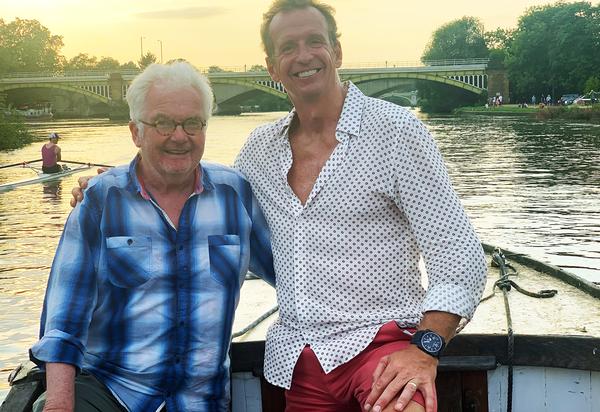
Kevin Cahill (L) and Greg Whyte (R) teamed up on Sport Relief in 2005
The RISE programme will give people the physical literacy and a nurtured baseline of confidence to encourage them into other forms of exercise in gyms and leisure centres

How successful was Sport Relief?
Whyte: Sport Relief was instrumental in changing attitudes towards sport. When I first teamed up with Kevin, back in 2005, I was coaching David Walliams to swim the English Channel. At the time, open water swimming was seen as something very niche and out of the ordinary. David and I would be training in the river and people would ask if everything was OK. Had we fallen in?

You can clearly track the popularity of open water swimming from 2006; it literally took off from that point. Today open water swimming is for the masses. There are now thousands of venues and open water events around the country.

Cahill: Sport Relief’s ultimate objective was to reach the poorest and most disadvantaged. Yes, to fundraise for these groups but also to inspire, encourage and motivate the most marginalised in our society.

The Sport Relief Mile was a great example of this. People simply had to run a mile. It wasn’t a marathon or an extreme challenge, but it was tangible and engagement was high, with over 80,000 people taking part in its first year across the UK.

The Sport Relief Mile ran biannually from 2004 – 2016. The diversity of the participants was noticeable, year on year. Five-year-old children were crossing the finish line with their grandmothers. People of all fitness levels and demographic groups were represented. Its inclusivity is what ultimately made the challenge a success.

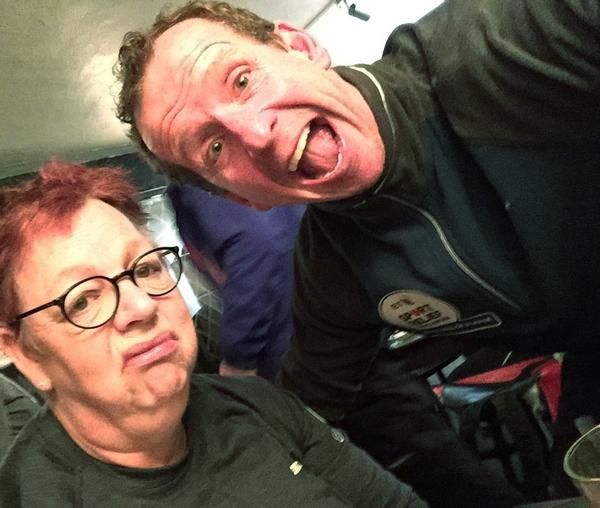
The most inspirational challenge – one people really identified with – was Jo Brand’s.

Jo completed her ‘Hell of a Walk’ in 2016, when she walked east to west across the UK, a route of 135.7 miles. Although it wasn’t the most physically difficult, what stood out was how Jo’s challenge was relatable, believable and inspirational. Jo said she wanted to demonstrate that ‘fat old women can walk!’

People came out to accompany her on sections of the walk, to cheer her on. Her supporters were often ‘like’ her; women of a certain age and fitness level. She looked like them and sounded like them. If Jo could do it, so could they!

What’s the purpose of RISE?
Whyte: RISE’s objective is to reach and engage with people who are inactive. The sedentary population of the UK alone is 11.3 million people. That’s a quarter of our population who are active for less than 30 minutes per week (WHO guidelines suggest 30 minutes on most days of the week for health).

Having previously collaborated on the Couch to 5k initiative, I realised even this assumes a level of confidence and physical literacy to take the steps to exercise.

RISE is different. Our approach starts with Couch to the Front Door for people who lack the know-how and confidence to pass even this basic threshold.

RISE doesn’t assume its users have any pre-conditioning, any self-confidence or even self-esteem related to exercise. It really is taking a step back in order to move forward.

Cahill: So many gyms and online exercise programmes make the assumption there is a baseline level of fitness; that the user already has an interest in fitness or a particular sport. At our local gym you feel you need to be fit to be a member. RISE doesn’t make such assumptions. The RISE programme will give its users a taster of what activity can look like, and aims to give them the physical literacy and a nurtured baseline of confidence that will ultimately funnel them into other forms of exercise, such as gyms and leisure centres.

The barrier to participation for the Sport Relief Mile was relatively low and RISE is also trying to remove those walls to participation, by making the programme free and by keeping the format simple.

One of our motivations for RISE is that the COVID-19 pandemic has and will continue to cause havoc to the wellbeing of our society. We will be feeling the aftermath of COVID, in the form of mental as well as physical health problems, for a long time.

As we know, exercise can help with the wellbeing of both our mind and body and an accessible programme needs to be in place to support everyone who needs it. A lot of people in the UK are going to be very damaged and will need something to help get their heads, bodies and emotions together. RISE will help them feel more centred and better about themselves.

How did you come up with the concept of Sport Relief and why was it successful, year on year?
Cahill: Sportspeople were becoming more iconic and internationally famous beyond sport; heroes such as Beckham and Federer crossed cultural and geographical boundaries and I felt there was an opportunity to replicate what we’d achieved with our comedians by connecting with them.

Together with Steve Redgrave, who’d just won his fifth Olympic gold medal, we contacted sports stars and entertainers to join the Sport Relief campaign. The response was astounding. Sport Relief captured the heart of the nation. It was a win-win. The people who took part enjoyed it, the money raised went to good causes, the BBC got great programming.

The proposition of Sport Relief made sense; to utilise the power and passion of sport to do social good. Comic Relief certainly influenced the number of events that use sport for social change and Sport Relief was a breakout entity that drove this coming together.

What have you learned about harnessing the influence of celebrities?
Cahill: Our star ambassadors will play a critical role in promoting the RISE programme – simply talking about the scheme to help get the word out.

The trick with artists and celebrities is to get them to do things that don’t take up too much time, but have meaningful impact, both for society and their reputation.

We hope that some of the comedians who worked with us on Comic Relief might help out again, to promote, encourage and inspire both the uptake and the completion of the programme.

Why do you think RISE will motivate people where gym operators have faltered?
Whyte: Leisure providers haven’t failed. The 11 million inactive people are difficult to identify, tricky to connect with and harder to get started. RISE is the bridge between inactivity and regular activity. It’s a launching point to physical wellbeing.

RISE is removing the stumbling blocks to entry into physical activity – firstly, it’s free, secondly, time isn’t an issue, as people can take part at their own convenience, and thirdly, they don’t need any equipment and can do it in the privacy of their own home.

It’s web-based, so people won’t need to download any apps or have a smartphone to take part. It’s delivered via a simple, user-friendly, web platform that’s been designed, created and donated by the team at Venueserve Fitness, a company that currently offers a white-labelled, virtual exercise platform to health club operators.

RISE consists of three six-week programmes and has gentle and targeted progression in each stage. Block one is chair-based exercise. Block two is very low intensity interval activity, and Block three is low intensity interval activity. Our team of instructors, who were filmed at the Marlow Club, are middle-aged men and women who have the expertise to give the user the confidence in the programme. We also have a yoga-based programme, focussing on agility and a mindfulness programme.

Getting people to this point is a powerful tool. By completing the three phases, the participant will gain the prerequisite level of fitness, and confidence to commence other activities, such as a ‘mainstream’ class, other virtual online exercises or even Parkrun.

Ultimately, RISE will give people the confidence to start something new; to incorporate physical activity into their daily life.

Why RISE and why now?
Whyte: Although RISE isn’t directly linked to the pandemic, I think COVID-19 has forced us to look again at social inequalities, and how deprivation impacts at every stage of life, including their experience of COVID-19.

The pandemic has normalised online connections, from business Zoom meetings to Facetiming with granny over Christmas. The RISE programme wouldn’t have been achievable even a year ago; the pandemic has made us all more comfortable with virtual and remote interactions.

RISE is being funded through donations and sponsors – effectively it costs one pound to put one person through the programme. RISE is about social good for all.

How will success be measured?
Whyte: Our goal is for RISE to reach one million people. However, it’s not just about getting a million people to sign up, we want a million people to complete the 18-week programme.

This isn’t about money, it’s a not-for-profit scheme and we’re actively looking for sponsors and partners to help us deliver the programme – it’s about people getting on board, enjoying it, keeping at it. This can have a profound knock-on effect on many sectors, including health and fitness. We want those who have completed the programme to feel ready to move on to their next set of wellbeing goals.

Find out more: riseexercise.com
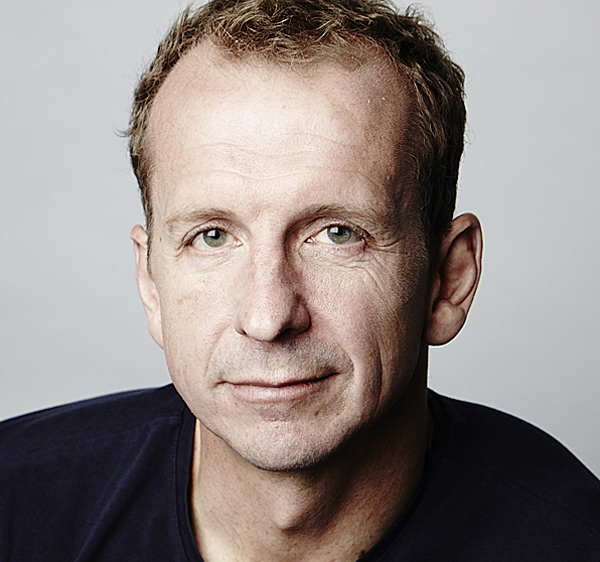
Greg Whyte

Greg Whyte, an expert in sports and exercise science, is well-known for his involvement in Sport Relief: since 2006 he’s trained, motivated and successfully coached people taking part in 32 Sport and Comic Relief Challenges.
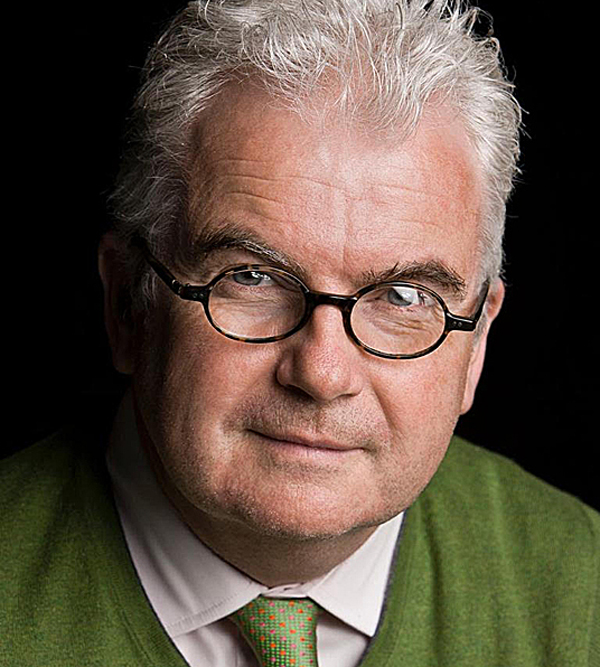
Kevin Cahill

Kevin Cahill has been CEO of Comic Relief since 1997. It was his idea to launch Sport Relief in 2002 and he played a key role in the Make Poverty History and Live 8 campaigns. After stepping down in September 2016 he was made an honorary life president of the charity.
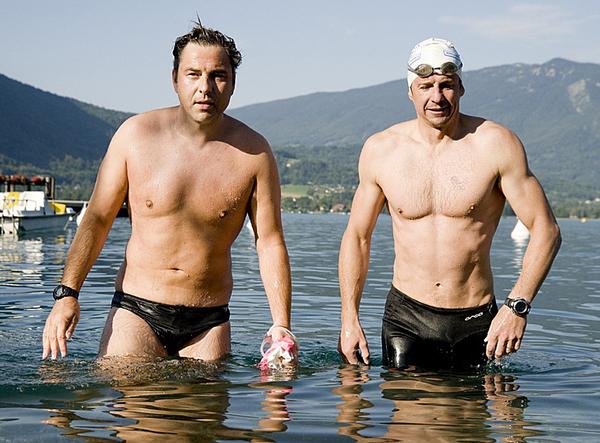
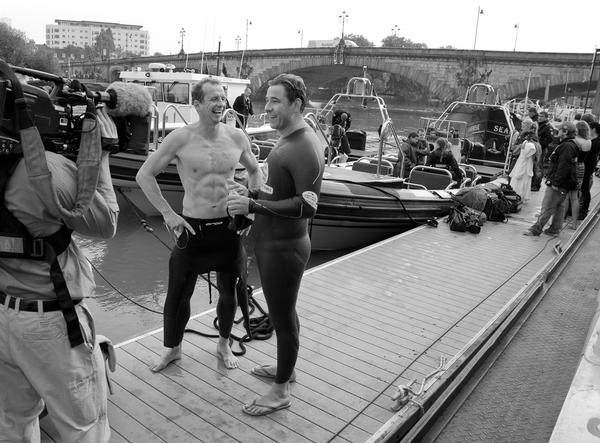
Whyte and Cahill say celebrities, such as David Walliams, can help to encourage and inspire
Whyte trained David Walliams for his English Channel swim, quite an unusual endeavour at the time
Jo Brand’s walk across the UK inspired many people who related to her journey
In 2012, John Bishop (L) completed a 290-mile triathlon for Sport Relief
https://www.leisureopportunities.co.uk/images/2021/125315_488360.jpg
The two have teamed up to create a free, virtual couch-to-exercise programme
HCM magazine
HCM People

Jamie Clements

The Breath Coach
I experienced a blissful feeling of joy I hadn’t felt since I was a kid
HCM magazine
Collaborations with the medical profession and greater aspirations around wellbeing are creating a need for more experts in our sector. It’s time to reboot our thinking around the workforce
HCM magazine
Strength training is evolving, driven by changing consumer preferences. Julie Cramer talks to innovators about how their products are meeting this demand
HCM magazine
As the entrepreneur who started Wexer, Fresh Fitness, Fitness DK and Repeat, as well as being a former elite athlete, Rasmus Ingerslev’s life looked perfect from the outside, but onthe inside it was a different story. He talks to Kath Hudson about healing old wounds
HCM magazine
Raphael Cuomo explores the powerful link between addiction, health and behaviour change
HCM promotional features
Sponsored
SnowDome Fitness has added 50 per cent more space with cutting-edge Technogym solutions
HCM promotional features
Sponsored
Find out how your gym can tap into the corporate wellness boom
HCM promotional features
Sponsored
Greg Bradley looks at the shift towards strength training in gyms and advises on how operators can create the ultimate training environment
HCM promotional features
Sponsored
Starpool supports Olympic champion Marcell Jacobs, says Riccardo Turri
HCM promotional features
Sponsored
David Lloyd is stepping up its commitment to women’s health as it continues to explore what fit-for-purpose looks like for the female population
HCM promotional features
Sponsored
Third Space partnered with IndigoFitness to deliver a bespoke training space for its new club at The Whiteley
HCM promotional features
Sponsored
EGYM has opened a new HQ in Paternoster Square, London and revealed a range of new launches
HCM promotional features
Promotion
Performance Health Systems, manufacturer of Power Plate, has a new CEO, with an ambitious vision for the company
HCM promotional features
Promotion
BLK BOX has been reimagining elite performance spaces for more than a decade. Founder and former athlete, Greg Bradley, tells us what it takes
HCM promotional features
Latest News
An ambitious women’s only strength and lifting studio concept is set to launch in Dallas this ...
Latest News
Finnish outdoor fitness equipment specialist, Omnigym, has partnered with charity, Emmaüs Solidarité, to launch an ...
Latest News
Virgin Active has officially opened its redesigned Mayfair club, unveiling its latest Social Wellness Club ...
Latest News
Europe’s largest low-cost operator, Basic-Fit, has agreed to acquire 41 Wellyou clubs in Germany for ...
Latest News
Longevity is the most important motivator for today’s exercisers and social connection is key, according ...
Latest News
Until has opened its fourth club at Canary Wharf, in the iconic YY London building. ...
Latest News
Ben Allen has been appointed managing director at Common Bond. Having set the company up ...
Latest News
Les Mills, whose name became synonymous with one of the world's leading fitness brands, has ...
Opinion
promotion
Strength training has moved from the margins to the mainstream.
Opinion: Building smarter strength spaces for today’s operators
Featured supplier news
Featured supplier news: CoverMe extends matching service to personal training, rewriting how members and personal trainers connect
CoverMe, the global leader in fitness workforce management, today launches CoverMe PT, an on-demand personal training platform that connects the right personal trainer to the right client in under 10 seconds.
Featured supplier news
Featured supplier news: Cornerstone Connect helps Active Blackpool tackle health inequalities
Active Blackpool is deploying Cornerstone Connect, a new digital interface allowing disparate information from multiple systems to be aggregated into one dataset, to support its focus on reducing health inequalities and improving healthy life expectancy.
Company profiles
Company profile: Future Fit
Since 1993, Future Fit have been consistently raising the bar when it comes to training ...
Company profiles
Company profile: Technogym UK Ltd
Technogym provides a complete Ecosystem made of connected smart fitness equipment, digital services and training ...
Supplier Showcases
Supplier Showcase - From nightclub to health club
Supplier Showcases
Supplier Showcase - Future-proofing
Catalogue Gallery
Click on a catalogue to view it online
Featured press releases
Panatta press release: On Air Fitness chooses Panatta and its Made in Italy fitness equipment
French fitness chain On Air Fitness, with 113 clubs across France and internationally (Spain, Morocco and Portugal) and more than 430,000 members, has chosen to introduce Panatta equipment — a 12-machine circuit from the premium Free Weight Special line —
Featured press releases
ukactive press release: UK Active announces plans for National Fitness Day 2026
UK Active has announced the details of National Fitness Day 2026, with the flagship campaign set to take place on Wednesday 16 September 2026.
Directory
Water experiences and hydrotherapy solutions
Aquaform s.r.l.: Water experiences and hydrotherapy solutions
Spa and beauty equipment
Living Earth Crafts: Spa and beauty equipment
Fitness tracking platform
SpiviTech: Fitness tracking platform
Industrial washing machines
Miele Company Limited: Industrial washing machines
Lockers
Crown Sports Lockers: Lockers
Hot tubs
MSpa International Ltd: Hot tubs
Property & Tenders
Stratford, East London.
Lee Valley Regional Park Authority
Property & Tenders
Y Felinheli, LL56 4QN
Newmark
Property & Tenders
Diary dates
21-24 Sep 2026
The Langham Huntington Pasadena , Pasadena, United States
Diary dates
06-08 Oct 2026
Messe Stuttgart, Stuttgart, Germany
Diary dates
22-22 Oct 2026
QEII Conference Centre, London,
Diary dates
26-29 Oct 2027
Koelnmesse Exhibition Centre, Cologne, Germany
Diary dates

features

Interview: Greg Whyte & Kevin Cahill

The duo have joined forces to launch a free virtual ‘couch to exercise’ programme called RISE. They talk to HCM about what they’ve learned from collaborating on Sport Relief and how they’re using this knowledge to deliver the new not-for-profit

Published in Health Club Management 2021 issue 1
Kevin Cahill (L) and Greg Whyte (R) teamed up on Sport Relief in 2005
The RISE programme will give people the physical literacy and a nurtured baseline of confidence to encourage them into other forms of exercise in gyms and leisure centres

How successful was Sport Relief?
Whyte: Sport Relief was instrumental in changing attitudes towards sport. When I first teamed up with Kevin, back in 2005, I was coaching David Walliams to swim the English Channel. At the time, open water swimming was seen as something very niche and out of the ordinary. David and I would be training in the river and people would ask if everything was OK. Had we fallen in?

You can clearly track the popularity of open water swimming from 2006; it literally took off from that point. Today open water swimming is for the masses. There are now thousands of venues and open water events around the country.

Cahill: Sport Relief’s ultimate objective was to reach the poorest and most disadvantaged. Yes, to fundraise for these groups but also to inspire, encourage and motivate the most marginalised in our society.

The Sport Relief Mile was a great example of this. People simply had to run a mile. It wasn’t a marathon or an extreme challenge, but it was tangible and engagement was high, with over 80,000 people taking part in its first year across the UK.

The Sport Relief Mile ran biannually from 2004 – 2016. The diversity of the participants was noticeable, year on year. Five-year-old children were crossing the finish line with their grandmothers. People of all fitness levels and demographic groups were represented. Its inclusivity is what ultimately made the challenge a success.

The most inspirational challenge – one people really identified with – was Jo Brand’s.

Jo completed her ‘Hell of a Walk’ in 2016, when she walked east to west across the UK, a route of 135.7 miles. Although it wasn’t the most physically difficult, what stood out was how Jo’s challenge was relatable, believable and inspirational. Jo said she wanted to demonstrate that ‘fat old women can walk!’

People came out to accompany her on sections of the walk, to cheer her on. Her supporters were often ‘like’ her; women of a certain age and fitness level. She looked like them and sounded like them. If Jo could do it, so could they!

What’s the purpose of RISE?
Whyte: RISE’s objective is to reach and engage with people who are inactive. The sedentary population of the UK alone is 11.3 million people. That’s a quarter of our population who are active for less than 30 minutes per week (WHO guidelines suggest 30 minutes on most days of the week for health).

Having previously collaborated on the Couch to 5k initiative, I realised even this assumes a level of confidence and physical literacy to take the steps to exercise.

RISE is different. Our approach starts with Couch to the Front Door for people who lack the know-how and confidence to pass even this basic threshold.

RISE doesn’t assume its users have any pre-conditioning, any self-confidence or even self-esteem related to exercise. It really is taking a step back in order to move forward.

Cahill: So many gyms and online exercise programmes make the assumption there is a baseline level of fitness; that the user already has an interest in fitness or a particular sport. At our local gym you feel you need to be fit to be a member. RISE doesn’t make such assumptions. The RISE programme will give its users a taster of what activity can look like, and aims to give them the physical literacy and a nurtured baseline of confidence that will ultimately funnel them into other forms of exercise, such as gyms and leisure centres.

The barrier to participation for the Sport Relief Mile was relatively low and RISE is also trying to remove those walls to participation, by making the programme free and by keeping the format simple.

One of our motivations for RISE is that the COVID-19 pandemic has and will continue to cause havoc to the wellbeing of our society. We will be feeling the aftermath of COVID, in the form of mental as well as physical health problems, for a long time.

As we know, exercise can help with the wellbeing of both our mind and body and an accessible programme needs to be in place to support everyone who needs it. A lot of people in the UK are going to be very damaged and will need something to help get their heads, bodies and emotions together. RISE will help them feel more centred and better about themselves.

How did you come up with the concept of Sport Relief and why was it successful, year on year?
Cahill: Sportspeople were becoming more iconic and internationally famous beyond sport; heroes such as Beckham and Federer crossed cultural and geographical boundaries and I felt there was an opportunity to replicate what we’d achieved with our comedians by connecting with them.

Together with Steve Redgrave, who’d just won his fifth Olympic gold medal, we contacted sports stars and entertainers to join the Sport Relief campaign. The response was astounding. Sport Relief captured the heart of the nation. It was a win-win. The people who took part enjoyed it, the money raised went to good causes, the BBC got great programming.

The proposition of Sport Relief made sense; to utilise the power and passion of sport to do social good. Comic Relief certainly influenced the number of events that use sport for social change and Sport Relief was a breakout entity that drove this coming together.

What have you learned about harnessing the influence of celebrities?
Cahill: Our star ambassadors will play a critical role in promoting the RISE programme – simply talking about the scheme to help get the word out.

The trick with artists and celebrities is to get them to do things that don’t take up too much time, but have meaningful impact, both for society and their reputation.

We hope that some of the comedians who worked with us on Comic Relief might help out again, to promote, encourage and inspire both the uptake and the completion of the programme.

Why do you think RISE will motivate people where gym operators have faltered?
Whyte: Leisure providers haven’t failed. The 11 million inactive people are difficult to identify, tricky to connect with and harder to get started. RISE is the bridge between inactivity and regular activity. It’s a launching point to physical wellbeing.

RISE is removing the stumbling blocks to entry into physical activity – firstly, it’s free, secondly, time isn’t an issue, as people can take part at their own convenience, and thirdly, they don’t need any equipment and can do it in the privacy of their own home.

It’s web-based, so people won’t need to download any apps or have a smartphone to take part. It’s delivered via a simple, user-friendly, web platform that’s been designed, created and donated by the team at Venueserve Fitness, a company that currently offers a white-labelled, virtual exercise platform to health club operators.

RISE consists of three six-week programmes and has gentle and targeted progression in each stage. Block one is chair-based exercise. Block two is very low intensity interval activity, and Block three is low intensity interval activity. Our team of instructors, who were filmed at the Marlow Club, are middle-aged men and women who have the expertise to give the user the confidence in the programme. We also have a yoga-based programme, focussing on agility and a mindfulness programme.

Getting people to this point is a powerful tool. By completing the three phases, the participant will gain the prerequisite level of fitness, and confidence to commence other activities, such as a ‘mainstream’ class, other virtual online exercises or even Parkrun.

Ultimately, RISE will give people the confidence to start something new; to incorporate physical activity into their daily life.

Why RISE and why now?
Whyte: Although RISE isn’t directly linked to the pandemic, I think COVID-19 has forced us to look again at social inequalities, and how deprivation impacts at every stage of life, including their experience of COVID-19.

The pandemic has normalised online connections, from business Zoom meetings to Facetiming with granny over Christmas. The RISE programme wouldn’t have been achievable even a year ago; the pandemic has made us all more comfortable with virtual and remote interactions.

RISE is being funded through donations and sponsors – effectively it costs one pound to put one person through the programme. RISE is about social good for all.

How will success be measured?
Whyte: Our goal is for RISE to reach one million people. However, it’s not just about getting a million people to sign up, we want a million people to complete the 18-week programme.

This isn’t about money, it’s a not-for-profit scheme and we’re actively looking for sponsors and partners to help us deliver the programme – it’s about people getting on board, enjoying it, keeping at it. This can have a profound knock-on effect on many sectors, including health and fitness. We want those who have completed the programme to feel ready to move on to their next set of wellbeing goals.

Find out more: riseexercise.com

Greg Whyte

Greg Whyte, an expert in sports and exercise science, is well-known for his involvement in Sport Relief: since 2006 he’s trained, motivated and successfully coached people taking part in 32 Sport and Comic Relief Challenges.

Kevin Cahill

Kevin Cahill has been CEO of Comic Relief since 1997. It was his idea to launch Sport Relief in 2002 and he played a key role in the Make Poverty History and Live 8 campaigns. After stepping down in September 2016 he was made an honorary life president of the charity.
Whyte and Cahill say celebrities, such as David Walliams, can help to encourage and inspire
Whyte trained David Walliams for his English Channel swim, quite an unusual endeavour at the time
Jo Brand’s walk across the UK inspired many people who related to her journey
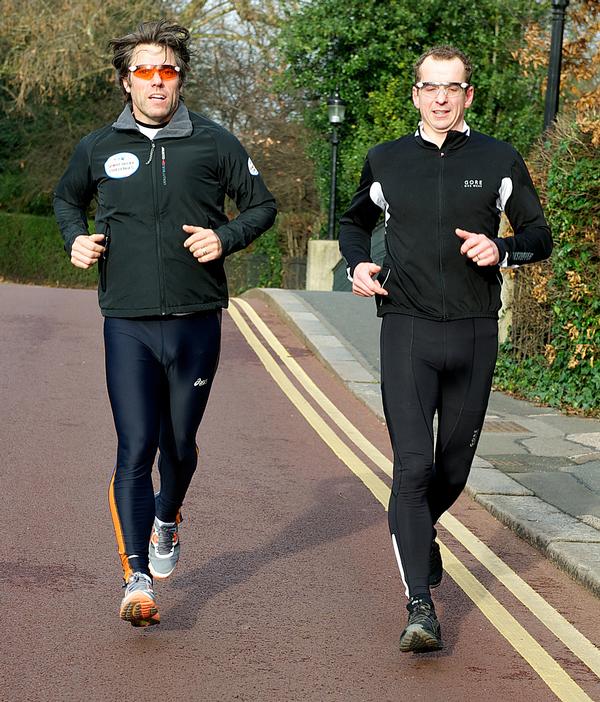
In 2012, John Bishop (L) completed a 290-mile triathlon for Sport Relief
https://www.leisureopportunities.co.uk/images/2021/125315_488360.jpg
The two have teamed up to create a free, virtual couch-to-exercise programme
Latest News
An ambitious women’s only strength and lifting studio concept is set to launch in Dallas this ...
Latest News
Finnish outdoor fitness equipment specialist, Omnigym, has partnered with charity, Emmaüs Solidarité, to launch an ...
Latest News
Virgin Active has officially opened its redesigned Mayfair club, unveiling its latest Social Wellness Club ...
Latest News
Europe’s largest low-cost operator, Basic-Fit, has agreed to acquire 41 Wellyou clubs in Germany for ...
Latest News
Longevity is the most important motivator for today’s exercisers and social connection is key, according ...
Latest News
Until has opened its fourth club at Canary Wharf, in the iconic YY London building. ...
Latest News
Ben Allen has been appointed managing director at Common Bond. Having set the company up ...
Latest News
Les Mills, whose name became synonymous with one of the world's leading fitness brands, has ...
Latest News
People taking GLP-1 weight loss medications such as Ozempic, Wegovy, Mounjaro and Zepbound may be ...
Latest News
Low-cost gym operator, PureGym, is trialling recovery zones at two of its UK sites, democratising ...
Latest News
In a milestone moment, mental health has become a core part of CIMSPA’s occupational professional ...
Opinion
promotion
Strength training has moved from the margins to the mainstream.
Opinion: Building smarter strength spaces for today’s operators
Featured supplier news
Featured supplier news: CoverMe extends matching service to personal training, rewriting how members and personal trainers connect
CoverMe, the global leader in fitness workforce management, today launches CoverMe PT, an on-demand personal training platform that connects the right personal trainer to the right client in under 10 seconds.
Featured supplier news
Featured supplier news: Cornerstone Connect helps Active Blackpool tackle health inequalities
Active Blackpool is deploying Cornerstone Connect, a new digital interface allowing disparate information from multiple systems to be aggregated into one dataset, to support its focus on reducing health inequalities and improving healthy life expectancy.

Company profiles
Company profile: Future Fit
Since 1993, Future Fit have been consistently raising the bar when it comes to training ...

Company profiles
Company profile: Technogym UK Ltd
Technogym provides a complete Ecosystem made of connected smart fitness equipment, digital services and training ...
Supplier Showcases
Supplier Showcase - From nightclub to health club
Supplier Showcases
Supplier Showcase - Future-proofing
Catalogue Gallery
Click on a catalogue to view it online
Featured press releases
Panatta press release: On Air Fitness chooses Panatta and its Made in Italy fitness equipment
French fitness chain On Air Fitness, with 113 clubs across France and internationally (Spain, Morocco and Portugal) and more than 430,000 members, has chosen to introduce Panatta equipment — a 12-machine circuit from the premium Free Weight Special line —
Featured press releases
ukactive press release: UK Active announces plans for National Fitness Day 2026
UK Active has announced the details of National Fitness Day 2026, with the flagship campaign set to take place on Wednesday 16 September 2026.
Directory
Water experiences and hydrotherapy solutions
Aquaform s.r.l.: Water experiences and hydrotherapy solutions
Spa and beauty equipment
Living Earth Crafts: Spa and beauty equipment
Fitness tracking platform
SpiviTech: Fitness tracking platform
Industrial washing machines
Miele Company Limited: Industrial washing machines
Lockers
Crown Sports Lockers: Lockers
Hot tubs
MSpa International Ltd: Hot tubs
Property & Tenders
Stratford, East London.
Lee Valley Regional Park Authority
Property & Tenders
Y Felinheli, LL56 4QN
Newmark
Property & Tenders
Diary dates
21-24 Sep 2026
The Langham Huntington Pasadena , Pasadena, United States
Diary dates
06-08 Oct 2026
Messe Stuttgart, Stuttgart, Germany
Diary dates
22-22 Oct 2026
QEII Conference Centre, London,
Diary dates
26-29 Oct 2027
Koelnmesse Exhibition Centre, Cologne, Germany
Diary dates
Search news, features & products:
Find a supplier:
Partner sites