








The Leisure Media Company Ltd
Follow Health Club Management on Twitter Like Health Club Management on Facebook Join the discussion with Health Club Management on LinkedIn
FITNESS, HEALTH, WELLNESS

features

Policy: Living longer better

As our sector starts to recover, there will be changes in the needs of communities, consumers and the provision of opportunities. To explore this subject we hosted a virtual round table to better understand views on key workforce questions
Published in Health Club Management 2021 issue 5
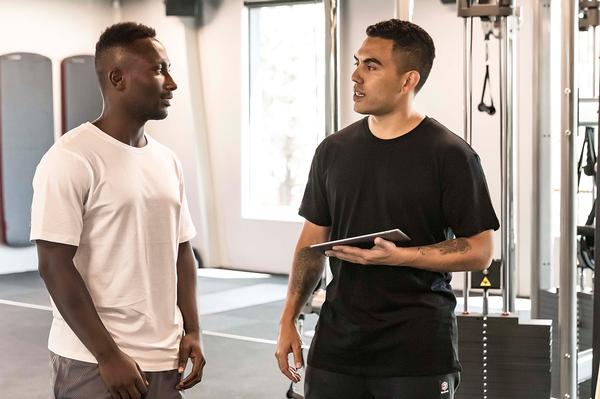
The health service needs to prescribe activity every time a drug is prescribed, says Gray / photo: les mills

The What?
Sport England tells us four out of 10 people are less active now than before the pandemic.

The Why?
As a nation, we need to learn lessons from COVID-19 and prove the value of physical activity to consumers, the health sector and the government.

The How?
Our facilities need to become more inclusive and community-based, but what does this mean for our workforce? 

What will be the main impact of COVID-19 on activity levels?
Muir: There’s evidence activity levels are down and weight is up. There will be increased awareness of the impact of inactivity and an opportunity for the fitness industry workforce to reach subgroups of society they’ve never reached before. 

Tara: A post-pandemic world represents one of the greatest opportunities for our sector in a generation. Government messaging constantly reinforced the importance of staying active throughout this last year and we know many people have taken steps for the first time to develop an active lifestyle.

Gyms and leisure centres will be influential, but we must remember not everyone wants to join a gym. Many enjoy a plethora of ways of staying active, and new habits have formed. Ensuring our sector broadens its offer in providing safe and enjoyable active environments that everyone can access is essential.

Stuart: The pandemic will leave a legacy of behaviour change. The economic impact will mean disposable income available for sport and leisure will be limited. People will look for low-cost, flexible, hyper-local activity. 

Elaine: The UK is one of the most obese countries in Europe, so we must reposition and reimagine our sector and ecosystem to enable people to be more active. The gaps between those who have access to exercise and physical activity and the motivation to take part and those who don’t, will be wider than before. There will be a need for our sector to rethink how to engage with those people to save the nation’s health.

What will these changes mean for the development of the sport and physical activity workforce?
Tara: There are many opportunities for our sector. To take advantage of these, we need to prioritise a new style and skill set in leadership that allows us to create a different type of approach to workforce development locally.

We need a leadership that can adopt a whole system approach to active lifestyles and work with local authorities, education providers and employers to show how healthy localities can impact social and economic outcomes.

Stuart: We predict a significant contraction in the workforce for employed roles, which means displaced workers will either look to other sectors or set up new opportunities.

Less employment in facilities will necessitate adaptation and becoming more flexible with where they work. Micro gyms, pop-up gyms, mobile activity provision at home or in community centres etc, will become increasingly essential.

Elaine: Opportunities for people to train in new and reimagined roles will be necessary to address a more holistic and community-based approach. Workforce development will need to ensure professionals can deliver a fully-rounded service and understand their local community’s needs and priorities to be part of the solution. 

What opportunities do you see?  
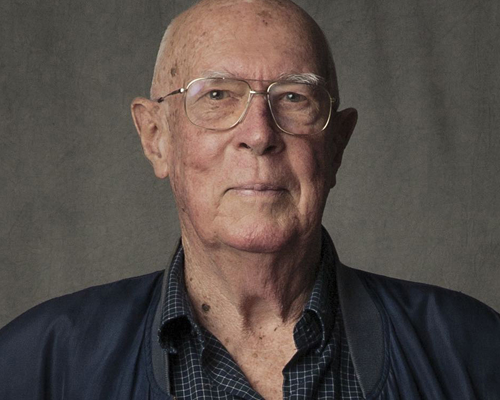
Muir: The health service needs to help – prescribing activity every time a drug is prescribed. 

Tara: There needs to be a greater understanding of the health and social priorities of local authorities. We need to work with local partners to become catalysts for change.

We’ll work with key stakeholders, operators, active partnerships and sports bodies to shape and support a workforce around impactful, sustainable systemic change.

Stuart: The possibilities are endless: retraining opportunities, employment solutions such as apprenticeships, traineeships and kickstart, as well as providing the support and guidance for people to start micro-businesses and social enterprises.

We could establish local and community employment collectives and trust banks, so people can access ‘micro credit’ and short hours employment can be aggregated to become something longer-term. 

Elaine: Having to adapt to a new way of working and living under lockdown has provided the opportunity to do things differently, embrace technology, undertake learning and reach out to others. The result will be our workforce seeking a more flexible way of working and collaborating. 

How can we ensure that wellbeing through exercise is available to all on a more equitable basis, rather than being the preserve of the well-off?
Muir: The NHS needs to shift £100m from the drugs budget to the activity therapy budget.

Tara: We have the most incredible ‘product’, which anyone can access, regardless of gender, background, postcode or finances.

If product focus is one step, then the next must surely be delivery. An inclusive and creative model, providing accessible, safe, enjoyable environments, is ours to share.

Collaboration, contribution and solution firmly ensconced in every delivery model’s mindset and values are also key. 

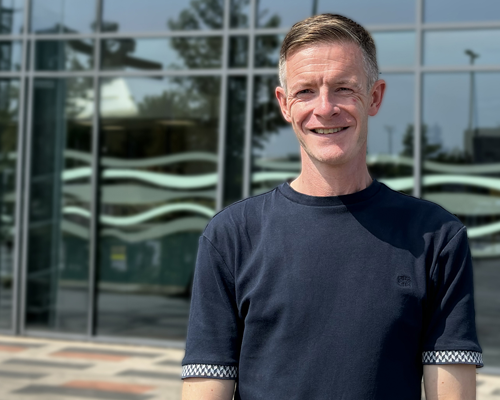
Stuart: Our [Sport England] strategy has a major aim to connect efficiently with health. Our workforce must be professionally recognised and regulated to make social prescribing easier and part of the standard health offering. 

We’ll also extend our pilot work with occupational therapists based in leisure facilities to make this support more easily accessible. 

Elaine: We need to educate our workforce and the public about the benefits of leading a healthy life. The workforce needs to understand that the answer lies not in fitness and facilities but in communities and health.

The public needs to be made aware of the many opportunities they have to become healthier in their local areas, assisted by a professional and credible workforce recognised by the health sector. 

Should we be ‘semi-medicalising’ our workforce?
Muir: Long-COVID is just another long-term condition; the workforce needs the confidence, skill and knowledge to treat it as such.

Tara: We have excellent standards of impactful practice such as cancer prehab, diabetes clinics etc. We do, however, need to continue to educate advocates, such as GPs and occupational and mental health professionals, about the benefits of activity.

Our profession is skilled-up to increase activity among the population – we can help prevent people from becoming ill – but our role needs to be better understood by allied health professions. That’s not to say that our workforce shouldn’t always look to upskill, but I don’t think ‘medicalising’ our professionals will encourage more people to get active, whereas getting the support and buy-in from our healthcare colleagues will.

Stuart: The workforce needs a better understanding of health conditions generally. Having a workforce able to engage with people with long-term health conditions is essential to meeting their needs and giving them confidence that they will be cared for effectively.

Elaine: There’s a step to be taken before ‘semi-medicalising’ the workforce. That is to change behaviours and mindsets about our sector’s training and what it does.

We need to reimagine our sector and the vital part we play in people’s health. Only with a willingness to change our services will we present the opportunities for a different approach and essential skills.

How can we get funding to reskill the sector?
Tara: Funding is critical. We need to work with the government to ensure activity is at the forefront of their minds when rebuilding society. We’ve got to do that in a more unified way than previously.

Stuart: We need a stronger understanding of the employment and skills required of our sector – we need granular knowledge from the ground up.

Then we’ll be able to tap into local sources of skills funding, influence education providers, and build a national picture to develop an industrial strategy and explore the possibility of a ‘sector deal’ with the government.

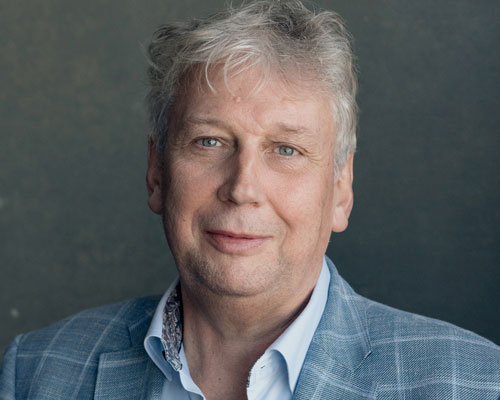
Elaine: We need to take a whole system approach when considering what skills are required to create a ‘National Wellness Service’. This would require buy-in and funding from local and national agencies. The measurements of such training would link to local and national priorities and outcomes.

"The NHS needs to shift £100m from the drugs budget to the activity therapy budget " – Muir Gray Optimal Ageing

"We need to take a whole system approach to create a ‘National Wellness Service’" – Elaine Briggs, FutureFit Training

" Our role needs to be better understood in the allied health professions " – Tara Dillon, CIMSPA

"We need to build an industrial strategy and explore the possibility of a sector deal with the government" – Stuart Armstrong, Sport England
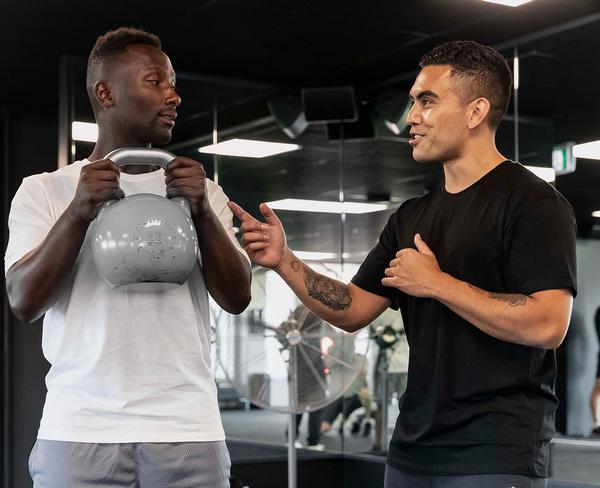

We need to educate the workforce and the public about the benefits of leading a healthy life / photo: les mills
https://www.leisureopportunities.co.uk/images/2021/355660_210480.jpg
Our panel of experts discuss ways to upskill the workforce in response to the challenges of the pandemic
HCM magazine
As the entrepreneur who started Wexer, Fresh Fitness, Fitness DK and Repeat, as well as being a former elite athlete, Rasmus Ingerslev’s life looked perfect from the outside, but onthe inside it was a different story. He talks to Kath Hudson about healing old wounds
HCM magazine
HCM People

Stephen Price

Founder, SP&Co Group
Working in public health over the last few years has lit up parts of my brain again
HCM magazine
Small improvements to sleep, diet and physical activity have major benefits for the heart, according to new research from the University of Sydney
HCM magazine
If the health service is to survive, we must recognise that it is a disease service – and that wellbeing rests with us, says the activity advocate and healthy ageing champion. He talks to Kate Cracknell
HCM magazine
Strength training is evolving, driven by changing consumer preferences. Julie Cramer talks to innovators about how their products are meeting this demand
HCM promotional features
Sponsored
Starpool supports Olympic champion Marcell Jacobs, says Riccardo Turri
HCM promotional features
Sponsored
SnowDome Fitness has added 50 per cent more space with cutting-edge Technogym solutions
HCM promotional features
Sponsored
David Lloyd is stepping up its commitment to women’s health as it continues to explore what fit-for-purpose looks like for the female population
HCM promotional features
Sponsored
Third Space partnered with IndigoFitness to deliver a bespoke training space for its new club at The Whiteley
HCM promotional features
Sponsored
Greg Bradley looks at the shift towards strength training in gyms and advises on how operators can create the ultimate training environment
HCM promotional features
Sponsored
Find out how your gym can tap into the corporate wellness boom
HCM promotional features
Sponsored
EGYM has opened a new HQ in Paternoster Square, London and revealed a range of new launches
HCM promotional features
Promotion
BLK BOX has been reimagining elite performance spaces for more than a decade. Founder and former athlete, Greg Bradley, tells us what it takes
HCM promotional features
Sponsored
Pulse Fitness has created a new health club delivering an elevated wellness experience
HCM promotional features
Latest News
Australia’s fast-growing fitness network, Viva Leisure, is adding a low-cost gym brand to its already ...
Latest News
Speedflex has launched a strength training programme for 10 to 16-year-olds, to make it safer, ...
Latest News
Tewinbury Farm Hotel in Hertfordshire, UK is expanding its premium leisure proposition with the launch ...
Latest News

Work is underway in Madrid on one of Europe’s most significant multi-functional complexes, ...

Latest News
PureGym is encouraging people to step away from their screens and go for a walk, ...
Latest News
Small improvements to sleep, diet quality, and physical activity, made in combination lead to a ...
Latest News
Therme Manchester’s 28-acre development, which will include interconnected glass pavilions that measure 65,000sq m, will ...
Latest News
The Yard Gym (TYG) is to become Nike Training’s official global training partner in a ...
Opinion
promotion
Strength training has moved from the margins to the mainstream.
Opinion: Building smarter strength spaces for today’s operators
Featured supplier news
Featured supplier news: W3Fit EMEA celebrates its fifth anniversary
Celebrating its milestone 5th anniversary, W3Fit EMEA returns in 2026 with an unmissable gathering of the Health & Fitness industry’s most influential leaders.
Featured supplier news
Featured supplier news: Supporting long-term health: why whole body vibration belongs in clinical settings
As healthcare continues to shift towards prevention, there’s a growing focus on helping people stay active, independent and feeling good for longer.
Company profiles
Company profile: IndigoFitness
IndigoFitness creates bespoke training spaces for commercial, education, public-sector, and specialist clients including the MoD ...
Company profiles
Company profile: GymNation
Ranging from 25,000 to 60,000 square feet, GymNation is open 24/7, 365 days a year ...
Supplier Showcases
Supplier Showcase - From nightclub to health club
Supplier Showcases
Supplier Showcase - Future-proofing
Catalogue Gallery
Click on a catalogue to view it online
Featured press releases
ukactive press release: Are they Fit for Office? UK Active and Technogym throw down the gauntlet to MPs
Hundreds of staff, MPs and Peers from across Westminster have signed up for the Fit for Office parliamentary physical activity challenge, which takes place throughout June and is hosted by ukactive and Technogym.
Featured press releases
Innerva press release: Lex Leisure’s power-assisted exercise suite smashes targets in record time
Crook Log Leisure Centre has more than doubled the membership target for its new power- assisted exercise suite in less than six months.
Directory
Spa and beauty equipment
Living Earth Crafts: Spa and beauty equipment
Hot tubs
MSpa International Ltd: Hot tubs
Water experiences and hydrotherapy solutions
Aquaform s.r.l.: Water experiences and hydrotherapy solutions
Fitness tracking platform
SpiviTech: Fitness tracking platform
Lockers
Crown Sports Lockers: Lockers
Industrial washing machines
Miele Company Limited: Industrial washing machines
Property & Tenders
Stratford, East London.
Lee Valley Regional Park Authority
Property & Tenders
Y Felinheli, LL56 4QN
Newmark
Property & Tenders
Diary dates
13-13 Jun 2026
Worldwide, Various,
Diary dates
21-24 Sep 2026
The Langham Huntington Pasadena , Pasadena, United States
Diary dates
06-08 Oct 2026
Messe Stuttgart, Stuttgart, Germany
Diary dates
22-22 Oct 2026
QEII Conference Centre, London,
Diary dates
26-29 Oct 2027
Koelnmesse Exhibition Centre, Cologne, Germany
Diary dates

features

Policy: Living longer better

As our sector starts to recover, there will be changes in the needs of communities, consumers and the provision of opportunities. To explore this subject we hosted a virtual round table to better understand views on key workforce questions

Published in Health Club Management 2021 issue 5
The health service needs to prescribe activity every time a drug is prescribed, says Gray / photo: les mills

The What?
Sport England tells us four out of 10 people are less active now than before the pandemic.

The Why?
As a nation, we need to learn lessons from COVID-19 and prove the value of physical activity to consumers, the health sector and the government.

The How?
Our facilities need to become more inclusive and community-based, but what does this mean for our workforce? 

What will be the main impact of COVID-19 on activity levels?
Muir: There’s evidence activity levels are down and weight is up. There will be increased awareness of the impact of inactivity and an opportunity for the fitness industry workforce to reach subgroups of society they’ve never reached before. 

Tara: A post-pandemic world represents one of the greatest opportunities for our sector in a generation. Government messaging constantly reinforced the importance of staying active throughout this last year and we know many people have taken steps for the first time to develop an active lifestyle.

Gyms and leisure centres will be influential, but we must remember not everyone wants to join a gym. Many enjoy a plethora of ways of staying active, and new habits have formed. Ensuring our sector broadens its offer in providing safe and enjoyable active environments that everyone can access is essential.

Stuart: The pandemic will leave a legacy of behaviour change. The economic impact will mean disposable income available for sport and leisure will be limited. People will look for low-cost, flexible, hyper-local activity. 

Elaine: The UK is one of the most obese countries in Europe, so we must reposition and reimagine our sector and ecosystem to enable people to be more active. The gaps between those who have access to exercise and physical activity and the motivation to take part and those who don’t, will be wider than before. There will be a need for our sector to rethink how to engage with those people to save the nation’s health.

What will these changes mean for the development of the sport and physical activity workforce?
Tara: There are many opportunities for our sector. To take advantage of these, we need to prioritise a new style and skill set in leadership that allows us to create a different type of approach to workforce development locally.

We need a leadership that can adopt a whole system approach to active lifestyles and work with local authorities, education providers and employers to show how healthy localities can impact social and economic outcomes.

Stuart: We predict a significant contraction in the workforce for employed roles, which means displaced workers will either look to other sectors or set up new opportunities.

Less employment in facilities will necessitate adaptation and becoming more flexible with where they work. Micro gyms, pop-up gyms, mobile activity provision at home or in community centres etc, will become increasingly essential.

Elaine: Opportunities for people to train in new and reimagined roles will be necessary to address a more holistic and community-based approach. Workforce development will need to ensure professionals can deliver a fully-rounded service and understand their local community’s needs and priorities to be part of the solution. 

What opportunities do you see?  
Muir: The health service needs to help – prescribing activity every time a drug is prescribed. 

Tara: There needs to be a greater understanding of the health and social priorities of local authorities. We need to work with local partners to become catalysts for change.

We’ll work with key stakeholders, operators, active partnerships and sports bodies to shape and support a workforce around impactful, sustainable systemic change.

Stuart: The possibilities are endless: retraining opportunities, employment solutions such as apprenticeships, traineeships and kickstart, as well as providing the support and guidance for people to start micro-businesses and social enterprises.

We could establish local and community employment collectives and trust banks, so people can access ‘micro credit’ and short hours employment can be aggregated to become something longer-term. 

Elaine: Having to adapt to a new way of working and living under lockdown has provided the opportunity to do things differently, embrace technology, undertake learning and reach out to others. The result will be our workforce seeking a more flexible way of working and collaborating. 

How can we ensure that wellbeing through exercise is available to all on a more equitable basis, rather than being the preserve of the well-off?
Muir: The NHS needs to shift £100m from the drugs budget to the activity therapy budget.

Tara: We have the most incredible ‘product’, which anyone can access, regardless of gender, background, postcode or finances.

If product focus is one step, then the next must surely be delivery. An inclusive and creative model, providing accessible, safe, enjoyable environments, is ours to share.

Collaboration, contribution and solution firmly ensconced in every delivery model’s mindset and values are also key. 

Stuart: Our [Sport England] strategy has a major aim to connect efficiently with health. Our workforce must be professionally recognised and regulated to make social prescribing easier and part of the standard health offering. 

We’ll also extend our pilot work with occupational therapists based in leisure facilities to make this support more easily accessible. 

Elaine: We need to educate our workforce and the public about the benefits of leading a healthy life. The workforce needs to understand that the answer lies not in fitness and facilities but in communities and health.

The public needs to be made aware of the many opportunities they have to become healthier in their local areas, assisted by a professional and credible workforce recognised by the health sector. 

Should we be ‘semi-medicalising’ our workforce?
Muir: Long-COVID is just another long-term condition; the workforce needs the confidence, skill and knowledge to treat it as such.

Tara: We have excellent standards of impactful practice such as cancer prehab, diabetes clinics etc. We do, however, need to continue to educate advocates, such as GPs and occupational and mental health professionals, about the benefits of activity.

Our profession is skilled-up to increase activity among the population – we can help prevent people from becoming ill – but our role needs to be better understood by allied health professions. That’s not to say that our workforce shouldn’t always look to upskill, but I don’t think ‘medicalising’ our professionals will encourage more people to get active, whereas getting the support and buy-in from our healthcare colleagues will.

Stuart: The workforce needs a better understanding of health conditions generally. Having a workforce able to engage with people with long-term health conditions is essential to meeting their needs and giving them confidence that they will be cared for effectively.

Elaine: There’s a step to be taken before ‘semi-medicalising’ the workforce. That is to change behaviours and mindsets about our sector’s training and what it does.

We need to reimagine our sector and the vital part we play in people’s health. Only with a willingness to change our services will we present the opportunities for a different approach and essential skills.

How can we get funding to reskill the sector?
Tara: Funding is critical. We need to work with the government to ensure activity is at the forefront of their minds when rebuilding society. We’ve got to do that in a more unified way than previously.

Stuart: We need a stronger understanding of the employment and skills required of our sector – we need granular knowledge from the ground up.

Then we’ll be able to tap into local sources of skills funding, influence education providers, and build a national picture to develop an industrial strategy and explore the possibility of a ‘sector deal’ with the government.

Elaine: We need to take a whole system approach when considering what skills are required to create a ‘National Wellness Service’. This would require buy-in and funding from local and national agencies. The measurements of such training would link to local and national priorities and outcomes.

"The NHS needs to shift £100m from the drugs budget to the activity therapy budget " – Muir Gray Optimal Ageing

"We need to take a whole system approach to create a ‘National Wellness Service’" – Elaine Briggs, FutureFit Training

" Our role needs to be better understood in the allied health professions " – Tara Dillon, CIMSPA

"We need to build an industrial strategy and explore the possibility of a sector deal with the government" – Stuart Armstrong, Sport England

We need to educate the workforce and the public about the benefits of leading a healthy life / photo: les mills

https://www.leisureopportunities.co.uk/images/2021/355660_210480.jpg
Our panel of experts discuss ways to upskill the workforce in response to the challenges of the pandemic
Latest News
Australia’s fast-growing fitness network, Viva Leisure, is adding a low-cost gym brand to its already ...

Latest News
Speedflex has launched a strength training programme for 10 to 16-year-olds, to make it safer, ...
Latest News
Tewinbury Farm Hotel in Hertfordshire, UK is expanding its premium leisure proposition with the launch ...
Latest News

Work is underway in Madrid on one of Europe’s most significant multi-functional complexes, ...

Latest News
PureGym is encouraging people to step away from their screens and go for a walk, ...
Latest News
Small improvements to sleep, diet quality, and physical activity, made in combination lead to a ...
Latest News
Therme Manchester’s 28-acre development, which will include interconnected glass pavilions that measure 65,000sq m, will ...
Latest News
The Yard Gym (TYG) is to become Nike Training’s official global training partner in a ...
Latest News
Everlast Gyms' York site has reopened following a refurbishment to bring it up to the ...
Latest News
Luxury hospitality and wellness pioneer Jeremy McCarthy has launched Leisure Alchemy, a digital platform that ...
Latest News
A contrast therapy and breathwork facility called Reset has opened in Islington, London, in the ...
Opinion
promotion
Strength training has moved from the margins to the mainstream.
Opinion: Building smarter strength spaces for today’s operators
Featured supplier news
Featured supplier news: W3Fit EMEA celebrates its fifth anniversary
Celebrating its milestone 5th anniversary, W3Fit EMEA returns in 2026 with an unmissable gathering of the Health & Fitness industry’s most influential leaders.
Featured supplier news
Featured supplier news: Supporting long-term health: why whole body vibration belongs in clinical settings
As healthcare continues to shift towards prevention, there’s a growing focus on helping people stay active, independent and feeling good for longer.
Company profiles
Company profile: IndigoFitness
IndigoFitness creates bespoke training spaces for commercial, education, public-sector, and specialist clients including the MoD ...
Company profiles
Company profile: GymNation
Ranging from 25,000 to 60,000 square feet, GymNation is open 24/7, 365 days a year ...
Supplier Showcases
Supplier Showcase - From nightclub to health club
Supplier Showcases
Supplier Showcase - Future-proofing
Catalogue Gallery
Click on a catalogue to view it online
Featured press releases
ukactive press release: Are they Fit for Office? UK Active and Technogym throw down the gauntlet to MPs
Hundreds of staff, MPs and Peers from across Westminster have signed up for the Fit for Office parliamentary physical activity challenge, which takes place throughout June and is hosted by ukactive and Technogym.
Featured press releases
Innerva press release: Lex Leisure’s power-assisted exercise suite smashes targets in record time
Crook Log Leisure Centre has more than doubled the membership target for its new power- assisted exercise suite in less than six months.
Directory
Spa and beauty equipment
Living Earth Crafts: Spa and beauty equipment
Hot tubs
MSpa International Ltd: Hot tubs
Water experiences and hydrotherapy solutions
Aquaform s.r.l.: Water experiences and hydrotherapy solutions
Fitness tracking platform
SpiviTech: Fitness tracking platform
Lockers
Crown Sports Lockers: Lockers
Industrial washing machines
Miele Company Limited: Industrial washing machines
Property & Tenders
Stratford, East London.
Lee Valley Regional Park Authority
Property & Tenders
Y Felinheli, LL56 4QN
Newmark
Property & Tenders
Diary dates
13-13 Jun 2026
Worldwide, Various,
Diary dates
21-24 Sep 2026
The Langham Huntington Pasadena , Pasadena, United States
Diary dates
06-08 Oct 2026
Messe Stuttgart, Stuttgart, Germany
Diary dates
22-22 Oct 2026
QEII Conference Centre, London,
Diary dates
26-29 Oct 2027
Koelnmesse Exhibition Centre, Cologne, Germany
Diary dates
Search news, features & products:
Find a supplier:
The Leisure Media Company Ltd
Partner sites