














GET HCM
magazine
Sign up for the FREE digital edition of HCM magazine and also get the HCM ezine and breaking news email alerts.
Not right now, thanksclose this window I've already subscribed!
Follow Health Club Management on Twitter Like Health Club Management on Facebook Join the discussion with Health Club Management on LinkedIn
FITNESS, HEALTH, WELLNESS

features

IHRSA update: Kelly McGonigal

The Stanford University psychologist has transformed ‘willpower’ from a concept into a science, and she explained how to use it at last month’s IHRSA Annual Convention & Trade Show

Published in Health Club Management 2015 issue 4
McGonigal is a lecturer in management at the Stanford Graduate School of Business

How do you define willpower, and how important is it?
It’s hard to underestimate the importance of willpower. It describes the ability to make choices and take steps that are consistent with your highest goals and values – even when it’s difficult or when some part of you doesn’t want to. For example, it’s declining a tempting dessert to avoid gaining weight, or working out instead of watching TV.

Unfortunately, when most people talk about willpower, they think of it as forcing themselves to do things they don’t want to do, and that’s draining. That’s why people have such a problem with resolutions. When you set up this sort of mental battle – where you feel you’re trying to defeat your behaviour rather than advance your goals – it’s hard to move forward. In the end, force doesn’t work.

How can club operators, instructors and personal trainers better harness willpower?
I’d suggest that, to get started, they first make a point of cultivating “want-power” in their clients – examining and reinforcing their underlying motivation. People need to be clear about their values and goals, and recognise that they’re making a conscious choice rather than forcing themselves to do something. That fosters a willingness to proceed, rather than imposing what seems like a kind of brutal self-discipline.

When initiating personal change, it’s essential that you identify with and endorse the positive goals you’re pursuing. If that isn’t the case – if you simply feel you’re repressing or suppressing your preferences, desires and instincts – that’s actually a harmful exercise in willpower.

If you want to have more willpower, you have to learn to be a friend and mentor to yourself, rather than equating self-control with self-criticism.

How can fitness professionals leverage this understanding of willpower to help members succeed?
First, it’s important to recognise the difference between a desire to change and what actually motivates that desire. People typically sign up for a membership for what they regard as negative reasons – guilt, shame, body hate, fear of health consequences – or because of the false-hope syndrome. “Maybe I weigh 300 pounds today, and I’ve never exercised, but starting tomorrow I’m going to work out two hours a day and lose all this weight. It’s going to change my life!”

This dichotomy – a negative cause and punitive effects versus a positive goal and rewarding outcomes – predicts absolute failure in terms of behaviour change. They’re contradictory stances – we’re working against ourselves.

So what can clubs do? Instil the desire to use the club by ensuring they know there’s someone there who knows their name, cares about them, and is committed to helping them achieve their goals.

It’s also very important to communicate the value of small behaviours. It’s crazy that, in the fitness industry, we promulgate recommended activity levels that 10 per cent or fewer of Americans are meeting.

Meanwhile, research show that just 10 minutes of activity a day reduces the incidence of depression, cardiovascular disease and all-cause mortality, while simultaneously increasing daily functionality and life satisfaction. Members need to pay attention to things that are easy to affect and control. It’s important for club staff to encourage small, positive changes first. Such changes matter, and they do add up.

Anything you might warn them not to do when dealing with club members?
Yes. They might, for instance, be looking at someone who’s overweight or very much out of shape and thinking: “This person has a willpower struggle.” But having taught, written and spoken about willpower for more than a decade now, I want to stress that everyone has areas in their lives where they feel a bit out of control – where it’s difficult for them to consistently make the positive choice.

I’d refrain from assuming anything about anyone until they choose to share information with you.

Also, it’s not what other people judge us for that we necessarily need to change. The real questions are: What are the things that matter to each of us individually? What are we not doing to support our own personal goals and values? Exercising your willpower instinct is really about devoting your attention, time and effort to what matters to you most – and helping your members do that same. It involves a very important discovery process.

You believe that willpower in action – whether successful or resulting in failure – is ‘contagious’. Could you elaborate?
When researchers study epidemiological events, and how willpower struggles spread over time, they find – on the negative side – that you’re more likely to become overweight or increase your drinking or become sleep-deprived if people in your social network have made that change already.

However, on the positive side, when someone we care about adopts a positive new goal or a healthier lifestyle behaviour, we tend to begin to incorporate their goals into our own goals, often unconsciously. And the more you like and spend time with someone, the more contagious they are.

The epidemiological data demonstrates that these behaviours tend to spread across networks, and a health club is a network – a very positive network.

You also say willpower isn’t an unlimited resource, but some people – such as Sir Richard Branson, founder of the Virgin Group – seem to have no end of it. How do you explain that?
First of all, I’d challenge the utility of identifying anyone as a willpower role model. Everyone, no matter how successful they may appear, has an area in their life that’s a bit out of control or self-destructive – it’s just that those unique willpower struggles are often invisible to others.

If you’re looking for a willpower role model, you’d do much better to look within your own circle of friends and acquaintances – for someone who’s been successful and whose struggles you’re aware of.

People tend, unconsciously, to choose individuals who don’t appear to be struggling as their power exemplars. But, remember, willpower is the ability to do things that are difficult – and we all have difficulties in our lives.

INTRODUCING KELLY McGONIGAL

Kelly McGonigal, 37, earned degrees in communication and psychology from Boston University in 1999, and a PhD in psychology from Stanford University in 2004.

Before joining the faculty of Stanford in 2006, she taught group fitness classes, was a freelance writer, conducted research in psychology, and edited the International Journal of Yoga Therapy.

As a health psychologist with the Stanford School of Medicine, she developed a course called ‘The Science of Willpower’, which led to her writing of The Willpower Instinct: How Self-Control Works, Why It Matters, and What You Can Do to Get More of It. The book describes the latest scientific insights into what willpower is, why we have it, and how to develop it further.

McGonigal is currently a lecturer in management at the Stanford Graduate School of Business, as well as at the Stanford Center for Compassion and Altruism Research and Education, which is part of the School of Medicine’s Institute for Translation Neuroscience.


Sign up here to get HCM's weekly ezine and every issue of HCM magazine free on digital.
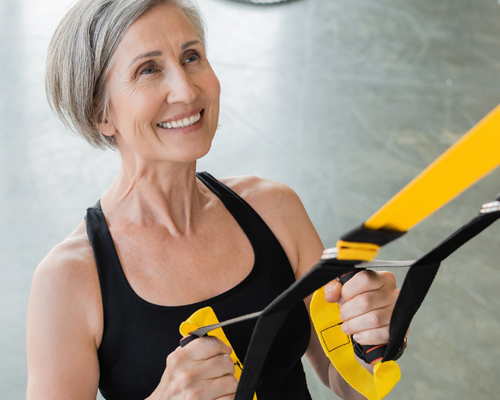
It’s important for gym staff to encourage small, positive changes among members / PHOTO: WWW.SHUTTERSTOCK.COM/ WAVEBREAKMEDIA
https://www.leisureopportunities.co.uk/images/611574_487365.jpg
In her IHRSA 15 keynote, psychologist Kelly McGonigal spoke about the science of willpower and how the health and fitness industry can seek to harness it
Kelly McGonigal,,Kelly McGonigal, willpower, psychology
HCM magazine
Software suppliers explain how AI, automation and connected digital experiences can work for the good of operators and consumers
HCM magazine
HCM People

Shaun Grove

Owner, Stride Fitness
My goal was to invest in where fitness is going, not where it’s already been
HCM magazine
The new CEO of UK Active talks to HCM about the gym-curious and why he believes the sector can double in size by the end of the next decade
HCM magazine
World Athletics president, Sebastian Coe talks to Liz Terry about the launch of Run X in partnership with Technogym
HCM magazine
Lisa Starr tries the Ammortal Chamber to see whether layering 10 modalities into one experience really delivers more
HCM promotional features
Sponsored
Social fitness the missing link to member engagement, according to a new Myzone report
HCM promotional features
Sponsored
Greg Bradley looks at the shift towards strength training in gyms and advises on how operators can create the ultimate training environment
HCM promotional features
Sponsored
Find out how your gym can tap into the corporate wellness boom
HCM promotional features
Sponsored
SnowDome Fitness has added 50 per cent more space with cutting-edge Technogym solutions
HCM promotional features
Sponsored
Starpool supports Olympic champion Marcell Jacobs, says Riccardo Turri
HCM promotional features
Sponsored
David Lloyd is stepping up its commitment to women’s health as it continues to explore what fit-for-purpose looks like for the female population
HCM promotional features
Sponsored
Third Space partnered with IndigoFitness to deliver a bespoke training space for its new club at The Whiteley
HCM promotional features
Sponsored
EGYM has opened a new HQ in Paternoster Square, London and revealed a range of new launches
HCM promotional features
Latest News
According to research which tracked more than 147,000 people for 30 years, 90-120 minutes of ...
Latest News
Everlast Gyms expands its footprint outside of the UK this month with the imminent launch ...
Latest News
The UK's four Chief Medical Officers have published a refreshed edition of  Physical activity guidelines: ...
Latest News
Places Leisure has exchanged contracts to build and operate a flagship £60m water and wellness ...
Latest News
The Republic of Ireland will become the latest market in PureGym’s expanding international portfolio, with ...
Latest News
Sophie Lawler, CEO of Total Fitness, has launched a leadership coaching business aimed at helping ...
Latest News
Anytime Fitness reaches a milestone this week with the launch of its 6000th site. The ...
Latest News
The £33.9 million Leighton Leisure and Community Centre has opened in Leighton Buzzard, UK, creating ...
Opinion
promotion
Strength training has moved from the margins to the mainstream.
Opinion: Building smarter strength spaces for today’s operators
Featured supplier news
Featured supplier news: Legends never die: four legends, four philosophies of life
Panatta brought together four of the most influential figures in bodybuilding history on the stage of RiminiWellness 2026: Phil Heath, Lee Haney, Ronnie Coleman and Hany Rambod.
Featured supplier news
Featured supplier news: Cornerstone Connect helps Active Blackpool tackle health inequalities
Active Blackpool is deploying Cornerstone Connect, a new digital interface allowing disparate information from multiple systems to be aggregated into one dataset, to support its focus on reducing health inequalities and improving healthy life expectancy.
Company profiles
Company profile: Panatta Srl
Panatta's mission is to create machines that are aesthetically pleasing, functional and competitive in price ...
Company profiles
Company profile: EGYM UK Ltd
EGYM partners with companies to improve employee health by providing access to fitness and health ...
Supplier Showcases
Supplier Showcase - Future-proofing
Catalogue Gallery
Click on a catalogue to view it online
Featured press releases
Precor Fitness Ltd press release: BH Live partners with Precor, transforming the Mountbatten Leisure Centre Gym
Alongside Precor, BH Live, the registered charity and social enterprise operating sport and leisure facilities across southern England, has completed a major refurbishment of the gym at Mountbatten Leisure Centre in Portsmouth as a part of a £750,000 inve
Featured press releases
Innerva press release: Wrightcare embeds wellness and active living into next-generation care homes
A care home provider is developing a new generation of care homes where health, wellbeing and active living are embedded into everyday life.
Directory
Spa and beauty equipment
Oakworks Inc: Spa and beauty equipment
Fitness tracking platform
SpiviTech: Fitness tracking platform
Hot tubs
MSpa International Ltd: Hot tubs
Water experiences and hydrotherapy solutions
Aquaform s.r.l.: Water experiences and hydrotherapy solutions
Industrial washing machines
Miele Company Limited: Industrial washing machines
Lockers
Crown Sports Lockers: Lockers
Property & Tenders
Stratford, East London.
Lee Valley Regional Park Authority
Property & Tenders
Y Felinheli, LL56 4QN
Newmark
Property & Tenders
Diary dates
21-24 Sep 2026
The Langham Huntington Pasadena , Pasadena, United States
Diary dates
06-08 Oct 2026
Messe Stuttgart, Stuttgart, Germany
Diary dates
22-22 Oct 2026
QEII Conference Centre, London,
Diary dates
26-29 Oct 2027
Koelnmesse Exhibition Centre, Cologne, Germany
Diary dates

features

IHRSA update: Kelly McGonigal

The Stanford University psychologist has transformed ‘willpower’ from a concept into a science, and she explained how to use it at last month’s IHRSA Annual Convention & Trade Show

Published in Health Club Management 2015 issue 4
McGonigal is a lecturer in management at the Stanford Graduate School of Business

How do you define willpower, and how important is it?
It’s hard to underestimate the importance of willpower. It describes the ability to make choices and take steps that are consistent with your highest goals and values – even when it’s difficult or when some part of you doesn’t want to. For example, it’s declining a tempting dessert to avoid gaining weight, or working out instead of watching TV.

Unfortunately, when most people talk about willpower, they think of it as forcing themselves to do things they don’t want to do, and that’s draining. That’s why people have such a problem with resolutions. When you set up this sort of mental battle – where you feel you’re trying to defeat your behaviour rather than advance your goals – it’s hard to move forward. In the end, force doesn’t work.

How can club operators, instructors and personal trainers better harness willpower?
I’d suggest that, to get started, they first make a point of cultivating “want-power” in their clients – examining and reinforcing their underlying motivation. People need to be clear about their values and goals, and recognise that they’re making a conscious choice rather than forcing themselves to do something. That fosters a willingness to proceed, rather than imposing what seems like a kind of brutal self-discipline.

When initiating personal change, it’s essential that you identify with and endorse the positive goals you’re pursuing. If that isn’t the case – if you simply feel you’re repressing or suppressing your preferences, desires and instincts – that’s actually a harmful exercise in willpower.

If you want to have more willpower, you have to learn to be a friend and mentor to yourself, rather than equating self-control with self-criticism.

How can fitness professionals leverage this understanding of willpower to help members succeed?
First, it’s important to recognise the difference between a desire to change and what actually motivates that desire. People typically sign up for a membership for what they regard as negative reasons – guilt, shame, body hate, fear of health consequences – or because of the false-hope syndrome. “Maybe I weigh 300 pounds today, and I’ve never exercised, but starting tomorrow I’m going to work out two hours a day and lose all this weight. It’s going to change my life!”

This dichotomy – a negative cause and punitive effects versus a positive goal and rewarding outcomes – predicts absolute failure in terms of behaviour change. They’re contradictory stances – we’re working against ourselves.

So what can clubs do? Instil the desire to use the club by ensuring they know there’s someone there who knows their name, cares about them, and is committed to helping them achieve their goals.

It’s also very important to communicate the value of small behaviours. It’s crazy that, in the fitness industry, we promulgate recommended activity levels that 10 per cent or fewer of Americans are meeting.

Meanwhile, research show that just 10 minutes of activity a day reduces the incidence of depression, cardiovascular disease and all-cause mortality, while simultaneously increasing daily functionality and life satisfaction. Members need to pay attention to things that are easy to affect and control. It’s important for club staff to encourage small, positive changes first. Such changes matter, and they do add up.

Anything you might warn them not to do when dealing with club members?
Yes. They might, for instance, be looking at someone who’s overweight or very much out of shape and thinking: “This person has a willpower struggle.” But having taught, written and spoken about willpower for more than a decade now, I want to stress that everyone has areas in their lives where they feel a bit out of control – where it’s difficult for them to consistently make the positive choice.

I’d refrain from assuming anything about anyone until they choose to share information with you.

Also, it’s not what other people judge us for that we necessarily need to change. The real questions are: What are the things that matter to each of us individually? What are we not doing to support our own personal goals and values? Exercising your willpower instinct is really about devoting your attention, time and effort to what matters to you most – and helping your members do that same. It involves a very important discovery process.

You believe that willpower in action – whether successful or resulting in failure – is ‘contagious’. Could you elaborate?
When researchers study epidemiological events, and how willpower struggles spread over time, they find – on the negative side – that you’re more likely to become overweight or increase your drinking or become sleep-deprived if people in your social network have made that change already.

However, on the positive side, when someone we care about adopts a positive new goal or a healthier lifestyle behaviour, we tend to begin to incorporate their goals into our own goals, often unconsciously. And the more you like and spend time with someone, the more contagious they are.

The epidemiological data demonstrates that these behaviours tend to spread across networks, and a health club is a network – a very positive network.

You also say willpower isn’t an unlimited resource, but some people – such as Sir Richard Branson, founder of the Virgin Group – seem to have no end of it. How do you explain that?
First of all, I’d challenge the utility of identifying anyone as a willpower role model. Everyone, no matter how successful they may appear, has an area in their life that’s a bit out of control or self-destructive – it’s just that those unique willpower struggles are often invisible to others.

If you’re looking for a willpower role model, you’d do much better to look within your own circle of friends and acquaintances – for someone who’s been successful and whose struggles you’re aware of.

People tend, unconsciously, to choose individuals who don’t appear to be struggling as their power exemplars. But, remember, willpower is the ability to do things that are difficult – and we all have difficulties in our lives.

INTRODUCING KELLY McGONIGAL

Kelly McGonigal, 37, earned degrees in communication and psychology from Boston University in 1999, and a PhD in psychology from Stanford University in 2004.

Before joining the faculty of Stanford in 2006, she taught group fitness classes, was a freelance writer, conducted research in psychology, and edited the International Journal of Yoga Therapy.

As a health psychologist with the Stanford School of Medicine, she developed a course called ‘The Science of Willpower’, which led to her writing of The Willpower Instinct: How Self-Control Works, Why It Matters, and What You Can Do to Get More of It. The book describes the latest scientific insights into what willpower is, why we have it, and how to develop it further.

McGonigal is currently a lecturer in management at the Stanford Graduate School of Business, as well as at the Stanford Center for Compassion and Altruism Research and Education, which is part of the School of Medicine’s Institute for Translation Neuroscience.

Sign up here to get HCM's weekly ezine and every issue of HCM magazine free on digital.
It’s important for gym staff to encourage small, positive changes among members / PHOTO: WWW.SHUTTERSTOCK.COM/ WAVEBREAKMEDIA
https://www.leisureopportunities.co.uk/images/611574_487365.jpg
In her IHRSA 15 keynote, psychologist Kelly McGonigal spoke about the science of willpower and how the health and fitness industry can seek to harness it
Kelly McGonigal,,Kelly McGonigal, willpower, psychology
Latest News
According to research which tracked more than 147,000 people for 30 years, 90-120 minutes of ...
Latest News
Everlast Gyms expands its footprint outside of the UK this month with the imminent launch ...
Latest News
The UK's four Chief Medical Officers have published a refreshed edition of  Physical activity guidelines: ...
Latest News
Places Leisure has exchanged contracts to build and operate a flagship £60m water and wellness ...
Latest News
The Republic of Ireland will become the latest market in PureGym’s expanding international portfolio, with ...
Latest News
Sophie Lawler, CEO of Total Fitness, has launched a leadership coaching business aimed at helping ...
Latest News
Anytime Fitness reaches a milestone this week with the launch of its 6000th site. The ...

Latest News
The £33.9 million Leighton Leisure and Community Centre has opened in Leighton Buzzard, UK, creating ...
Latest News
YogaSix, the yoga brand owned by Xponential Fitness, has launched a heated, Pilates-inspired class called ...
Latest News
Walnuts Leisure Centre in Orpington, in the London Borough of Bromley, has reopened following a ...
Latest News
The Gym Group, has announced that it's sustained positive trading momentum has continued through the ...
Opinion
promotion
Strength training has moved from the margins to the mainstream.
Opinion: Building smarter strength spaces for today’s operators
Featured supplier news
Featured supplier news: Legends never die: four legends, four philosophies of life
Panatta brought together four of the most influential figures in bodybuilding history on the stage of RiminiWellness 2026: Phil Heath, Lee Haney, Ronnie Coleman and Hany Rambod.
Featured supplier news
Featured supplier news: Cornerstone Connect helps Active Blackpool tackle health inequalities
Active Blackpool is deploying Cornerstone Connect, a new digital interface allowing disparate information from multiple systems to be aggregated into one dataset, to support its focus on reducing health inequalities and improving healthy life expectancy.
Company profiles
Company profile: Panatta Srl
Panatta's mission is to create machines that are aesthetically pleasing, functional and competitive in price ...
Company profiles
Company profile: EGYM UK Ltd
EGYM partners with companies to improve employee health by providing access to fitness and health ...
Supplier Showcases
Supplier Showcase - Future-proofing
Catalogue Gallery
Click on a catalogue to view it online
Featured press releases
Precor Fitness Ltd press release: BH Live partners with Precor, transforming the Mountbatten Leisure Centre Gym
Alongside Precor, BH Live, the registered charity and social enterprise operating sport and leisure facilities across southern England, has completed a major refurbishment of the gym at Mountbatten Leisure Centre in Portsmouth as a part of a £750,000 inve
Featured press releases
Innerva press release: Wrightcare embeds wellness and active living into next-generation care homes
A care home provider is developing a new generation of care homes where health, wellbeing and active living are embedded into everyday life.
Directory
Spa and beauty equipment
Oakworks Inc: Spa and beauty equipment
Fitness tracking platform
SpiviTech: Fitness tracking platform
Hot tubs
MSpa International Ltd: Hot tubs
Water experiences and hydrotherapy solutions
Aquaform s.r.l.: Water experiences and hydrotherapy solutions
Industrial washing machines
Miele Company Limited: Industrial washing machines
Lockers
Crown Sports Lockers: Lockers
Property & Tenders
Stratford, East London.
Lee Valley Regional Park Authority
Property & Tenders
Y Felinheli, LL56 4QN
Newmark
Property & Tenders
Diary dates
21-24 Sep 2026
The Langham Huntington Pasadena , Pasadena, United States
Diary dates
06-08 Oct 2026
Messe Stuttgart, Stuttgart, Germany
Diary dates
22-22 Oct 2026
QEII Conference Centre, London,
Diary dates
26-29 Oct 2027
Koelnmesse Exhibition Centre, Cologne, Germany
Diary dates
Search news, features & products:
Find a supplier:
Partner sites