







Editor's letter



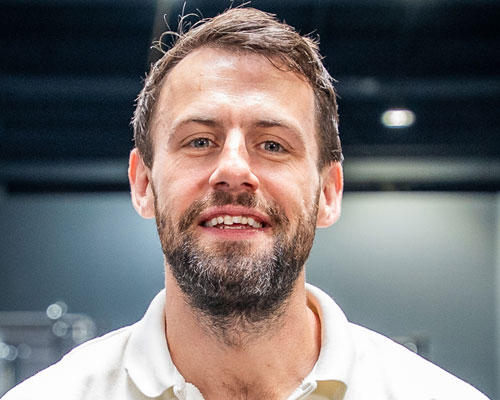
You’re taking over as MD of Active Insight – how are you feeling?
It comes at such a dynamic moment in time for us.
Active Insight has spent 26 years helping 500 organisations across the leisure, culture, health and education sectors use data to make better decisions.
Our work has always been about helping them understand people more deeply so they can deliver better experiences and outcomes. The fact I now get to lead that mission is both an honour and a huge responsibility.
We’re extending our reach beyond facilities and into places, so we can meet people where they are
Understanding people through their own voice is incredibly powerful. Our consumer insight platforms exist to help organisations see the world through the eyes of the customer, to understand their motivations and barriers to participation in physical activity.
How is your senior team changing?
Active Insight’s founder, Mike Hill and director, David Monkhouse, are moving into strategically-focused positions. Mike will lead the development and delivery of our partnership with Sport England’s Moving Communities, while David will dedicate more time to the growth of our events.
What are your personal priorities?
To stay true to why Mike Hill started the business – measuring and managing customer experience. We’re proud of our history, but also excited about what comes next.
We’re moving into a period of significant investment, particularly within our consumer insight and customer experience platforms – Enquire, Onboard, Engage and Retain. These products are already transforming how our clients understand and respond to customer behaviour, but the next 12 months will see us increasing real-time feedback touchpoints. As part of this, we’re also extending our reach beyond facilities and into places, so we can meet people where they are.
Where are the biggest opportunities for the sector?
Data insight is no longer a ‘nice to have’, it’s an essential part of business intelligence for decision-making and strategy development.
I believe personalisation will become increasingly important and we’ll also see the shift from periodic to continuous insight to better reflect the experiences of customers and not just rely on isolated snapshots in time.
Social connection underpins participation and community-building, so if we can also understand that deeply and respond to it intelligently, we’ll bring more people into activity and keep them longer.
How is access to data transformational?
We’ve been providing data the sector can use to counter inequalities and ensure all communities have access to opportunities to be physically active.
We partner with organisations such as UK Active, supporting them with insight – for example, the Mental Health In Motion report (www.hcmmag.com/MHIM).
All feedback – both positive and negative – gives a chance for organisations to learn and improve.
How will you future-proof the business?
We’re not only thinking about today’s customers, but also tomorrow’s, including Gen Alpha, who engage with brands very differently.
WhatsApp, Snapchat, frictionless interfaces and personalisation will all shape how the next generation communicates. Our digital evolution will support that shift.
Any feedback – even negative – gives a chance to learn and improve
We’ll also be exploring new markets and developing global relationships. Growth matters, but it must be grounded in purpose, collaboration and value.
What’s your overarching vision?
Our vision is to connect people through insight to enable the creation of memorable experiences.
We believe the relationship between operators and suppliers is intrinsically linked and through insight-sharing, collaboration and conversation, we can grow stronger as a sector.
Expect to see more actionable takeaways and opportunities to learn from one another, whether through our events or direct partnership work.
More: www.active-insight.org
We explored consumer attitudes and behaviours in relation to secondary spend in health clubs and leisure centres to understand the scale of opportunity for upselling beyond membership fees.
The study utilised a national consumer insight panel capturing trends across age, gender and exercise frequency in public and private sectors.
Findings indicated a significant untapped market, with 42 per cent of respondents stating they were ‘likely’ or ‘very likely’ to purchase additional products or services.
Gen Z-ers showed the strongest appetite for additional product purchases
Health snacks and meal kits landed with 24 per cent on the product side, followed by vitamins and supplements with 23 per cent and protein shakes with 21 per cent.
Gen Zers showed the strongest appetite for product purchases, particularly in supplements and gym accessories.
Looking at services, family or guest passes ranked highest at 29 per cent, followed closely by massage and recovery treatments at 27 per cent and health checks/MOTs at 26 per cent.
Interest in personal training remained strong across both ‘regular’ and ‘less frequent’ gym-goers. The research also identified a link between frequency of use and secondary spend, with frequent members more likely to buy additional products and services.
Overall, the research highlighted opportunities for operators who prioritise customer experience, personalisation and the integration of upsell offerings into the member journey.
Actioning the findings
• Operators should focus on delivering experiences that lead to return visits.
• When conversations are organic around upselling they’re more effective.
Active Insight, Melvyn Hillsdon and Fitronics collaborated to understand what drives people to join or rejoin health clubs.
With 2,000 respondents in the UK, the study, The TRP Baseline Report, examined current and former members and people who have never held a membership.
Its purpose was to give operators insights into motivation, barriers and the commercial opportunity presented by those who are lapsed and inactive.
A key finding was that cancellations are not ‘final’ in the minds of consumers – particularly within the first six months, when people are most likely to rejoin when compared with those who cancelled longer ago or who had never been a member.
Cancellations are not ‘final’ in the minds of consumers, particularly within the first six months
The strongest motivators for rejoining were ‘confidence in achieving results’ and ‘a good variety of equipment’, while ‘affordability’ and ‘lack of time’ emerged as the stated primary barriers.
The study found 13.7 per cent had a ‘strong intent’ to join a club ‘soon’ and a further 35.2 per cent were ‘somewhat likely’ to do so.
Younger adults were most responsive to PT support and promotional offers and over 45s more impacted by value, price and choice of group activity.
The research demonstrated the potential of ‘re-activation’, particularly among recently cancelled members and outlined strategies for converting ‘consideration’ into membership return.
Actioning the findings
• View cancellations as a high-value engagement opportunity rather than churn.
• Focus onboarding and retention around outcomes with clear pathways to progress.
• Segment by life stage to overcome barriers of cost and time.

Editor's letter

Feedback
HCM People

HCM People
Interview

Inclusion

DMCC

Insight

Talking point

Insight

Tech

Research























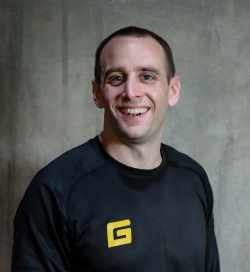







You’re taking over as MD of Active Insight – how are you feeling?
It comes at such a dynamic moment in time for us.
Active Insight has spent 26 years helping 500 organisations across the leisure, culture, health and education sectors use data to make better decisions.
Our work has always been about helping them understand people more deeply so they can deliver better experiences and outcomes. The fact I now get to lead that mission is both an honour and a huge responsibility.
We’re extending our reach beyond facilities and into places, so we can meet people where they are
Understanding people through their own voice is incredibly powerful. Our consumer insight platforms exist to help organisations see the world through the eyes of the customer, to understand their motivations and barriers to participation in physical activity.
How is your senior team changing?
Active Insight’s founder, Mike Hill and director, David Monkhouse, are moving into strategically-focused positions. Mike will lead the development and delivery of our partnership with Sport England’s Moving Communities, while David will dedicate more time to the growth of our events.
What are your personal priorities?
To stay true to why Mike Hill started the business – measuring and managing customer experience. We’re proud of our history, but also excited about what comes next.
We’re moving into a period of significant investment, particularly within our consumer insight and customer experience platforms – Enquire, Onboard, Engage and Retain. These products are already transforming how our clients understand and respond to customer behaviour, but the next 12 months will see us increasing real-time feedback touchpoints. As part of this, we’re also extending our reach beyond facilities and into places, so we can meet people where they are.
Where are the biggest opportunities for the sector?
Data insight is no longer a ‘nice to have’, it’s an essential part of business intelligence for decision-making and strategy development.
I believe personalisation will become increasingly important and we’ll also see the shift from periodic to continuous insight to better reflect the experiences of customers and not just rely on isolated snapshots in time.
Social connection underpins participation and community-building, so if we can also understand that deeply and respond to it intelligently, we’ll bring more people into activity and keep them longer.
How is access to data transformational?
We’ve been providing data the sector can use to counter inequalities and ensure all communities have access to opportunities to be physically active.
We partner with organisations such as UK Active, supporting them with insight – for example, the Mental Health In Motion report (www.hcmmag.com/MHIM).
All feedback – both positive and negative – gives a chance for organisations to learn and improve.
How will you future-proof the business?
We’re not only thinking about today’s customers, but also tomorrow’s, including Gen Alpha, who engage with brands very differently.
WhatsApp, Snapchat, frictionless interfaces and personalisation will all shape how the next generation communicates. Our digital evolution will support that shift.
Any feedback – even negative – gives a chance to learn and improve
We’ll also be exploring new markets and developing global relationships. Growth matters, but it must be grounded in purpose, collaboration and value.
What’s your overarching vision?
Our vision is to connect people through insight to enable the creation of memorable experiences.
We believe the relationship between operators and suppliers is intrinsically linked and through insight-sharing, collaboration and conversation, we can grow stronger as a sector.
Expect to see more actionable takeaways and opportunities to learn from one another, whether through our events or direct partnership work.
More: www.active-insight.org
We explored consumer attitudes and behaviours in relation to secondary spend in health clubs and leisure centres to understand the scale of opportunity for upselling beyond membership fees.
The study utilised a national consumer insight panel capturing trends across age, gender and exercise frequency in public and private sectors.
Findings indicated a significant untapped market, with 42 per cent of respondents stating they were ‘likely’ or ‘very likely’ to purchase additional products or services.
Gen Z-ers showed the strongest appetite for additional product purchases
Health snacks and meal kits landed with 24 per cent on the product side, followed by vitamins and supplements with 23 per cent and protein shakes with 21 per cent.
Gen Zers showed the strongest appetite for product purchases, particularly in supplements and gym accessories.
Looking at services, family or guest passes ranked highest at 29 per cent, followed closely by massage and recovery treatments at 27 per cent and health checks/MOTs at 26 per cent.
Interest in personal training remained strong across both ‘regular’ and ‘less frequent’ gym-goers. The research also identified a link between frequency of use and secondary spend, with frequent members more likely to buy additional products and services.
Overall, the research highlighted opportunities for operators who prioritise customer experience, personalisation and the integration of upsell offerings into the member journey.
Actioning the findings
• Operators should focus on delivering experiences that lead to return visits.
• When conversations are organic around upselling they’re more effective.
Active Insight, Melvyn Hillsdon and Fitronics collaborated to understand what drives people to join or rejoin health clubs.
With 2,000 respondents in the UK, the study, The TRP Baseline Report, examined current and former members and people who have never held a membership.
Its purpose was to give operators insights into motivation, barriers and the commercial opportunity presented by those who are lapsed and inactive.
A key finding was that cancellations are not ‘final’ in the minds of consumers – particularly within the first six months, when people are most likely to rejoin when compared with those who cancelled longer ago or who had never been a member.
Cancellations are not ‘final’ in the minds of consumers, particularly within the first six months
The strongest motivators for rejoining were ‘confidence in achieving results’ and ‘a good variety of equipment’, while ‘affordability’ and ‘lack of time’ emerged as the stated primary barriers.
The study found 13.7 per cent had a ‘strong intent’ to join a club ‘soon’ and a further 35.2 per cent were ‘somewhat likely’ to do so.
Younger adults were most responsive to PT support and promotional offers and over 45s more impacted by value, price and choice of group activity.
The research demonstrated the potential of ‘re-activation’, particularly among recently cancelled members and outlined strategies for converting ‘consideration’ into membership return.
Actioning the findings
• View cancellations as a high-value engagement opportunity rather than churn.
• Focus onboarding and retention around outcomes with clear pathways to progress.
• Segment by life stage to overcome barriers of cost and time.
Editor's letter
Feedback
HCM People
HCM People
Interview
Inclusion
DMCC
Insight
Talking point
Insight
Tech
Research