









Follow Health Club Management on Twitter Like Health Club Management on Facebook Join the discussion with Health Club Management on LinkedIn
FITNESS, HEALTH, WELLNESS

features

Child welfare: Safe and sound

The NSPCC’s Child Protection in Sport Unit (CPSU) has been working with leading sports bodies for over a decade to protect children from harm. Now it’s turning its attention to the leisure sector. CPSU director Anne Tiivas and senior consultant Nick Slinn explain

Published in Health Club Management 2014 issue 8
There’s huge potential to help the leisure sector develop industry-wide standards. We’re not funded to do that, but a lot of stakeholders want this to be the next step

What does the CPSU do?
AT: The Unit was set up in 2001 following a number of very high-profile cases of child abuse in sport, initially in swimming, yachting and football. This had a very negative impact on the sports in question, and they came to the NSPCC for help with creating policies and procedures. It quickly became clear that a more joined-up and long-term approach was needed, so the CPSU was formed as a partnership between the NSPCC and Sport England; Sport Northern Ireland and Sport Wales soon came on board too. Sport Scotland has a similar partnership with the charity Children 1st and we share information.

Our primary aim is to work with the UK sports councils, National Governing Bodies of Sport (NGBs) and County Sports Partnerships (CSPs) to help them reduce the risk of children coming to harm while participating in sport. We published our minimum Standards for Safeguarding and Protecting Children in Sport in England in 2002, and subsequently published similar standards in Northern Ireland and Wales. Since then, around 200 sports bodies in the UK have met them, including every CSP in England.

Most importantly, we’ve seen a major shift in mindset within the funded sports sector, from seeing safeguarding as being just about catching dangerous people to being about creating positive, child-friendly environments where harmful things are less likely to happen in the first place.

In 2010, we also launched the multi-agency Sports Safeguarding Children Initiative in England to enable a more collaborative approach. Participating groups include not only Sport England, NGBs and CSPs, but also UK Sport, which focuses on Olympic sport; the Sport and Recreational Alliance; sports coach UK, the national coaching agency; the Youth Sport Trust; a disability sport representative; and school partners.

There aren’t yet any industry-wide standards specific to leisure centre or health club operators that cater for children. Is this something you’re looking to address?
AT: It is. However, historically our funding has come from the sports councils and we’re very small, so we have a limited capacity in terms of what we can focus on. That said, there’s huge potential to help the leisure sector develop industry-wide standards. We’re not funded to do that at the moment, but the relationships have been building and there are a lot of stakeholders that want this to be the next step.

The key stakeholders we’re pulling together to work with us on this include local leisure heads and leading trade bodies such as CIMSPA, the Amateur Swimming Association and Quest – the Sport England-backed quality scheme for sport and leisure.

NS: We also welcome involvement from the private sector. Any health clubs or other organisations that provide services to children – either as a core service or as part of a wider service to adults – ought to have safeguarding measures in place, and have a key role to play in any move to develop and promote safeguarding practice across the wider leisure industry.

When you talk about safeguarding children, what does that cover?
AT: In the beginning, the focus was on preventing the appalling cases of sexual and physical abuse we were seeing by adults in positions of trust. Now our remit has broadened to address a whole range of potential forms of harm.

Issues that are unique to sport include things like hazing or initiation ceremonies, as well as specific forms of bullying. There’s bullying everywhere, but in sport it can take a different form: bullying in teams, for example.

NS: Abuse of social media by both adults and children is another one. Most sports bodies we’ve worked with have come to us with issues around children in their care abusing each other on Facebook or Twitter, or adults that work in sport following children online.

There are also specific issues around body image and eating disorders. Some children may have eating disorders already, which – if coaches are unaware and unwittingly reinforce negative messages around diet or body shape – can be made worse by their participation in sport. In some sports, there are particular pressures around fitness, weight and diet that can actually cause young people to develop these kind of problems.

AT: That’s particularly true of weight-related sports – for example, martial arts where you need to meet a weight category. We’ve had cases of young people being sweated out in cling-film, and then being expected to perform in a competition while they were suffering from dehydration.

NS: Being given performance-enhancing drugs is another example of the harm that talented young people are particularly vulnerable to. We would view that as physical abuse.

Your standards include codes of conduct for parents as well as staff. Why is that?
AT: Young people can be put under pressure to perform by pushy parents. We would encourage all clubs and facilities to have codes of conduct for parents, to explain to parents at the outset what the expectations of their behaviour are, and to have mechanisms in place to challenge it.

However, these things tend to work better when done in partnership. One of the things we’ve done to promote positive parental behaviour is a video called My Magic Sports Kit, which shows children talking about how adults’ behaviour towards them changes when they put on their sports kit – so things like: “They treat me like I’m much older and expect much more of me.”

Have you identified issues specific to leisure centres and health clubs since you’ve started looking at the sector?
NS: We’ve already set up a working group to look at the issue of unsupervised children in leisure centres, as current guidance on this is very patchy. If you ask what age is it OK for a child to be in a leisure facility unaccompanied, there’s no definitive answer. In the case of swimming, there are rules around how old a child has to be before they can be in the pool unaccompanied – the question is what happens when they leave? Outside of that swimming session, they could be in the changing room or foyer or cafeteria without anyone being responsible for them, and that’s worrying.

Nick, you’ve been working with Quest to create a Safeguarding Children module for the scheme. Can you tell us more about that?
NS: Right Directions, the organisation that manages Quest, contacted us through Sport England because they realised that, although there was some reference to safeguarding children in their existing modules, there was scope to have a specific module dedicated entirely to this issue. Since then, we’ve worked with them to develop an optional safeguarding module for sports development teams and leisure facilities undergoing Quest assessments. We suspect that will grow legs as people see the benefit of it.

The modules cover all the basics, from having policies in place right down to clear guidance on what to do if an issue crops up.

Although Quest is only one arm of the work we’re doing in relation to leisure facilities, it’s been a good starting point for thinking about minimum operating standards for the sector.

Aren’t facilities required by law to have these kinds of safeguards in place anyway?
NS: There is health and safety legislation and child protection legislation that spells out the statutory obligations of local authority leisure services, and indeed all those that provide services to children. Government guidance clearly sets out steps these organisations need to take to safeguard and protect the children they’re responsible for.

But unfortunately, in practice, safeguarding often happens in reverse. In the event of something happening, a club or facility would be hauled over the coals and all these questions would be asked, but there isn’t a safeguarding policing team that goes around asking: “Have you got X, Y or Z in place?”

AT: One of the things we’ve tried to emphasise with our standards is that the aim isn’t to have the standard – the aim is to put the safeguards in place. What the standards do, and what Quest will do, is benchmark the action you’re already taking to illustrate to parents and other users what your stance on safeguarding is and what they can expect from you.

If a leisure centre or health club wants to raise its game in this area, where should it start?
NS: The resources on the CPSU website should be suitable for any sport or leisure provider, although we recognise we need to do more work with leisure operators to ensure the language and context used in these materials is appropriate and meaningful for them.

In addition, CSPs can often provide locally informed signposting, support and information for organisations delivering sport in their area – and this should include leisure providers as well as clubs linked to NGBs.

Local Safeguarding Children Boards can be another source of advice and guidance for leisure operators and other organisations seeking to put safeguards in place.

Sign up here to get HCM's weekly ezine and every issue of HCM magazine free on digital.
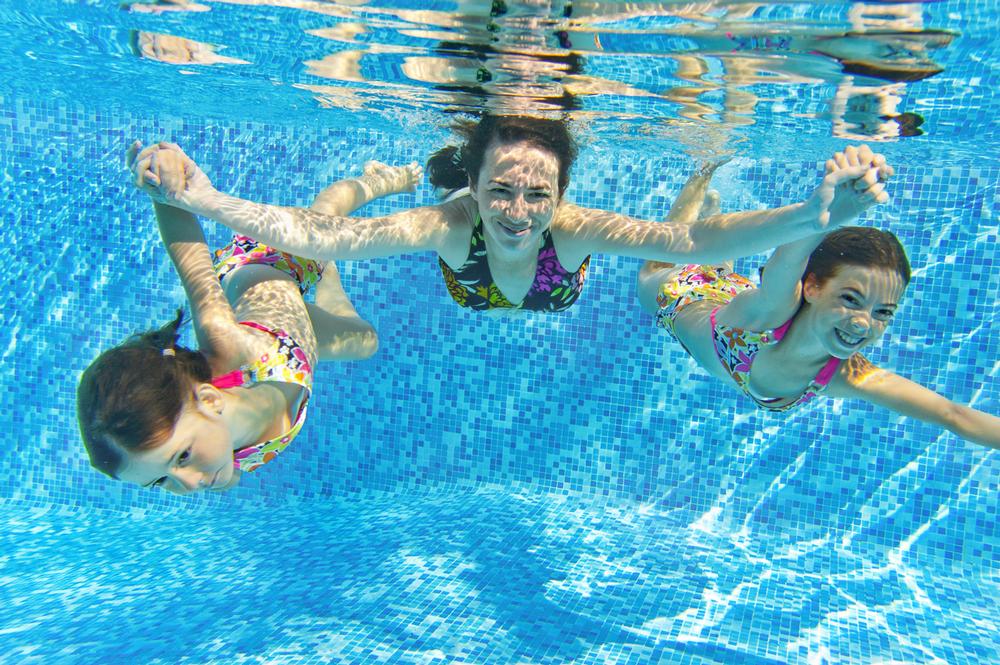
Health clubs or centres providing services to children should have safeguarding protocols / Photo: shutterstock.com/JaySi
Abuse of social media by adults and children is one area of concern / Photo: shutterstock.com/Antonio Guillem
https://www.leisureopportunities.co.uk/images/HCM2014_8safe.jpg
The Child Protection in Sport Unit is turning its attention to helping the leisure sector put safeguards in place
CPSU director Anne Tiivas and senior consultant Nick Slinn NSPCC’s Child Protection in Sport Unit,NSPCC’s Child Protection in Sport Unit, children, sport, health, weight
HCM magazine
If the health service is to survive, we must recognise that it is a disease service – and that wellbeing rests with us, says the activity advocate and healthy ageing champion. He talks to Kate Cracknell
HCM magazine
For every member with a tripod and a big following, there are others irritated at the way equipment is being hogged or wary they’ll be in the background on someone’s Insta feed. Do influencers offer valuable, free marketing or are they just a nuisance? Kath Hudson finds out how operators are responding
HCM magazine
Collaborations with the medical profession and greater aspirations around wellbeing are creating a need for more experts in our sector. It’s time to reboot our thinking around the workforce
HCM magazine
HCM People

Stephen Price

Founder, SP&Co Group
Working in public health over the last few years has lit up parts of my brain again
HCM magazine
As the entrepreneur who started Wexer, Fresh Fitness, Fitness DK and Repeat, as well as being a former elite athlete, Rasmus Ingerslev’s life looked perfect from the outside, but onthe inside it was a different story. He talks to Kath Hudson about healing old wounds
HCM promotional features
Sponsored
Third Space partnered with IndigoFitness to deliver a bespoke training space for its new club at The Whiteley
HCM promotional features
Sponsored
Greg Bradley looks at the shift towards strength training in gyms and advises on how operators can create the ultimate training environment
HCM promotional features
Sponsored
SnowDome Fitness has added 50 per cent more space with cutting-edge Technogym solutions
HCM promotional features
Sponsored
Starpool supports Olympic champion Marcell Jacobs, says Riccardo Turri
HCM promotional features
Sponsored
Find out how your gym can tap into the corporate wellness boom
HCM promotional features
Sponsored
David Lloyd is stepping up its commitment to women’s health as it continues to explore what fit-for-purpose looks like for the female population
HCM promotional features
Sponsored
EGYM has opened a new HQ in Paternoster Square, London and revealed a range of new launches
HCM promotional features
Sponsored
New launch, Salus House, elevates boutique wellness with high service levels and a partnership with Technogym
HCM promotional features
Sponsored
The industry is embracing consumer-facing tech. Now it’s time to streamline back-of-house systems with Orbit4, says Daniel Jones
HCM promotional features
Latest News
Celebrating its 10th anniversary, Elevate has had its busiest show to date, with almost 200 ...
Latest News
A new report from Your Personal Training (YPT) suggests UK gym operators could be missing ...
Latest News
Eighty-four per cent of consumers now say wellness is a top priority in their lives, ...
Latest News
Elevate Arena is underway at London's Excel and the hot topic of AI was the ...
Latest News
PureGym Group has announced that group chief financial officer, Alex Wood, is taking over the ...
Latest News
Independent operator, Fitness Worx Gyms, is introducing private blood testing as a service to members. ...
Latest News
International industry lobbying associations are calling for physical activity and strength training to be deeply ...
Latest News
Global group exercise specialist, Les Mills, is inviting operators to sign up to its Workout ...
Opinion
promotion
Strength training has moved from the margins to the mainstream.
Opinion: Building smarter strength spaces for today’s operators
Featured supplier news
Featured supplier news: Reaching the people most gyms miss: Bedford Gym & Swim Campaign delivers 410 new members
One of the biggest mistakes the fitness industry still makes is advertising almost exclusively to people who already look and live like gym members.
Featured supplier news
Featured supplier news: CoverMe extends matching service to personal training, rewriting how members and personal trainers connect
CoverMe, the global leader in fitness workforce management, today launches CoverMe PT, an on-demand personal training platform that connects the right personal trainer to the right client in under 10 seconds.
Company profiles
Company profile: Total Vibration Solutions Ltd (TVS Group)
TVS Group includes TVS Sports Surfaces, TVS Gym Flooring, TVS Play Surfaces and TVS Acoustics. ...
Company profiles
Company profile: Sporty Group AS
With more than 90 fitness centres across the country and more than 130.000 members, Sporty ...
Supplier Showcases
Supplier Showcase - From nightclub to health club
Supplier Showcases
Supplier Showcase - Future-proofing
Catalogue Gallery
Click on a catalogue to view it online
Featured press releases
Create PT press release: Create sets a new standard with its new personal training diploma
Create's new Personal Training Diploma is built on the depth, real-client practice and coaching judgement that turn a qualification into genuine readiness - taught as one continuous course so that every skill is reinforced and applied, not cleared once and forgotten.
Featured press releases
Leisure Energy press release: Studley Leisure Centre solar panel installation project begins
Stratford-on-Avon District Council is delighted to announce a new solar panel installation project at Studley Leisure Centre, marking an important step towards improving the sustainability of this valued community facility.
Directory
Lockers
Crown Sports Lockers: Lockers
Hot tubs
MSpa International Ltd: Hot tubs
Industrial washing machines
Miele Company Limited: Industrial washing machines
Spa and beauty equipment
Oakworks Inc: Spa and beauty equipment
Fitness tracking platform
SpiviTech: Fitness tracking platform
Water experiences and hydrotherapy solutions
Aquaform s.r.l.: Water experiences and hydrotherapy solutions
Property & Tenders
Stratford, East London.
Lee Valley Regional Park Authority
Property & Tenders
Y Felinheli, LL56 4QN
Newmark
Property & Tenders
Diary dates
22-23 Jun 2026
WX Wakefield , Wakefield, United Kingdom
Diary dates
21-24 Sep 2026
The Langham Huntington Pasadena , Pasadena, United States
Diary dates
06-08 Oct 2026
Messe Stuttgart, Stuttgart, Germany
Diary dates
22-22 Oct 2026
QEII Conference Centre, London,
Diary dates
26-29 Oct 2027
Koelnmesse Exhibition Centre, Cologne, Germany
Diary dates

features

Child welfare: Safe and sound

The NSPCC’s Child Protection in Sport Unit (CPSU) has been working with leading sports bodies for over a decade to protect children from harm. Now it’s turning its attention to the leisure sector. CPSU director Anne Tiivas and senior consultant Nick Slinn explain

Published in Health Club Management 2014 issue 8
There’s huge potential to help the leisure sector develop industry-wide standards. We’re not funded to do that, but a lot of stakeholders want this to be the next step

What does the CPSU do?
AT: The Unit was set up in 2001 following a number of very high-profile cases of child abuse in sport, initially in swimming, yachting and football. This had a very negative impact on the sports in question, and they came to the NSPCC for help with creating policies and procedures. It quickly became clear that a more joined-up and long-term approach was needed, so the CPSU was formed as a partnership between the NSPCC and Sport England; Sport Northern Ireland and Sport Wales soon came on board too. Sport Scotland has a similar partnership with the charity Children 1st and we share information.

Our primary aim is to work with the UK sports councils, National Governing Bodies of Sport (NGBs) and County Sports Partnerships (CSPs) to help them reduce the risk of children coming to harm while participating in sport. We published our minimum Standards for Safeguarding and Protecting Children in Sport in England in 2002, and subsequently published similar standards in Northern Ireland and Wales. Since then, around 200 sports bodies in the UK have met them, including every CSP in England.

Most importantly, we’ve seen a major shift in mindset within the funded sports sector, from seeing safeguarding as being just about catching dangerous people to being about creating positive, child-friendly environments where harmful things are less likely to happen in the first place.

In 2010, we also launched the multi-agency Sports Safeguarding Children Initiative in England to enable a more collaborative approach. Participating groups include not only Sport England, NGBs and CSPs, but also UK Sport, which focuses on Olympic sport; the Sport and Recreational Alliance; sports coach UK, the national coaching agency; the Youth Sport Trust; a disability sport representative; and school partners.

There aren’t yet any industry-wide standards specific to leisure centre or health club operators that cater for children. Is this something you’re looking to address?
AT: It is. However, historically our funding has come from the sports councils and we’re very small, so we have a limited capacity in terms of what we can focus on. That said, there’s huge potential to help the leisure sector develop industry-wide standards. We’re not funded to do that at the moment, but the relationships have been building and there are a lot of stakeholders that want this to be the next step.

The key stakeholders we’re pulling together to work with us on this include local leisure heads and leading trade bodies such as CIMSPA, the Amateur Swimming Association and Quest – the Sport England-backed quality scheme for sport and leisure.

NS: We also welcome involvement from the private sector. Any health clubs or other organisations that provide services to children – either as a core service or as part of a wider service to adults – ought to have safeguarding measures in place, and have a key role to play in any move to develop and promote safeguarding practice across the wider leisure industry.

When you talk about safeguarding children, what does that cover?
AT: In the beginning, the focus was on preventing the appalling cases of sexual and physical abuse we were seeing by adults in positions of trust. Now our remit has broadened to address a whole range of potential forms of harm.

Issues that are unique to sport include things like hazing or initiation ceremonies, as well as specific forms of bullying. There’s bullying everywhere, but in sport it can take a different form: bullying in teams, for example.

NS: Abuse of social media by both adults and children is another one. Most sports bodies we’ve worked with have come to us with issues around children in their care abusing each other on Facebook or Twitter, or adults that work in sport following children online.

There are also specific issues around body image and eating disorders. Some children may have eating disorders already, which – if coaches are unaware and unwittingly reinforce negative messages around diet or body shape – can be made worse by their participation in sport. In some sports, there are particular pressures around fitness, weight and diet that can actually cause young people to develop these kind of problems.

AT: That’s particularly true of weight-related sports – for example, martial arts where you need to meet a weight category. We’ve had cases of young people being sweated out in cling-film, and then being expected to perform in a competition while they were suffering from dehydration.

NS: Being given performance-enhancing drugs is another example of the harm that talented young people are particularly vulnerable to. We would view that as physical abuse.

Your standards include codes of conduct for parents as well as staff. Why is that?
AT: Young people can be put under pressure to perform by pushy parents. We would encourage all clubs and facilities to have codes of conduct for parents, to explain to parents at the outset what the expectations of their behaviour are, and to have mechanisms in place to challenge it.

However, these things tend to work better when done in partnership. One of the things we’ve done to promote positive parental behaviour is a video called My Magic Sports Kit, which shows children talking about how adults’ behaviour towards them changes when they put on their sports kit – so things like: “They treat me like I’m much older and expect much more of me.”

Have you identified issues specific to leisure centres and health clubs since you’ve started looking at the sector?
NS: We’ve already set up a working group to look at the issue of unsupervised children in leisure centres, as current guidance on this is very patchy. If you ask what age is it OK for a child to be in a leisure facility unaccompanied, there’s no definitive answer. In the case of swimming, there are rules around how old a child has to be before they can be in the pool unaccompanied – the question is what happens when they leave? Outside of that swimming session, they could be in the changing room or foyer or cafeteria without anyone being responsible for them, and that’s worrying.

Nick, you’ve been working with Quest to create a Safeguarding Children module for the scheme. Can you tell us more about that?
NS: Right Directions, the organisation that manages Quest, contacted us through Sport England because they realised that, although there was some reference to safeguarding children in their existing modules, there was scope to have a specific module dedicated entirely to this issue. Since then, we’ve worked with them to develop an optional safeguarding module for sports development teams and leisure facilities undergoing Quest assessments. We suspect that will grow legs as people see the benefit of it.

The modules cover all the basics, from having policies in place right down to clear guidance on what to do if an issue crops up.

Although Quest is only one arm of the work we’re doing in relation to leisure facilities, it’s been a good starting point for thinking about minimum operating standards for the sector.

Aren’t facilities required by law to have these kinds of safeguards in place anyway?
NS: There is health and safety legislation and child protection legislation that spells out the statutory obligations of local authority leisure services, and indeed all those that provide services to children. Government guidance clearly sets out steps these organisations need to take to safeguard and protect the children they’re responsible for.

But unfortunately, in practice, safeguarding often happens in reverse. In the event of something happening, a club or facility would be hauled over the coals and all these questions would be asked, but there isn’t a safeguarding policing team that goes around asking: “Have you got X, Y or Z in place?”

AT: One of the things we’ve tried to emphasise with our standards is that the aim isn’t to have the standard – the aim is to put the safeguards in place. What the standards do, and what Quest will do, is benchmark the action you’re already taking to illustrate to parents and other users what your stance on safeguarding is and what they can expect from you.

If a leisure centre or health club wants to raise its game in this area, where should it start?
NS: The resources on the CPSU website should be suitable for any sport or leisure provider, although we recognise we need to do more work with leisure operators to ensure the language and context used in these materials is appropriate and meaningful for them.

In addition, CSPs can often provide locally informed signposting, support and information for organisations delivering sport in their area – and this should include leisure providers as well as clubs linked to NGBs.

Local Safeguarding Children Boards can be another source of advice and guidance for leisure operators and other organisations seeking to put safeguards in place.
Sign up here to get HCM's weekly ezine and every issue of HCM magazine free on digital.

Health clubs or centres providing services to children should have safeguarding protocols / Photo: shutterstock.com/JaySi
Abuse of social media by adults and children is one area of concern / Photo: shutterstock.com/Antonio Guillem
https://www.leisureopportunities.co.uk/images/HCM2014_8safe.jpg
The Child Protection in Sport Unit is turning its attention to helping the leisure sector put safeguards in place
CPSU director Anne Tiivas and senior consultant Nick Slinn NSPCC’s Child Protection in Sport Unit,NSPCC’s Child Protection in Sport Unit, children, sport, health, weight
Latest News
Celebrating its 10th anniversary, Elevate has had its busiest show to date, with almost 200 ...
Latest News
A new report from Your Personal Training (YPT) suggests UK gym operators could be missing ...
Latest News
Eighty-four per cent of consumers now say wellness is a top priority in their lives, ...
Latest News
Elevate Arena is underway at London's Excel and the hot topic of AI was the ...
Latest News
PureGym Group has announced that group chief financial officer, Alex Wood, is taking over the ...
Latest News
Independent operator, Fitness Worx Gyms, is introducing private blood testing as a service to members. ...
Latest News
International industry lobbying associations are calling for physical activity and strength training to be deeply ...
Latest News
Global group exercise specialist, Les Mills, is inviting operators to sign up to its Workout ...
Latest News
Global luxury hospitality brand, Six Senses, has partnered with longevity healthcare provider, HUM2N, to launch ...
Latest News
Premium London health club, KX Chelsea, is gearing up to unveil its most significant redevelopment ...
Latest News
Researchers in the US have identified an antibody which could greatly reduce the loss of ...
Opinion
promotion
Strength training has moved from the margins to the mainstream.
Opinion: Building smarter strength spaces for today’s operators
Featured supplier news
Featured supplier news: Reaching the people most gyms miss: Bedford Gym & Swim Campaign delivers 410 new members
One of the biggest mistakes the fitness industry still makes is advertising almost exclusively to people who already look and live like gym members.
Featured supplier news
Featured supplier news: CoverMe extends matching service to personal training, rewriting how members and personal trainers connect
CoverMe, the global leader in fitness workforce management, today launches CoverMe PT, an on-demand personal training platform that connects the right personal trainer to the right client in under 10 seconds.
Company profiles
Company profile: Total Vibration Solutions Ltd (TVS Group)
TVS Group includes TVS Sports Surfaces, TVS Gym Flooring, TVS Play Surfaces and TVS Acoustics. ...
Company profiles
Company profile: Sporty Group AS
With more than 90 fitness centres across the country and more than 130.000 members, Sporty ...
Supplier Showcases
Supplier Showcase - From nightclub to health club
Supplier Showcases
Supplier Showcase - Future-proofing
Catalogue Gallery
Click on a catalogue to view it online
Featured press releases
Create PT press release: Create sets a new standard with its new personal training diploma
Create's new Personal Training Diploma is built on the depth, real-client practice and coaching judgement that turn a qualification into genuine readiness - taught as one continuous course so that every skill is reinforced and applied, not cleared once and forgotten.
Featured press releases
Leisure Energy press release: Studley Leisure Centre solar panel installation project begins
Stratford-on-Avon District Council is delighted to announce a new solar panel installation project at Studley Leisure Centre, marking an important step towards improving the sustainability of this valued community facility.
Directory
Lockers
Crown Sports Lockers: Lockers
Hot tubs
MSpa International Ltd: Hot tubs
Industrial washing machines
Miele Company Limited: Industrial washing machines
Spa and beauty equipment
Oakworks Inc: Spa and beauty equipment
Fitness tracking platform
SpiviTech: Fitness tracking platform
Water experiences and hydrotherapy solutions
Aquaform s.r.l.: Water experiences and hydrotherapy solutions
Property & Tenders
Stratford, East London.
Lee Valley Regional Park Authority
Property & Tenders
Y Felinheli, LL56 4QN
Newmark
Property & Tenders
Diary dates
22-23 Jun 2026
WX Wakefield , Wakefield, United Kingdom
Diary dates
21-24 Sep 2026
The Langham Huntington Pasadena , Pasadena, United States
Diary dates
06-08 Oct 2026
Messe Stuttgart, Stuttgart, Germany
Diary dates
22-22 Oct 2026
QEII Conference Centre, London,
Diary dates
26-29 Oct 2027
Koelnmesse Exhibition Centre, Cologne, Germany
Diary dates
Search news, features & products:
Find a supplier:
Partner sites