










GET HCM
magazine
Sign up for the FREE digital edition of HCM magazine and also get the HCM ezine and breaking news email alerts.
Not right now, thanksclose this window I've already subscribed!
Follow Health Club Management on Twitter Like Health Club Management on Facebook Join the discussion with Health Club Management on LinkedIn
FITNESS, HEALTH, WELLNESS

Latest news

Santiago Calatrava exclusive: 'I want to push the limits of expression'

There is no difference between art and technique, nor between architecture and engineering. Both serve the art of construction
– Santiago Calatrava
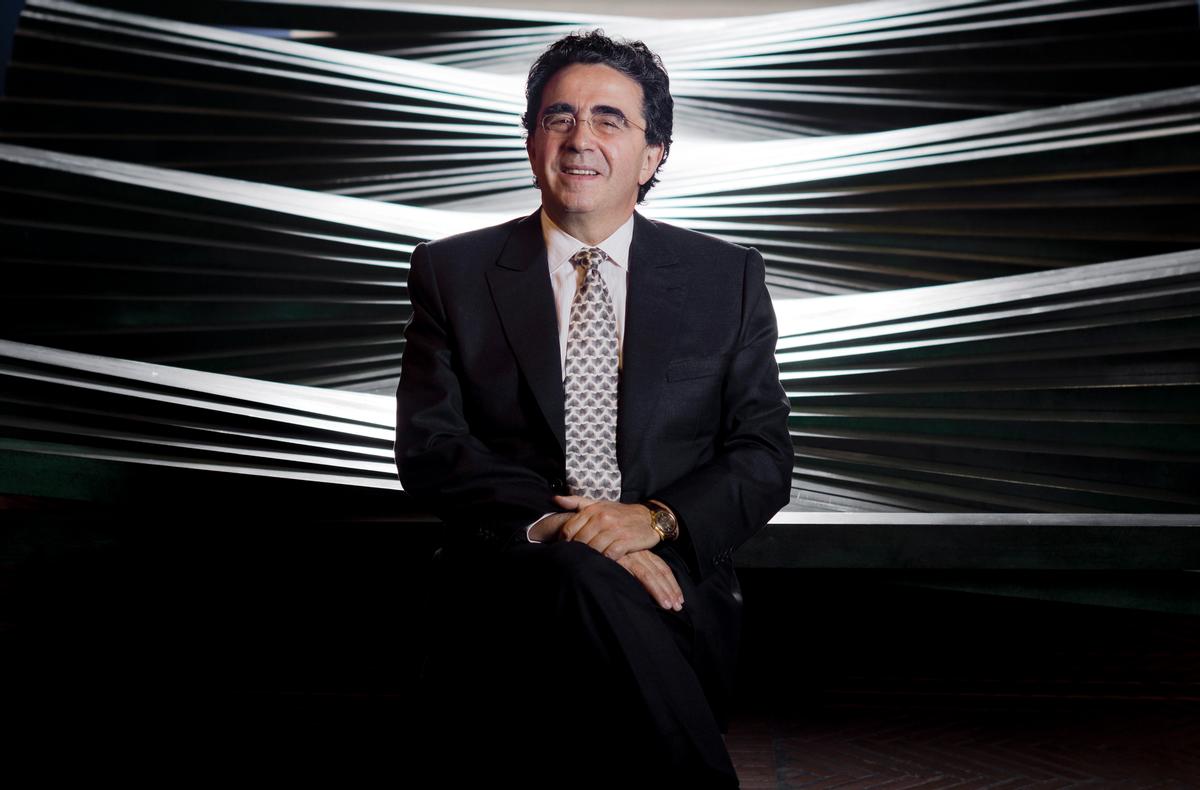
Credit: Thomas Hoeffgen

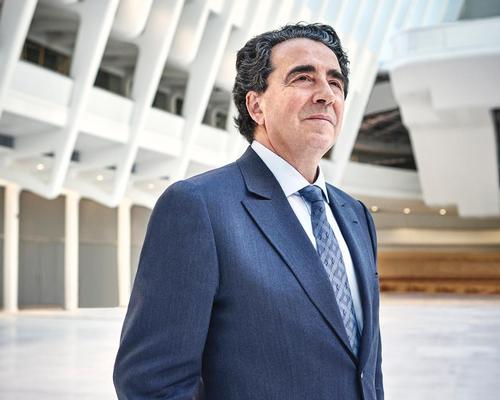
Spanish architect Santiago Calatrava has told CLADglobal how he wants to use technology and advanced engineering “to push the limits of expression.”

“From day one, movability has been important to me,” he said, in an exclusive interview. “Today we can create this sense that architecture is no more an aesthetic and firm thing, but rather something that transforms, something alive, something new and poetic.”

Calatrava also discussed his controversial reputation, why he loves to build for the public and his £1bn transport and leisure hub for Greenwich, London.

The interview appears in the new issue of CLADmag – our quarterly magazine – which is available to read now both online and in print.

The full feature appears both below and on digital turning pages.

The world of contemporary architecture is far from short of controversial characters. But even in this sometimes polarising industry, few people split opinion quite like Santiago Calatrava, the Spanish architect, engineer, sculptor and painter disparaged by some and hailed as a visionary by others.

Everyone has an opinion, because love them or hate them, Calatrava’s stylised neo-futuristic structures are impossible to ignore.

From the Museum of Tomorrow in Rio de Janeiro to Valencia’s City of Arts and Sciences, the Milwaukee Art Museum in Wisconsin and the World Trade Center Transport Hub in New York, Calatrava’s work dominates city skylines around the world. His signature white skeletal forms, often representing natural organisms, have become as identifiable to him as curves were to the late Zaha Hadid.

The problem, at least in the eyes of his critics, is the cost it takes to achieve his complex visions. The transport hub infamously came in at a whopping US$4bn – twice its original budget – while the Valencia project was plagued by soaring cost overruns, delays and legal battles over structural problems, including a leaking roof and falling tiles.

Oculus

In 2014, a Spanish political party was ordered to pay Calatrava damages after cataloguing alleged flaws in his buildings on a website titled ‘Calatravatelaclava’ – loosely translated as “Calatrava bleeds you dry.” In an interview with The New York Times, the president of Bilbao’s architectural association complained that “rather than searching for functionality or customer satisfaction, he aims for singularity.”

These slings and arrows have had little obvious impact on Calatrava’s career. On the contrary, the accolades keep on coming, including a lifetime achievement award from the Leading European Architecture Forum in 2016, and the European Prize for Architecture the year before.

In the jury citation for the latter, architect Christian Narkiewicz-Laine described Calatrava’s buildings as “powerful works of art; inspired by a master’s gifted hand and sculpted by a superior, critical eye; immensely evocative and fiercely intellectual.” Cities want to work with Calatrava, he added, because “by building inspiring architecture for the public, he has added much to the definition of what is civic realm.”

The stream of high-profile projects shows no sign of slowing. From the United Arab Emirates’ falcon-shaped pavilion for the 2020 Dubai Expo, to a tower that will outmuscle the Burj Khalifa as the world’s tallest, the next big budget project is always just around the corner.

Now, after years of speculation and false starts, ‘a Calatrava’ will be built in London.

Peninsula Place

Peninsula Place

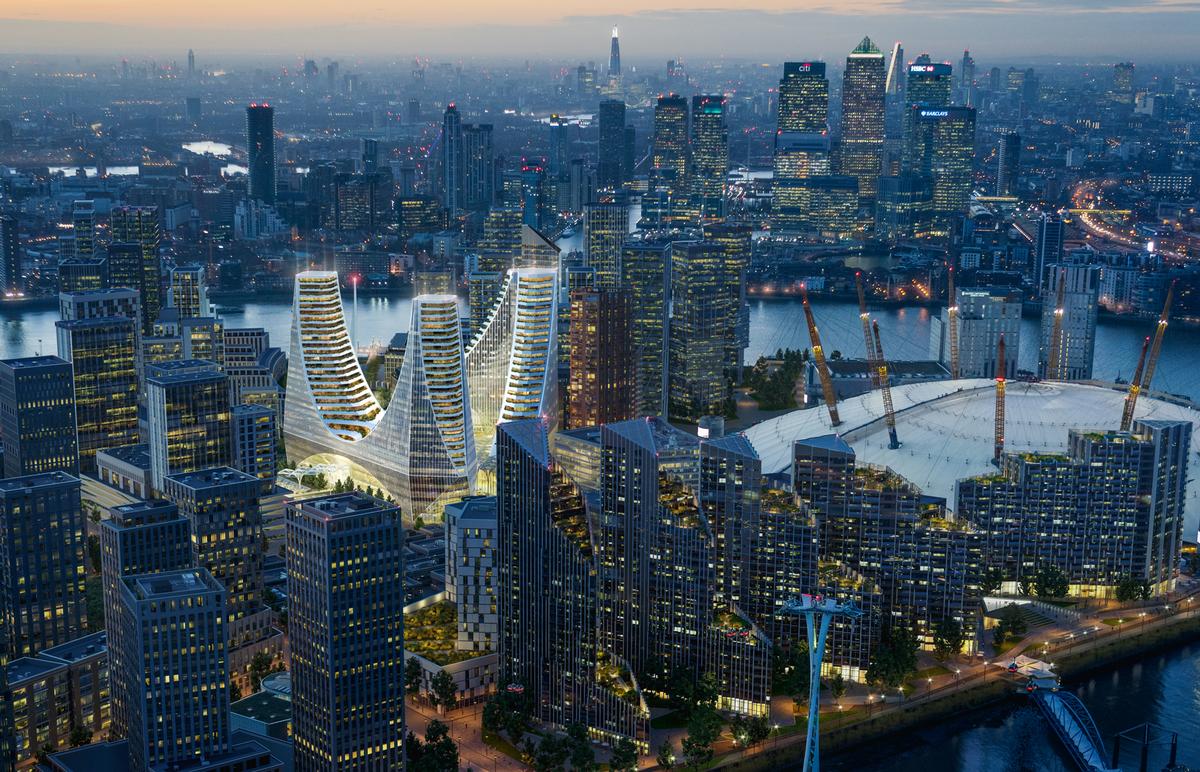
The project in question, Peninsula Place, is a vast underground station, transport hub and leisure zone for Greenwich in South East London. The site will serve as a gateway to the world’s most popular entertainment venue, Richard Rogers’ O2 Arena – formerly the Millennium Dome – and the new £8.4bn Greenwich Peninsula district beyond.

As you’d expect from a Calatrava project, it is monumental in both scale and budget. Billed by Hong Kong developer Knight Dragon as “a unique cultural destination,” it will have a surface area of 1.4 million sq ft. The price tag? A cool £1bn.

The complex will be formed of three 30-storey towers – housing offices, apartments and hotels – that rise in the shape of a crown. These will surround a 24m-tall glazed winter garden, topped by a triangular glass roof that can open to the elements.

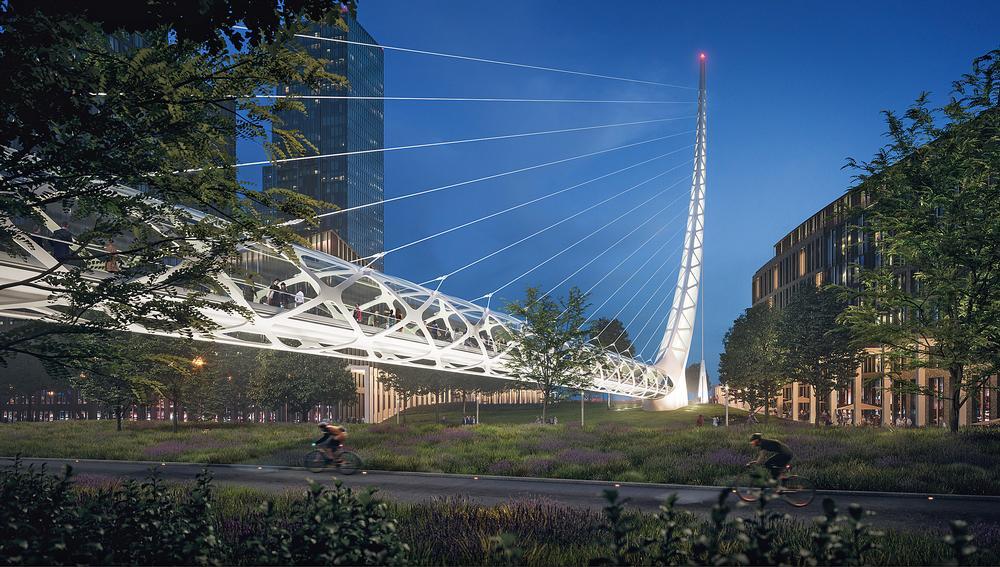
It is into this space that people will ascend from the underground station, before being led along a 152m-long galleria of columns towards Peninsula Place’s leisure facilities – a theatre, cinema and performance venue, bars, shops and a wellbeing hub. Outside, a new Calatrava-designed land bridge will link with a public park alongside the River Thames.

Peninsula Place

A GRAND GESTURE

I meet Calatrava following the project’s glitzy London launch – an event dramatically, or perhaps ominously, soundtracked by a series of movie theme tunes, including Star Wars. In person, he is calm, polite and happy for the big secret to be out in the open. Despite what has presumably been a long day of difficult questioning – I’m the last journalist to meet with him – he speaks quickly and passionately about Greenwich. In fact, I can barely get a word in edgeways.

Peninsula Place

“This project is very important to me,” he says, gesturing at the large model of his design that dominates the room. “There is such potential here. Greenwich is an area of architectural and industrial archaeology. From the top of the towers, you will see the most beautiful fluvial landscape and feel how vibrant London is.”

He became involved in the project over 18 months ago, when Knight Dragon invited him to design a grand gesture for Greenwich Peninsula and “a special place of the arts and for the public.”

“That was enormously appealing to me, because for more than 35 years, 80 per cent or more of my work has been public buildings, and I have done many transport projects and bridges too,” he says. “Most architects would think carefully before taking on a project like this, and I was no different, but I soon felt I could contribute something to this place.”

Peninsula Place

Calatrava believes Peninsula Place gives him a chance “to build for people who don’t usually have the opportunity to go to public places that are nice and beautiful.

“I want to make them feel ‘this is my place, and it’s been made for me’. The goal is to celebrate the area and deliver important things to an important city, but also to humanise the building as much as possible. If we achieve this, it will be like giving a concerto for someone who is hearing good music for the first time.”

During the design phase, Calatrava would regularly fly from Zürich to London City Airport, “just seven minutes away from Greenwich”. Looking down at the city landscape from the plane, he formulated ideas to be expanded later, often while drinking coffee by the Thames.

Peninsula Place will occupy a challenging site. There is a protected park nearby. The existing underground and bus network has to be integrated into the project. The orientation of the hub will have to be perfect to cater for hundreds of thousands of visitors travelling to the O2 – a “very important landmark that should not be overshadowed,” says Calatrava.

For inspiration, Calatrava considered London’s gothic heritage, its garden cities, and particularly the structures built by two of his heroes, Isambard Kingdom Brunel and Joseph Paxton, the designer of London’s Crystal Palace.

Then, he thought about the Greenwich Meridian Line, where the western and eastern hemispheres are divided.

“In Spain, if you’re a 10 year old kid you learn about ‘El Meridiano’ and it seems fantastic! Now I am building at El Meridiano,” he says, with feeling. “We want to impress a child with this design and find elements that excite them. I want them to think, ‘Wow, this is where the Meridian Line passes through!’ Because that is an extraordinary fact, that many people in London have forgotten.

“We want to recall these kind of childhood ideas and memories, and give them form.”

To achieve this, Calatrava’s bridge will act as an enormous sundial, with the vertical mast cable landing on the Meridian Line, “showing a kid that the shadow at noon goes always to the north side.”

Peninsula Place

Foldable frames and moving parts

The huge moving shadows and openable glass cupola demonstrate the kind of movability that is a regular feature of Calatrava’s work.

The Museum of Tomorrow’s roof is lined with photovoltaic solar panel ‘wings’ that follow the position of the sun throughout the day. His New York Transport Hub has a 355 foot-long operable skylight that opens every 11 September to let in sunlight for 102 minutes – reflecting how long the 2001 terrorist attack lasted, from the time the first jetliner hit the trade centre until the collapse of the second tower.

Even the buildings that don’t physically move are designed as if poised to take flight at any moment.

“From day one, movability has been important to me,” Calatrava explains. “It was the subject of my doctoral thesis. The industrial technology available today means we can create this sense that architecture is no more an aesthetic and firm thing, but rather something that transforms, something alive, something new and poetic.

“When I speak to you, I am gesticulating with my arms and hands. When wind blows, trees move and water ripples. It’s the same with my buildings. They are not static. By transforming, they can adapt with time and capture an instant. For example, they react to the weather. With Peninsula Place, if it’s cloudy and cold, I close the roof. If it’s sunny, I open it.”

He laughs. “This is good, because a friend told me if you don’t like the weather in London, you just wait 10 minutes and it will change.”

Calatrava originally trained as an artist, before the discovery of a book about Le Corbusier inspired him to study architecture at university in Valencia. Later, he enrolled at the Swiss Federal Institute of Technology in Zürich to study a second degree in civil engineering.

Art and architecture

It is this confident merging of disciplines that has propelled him to superstardom. In his citation for the European Prize, Narkiewicz-Laine remarked: “Calatrava regularly traverses the lines between art and architecture; his buildings are frequently called sculptural, while his sculptures and paintings are like sketches of buildings.”

This duality becomes apparent as we speak. One moment, Calatrava the engineer provides lengthy, technically rich explanations about the impact of forces and dynamic acceleration. The next, Calatrava the artist tells me about the poetry of the built environment.

I ask him if he considers himself an architect or engineer first and foremost.

“For me, it is about how I can use engineering in a way to signify a place,” he replies. “This is the way I have been with building with technology. I want to use it to push the limits of expression.

“The possibilities of technology are fascinating because we can trust it. People hang in single-cable cable cars every day, and they are relaxed. They go in an elevator in a very, very tall building, but they have no worries. Technology can help us towards a new architecture.”

Warming to his theme, I’m introduced to a third Calatrava – the philosopher.

“You know, there is no difference between art and technique, nor between architecture and engineering. Both serve the art of construction.

“An engineer uses technique, which comes from the ancient Greek word ‘technikí’. But the Greeks also have the word ‘téchni’, meaning art. The worker – ‘tekton’ – has a skill, which is used to achieve art. The ancient Greeks – who were very rational – said ‘a man who is capable of moving me through the creation of an object must be possessed by the Gods.’ Their word for this type of divine possession was ‘enthousiasmos’ – the root of the word ‘enthusiasm.’

“When an object is beautiful, it moves you and you feel uplifted. That is because there someone created it with enthusiasm, to express something. This is what we want to do here in Greenwich.”

For all his passionate words and evident delight in building in London, some people won’t be prepared to give Calatrava the benefit of the doubt. Given the controversies of the past, that’s hardly surprising, and I suspect a part of him has come to terms with this.

In previous interviews, he has defended himself vociferously (telling Co.Design: “There is so much vulgarity in the everyday, that when somebody has the pretension to do something extraordinary for the community, then you have to suffer”). However, when I ask him what he has learnt from his past projects, and how he feels about the criticism, he remains philosophical.

“I’ll give you a brief example [of my thoughts]. At the age of 82, when he was completely deaf, Goya, the great Spanish painter, left Spain and went in exile to Bordeaux. Then, suddenly, he moved to Paris, where nobody knew him and where he could only communicate by writing in Spanish. Even the French culture minister asked ‘why has this man moved here?’

“Well, he went there, deaf and alone, to learn photography. From around this time there is a small drawing by Goya of an old man, bent over with two walking sticks. It is titled ‘Aun aprendo’.

“It means ‘I am still learning.’”

Related news

Santiago Calatrava reveals £1bn London leisure landmark

02 Feb 2017
Spanish architect and engineer Santiago Calatrava has unveiled his £1bn landmark for London’s Greenwich Peninsula ...

Santiago Calatrava designing £1bn project at the heart of London’s Greenwich Peninsula

25 Jan 2017
Santiago Calatrava is set to unveil a major £1bn (US$1.2bn, €1.1bn) project he is designing ...

Work starts on world's tallest tower following groundbreaking ceremony

13 Oct 2016
Ground has been broken on the Santiago Calatrava-designed world's tallest skyscraper, which is scheduled to ...
Spanish architect Santiago Calatrava has told CLADglobal how he wants to use technology and advanced engineering “to push the limits of expression.”
ARC,DES,DEV,PHR,CLD
THUMB19160_606638.jpg
Latest News
Wattbike has announced a new integration with EGYM, which enables the bikes to contribute to ...
Latest News
Les Mills has launched a reformer Pilates workout. The 45-minute workout blends traditional reformer movements ...
Latest News
The inaugural HCM Invest event has opened applications for pitching slots ahead of its launch ...
Latest News
Girls in the UK are missing out on 280 million hours of sport every year ...
Latest News
According to research which tracked more than 147,000 people for 30 years, 90-120 minutes of ...
Latest News
Everlast Gyms expands its footprint outside of the UK this month with the imminent launch ...
Latest News
The UK's four Chief Medical Officers have published a refreshed edition of  Physical activity guidelines: ...
Latest News
Places Leisure has exchanged contracts to build and operate a flagship £60m water and wellness ...
HCM promotional features
Sponsored
Social fitness the missing link to member engagement, according to a new Myzone report
HCM promotional features
Sponsored
Find out how your gym can tap into the corporate wellness boom
HCM promotional features
Sponsored
Starpool supports Olympic champion Marcell Jacobs, says Riccardo Turri
HCM promotional features
Sponsored
Greg Bradley looks at the shift towards strength training in gyms and advises on how operators can create the ultimate training environment
HCM promotional features
Sponsored
Third Space partnered with IndigoFitness to deliver a bespoke training space for its new club at The Whiteley
HCM promotional features
Sponsored
SnowDome Fitness has added 50 per cent more space with cutting-edge Technogym solutions
HCM promotional features
Sponsored
David Lloyd is stepping up its commitment to women’s health as it continues to explore what fit-for-purpose looks like for the female population
HCM promotional features
Sponsored
EGYM has opened a new HQ in Paternoster Square, London and revealed a range of new launches
HCM promotional features
HCM magazine
New legislation is exposing weakness and potential liabilities in the management of customer data in health clubs, says Andy Chesterman
HCM magazine
Lisa Starr tries the Ammortal Chamber to see whether layering 10 modalities into one experience really delivers more
HCM magazine
Software suppliers explain how AI, automation and connected digital experiences can work for the good of operators and consumers
HCM magazine
As the 20th State of the Industry Report is released, LeisureDB has rebranded to Evolve, as Kath Hudson reports
HCM magazine
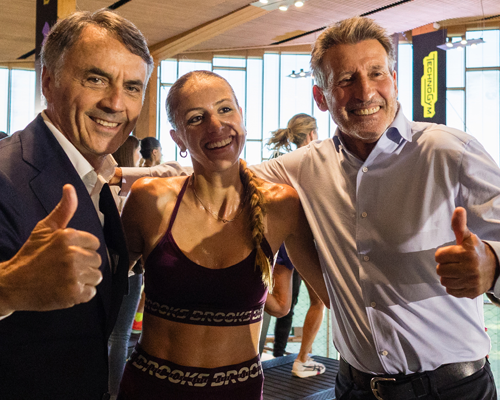
World Athletics president, Sebastian Coe talks to Liz Terry about the launch of Run X in partnership with Technogym
Opinion
promotion
Strength training has moved from the margins to the mainstream.
Opinion: Building smarter strength spaces for today’s operators
Featured supplier news
Featured supplier news: Introducing a new era of Nautilus Leverage
Strength training has never been more important for member retention, facility differentiation and long-term commercial success.
Featured supplier news
Featured supplier news: Legends never die: four legends, four philosophies of life
Panatta brought together four of the most influential figures in bodybuilding history on the stage of RiminiWellness 2026: Phil Heath, Lee Haney, Ronnie Coleman and Hany Rambod.
Company profiles
Company profile: Energym
At Energym, we’re redefining the role of fitness in a sustainable future. Our award-winning British ...
Company profiles
Company profile: Shua Fitness
Founded in 1996, Shua integrates intelligent technology, sports science, and premium fitness equipment to deliver ...
Supplier Showcases
Supplier Showcase - Future-proofing
Catalogue Gallery
Click on a catalogue to view it online
Featured press releases
Speedflex (UK press release: Inclusive Fitness in action: The Speedflex Blade at Gym Possible
Following the successful installation of the Speedflex Blade at Gym Possible, the UK based charity gym dedicated to making exercise accessible for people with physical disabilities, the innovative training solution has quickly become one of the facility’s
Featured press releases
BLK BOX press release: Inside the Player Gym at The Open, equipped by BLK BOX
The performance facility at Royal Birkdale gives the world’s leading golfers access to strength, conditioning, mobility and recovery equipment throughout Championship week.
Directory
Industrial washing machines
Miele Company Limited: Industrial washing machines
Water experiences and hydrotherapy solutions
Aquaform s.r.l.: Water experiences and hydrotherapy solutions
Spa and beauty equipment
Living Earth Crafts: Spa and beauty equipment
Fitness tracking platform
SpiviTech: Fitness tracking platform
Hot tubs
MSpa International Ltd: Hot tubs
Lockers
Crown Sports Lockers: Lockers
Property & Tenders
Stratford, East London.
Lee Valley Regional Park Authority
Property & Tenders
Y Felinheli, LL56 4QN
Newmark
Property & Tenders
Diary dates
21-24 Sep 2026
The Langham Huntington Pasadena , Pasadena, United States
Diary dates
06-08 Oct 2026
Messe Stuttgart, Stuttgart, Germany
Diary dates
22-22 Oct 2026
QEII Conference Centre, London,
Diary dates
26-29 Oct 2027
Koelnmesse Exhibition Centre, Cologne, Germany
Diary dates

Latest news

Santiago Calatrava exclusive: 'I want to push the limits of expression'

There is no difference between art and technique, nor between architecture and engineering. Both serve the art of construction
– Santiago Calatrava
Credit: Thomas Hoeffgen

Spanish architect Santiago Calatrava has told CLADglobal how he wants to use technology and advanced engineering “to push the limits of expression.”

“From day one, movability has been important to me,” he said, in an exclusive interview. “Today we can create this sense that architecture is no more an aesthetic and firm thing, but rather something that transforms, something alive, something new and poetic.”

Calatrava also discussed his controversial reputation, why he loves to build for the public and his £1bn transport and leisure hub for Greenwich, London.

The interview appears in the new issue of CLADmag – our quarterly magazine – which is available to read now both online and in print.

The full feature appears both below and on digital turning pages.

The world of contemporary architecture is far from short of controversial characters. But even in this sometimes polarising industry, few people split opinion quite like Santiago Calatrava, the Spanish architect, engineer, sculptor and painter disparaged by some and hailed as a visionary by others.

Everyone has an opinion, because love them or hate them, Calatrava’s stylised neo-futuristic structures are impossible to ignore.

From the Museum of Tomorrow in Rio de Janeiro to Valencia’s City of Arts and Sciences, the Milwaukee Art Museum in Wisconsin and the World Trade Center Transport Hub in New York, Calatrava’s work dominates city skylines around the world. His signature white skeletal forms, often representing natural organisms, have become as identifiable to him as curves were to the late Zaha Hadid.

The problem, at least in the eyes of his critics, is the cost it takes to achieve his complex visions. The transport hub infamously came in at a whopping US$4bn – twice its original budget – while the Valencia project was plagued by soaring cost overruns, delays and legal battles over structural problems, including a leaking roof and falling tiles.
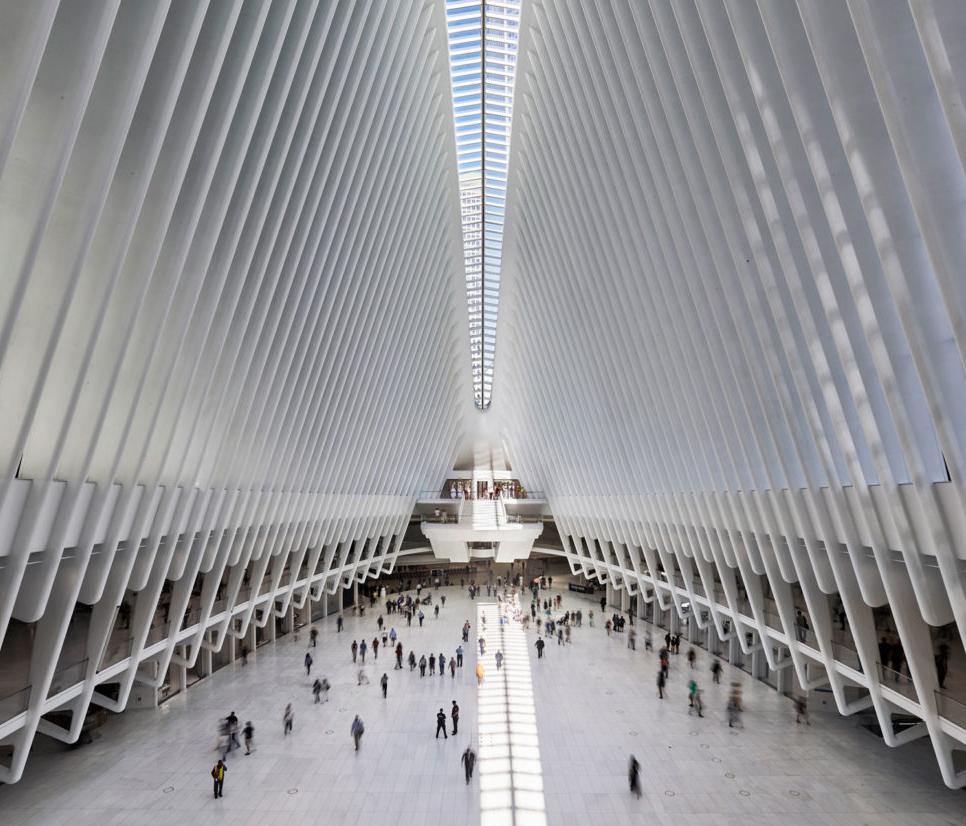
Oculus

In 2014, a Spanish political party was ordered to pay Calatrava damages after cataloguing alleged flaws in his buildings on a website titled ‘Calatravatelaclava’ – loosely translated as “Calatrava bleeds you dry.” In an interview with The New York Times, the president of Bilbao’s architectural association complained that “rather than searching for functionality or customer satisfaction, he aims for singularity.”

These slings and arrows have had little obvious impact on Calatrava’s career. On the contrary, the accolades keep on coming, including a lifetime achievement award from the Leading European Architecture Forum in 2016, and the European Prize for Architecture the year before.

In the jury citation for the latter, architect Christian Narkiewicz-Laine described Calatrava’s buildings as “powerful works of art; inspired by a master’s gifted hand and sculpted by a superior, critical eye; immensely evocative and fiercely intellectual.” Cities want to work with Calatrava, he added, because “by building inspiring architecture for the public, he has added much to the definition of what is civic realm.”

The stream of high-profile projects shows no sign of slowing. From the United Arab Emirates’ falcon-shaped pavilion for the 2020 Dubai Expo, to a tower that will outmuscle the Burj Khalifa as the world’s tallest, the next big budget project is always just around the corner.

Now, after years of speculation and false starts, ‘a Calatrava’ will be built in London.

Peninsula Place
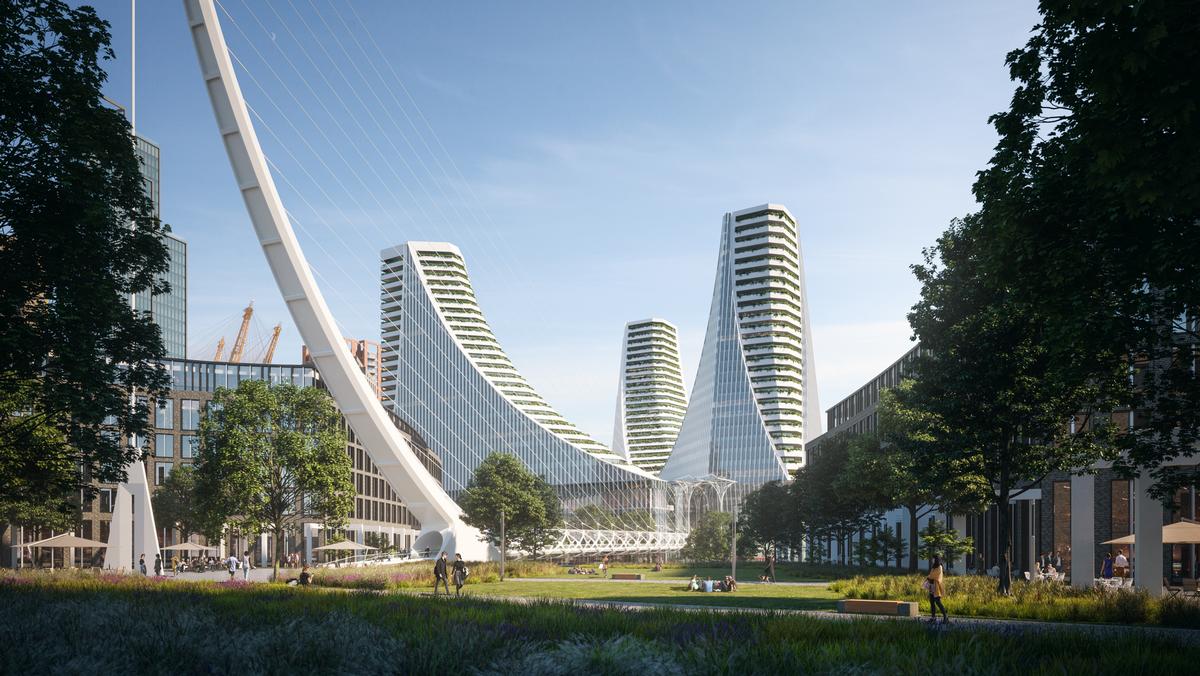
Peninsula Place

The project in question, Peninsula Place, is a vast underground station, transport hub and leisure zone for Greenwich in South East London. The site will serve as a gateway to the world’s most popular entertainment venue, Richard Rogers’ O2 Arena – formerly the Millennium Dome – and the new £8.4bn Greenwich Peninsula district beyond.

As you’d expect from a Calatrava project, it is monumental in both scale and budget. Billed by Hong Kong developer Knight Dragon as “a unique cultural destination,” it will have a surface area of 1.4 million sq ft. The price tag? A cool £1bn.

The complex will be formed of three 30-storey towers – housing offices, apartments and hotels – that rise in the shape of a crown. These will surround a 24m-tall glazed winter garden, topped by a triangular glass roof that can open to the elements.

It is into this space that people will ascend from the underground station, before being led along a 152m-long galleria of columns towards Peninsula Place’s leisure facilities – a theatre, cinema and performance venue, bars, shops and a wellbeing hub. Outside, a new Calatrava-designed land bridge will link with a public park alongside the River Thames.

Peninsula Place

A GRAND GESTURE

I meet Calatrava following the project’s glitzy London launch – an event dramatically, or perhaps ominously, soundtracked by a series of movie theme tunes, including Star Wars. In person, he is calm, polite and happy for the big secret to be out in the open. Despite what has presumably been a long day of difficult questioning – I’m the last journalist to meet with him – he speaks quickly and passionately about Greenwich. In fact, I can barely get a word in edgeways.
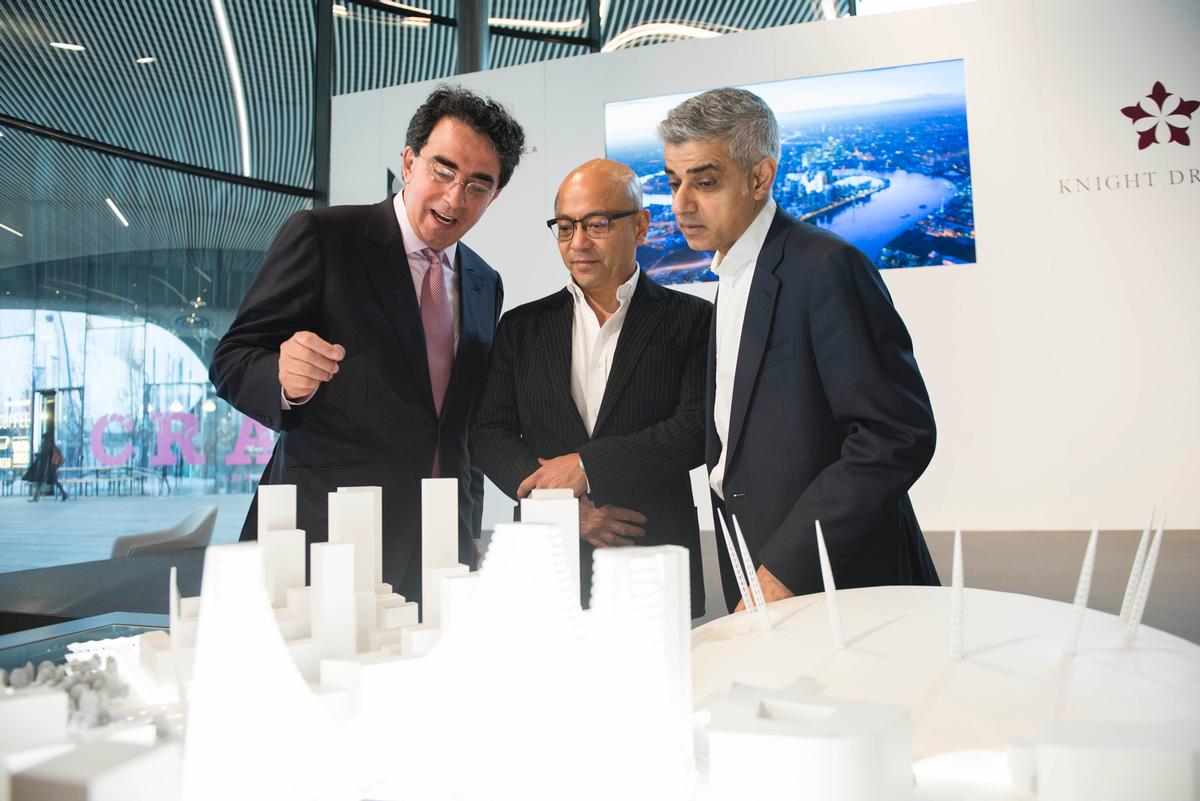
Peninsula Place

“This project is very important to me,” he says, gesturing at the large model of his design that dominates the room. “There is such potential here. Greenwich is an area of architectural and industrial archaeology. From the top of the towers, you will see the most beautiful fluvial landscape and feel how vibrant London is.”

He became involved in the project over 18 months ago, when Knight Dragon invited him to design a grand gesture for Greenwich Peninsula and “a special place of the arts and for the public.”

“That was enormously appealing to me, because for more than 35 years, 80 per cent or more of my work has been public buildings, and I have done many transport projects and bridges too,” he says. “Most architects would think carefully before taking on a project like this, and I was no different, but I soon felt I could contribute something to this place.”
Peninsula Place

Calatrava believes Peninsula Place gives him a chance “to build for people who don’t usually have the opportunity to go to public places that are nice and beautiful.

“I want to make them feel ‘this is my place, and it’s been made for me’. The goal is to celebrate the area and deliver important things to an important city, but also to humanise the building as much as possible. If we achieve this, it will be like giving a concerto for someone who is hearing good music for the first time.”

During the design phase, Calatrava would regularly fly from Zürich to London City Airport, “just seven minutes away from Greenwich”. Looking down at the city landscape from the plane, he formulated ideas to be expanded later, often while drinking coffee by the Thames.

Peninsula Place will occupy a challenging site. There is a protected park nearby. The existing underground and bus network has to be integrated into the project. The orientation of the hub will have to be perfect to cater for hundreds of thousands of visitors travelling to the O2 – a “very important landmark that should not be overshadowed,” says Calatrava.

For inspiration, Calatrava considered London’s gothic heritage, its garden cities, and particularly the structures built by two of his heroes, Isambard Kingdom Brunel and Joseph Paxton, the designer of London’s Crystal Palace.

Then, he thought about the Greenwich Meridian Line, where the western and eastern hemispheres are divided.

“In Spain, if you’re a 10 year old kid you learn about ‘El Meridiano’ and it seems fantastic! Now I am building at El Meridiano,” he says, with feeling. “We want to impress a child with this design and find elements that excite them. I want them to think, ‘Wow, this is where the Meridian Line passes through!’ Because that is an extraordinary fact, that many people in London have forgotten.

“We want to recall these kind of childhood ideas and memories, and give them form.”

To achieve this, Calatrava’s bridge will act as an enormous sundial, with the vertical mast cable landing on the Meridian Line, “showing a kid that the shadow at noon goes always to the north side.”
Peninsula Place

Foldable frames and moving parts

The huge moving shadows and openable glass cupola demonstrate the kind of movability that is a regular feature of Calatrava’s work.

The Museum of Tomorrow’s roof is lined with photovoltaic solar panel ‘wings’ that follow the position of the sun throughout the day. His New York Transport Hub has a 355 foot-long operable skylight that opens every 11 September to let in sunlight for 102 minutes – reflecting how long the 2001 terrorist attack lasted, from the time the first jetliner hit the trade centre until the collapse of the second tower.

Even the buildings that don’t physically move are designed as if poised to take flight at any moment.

“From day one, movability has been important to me,” Calatrava explains. “It was the subject of my doctoral thesis. The industrial technology available today means we can create this sense that architecture is no more an aesthetic and firm thing, but rather something that transforms, something alive, something new and poetic.

“When I speak to you, I am gesticulating with my arms and hands. When wind blows, trees move and water ripples. It’s the same with my buildings. They are not static. By transforming, they can adapt with time and capture an instant. For example, they react to the weather. With Peninsula Place, if it’s cloudy and cold, I close the roof. If it’s sunny, I open it.”

He laughs. “This is good, because a friend told me if you don’t like the weather in London, you just wait 10 minutes and it will change.”

Calatrava originally trained as an artist, before the discovery of a book about Le Corbusier inspired him to study architecture at university in Valencia. Later, he enrolled at the Swiss Federal Institute of Technology in Zürich to study a second degree in civil engineering.

Art and architecture

It is this confident merging of disciplines that has propelled him to superstardom. In his citation for the European Prize, Narkiewicz-Laine remarked: “Calatrava regularly traverses the lines between art and architecture; his buildings are frequently called sculptural, while his sculptures and paintings are like sketches of buildings.”

This duality becomes apparent as we speak. One moment, Calatrava the engineer provides lengthy, technically rich explanations about the impact of forces and dynamic acceleration. The next, Calatrava the artist tells me about the poetry of the built environment.

I ask him if he considers himself an architect or engineer first and foremost.

“For me, it is about how I can use engineering in a way to signify a place,” he replies. “This is the way I have been with building with technology. I want to use it to push the limits of expression.

“The possibilities of technology are fascinating because we can trust it. People hang in single-cable cable cars every day, and they are relaxed. They go in an elevator in a very, very tall building, but they have no worries. Technology can help us towards a new architecture.”

Warming to his theme, I’m introduced to a third Calatrava – the philosopher.

“You know, there is no difference between art and technique, nor between architecture and engineering. Both serve the art of construction.

“An engineer uses technique, which comes from the ancient Greek word ‘technikí’. But the Greeks also have the word ‘téchni’, meaning art. The worker – ‘tekton’ – has a skill, which is used to achieve art. The ancient Greeks – who were very rational – said ‘a man who is capable of moving me through the creation of an object must be possessed by the Gods.’ Their word for this type of divine possession was ‘enthousiasmos’ – the root of the word ‘enthusiasm.’

“When an object is beautiful, it moves you and you feel uplifted. That is because there someone created it with enthusiasm, to express something. This is what we want to do here in Greenwich.”

For all his passionate words and evident delight in building in London, some people won’t be prepared to give Calatrava the benefit of the doubt. Given the controversies of the past, that’s hardly surprising, and I suspect a part of him has come to terms with this.

In previous interviews, he has defended himself vociferously (telling Co.Design: “There is so much vulgarity in the everyday, that when somebody has the pretension to do something extraordinary for the community, then you have to suffer”). However, when I ask him what he has learnt from his past projects, and how he feels about the criticism, he remains philosophical.

“I’ll give you a brief example [of my thoughts]. At the age of 82, when he was completely deaf, Goya, the great Spanish painter, left Spain and went in exile to Bordeaux. Then, suddenly, he moved to Paris, where nobody knew him and where he could only communicate by writing in Spanish. Even the French culture minister asked ‘why has this man moved here?’

“Well, he went there, deaf and alone, to learn photography. From around this time there is a small drawing by Goya of an old man, bent over with two walking sticks. It is titled ‘Aun aprendo’.

“It means ‘I am still learning.’”
Related news

Santiago Calatrava reveals £1bn London leisure landmark

02 Feb 2017
Spanish architect and engineer Santiago Calatrava has unveiled his £1bn landmark for London’s Greenwich Peninsula ...

Santiago Calatrava designing £1bn project at the heart of London’s Greenwich Peninsula

25 Jan 2017
Santiago Calatrava is set to unveil a major £1bn (US$1.2bn, €1.1bn) project he is designing ...

Work starts on world's tallest tower following groundbreaking ceremony

13 Oct 2016
Ground has been broken on the Santiago Calatrava-designed world's tallest skyscraper, which is scheduled to ...
Spanish architect Santiago Calatrava has told CLADglobal how he wants to use technology and advanced engineering “to push the limits of expression.”
ARC,DES,DEV,PHR,CLD
THUMB19160_606638.jpg

Latest news
Wattbike has announced a new integration with EGYM, which enables the bikes to contribute to
Les Mills has launched a reformer Pilates workout. The 45-minute workout blends traditional reformer movements
The inaugural HCM Invest event has opened applications for pitching slots ahead of its launch
Girls in the UK are missing out on 280 million hours of sport every year
According to research which tracked more than 147,000 people for 30 years, 90-120 minutes of
Everlast Gyms expands its footprint outside of the UK this month with the imminent launch
Strength training has never been more important for member retention, facility  differentiation and long-term commercial
The UK's four Chief Medical Officers have published a refreshed edition of  Physical activity guidelines:
Places Leisure has exchanged contracts to build and operate a flagship £60m water and wellness
The Republic of Ireland will become the latest market in PureGym’s expanding international portfolio, with
Sophie Lawler, CEO of Total Fitness, has launched a leadership coaching business aimed at helping
Anytime Fitness reaches a milestone this week with the launch of its 6000th site. The
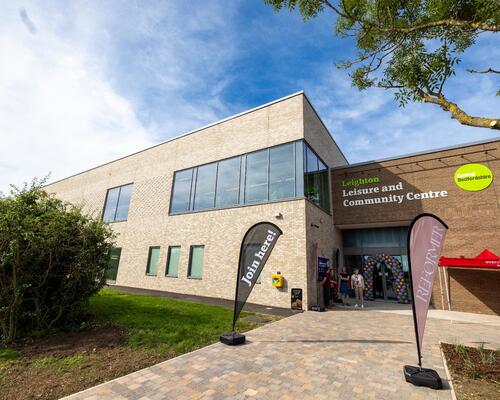
The £33.9 million Leighton Leisure and Community Centre has opened in Leighton Buzzard, UK, creating
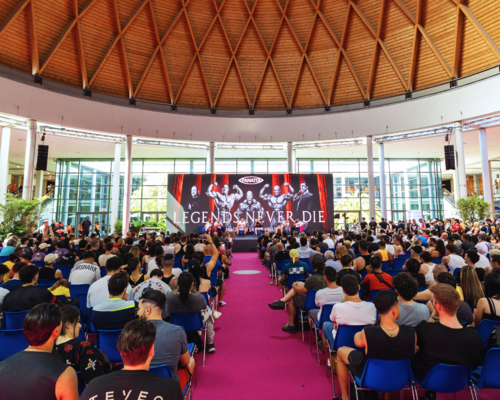
Panatta brought together four of the most influential figures in bodybuilding history on the stage
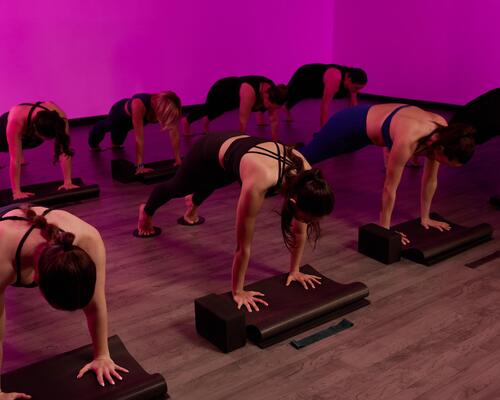
YogaSix, the yoga brand owned by Xponential Fitness, has launched a heated, Pilates-inspired class called
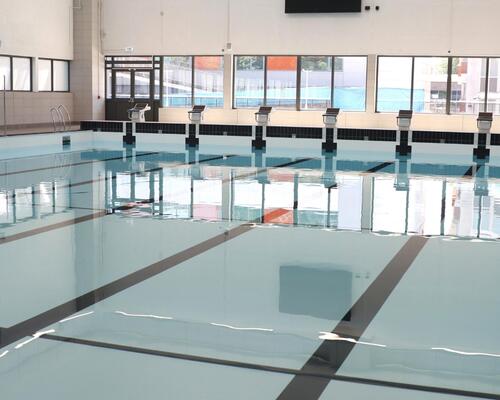
Walnuts Leisure Centre in Orpington, in the London Borough of Bromley, has reopened following a
The Gym Group, has announced that it's sustained positive trading momentum has continued through the
Hyrox has announced it will be working with a second charity in the upcoming season
US low-cost operator, Amped Fitness, has launched a flagship location in Texas, debuting its multi-sensory
Luxury boutique Pilates and wellness studio, X-Club, officially launches a 4,000sq ft flagship at Marylebone
The LifeFit Group continues its buy and build strategy with the acquisition of the Fitness
An ambitious women’s only strength and lifting studio concept is set to launch in Dallas this
1 - 20 of 12,300
HCM promotional features
Sponsored
Social fitness the missing link to member engagement, according to a new Myzone report
HCM promotional features
Sponsored
Find out how your gym can tap into the corporate wellness boom
HCM promotional features
Sponsored
Starpool supports Olympic champion Marcell Jacobs, says Riccardo Turri
HCM promotional features
Sponsored
Greg Bradley looks at the shift towards strength training in gyms and advises on how operators can create the ultimate training environment
HCM promotional features
Sponsored
Third Space partnered with IndigoFitness to deliver a bespoke training space for its new club at The Whiteley
HCM promotional features
Sponsored
SnowDome Fitness has added 50 per cent more space with cutting-edge Technogym solutions
HCM promotional features
Sponsored
David Lloyd is stepping up its commitment to women’s health as it continues to explore what fit-for-purpose looks like for the female population
HCM promotional features
Sponsored
EGYM has opened a new HQ in Paternoster Square, London and revealed a range of new launches
HCM promotional features
HCM magazine
New legislation is exposing weakness and potential liabilities in the management of customer data in health clubs, says Andy Chesterman
HCM magazine
Lisa Starr tries the Ammortal Chamber to see whether layering 10 modalities into one experience really delivers more
HCM magazine
Software suppliers explain how AI, automation and connected digital experiences can work for the good of operators and consumers
HCM magazine
As the 20th State of the Industry Report is released, LeisureDB has rebranded to Evolve, as Kath Hudson reports
HCM magazine
World Athletics president, Sebastian Coe talks to Liz Terry about the launch of Run X in partnership with Technogym
HCM magazine
Fuel the debate about issues and opportunities across the industry. We’d love to hear from you. Write to [email protected]
HCM magazine
After decades of focusing on adult audiences, operators are starting to engage young people – unlocking growth opportunities while supporting the health and wellbeing of future generations
HCM magazine
People on weight loss drugs reduce their activity levels, according to a team at St John’s Hospital Illinois
HCM magazine
The fitness industry is mourning the passing of Les Mills, a founding father of fitness, as Kath Hudson reports
HCM magazine
Shaping the future of the sector with a clear mission, unified voice and open channels of communication. This is the ambition of UK Active’s new chair
HCM magazine
Would you stop selling memberships to prevent your club getting overcrowded? How do you strike the balance between maximising profits and prioritising the member experience? Kath Hudson talks to the experts
HCM magazine
Opinion
promotion
Strength training has moved from the margins to the mainstream.
Opinion: Building smarter strength spaces for today’s operators
Featured supplier news

Featured supplier news: Introducing a new era of Nautilus Leverage
Strength training has never been more important for member retention, facility differentiation and long-term commercial success.
Featured supplier news

Featured supplier news: Legends never die: four legends, four philosophies of life
Panatta brought together four of the most influential figures in bodybuilding history on the stage of RiminiWellness 2026: Phil Heath, Lee Haney, Ronnie Coleman and Hany Rambod.
Company profiles
Company profile: Energym
At Energym, we’re redefining the role of fitness in a sustainable future. Our award-winning British ...
Company profiles
Company profile: Shua Fitness
Founded in 1996, Shua integrates intelligent technology, sports science, and premium fitness equipment to deliver ...
Supplier Showcases
Supplier Showcase - Future-proofing
Catalogue Gallery
Click on a catalogue to view it online
Featured press releases
Speedflex (UK press release: Inclusive Fitness in action: The Speedflex Blade at Gym Possible
Following the successful installation of the Speedflex Blade at Gym Possible, the UK based charity gym dedicated to making exercise accessible for people with physical disabilities, the innovative training solution has quickly become one of the facility’s
Featured press releases
BLK BOX press release: Inside the Player Gym at The Open, equipped by BLK BOX
The performance facility at Royal Birkdale gives the world’s leading golfers access to strength, conditioning, mobility and recovery equipment throughout Championship week.
Directory
Industrial washing machines
Miele Company Limited: Industrial washing machines
Water experiences and hydrotherapy solutions
Aquaform s.r.l.: Water experiences and hydrotherapy solutions
Spa and beauty equipment
Living Earth Crafts: Spa and beauty equipment
Fitness tracking platform
SpiviTech: Fitness tracking platform
Hot tubs
MSpa International Ltd: Hot tubs
Lockers
Crown Sports Lockers: Lockers
Property & Tenders
Stratford, East London.
Lee Valley Regional Park Authority
Property & Tenders
Y Felinheli, LL56 4QN
Newmark
Property & Tenders
Diary dates
21-24 Sep 2026
The Langham Huntington Pasadena , Pasadena, United States
Diary dates
06-08 Oct 2026
Messe Stuttgart, Stuttgart, Germany
Diary dates
22-22 Oct 2026
QEII Conference Centre, London,
Diary dates
26-29 Oct 2027
Koelnmesse Exhibition Centre, Cologne, Germany
Diary dates
Search news, features & products:
Find a supplier: