












Leisure employees ‘most reluctant’ to mix work and play online
By Jak Phillips
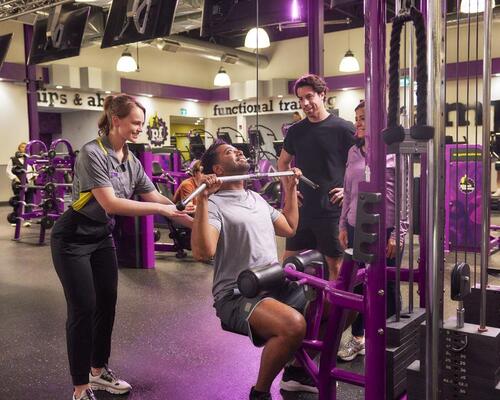
Despite a growing selfie culture among PTs, research has found leisure sector workers draw a strict distinction between online work and play Credit: Shutterstock.com
Leisure sector workers are the UK’s most likely to keep their personal and professional online lives separate.
That’s according to new research into the blurring lines of personal and professional social media use, which found leisure employees are least likely to want to use their personal accounts to promote their company, and least likely to accept work colleagues on Facebook.
Around 45 per cent of leisure employees said that they wouldn’t accept their manager as a ‘friend’ on Facebook, 10 per cent more than the national average. Meanwhile, 16 per cent leisure employees say they have read their company’s social media policy, but don’t follow it – compared to just nine per cent across the national average.
The findings from online reputation management company Igniyte follow a number of high-profile cases where employees have posted ill-judged content from their personal social media account – thrusting their employer into the spotlight in the process.
Overall, the study – carried out in October 2015 with 1,000 UK employees across varying sectors – identified several eye-opening patterns around the modern employee’s social media use.
Nearly one in five employees don’t even know if their company has a social media policy, while only a quarter said they would think carefully before posting content or pictures on social media about how it could affect theirs or someone else’s professional reputation. A total of 28 per cent of UK employees say they are happy to accept any work colleague as a ‘friend’ on Facebook.
The findings of the research have been used to compile a free online guide to Protecting Your Company From Employee Risk, which is available here.
Leisure sector workers are the UK’s most likely to keep their personal and professional
online lives separate.
Collaborations with the medical profession and greater aspirations around wellbeing are creating a need for more experts in our sector. It’s time to reboot our thinking around the workforce
As the entrepreneur who started Wexer, Fresh Fitness, Fitness DK and Repeat, as well as being a former elite athlete, Rasmus Ingerslev’s life looked perfect from the outside, but onthe inside it was a different story. He talks to Kath Hudson about healing old wounds
For every member with a tripod and a big following, there are others irritated at the way equipment is being hogged or wary they’ll be in the background on someone’s Insta feed. Do influencers offer valuable, free marketing or are they just a nuisance? Kath Hudson finds out how operators are responding
Active Blackpool is deploying Cornerstone Connect, a new digital interface allowing
disparate information from multiple systems to be aggregated into one dataset, to support
its focus on reducing health inequalities and improving healthy life expectancy.
CoverMe, the global leader in fitness workforce management, today launches CoverMe PT, an
on-demand personal training platform that connects the right personal trainer to the right
client in under 10 seconds.
Create's new Personal Training Diploma is built on the depth, real-client practice and
coaching judgement that turn a qualification into genuine readiness - taught as one
continuous course so that every skill is reinforced and applied, not cleared once and
forgotten.
Leisure employees ‘most reluctant’ to mix work and play online
By Jak Phillips
Despite a growing selfie culture among PTs, research has found leisure sector workers draw a strict distinction between online work and play Credit: Shutterstock.com
Leisure sector workers are the UK’s most likely to keep their personal and professional online lives separate.
That’s according to new research into the blurring lines of personal and professional social media use, which found leisure employees are least likely to want to use their personal accounts to promote their company, and least likely to accept work colleagues on Facebook.
Around 45 per cent of leisure employees said that they wouldn’t accept their manager as a ‘friend’ on Facebook, 10 per cent more than the national average. Meanwhile, 16 per cent leisure employees say they have read their company’s social media policy, but don’t follow it – compared to just nine per cent across the national average.
The findings from online reputation management company Igniyte follow a number of high-profile cases where employees have posted ill-judged content from their personal social media account – thrusting their employer into the spotlight in the process.
Overall, the study – carried out in October 2015 with 1,000 UK employees across varying sectors – identified several eye-opening patterns around the modern employee’s social media use.
Nearly one in five employees don’t even know if their company has a social media policy, while only a quarter said they would think carefully before posting content or pictures on social media about how it could affect theirs or someone else’s professional reputation. A total of 28 per cent of UK employees say they are happy to accept any work colleague as a ‘friend’ on Facebook.
The findings of the research have been used to compile a free online guide to Protecting Your Company From Employee Risk, which is available here.
Leisure sector workers are the UK’s most likely to keep their personal and professional
online lives separate.
Collaborations with the medical profession and greater aspirations around wellbeing are creating a need for more experts in our sector. It’s time to reboot our thinking around the workforce
As the entrepreneur who started Wexer, Fresh Fitness, Fitness DK and Repeat, as well as being a former elite athlete, Rasmus Ingerslev’s life looked perfect from the outside, but onthe inside it was a different story. He talks to Kath Hudson about healing old wounds

For every member with a tripod and a big following, there are others irritated at the way equipment is being hogged or wary they’ll be in the background on someone’s Insta feed. Do influencers offer valuable, free marketing or are they just a nuisance? Kath Hudson finds out how operators are responding
Strength training is evolving,
driven by changing consumer
preferences. Julie Cramer talks
to innovators about how their
products are meeting this demand
If the health service is to
survive, we must recognise
that it is a disease service
– and that wellbeing rests with
us, says the activity advocate
and healthy ageing champion.
He talks to Kate Cracknell
UK market penetration has risen to 18 per cent – one of the highest
globally, yet with 100 per cent of people seeing benefits when they
exercise, how high could it go? Kath Hudson asks the experts…
Active Blackpool is deploying Cornerstone Connect, a new digital interface allowing
disparate information from multiple systems to be aggregated into one dataset, to support
its focus on reducing health inequalities and improving healthy life expectancy.
CoverMe, the global leader in fitness workforce management, today launches CoverMe PT, an
on-demand personal training platform that connects the right personal trainer to the right
client in under 10 seconds.
Create's new Personal Training Diploma is built on the depth, real-client practice and
coaching judgement that turn a qualification into genuine readiness - taught as one
continuous course so that every skill is reinforced and applied, not cleared once and
forgotten.