






















Latest news
GM Active study reveals the power of health intervention programmes


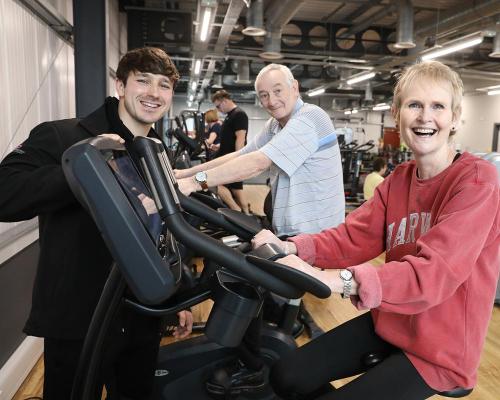
According to a study commissioned by GM Active, health intervention programmes provide more than £20,000 of social value per person and £5,600 worth of health improvements.
This study was undertaken by State of Life on behalf of the public sector health and fitness provider and provides a compelling case for expanding and embedding exercise referral in the UK government’s planned shift to prevention.
Spanning eight Greater Manchester boroughs, the study showed that interventions delivered in leisure centres, community venues and green spaces provide more than £20,000 of social value per person using WELLBY standard, and £5,600 worth of health improvements using NHS QALY.
Andy King, chair of GM Active, said this demonstrates physical activity is medicine: “The results of this study are significant. We were determined to properly understand the effect that physical activity could have when used as an intervention to improve a person’s health and wellbeing and this study gives ample evidence of the role that physical activity can play.”
More than 3,000 respondents took part in the research. Around 2,000 were current or previous participants in the exercise programmes, the rest were waiting to start a programme, providing a control group.
The findings revealed that taking part in a GM Active programme is associated with significant improvements in personal and mental wellbeing, community cohesion, individual development, physical health, and reduced reliance on NHS services.
There was a 1.32-point difference in life satisfaction between participants and those on the waiting list, which is almost three times greater than the improvement seen in the national data when someone moves from unemployed to employed.
The biggest boost to life satisfaction was seen among those with a lower baseline wellbeing, such as being physically inactive, having a disability or a long-term health condition, or those living in more deprived communities.
The greatest wellbeing gains came from those who participated at least four to six times a week, attended supervised sessions or specialist classes and stayed in the programme for at least four to six weeks.
Wellbeing value is up to eight times higher when working with those participating in exercise referral schemes compared to the average adult. Using HM Treasury-approved wellbeing valuation methods, this converts into a social value of £21,800 per person per year.
As a comparison, through State of Life’s work with Sport England, they found that a member of the general population being physically active is worth £2,500 of social value.
Researchers also found that 80 per cent of participants said they plan to stay physically active after finishing a programme, and 66 per cent intend to continue as customers at their GM Active centre, contributing directly to the financial viability of the service providers.
The survey also included the EQ-5D-5L questionnaire to measure health-related quality of life – a standard used by NICE and the NHS to assess whether health interventions, including drugs and services – offer good value for public money. The findings calculate participation in GM Active’s exercise referral programmes is associated with an average health improvement equivalent to £5,600 per person in QALY terms.
Based on a conservative NHS production cost benchmark of £15,000 per QALY, this implies the programmes would represent value for money if delivered at a cost if less than £1,200 per participant per year. Early estimates in the GM Active study suggest the costs could be less than a quarter of this figure.
Participants also reported 19 per cent fewer GP appointments over a 28-day period compared to those on the waiting list, suggesting that these programmes not only improve health-related quality of life but also reduce pressure on frontline NHS services.

Latest news






Work is underway in Madrid on one of Europe’s most significant multi-functional complexes,

























Stephen Price
Founder, SP&Co Group


Jamie Clements
The Breath Coach