






Editor's letter


Tell us about your career path
I’ve always had a passion for technology. I started my first business when I was 15, focusing on bulletin board systems before the internet became mainstream, then built and sold my first internet business by the time I was 25.
I worked for the buyer briefly, but quickly realised I couldn’t work for someone else, so moved into the family construction business. At the same time, I continued to launch my own IT ventures, including another internet provider.
We target break-even within four to six weeks of opening. In the last five clubs we’ve opened, we’ve achieved break-even during presale
Then in 2004, our construction company won a contract to build, own and operate a A$30m leisure centre in Canberra: a 14,000sq m centre with 50m and 25m pools, a 5,000sq m gym and indoor sports courts. The local government contributed A$10m and we put in A$20m.
When we were looking for operators, everyone wanted the gym but not the pool without a subsidy. We needed a return and when I looked at the business model I realised it was just a low-tech version of my internet businesses, with recurring revenue, churn management and customer service. It was just in a sector where most operators were fitness enthusiasts rather than business people. So I decided to run the centre myself, approaching it from a systems and data perspective.
It went really well and in 2006, we bought a golf course and added a gym to it. In 2008, we bought a block of land and built a large gym. In 2010, we did our first acquisition – four health clubs – and in 2012, when Fitness First was downsizing in Australia, we acquired one of its clubs just outside Canberra, where we were based.
We continued to grow and by 2019, had reached 29 locations – all funded with family capital.
Is this when you listed on the Stock Exchange?
Yes. With no other listed fitness group in Australia, we had to educate the investors, but when we showed them our technology and explained how ripe the industry was for consolidation, they realised we were the ideal horse to back and it happened quite straightforwardly.
We’d already built a full technology stack before we listed, with member management (Viva Hub), payments (Viva Pay) and access control (Viva Access).
In the UK, we’ve signed a master agreement, with the first site opening in April 2026. When we enter a market, we aim to scale quickly and to dominate
We’d also launched a member app in 2014 and fully-automated online joining in 2015, removing the widespread issue of fob sharing by channelling all club access through mobile phones. We were capturing and analysing everything and knew so much about our members. We also had PCI DSS Level 1 certification, which is bank-level payments security.
If you look at our early ASX (Australian Stock Exchange) announcements, we described ourselves as a technology-focused health club group, rebranding from The Club Group to Viva Leisure to support that positioning. It remains the case today, with 30 developers on our team coding new products all the time.
How has your estate grown since then?
In the six and a half years since we listed – and despite COVID – we’ve completed 100 acquisitions. The largest was 13 clubs; most were between one and three sites.
That was achievable because we’d already removed the integration risks associated with acquisitions, namely membership software, billing and access control.
When we bought a club, members didn’t have to fill in a new membership form: we simply exported their data into our own membership software. There was no need to fill in a new direct debit form, because our PCI DSS Level 1 certification meant we could exchange financial data direct with their banks. And there was no need to get a new fob, because we’d built our own access control boards that could integrate old fobs and cards with our new solution, all on one door. Our own existing members could roam to the new club, while incumbent members could still use their old access methods, although we did recommend they move to our app.
To put this into perspective, when we bought the Fitness First club in 2012, we integrated everything into our system and started to collect data one hour after settlement – all without asking anything of the members that might potentially have caused disruption or woken sleepers.
This was the tech focus that allowed us to do 100 acquisitions in six years.
Tell us about your current portfolio
Most of our 202 corporately-owned locations – 135 of them – are branded as Club Lime. When we complete an acquisition, we upgrade the clubs as needed and bring them into this estate.
In contrast to operators who need a set footprint to be able to open, we have options that work whether the site is 300sq m or 5,000sq m
There was a point when we were opening a Club Lime site every nine days, but we’re now taking a step back and streamlining the estate, with network optimisation as our focus. In some cases we’re closing smaller locations that are in close proximity and reopening as one larger club. In others, we’re reviewing our facility mix: removing crèches from some sites, removing group fitness from others and replacing these with popular strength equipment.
Our second brand is the value-focused Plus Fitness franchise, which we acquired in August 2020 – an A$18m investment in the middle of COVID. As part of the deal, we have first right of refusal to buy sites from franchisees who want to exit. When you’re buying a franchise business but also own a competing business, you have to show the franchisees you’re invested – that any decision you make as franchisor affects you as a franchisee as much as it affects them. So we currently corporately-own 33 locations alongside the 170 franchised sites, most of which are in Australia, plus a couple in New Zealand and around 10 in India.
You also have boutiques?
We acquired Rebalance in 2021 and currently have eight of these mind-body studios and we’re in the process of rebranding them to Club Pilates.
Since 2024, we’ve been a 34 per cent shareholder in Boutique Fitness Studios, which holds the Australia and New Zealand master franchise for the Club Pilates, CycleBar, StretchLab and Rumble brands.
We also have two organically-grown boutique brands: HIIT Republic and Ground Up, which is a premium Pilates and wellness boutique. We’re currently piloting a new wellness concept at Ground Up in Canberra. Providing exclusive, boutique access to infrared sauna, ice baths and so on – customers add it to their Pilates membership, buy a wellness-only membership or buy casual passes every time they want to use it.
Finally, we’re a 25 per cent shareholder in World Gym Australia, as well as owning three of our own World Gym clubs.
Overall, 202 of our 518 locations are corporately-owned and the remaining 316 – mostly Plus Fitness – are franchised.
What’s the benefit of a portfolio approach?
In contrast to operators who need a set footprint to be able to open a club, we have an option that works whether the site is 300sq m or 5,000sq m. We also open clubs in a ‘hub and spoke’ model – big clubs supported by little clubs around them – and draw on our data to understand what needs to go into which. We then configure them correctly and charge members extra to roam between them.
We have a really clear formula: two members per square metre. If the catchment supports 1,500 members – based on Australia’s 15 per cent penetration rate and the local competition, among other things – we’ll open a 700sq m club, not 2,000sq m just because that’s the standard model. In this industry, 70 per cent of your costs are rent and wages. The latter we control with technology. Rent we control by not taking more space than we need.
If we then find there’s more demand than expected, we simply open another club in the area. We have some suburbs with three, four, five of our clubs – sometimes the same brand, sometimes multiple brands.
By perfecting this approach, we now target break-even within four to six weeks of opening. In the last five clubs we’ve opened, we’ve achieved break-even during pre-sale.
Across our 202 corporately-owned clubs, we run at 80 per cent utilisation. In some states, we’re at 100 per cent utilisation and are constantly having to open more clubs. In Canberra, for example, we have 62,000 members from a population – total, not adult – of 450,000. We have around an 80 per cent market share there.
Why did you want to get into franchising?
The option to buy back gives us a pipeline, but the primary reason was capital-light growth.
When we acquired Plus Fitness, it had 160-odd locations and was generating around A$2m a year in EBITDA. Last year, having grown to around 200 sites, it generated A$3.5m – but that isn’t the story. By overlaying our payments and technology, we generated an additional A$6m last year for a total EBITDA of A$9.5m; we make more from processing payments and licensing our technology than from the franchise fees themselves.
The franchisees benefit too, paying less for their billing today than they did before we migrated them to our technology and payments platform, which is also a better, more integrated system than they had before. The only way we could do all of this was by owning the franchise.
We then looked at Boutique Fitness Studios, which is rolling out quickly – with approaching 100 franchises across the four different brands – and realised we could do the same thing without necessarily having to own all of it. In our shareholder’s agreement, Boutique Fitness Studios franchisees now have to move to our technology provided it does everything they need and is cheaper than what they currently have, criteria we can easily achieve.
We want to create an Independent Fitness Group where we take care of everyone’s back office,website,access control, billing,legal and so on
Again, we have first right to buy sites from franchisees who are exiting, but from technology licensing alone, we believe we’ll make our initial investment back very quickly.
World Gym is the same, with the only challenge being an existing contract for billing until April 2027. We’ve acquired 25 per cent of the business with a three-year option to buy the remainder and we’ll wait until we’re ready to turn on our billing. As soon as we do that, it’s an extra A$6m a year for Viva Leisure.
So you license your tech?
Only within our own ecosystem of brands at the moment, but we’ve just started licensing our access control to third party software companies. There’s nothing else like it. One little box and you can implement it into solutions, it works with digital wallet, with any reader in the world, with any fob technology, with app access.
But to really understand our external perspective, you have to understand another vision of ours. Just as we bring franchisees together, giving them systems and buying power, so we want to bring independents together without them having to rebrand.
We want to create an Independent Fitness Group where we take care of everyone’s back office, website, access control, billing, legal and so on. We’ll enable members to roam to other Independent Fitness Group locations. Rather than being limited to a local market, a single independent club will be part of a nationwide network.
That’s our vision and the next phase of rolling out our tech: through white label licensing to large groups, including groups we create ourselves.
Our own franchise network shows just how well this can work. In the beginning, franchisees didn’t trust us – they thought we’d bought them to get their data and close them down – but by implementing our technology, they started making more money. Every single franchisee is now making around 30 per cent more profit than when we bought them. So now, when we release new technology, they trust us – and they proactively ask us what’s coming next.
One product coming their way is Viva Signage – our in-club digital advertising screens. We have around 800 screens out there at the moment, making close to A$1m a year in profit. When we roll Viva Signage out to our franchisees, we’ll share the revenue with them, sending them a cheque every month just for having the screens in their clubs.
Another product coming their way is Fling, which will drive more people to their clubs.
Tell us about Fling
Fling is one of two flexible access products already live in our ecosystem, the other being Flex.
Flex is currently Club Lime-only, although it will soon roll out to Plus Fitness. It allows casual users to buy instant passes via Apple Pay or Google Pay and access a club without a membership. Linking to our tech, billing and access systems, the pass disappears from the phone once used.
In January 2026, we sold 7,200 Flex passes at A$25 each and the business is trending to around A$1.5m annually – all with no staff costs, just an app on the App Store.
Fling allows members to ‘have a fling’ with another club, paying a small premium to visit outside their home location. It’s currently live in Club Lime and about to go live in Plus Fitness, with plans to start rolling it out to World Gym locations later this calendar year.
Ultimately, we’d like to bring everything together under Fling, giving members access to our big box clubs, swimming pools, boutique studios and premium wellness in a way that acknowledges the different price points and compensates franchisees for non-member visits. It’s complicated but not impossible within our Vivaverse – the ecosystem we build and control for our almost 700,000 members.
Any other tech innovations?
We recently launched hotel.fitness to fill the gaps for hotels with small or non-existent gyms. Hotels display a QR code in their rooms and guests scan it to buy a one-, two- or three-day pass to our portfolio of gyms and clubs. This is sent to them via digital wallet, with the whole process taking 30 seconds. It’s white-labelled to the hotel and costs the hotel nothing.
We reach beyond recurring membership revenues to create a robust ‘Vivaverse’ in which everything is firing
Launched with Club Lime, we’ll be adding Plus Fitness to the inventory as well. This will unlock 200+ locations initially, but there’s no reason why it couldn’t go worldwide: any gym is able to license our system and install our access control board without interrupting or removing their existing system.
On the personalisation side, we’re building out our AI coaching to enrich members’ programmes and build-in supplement recommendations and streamlined purchases. We’re also prototyping anonymous in-gym tracking – with consent – to deliver hyper-personalised prompts, without being intrusive.
Will tech overtake health clubs in your priorities?
Yes and no. Our technology, payments, licensing and retail division (TPLR) is where a lot of our investment is now being channelled, but our technology relies on having clubs and members – and our clubs are highly automated and straightforward to operate.
The goal is ecosystem growth. Whether the network expands corporately or via franchise, it doesn’t matter. As long as it grows, our technology, payments and licensing businesses grow alongside it.
Ancillary spend is also a major focus, including vending, supplements, roaming fees, digital advertising and other services. We currently generate around A$0.80 per member per week in ancillary revenue. Our target is A$2. So, we need the members, even if we don’t rely solely on membership revenue any more.
Tell us about your supplements
Our vending business was already making A$3.6m in revenues a year and rising, with 50 per cent margin, so about two years ago we decided to move into supplements.
We now have an online supplement store, Supp Society, where we sell a range of products and brands. Our house brand – the product range where we drive the best margins – is created for us by Gorilla X Labs, a company we own 33 per cent of. In addition to the online store, we have four physical Supp Society stores inside Club Lime locations.
Our supplements business is only 18 months old, but we’ll do over A$1m this year just from the online store. With our four physical stores now open and more to come, we expect this to grow quickly.
Meanwhile, our target is to have 40 in-club stores operational within the next 12 months, which should make us the fourth or fifth largest supplement retailer in Australia. We’ll continue to grow that market.
We’re also on a path to acquire independent supplement stores located close to our health clubs, rebranding them to Supp Society, as an alternative to building in-club stores. We see an opportunity to consolidate this market just as we have the health club market. We can then start offering subscriptions that bundle together gym membership and supplements.
Let’s talk about your recent half-year results
For the half-year to 31 December 2025, revenue increased 17.6 per cent to A$116.5m. Statutory NPAT rose 168 per cent to A$5.2m – last year it was $A5.1m for the whole year – and adjusted free cash flow increased 25 per cent to A$19.9m.
Our TPLR division grew 45 per cent and now represents 8.1 per cent of group revenue. It generated A$9.3m in the half-year and is on track for A$20m for the full year, growing around 40 per cent annually. That’s before we factor in supplement store acquisitions and upcoming tech launches, including hotel.fitness among others that I won’t share just yet. TPLR runs at extremely high margins, which helps the overall group performance.
What I’m most pleased about is that we achieved all of this with no club acquisitions and just one net new site, showing the impact of our network optimisation strategy. We added over 7,000 members organically across our corporate network, driving around A$7m in additional annual revenue without any additional costs to the business.
I’m not saying our model is the best, but what we do, we do really well. We reach beyond recurring membership revenues to create a robust Vivaverse in which everything is firing, from tech to payments, corporate clubs to franchise clubs.
As the only listed fitness business in Australia, we hope to provide a benchmark that shows other operators what’s possible. We listed in 2019 with a target of A$7m EBITDA. We’ve just done A$54m in six months; achieved 60 per cent CAGR for the full year to June 2025; and are forecasting A$237m in revenues for the financial year ending June 2026.
What are your physical growth plans?
We have 171 franchise locations sold and in our pipeline, five corporate sites under construction and around 15 in negotiation. By June 2026, we will reach 689 sites, hopefully overtaking Anytime Fitness as the largest operator in Australia by site count.
The technology, payments, licensing and retail division runs at extremely high margins, which helps the overall group performance
We’ve sold 10 Plus Fitness territories in Singapore and expect corporate expansion in New Zealand. In the UK, we’ve signed a master agreement, with the first site opening in April 2026. Franchise rollout will follow and we’re expecting it to do well.
We are looking at other markets, but we aren’t interested in token international presence. If we enter a market, we aim to scale quickly and dominate.
The same applies in Australia. Our data shows 60 per cent of people join a gym based on convenience and location – specifically, being within 5km. We will go to South Australia and Tasmania, the only two Australian states we don’t currently service with corporate locations, but only when we can achieve density quickly.
Our track record speaks for itself: 100 acquisitions, 600-plus locations and a technology platform that’s now a revenue engine in its own right. But we’re not standing still. The roadmap is clear, the infrastructure is built and we’re executing. That’s what we do: we deliver first and let the results do the talking.
Revenue: >$237m
FY2025: $211.3m
Statutory EBITDA: >$111m
FY2025: $99.0m
Statutory NPAT: >$11.5m
FY2025: $5.2m
Underlying EBITDA: >$53m
FY2025: $45.9m
Editor's letter
HCM People
HCM People
Interview

Sponsored

Talking point
Supplier Showcase
Research

Insight
Show preview

Insight

Specifier

Specifier

Research



























Tell us about your career path
I’ve always had a passion for technology. I started my first business when I was 15, focusing on bulletin board systems before the internet became mainstream, then built and sold my first internet business by the time I was 25.
I worked for the buyer briefly, but quickly realised I couldn’t work for someone else, so moved into the family construction business. At the same time, I continued to launch my own IT ventures, including another internet provider.
We target break-even within four to six weeks of opening. In the last five clubs we’ve opened, we’ve achieved break-even during presale
Then in 2004, our construction company won a contract to build, own and operate a A$30m leisure centre in Canberra: a 14,000sq m centre with 50m and 25m pools, a 5,000sq m gym and indoor sports courts. The local government contributed A$10m and we put in A$20m.
When we were looking for operators, everyone wanted the gym but not the pool without a subsidy. We needed a return and when I looked at the business model I realised it was just a low-tech version of my internet businesses, with recurring revenue, churn management and customer service. It was just in a sector where most operators were fitness enthusiasts rather than business people. So I decided to run the centre myself, approaching it from a systems and data perspective.
It went really well and in 2006, we bought a golf course and added a gym to it. In 2008, we bought a block of land and built a large gym. In 2010, we did our first acquisition – four health clubs – and in 2012, when Fitness First was downsizing in Australia, we acquired one of its clubs just outside Canberra, where we were based.
We continued to grow and by 2019, had reached 29 locations – all funded with family capital.
Is this when you listed on the Stock Exchange?
Yes. With no other listed fitness group in Australia, we had to educate the investors, but when we showed them our technology and explained how ripe the industry was for consolidation, they realised we were the ideal horse to back and it happened quite straightforwardly.
We’d already built a full technology stack before we listed, with member management (Viva Hub), payments (Viva Pay) and access control (Viva Access).
In the UK, we’ve signed a master agreement, with the first site opening in April 2026. When we enter a market, we aim to scale quickly and to dominate
We’d also launched a member app in 2014 and fully-automated online joining in 2015, removing the widespread issue of fob sharing by channelling all club access through mobile phones. We were capturing and analysing everything and knew so much about our members. We also had PCI DSS Level 1 certification, which is bank-level payments security.
If you look at our early ASX (Australian Stock Exchange) announcements, we described ourselves as a technology-focused health club group, rebranding from The Club Group to Viva Leisure to support that positioning. It remains the case today, with 30 developers on our team coding new products all the time.
How has your estate grown since then?
In the six and a half years since we listed – and despite COVID – we’ve completed 100 acquisitions. The largest was 13 clubs; most were between one and three sites.
That was achievable because we’d already removed the integration risks associated with acquisitions, namely membership software, billing and access control.
When we bought a club, members didn’t have to fill in a new membership form: we simply exported their data into our own membership software. There was no need to fill in a new direct debit form, because our PCI DSS Level 1 certification meant we could exchange financial data direct with their banks. And there was no need to get a new fob, because we’d built our own access control boards that could integrate old fobs and cards with our new solution, all on one door. Our own existing members could roam to the new club, while incumbent members could still use their old access methods, although we did recommend they move to our app.
To put this into perspective, when we bought the Fitness First club in 2012, we integrated everything into our system and started to collect data one hour after settlement – all without asking anything of the members that might potentially have caused disruption or woken sleepers.
This was the tech focus that allowed us to do 100 acquisitions in six years.
Tell us about your current portfolio
Most of our 202 corporately-owned locations – 135 of them – are branded as Club Lime. When we complete an acquisition, we upgrade the clubs as needed and bring them into this estate.
In contrast to operators who need a set footprint to be able to open, we have options that work whether the site is 300sq m or 5,000sq m
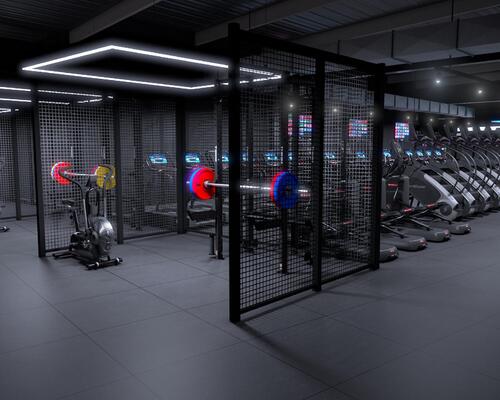
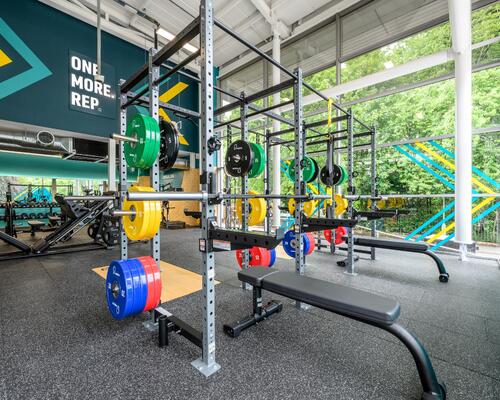
There was a point when we were opening a Club Lime site every nine days, but we’re now taking a step back and streamlining the estate, with network optimisation as our focus. In some cases we’re closing smaller locations that are in close proximity and reopening as one larger club. In others, we’re reviewing our facility mix: removing crèches from some sites, removing group fitness from others and replacing these with popular strength equipment.
Our second brand is the value-focused Plus Fitness franchise, which we acquired in August 2020 – an A$18m investment in the middle of COVID. As part of the deal, we have first right of refusal to buy sites from franchisees who want to exit. When you’re buying a franchise business but also own a competing business, you have to show the franchisees you’re invested – that any decision you make as franchisor affects you as a franchisee as much as it affects them. So we currently corporately-own 33 locations alongside the 170 franchised sites, most of which are in Australia, plus a couple in New Zealand and around 10 in India.
You also have boutiques?
We acquired Rebalance in 2021 and currently have eight of these mind-body studios and we’re in the process of rebranding them to Club Pilates.
Since 2024, we’ve been a 34 per cent shareholder in Boutique Fitness Studios, which holds the Australia and New Zealand master franchise for the Club Pilates, CycleBar, StretchLab and Rumble brands.
We also have two organically-grown boutique brands: HIIT Republic and Ground Up, which is a premium Pilates and wellness boutique. We’re currently piloting a new wellness concept at Ground Up in Canberra. Providing exclusive, boutique access to infrared sauna, ice baths and so on – customers add it to their Pilates membership, buy a wellness-only membership or buy casual passes every time they want to use it.
Finally, we’re a 25 per cent shareholder in World Gym Australia, as well as owning three of our own World Gym clubs.
Overall, 202 of our 518 locations are corporately-owned and the remaining 316 – mostly Plus Fitness – are franchised.
What’s the benefit of a portfolio approach?
In contrast to operators who need a set footprint to be able to open a club, we have an option that works whether the site is 300sq m or 5,000sq m. We also open clubs in a ‘hub and spoke’ model – big clubs supported by little clubs around them – and draw on our data to understand what needs to go into which. We then configure them correctly and charge members extra to roam between them.
We have a really clear formula: two members per square metre. If the catchment supports 1,500 members – based on Australia’s 15 per cent penetration rate and the local competition, among other things – we’ll open a 700sq m club, not 2,000sq m just because that’s the standard model. In this industry, 70 per cent of your costs are rent and wages. The latter we control with technology. Rent we control by not taking more space than we need.
If we then find there’s more demand than expected, we simply open another club in the area. We have some suburbs with three, four, five of our clubs – sometimes the same brand, sometimes multiple brands.
By perfecting this approach, we now target break-even within four to six weeks of opening. In the last five clubs we’ve opened, we’ve achieved break-even during pre-sale.
Across our 202 corporately-owned clubs, we run at 80 per cent utilisation. In some states, we’re at 100 per cent utilisation and are constantly having to open more clubs. In Canberra, for example, we have 62,000 members from a population – total, not adult – of 450,000. We have around an 80 per cent market share there.
Why did you want to get into franchising?
The option to buy back gives us a pipeline, but the primary reason was capital-light growth.
When we acquired Plus Fitness, it had 160-odd locations and was generating around A$2m a year in EBITDA. Last year, having grown to around 200 sites, it generated A$3.5m – but that isn’t the story. By overlaying our payments and technology, we generated an additional A$6m last year for a total EBITDA of A$9.5m; we make more from processing payments and licensing our technology than from the franchise fees themselves.
The franchisees benefit too, paying less for their billing today than they did before we migrated them to our technology and payments platform, which is also a better, more integrated system than they had before. The only way we could do all of this was by owning the franchise.
We then looked at Boutique Fitness Studios, which is rolling out quickly – with approaching 100 franchises across the four different brands – and realised we could do the same thing without necessarily having to own all of it. In our shareholder’s agreement, Boutique Fitness Studios franchisees now have to move to our technology provided it does everything they need and is cheaper than what they currently have, criteria we can easily achieve.
We want to create an Independent Fitness Group where we take care of everyone’s back office,website,access control, billing,legal and so on
Again, we have first right to buy sites from franchisees who are exiting, but from technology licensing alone, we believe we’ll make our initial investment back very quickly.
World Gym is the same, with the only challenge being an existing contract for billing until April 2027. We’ve acquired 25 per cent of the business with a three-year option to buy the remainder and we’ll wait until we’re ready to turn on our billing. As soon as we do that, it’s an extra A$6m a year for Viva Leisure.
So you license your tech?
Only within our own ecosystem of brands at the moment, but we’ve just started licensing our access control to third party software companies. There’s nothing else like it. One little box and you can implement it into solutions, it works with digital wallet, with any reader in the world, with any fob technology, with app access.
But to really understand our external perspective, you have to understand another vision of ours. Just as we bring franchisees together, giving them systems and buying power, so we want to bring independents together without them having to rebrand.
We want to create an Independent Fitness Group where we take care of everyone’s back office, website, access control, billing, legal and so on. We’ll enable members to roam to other Independent Fitness Group locations. Rather than being limited to a local market, a single independent club will be part of a nationwide network.
That’s our vision and the next phase of rolling out our tech: through white label licensing to large groups, including groups we create ourselves.
Our own franchise network shows just how well this can work. In the beginning, franchisees didn’t trust us – they thought we’d bought them to get their data and close them down – but by implementing our technology, they started making more money. Every single franchisee is now making around 30 per cent more profit than when we bought them. So now, when we release new technology, they trust us – and they proactively ask us what’s coming next.
One product coming their way is Viva Signage – our in-club digital advertising screens. We have around 800 screens out there at the moment, making close to A$1m a year in profit. When we roll Viva Signage out to our franchisees, we’ll share the revenue with them, sending them a cheque every month just for having the screens in their clubs.
Another product coming their way is Fling, which will drive more people to their clubs.
Tell us about Fling
Fling is one of two flexible access products already live in our ecosystem, the other being Flex.
Flex is currently Club Lime-only, although it will soon roll out to Plus Fitness. It allows casual users to buy instant passes via Apple Pay or Google Pay and access a club without a membership. Linking to our tech, billing and access systems, the pass disappears from the phone once used.
In January 2026, we sold 7,200 Flex passes at A$25 each and the business is trending to around A$1.5m annually – all with no staff costs, just an app on the App Store.
Fling allows members to ‘have a fling’ with another club, paying a small premium to visit outside their home location. It’s currently live in Club Lime and about to go live in Plus Fitness, with plans to start rolling it out to World Gym locations later this calendar year.
Ultimately, we’d like to bring everything together under Fling, giving members access to our big box clubs, swimming pools, boutique studios and premium wellness in a way that acknowledges the different price points and compensates franchisees for non-member visits. It’s complicated but not impossible within our Vivaverse – the ecosystem we build and control for our almost 700,000 members.
Any other tech innovations?
We recently launched hotel.fitness to fill the gaps for hotels with small or non-existent gyms. Hotels display a QR code in their rooms and guests scan it to buy a one-, two- or three-day pass to our portfolio of gyms and clubs. This is sent to them via digital wallet, with the whole process taking 30 seconds. It’s white-labelled to the hotel and costs the hotel nothing.
We reach beyond recurring membership revenues to create a robust ‘Vivaverse’ in which everything is firing
Launched with Club Lime, we’ll be adding Plus Fitness to the inventory as well. This will unlock 200+ locations initially, but there’s no reason why it couldn’t go worldwide: any gym is able to license our system and install our access control board without interrupting or removing their existing system.
On the personalisation side, we’re building out our AI coaching to enrich members’ programmes and build-in supplement recommendations and streamlined purchases. We’re also prototyping anonymous in-gym tracking – with consent – to deliver hyper-personalised prompts, without being intrusive.
Will tech overtake health clubs in your priorities?
Yes and no. Our technology, payments, licensing and retail division (TPLR) is where a lot of our investment is now being channelled, but our technology relies on having clubs and members – and our clubs are highly automated and straightforward to operate.
The goal is ecosystem growth. Whether the network expands corporately or via franchise, it doesn’t matter. As long as it grows, our technology, payments and licensing businesses grow alongside it.
Ancillary spend is also a major focus, including vending, supplements, roaming fees, digital advertising and other services. We currently generate around A$0.80 per member per week in ancillary revenue. Our target is A$2. So, we need the members, even if we don’t rely solely on membership revenue any more.
Tell us about your supplements
Our vending business was already making A$3.6m in revenues a year and rising, with 50 per cent margin, so about two years ago we decided to move into supplements.
We now have an online supplement store, Supp Society, where we sell a range of products and brands. Our house brand – the product range where we drive the best margins – is created for us by Gorilla X Labs, a company we own 33 per cent of. In addition to the online store, we have four physical Supp Society stores inside Club Lime locations.
Our supplements business is only 18 months old, but we’ll do over A$1m this year just from the online store. With our four physical stores now open and more to come, we expect this to grow quickly.
Meanwhile, our target is to have 40 in-club stores operational within the next 12 months, which should make us the fourth or fifth largest supplement retailer in Australia. We’ll continue to grow that market.
We’re also on a path to acquire independent supplement stores located close to our health clubs, rebranding them to Supp Society, as an alternative to building in-club stores. We see an opportunity to consolidate this market just as we have the health club market. We can then start offering subscriptions that bundle together gym membership and supplements.
Let’s talk about your recent half-year results
For the half-year to 31 December 2025, revenue increased 17.6 per cent to A$116.5m. Statutory NPAT rose 168 per cent to A$5.2m – last year it was $A5.1m for the whole year – and adjusted free cash flow increased 25 per cent to A$19.9m.
Our TPLR division grew 45 per cent and now represents 8.1 per cent of group revenue. It generated A$9.3m in the half-year and is on track for A$20m for the full year, growing around 40 per cent annually. That’s before we factor in supplement store acquisitions and upcoming tech launches, including hotel.fitness among others that I won’t share just yet. TPLR runs at extremely high margins, which helps the overall group performance.
What I’m most pleased about is that we achieved all of this with no club acquisitions and just one net new site, showing the impact of our network optimisation strategy. We added over 7,000 members organically across our corporate network, driving around A$7m in additional annual revenue without any additional costs to the business.
I’m not saying our model is the best, but what we do, we do really well. We reach beyond recurring membership revenues to create a robust Vivaverse in which everything is firing, from tech to payments, corporate clubs to franchise clubs.
As the only listed fitness business in Australia, we hope to provide a benchmark that shows other operators what’s possible. We listed in 2019 with a target of A$7m EBITDA. We’ve just done A$54m in six months; achieved 60 per cent CAGR for the full year to June 2025; and are forecasting A$237m in revenues for the financial year ending June 2026.
What are your physical growth plans?
We have 171 franchise locations sold and in our pipeline, five corporate sites under construction and around 15 in negotiation. By June 2026, we will reach 689 sites, hopefully overtaking Anytime Fitness as the largest operator in Australia by site count.
The technology, payments, licensing and retail division runs at extremely high margins, which helps the overall group performance
We’ve sold 10 Plus Fitness territories in Singapore and expect corporate expansion in New Zealand. In the UK, we’ve signed a master agreement, with the first site opening in April 2026. Franchise rollout will follow and we’re expecting it to do well.
We are looking at other markets, but we aren’t interested in token international presence. If we enter a market, we aim to scale quickly and dominate.
The same applies in Australia. Our data shows 60 per cent of people join a gym based on convenience and location – specifically, being within 5km. We will go to South Australia and Tasmania, the only two Australian states we don’t currently service with corporate locations, but only when we can achieve density quickly.
Our track record speaks for itself: 100 acquisitions, 600-plus locations and a technology platform that’s now a revenue engine in its own right. But we’re not standing still. The roadmap is clear, the infrastructure is built and we’re executing. That’s what we do: we deliver first and let the results do the talking.
Revenue: >$237m
FY2025: $211.3m
Statutory EBITDA: >$111m
FY2025: $99.0m
Statutory NPAT: >$11.5m
FY2025: $5.2m
Underlying EBITDA: >$53m
FY2025: $45.9m
Editor's letter
HCM People
HCM People
Interview
Sponsored
Talking point
Supplier Showcase
Research
Insight
Show preview
Insight
Specifier
Specifier
Research