

















Follow Health Club Management on Twitter Like Health Club Management on Facebook Join the discussion with Health Club Management on LinkedIn
FITNESS, HEALTH, WELLNESS

features

Nutrition: Friend or foe

Are activity trackers a help or a hindrance when it comes to weight loss? Kath Hudson reports

By Kath Hudson | Published in Health Club Management 2017 issue 1

Increased exercise and a low-calorie diet, supported by an activity tracking device, is less effective than the same regime supported by regular counselling, according to a two-year study from the University of Pittsburgh in the US.

For the research, participants were put on low-calorie diets and prescribed increases in physical activity – but while device users lost an average of 7.7lbs, those being counselled lost an average of 13lbs.

The study concluded that, although devices allow for easy tracking of physical activity and give feedback and encouragement, they may not enhance adherence to a healthy lifestyle – ultimately the most important aspect of any weight-loss regime.

Lead researcher John Jakicic says: “Questions remain regarding the effectiveness of wearable devices, and how to best use them to modify physical activity and diet behaviours in adults seeking weight loss.”

Not only that, but a growing number of media reports and internet chat forums indicate that people who have turned to trackers to help them lose weight have found their weight plateau, or even rise – an outcome generally attributed to inaccurate calorie trackers, or to the fact that any nutritional advice from the tracker is insufficiently personalised, so users tend to make the wrong food choices.

So, what advice should operators be giving their clients when it comes to using activity trackers for weight loss? Might using a tracker stop you losing weight – or worse, cause you to put it on? We ask the experts.

David Minton,

Director,

The Leisure Database Company

David Minton
David Minton

It’s good that wearable technology and physical activity trackers are being debated, but we need to put them into context – we’re only at the start of the journey of their functionality. We’re at the stage where we can only use tracking information as an indication and not take it too seriously. If companies like Nike and Microsoft have withdrawn their devices, it shows we’re at a very early stage.

There’s so much confusion over healthy eating and weight management. Monitoring activity is only part of the answer and people need to be careful about setting their calorific intake based on the information from a tracker: most people tend to over-estimate their physical activity levels and under-estimate what they eat.

Going forward, to make trackers more effective, there needs to be more use of artificial intelligence. There also needs to be more gamification. This needs to be fun – it shouldn’t be boring or dreary.

"We’re at the stage where we can only use tracking information as an indication and not take it
too seriously" – David Minton

Liz Dickinson,

Founder and CEO,

Mio Global

Liz Dickinson
Liz Dickinson

The majority of trackers on the market today are limited to a single objective: to provide information on steps, calories or sleep. What’s missing are the appropriate actions that must be taken to lead a healthy lifestyle. To have a significant impact as a weight-loss tool, wearables must also be able to provide personalised actions.

 It isn’t an appropriate strategy to just rely on calorie deficit as the primary means of achieving weight loss. There are complex and dynamic properties which alter how we metabolise calories, including the type of calorie composition and the individual’s physiology and genetics.

Wearables can have a significant impact as a tool for weight loss, but only if they provide both insights and personalised actions. Mio’s approach is to transform information into insights, using a scientifically-validated metric called PAI (Personal Activity Intelligence), which contextualises sensor-acquired data. Contextualising a user’s physiological habits, sleep, daily activities and exercise – all 24/7 – should positively impact the likelihood of behaviour change by providing truly personalised insights and meaningful actions.

Anna Gudmundson ,

CEO,

Fitbug

Anna Gudmundson
Anna Gudmundson

This is a new segment that will evolve and get more accurate in terms of using the data generated. Wearables aren’t a magic wand, but they can help with a healthier lifestyle. Just like scales or a mirror, trackers can’t be weight-loss tools on their own, but they can help shift us towards a healthier lifestyle.

Education and awareness is key, and Fitbug is focused on creating programmes that have context and explanation. Working within the corporate environment rather than health clubs, we look at holistic wellness and seek to change overall health and wellbeing – not just to support weight loss.

We aim to be an education tool that helps people recognise their bad habits and address them. For example, the device made me realise how few steps I do when I’m travelling. Those using the app also receive feedback based on their behaviours – for example, suggesting fewer sugary snacks or offering tips on how to get a better night’s sleep. The more people engage, the more they get out of it.

The impact wearables can have in getting people to move more, and adopt a healthier lifestyle, should not be underestimated. Our research shows that people increase their daily average from 4,900 steps to 9,900 during a Fitbug team challenge and afterwards their activity levels remain 16 per cent higher. This won’t guarantee weight loss in itself, but it’s unquestionably an important part of achieving a healthier lifestyle.
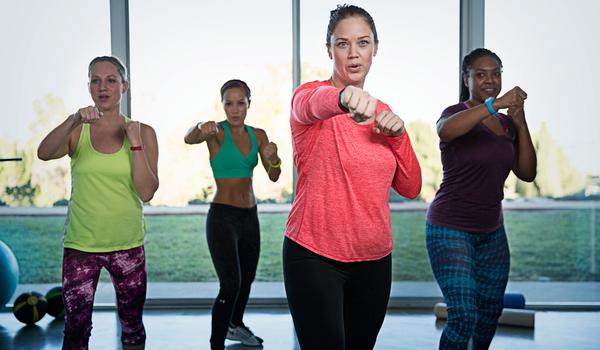
Participants in a Fitbug challenge almost double their average daily steps

Dave Wright ,

CEO,

MYZONE

Dave Wright
Dave Wright

Any form of self-awareness that’s driven through the use of an activity tracker (or reminder) can help with consciousness of food habits.

However, what people don’t realise is that many trackers currently on the market are simply not accurate in their measurement of calorie burn. This lack of awareness on the part of consumers, in conjunction with a pay-back mindset (“I’ve exercised – I deserve a treat”), could certainly lead to weight gain.  

For example, if you have an accelerometer that tries to measure exertion by movement, you could be sitting on a bus to work and the bouncing of the bus could trick your tracker into clocking up 3,000 steps. You then see the calorie tracker and think you can have a bar of chocolate. 

The bottom line is that the more data points that a tracker uses, the more likely it is to measure true calorific output. Not only that, but the more data that you see, the more likely you are to change both your exercise and food habits for the better.

Andy Caddy,

CIO,

Virgin Active

Andy Caddy
Andy Caddy

The problem is that the technology is limited and over-hyped, so there’s a tendency to put too much faith in it. In five to 10 years, we’ll have the functionality we’re looking for, but at the moment it’s early days.

Steps don’t give enough insights and although people are initially excited, after a while they lose interest. When trackers can take into account nutritional and exercise knowledge, they will be able to increase engagement in a contextual way – for example, summarising what people did last week and giving them advice on how to build on that with some nutritional guidelines.
Sign up here to get HCM's weekly ezine and every issue of HCM magazine free on digital.
https://www.leisureopportunities.co.uk/images/HCM2017_1friend.jpg
Are activity trackers a help or a hindrance when it comes to weight loss? We ask the experts.
Kath Huson, Journalist, Leisure Media David Minton, The Leisure Database Company: Director Liz Dickinson, Mio Global: Founder and CEO Anna Gudmundson, Fitbug: CEO Dave Wright, MYZONE: CEO Andy Caddy, Virgin Active: CIO,Activity trackers, Kath Hudson, David Minton, The Leisure Database Company, Liz Dickinson, Mio Global, Anna Gudmundson, Fitbug, Dave Wright, MyZone, Andy Caddy, Virgin Active, Fitbug
HCM magazine
Raphael Cuomo explores the powerful link between addiction, health and behaviour change
HCM magazine
For every member with a tripod and a big following, there are others irritated at the way equipment is being hogged or wary they’ll be in the background on someone’s Insta feed. Do influencers offer valuable, free marketing or are they just a nuisance? Kath Hudson finds out how operators are responding
HCM magazine
I experienced a blissful feeling of joy I hadn’t felt since I was a kid
HCM magazine
As the entrepreneur who started Wexer, Fresh Fitness, Fitness DK and Repeat, as well as being a former elite athlete, Rasmus Ingerslev’s life looked perfect from the outside, but onthe inside it was a different story. He talks to Kath Hudson about healing old wounds
HCM magazine
HCM People

Stephen Price

Founder, SP&Co Group
Working in public health over the last few years has lit up parts of my brain again
HCM promotional features
Sponsored
David Lloyd is stepping up its commitment to women’s health as it continues to explore what fit-for-purpose looks like for the female population
HCM promotional features
Sponsored
Find out how your gym can tap into the corporate wellness boom
HCM promotional features
Sponsored
Greg Bradley looks at the shift towards strength training in gyms and advises on how operators can create the ultimate training environment
HCM promotional features
Sponsored
Third Space partnered with IndigoFitness to deliver a bespoke training space for its new club at The Whiteley
HCM promotional features
Sponsored
SnowDome Fitness has added 50 per cent more space with cutting-edge Technogym solutions
HCM promotional features
Sponsored
Starpool supports Olympic champion Marcell Jacobs, says Riccardo Turri
HCM promotional features
Sponsored
EGYM has opened a new HQ in Paternoster Square, London and revealed a range of new launches
HCM promotional features
Promotion
BLK BOX has been reimagining elite performance spaces for more than a decade. Founder and former athlete, Greg Bradley, tells us what it takes
HCM promotional features
Sponsored
The industry is embracing consumer-facing tech. Now it’s time to streamline back-of-house systems with Orbit4, says Daniel Jones
HCM promotional features
Latest News
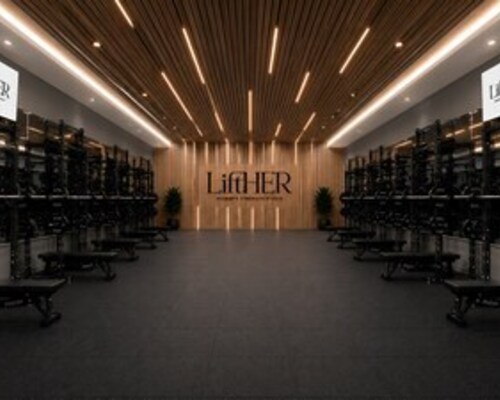
An ambitious women’s only strength and lifting studio concept is set to launch in Dallas this ...
Latest News
Finnish outdoor fitness equipment specialist, Omnigym, has partnered with charity, Emmaüs Solidarité, to launch an ...
Latest News
Virgin Active has officially opened its redesigned Mayfair club, unveiling its latest Social Wellness Club ...
Latest News
Europe’s largest low-cost operator, Basic-Fit, has agreed to acquire 41 Wellyou clubs in Germany for ...
Latest News
Longevity is the most important motivator for today’s exercisers and social connection is key, according ...
Latest News
Until has opened its fourth club at Canary Wharf, in the iconic YY London building. ...
Latest News
Ben Allen has been appointed managing director at Common Bond. Having set the company up ...
Latest News
Les Mills, whose name became synonymous with one of the world's leading fitness brands, has ...
Opinion
promotion
Strength training has moved from the margins to the mainstream.
Opinion: Building smarter strength spaces for today’s operators
Featured supplier news
Featured supplier news: CoverMe extends matching service to personal training, rewriting how members and personal trainers connect
CoverMe, the global leader in fitness workforce management, today launches CoverMe PT, an on-demand personal training platform that connects the right personal trainer to the right client in under 10 seconds.
Featured supplier news
Featured supplier news: Cornerstone Connect helps Active Blackpool tackle health inequalities
Active Blackpool is deploying Cornerstone Connect, a new digital interface allowing disparate information from multiple systems to be aggregated into one dataset, to support its focus on reducing health inequalities and improving healthy life expectancy.
Company profiles
Company profile: Future Fit
Since 1993, Future Fit have been consistently raising the bar when it comes to training ...
Company profiles
Company profile: Orbit4
Orbit4 is a digital operations platform designed to help fitness and leisure operators manage assets, ...
Supplier Showcases
Supplier Showcase - From nightclub to health club
Supplier Showcases
Supplier Showcase - Future-proofing
Catalogue Gallery
Click on a catalogue to view it online
Featured press releases
Panatta press release: On Air Fitness chooses Panatta and its Made in Italy fitness equipment
French fitness chain On Air Fitness, with 113 clubs across France and internationally (Spain, Morocco and Portugal) and more than 430,000 members, has chosen to introduce Panatta equipment — a 12-machine circuit from the premium Free Weight Special line —
Featured press releases
ukactive press release: UK Active announces plans for National Fitness Day 2026
UK Active has announced the details of National Fitness Day 2026, with the flagship campaign set to take place on Wednesday 16 September 2026.
Directory
Hot tubs
MSpa International Ltd: Hot tubs
Water experiences and hydrotherapy solutions
Aquaform s.r.l.: Water experiences and hydrotherapy solutions
Spa and beauty equipment
Oakworks Inc: Spa and beauty equipment
Fitness tracking platform
SpiviTech: Fitness tracking platform
Industrial washing machines
Miele Company Limited: Industrial washing machines
Lockers
Crown Sports Lockers: Lockers
Property & Tenders
Stratford, East London.
Lee Valley Regional Park Authority
Property & Tenders
Y Felinheli, LL56 4QN
Newmark
Property & Tenders
Diary dates
21-24 Sep 2026
The Langham Huntington Pasadena , Pasadena, United States
Diary dates
06-08 Oct 2026
Messe Stuttgart, Stuttgart, Germany
Diary dates
22-22 Oct 2026
QEII Conference Centre, London,
Diary dates
26-29 Oct 2027
Koelnmesse Exhibition Centre, Cologne, Germany
Diary dates

features

Nutrition: Friend or foe

Are activity trackers a help or a hindrance when it comes to weight loss? Kath Hudson reports

By Kath Hudson | Published in Health Club Management 2017 issue 1

Increased exercise and a low-calorie diet, supported by an activity tracking device, is less effective than the same regime supported by regular counselling, according to a two-year study from the University of Pittsburgh in the US.

For the research, participants were put on low-calorie diets and prescribed increases in physical activity – but while device users lost an average of 7.7lbs, those being counselled lost an average of 13lbs.

The study concluded that, although devices allow for easy tracking of physical activity and give feedback and encouragement, they may not enhance adherence to a healthy lifestyle – ultimately the most important aspect of any weight-loss regime.

Lead researcher John Jakicic says: “Questions remain regarding the effectiveness of wearable devices, and how to best use them to modify physical activity and diet behaviours in adults seeking weight loss.”

Not only that, but a growing number of media reports and internet chat forums indicate that people who have turned to trackers to help them lose weight have found their weight plateau, or even rise – an outcome generally attributed to inaccurate calorie trackers, or to the fact that any nutritional advice from the tracker is insufficiently personalised, so users tend to make the wrong food choices.

So, what advice should operators be giving their clients when it comes to using activity trackers for weight loss? Might using a tracker stop you losing weight – or worse, cause you to put it on? We ask the experts.

David Minton,

Director,

The Leisure Database Company

David Minton
David Minton

It’s good that wearable technology and physical activity trackers are being debated, but we need to put them into context – we’re only at the start of the journey of their functionality. We’re at the stage where we can only use tracking information as an indication and not take it too seriously. If companies like Nike and Microsoft have withdrawn their devices, it shows we’re at a very early stage.

There’s so much confusion over healthy eating and weight management. Monitoring activity is only part of the answer and people need to be careful about setting their calorific intake based on the information from a tracker: most people tend to over-estimate their physical activity levels and under-estimate what they eat.

Going forward, to make trackers more effective, there needs to be more use of artificial intelligence. There also needs to be more gamification. This needs to be fun – it shouldn’t be boring or dreary.

"We’re at the stage where we can only use tracking information as an indication and not take it
too seriously" – David Minton

Liz Dickinson,

Founder and CEO,

Mio Global

Liz Dickinson
Liz Dickinson

The majority of trackers on the market today are limited to a single objective: to provide information on steps, calories or sleep. What’s missing are the appropriate actions that must be taken to lead a healthy lifestyle. To have a significant impact as a weight-loss tool, wearables must also be able to provide personalised actions.

 It isn’t an appropriate strategy to just rely on calorie deficit as the primary means of achieving weight loss. There are complex and dynamic properties which alter how we metabolise calories, including the type of calorie composition and the individual’s physiology and genetics.

Wearables can have a significant impact as a tool for weight loss, but only if they provide both insights and personalised actions. Mio’s approach is to transform information into insights, using a scientifically-validated metric called PAI (Personal Activity Intelligence), which contextualises sensor-acquired data. Contextualising a user’s physiological habits, sleep, daily activities and exercise – all 24/7 – should positively impact the likelihood of behaviour change by providing truly personalised insights and meaningful actions.

Anna Gudmundson ,

CEO,

Fitbug

Anna Gudmundson
Anna Gudmundson

This is a new segment that will evolve and get more accurate in terms of using the data generated. Wearables aren’t a magic wand, but they can help with a healthier lifestyle. Just like scales or a mirror, trackers can’t be weight-loss tools on their own, but they can help shift us towards a healthier lifestyle.

Education and awareness is key, and Fitbug is focused on creating programmes that have context and explanation. Working within the corporate environment rather than health clubs, we look at holistic wellness and seek to change overall health and wellbeing – not just to support weight loss.

We aim to be an education tool that helps people recognise their bad habits and address them. For example, the device made me realise how few steps I do when I’m travelling. Those using the app also receive feedback based on their behaviours – for example, suggesting fewer sugary snacks or offering tips on how to get a better night’s sleep. The more people engage, the more they get out of it.

The impact wearables can have in getting people to move more, and adopt a healthier lifestyle, should not be underestimated. Our research shows that people increase their daily average from 4,900 steps to 9,900 during a Fitbug team challenge and afterwards their activity levels remain 16 per cent higher. This won’t guarantee weight loss in itself, but it’s unquestionably an important part of achieving a healthier lifestyle.

Participants in a Fitbug challenge almost double their average daily steps

Dave Wright ,

CEO,

MYZONE

Dave Wright
Dave Wright

Any form of self-awareness that’s driven through the use of an activity tracker (or reminder) can help with consciousness of food habits.

However, what people don’t realise is that many trackers currently on the market are simply not accurate in their measurement of calorie burn. This lack of awareness on the part of consumers, in conjunction with a pay-back mindset (“I’ve exercised – I deserve a treat”), could certainly lead to weight gain.  

For example, if you have an accelerometer that tries to measure exertion by movement, you could be sitting on a bus to work and the bouncing of the bus could trick your tracker into clocking up 3,000 steps. You then see the calorie tracker and think you can have a bar of chocolate. 

The bottom line is that the more data points that a tracker uses, the more likely it is to measure true calorific output. Not only that, but the more data that you see, the more likely you are to change both your exercise and food habits for the better.

Andy Caddy,

CIO,

Virgin Active

Andy Caddy
Andy Caddy

The problem is that the technology is limited and over-hyped, so there’s a tendency to put too much faith in it. In five to 10 years, we’ll have the functionality we’re looking for, but at the moment it’s early days.

Steps don’t give enough insights and although people are initially excited, after a while they lose interest. When trackers can take into account nutritional and exercise knowledge, they will be able to increase engagement in a contextual way – for example, summarising what people did last week and giving them advice on how to build on that with some nutritional guidelines.

Sign up here to get HCM's weekly ezine and every issue of HCM magazine free on digital.
https://www.leisureopportunities.co.uk/images/HCM2017_1friend.jpg
Are activity trackers a help or a hindrance when it comes to weight loss? We ask the experts.

Kath Huson, Journalist, Leisure Media David Minton, The Leisure Database Company: Director Liz Dickinson, Mio Global: Founder and CEO Anna Gudmundson, Fitbug: CEO Dave Wright, MYZONE: CEO Andy Caddy, Virgin Active: CIO,Activity trackers, Kath Hudson, David Minton, The Leisure Database Company, Liz Dickinson, Mio Global, Anna Gudmundson, Fitbug, Dave Wright, MyZone, Andy Caddy, Virgin Active, Fitbug
Latest News
An ambitious women’s only strength and lifting studio concept is set to launch in Dallas this ...
Latest News
Finnish outdoor fitness equipment specialist, Omnigym, has partnered with charity, Emmaüs Solidarité, to launch an ...
Latest News
Virgin Active has officially opened its redesigned Mayfair club, unveiling its latest Social Wellness Club ...
Latest News
Europe’s largest low-cost operator, Basic-Fit, has agreed to acquire 41 Wellyou clubs in Germany for ...
Latest News
Longevity is the most important motivator for today’s exercisers and social connection is key, according ...
Latest News
Until has opened its fourth club at Canary Wharf, in the iconic YY London building. ...
Latest News
Ben Allen has been appointed managing director at Common Bond. Having set the company up ...
Latest News
Les Mills, whose name became synonymous with one of the world's leading fitness brands, has ...
Latest News
People taking GLP-1 weight loss medications such as Ozempic, Wegovy, Mounjaro and Zepbound may be ...
Latest News
Low-cost gym operator, PureGym, is trialling recovery zones at two of its UK sites, democratising ...
Latest News
In a milestone moment, mental health has become a core part of CIMSPA’s occupational professional ...
Opinion
promotion
Strength training has moved from the margins to the mainstream.
Opinion: Building smarter strength spaces for today’s operators
Featured supplier news
Featured supplier news: CoverMe extends matching service to personal training, rewriting how members and personal trainers connect
CoverMe, the global leader in fitness workforce management, today launches CoverMe PT, an on-demand personal training platform that connects the right personal trainer to the right client in under 10 seconds.
Featured supplier news
Featured supplier news: Cornerstone Connect helps Active Blackpool tackle health inequalities
Active Blackpool is deploying Cornerstone Connect, a new digital interface allowing disparate information from multiple systems to be aggregated into one dataset, to support its focus on reducing health inequalities and improving healthy life expectancy.
Company profiles
Company profile: Future Fit
Since 1993, Future Fit have been consistently raising the bar when it comes to training ...
Company profiles
Company profile: Orbit4
Orbit4 is a digital operations platform designed to help fitness and leisure operators manage assets, ...
Supplier Showcases
Supplier Showcase - From nightclub to health club
Supplier Showcases
Supplier Showcase - Future-proofing
Catalogue Gallery
Click on a catalogue to view it online
Featured press releases
Panatta press release: On Air Fitness chooses Panatta and its Made in Italy fitness equipment
French fitness chain On Air Fitness, with 113 clubs across France and internationally (Spain, Morocco and Portugal) and more than 430,000 members, has chosen to introduce Panatta equipment — a 12-machine circuit from the premium Free Weight Special line —
Featured press releases
ukactive press release: UK Active announces plans for National Fitness Day 2026
UK Active has announced the details of National Fitness Day 2026, with the flagship campaign set to take place on Wednesday 16 September 2026.
Directory
Hot tubs
MSpa International Ltd: Hot tubs
Water experiences and hydrotherapy solutions
Aquaform s.r.l.: Water experiences and hydrotherapy solutions
Spa and beauty equipment
Oakworks Inc: Spa and beauty equipment
Fitness tracking platform
SpiviTech: Fitness tracking platform
Industrial washing machines
Miele Company Limited: Industrial washing machines
Lockers
Crown Sports Lockers: Lockers
Property & Tenders
Stratford, East London.
Lee Valley Regional Park Authority
Property & Tenders
Y Felinheli, LL56 4QN
Newmark
Property & Tenders
Diary dates
21-24 Sep 2026
The Langham Huntington Pasadena , Pasadena, United States
Diary dates
06-08 Oct 2026
Messe Stuttgart, Stuttgart, Germany
Diary dates
22-22 Oct 2026
QEII Conference Centre, London,
Diary dates
26-29 Oct 2027
Koelnmesse Exhibition Centre, Cologne, Germany
Diary dates
Search news, features & products:
Find a supplier:
Partner sites