

























features
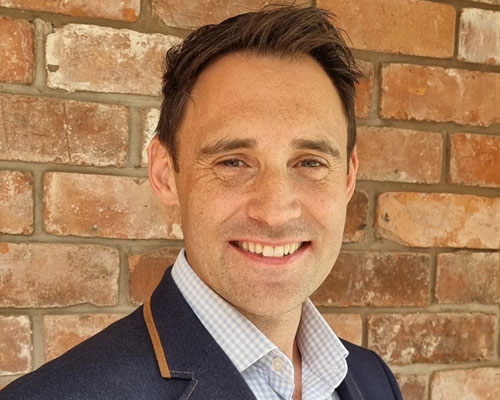
Interview: Will Orr
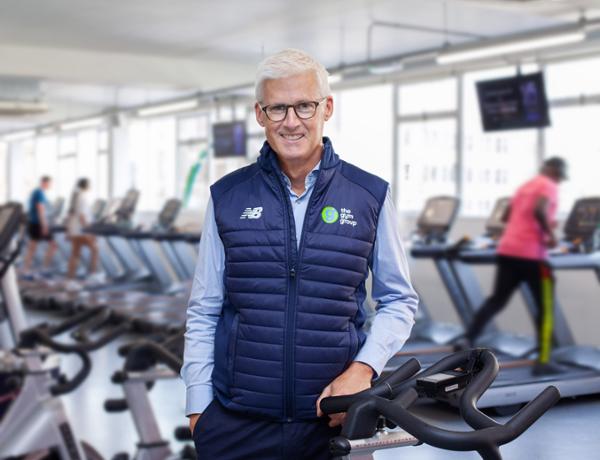
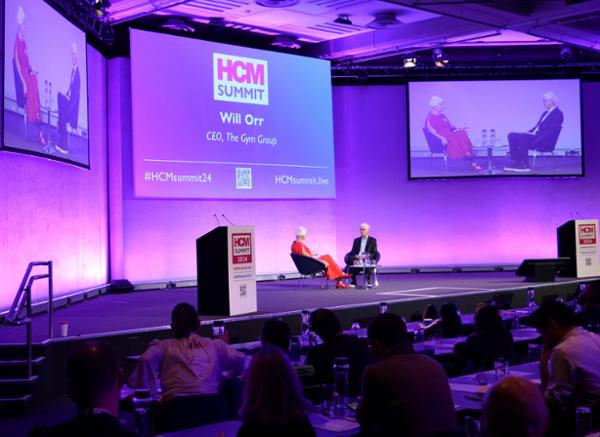
In late 2023, The Gym Group welcomed a new CEO – previously MD of newspaper publishing house Times Media. One year on, he gives Kate Cracknell a progress report


What brought you into the industry and to The Gym Group specifically?
I feel a strong draw towards the purpose of The Gym Group: lowering the barriers to fitness for all.
Over the years, The Gym Group’s high value low cost (HVLC) proposition has brought affordable fitness to so many more people. It’s given them the opportunity to feel better, look better, have more confidence, feel less stressed – all things our surveys show are important to our members, who – with an average age of 29 years – are of a generation that prioritises physical and mental health equally.
That fundamental purpose is very appealing, as is the scale of our impact: the positive contribution we already make to over 900,000 members and all the people we employ in our gyms. The significant opportunities for further growth also excite me.
I also feel a personal affinity with the sector: I played competitive tennis as a kid and spent a lot of time in gyms from an early age. But it’s also nice to do something really positive in your work. Every company has a purpose, but fitness is so positive you don't have to try to be excited by it.
What insights have you brought from the world of media?
There are some obvious differences between selling newspaper subscriptions and selling gym memberships, but also some fundamental similarities.
In both cases, you’re trying to create and evolve a product that’s sufficiently indispensable that people are willing to pay for it each month. That requires a great product, but also an understanding of where you fit into consumers’ lives. You have to help people see the value in the product and the subscription to keep them engaged.
And there are some similarities in how you go about this, not least in what The Gym Group calls ‘early life’, which is how we aim to retain members beyond the first 45 days of their membership.
At Times Media, we knew subscribers were most likely to churn early on, when they were just trying out their subscription, so we focused on building a habit around consuming Times news. We helped them see the value in their subscription by showcasing different types of content, prompting them to sign up to a newsletter and encouraging them to listen to podcasts and Times Radio.
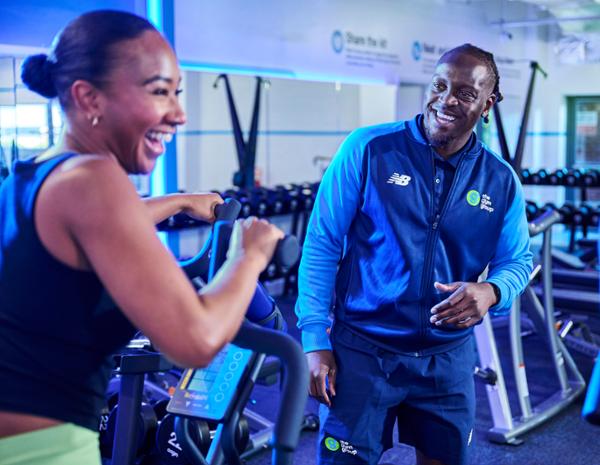
There’s a very direct parallel with The Gym Group, where we encourage new members to have an induction, meet a PT, set objectives and build a programme. Again, it’s about helping them quickly understand the value of our product and service so they establish a habit and about congratulating and encouraging them when they come regularly.
What were your first impressions of The Gym Group?
In the gyms themselves and across our support centre, the people were really great. That was my first impression.
The opportunity lay – and indeed lies – in harnessing that great capability. It’s about enabling our great people to be as successful as possible by having a really clear strategy and plan, aligning our resources to that plan and reducing distractions from that plan.
My second impression was the fantastic growth potential in this market, which many of the more mature consumer markets don’t have. There is huge headroom in the HVLC gym market; earlier this year, PwC unveiled an analysis which said there was space for the number of low-cost gyms in the UK to more than double. Obviously we’re one of the leading players in that space, so, great people and great growth potential. Then there’s the fact that the fundamental proposition works.
It can keep evolving, but what John Treharne [founder of The Gym Group] did from the outset was a stroke of genius, focusing on what really matters to consumers – convenient location, great kit, an affordable price and a friendly environment – and stripping the rest away.
I was also immediately impressed by the amount of work that’s gone into measuring social value, which lies at the heart of The Gym Group’s purpose.
Were there any areas you felt required work?
I felt the business was a bit siloed and that we could join up in a more focused way in the areas of greatest opportunity.
In line with that, I felt marketing could be simpler and more consistent, building relevance by focusing on the things that matter most to our members: quality of equipment, affordability, friendliness and results.
Retention was another big one. With a proposition based on flexibility and no contracts, I think there was a sort of accepted wisdom in the company that retention was less of a priority than acquisition.
I have quite a lot of experience here and felt there must be opportunities to do more to retain members for longer, so we’re making this a really big focus.
There’s no downside to doing this: if you get better at meeting member needs, you’re rewarded by members staying for longer. It’s a win-win. And when you have over 900,000 members, even relatively incremental improvements to retention rates can make a huge difference to the economics of the business.
Another observation was that, while opening new sites is obviously hugely important, when you have 240 existing gyms it’s arguably even more important to manage the estate and the members you already have. That became pillar one of our strategy growth plan.
Our investment case is a like-for-like revenue and free cashflow growth story with a rollout attached to it. It isn’t just about a gym rollout and a race for space. We’re focused on a balanced, sustainable growth plan that’s rooted in retention and marketing and doing a brilliant job for members.
You unveiled a new growth strategy for the company in March…
The Next Chapter growth plan is a three- to five-year plan based on three pillars: Strengthen the core, Accelerate rollout of quality sites and Broaden our growth – new revenue streams. [www.hcmmag.com/WO1]
We’ve defined clear priorities with clear goals, looking at areas such as how we acquire more customers, how we market, how we retain more customers, how we meet the needs of customers, how we manage our revenue and promotional strategy, how we approach opening new sites and so on. We’ve then created and empowered multi-functional, joined-up teams – teams that embrace data, customer insight, pricing, operations, marketing and more – to go after those priorities.
It’s still early days, but I’m encouraged by our progress across all work streams.
What’s the progress on pillar one: Strengthen the core?
The key metric is like-for-like revenue growth and return on investment in our mature estate. For new sites, we’re targeting a 30 per cent return on invested capital (ROIC), but we're also targeting a mature site ROIC of 25 per cent.
We’ll update on progress when we report our full-year results in March 2025, but our H1 results were strong [www.hcmmag.com/WO2] and the momentum continued throughout the summer. We were well-prepared to capitalise on the autumn peak.
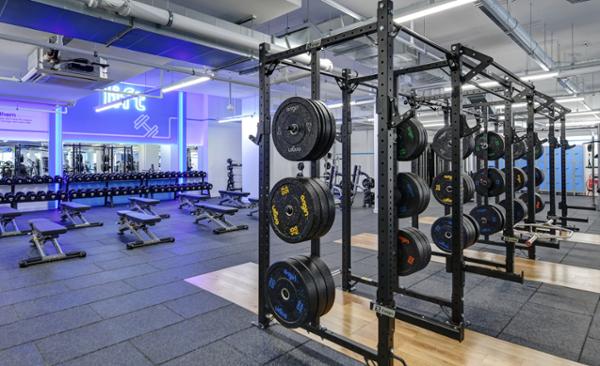
Yield has been a key focus this year and has been assisted by very strong consumer perceptions of our value for money. When you can walk into a 15,000sq ft gym that’s clean, well-run and full of good equipment for £20 a month, that’s demonstrably great value. It creates the conditions to increase prices at least in line with inflation, if not a little bit more.
We’re talking about relatively modest increases of perhaps £1 a month, but across a big base of around 900,000 customers this can make quite a big difference. So we’re pursuing that strategy, but the absolute key is to simultaneously continue to build and reinforce our strong value for money credentials.
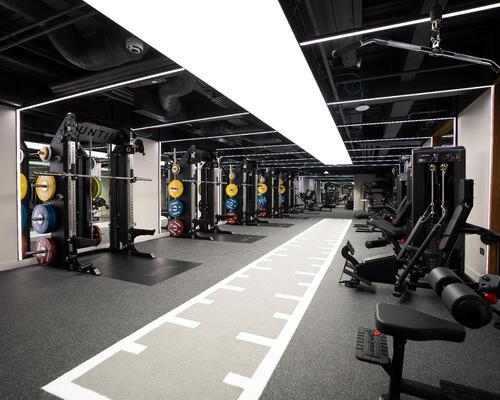
Our programme of maintenance feeds into this, with work being done at 150 of our mature gyms in the first half of this year – everything from a small tidy-up to a few days of closure to do a full refurbishment.
We continue to evolve the equipment mix to meet member needs, too. And we’ve launched Hyrox in 37 of our gyms already, for free to our members, with a plan to roll it out to 50 by the end of the year.
We also have a new Off-Peak membership tier alongside our Ultimate, Standard, Student and Saver products – Saver memberships being a pay upfront product with a lower monthly price in return for a longer-term commitment. Different people find value in different tiers.
Then looking at revenue management, we’re being thoughtful about the way we promote. How we deploy digital media to advertise hyper-locally is one point, because most people choose a gym within a couple of mile radius. But we’re also looking at how we use promotions that are effective in terms of attracting customers but also retaining them. We don’t want to be over-discounting: that isn’t good for our business or for the industry.
We’ve also been looking at how we make our digital buying journey as effective as possible. We’re trying to be highly data-driven in every decision we make, recognising the important role this plays in achieving competitive advantage and sustainable growth. And then there’s the whole piece around retention.
Tell us about your approach to retention.
Ours is a very strong proposition: over 90 per cent of Gym Group members already rate us four or five out of five. But we need to build on those strengths, continually making sure we’re as good as we can be.
Our approach to retention is data-driven and analytical – that’s the first thing to say. But crucially, we’ve made retention a priority across the company. We use a lot of data and analysis to understand what’s going on: why customers leave, when they leave, how they leave, what encourages them to stay longer. We’re also putting a lot of thought into how we acquire customers in the first place: certain promotions are more retentive than others.
As I’ve already mentioned, we have a big focus on Early Life – on helping new members see and benefit from all the value in our proposition and in turn establish fitness habits that will last. We have a number of programmes in this area. Going back to the sense of purpose, the nice thing about this sector and this business is that if you win for your customers – if they get fitter and healthier and all the rest of it – they reward you with loyalty. You have to try and achieve that win-win and Early Life is a big part of it.
We’re also putting continued thought into the experience in our gyms. Consumers are so much more informed about fitness and wellbeing these days – we talk about ‘Fitness IQ’ – and they understand the need for gym facilities for a rounded workout. The social aspect of training together is another big consumer trend that’s very encouraging for The Gym Group and the industry as a whole.
We’re also looking at how our app and other digital elements can enhance the experience: everything from club access to capturing data to help members get better results. The long-term winners in this industry will be those that combine the best of what digital gives you – the inspiration and information it unlocks – with the best of what the gym experience has to offer.
As we reported in our H1 results, we’ve seen an improvement in our retention rate. It’s early days with this work, but we’re encouraged by what we’re seeing.
Can you update us on your rollout plans and implementation?
Our plan includes around 50 new club openings from 2024–2026. We’ve already opened eight this year and are on-track to open 10–12 in the full year 2024. We will then accelerate throughout 2025 and 2026.
Although we have only guided on this three-year pipeline so far, I would expect to reach 300+ locations in the not too distant future. I certainly see us opening a lot more gyms.
At this stage, we’re focused on the UK. I wouldn’t rule out overseas expansion at some point, but there’s just so much opportunity within our core business in the UK that we don't have any plans to expand internationally right now.
Pillar three references new revenue streams. Any update?
For now, we’re focused on pillars one and two. We see so much opportunity around increasing the returns on our existing sites by being brilliant for members. We also think there’s probably 10 years’ worth of rollout in the UK for low-cost gyms. That’s a lot to go after that’s right there.
Companies can sometimes take their eye off the ball and go after something new, because new things tend to be more exciting. It takes discipline to stay focused on the priorities you already have.
Over the longer run, we wouldn't rule out other adjacent opportunities in, say, nutrition, other aspects of wellness or other activities consistent with our purpose of accessible fitness for as many people as possible. All of that is under continual review, keeping an eye on where those opportunities might lie.
But we’re not in a rush. For now, we’ve so much to do and are making encouraging progress. I’d be reluctant to take our eye off the ball at this stage.
That said, I am very keen to explore how private sector gyms can contribute to the preventative healthcare agenda. The new government has started to talk about this and I believe the private sector – especially the low-cost sector with its scale and its pricing – can play a strong role here.
How are you finding running a listed business?
I have experience in both listed and private equity-backed companies, but this is the first time I've been CEO of a listed business. The way your investors hold you to account is something I’m finding positive. They’re involved in lots of businesses and ask good questions, encouraging you to be thoughtful about what you’re doing so your growth is sustainable.
We’re building a track record of consistency of delivery and are making early progress on The Next Chapter growth plan. Investors’ growing confidence in what we’re doing is encouraging to see.
But the truth is, we’re absolutely focused on making the company as good as possible for our members, our new members, our people and the communities we serve.
Yes, ours is a listed business and as I always remind our people, it’s our investors who enable us to succeed. They are very, very important stakeholders and we want to keep building their confidence. However, if we deliver for our members, investor confidence should take care of itself.
How do you measure success?
We want to grow the number of members we have. This is the single most important measure. We also want to grow revenue and improve the return on invested capital (ROIC) our investors get from our gyms. We want to create social value within the communities we serve. And we want engaged people working in the organisation; we were recently listed in the Sunday Times Best Places to Work 2024.
I ultimately believe we’ll have a winning business if we succeed for our members, for the communities we serve, for our employees and for our shareholders. That’s what we’re aiming to do.
What motivates you personally?
I’m excited by the combination of our growth prospects and the positive impact we already have across the UK. With over 900,000 members, we impact at scale and I believe there is so much more to come.
I’m also excited to work with the team. The Gym Group has a great culture and to be part of that – to have the chance to nurture and enhance it – is great.
Winning also motivates me; as I said, I used to play quite a lot of competitive sport. It’s nice to be on the winning team and also to feel that you’re making progress as a group. That sense of progress and winning is definitely important to me.