
























Elevate Arena
Elevate Arena
Elevate Arena
Follow Health Club Management on Twitter Like Health Club Management on Facebook Join the discussion with Health Club Management on LinkedIn
FITNESS, HEALTH, WELLNESS

features

Activity tracking: Should we trust tracking?

Recent research casts doubt on the ability of existing technology to accurately count the calories burned during exercise. But does being able to tell whether you’ve burnt off 400 calories or 450 during a workout actually matter? Crispin Andrews reports
By Crispin Andrews | Published in Health Club Management 2015 issue 5
Even if not 100 per cent accurate, tracking data offers users a benchmark against which to measure their future performance
You can’t expect a perfect measurement. Ten to 15 per cent out is good – 5 per cent is difficult to achieve

This February, BBC TV technology presenter Lara Lewington decided to find out whether wearable activity trackers gave people an accurate indication of the exercise they do. She spent a week wearing four of the latest trackers and found that they each gave a different record of how many calories she’d burnt off and the steps she’d taken: the range was 2,649 calories, with a 23 per cent difference in the recorded number of steps.

Not long afterwards, researchers at the Perelman School of Medicine and the Center for Health Incentives and Behavioral Economics at the University of Pennsylvania, US, claimed that smartphone apps are just as capable of accurately tracking physical activity as fitness trackers and other wearables.

Participants in this study walked on a treadmill wearing a pedometer, two accelerometers, three wearables and two smartphones running four apps. The researchers counted people walking 500 steps and 1,500 steps and then checked to see what the apps and wearables had recorded. They found that wearables logged between 22.7 per cent and 1.5 per cent less than the observed step count, while apps recorded between 6.7 per cent less and 6.2 per cent more.

The researchers concluded that, if everyone has a smartphone and can download free apps, why – if there’s not much difference in accuracy – would you pay for a wearable device?

In January 2015 there was more bad news for wearables. Iowa State University announced that seven of the most popular wearable devices provided inaccurate readings. The Iowa researchers gave 50 participants seven wearable devices each, and recorded how many calories the devices said each individual burned off.

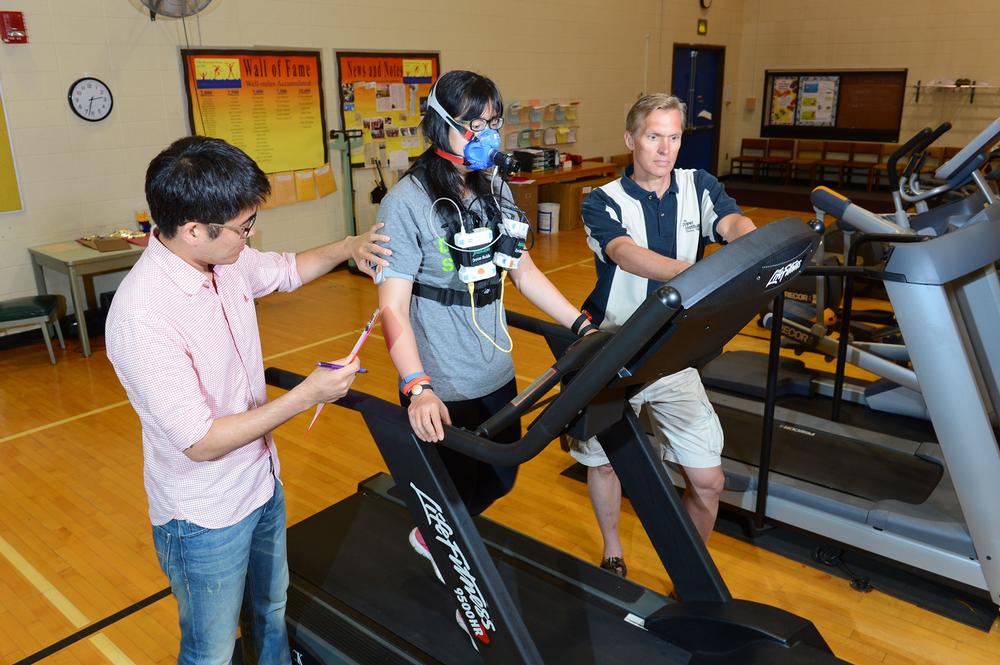
As a control, they simultaneously tested each participant with a system that determines calorie burn by analysing oxygen levels in exhaled breath – widely recognised as the most accurate way to measure calorie consumption. The Iowa team found that all seven devices were at least 15 per cent inaccurate, with the worst offender out by 40 per cent.

Acceptable margins of error
Newspaper headlines made much of the inaccuracies and discrepancies. However, Greg Welk, an Iowa State University professor of kinesiology, says a device that is 10–15 per cent out is actually providing a reasonably accurate estimate of calories burnt. Mitesh Patel, from the University of Pennsylvania, also said the devices his team tested were “all pretty accurate”.

“You can’t expect a perfect measurement,” comments Yang Bai, the lead Iowa State University researcher. “Ten to 15 per cent out is good – 5 per cent is difficult to achieve.”

Bai explains that the actual number of calories a person burns during exercise varies depending on the person and what they’re doing during the workout. She adds that tracking technology in fitness devices doesn’t take amount of resistance into account – say, for instance, if you’re running up a hill or lifting a heavier weight. “When the activity changes, or you change speeds, this will affect how many calories you burn off,” she adds.

Overstating calories?
And the challenge of accurately measuring calories isn’t limited to trackers, as Liz Dickinson, CEO of wearable company MioGlobal, explains, pointing out that counting calories based on steps taken gives only an indication of what an average person of average fitness might burn off during the exercise. “It’s imprecise,” she says. “Calories actually burn off depending on metabolic expenditure, which varies with age, fitness levels and gender.”
She continues: “If you input all this information it gives a picture of who you are, but you still only get a crude reading.”

So if the reading is only crude when all this data is inputted, what happens when people using fitness equipment in a gym just press ‘quick start’, or at most input their age and weight? Dave Wright, CEO of heart rate system MYZONE, believes 99 per cent of people using a piece of fitness equipment don’t provide enough information to get any sort of accurate indication of the calories they burn off.

Wright also believes some equipment manufacturers overstate the number of calories burned. “It makes members feel better on their piece of equipment, which helps the supplier sell more of its brand to health clubs,” he says. “But if you want accuracy, the more data points you collect, the more accurate the equation and the more precise the calorie count.”

Everyday activity vs exercise
Returning specifically to the trackers vs apps debate, Doug McClure, executive VP of product marketing at FitLinxx – which has recently launched its AmpStrip device – doesn’t accept that smartphone apps do as effective a job as wearables in tracking fitness. “People might carry their phones with them all day, but the phone isn’t always on their person – it’s sitting on a desk, in a bag, or a drawer,” he points out. “If you’re running on a treadmill for an hour, then a phone app will do a similar job, but in the real world phone apps fall down.”

Dickinson says another drawback of smartphone apps is that – at least for now – they tend to measure steps, not heart rate. Meanwhile new wearables such as the Apple Watch and MioGlobal’s latest general purpose activity tracker, MioFuse, use more advanced technology to measure heart rate. In the case of the MioFuse, electro-optical cell technology measures the volume of blood under the skin, with an algorithm calculating the heartbeat during the workout.

“This technology doesn’t calculate heart rate from an electrical beat of the heart, though, which would be more accurate still,” comments Wright.

“It also relies on the person’s arms staying still and the device being tight enough not to let light in from the outside. The algorithm predicts the movement of the wrist, which is OK when the movement is regular – running or walking. But if the movement is irregular, it can’t measure heart rate in real time. It will therefore give inaccurate readings during vigorous exercise.”

Wright believes these devices are good for the 23 hours of the day when someone isn’t exercising, but says they will need an accurate device, such as a chest strap, to more accurately measure what goes on during concerted activity.

And even then there are challenges to obtaining accurate data, because the analogue chips in cardio equipment rely on the heart rate belts that come with this chip, says Wright: “The issue with analogue chest straps is that, with multiple people exercising across numerous pieces of cardio equipment, you get cross-talk – your heart rate appears on someone else’s machine. You can’t guarantee the readings are yours.”

Digital solutions such as Ant+ and Bluetooth can eliminate cross-talk.

Progress or accuracy?
When it comes to accuracy of calculating calories, it seems the main issue is not whether the device is wearable, an app or a piece of gym equipment. It’s more that, with current tech – or at least tech that’s appropriate for everyday use – it’s very hard to calculate calories accurately.

Mick Rice, operations director at Pulse, confirms: “There’s lots of data we don’t know and can’t get at – for instance, a person’s BMI. Anything other than an oxygen mask to some degree gives you an average.” And McClure agrees: “The question is: how close can we get to that gold standard in a consumer-friendly environment?”

But if existing technology can’t measure calorie count and heart rate accurately, how – short of people running around with oxygen masks on – can technology measure fitness progress?

“If you can’t get perfect data, don’t worry about perfect data,” suggests Jeff Bartree, networked fitness product manager at Precor US. “Instead, measure relevant data.”

He continues: “If you walk 10,000 steps or do 45 minutes on a cardio machine and you’re told you’ve burnt 450–500 calories, you also know you’ll burn even more if you increase the speed, the intensity or the time. You may not know exactly how many calories you burn off, but you’ll get in better shape, and that’s the real aim.”

Rice agrees. “All this is just an index that encourages people to keep up levels of activity and track trends,” he says. “Time, distance travelled or intensity provide more accurate indicators. Calories burned gives an indicator of sorts, so too heart rate and step count. So why not put them all into a wearable device?

“People are motivated by different things. We want users to hold on to some method of keeping up an active, healthy lifestyle, so we should offer them as many indicators as possible.” Bartree agrees, adding: “It’s also useful if technology allows you to record what you do across a number of different types of exercise.”

Watch this space
Eventually, technological advances will enable trackers to be more accurate. “We’ll get better data recording, better algorithms and better ways of communicating this to users in meaningful and useful ways,” says McClure. “Today’s technology is much more accurate than early tracking tech and I don’t see any reason why this trend wouldn’t continue.”

Bartree believes people, and headline writers, need to be more patient: “This technology is a relatively new thing for mass market fitness. It might not be accurate at the moment, but now it’s caught on there will be lots of clever people looking at it. Over time, it will get more accurate.”

Currently, the general consensus is that tracking relative progress and offering people different measures to motivate them – to be used as an index against which to measure progress – should be more important than absolute accuracy.

Sign up here to get HCM's weekly ezine and every issue of HCM magazine free on digital.
A study at Iowa University tested 10 trackers – a pedometer, accelerometers, wearables and apps – and none was accurate
The MioFuse is able to monitor heart rate by measuring the 
volume of blood under the skin
The MioFuse is able to monitor heart rate by measuring the volume of blood under the skin
FitLinxx’s AmpStrip sticks to the body, so it tracks activity 24/7
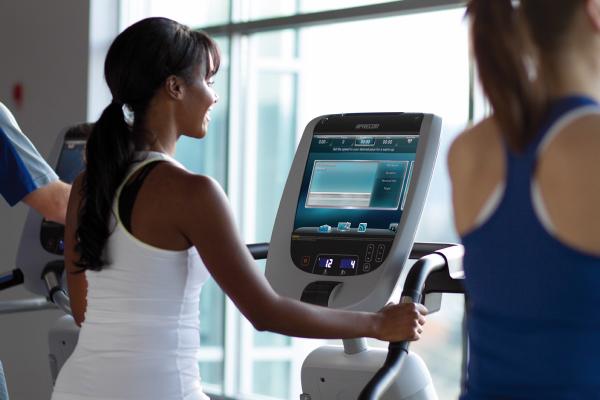
If trackers can help motivate and measure progress, is absolute accuracy so important? / photo: shutterstock/syda productions
https://www.leisureopportunities.co.uk/images/169859_112551.jpg
Activity tracking technology: does accuracy even matter?
Crispin Andrews,Wearables, apps, tracking, technology, activity tracking, accuracy, calories, Crispin Andrews, AmpStrip, MioFuse, FitLinxx, Precor, Iowa State University, MYZONE
HCM magazine
HCM People

Stephen Price

Founder, SP&Co Group
Working in public health over the last few years has lit up parts of my brain again
HCM magazine
Strength training is evolving, driven by changing consumer preferences. Julie Cramer talks to innovators about how their products are meeting this demand
HCM magazine
Raphael Cuomo explores the powerful link between addiction, health and behaviour change
HCM magazine
If the health service is to survive, we must recognise that it is a disease service – and that wellbeing rests with us, says the activity advocate and healthy ageing champion. He talks to Kate Cracknell
HCM magazine
As the entrepreneur who started Wexer, Fresh Fitness, Fitness DK and Repeat, as well as being a former elite athlete, Rasmus Ingerslev’s life looked perfect from the outside, but onthe inside it was a different story. He talks to Kath Hudson about healing old wounds
HCM promotional features
Sponsored
David Lloyd is stepping up its commitment to women’s health as it continues to explore what fit-for-purpose looks like for the female population
HCM promotional features
Sponsored
Greg Bradley looks at the shift towards strength training in gyms and advises on how operators can create the ultimate training environment
HCM promotional features
Sponsored
Third Space partnered with IndigoFitness to deliver a bespoke training space for its new club at The Whiteley
HCM promotional features
Sponsored
Starpool supports Olympic champion Marcell Jacobs, says Riccardo Turri
HCM promotional features
Sponsored
Find out how your gym can tap into the corporate wellness boom
HCM promotional features
Sponsored
SnowDome Fitness has added 50 per cent more space with cutting-edge Technogym solutions
HCM promotional features
Sponsored
EGYM has opened a new HQ in Paternoster Square, London and revealed a range of new launches
HCM promotional features
Promotion
Performance Health Systems, manufacturer of Power Plate, has a new CEO, with an ambitious vision for the company
HCM promotional features
Sponsored
Pulse Fitness has created a new health club delivering an elevated wellness experience
HCM promotional features
Latest News
Global group exercise specialist, Les Mills, is inviting operators to sign up to its Workout ...
Latest News
Global luxury hospitality brand, Six Senses, has partnered with longevity healthcare provider, HUM2N, to launch ...
Latest News
Premium London health club, KX Chelsea, is gearing up to unveil its most significant redevelopment ...
Latest News
Researchers in the US have identified an antibody which could greatly reduce the loss of ...
Latest News
Peloton has made the strategic acquisition of Pilates start-up, Skōp, to support the expansion of ...
Latest News
Crunch Fitness has announced the launch of Crunch Reform Pilates – its own reformer concept ...
Latest News
The 20th State of the Industry Report from LeisureDB has revealed a resilient, expanding and ...
Latest News
Purpose Brands has announced its entry into the Italian market, having sold the franchise rights ...
Opinion
promotion
Strength training has moved from the margins to the mainstream.
Opinion: Building smarter strength spaces for today’s operators
Featured supplier news
Featured supplier news: Reaching the people most gyms miss: Bedford Gym & Swim Campaign delivers 410 new members
One of the biggest mistakes the fitness industry still makes is advertising almost exclusively to people who already look and live like gym members.
Featured supplier news
Featured supplier news: CoverMe extends matching service to personal training, rewriting how members and personal trainers connect
CoverMe, the global leader in fitness workforce management, today launches CoverMe PT, an on-demand personal training platform that connects the right personal trainer to the right client in under 10 seconds.
Company profiles
Company profile: EGYM UK Ltd
EGYM partners with companies to improve employee health by providing access to fitness and health ...
Company profiles
Company profile: Speedflex (UK & Ireland) Limited
Speedflex offers safe and effective, high intensity, low impact HIIT training in a variety of ...
Supplier Showcases
Supplier Showcase - Future-proofing
Catalogue Gallery
Click on a catalogue to view it online
Featured press releases
ukactive press release: UK Active launches next phase of Digital Futures to support digital maturity across the physical activity sector
UK Active has announced the next phase of its Digital Futures programme, supporting organisations across the physical activity sector to develop their digital capability.
Featured press releases
The Fitness Group press release: The Fitness Group partners with Serco Leisure to deliver education and career pathways across UK leisure facilities
The Fitness Group, the UK's leading fitness education training provider, has announced a strategic partnership with Serco Leisure, one of the UK's leading national operators of leisure centres, destination venues and elite sporting facilities.
Directory
Industrial washing machines
Miele Company Limited: Industrial washing machines
Fitness tracking platform
SpiviTech: Fitness tracking platform
Water experiences and hydrotherapy solutions
Aquaform s.r.l.: Water experiences and hydrotherapy solutions
Lockers
Crown Sports Lockers: Lockers
Spa and beauty equipment
Living Earth Crafts: Spa and beauty equipment
Hot tubs
MSpa International Ltd: Hot tubs
Property & Tenders
Stratford, East London.
Lee Valley Regional Park Authority
Property & Tenders
Y Felinheli, LL56 4QN
Newmark
Property & Tenders
Diary dates
21-24 Sep 2026
The Langham Huntington Pasadena , Pasadena, United States
Diary dates
06-08 Oct 2026
Messe Stuttgart, Stuttgart, Germany
Diary dates
22-22 Oct 2026
QEII Conference Centre, London,
Diary dates
26-29 Oct 2027
Koelnmesse Exhibition Centre, Cologne, Germany
Diary dates

features

Activity tracking: Should we trust tracking?

Recent research casts doubt on the ability of existing technology to accurately count the calories burned during exercise. But does being able to tell whether you’ve burnt off 400 calories or 450 during a workout actually matter? Crispin Andrews reports

By Crispin Andrews | Published in Health Club Management 2015 issue 5
Even if not 100 per cent accurate, tracking data offers users a benchmark against which to measure their future performance
You can’t expect a perfect measurement. Ten to 15 per cent out is good – 5 per cent is difficult to achieve

This February, BBC TV technology presenter Lara Lewington decided to find out whether wearable activity trackers gave people an accurate indication of the exercise they do. She spent a week wearing four of the latest trackers and found that they each gave a different record of how many calories she’d burnt off and the steps she’d taken: the range was 2,649 calories, with a 23 per cent difference in the recorded number of steps.

Not long afterwards, researchers at the Perelman School of Medicine and the Center for Health Incentives and Behavioral Economics at the University of Pennsylvania, US, claimed that smartphone apps are just as capable of accurately tracking physical activity as fitness trackers and other wearables.

Participants in this study walked on a treadmill wearing a pedometer, two accelerometers, three wearables and two smartphones running four apps. The researchers counted people walking 500 steps and 1,500 steps and then checked to see what the apps and wearables had recorded. They found that wearables logged between 22.7 per cent and 1.5 per cent less than the observed step count, while apps recorded between 6.7 per cent less and 6.2 per cent more.

The researchers concluded that, if everyone has a smartphone and can download free apps, why – if there’s not much difference in accuracy – would you pay for a wearable device?

In January 2015 there was more bad news for wearables. Iowa State University announced that seven of the most popular wearable devices provided inaccurate readings. The Iowa researchers gave 50 participants seven wearable devices each, and recorded how many calories the devices said each individual burned off.

As a control, they simultaneously tested each participant with a system that determines calorie burn by analysing oxygen levels in exhaled breath – widely recognised as the most accurate way to measure calorie consumption. The Iowa team found that all seven devices were at least 15 per cent inaccurate, with the worst offender out by 40 per cent.

Acceptable margins of error
Newspaper headlines made much of the inaccuracies and discrepancies. However, Greg Welk, an Iowa State University professor of kinesiology, says a device that is 10–15 per cent out is actually providing a reasonably accurate estimate of calories burnt. Mitesh Patel, from the University of Pennsylvania, also said the devices his team tested were “all pretty accurate”.

“You can’t expect a perfect measurement,” comments Yang Bai, the lead Iowa State University researcher. “Ten to 15 per cent out is good – 5 per cent is difficult to achieve.”

Bai explains that the actual number of calories a person burns during exercise varies depending on the person and what they’re doing during the workout. She adds that tracking technology in fitness devices doesn’t take amount of resistance into account – say, for instance, if you’re running up a hill or lifting a heavier weight. “When the activity changes, or you change speeds, this will affect how many calories you burn off,” she adds.

Overstating calories?
And the challenge of accurately measuring calories isn’t limited to trackers, as Liz Dickinson, CEO of wearable company MioGlobal, explains, pointing out that counting calories based on steps taken gives only an indication of what an average person of average fitness might burn off during the exercise. “It’s imprecise,” she says. “Calories actually burn off depending on metabolic expenditure, which varies with age, fitness levels and gender.”
She continues: “If you input all this information it gives a picture of who you are, but you still only get a crude reading.”

So if the reading is only crude when all this data is inputted, what happens when people using fitness equipment in a gym just press ‘quick start’, or at most input their age and weight? Dave Wright, CEO of heart rate system MYZONE, believes 99 per cent of people using a piece of fitness equipment don’t provide enough information to get any sort of accurate indication of the calories they burn off.

Wright also believes some equipment manufacturers overstate the number of calories burned. “It makes members feel better on their piece of equipment, which helps the supplier sell more of its brand to health clubs,” he says. “But if you want accuracy, the more data points you collect, the more accurate the equation and the more precise the calorie count.”

Everyday activity vs exercise
Returning specifically to the trackers vs apps debate, Doug McClure, executive VP of product marketing at FitLinxx – which has recently launched its AmpStrip device – doesn’t accept that smartphone apps do as effective a job as wearables in tracking fitness. “People might carry their phones with them all day, but the phone isn’t always on their person – it’s sitting on a desk, in a bag, or a drawer,” he points out. “If you’re running on a treadmill for an hour, then a phone app will do a similar job, but in the real world phone apps fall down.”

Dickinson says another drawback of smartphone apps is that – at least for now – they tend to measure steps, not heart rate. Meanwhile new wearables such as the Apple Watch and MioGlobal’s latest general purpose activity tracker, MioFuse, use more advanced technology to measure heart rate. In the case of the MioFuse, electro-optical cell technology measures the volume of blood under the skin, with an algorithm calculating the heartbeat during the workout.

“This technology doesn’t calculate heart rate from an electrical beat of the heart, though, which would be more accurate still,” comments Wright.

“It also relies on the person’s arms staying still and the device being tight enough not to let light in from the outside. The algorithm predicts the movement of the wrist, which is OK when the movement is regular – running or walking. But if the movement is irregular, it can’t measure heart rate in real time. It will therefore give inaccurate readings during vigorous exercise.”

Wright believes these devices are good for the 23 hours of the day when someone isn’t exercising, but says they will need an accurate device, such as a chest strap, to more accurately measure what goes on during concerted activity.

And even then there are challenges to obtaining accurate data, because the analogue chips in cardio equipment rely on the heart rate belts that come with this chip, says Wright: “The issue with analogue chest straps is that, with multiple people exercising across numerous pieces of cardio equipment, you get cross-talk – your heart rate appears on someone else’s machine. You can’t guarantee the readings are yours.”

Digital solutions such as Ant+ and Bluetooth can eliminate cross-talk.

Progress or accuracy?
When it comes to accuracy of calculating calories, it seems the main issue is not whether the device is wearable, an app or a piece of gym equipment. It’s more that, with current tech – or at least tech that’s appropriate for everyday use – it’s very hard to calculate calories accurately.

Mick Rice, operations director at Pulse, confirms: “There’s lots of data we don’t know and can’t get at – for instance, a person’s BMI. Anything other than an oxygen mask to some degree gives you an average.” And McClure agrees: “The question is: how close can we get to that gold standard in a consumer-friendly environment?”

But if existing technology can’t measure calorie count and heart rate accurately, how – short of people running around with oxygen masks on – can technology measure fitness progress?

“If you can’t get perfect data, don’t worry about perfect data,” suggests Jeff Bartree, networked fitness product manager at Precor US. “Instead, measure relevant data.”

He continues: “If you walk 10,000 steps or do 45 minutes on a cardio machine and you’re told you’ve burnt 450–500 calories, you also know you’ll burn even more if you increase the speed, the intensity or the time. You may not know exactly how many calories you burn off, but you’ll get in better shape, and that’s the real aim.”

Rice agrees. “All this is just an index that encourages people to keep up levels of activity and track trends,” he says. “Time, distance travelled or intensity provide more accurate indicators. Calories burned gives an indicator of sorts, so too heart rate and step count. So why not put them all into a wearable device?

“People are motivated by different things. We want users to hold on to some method of keeping up an active, healthy lifestyle, so we should offer them as many indicators as possible.” Bartree agrees, adding: “It’s also useful if technology allows you to record what you do across a number of different types of exercise.”

Watch this space
Eventually, technological advances will enable trackers to be more accurate. “We’ll get better data recording, better algorithms and better ways of communicating this to users in meaningful and useful ways,” says McClure. “Today’s technology is much more accurate than early tracking tech and I don’t see any reason why this trend wouldn’t continue.”

Bartree believes people, and headline writers, need to be more patient: “This technology is a relatively new thing for mass market fitness. It might not be accurate at the moment, but now it’s caught on there will be lots of clever people looking at it. Over time, it will get more accurate.”

Currently, the general consensus is that tracking relative progress and offering people different measures to motivate them – to be used as an index against which to measure progress – should be more important than absolute accuracy.
Sign up here to get HCM's weekly ezine and every issue of HCM magazine free on digital.
A study at Iowa University tested 10 trackers – a pedometer, accelerometers, wearables and apps – and none was accurate
The MioFuse is able to monitor heart rate by measuring the 
volume of blood under the skin
The MioFuse is able to monitor heart rate by measuring the volume of blood under the skin
FitLinxx’s AmpStrip sticks to the body, so it tracks activity 24/7
If trackers can help motivate and measure progress, is absolute accuracy so important? / photo: shutterstock/syda productions
https://www.leisureopportunities.co.uk/images/169859_112551.jpg
Activity tracking technology: does accuracy even matter?
Crispin Andrews,Wearables, apps, tracking, technology, activity tracking, accuracy, calories, Crispin Andrews, AmpStrip, MioFuse, FitLinxx, Precor, Iowa State University, MYZONE
Latest News
Global group exercise specialist, Les Mills, is inviting operators to sign up to its Workout ...
Latest News
Global luxury hospitality brand, Six Senses, has partnered with longevity healthcare provider, HUM2N, to launch ...
Latest News
Premium London health club, KX Chelsea, is gearing up to unveil its most significant redevelopment ...
Latest News
Researchers in the US have identified an antibody which could greatly reduce the loss of ...
Latest News
Peloton has made the strategic acquisition of Pilates start-up, Skōp, to support the expansion of ...
Latest News
Crunch Fitness has announced the launch of Crunch Reform Pilates – its own reformer concept ...
Latest News
The 20th State of the Industry Report from LeisureDB has revealed a resilient, expanding and ...
Latest News
Purpose Brands has announced its entry into the Italian market, having sold the franchise rights ...
Latest News
Fitness First UK is integrating red light therapy into its yoga and Pilates classes through ...
Latest News
Nuffield Health has told HCM that it takes its responsibilities towards its colleagues seriously and ...
Latest News
Technogym has announced the launch of the Run X World Treadmill Championship, the first world ...
Opinion
promotion
Strength training has moved from the margins to the mainstream.
Opinion: Building smarter strength spaces for today’s operators
Featured supplier news
Featured supplier news: Reaching the people most gyms miss: Bedford Gym & Swim Campaign delivers 410 new members
One of the biggest mistakes the fitness industry still makes is advertising almost exclusively to people who already look and live like gym members.
Featured supplier news
Featured supplier news: CoverMe extends matching service to personal training, rewriting how members and personal trainers connect
CoverMe, the global leader in fitness workforce management, today launches CoverMe PT, an on-demand personal training platform that connects the right personal trainer to the right client in under 10 seconds.
Company profiles
Company profile: EGYM UK Ltd
EGYM partners with companies to improve employee health by providing access to fitness and health ...
Company profiles
Company profile: Speedflex (UK & Ireland) Limited
Speedflex offers safe and effective, high intensity, low impact HIIT training in a variety of ...
Supplier Showcases
Supplier Showcase - Future-proofing
Catalogue Gallery
Click on a catalogue to view it online
Featured press releases
ukactive press release: UK Active launches next phase of Digital Futures to support digital maturity across the physical activity sector
UK Active has announced the next phase of its Digital Futures programme, supporting organisations across the physical activity sector to develop their digital capability.
Featured press releases
The Fitness Group press release: The Fitness Group partners with Serco Leisure to deliver education and career pathways across UK leisure facilities
The Fitness Group, the UK's leading fitness education training provider, has announced a strategic partnership with Serco Leisure, one of the UK's leading national operators of leisure centres, destination venues and elite sporting facilities.

Directory
Industrial washing machines
Miele Company Limited: Industrial washing machines
Fitness tracking platform
SpiviTech: Fitness tracking platform
Water experiences and hydrotherapy solutions
Aquaform s.r.l.: Water experiences and hydrotherapy solutions
Lockers
Crown Sports Lockers: Lockers
Spa and beauty equipment
Living Earth Crafts: Spa and beauty equipment
Hot tubs
MSpa International Ltd: Hot tubs
Property & Tenders
Stratford, East London.
Lee Valley Regional Park Authority
Property & Tenders
Y Felinheli, LL56 4QN
Newmark
Property & Tenders
Diary dates
21-24 Sep 2026
The Langham Huntington Pasadena , Pasadena, United States
Diary dates
06-08 Oct 2026
Messe Stuttgart, Stuttgart, Germany
Diary dates
22-22 Oct 2026
QEII Conference Centre, London,
Diary dates
26-29 Oct 2027
Koelnmesse Exhibition Centre, Cologne, Germany
Diary dates
Search news, features & products:
Find a supplier:
Elevate Arena
Elevate Arena
Partner sites