






Editor's letter


You've bought back 24 Hour Fitness. What’s taking up most of your time?
I love to get my hands around everything, getting out into the clubs, talking to the teams, going up and down the ladder in all areas.
I've got ideas for things I’d like to see us change, but I don’t want to make assumptions or decisions until I get a feel for everything.
It’s like changing the tyres while the car is going around the race track. It's not easy.
So a time to assess and validate?
Absolutely. We're sitting on a really nice portfolio of clubs that are performing well and we just need to improve and enhance them and then infill around them a little.
I put together a plan, which I shared with the team when we got the deal done, so that’s in place and now I’m looking at any adjustments I we need to make to the business. It’s turning out to be pretty close to my original assessment.
How is the industry doing in your view?
We’re enjoying a period of robust growth where ordinary people are gravitating to us, whether because of GLP-1s – where they need to do resistance training as they lose weight – or because younger people understand that longevity has to be built through health and fitness early on.
What's your take on the competition?
I’m excited by what other operators in the US are doing too. I love Crunch – I helped build that business and it’s doing extremely well. Obviously I admire Bahram Akradi at Life Time and I also had stock in his company, which is exceptional. He’s crushing it.
There are so many cool brands out there growing well. Rich Drengberg at EOS and Amp Fitness, which is doing really good work, then you’ve got VASA in the Midwest. I’m excited to watch everybody grow.
We compete as friends. Some people look at competition differently. I look at it as everybody being my friend and all of us having room to do well. If we don’t do well in one market, it’s purely because we’re not executing.
Will you open more clubs?
The company hasn’t grown in quite some time, so we're actively looking at locations to lease. Opening a new club takes 12 months, so there won't be a lot of visible activity immediately, but it’ll keep us busy.
Talk me through the growth strategy. Will you cluster?
We’ll study the marketplace, see where the holes are and try to fill them. The company lost a number of locations during the pandemic, so we’ve got to get back into some markets we once served and fill back in. Then we have to look at new markets we’ve never serviced that fit well.
We’ll formulate our plan over the next few months, then get after it, but nothing’s set in stone just yet.
What opening rate do you anticipate?
We’re already making offers – we’ll find good real estate and start to open some boxes. Maybe it’ll be one a month, then maybe two a month and eventually one a week. It’ll take some time to get there.
We're also looking at M&A. There's an opportunity to acquire and infill and grow. It isn't urgent right now – we're not in a hurry – but there are opportunities we’re looking at and people have approached us with portfolios.
What's the timeline for this?
I’m a pretty aggressive, fast-paced human being. I like to get after things very quickly, as I’m sure you know, so I expect we’ll be pushing pretty hard here. The whole team is the same way, and they’re excited. We want to keep the momentum going.
Might you buy back your old sites?
Most of them have been repurposed by other brands so I don’t think so.
What will you do to elevate the existing portfolio?
The company went through a tough time, due to the bankruptcy. Karl Sanft went in as CEO, which was a big move and he’s done a great job stabilising the business and returning it to profit.
He's also remodelled a number of clubs, but not all of them, so some still need to be updated.
We have to put capital back to work – we’ve started putting in new equipment and amenities and updating the clubs.
Tell us about the upgrades to date
We've had a company doing the remodels. They’ve gone into a number of the clubs and followed a template, which is solid – I like it.
Once complete, they measured the performance in those clubs, looking at how well they operate post-remodel. So far they’ve got strong returns – the impact of the investment sees improvements in both attrition and reactivation, so the formula is working well already.
Will you be enhancing the clubs?
Yes, we’ll add additional amenities, mostly around recovery, to enhance the member experience.
This is the one area the team hasn't been able to invest in as aggressively as they wanted.
How will you accommodate recovery?
We have huge clubs – existing locations are 40,000sq ft and larger – so there's room.
Back in the day when Mike Feeney and I were growing the company, we had a philosophy that our clubs would be built to stand the test of time.
They’ve got a lot of square footage to move things around. We compartmentalised the clubs, with basketball, pools, group exercise studios, kids’ clubs and so on.
As I walk back into these clubs, they're exactly the way they looked when we built them 20 years ago. The locker rooms, lockers and flooring have all held up and now it’s basically about replacing, refreshing and improving.
Kids’ clubs have faded in some locations as fewer parents bring their kids, so some clubs have removed them. Ultimately, there’s a lot of space inside every club and we can bring in new and fresh ideas and amenities that make the member base excited.
Will you add Pilates?
Yes, we plan to. There are a lot of Pilates studios around, so while consumers may want to come into the gym and take Pilates, they also want the full boutique experience.
There are some great companies out there, such as Solidcore, that are crushing it with a very difficult workout that attracts young people. So I think there’s space in gyms for us to do Pilates, but I also think there’s space for the boutiques and I really like the boutiques, so we'll have to think that through.
What else will you be investing in?
We’re going to be buying a ton of equipment. I know the industry is going to be excited, because we’ll be spending a lot of money with the distributors that are all lining up.
Do you favour any one supplier?
No, I love everybody and there’s so much cool equipment right now all over the globe. I’ve been a Michael Bruno guy for years with Core. I also love the Johnson Fitness Matrix guys, as well as Panatta and Gym80. I like the Skelcore range. We work with everybody and don’t favour anyone,
We get the best products at the best price, with the best warranty, then we put it to work, maintain it and service it well. We also listen to our members. What are they looking for? What do they enjoy? And we get after that.
Will new clubs be on the same scale?
It depends what we find in terms of real estate. It’s hard to find big spaces – you’re talking about higher rent and build costs – it’s not cheap any more. It’s also getting more costly with tariffs and everything else that’s going on in the world.
What are the timescales?
We have to figure out exactly what the model looks like in different locations – what people want in Denver is different from San Diego. I think in the next 24 months we’ll pretty much have all the remodels done. We’ll then reinvest every five to seven years.
What else is needed to fill out the offering?
When I ran the company back in the day, we had a strong ancillary programme – personal training, nutrition, drinks, foodservice, retail and so on. That area has reduced from what I’m used to seeing. So we’ll reinvigorate that to give members more options and improve retention and reduce attrition as we go forward.
Is your pricing optimal?
Our pricing is solid. We’re not planning to reduce prices – we're more likely to increase them.
We’ll continue to enhance our amenities and provide greater value, so members are willing to spend a little more.
If someone is going to a club which has 10,000 to 15,000 members doing 2,000 to 3,000 workouts a day and it’s hard to get on equipment, I think they'll be prepared to pay a little more when they see our clubs – where we have bigger spaces and more amenities.
People today are rarely members of just one club. They might use 24 Hour Fitness to play basketball, go to another club to lift weights and go to UFC Gym to do Brazilian Jiujitsu.
They belong to multiple locations because it’s not super-expensive. Often they're paying less than US$1 a day for access to a facility.
How are you financing your deals?
We’re structured well and very conservatively, which is how I like it.
We put a bunch of cash on the balance sheet and we’ve got excess cashflow from profitability each year, so we’ve got plenty of firepower, as well as more borrowing power.
We didn’t leverage the company very highly, but put in a lot of equity, so we have a low level of debt.
We’ll take our time to grow and do the right things. We’ll put money back into our business. We’re not going to put it in our pockets. I don’t like taking dividends – I put it back to work.
Long Range Capital is our partner and the team there is excited about the journey we’re embarking on. We’ll do the right thing by the company and by the industry. I think we’ll be a good, fair competitor in our marketplaces and we’ll complement everybody out there.
What are the plans for globalisation?
I’ve personally built and developed in close to 60 countries, so I’ve got pretty good international experience and connections. We just have to decide when we want to get there.
It’s not something we’re going to tackle today, it’s a little further down the road, but if a phone call comes in and a deal sounds interesting, we’ll listen.
Will you build or acquire globally?
Globally it will be more about M&A activity, because markets need to be led by people who live and operate there and know the marketplace.
It’s tough to pop in from the US and start to build without knowing what’s going on, so if you can find good partners and get behind them and help them with systems and things we do well in the US that they’re not yet strong at, then we'd have a win-win situation.
What type of businesses would fit the portfolio?
It depends on the market. As an example, we developed SATS in the Nordic region by buying some clubs in Sweden, partnering with Bjørn Johansen and Vegard Liven and acquiring SATS. Over three years we grew it to 165 owned and franchised locations in the Nordic region and eventually sold it to Nordic Capital.
But the clubs in those markets were smaller, generally 15,000sq ft to 25,000sq ft, so not suitable for 24 Hour Fitness. Only occasionally would you find a bigger box, so the long answer is that it depends on the marketplace.
Every market has to be built based on rents, infrastructure costs, power and so on. Once you build your model in an overseas market, you start to understand it, which is why I say you have to have local people who know the markets well, because there are so many things you have to navigate.
You’re discreet about your investments...
We’ve built clubs all over the world on just about every continent, but I keep it quiet unless the brand in question wants something said.
A lot of the time I’m a capital partner, backing a management team I really love. It depends on the situation, as each market is a little different.
Take Australia as an example. We’ve been working there for a long time with partners Selena and Lusiano Afeaki who've done phenomenal work growing Crunch Fitness. They’re great leaders and I enjoy working with them.
What are your other immediate priorities?
The next step is staffing. After the bankruptcy, staffing levels were reduced to maintain the cost structure and we’ve been more focused on what we can do versus what we could do.
We're going to get staffing levels up and reward the team in different ways to motivate them to excel – as we have in our other businesses.
Some operators are reducing staffing levels...
If you look at the HVLP market the model works because you don’t need as many staff. The price points work, people join pretty easily and the clubs are smaller on average. That's the formula.
If you get into the mid-market and want to upgrade and bring your pricing up, you’ve got to give more service. People expect it.
We want to take care of our members and we want our staff to be excited by their work and by the standards we set as a company.
As Ray Wilson, one of the legends of this industry, used to say: it’s never the location, it’s always the team. His philosophy was that if he put his best team in his worst club, it became his best club the next day.
We’ve always found that to be right. We can take an underperforming club, put in a phenomenal team and turn it around. So pay your people well, motivate them well, execute properly and create loyalty and you’ll have something special in your secret sauce.
Where do your pay scales sit?
If you’re looking at HVLP, we’re equal to or greater than. If you’re looking at the mid-market, we’re probably less than. Looking at the high-end market, we’re probably less than.
What can people earn in the fitness industry in the US?
The major operators are probably paying US$175,000 to US$225,000 a year, because their managers run very big, challenging businesses, so they have to be pretty sharp at what they do.
Step back down into the regular gym space and – depending on the incentive programmes – somewhere between US$125,000 and US$175,000 is probably what people are looking to make. Then in the lower segment, it’s around US$75,000.
Turning to the tech, what are the plans?
I started off in this industry as a PT and when I first became a gym manager, I spent the first couple of years helping build a software program.
I’ve been involved in enough software and IT developments over my career, in countries all over the world, to have a pretty good feel for it. I’ve got my finger on the pulse and I think we’re going to be able to do some really cool stuff.
Our IT team at 24 Hour Fitness is really strong, with a great leader. Our platform is owned by us, it’s not third-party, so it has a lot of flexibility and gives us room to improve what we do.
I’m all about simplification. I want the system to be easy to use, for compensation packages to be easy to see and understand and easy to administer through payroll. So we have to get all that into alignment.
The industry is well served by third-party software groups that help clubs perform, but I like the fact we own our own and can develop it, move quickly and make changes as needed.
How about customer-facing tech?
24 Hour Fitness has a fantastic interface with its app and web platform. It’s easy to join, easy to learn and easy to find things, so the technology is really strong. The team has done great work from a member-experience standpoint.
If members need an answer and want to go online – whether it’s to find information on their membership, whether they missed a payment, for example, or they're leaving town and want to cancel – we make it as easy as possible.
Consumers don’t have a lot of time. We’ve got everything on the app they want: exercise programmes, group exercise, classes, everything.
Are you integrating AI into your consumer-facing tech?
It’s coming. Everybody’s trying to figure out how to use it to enhance the customer experience, but I don’t think there’s a distinct answer yet.
On the marketing side it’s being used by third-party marketing groups and media buyers to navigate the ever-growing challenge of getting the attention of consumers – some of these challenges are law-related, as texting and email legislation is making it harder to contact people.
I think AI will come into play and enhance these capabilities, but it’s very early days.
Which human touchpoints do you think are most meaningful for members?
A lot is delivered via PT on the gym floor and by talking and interacting with members.
Some want to sit and chat. Some just want to get in and out. Some don’t want anyone bothering them. They just want to put their headphones in and get on with their workout. Some want loud music. You have to adjust.
When I ran a club, I felt as though I had to be the 'mayor', so I'd spend a lot of time stopping, talking to members and getting known and building up great relationships with my members.
That’s what I want us to get back to. I still want people to be able to come in and get out, but we also want them to get to know us a little and feel as though this is home.
As we’ve always said, fitness is the third place. You’ve got home, work and the gym. Howard Schultz would say it's Starbucks, but I’d say not any more, these days the third place is fitness. People come to the gym before Starbucks.
The better we know our members, and the better the interaction with our staff and team, the more we'll thrive
How do you build community?
There are so many things in our industry that make it cool and make us a hub in the community for those who operate well.
People want to go to a place where they're comfortable, so it has to be well maintained, clean and serviced. There must be people who engage with you, if you’re open to that – saying hello, hanging out for a second or two.
There are so many levers you can pull to engage with your audience, from equipment to great classes that are pumping out energy. You have to understand what people are looking for.
If you look at the younger market, for example, they want what’s new and price may be an issue, so they might go to Crunch, Planet or EOS because they can get in for US$10 to US$20 a month, but then when they get to the stage that they want to move to a club with better amenities, that will come down to if your offering is a fit for them.
Our view is that fitness is for all, so we welcome everybody, with a focus on community.
What’s your own workout routine?
I do 45 minutes of cardio and full-body strength a couple of times a week and then split training the rest of the week. It’s old school: chest and arms one day, legs and glutes another.
I’ll play golf, pickleball, tennis, padel, basketball. I’m active with whoever I’m with. My wife loves to run and we’re out for a three- or four-mile walk every morning.
I’m active five to six days a week, sometimes seven, to get my engine started. I’m always exercising, just trying to stay lean, healthy and fit.
1983: Founds 24-Hour Fitness as 24-Hour Nautilus
1998: Co-founds Fitness Holdings Europe with David Giampaolo
2004: Co-founds Mrs Sporty
2005: Sells 24 Hour Fitness to Forstmann Little & Co for c. US$1.6 billion
2005: Leads the purchase of Crunch Fitness
2005: Opens 24 Hour Fitness Shaq Sport club with Shaquille O’Neal
2008: Co-founded New Evolution Ventures with Jim Rowley and Mike Feeney
2010: Founds Hard Candy Fitness with Madonna and Guy Oseary
2012: Invests in US Fitness with Kirk and John Galiani
2016-2019: Hard Candy locations closed
2021: Invests in Frame Fitness
2025: Crunch Fitness sold to Leonard Green and Partners
2026: Reacquires 24-Hour Fitness in partnership with LongRange Capital
Editor's letter
HCM People
HCM People
Interview
Sponsored

Talkback
Sponsored

Insight

Policy

Promotion
Sponsored
Life Lessons
Sponsored

Specifier

Sponsored
Recovery

Research





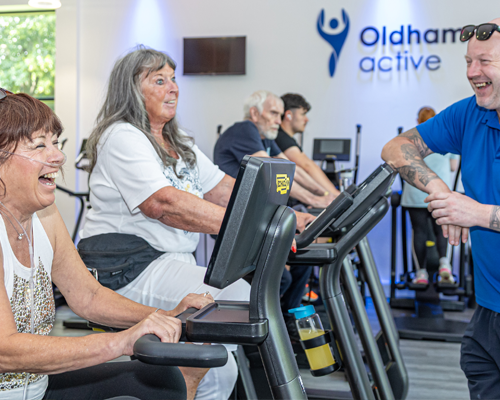

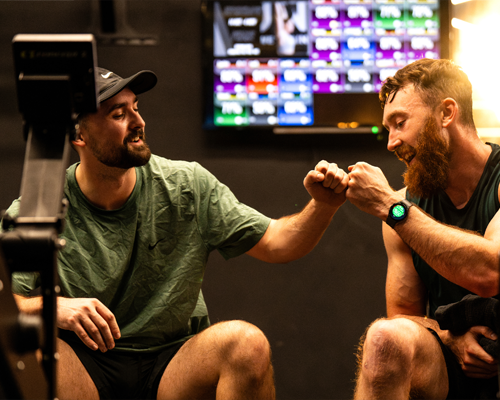
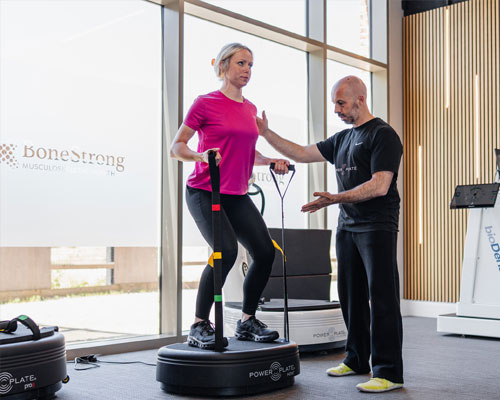
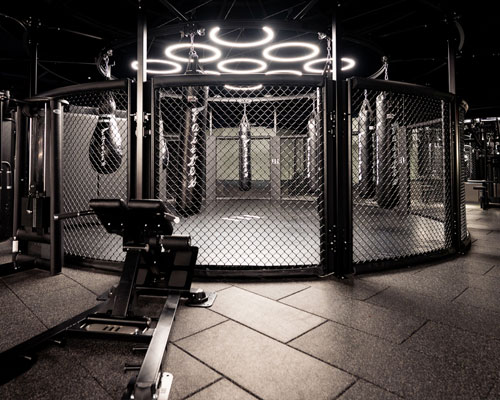

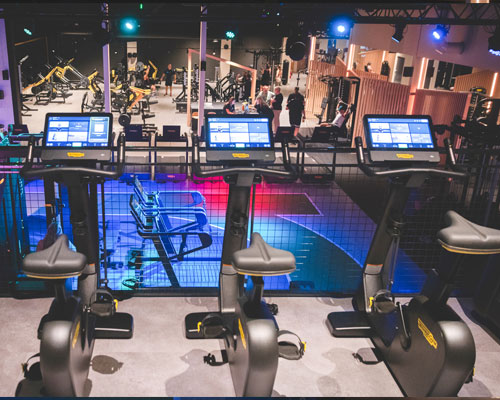





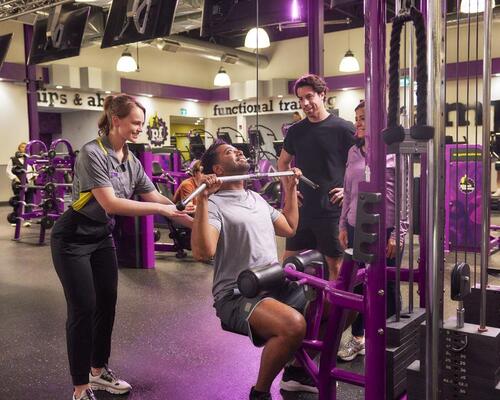
Private investment company Franchise Equity Partners has acquired Bravo Fit, the Planet Fitness ...

Midtown Athletic Club has launched a new community tennis initiative honouring the legacy ...

Urban Gym Group has entered the Irish market with the acquisition of Iconic ...
Total Fitness has released new research revealing how the expectations and motivations of ...











You've bought back 24 Hour Fitness. What’s taking up most of your time?
I love to get my hands around everything, getting out into the clubs, talking to the teams, going up and down the ladder in all areas.
I've got ideas for things I’d like to see us change, but I don’t want to make assumptions or decisions until I get a feel for everything.
It’s like changing the tyres while the car is going around the race track. It's not easy.
So a time to assess and validate?
Absolutely. We're sitting on a really nice portfolio of clubs that are performing well and we just need to improve and enhance them and then infill around them a little.
I put together a plan, which I shared with the team when we got the deal done, so that’s in place and now I’m looking at any adjustments I we need to make to the business. It’s turning out to be pretty close to my original assessment.
How is the industry doing in your view?
We’re enjoying a period of robust growth where ordinary people are gravitating to us, whether because of GLP-1s – where they need to do resistance training as they lose weight – or because younger people understand that longevity has to be built through health and fitness early on.
What's your take on the competition?
I’m excited by what other operators in the US are doing too. I love Crunch – I helped build that business and it’s doing extremely well. Obviously I admire Bahram Akradi at Life Time and I also had stock in his company, which is exceptional. He’s crushing it.
There are so many cool brands out there growing well. Rich Drengberg at EOS and Amp Fitness, which is doing really good work, then you’ve got VASA in the Midwest. I’m excited to watch everybody grow.
We compete as friends. Some people look at competition differently. I look at it as everybody being my friend and all of us having room to do well. If we don’t do well in one market, it’s purely because we’re not executing.
Will you open more clubs?
The company hasn’t grown in quite some time, so we're actively looking at locations to lease. Opening a new club takes 12 months, so there won't be a lot of visible activity immediately, but it’ll keep us busy.
Talk me through the growth strategy. Will you cluster?
We’ll study the marketplace, see where the holes are and try to fill them. The company lost a number of locations during the pandemic, so we’ve got to get back into some markets we once served and fill back in. Then we have to look at new markets we’ve never serviced that fit well.
We’ll formulate our plan over the next few months, then get after it, but nothing’s set in stone just yet.
What opening rate do you anticipate?
We’re already making offers – we’ll find good real estate and start to open some boxes. Maybe it’ll be one a month, then maybe two a month and eventually one a week. It’ll take some time to get there.
We're also looking at M&A. There's an opportunity to acquire and infill and grow. It isn't urgent right now – we're not in a hurry – but there are opportunities we’re looking at and people have approached us with portfolios.
What's the timeline for this?
I’m a pretty aggressive, fast-paced human being. I like to get after things very quickly, as I’m sure you know, so I expect we’ll be pushing pretty hard here. The whole team is the same way, and they’re excited. We want to keep the momentum going.
Might you buy back your old sites?
Most of them have been repurposed by other brands so I don’t think so.
What will you do to elevate the existing portfolio?
The company went through a tough time, due to the bankruptcy. Karl Sanft went in as CEO, which was a big move and he’s done a great job stabilising the business and returning it to profit.
He's also remodelled a number of clubs, but not all of them, so some still need to be updated.
We have to put capital back to work – we’ve started putting in new equipment and amenities and updating the clubs.
Tell us about the upgrades to date
We've had a company doing the remodels. They’ve gone into a number of the clubs and followed a template, which is solid – I like it.
Once complete, they measured the performance in those clubs, looking at how well they operate post-remodel. So far they’ve got strong returns – the impact of the investment sees improvements in both attrition and reactivation, so the formula is working well already.
Will you be enhancing the clubs?
Yes, we’ll add additional amenities, mostly around recovery, to enhance the member experience.
This is the one area the team hasn't been able to invest in as aggressively as they wanted.
How will you accommodate recovery?
We have huge clubs – existing locations are 40,000sq ft and larger – so there's room.
Back in the day when Mike Feeney and I were growing the company, we had a philosophy that our clubs would be built to stand the test of time.
They’ve got a lot of square footage to move things around. We compartmentalised the clubs, with basketball, pools, group exercise studios, kids’ clubs and so on.
As I walk back into these clubs, they're exactly the way they looked when we built them 20 years ago. The locker rooms, lockers and flooring have all held up and now it’s basically about replacing, refreshing and improving.
Kids’ clubs have faded in some locations as fewer parents bring their kids, so some clubs have removed them. Ultimately, there’s a lot of space inside every club and we can bring in new and fresh ideas and amenities that make the member base excited.
Will you add Pilates?
Yes, we plan to. There are a lot of Pilates studios around, so while consumers may want to come into the gym and take Pilates, they also want the full boutique experience.
There are some great companies out there, such as Solidcore, that are crushing it with a very difficult workout that attracts young people. So I think there’s space in gyms for us to do Pilates, but I also think there’s space for the boutiques and I really like the boutiques, so we'll have to think that through.
What else will you be investing in?
We’re going to be buying a ton of equipment. I know the industry is going to be excited, because we’ll be spending a lot of money with the distributors that are all lining up.
Do you favour any one supplier?
No, I love everybody and there’s so much cool equipment right now all over the globe. I’ve been a Michael Bruno guy for years with Core. I also love the Johnson Fitness Matrix guys, as well as Panatta and Gym80. I like the Skelcore range. We work with everybody and don’t favour anyone,
We get the best products at the best price, with the best warranty, then we put it to work, maintain it and service it well. We also listen to our members. What are they looking for? What do they enjoy? And we get after that.
Will new clubs be on the same scale?
It depends what we find in terms of real estate. It’s hard to find big spaces – you’re talking about higher rent and build costs – it’s not cheap any more. It’s also getting more costly with tariffs and everything else that’s going on in the world.
What are the timescales?
We have to figure out exactly what the model looks like in different locations – what people want in Denver is different from San Diego. I think in the next 24 months we’ll pretty much have all the remodels done. We’ll then reinvest every five to seven years.
What else is needed to fill out the offering?
When I ran the company back in the day, we had a strong ancillary programme – personal training, nutrition, drinks, foodservice, retail and so on. That area has reduced from what I’m used to seeing. So we’ll reinvigorate that to give members more options and improve retention and reduce attrition as we go forward.
Is your pricing optimal?
Our pricing is solid. We’re not planning to reduce prices – we're more likely to increase them.
We’ll continue to enhance our amenities and provide greater value, so members are willing to spend a little more.
If someone is going to a club which has 10,000 to 15,000 members doing 2,000 to 3,000 workouts a day and it’s hard to get on equipment, I think they'll be prepared to pay a little more when they see our clubs – where we have bigger spaces and more amenities.
People today are rarely members of just one club. They might use 24 Hour Fitness to play basketball, go to another club to lift weights and go to UFC Gym to do Brazilian Jiujitsu.
They belong to multiple locations because it’s not super-expensive. Often they're paying less than US$1 a day for access to a facility.
How are you financing your deals?
We’re structured well and very conservatively, which is how I like it.
We put a bunch of cash on the balance sheet and we’ve got excess cashflow from profitability each year, so we’ve got plenty of firepower, as well as more borrowing power.
We didn’t leverage the company very highly, but put in a lot of equity, so we have a low level of debt.
We’ll take our time to grow and do the right things. We’ll put money back into our business. We’re not going to put it in our pockets. I don’t like taking dividends – I put it back to work.
Long Range Capital is our partner and the team there is excited about the journey we’re embarking on. We’ll do the right thing by the company and by the industry. I think we’ll be a good, fair competitor in our marketplaces and we’ll complement everybody out there.
What are the plans for globalisation?
I’ve personally built and developed in close to 60 countries, so I’ve got pretty good international experience and connections. We just have to decide when we want to get there.
It’s not something we’re going to tackle today, it’s a little further down the road, but if a phone call comes in and a deal sounds interesting, we’ll listen.
Will you build or acquire globally?
Globally it will be more about M&A activity, because markets need to be led by people who live and operate there and know the marketplace.
It’s tough to pop in from the US and start to build without knowing what’s going on, so if you can find good partners and get behind them and help them with systems and things we do well in the US that they’re not yet strong at, then we'd have a win-win situation.
What type of businesses would fit the portfolio?
It depends on the market. As an example, we developed SATS in the Nordic region by buying some clubs in Sweden, partnering with Bjørn Johansen and Vegard Liven and acquiring SATS. Over three years we grew it to 165 owned and franchised locations in the Nordic region and eventually sold it to Nordic Capital.
But the clubs in those markets were smaller, generally 15,000sq ft to 25,000sq ft, so not suitable for 24 Hour Fitness. Only occasionally would you find a bigger box, so the long answer is that it depends on the marketplace.
Every market has to be built based on rents, infrastructure costs, power and so on. Once you build your model in an overseas market, you start to understand it, which is why I say you have to have local people who know the markets well, because there are so many things you have to navigate.
You’re discreet about your investments...
We’ve built clubs all over the world on just about every continent, but I keep it quiet unless the brand in question wants something said.
A lot of the time I’m a capital partner, backing a management team I really love. It depends on the situation, as each market is a little different.
Take Australia as an example. We’ve been working there for a long time with partners Selena and Lusiano Afeaki who've done phenomenal work growing Crunch Fitness. They’re great leaders and I enjoy working with them.
What are your other immediate priorities?
The next step is staffing. After the bankruptcy, staffing levels were reduced to maintain the cost structure and we’ve been more focused on what we can do versus what we could do.
We're going to get staffing levels up and reward the team in different ways to motivate them to excel – as we have in our other businesses.
Some operators are reducing staffing levels...
If you look at the HVLP market the model works because you don’t need as many staff. The price points work, people join pretty easily and the clubs are smaller on average. That's the formula.
If you get into the mid-market and want to upgrade and bring your pricing up, you’ve got to give more service. People expect it.
We want to take care of our members and we want our staff to be excited by their work and by the standards we set as a company.
As Ray Wilson, one of the legends of this industry, used to say: it’s never the location, it’s always the team. His philosophy was that if he put his best team in his worst club, it became his best club the next day.
We’ve always found that to be right. We can take an underperforming club, put in a phenomenal team and turn it around. So pay your people well, motivate them well, execute properly and create loyalty and you’ll have something special in your secret sauce.
Where do your pay scales sit?
If you’re looking at HVLP, we’re equal to or greater than. If you’re looking at the mid-market, we’re probably less than. Looking at the high-end market, we’re probably less than.
What can people earn in the fitness industry in the US?
The major operators are probably paying US$175,000 to US$225,000 a year, because their managers run very big, challenging businesses, so they have to be pretty sharp at what they do.
Step back down into the regular gym space and – depending on the incentive programmes – somewhere between US$125,000 and US$175,000 is probably what people are looking to make. Then in the lower segment, it’s around US$75,000.
Turning to the tech, what are the plans?
I started off in this industry as a PT and when I first became a gym manager, I spent the first couple of years helping build a software program.
I’ve been involved in enough software and IT developments over my career, in countries all over the world, to have a pretty good feel for it. I’ve got my finger on the pulse and I think we’re going to be able to do some really cool stuff.
Our IT team at 24 Hour Fitness is really strong, with a great leader. Our platform is owned by us, it’s not third-party, so it has a lot of flexibility and gives us room to improve what we do.
I’m all about simplification. I want the system to be easy to use, for compensation packages to be easy to see and understand and easy to administer through payroll. So we have to get all that into alignment.
The industry is well served by third-party software groups that help clubs perform, but I like the fact we own our own and can develop it, move quickly and make changes as needed.
How about customer-facing tech?
24 Hour Fitness has a fantastic interface with its app and web platform. It’s easy to join, easy to learn and easy to find things, so the technology is really strong. The team has done great work from a member-experience standpoint.
If members need an answer and want to go online – whether it’s to find information on their membership, whether they missed a payment, for example, or they're leaving town and want to cancel – we make it as easy as possible.
Consumers don’t have a lot of time. We’ve got everything on the app they want: exercise programmes, group exercise, classes, everything.
Are you integrating AI into your consumer-facing tech?
It’s coming. Everybody’s trying to figure out how to use it to enhance the customer experience, but I don’t think there’s a distinct answer yet.
On the marketing side it’s being used by third-party marketing groups and media buyers to navigate the ever-growing challenge of getting the attention of consumers – some of these challenges are law-related, as texting and email legislation is making it harder to contact people.
I think AI will come into play and enhance these capabilities, but it’s very early days.
Which human touchpoints do you think are most meaningful for members?
A lot is delivered via PT on the gym floor and by talking and interacting with members.
Some want to sit and chat. Some just want to get in and out. Some don’t want anyone bothering them. They just want to put their headphones in and get on with their workout. Some want loud music. You have to adjust.
When I ran a club, I felt as though I had to be the 'mayor', so I'd spend a lot of time stopping, talking to members and getting known and building up great relationships with my members.
That’s what I want us to get back to. I still want people to be able to come in and get out, but we also want them to get to know us a little and feel as though this is home.
As we’ve always said, fitness is the third place. You’ve got home, work and the gym. Howard Schultz would say it's Starbucks, but I’d say not any more, these days the third place is fitness. People come to the gym before Starbucks.
The better we know our members, and the better the interaction with our staff and team, the more we'll thrive
How do you build community?
There are so many things in our industry that make it cool and make us a hub in the community for those who operate well.
People want to go to a place where they're comfortable, so it has to be well maintained, clean and serviced. There must be people who engage with you, if you’re open to that – saying hello, hanging out for a second or two.
There are so many levers you can pull to engage with your audience, from equipment to great classes that are pumping out energy. You have to understand what people are looking for.
If you look at the younger market, for example, they want what’s new and price may be an issue, so they might go to Crunch, Planet or EOS because they can get in for US$10 to US$20 a month, but then when they get to the stage that they want to move to a club with better amenities, that will come down to if your offering is a fit for them.
Our view is that fitness is for all, so we welcome everybody, with a focus on community.
What’s your own workout routine?
I do 45 minutes of cardio and full-body strength a couple of times a week and then split training the rest of the week. It’s old school: chest and arms one day, legs and glutes another.
I’ll play golf, pickleball, tennis, padel, basketball. I’m active with whoever I’m with. My wife loves to run and we’re out for a three- or four-mile walk every morning.
I’m active five to six days a week, sometimes seven, to get my engine started. I’m always exercising, just trying to stay lean, healthy and fit.
1983: Founds 24-Hour Fitness as 24-Hour Nautilus
1998: Co-founds Fitness Holdings Europe with David Giampaolo
2004: Co-founds Mrs Sporty
2005: Sells 24 Hour Fitness to Forstmann Little & Co for c. US$1.6 billion
2005: Leads the purchase of Crunch Fitness
2005: Opens 24 Hour Fitness Shaq Sport club with Shaquille O’Neal
2008: Co-founded New Evolution Ventures with Jim Rowley and Mike Feeney
2010: Founds Hard Candy Fitness with Madonna and Guy Oseary
2012: Invests in US Fitness with Kirk and John Galiani
2016-2019: Hard Candy locations closed
2021: Invests in Frame Fitness
2025: Crunch Fitness sold to Leonard Green and Partners
2026: Reacquires 24-Hour Fitness in partnership with LongRange Capital
Editor's letter
HCM People
HCM People
Interview
Sponsored
Talkback
Sponsored
Insight
Policy
Promotion
Sponsored
Life Lessons
Sponsored
Specifier
Sponsored
Recovery
Research
Private investment company Franchise Equity Partners has acquired Bravo Fit, the Planet Fitness ...
Midtown Athletic Club has launched a new community tennis initiative honouring the legacy ...
Urban Gym Group has entered the Irish market with the acquisition of Iconic ...
Total Fitness has released new research revealing how the expectations and motivations of ...