




















people
Interview: Clive Chesser
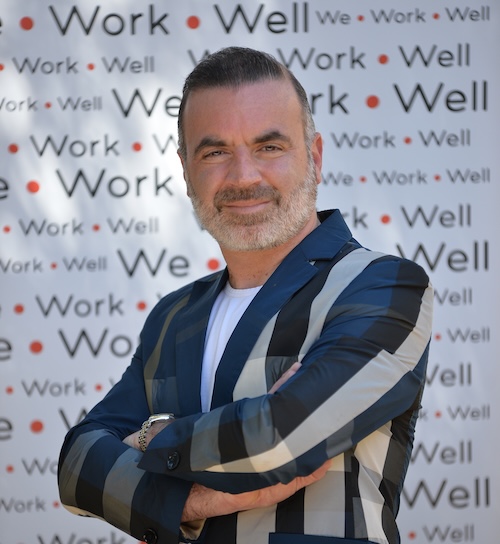
With more than one gym opening a week and the integration of Blink Fitness underway in the US, the new CEO of PureGym has a busy schedule. He speaks to Kate Cracknell


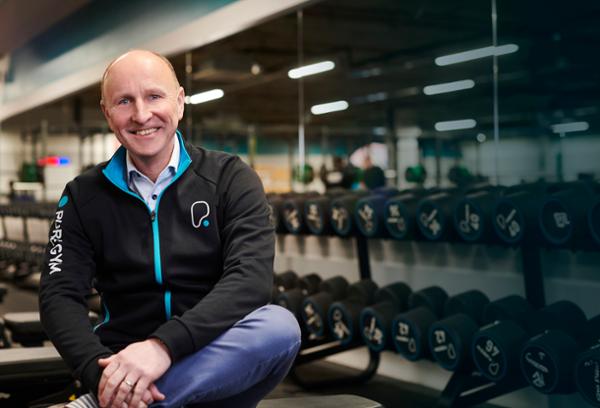
What drew you to the PureGym role?
After 17 years in the UK pub sector and at this stage of my career, it was a big move to change sector, but when the opportunity came up it felt very compelling.
Looking at my career to date, it’s been in service-led businesses that deliver experiences to customers and local communities. Pubs offer a different kind of dopamine hit from fitness, of course, but in many ways have the same goal: making people’s lives better, more fulfilled, more enjoyable, helping them leave feeling better than when they arrived.
Fitness has been a big part of my life, particularly over the last 10-15 years when I got into marathon running and cycling. I’ve used PureGyms when training for events and visiting UK pubs, so I was familiar with the brand and admired it for its convenience, value and consistently high quality.
The ownership model is important to me, too: having strong, supportive investors who believe in the business plan and the team. I found all that once I got to meet the team behind the PureGym business, with Leonard Green & Partners in the US and KKR.
I was also keen to join a strong brand with strong growth potential, including internationally.
All these converging themes came together at PureGym, at a stage in my life when I wanted a big, exciting job. I was delighted to be asked to take on the role of CEO and succeed Humphrey [Cobbold, now PureGym chair], who has done a magnificent job during his 10 years at the helm.
What was your first impression?
It’s unusual to come into a business as a CEO and find that it’s working very well, but PureGym is a highly focused business that knows what it does and does it brilliantly. There’s a strong, strategically-minded executive team, great investors, and talent across the various markets that can support a new openings programme that’s moving at pace.
It’s driven by purpose, with a mission to inspire healthier nations: making it easier for people to get fit and be healthy through accessible, inclusive, low-price yet high-quality fitness.
The macro environment is also interesting across our markets, particularly the US right now with its new president.
Having come from hospitality recently and now looking at fitness, I can see a definite change of direction from headwinds to tailwinds. People are taking health and fitness more seriously, particularly the younger generations for whom our flexibility and lack of contracts plays well – especially while consumer confidence remains shaky in some parts of the market.
We also have a lot of white space to grow into across the UK and each of our markets. There’s significant potential for expansion, especially as we experiment with scale: slightly smaller footprint gyms will enable us to get into more local communities and high street-type locations.
So, we have a lot of things in our favour that we can harness. We still have to deliver a great product and great experience at the right price and consistently well. But we have a growing level of demand in each of our markets and that gives us a really great opportunity.
What does the portfolio currently look like?
We’re at different stages of the life cycle depending on which market you look at. In the UK, PureGym is market leader. In Denmark, following our pre-COVID acquisition of Fitness World, we’re also market leader. We’re in a growing business in Switzerland; have a franchise business in the Middle East that we’re looking to expand; and have a fledgling business in the US with three gyms around the Washington, DC area plus the Blink Fitness gyms we’ve recently acquired.
The product and proposition are essentially the same across our markets, though, with a few small local nuances. That focus and clarity is one of PureGym’s real strengths. It’s a classic case of supply and demand. We believe our high value, low price model is compelling in all the markets where we operate – and probably every market around the world. Increasingly, we intend to explore that.
How have your US clubs performed so far?
Launched in 2022, the three gyms in Washington, DC were a test bed. That was the whole point of them. The team had decided to dip a toe into the US market to understand if our model worked there and if so, if tweaks and nuances were needed. It was deliberately not a rapid expansion.
Where PureGym was very much a disruptor in the UK as one of the first budget gym brands, competitors such as Planet Fitness had already established the low-cost segment in the US. Our clubs have still taken a little longer to mature than in the UK, possibly due to the early stage of our brand awareness in the US, but they’re performing well and we have short-term plans to add to the portfolio in the DC area.
The US is the biggest fitness market in the world, very dynamic and with lots of room for us to grow. It’s exciting to be here and I believe we have USPs to offer. We’re very proud of the quality and levels of investment we put into our business, as well as our people. We may also prove to have a little more agility in footprint and scale; we’ll explore that further as we expand in the US and our other markets.
And of course we have US investors in Leonard Green and Partners who absolutely understand the opportunities in the US market. They’ve been very supportive of us, initially with the three clubs and then, when the Blink Fitness opportunity came along, with the strategic intent of growing and investing in the US.
Tell us about the Blink Fitness acquisition
I was in the US for the auction, but I take no credit for this acquisition which was the work of Humphrey, our CFO Alex Wood and the rest of the team.
The Blink gyms were in Chapter 11, but to view our acquisition as opportunistic would be unfair on the team here. PureGym had done its homework. It had already looked at Blink Fitness in 2018 and again in 2022 and this meant we had a real head-start.
We moved quickly with some of our bond holders to raise US$180m, enabling us to show our intent prior to the auction by making a stalking horse bid of US$105m.
Supreme Fitness, a significant Planet Fitness franchisee, ultimately bid slightly higher than us, but the role of the auction is to achieve the best outcome for the creditors. It was deemed that our final bid of US$121m provided the best outcome, I believe principally due to greater certainty in our ability to complete the deal within the timescales required. We didn’t have the risk of competition issues in the local market.
Perhaps it was also looked on favourably that we’re a new entrant to the US market – one that’s looking to invest in and grow the business – and that this might mean a better outcome for the Blink team.
How many Blink clubs did you acquire?
The structure of the Chapter 11 deal gave us some real optionality, allowing us to choose exactly which sites we wanted to keep or not keep, with an extended period of time to negotiate with landlords. As a result, we’ve taken on a very clean and carefully-selected business that we’re ready to invest in, as well as a passionate team that’s come across from Blink head office.
The geographically peripheral Blink franchise business, spanning 15 gyms in states such as California and Texas, was sold separately. We didn’t bid on that. What we acquired was an option on the 67 Blink Fitness gyms in New York and New Jersey. Following our negotiation period, we’ve kept 56 of them.
Chapter 11 can be complicated, but in our case it’s been very helpful and given us a positive start.
What comes next in the US?
First and foremost it’s about business continuity. It’s a significant amount of work to bring parts of the Blink business into ours and really important that we do it well, so we’ve focused clearly on what we wanted to take on and had a transitional services agreement in place with Equinox [the former owner of Blink Fitness].
We also want to listen, learn and understand what works well in the Blink business, as well as in the New York and New Jersey markets where we haven’t previously operated. There’s a lot they’re rightly proud of at Blink: we have the privilege of taking on a business with a good history that’s trading well. It’s important we take the time to understand this before making decisions about what the future operation might look like.
One thing I can share is that we intend to rebrand the three Washington, DC clubs from Pure Fitness – as they’re currently trading – to PureGym. Previously it was felt that ‘fitness’ had more inclusive connotations in the US than ‘gym’, but the market has evolved and we believe we’re best served by operating as one brand across all our markets.
We are already PureGym in the UK, Denmark, Switzerland and the Middle East. The rebrand of our Pure Fitness clubs should be fairly seamless. But we mustn’t underestimate the challenge of building a new brand in the highly brand-focused market of New York. For the Blink clubs we’ve acquired, we’ll first assimilate our learnings and only then commence our investment programme. The physical rebrand will likely take place in the latter part of 2025, but it will require a lot of thought.
We’re very proud of the PureGym brand, but we need to ensure we launch it intelligently and that our whole proposition is very clear in the market. We’ll take our time to do that properly. Although we didn’t acquire the franchise business, we’re also having conversations with franchisees about the future of the Blink Fitness brand.
What are your other areas of focus for 2025?
We’re currently opening more than a gym a week and the pipeline is strong for 2025 and into 2026. We’re looking at 70+ new openings this year: just over 50 in the UK, probably 10-12 in Switzerland and the rest elsewhere, including the US where we’re already looking for sites.
We’re also focused on organic growth, keeping a firm eye on like-for-like performance and like-for-like members. We have a very strong programme of the refurbishment of the existing estate: over the last 12–18 months we’ve invested in 75 of our Danish gyms, for example. We’re also investing in the digital experience in and outside the gym, encouraging our members to see us as their partner in this important part of their life.
It gets more difficult as we scale – we don’t have an infinite pot of capital so we have to make choices – but it’s important to me that anyone going into a PureGym anywhere in the world gets an experience the brand would be proud of.
What are your longer-term plans?
I’ve had the luxury of coming into a business that’s a very strong performer. It hasn’t needed any urgent surgery or changes of direction, which gives me the time to work with the team and think about what the future looks like. How do we need to evolve the business over time in terms of the proposition we provide, as well as the expansion and development?
Clearly the Blink acquisition changes the paradigm to a degree, giving us a great platform for further growth and expansion in the world’s biggest fitness market, but we see growth potential in each of our markets.
There’s also the opportunity to enter new international markets. There’s nothing imminent, but we are having some serious conversations. We’re not tied to any particular model and I’ve worked with a wide array during my career – corporate fully-managed, master franchises, master and sub-franchise, joint ventures – so we’ll explore all options. To a degree, I think it can be horses for courses in different markets. Really it’s about the calibre of partner you can attract and the level of capital they’re able to invest in the brand.
So we have lots of opportunities in front of us. My role is to help the team define the next chapter of our strategic evolution: where to focus our priorities and allocate our capital and resources, because we can’t take on everything. We need to maintain a forensic approach to doing what we do well, not tripping ourselves up by trying to do too much, too quickly.
Your openings are still mostly in the UK…
The current rate of opening – around one gym a week – is a good pace and cadence for the business. It allows us to grow in a controlled way without compromising on the level of focus that goes into investment decisions, the CapEx programme or the work that supports those openings. I’m comfortable that although it’s a fast pace, it’s a good pace for us and it’s how we envisage our continued growth in the UK.
PureGym has previously spoken about 600 high-quality new site opportunities in the UK and 100 in Switzerland and if you look at comparable markets – airlines and hotels, for example – I think that sort of scale is eminently achievable. There are a significant number of local UK markets we’re not in yet and we’re still exploring how our proposition works in smaller footprints.
We’ll continue to chase the bigger footprints – we have strong muscle memory of doing that – but success in smaller footprints will allow us to explore with more agility and inform how many more opportunities there are in the UK.
Will there be another bid at an IPO?
We’re fortunate to have very supportive investors, a strong growth programme and good pace and trajectory in the business. Right now, our focus is on growth, not on exit.
I’m sure that time will come and when it does, we’ll explore the best options for doing so. But genuinely, that’s not where the focus of the board is right now. It’s on how we optimise the pace of growth while keeping a focus on like-for-like, organic growth.
(February 2025)
✻ US: 59 (56 Blink)
✻ UK: 412
✻ Denmark: 143
✻ Middle East: 23
✻ Switzerland: 44
✻ Q3 2024 adjusted EBITDA: £35m (+£2m vs Q3 2023)
✻ Q3 2024 run rate adjusted EBITDA: £165m (+£26m vs Q3 2023)
✻ Q3 2024 leverage 4x (vs 4.6x in Q3 2023)




Urban Gym Group has entered the Irish market with the acquisition of Iconic ...
Total Fitness has released new research revealing how the expectations and motivations of ...