














GET HCM
magazine
Sign up for the FREE digital edition of HCM magazine and also get the HCM ezine and breaking news email alerts.
Not right now, thanksclose this window I've already subscribed!
Follow Health Club Management on Twitter Like Health Club Management on Facebook Join the discussion with Health Club Management on LinkedIn
FITNESS, HEALTH, WELLNESS

Latest news

The HFA’s annual report shows the global fitness industry is resilient and poised for growth

The Health and Fitness Association has released its 2025 HFA Global Report
People around the world are prioritising their health and wellness
Many countries have reported all-time highs in membership and penetration
Ninety one per cent of respondents anticipate growth in 2025

The 2025 HFA Global Report, which looked at almost 30 markets, shows that around the world more people are joining gyms and seeing fitness as essential, despite rising living costs.

After surviving economic slowdowns and a global pandemic, the fitness industry is growing a reputation as being a long-term investment target, especially since club offerings have expanded into mental wellness, recovery and longevity. Ninety one per cent of respondents anticipate growth in 2025 and 51.3 per cent foresee membership growth.

Introducing this year’s flagship annual report, the Health & Fitness Association’s CEO and president, Liz Clark, says: “In 2024, many countries reported all-time highs in facilities, membership and penetration.

“Operators continued to invest in innovation – from AI and wearables to recovery services and strength-focused design. Public discussions around obesity, mental health and prevention increasingly included the role of fitness.”

Stand-out trends

Massive growth opportunities still exist in emerging markets where penetration rates are below 1 per cent, such as India, while developed markets are approaching or exceeding 20 per cent.

Hybrid models have become the industry standard.

Millennials and Gen Z are driving growth, while higher-income segments are dominating memberships and creating premium opportunities.

There needs to be more focus on retention, including better onboarding and engagement strategies, in order to keep the 50 per cent of new members who cancel within six months.

Corporate wellness is a significant opportunity and medical integration offers health-care partnership potential.

Consumers are showing preferences for personalisation.

Preventative health strategies being initiated by many governments offer an opportunity to elevate the fitness industry and capitalise on the messaging.

There has been a shift away from the pandemic behaviours of outdoor exercise and at-home fitness back to facilities, with a renewed appreciation for community.

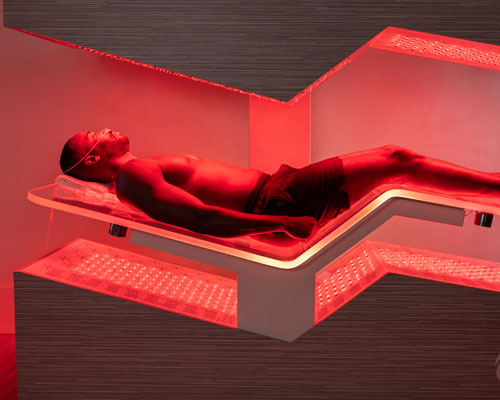
Search trends reflect a growing interest in longevity and healthspan, rather than aesthetics, with consumers increasingly focused on fitness as medicine. Recovery and wellness services – such as cryotherapy and red light therapy – are becoming minimum member expectations.

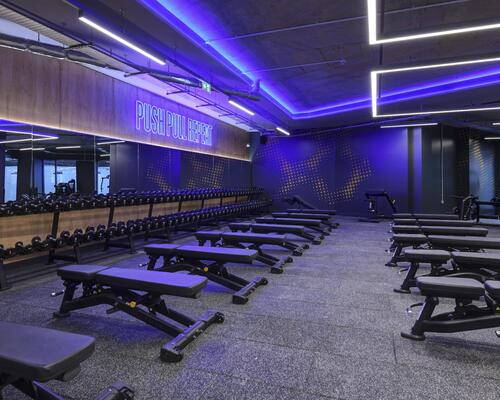
The surge in strength training has led to modern clubs allocating 42 per cent of floor space to strength training compared with 20 per cent in traditional layouts, while cardio space has decreased from 34 per cent to 12 per cent.

Pickleball is the fastest growing sport in the world, growing 223.5 per cent in the US in three years. Life Time is hoping to reach 1,000 pickleball courts by the end of 2025.

The integration of technology is another strong trend, with increasing leverage of AI for operational efficiency and enhanced member experiences, to provide personalised guidance and improve engagement. However, 47 per cent of consumers frequently encounter inaccurate or irrelevant data when using AI fitness apps, raising questions about reliability.

The fitness industry is becoming increasingly attractive to equity investors. Notable funding rounds included US$17.2 million for Myzone and US$165 million for Therabody. Planet Fitness raised $800 million in securitized financing and Equinox raised around $1.8 billion in new capital.

Investment is being driven by strong results from public companies like Planet Fitness and Life Time; the trend in longevity and healthspan and the post-COVID wellness boom, especially among younger consumers.

Challenges facing the fitness industry include inflationary pressures impacting discretionary income; rising costs of interest rates, construction and labour; supply chain issues and staffing shortages. Tariffs are also causing uncertainty in the US.

By numbers

The top 10 companies in terms of revenue were Life Time (US$2,621 million); Basic-Fit ($1,315 million); Planet Fitness ($1,200 million); RIZAP Group ($1,130 million); David Lloyd Leisure ($1,084 million); SmartFit ($1,035 million); PureGym ($773 million); RSG Group ( $482 million); SATS Group ($471 million); Fitness Park Group ($460 million).

Purpose Brands has the biggest estate in the world at 7,084 units, followed by Xponential Fitness (3,187); Planet Fitness (2,722); Curves Holdings Group (1,984); HILEFIT (1,800); RIZAP Group (1,782); Smart Fit (1,743); ZhongTian Group (1,593); Basic-Fit (1,575) and F45 Training (1,500+). The UK’s biggest operator, PureGym, came in 13th, with 680 units.

The biggest franchised brands are Anytime Fitness, Planet Fitness, Curves (Japan), F45 Training and Orangetheory Fitness.

Planet Fitness has the most members at 19.7 million. Followed by Chinese operator, HILEFIT at 14 million; Purpose Brands (5.7 million); Smart Fit Academias (4.8 million) and Basic-Fit (4.3 million).

Europe

Europe includes a mix of mature and emerging markets, reflecting stability and opportunity. The mature markets of UK, Switzerland, Germany, Austria and Spain all saw gains in 2024. European fitness companies are highly optimistic about 2025, with 90 per cent anticipating growth and half planning to expand their businesses.

The UK has the highest penetration rate in central Europe, at 16.9 per cent. Despite challenges in terms of costs, inflation and pressures on discretionary spending, all metrics are rising and the outlook is positive. With a new Labour government elected in 2024, which plans to focus on public health and economic growth, the industry is lobbying to play a key role.

For the first time, Austria overtook Germany in terms of penetration at 13.9 per cent, with the strongest growth being among the under 30s and over 50s. The sector has actively sought greater visibility in health policy debates. Personalisation and digitalisation are on the rise and the fastest growing modalities are yoga and free-weight strength training.

Germany’s penetration rose by 0.2 per cent to 13.8 per cent. Despite cost of living pressures, consumers are prioritising their wellbeing. The Employers’ Association of German Fitness and Health Facilities (DSSV) has prepared a Quality Offensive, aimed at strengthening the sector’s position as a legitimate contributor to public health.

Public awareness of health continues to rise and there is growing political recognition of fitness facilities as healthcare providers. Operators are increasingly using automation and AI to improve efficiency.

France surpassed the 10 per cent penetration mark. Momentum is being driven by the under-30s, especially women. However, there needs to be more attention paid to the over-60s who currently represent just 6 per cent of the membership and have a 40 per cent cancellation rate.

Spain reached historic highs in 2024, with membership increasing by 8.8 per cent to achieve a penetration rate of 13 per cent. It is now seen as one of Europe’s leading fitness markets and offers opportunities for operators and investors. Brands like VivaGym and Synergym both saw record expansion. Chains like Metropolitan and David Lloyd are expanding into cities such as Valencia, Seville and Bilbao and boutique studios are spreading beyond Madrid and Barcelona to mid-size cities. Rising disposable income among younger demographics has provided a boost.

Asia Pacific

Asia Pacific is a very diverse market, with World Health Organization estimating that South Asia has one of the highest rates of physical inactivity in the world at 48 per cent, while Oceania has the lowest at 14 per cent.

Australia’s penetration is around 23 per cent. According to AusPlay, 48 per cent of Australians over the age of 15 are active at least three times a week. There is a growing awareness of the importance of strength training, especially among older demographics.

New Zealand also has a strong penetration of 21 per cent. However, the economy presented considerable headwinds in 2024 with inflation higher than comparable countries and economic growth rates low. Many fitness operators adapted with leaner operations and more targeted offerings.

While demand among older adults is increasing, participation rates have stagnated among younger people. There are also significant health inequalities among the Māori, Pacific and rural communities, which are placing a burden on the public health system.

In China, there has been a shift away from long-term, pre-paid memberships towards affordable and flexible models. Outdoor fitness alternatives offering free or low cost access and community engagement are popular, putting pressure on gyms to justify their pricing, improve services and innovate. The ageing population offers a growth opportunity for elderly-focused fitness services.

India has a penetration rate of just 0.8 per cent, but demand is growing rapidly and the government is pushing a more fitness-conscious culture with its Fit India Movement. Market leader Curefit – the parent company of cult.fit, Fitness First India and Gold’s Gym India – says that the lux and boutique segments are growing the fastest, driven by a rising class of affluent, fitness-conscious Indians.

Pilates is on the rise in Japan and the most promising segment is the new generation of 24-hour, self-service gyms. Consolidation and M&A activity is expected, along with new entrants and the launch of smaller, concept-led facilities.

Latin America

Latin America offers untapped potential: the industry is fragmented and most facilities still use cash to collect memberships. It is dominated by homegrown brands, with Smart Fit the market leader with 4.8 million members across 15 countries and currently preparing to open its first club outside the region, in Morocco.

The fundamentals are strong with growing health awareness, increasing demand and a consumer willingness to invest in wellbeing, even amid economic constraints. The report says that to thrive, gym operators will need to embrace technology and improve the member and employee experience.

The Middle East

With favourable economic conditions, government-backed health initiatives and growing consumer appetite for wellness, the Middle East shows significant potential.

According to WHO, the region has some of the world’s highest inactivity rates, however, there is a rising consumer interest in fitness, especially in Saudi Arabia and UAE.

The major players are Leejam/Fitness Time, Holmes Place, Kun Sports, Saudi Sports Club Company, Gymnation, Armah Sports Company and Trifit.

Some UK and US operators have entered the market, including 9Round, F45 Training, UFC Gyms, Fitness First, World Gym, Powerhouse Gym, Gold’s Gym, Purpose Brands and Xponential Fitness.

In Saudi Arabia the competition is growing, with local operators scaling and international operators entering the market. There is a rising demand for high quality strength training and Pilates.

Bio-hacking, functional medicine and personalised services are gaining popularity in UAE, driven by expatriates. With economic stability and support from the government, the fitness industry is poised to thrive.

North America

North America’s fitness market continued to expand in 2024, with the US hitting a world-leading penetration rate of 24.9 per cent and Canada around 15.5 per cent. Both have strong infrastructure and room for growth, with WHO data showing 30 per cent of residents are inactive.

HVLP gyms are leading the charge, with boutique studios and premium offerings growing thanks to their personalised approach and community engagement.

The Fitness Industry Council of Canada has set clear priorities for 2025 of incentivising fitness through policy, breaking down affordability barriers and positioning the industry as a partner in Canada’s chronic disease crisis. New partnerships are already forming between fitness providers, provincial governments and healthcare leaders.

Hopes are high in the US for national policies to support the industry, with President Trump’s Make America Health Again initiative, which has elevated physical activity and wellness as national priorities. However, US tariff uncertainties could impact economic confidence and reduce available capital for upgrades or expansion.

Digital subscriptions have declined as consumers have returned to bricks and mortar facilities; demand for recovery technology is strong and AI is being embraced to streamline operations and deliver personalised experiences.

With strong consumer demand, a shift towards preventative health and private equity showing confidence in the sector, the US fitness industry is well-positioned for growth.

Predictions

The momentum of the high value best price models will continue around the world. Community building will become critical to retention. The integration of AI will continue. Wellness and longevity services will go from strength to strength. There will be international expansion to areas with low penetration rates, including India, Japan and Saudi Arabia.

Success will depend on balancing traditional fitness offerings with expanded wellness services; integrating technology while maintaining human connection and scalable business models that can adapt to regional differences.

The 2025 HFA Global Report, which looked at almost 30 markets, shows that around the world more people are joining gyms and seeing fitness as essential, despite rising living costs.
HAF,FIT,IND,PTS,FRN,RES
2025/THUMB356-356856_563348_747454.jpg
Latest News

Urban Gym Group has entered the Irish market with the acquisition of Iconic ...

Latest News

Total Fitness has released new research revealing how the expectations and motivations of ...

Latest News
Wattbike has announced a new integration with EGYM, which enables the bikes to contribute to ...
Latest News
Les Mills has launched a reformer Pilates workout. The 45-minute workout blends traditional reformer movements ...
Latest News
The inaugural HCM Invest event has opened applications for pitching slots ahead of its launch ...
Latest News
Girls in the UK are missing out on 280 million hours of sport every year ...
Latest News
According to research which tracked more than 147,000 people for 30 years, 90-120 minutes of ...
Latest News
Everlast Gyms expands its footprint outside of the UK this month with the imminent launch ...
HCM promotional features
Sponsored
Social fitness the missing link to member engagement, according to a new Myzone report
HCM promotional features
Sponsored
SnowDome Fitness has added 50 per cent more space with cutting-edge Technogym solutions
HCM promotional features
Sponsored
Third Space partnered with IndigoFitness to deliver a bespoke training space for its new club at The Whiteley
HCM promotional features
Sponsored
David Lloyd is stepping up its commitment to women’s health as it continues to explore what fit-for-purpose looks like for the female population
HCM promotional features
Sponsored
Greg Bradley looks at the shift towards strength training in gyms and advises on how operators can create the ultimate training environment
HCM promotional features
Sponsored
Find out how your gym can tap into the corporate wellness boom
HCM promotional features
Sponsored
Starpool supports Olympic champion Marcell Jacobs, says Riccardo Turri
HCM promotional features
Sponsored
EGYM has opened a new HQ in Paternoster Square, London and revealed a range of new launches
HCM promotional features
HCM magazine
After decades of focusing on adult audiences, operators are starting to engage young people – unlocking growth opportunities while supporting the health and wellbeing of future generations
HCM magazine
HCM People

Shaun Grove

Owner, Stride Fitness
My goal was to invest in where fitness is going, not where it’s already been
HCM magazine
People on weight loss drugs reduce their activity levels, according to a team at St John’s Hospital Illinois
HCM magazine
The fitness industry is mourning the passing of Les Mills, a founding father of fitness, as Kath Hudson reports
HCM magazine
We’ve reduced the level of council investment over the last three years by 40 per cent and increased our turnover by 9 per cent
Opinion
promotion
Strength training has moved from the margins to the mainstream.
Opinion: Building smarter strength spaces for today’s operators
Featured supplier news
Featured supplier news: Legends never die: four legends, four philosophies of life
Panatta brought together four of the most influential figures in bodybuilding history on the stage of RiminiWellness 2026: Phil Heath, Lee Haney, Ronnie Coleman and Hany Rambod.
Featured supplier news
Featured supplier news: Introducing a new era of Nautilus Leverage
Strength training has never been more important for member retention, facility differentiation and long-term commercial success.
Company profiles
Company profile: Your Personal Training
Your Personal Training is the UK’s leading personal training brand, committed to raising industry standards ...
Company profiles
Company profile: Sporty Group AS
With more than 90 fitness centres across the country and more than 130.000 members, Sporty ...
Supplier Showcases
Supplier Showcase - From nightclub to health club
Supplier Showcases
Supplier Showcase - Future-proofing
Catalogue Gallery
Click on a catalogue to view it online
Featured press releases
MyZone press release: Myzone Go expands operator opportunity with Garmin integration
Myzone has announced a significant expansion of its MoTech (Motivation Technology) platform, as Myzone Go integration with Garmin goes live.
Featured press releases
Dyaco UK Ltd press release: i-Strength | Spirit Commercial Fitness: Same movements, smarter resistance
Upgrading a gym floor is rarely straightforward. New equipment means retraining staff, repositioning layouts, and a period of adjustment for members.
Directory
Water experiences and hydrotherapy solutions
Aquaform s.r.l.: Water experiences and hydrotherapy solutions
Spa and beauty equipment
Living Earth Crafts: Spa and beauty equipment
Industrial washing machines
Miele Company Limited: Industrial washing machines
Fitness tracking platform
SpiviTech: Fitness tracking platform
Hot tubs
MSpa International Ltd: Hot tubs
Lockers
Crown Sports Lockers: Lockers
Property & Tenders
Stratford, East London.
Lee Valley Regional Park Authority
Property & Tenders
Y Felinheli, LL56 4QN
Newmark
Property & Tenders
Diary dates
21-24 Sep 2026
The Langham Huntington Pasadena , Pasadena, United States
Diary dates
28-29 Sep 2026
Grand Ballroom, METT Singapore, Singapore
Diary dates
06-08 Oct 2026
Messe Stuttgart, Stuttgart, Germany
Diary dates
22-22 Oct 2026
QEII Conference Centre, London,
Diary dates
29-31 Oct 2026
Impact Exhibition & Convention Center Bangkok,Thailand, Bangkok, Thailand
Diary dates
29-31 Oct 2026
IMPACT Exhibition Center, Bangkok, Thailand , Bangkok, Thailand
Diary dates
14-15 Nov 2026
The Kromhouthal , Amsterdam, Netherlands
Diary dates
26-29 Oct 2027
Koelnmesse Exhibition Centre, Cologne, Germany
Diary dates

Latest news

The HFA’s annual report shows the global fitness industry is resilient and poised for growth

The Health and Fitness Association has released its 2025 HFA Global Report
People around the world are prioritising their health and wellness
Many countries have reported all-time highs in membership and penetration
Ninety one per cent of respondents anticipate growth in 2025

The 2025 HFA Global Report, which looked at almost 30 markets, shows that around the world more people are joining gyms and seeing fitness as essential, despite rising living costs.

After surviving economic slowdowns and a global pandemic, the fitness industry is growing a reputation as being a long-term investment target, especially since club offerings have expanded into mental wellness, recovery and longevity. Ninety one per cent of respondents anticipate growth in 2025 and 51.3 per cent foresee membership growth.

Introducing this year’s flagship annual report, the Health & Fitness Association’s CEO and president, Liz Clark, says: “In 2024, many countries reported all-time highs in facilities, membership and penetration.

“Operators continued to invest in innovation – from AI and wearables to recovery services and strength-focused design. Public discussions around obesity, mental health and prevention increasingly included the role of fitness.”

Stand-out trends

Massive growth opportunities still exist in emerging markets where penetration rates are below 1 per cent, such as India, while developed markets are approaching or exceeding 20 per cent.

Hybrid models have become the industry standard.

Millennials and Gen Z are driving growth, while higher-income segments are dominating memberships and creating premium opportunities.

There needs to be more focus on retention, including better onboarding and engagement strategies, in order to keep the 50 per cent of new members who cancel within six months.

Corporate wellness is a significant opportunity and medical integration offers health-care partnership potential.

Consumers are showing preferences for personalisation.

Preventative health strategies being initiated by many governments offer an opportunity to elevate the fitness industry and capitalise on the messaging.

There has been a shift away from the pandemic behaviours of outdoor exercise and at-home fitness back to facilities, with a renewed appreciation for community.

Search trends reflect a growing interest in longevity and healthspan, rather than aesthetics, with consumers increasingly focused on fitness as medicine. Recovery and wellness services – such as cryotherapy and red light therapy – are becoming minimum member expectations.

The surge in strength training has led to modern clubs allocating 42 per cent of floor space to strength training compared with 20 per cent in traditional layouts, while cardio space has decreased from 34 per cent to 12 per cent.

Pickleball is the fastest growing sport in the world, growing 223.5 per cent in the US in three years. Life Time is hoping to reach 1,000 pickleball courts by the end of 2025.

The integration of technology is another strong trend, with increasing leverage of AI for operational efficiency and enhanced member experiences, to provide personalised guidance and improve engagement. However, 47 per cent of consumers frequently encounter inaccurate or irrelevant data when using AI fitness apps, raising questions about reliability.

The fitness industry is becoming increasingly attractive to equity investors. Notable funding rounds included US$17.2 million for Myzone and US$165 million for Therabody. Planet Fitness raised $800 million in securitized financing and Equinox raised around $1.8 billion in new capital.

Investment is being driven by strong results from public companies like Planet Fitness and Life Time; the trend in longevity and healthspan and the post-COVID wellness boom, especially among younger consumers.

Challenges facing the fitness industry include inflationary pressures impacting discretionary income; rising costs of interest rates, construction and labour; supply chain issues and staffing shortages. Tariffs are also causing uncertainty in the US.

By numbers

The top 10 companies in terms of revenue were Life Time (US$2,621 million); Basic-Fit ($1,315 million); Planet Fitness ($1,200 million); RIZAP Group ($1,130 million); David Lloyd Leisure ($1,084 million); SmartFit ($1,035 million); PureGym ($773 million); RSG Group ( $482 million); SATS Group ($471 million); Fitness Park Group ($460 million).

Purpose Brands has the biggest estate in the world at 7,084 units, followed by Xponential Fitness (3,187); Planet Fitness (2,722); Curves Holdings Group (1,984); HILEFIT (1,800); RIZAP Group (1,782); Smart Fit (1,743); ZhongTian Group (1,593); Basic-Fit (1,575) and F45 Training (1,500+). The UK’s biggest operator, PureGym, came in 13th, with 680 units.

The biggest franchised brands are Anytime Fitness, Planet Fitness, Curves (Japan), F45 Training and Orangetheory Fitness.

Planet Fitness has the most members at 19.7 million. Followed by Chinese operator, HILEFIT at 14 million; Purpose Brands (5.7 million); Smart Fit Academias (4.8 million) and Basic-Fit (4.3 million).

Europe

Europe includes a mix of mature and emerging markets, reflecting stability and opportunity. The mature markets of UK, Switzerland, Germany, Austria and Spain all saw gains in 2024. European fitness companies are highly optimistic about 2025, with 90 per cent anticipating growth and half planning to expand their businesses.

The UK has the highest penetration rate in central Europe, at 16.9 per cent. Despite challenges in terms of costs, inflation and pressures on discretionary spending, all metrics are rising and the outlook is positive. With a new Labour government elected in 2024, which plans to focus on public health and economic growth, the industry is lobbying to play a key role.

For the first time, Austria overtook Germany in terms of penetration at 13.9 per cent, with the strongest growth being among the under 30s and over 50s. The sector has actively sought greater visibility in health policy debates. Personalisation and digitalisation are on the rise and the fastest growing modalities are yoga and free-weight strength training.

Germany’s penetration rose by 0.2 per cent to 13.8 per cent. Despite cost of living pressures, consumers are prioritising their wellbeing. The Employers’ Association of German Fitness and Health Facilities (DSSV) has prepared a Quality Offensive, aimed at strengthening the sector’s position as a legitimate contributor to public health.

Public awareness of health continues to rise and there is growing political recognition of fitness facilities as healthcare providers. Operators are increasingly using automation and AI to improve efficiency.

France surpassed the 10 per cent penetration mark. Momentum is being driven by the under-30s, especially women. However, there needs to be more attention paid to the over-60s who currently represent just 6 per cent of the membership and have a 40 per cent cancellation rate.

Spain reached historic highs in 2024, with membership increasing by 8.8 per cent to achieve a penetration rate of 13 per cent. It is now seen as one of Europe’s leading fitness markets and offers opportunities for operators and investors. Brands like VivaGym and Synergym both saw record expansion. Chains like Metropolitan and David Lloyd are expanding into cities such as Valencia, Seville and Bilbao and boutique studios are spreading beyond Madrid and Barcelona to mid-size cities. Rising disposable income among younger demographics has provided a boost.

Asia Pacific

Asia Pacific is a very diverse market, with World Health Organization estimating that South Asia has one of the highest rates of physical inactivity in the world at 48 per cent, while Oceania has the lowest at 14 per cent.

Australia’s penetration is around 23 per cent. According to AusPlay, 48 per cent of Australians over the age of 15 are active at least three times a week. There is a growing awareness of the importance of strength training, especially among older demographics.

New Zealand also has a strong penetration of 21 per cent. However, the economy presented considerable headwinds in 2024 with inflation higher than comparable countries and economic growth rates low. Many fitness operators adapted with leaner operations and more targeted offerings.

While demand among older adults is increasing, participation rates have stagnated among younger people. There are also significant health inequalities among the Māori, Pacific and rural communities, which are placing a burden on the public health system.

In China, there has been a shift away from long-term, pre-paid memberships towards affordable and flexible models. Outdoor fitness alternatives offering free or low cost access and community engagement are popular, putting pressure on gyms to justify their pricing, improve services and innovate. The ageing population offers a growth opportunity for elderly-focused fitness services.

India has a penetration rate of just 0.8 per cent, but demand is growing rapidly and the government is pushing a more fitness-conscious culture with its Fit India Movement. Market leader Curefit – the parent company of cult.fit, Fitness First India and Gold’s Gym India – says that the lux and boutique segments are growing the fastest, driven by a rising class of affluent, fitness-conscious Indians.

Pilates is on the rise in Japan and the most promising segment is the new generation of 24-hour, self-service gyms. Consolidation and M&A activity is expected, along with new entrants and the launch of smaller, concept-led facilities.

Latin America

Latin America offers untapped potential: the industry is fragmented and most facilities still use cash to collect memberships. It is dominated by homegrown brands, with Smart Fit the market leader with 4.8 million members across 15 countries and currently preparing to open its first club outside the region, in Morocco.

The fundamentals are strong with growing health awareness, increasing demand and a consumer willingness to invest in wellbeing, even amid economic constraints. The report says that to thrive, gym operators will need to embrace technology and improve the member and employee experience.

The Middle East

With favourable economic conditions, government-backed health initiatives and growing consumer appetite for wellness, the Middle East shows significant potential.

According to WHO, the region has some of the world’s highest inactivity rates, however, there is a rising consumer interest in fitness, especially in Saudi Arabia and UAE.

The major players are Leejam/Fitness Time, Holmes Place, Kun Sports, Saudi Sports Club Company, Gymnation, Armah Sports Company and Trifit.

Some UK and US operators have entered the market, including 9Round, F45 Training, UFC Gyms, Fitness First, World Gym, Powerhouse Gym, Gold’s Gym, Purpose Brands and Xponential Fitness.

In Saudi Arabia the competition is growing, with local operators scaling and international operators entering the market. There is a rising demand for high quality strength training and Pilates.

Bio-hacking, functional medicine and personalised services are gaining popularity in UAE, driven by expatriates. With economic stability and support from the government, the fitness industry is poised to thrive.

North America

North America’s fitness market continued to expand in 2024, with the US hitting a world-leading penetration rate of 24.9 per cent and Canada around 15.5 per cent. Both have strong infrastructure and room for growth, with WHO data showing 30 per cent of residents are inactive.

HVLP gyms are leading the charge, with boutique studios and premium offerings growing thanks to their personalised approach and community engagement.

The Fitness Industry Council of Canada has set clear priorities for 2025 of incentivising fitness through policy, breaking down affordability barriers and positioning the industry as a partner in Canada’s chronic disease crisis. New partnerships are already forming between fitness providers, provincial governments and healthcare leaders.

Hopes are high in the US for national policies to support the industry, with President Trump’s Make America Health Again initiative, which has elevated physical activity and wellness as national priorities. However, US tariff uncertainties could impact economic confidence and reduce available capital for upgrades or expansion.

Digital subscriptions have declined as consumers have returned to bricks and mortar facilities; demand for recovery technology is strong and AI is being embraced to streamline operations and deliver personalised experiences.

With strong consumer demand, a shift towards preventative health and private equity showing confidence in the sector, the US fitness industry is well-positioned for growth.

Predictions

The momentum of the high value best price models will continue around the world. Community building will become critical to retention. The integration of AI will continue. Wellness and longevity services will go from strength to strength. There will be international expansion to areas with low penetration rates, including India, Japan and Saudi Arabia.

Success will depend on balancing traditional fitness offerings with expanded wellness services; integrating technology while maintaining human connection and scalable business models that can adapt to regional differences.

The 2025 HFA Global Report, which looked at almost 30 markets, shows that around the world more people are joining gyms and seeing fitness as essential, despite rising living costs.
HAF,FIT,IND,PTS,FRN,RES
2025/THUMB356-356856_563348_747454.jpg

Latest news

Urban Gym Group has entered the Irish market with the acquisition of Iconic
Total Fitness has released new research revealing how the expectations and motivations of
Wattbike has announced a new integration with EGYM, which enables the bikes to contribute to
Les Mills has launched a reformer Pilates workout. The 45-minute workout blends traditional reformer movements
The inaugural HCM Invest event has opened applications for pitching slots ahead of its launch
Girls in the UK are missing out on 280 million hours of sport every year
Strength training has never been more important for member retention, facility  differentiation and long-term commercial
According to research which tracked more than 147,000 people for 30 years, 90-120 minutes of
Everlast Gyms expands its footprint outside of the UK this month with the imminent launch
The UK's four Chief Medical Officers have published a refreshed edition of  Physical activity guidelines:
Places Leisure has exchanged contracts to build and operate a flagship £60m water and wellness
The Republic of Ireland will become the latest market in PureGym’s expanding international portfolio, with
Sophie Lawler, CEO of Total Fitness, has launched a leadership coaching business aimed at helping
Panatta brought together four of the most influential figures in bodybuilding history on the stage
Anytime Fitness reaches a milestone this week with the launch of its 6000th site. The
The £33.9 million Leighton Leisure and Community Centre has opened in Leighton Buzzard, UK, creating
YogaSix, the yoga brand owned by Xponential Fitness, has launched a heated, Pilates-inspired class called
Walnuts Leisure Centre in Orpington, in the London Borough of Bromley, has reopened following a
The Gym Group, has announced that it's sustained positive trading momentum has continued through the
Hyrox has announced it will be working with a second charity in the upcoming season
US low-cost operator, Amped Fitness, has launched a flagship location in Texas, debuting its multi-sensory
Luxury boutique Pilates and wellness studio, X-Club, officially launches a 4,000sq ft flagship at Marylebone
1 - 20 of 12,300
HCM promotional features
Sponsored
Social fitness the missing link to member engagement, according to a new Myzone report
HCM promotional features
Sponsored
SnowDome Fitness has added 50 per cent more space with cutting-edge Technogym solutions
HCM promotional features
Sponsored
Third Space partnered with IndigoFitness to deliver a bespoke training space for its new club at The Whiteley
HCM promotional features
Sponsored
David Lloyd is stepping up its commitment to women’s health as it continues to explore what fit-for-purpose looks like for the female population
HCM promotional features
Sponsored
Greg Bradley looks at the shift towards strength training in gyms and advises on how operators can create the ultimate training environment
HCM promotional features
Sponsored
Find out how your gym can tap into the corporate wellness boom
HCM promotional features
Sponsored
Starpool supports Olympic champion Marcell Jacobs, says Riccardo Turri
HCM promotional features
Sponsored
EGYM has opened a new HQ in Paternoster Square, London and revealed a range of new launches
HCM promotional features
HCM magazine
After decades of focusing on adult audiences, operators are starting to engage young people – unlocking growth opportunities while supporting the health and wellbeing of future generations
HCM magazine
HCM People

Shaun Grove

Owner, Stride Fitness

My goal was to invest in where fitness is going, not where it’s already been
HCM magazine
People on weight loss drugs reduce their activity levels, according to a team at St John’s Hospital Illinois
HCM magazine
The fitness industry is mourning the passing of Les Mills, a founding father of fitness, as Kath Hudson reports
HCM magazine
We’ve reduced the level of council investment over the last three years by 40 per cent and increased our turnover by 9 per cent
HCM magazine
New legislation is exposing weakness and potential liabilities in the management of customer data in health clubs, says Andy Chesterman
HCM magazine
Shaping the future of the sector with a clear mission, unified voice and open channels of communication. This is the ambition of UK Active’s new chair
HCM magazine
Would you stop selling memberships to prevent your club getting overcrowded? How do you strike the balance between maximising profits and prioritising the member experience? Kath Hudson talks to the experts
HCM magazine
Software suppliers explain how AI, automation and connected digital experiences can work for the good of operators and consumers
HCM magazine
A new report puts physical activity at the heart of healthcare, says Muir Gray
HCM magazine
Lisa Starr tries the Ammortal Chamber to see whether layering 10 modalities into one experience really delivers more
HCM magazine
Opinion
promotion
Strength training has moved from the margins to the mainstream.
Opinion: Building smarter strength spaces for today’s operators
Featured supplier news
Featured supplier news: Legends never die: four legends, four philosophies of life
Panatta brought together four of the most influential figures in bodybuilding history on the stage of RiminiWellness 2026: Phil Heath, Lee Haney, Ronnie Coleman and Hany Rambod.
Featured supplier news
Featured supplier news: Introducing a new era of Nautilus Leverage
Strength training has never been more important for member retention, facility differentiation and long-term commercial success.
Company profiles
Company profile: Your Personal Training
Your Personal Training is the UK’s leading personal training brand, committed to raising industry standards ...
Company profiles
Company profile: Sporty Group AS
With more than 90 fitness centres across the country and more than 130.000 members, Sporty ...
Supplier Showcases
Supplier Showcase - From nightclub to health club
Supplier Showcases
Supplier Showcase - Future-proofing
Catalogue Gallery
Click on a catalogue to view it online
Featured press releases
MyZone press release: Myzone Go expands operator opportunity with Garmin integration
Myzone has announced a significant expansion of its MoTech (Motivation Technology) platform, as Myzone Go integration with Garmin goes live.
Featured press releases
Dyaco UK Ltd press release: i-Strength | Spirit Commercial Fitness: Same movements, smarter resistance
Upgrading a gym floor is rarely straightforward. New equipment means retraining staff, repositioning layouts, and a period of adjustment for members.
Directory
Water experiences and hydrotherapy solutions
Aquaform s.r.l.: Water experiences and hydrotherapy solutions
Spa and beauty equipment
Living Earth Crafts: Spa and beauty equipment
Industrial washing machines
Miele Company Limited: Industrial washing machines
Fitness tracking platform
SpiviTech: Fitness tracking platform
Hot tubs
MSpa International Ltd: Hot tubs
Lockers
Crown Sports Lockers: Lockers
Property & Tenders
Stratford, East London.
Lee Valley Regional Park Authority
Property & Tenders
Y Felinheli, LL56 4QN
Newmark
Property & Tenders
Diary dates
21-24 Sep 2026
The Langham Huntington Pasadena , Pasadena, United States
Diary dates
28-29 Sep 2026
Grand Ballroom, METT Singapore, Singapore
Diary dates
06-08 Oct 2026
Messe Stuttgart, Stuttgart, Germany
Diary dates
22-22 Oct 2026
QEII Conference Centre, London,
Diary dates
29-31 Oct 2026
Impact Exhibition & Convention Center Bangkok,Thailand, Bangkok, Thailand
Diary dates
29-31 Oct 2026
IMPACT Exhibition Center, Bangkok, Thailand , Bangkok, Thailand
Diary dates
14-15 Nov 2026
The Kromhouthal , Amsterdam, Netherlands
Diary dates
26-29 Oct 2027
Koelnmesse Exhibition Centre, Cologne, Germany
Diary dates
Search news, features & products:
Find a supplier:
Partner sites