




















Follow Health Club Management on Twitter Like Health Club Management on Facebook Join the discussion with Health Club Management on LinkedIn
FITNESS, HEALTH, WELLNESS

features

Talking point: Emotional wellbeing

Mental health issues affect 25 per cent of the population, and research shows exercise can be more effective than medication – as well as helping prevent issues occurring in the first place. So how can the health and fitness industry reach out to those who are suffering? Kath Hudson reports

By Kath Hudson | Published in Health Club Management 2017 issue 2

Although I’ve suffered from depression in the past, the only time I’ve needed to take medication was when I stopped exercising. When I did get back to exercise, while the physical benefits took around a year to become obvious, the mental health benefits were practically immediate.

So why doesn’t the health and fitness industry use this as a marketing tool? Why the unwavering focus on weight and physical appearance, which so frequently ends in disappointment – why not instead celebrate the fact that exercise will boost resilience, sleeping patterns, coping mechanisms, self-esteem and sense of wellbeing?

A shift in focus could lead to clubs connecting with, and helping, many more people – those who don’t understand what a profound and positive impact exercise can have on mental health.

Because this is a huge issue nationally: figures from the Centre for Mental Health show that work-related stress, anxiety and depression contribute to 35 per cent of all work-related ill health cases, making the financial cost to British businesses an estimated £26bn a year. This is a great opportunity for the fitness sector to reach out to the business community with innovative solutions.

So what could, and should, health and fitness operators be doing to proactively help people with mental health issues? We ask our panel of experts.

Paul Farmer,

Chief executive,

MIND

Paul Farmer
Paul Farmer

In my opinion, exercise is the number one preventative measure for mental health and there’s a strong evidence base to show its efficacy, so it’s very important for operators to really engage with this market.

There are three areas in which health and fitness providers could help. Firstly, encouraging clients to think about looking after their mental health in the same way they do their physical health. The Five Steps to Wellbeing programme is a great way of doing this: connect with other people, be active, keep learning new skills, give to others and be mindful.

Secondly, make sure your organisation is mental health aware. Signing up to the Sport and Recreation Alliance’s mental health charter is a strong platform to help create an action plan, and we’re delighted that more than 350 organisations have signed up so far.

Thirdly, connecting with MIND’s Get Set to Go programme is an easy way of engaging with this market. This campaign works to signpost people towards exercise opportunities and helps to remove the barriers.

People with mental health issues are often low in self-esteem and confidence, and have preconceptions that gyms are intimidating places, so it’s of paramount importance to be open and welcoming. It might also be appropriate to run a few sessions aimed purely at those with mental health issues. One free taster session might be the turning point they need.

"Run a few sessions aimed purely at those with mental health issues. One free taster session might be the turning point they need" – Paul Farmer

Marcus Hunt,

Health and wellbeing manager Europe,

Unilever
Marcus Hunt
Marcus Hunt

The benefits of being active on our mental health and happiness are still relatively unreported, and not widely regarded as a reason to be more active. The fitness industry can help to spread this message by talking to companies and providing innovative ideas on engaging more people in physical activity.

At Unilever, we believe an employee’s wellbeing is paramount – this is fundamental to our global Unilever Sustainability Living Plan. We know that being physically active is as important for our employees’ mental wellbeing as their physical wellbeing, and we must continue to share this important message. Having key educational themes and myth-busting discussions around physical activity can enable behaviour change, and the workplace is a perfect opportunity for this.

Within our UK business, we have a number of gyms in our offices, factories and R&D sites, but we’ve also diversified this offering to include Gentle Gym classes, mindfulness sessions and we recently launched our Active U programme. The purpose of this programme is to encourage our employees to be active daily, through ideas such as non-sitting meetings, warming up for work and learning more about their functional capacity and how to be fitter for the future.

 Active U has four key themes: active workplace, transport, health and happiness. Our ‘activity gurus’ are always on-hand to discuss how to be more active at home, around the workplace and during a commute. We also place great emphasis on how important being active is for happiness, and we champion this as part of our award-winning mental health programme.

"Having key educational themes and myth-busting discussions around physical activity can enable behaviour change" – Marcus Hunt
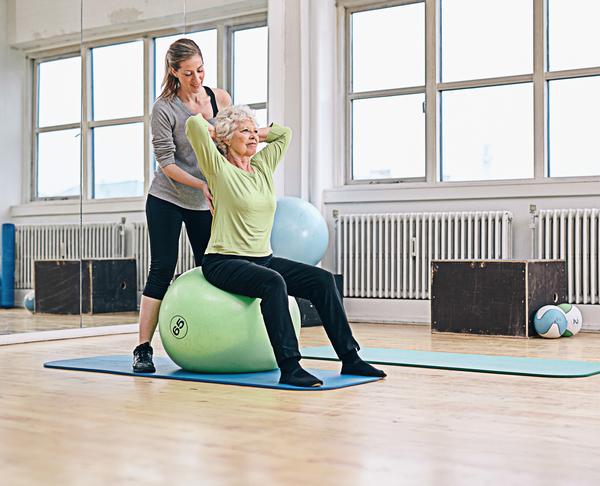
Fitness staff should be trained to recognise the symptoms of mental health problems / shutterstock

Steve Phillips,

Director of PT & community engagement,,

HPT5

Steve Phillips
Steve Phillips

The fitness industry is currently letting personal trainers and fitness instructors down, because we aren’t empowering them to talk about mental health. It’s an ignored subject that doesn’t feature in standard industry training.

Swedish research has proved that exercise is more effective than medication in alleviating the symptoms of mental health, but we don’t let people know that we can help them!

We shouldn’t be calling people with mental health issues a ‘special population’ – this is a quarter of the population, and many others are suffering from post-natal depression, anxiety or stress and don’t even realise they have a condition.

If someone is feeling low, they don’t necessarily want to be pushed hard physically (although some do). For many people, the idea of exercise is scary and can create added anxiety, so the key focus is to just get them out of the house. Sometimes they just need to walk and talk.

Going forward, the industry needs to provide a mix of exercise, meditation and cognitive behavioural therapy, and there must be training qualifications linked to all this that are recognised by REPS and CIMPSA. In the meantime, it’s easier than you think to connect with, and help, people with mental health issues. For example, many new mums feel overwhelmed even if they don’t consider they’re suffering from post-natal depression, so launch a group, invite them to come into the club with their babies and just talk, and then introduce exercise.

"We shouldn’t be calling people with mental health issues a ‘special population’. This is a quarter of the population" – Steve Phillips

Health clubs could offer group support to overwhelmed new mothers / shutterstock

Chris Harbron,

Director of emotional wellbeing,

Nuffield Health

Chris Harbron
Chris Harbron

Following the acquisition of a cognitive behavioural therapy business, Nuffield Health has recently launched an emotional wellbeing service aimed at supporting those suffering from stress, anxiety and depression. Launching initially to businesses for their employees, the service will then roll out in the next few months through our 111 consumer fitness and wellbeing gyms and will be available to all, regardless of a gym membership.

Emotional health is just as important as our physical health, and our focus at Nuffield Health is on the overall wellbeing of the individual. All front-line staff will be trained to recognise the signs and symptoms of mental health problems, begin a conversation about it, and signpost the individual to additional support. As such, we’re looking to create a culture where open dialogue about emotional wellbeing and physical wellbeing is encouraged, supported and expected.

Thinking and acting towards people as if they’re abnormal is one of the key issues that creates stigma around mental health. Understanding and empathy can make all the difference: making it normal to talk about ups and downs can make people feel comfortable to ask for help if they experience a problem. Suicide is a leading cause of death in both men and women, but rates are around three times higher in men. Supporting them to talk about their emotions, as well as spotting signs of more significant distress, is important.

"We’re looking to create a culture where open dialogue about emotional and physical wellbeing is encouraged, supported and expected" – Chris Harbron

Debbie Lawrence,

Qualification lead,

VTCT

Debbie Lawrence
Debbie Lawrence

There’s still so much stigma around mental health, and although the Time to Change campaign has done a lot to raise awareness, it’s still a very misunderstood area.

The first steps are the normalisation and acceptance of mental health as something that affects everyone. Being able to speak openly, in an empathetic environment and without being judged, is the key to acceptance. However, this requires strong soft skills and trust, so some extra staff training in mental health awareness may be needed – it’s crucial the instructor is empathetic and caring.

Mental health issues often lower energy and mood, so beasting sessions at the gym are generally not appropriate. A more holistic approach is needed, balancing emotional, mental, physical, medical and social wellbeing.

People with more severe and enduring conditions will be harder to reach, and operators may need to be prepared to reach out into the community, with walking groups or sessions in village halls.

There are some great examples of community-based programmes, including the Welsh national exercise referral scheme and the Bristol Active Living project, which provided a whole range of services, supporting people with mental health issues to participate in a range of activities.

"Extra staff training in mental health awareness may be needed. It’s crucial the instructor is empathetic and caring" – Debbie Lawrence
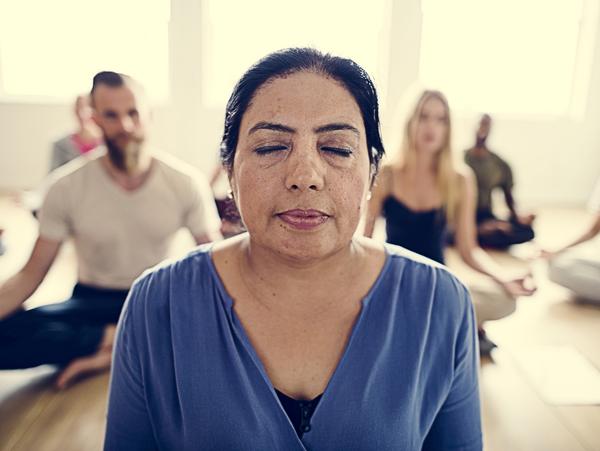

Mental health issues can lead 
to lower energy levels, so a 
gentler exercise approach 
may be needed / shutterstock
Mental health issues can lead to lower energy levels, so a gentler exercise approach may be needed / shutterstock
Sign up here to get HCM's weekly ezine and every issue of HCM magazine free on digital.
A focus on human behaviour is just as important as a focus on technology / PHOTO: shutterstock.com
The winners will be those that stay closest to their customers and meet their needs / PHOTO: shutterstock.com
https://www.leisureopportunities.co.uk/images/HCM2017_2talking.jpg
What more can the fitness sector do to help those suffering with mental health issues?
Paul Farmer, Chief executive, MIND Marcus Hunt, Health and wellbeing manager Europe, Unilever Steve Phillips, Director of PT & community engagement, HPT5 Chris Harbron, Director of emotional wellbeing, Nuffield Health Debbie Lawrence, Qualification lead, VTCT Kath Hudson, Journalist, Leisure Media,mental health, Kath Hudson, Paul Farmer, MIND, Five Steps to Wellbeing, Sport and Recreation Alliance, Marcus Hunt, Unilever, Active U, Steve Phillips, HPT5, REPS, CIMSPA, Chris Harbron, Nuffield Health, Debbie Lawrence, VTCT, Time to Change, Bristol Active Living,
HCM magazine
The fitness industry is mourning the passing of Les Mills, a founding father of fitness, as Kath Hudson reports
HCM magazine
World Athletics president, Sebastian Coe talks to Liz Terry about the launch of Run X in partnership with Technogym
HCM magazine
Fuel the debate about issues and opportunities across the industry. We’d love to hear from you. Write to [email protected]
HCM magazine
We’ve reduced the level of council investment over the last three years by 40 per cent and increased our turnover by 9 per cent
HCM magazine
New legislation is exposing weakness and potential liabilities in the management of customer data in health clubs, says Andy Chesterman
HCM promotional features
Sponsored
Social fitness the missing link to member engagement, according to a new Myzone report
HCM promotional features
Sponsored
David Lloyd is stepping up its commitment to women’s health as it continues to explore what fit-for-purpose looks like for the female population
HCM promotional features
Sponsored
SnowDome Fitness has added 50 per cent more space with cutting-edge Technogym solutions
HCM promotional features
Sponsored
Greg Bradley looks at the shift towards strength training in gyms and advises on how operators can create the ultimate training environment
HCM promotional features
Sponsored
Third Space partnered with IndigoFitness to deliver a bespoke training space for its new club at The Whiteley
HCM promotional features
Sponsored
Starpool supports Olympic champion Marcell Jacobs, says Riccardo Turri
HCM promotional features
Sponsored
Find out how your gym can tap into the corporate wellness boom
HCM promotional features
Sponsored
EGYM has opened a new HQ in Paternoster Square, London and revealed a range of new launches
HCM promotional features
Latest News
Les Mills has launched a reformer Pilates workout. The 45-minute workout blends traditional reformer movements ...
Latest News
The inaugural HCM Invest event has opened applications for pitching slots ahead of its launch ...
Latest News
Girls in the UK are missing out on 280 million hours of sport every year ...
Latest News
According to research which tracked more than 147,000 people for 30 years, 90-120 minutes of ...
Latest News
Everlast Gyms expands its footprint outside of the UK this month with the imminent launch ...
Latest News
The UK's four Chief Medical Officers have published a refreshed edition of  Physical activity guidelines: ...
Latest News
Places Leisure has exchanged contracts to build and operate a flagship £60m water and wellness ...
Latest News
The Republic of Ireland will become the latest market in PureGym’s expanding international portfolio, with ...
Opinion
promotion
Strength training has moved from the margins to the mainstream.
Opinion: Building smarter strength spaces for today’s operators
Featured supplier news
Featured supplier news: Legends never die: four legends, four philosophies of life
Panatta brought together four of the most influential figures in bodybuilding history on the stage of RiminiWellness 2026: Phil Heath, Lee Haney, Ronnie Coleman and Hany Rambod.
Featured supplier news
Featured supplier news: Introducing a new era of Nautilus Leverage
Strength training has never been more important for member retention, facility differentiation and long-term commercial success.
Company profiles
Company profile: Absolute Performance
Absolute Performance is one of the UK’s leading gym design and installation companies. We install ...
Company profiles
Company profile: Fitbench
Fitbench creates modular training solutions designed to support efficient, high-quality workouts in a wide range ...
Supplier Showcases
Supplier Showcase - Future-proofing
Catalogue Gallery
Click on a catalogue to view it online
Featured press releases
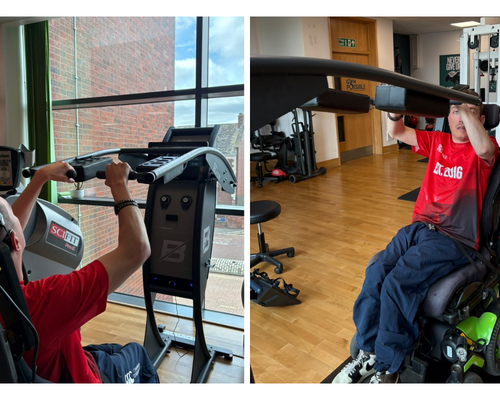
Speedflex (UK press release: Inclusive Fitness in action: The Speedflex Blade at Gym Possible
Following the successful installation of the Speedflex Blade at Gym Possible, the UK based charity gym dedicated to making exercise accessible for people with physical disabilities, the innovative training solution has quickly become one of the facility’s
Featured press releases
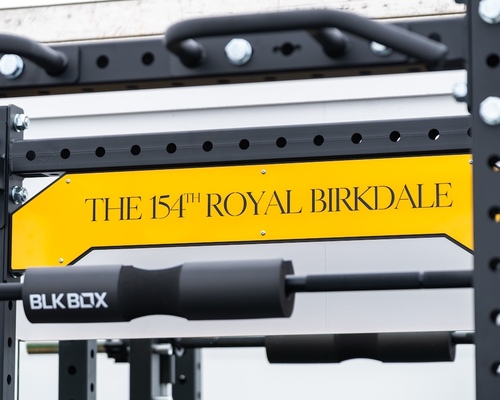
BLK BOX press release: Inside the Player Gym at The Open, equipped by BLK BOX
The performance facility at Royal Birkdale gives the world’s leading golfers access to strength, conditioning, mobility and recovery equipment throughout Championship week.
Directory
Lockers
Crown Sports Lockers: Lockers
Fitness tracking platform
SpiviTech: Fitness tracking platform
Industrial washing machines
Miele Company Limited: Industrial washing machines
Spa and beauty equipment
Living Earth Crafts: Spa and beauty equipment
Hot tubs
MSpa International Ltd: Hot tubs
Water experiences and hydrotherapy solutions
Aquaform s.r.l.: Water experiences and hydrotherapy solutions
Property & Tenders
Stratford, East London.
Lee Valley Regional Park Authority
Property & Tenders
Y Felinheli, LL56 4QN
Newmark
Property & Tenders
Diary dates
21-24 Sep 2026
The Langham Huntington Pasadena , Pasadena, United States
Diary dates
06-08 Oct 2026
Messe Stuttgart, Stuttgart, Germany
Diary dates
22-22 Oct 2026
QEII Conference Centre, London,
Diary dates
26-29 Oct 2027
Koelnmesse Exhibition Centre, Cologne, Germany
Diary dates

features

Talking point: Emotional wellbeing

Mental health issues affect 25 per cent of the population, and research shows exercise can be more effective than medication – as well as helping prevent issues occurring in the first place. So how can the health and fitness industry reach out to those who are suffering? Kath Hudson reports

By Kath Hudson | Published in Health Club Management 2017 issue 2

Although I’ve suffered from depression in the past, the only time I’ve needed to take medication was when I stopped exercising. When I did get back to exercise, while the physical benefits took around a year to become obvious, the mental health benefits were practically immediate.

So why doesn’t the health and fitness industry use this as a marketing tool? Why the unwavering focus on weight and physical appearance, which so frequently ends in disappointment – why not instead celebrate the fact that exercise will boost resilience, sleeping patterns, coping mechanisms, self-esteem and sense of wellbeing?

A shift in focus could lead to clubs connecting with, and helping, many more people – those who don’t understand what a profound and positive impact exercise can have on mental health.

Because this is a huge issue nationally: figures from the Centre for Mental Health show that work-related stress, anxiety and depression contribute to 35 per cent of all work-related ill health cases, making the financial cost to British businesses an estimated £26bn a year. This is a great opportunity for the fitness sector to reach out to the business community with innovative solutions.

So what could, and should, health and fitness operators be doing to proactively help people with mental health issues? We ask our panel of experts.

Paul Farmer,

Chief executive,

MIND

Paul Farmer
Paul Farmer

In my opinion, exercise is the number one preventative measure for mental health and there’s a strong evidence base to show its efficacy, so it’s very important for operators to really engage with this market.

There are three areas in which health and fitness providers could help. Firstly, encouraging clients to think about looking after their mental health in the same way they do their physical health. The Five Steps to Wellbeing programme is a great way of doing this: connect with other people, be active, keep learning new skills, give to others and be mindful.

Secondly, make sure your organisation is mental health aware. Signing up to the Sport and Recreation Alliance’s mental health charter is a strong platform to help create an action plan, and we’re delighted that more than 350 organisations have signed up so far.

Thirdly, connecting with MIND’s Get Set to Go programme is an easy way of engaging with this market. This campaign works to signpost people towards exercise opportunities and helps to remove the barriers.

People with mental health issues are often low in self-esteem and confidence, and have preconceptions that gyms are intimidating places, so it’s of paramount importance to be open and welcoming. It might also be appropriate to run a few sessions aimed purely at those with mental health issues. One free taster session might be the turning point they need.

"Run a few sessions aimed purely at those with mental health issues. One free taster session might be the turning point they need" – Paul Farmer

Marcus Hunt,

Health and wellbeing manager Europe,

Unilever

Marcus Hunt
Marcus Hunt

The benefits of being active on our mental health and happiness are still relatively unreported, and not widely regarded as a reason to be more active. The fitness industry can help to spread this message by talking to companies and providing innovative ideas on engaging more people in physical activity.

At Unilever, we believe an employee’s wellbeing is paramount – this is fundamental to our global Unilever Sustainability Living Plan. We know that being physically active is as important for our employees’ mental wellbeing as their physical wellbeing, and we must continue to share this important message. Having key educational themes and myth-busting discussions around physical activity can enable behaviour change, and the workplace is a perfect opportunity for this.

Within our UK business, we have a number of gyms in our offices, factories and R&D sites, but we’ve also diversified this offering to include Gentle Gym classes, mindfulness sessions and we recently launched our Active U programme. The purpose of this programme is to encourage our employees to be active daily, through ideas such as non-sitting meetings, warming up for work and learning more about their functional capacity and how to be fitter for the future.

 Active U has four key themes: active workplace, transport, health and happiness. Our ‘activity gurus’ are always on-hand to discuss how to be more active at home, around the workplace and during a commute. We also place great emphasis on how important being active is for happiness, and we champion this as part of our award-winning mental health programme.

"Having key educational themes and myth-busting discussions around physical activity can enable behaviour change" – Marcus Hunt

Fitness staff should be trained to recognise the symptoms of mental health problems / shutterstock

Steve Phillips,

Director of PT & community engagement,,

HPT5

Steve Phillips
Steve Phillips

The fitness industry is currently letting personal trainers and fitness instructors down, because we aren’t empowering them to talk about mental health. It’s an ignored subject that doesn’t feature in standard industry training.

Swedish research has proved that exercise is more effective than medication in alleviating the symptoms of mental health, but we don’t let people know that we can help them!

We shouldn’t be calling people with mental health issues a ‘special population’ – this is a quarter of the population, and many others are suffering from post-natal depression, anxiety or stress and don’t even realise they have a condition.

If someone is feeling low, they don’t necessarily want to be pushed hard physically (although some do). For many people, the idea of exercise is scary and can create added anxiety, so the key focus is to just get them out of the house. Sometimes they just need to walk and talk.

Going forward, the industry needs to provide a mix of exercise, meditation and cognitive behavioural therapy, and there must be training qualifications linked to all this that are recognised by REPS and CIMPSA. In the meantime, it’s easier than you think to connect with, and help, people with mental health issues. For example, many new mums feel overwhelmed even if they don’t consider they’re suffering from post-natal depression, so launch a group, invite them to come into the club with their babies and just talk, and then introduce exercise.

"We shouldn’t be calling people with mental health issues a ‘special population’. This is a quarter of the population" – Steve Phillips

Health clubs could offer group support to overwhelmed new mothers / shutterstock

Chris Harbron,

Director of emotional wellbeing,

Nuffield Health

Chris Harbron
Chris Harbron

Following the acquisition of a cognitive behavioural therapy business, Nuffield Health has recently launched an emotional wellbeing service aimed at supporting those suffering from stress, anxiety and depression. Launching initially to businesses for their employees, the service will then roll out in the next few months through our 111 consumer fitness and wellbeing gyms and will be available to all, regardless of a gym membership.

Emotional health is just as important as our physical health, and our focus at Nuffield Health is on the overall wellbeing of the individual. All front-line staff will be trained to recognise the signs and symptoms of mental health problems, begin a conversation about it, and signpost the individual to additional support. As such, we’re looking to create a culture where open dialogue about emotional wellbeing and physical wellbeing is encouraged, supported and expected.

Thinking and acting towards people as if they’re abnormal is one of the key issues that creates stigma around mental health. Understanding and empathy can make all the difference: making it normal to talk about ups and downs can make people feel comfortable to ask for help if they experience a problem. Suicide is a leading cause of death in both men and women, but rates are around three times higher in men. Supporting them to talk about their emotions, as well as spotting signs of more significant distress, is important.

"We’re looking to create a culture where open dialogue about emotional and physical wellbeing is encouraged, supported and expected" – Chris Harbron

Debbie Lawrence,

Qualification lead,

VTCT

Debbie Lawrence
Debbie Lawrence

There’s still so much stigma around mental health, and although the Time to Change campaign has done a lot to raise awareness, it’s still a very misunderstood area.

The first steps are the normalisation and acceptance of mental health as something that affects everyone. Being able to speak openly, in an empathetic environment and without being judged, is the key to acceptance. However, this requires strong soft skills and trust, so some extra staff training in mental health awareness may be needed – it’s crucial the instructor is empathetic and caring.

Mental health issues often lower energy and mood, so beasting sessions at the gym are generally not appropriate. A more holistic approach is needed, balancing emotional, mental, physical, medical and social wellbeing.

People with more severe and enduring conditions will be harder to reach, and operators may need to be prepared to reach out into the community, with walking groups or sessions in village halls.

There are some great examples of community-based programmes, including the Welsh national exercise referral scheme and the Bristol Active Living project, which provided a whole range of services, supporting people with mental health issues to participate in a range of activities.

"Extra staff training in mental health awareness may be needed. It’s crucial the instructor is empathetic and caring" – Debbie Lawrence
Mental health issues can lead 
to lower energy levels, so a 
gentler exercise approach 
may be needed / shutterstock
Mental health issues can lead to lower energy levels, so a gentler exercise approach may be needed / shutterstock
Sign up here to get HCM's weekly ezine and every issue of HCM magazine free on digital.
A focus on human behaviour is just as important as a focus on technology / PHOTO: shutterstock.com
The winners will be those that stay closest to their customers and meet their needs / PHOTO: shutterstock.com
https://www.leisureopportunities.co.uk/images/HCM2017_2talking.jpg
What more can the fitness sector do to help those suffering with mental health issues?
Paul Farmer, Chief executive, MIND Marcus Hunt, Health and wellbeing manager Europe, Unilever Steve Phillips, Director of PT & community engagement, HPT5 Chris Harbron, Director of emotional wellbeing, Nuffield Health Debbie Lawrence, Qualification lead, VTCT Kath Hudson, Journalist, Leisure Media,mental health, Kath Hudson, Paul Farmer, MIND, Five Steps to Wellbeing, Sport and Recreation Alliance, Marcus Hunt, Unilever, Active U, Steve Phillips, HPT5, REPS, CIMSPA, Chris Harbron, Nuffield Health, Debbie Lawrence, VTCT, Time to Change, Bristol Active Living,
Latest News
Les Mills has launched a reformer Pilates workout. The 45-minute workout blends traditional reformer movements ...
Latest News
The inaugural HCM Invest event has opened applications for pitching slots ahead of its launch ...
Latest News
Girls in the UK are missing out on 280 million hours of sport every year ...
Latest News
According to research which tracked more than 147,000 people for 30 years, 90-120 minutes of ...
Latest News
Everlast Gyms expands its footprint outside of the UK this month with the imminent launch ...
Latest News
The UK's four Chief Medical Officers have published a refreshed edition of  Physical activity guidelines: ...
Latest News
Places Leisure has exchanged contracts to build and operate a flagship £60m water and wellness ...
Latest News
The Republic of Ireland will become the latest market in PureGym’s expanding international portfolio, with ...
Latest News
Sophie Lawler, CEO of Total Fitness, has launched a leadership coaching business aimed at helping ...
Latest News
Anytime Fitness reaches a milestone this week with the launch of its 6000th site. The ...
Latest News
The £33.9 million Leighton Leisure and Community Centre has opened in Leighton Buzzard, UK, creating ...
Opinion
promotion
Strength training has moved from the margins to the mainstream.
Opinion: Building smarter strength spaces for today’s operators
Featured supplier news
Featured supplier news: Legends never die: four legends, four philosophies of life
Panatta brought together four of the most influential figures in bodybuilding history on the stage of RiminiWellness 2026: Phil Heath, Lee Haney, Ronnie Coleman and Hany Rambod.
Featured supplier news
Featured supplier news: Introducing a new era of Nautilus Leverage
Strength training has never been more important for member retention, facility differentiation and long-term commercial success.
Company profiles
Company profile: Absolute Performance
Absolute Performance is one of the UK’s leading gym design and installation companies. We install ...
Company profiles
Company profile: Fitbench
Fitbench creates modular training solutions designed to support efficient, high-quality workouts in a wide range ...
Supplier Showcases
Supplier Showcase - Future-proofing
Catalogue Gallery
Click on a catalogue to view it online
Featured press releases
Speedflex (UK press release: Inclusive Fitness in action: The Speedflex Blade at Gym Possible
Following the successful installation of the Speedflex Blade at Gym Possible, the UK based charity gym dedicated to making exercise accessible for people with physical disabilities, the innovative training solution has quickly become one of the facility’s
Featured press releases
BLK BOX press release: Inside the Player Gym at The Open, equipped by BLK BOX
The performance facility at Royal Birkdale gives the world’s leading golfers access to strength, conditioning, mobility and recovery equipment throughout Championship week.
Directory
Lockers
Crown Sports Lockers: Lockers
Fitness tracking platform
SpiviTech: Fitness tracking platform
Industrial washing machines
Miele Company Limited: Industrial washing machines
Spa and beauty equipment
Living Earth Crafts: Spa and beauty equipment
Hot tubs
MSpa International Ltd: Hot tubs
Water experiences and hydrotherapy solutions
Aquaform s.r.l.: Water experiences and hydrotherapy solutions
Property & Tenders
Stratford, East London.
Lee Valley Regional Park Authority
Property & Tenders
Y Felinheli, LL56 4QN
Newmark
Property & Tenders
Diary dates
21-24 Sep 2026
The Langham Huntington Pasadena , Pasadena, United States
Diary dates
06-08 Oct 2026
Messe Stuttgart, Stuttgart, Germany
Diary dates
22-22 Oct 2026
QEII Conference Centre, London,

Diary dates
26-29 Oct 2027
Koelnmesse Exhibition Centre, Cologne, Germany

Diary dates
Search news, features & products:
Find a supplier:
Partner sites