













Elevate Arena
Elevate Arena
Elevate Arena
Follow Health Club Management on Twitter Like Health Club Management on Facebook Join the discussion with Health Club Management on LinkedIn
FITNESS, HEALTH, WELLNESS

features

Standards: Elevating the industry

EuropeActive and the European Committee for Standardisation are launching new standards for a wide range of health club operations, as Cliff Collins explains
Published in Health Club Management 2021 issue 11
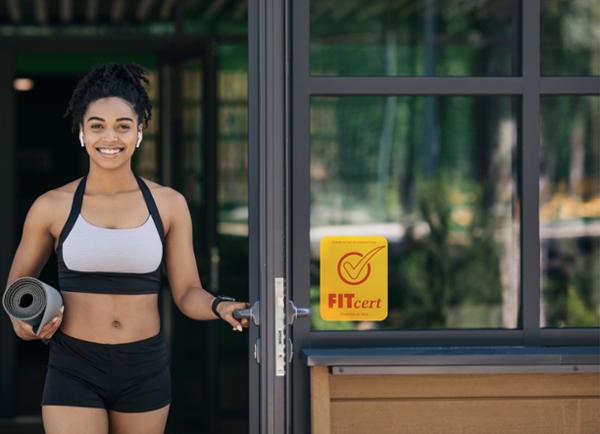
The FitCert.eu scheme will prove operators’ commitment to raising standards / photo: Prostock/shutterstock
FitCert.eu is a game-changer for the European fitness sector

Standards define many parts of our lives, such as what we eat, the electrical appliances we use, the cars we drive, how we trade with other countries and the toys our children play with.

We have standards mainly because they reduce risk and in the case of the fitness sector they’re all about risk reduction for our customers, for our employees, and for the operators themselves. Most importantly, they describe and define what is currently considered to be a good practice model.

Standards are voluntary, and there’s no legal obligation to apply them, but they’re used by the legal profession and by insurers and as a result, they have a habit over time of ending up being written into national and European legislation and directives.

Country-specific standards exist – such as BSI in the UK – while at the European level, standards have a prefix of EN and internationally it’s ISO.

The design, manufacture, and installation of stationary fitness equipment in our health clubs, for example, has been covered by standards for quite some time and today these are produced under the ISO20957 Standard.

It’s not surprising, therefore, that now we have new European standards for the operation and management of health clubs, and these are known as EN17229. Even though they’re only just launching, these standards already automatically apply to just about every fitness club in Europe and the UK – all 60,000 of them.

Industry-based standards
The new EN17229 standards are industry-based and have been written by more than 25 people – including health club operators and fitness experts – all working under the direction of the European Committee for Standardisation, otherwise known as CEN (Comité Européen de Normalisation).

Finally reaching consensus and achieving ‘sign-off’ by 35 national standards bodies has taken the CEN/TC 136 Working Group Two, which has been responsible for this undertaking, over six years and there are more standards coming down the track from this hard-working group.

It’s fair to say that standards make for rather boring reading, and so it’s important to understand what they mean in practice and this is why the new European Fitness Centre Certification Scheme has been launched. It’s a game-changer for the sector because it moves the whole concept of self-certification (or Code of Practice) to a new, much higher level of independent conformity assessment and certification.

Two main components have come together to create the scheme, which is being called FitCert.eu. First is the support and buy-in from operators – this was mainly secured through EuropeActive’s Presidents’ Council of Operators – and second it needed a sponsor that could give it the quality assurance and recognition of status it needed to make it credible. In this case, the sponsor is the Netherlands National Standards Organisation (NEN).

NEN has been active in the world of standardisation for more than a hundred years, and already has experience of running other similar certification schemes in other sectors.

The third component needed comes from the ‘conformity assessment’ of clubs by international certification bodies, such as Veritas, SGS and TÜV.

All this work is done under the requirements of yet another standard – ISO 17020 – because, of course, there are even standards for how you use standards!

Launching FitCert.eu
The FitCert.eu scheme was launched at the European Health and Fitness Forum in Cologne on 3rd November and the industry reaction has been extraordinarily positive. Timing is critical and the COVID-19 experience has shown clearly that fitness needs to better define itself in the eyes of politicians and public health officials, so we can differentiate the sector from other ‘leisure’ activities.

We want the FitCert.eu scheme to help level the market, enhance the performance of the sector, to help build confidence with our users and with health professionals. We’re part of the solution and we can show through the FitCert.eu scheme that we’re professional and committed to quality.

We’ve broken the FitCert.eu scheme into five main stages:

1. Aspiring clubs make a commitment to joining the scheme

2. They go through a self-assessment process

3. Clubs achieve the EN17229 standard, and show conformity but at less than 100 per cent compliance

4. Full club certification is achieved to EN17229 through 100 per cent compliance

5. Revalidation takes place every three years

We want to make sure that clubs are supported at every step of the way and fully informed of what’s expected of them. There are no tricks, and no intention to disadvantage any club that wants to work towards getting this new Charter Mark which – over time – should become the industry’s trusted marque of quality assurance.

Each step will be clearly explained and clubs can take their time to prepare for each stage. The process will be transparent and what’s called ‘conformity assessment’ will be undertaken consistently across Europe, in national languages, using the same criteria and methods, irrespective of the size of the club or its location.

Validating the standard
NEN and the certification bodies have well-deserved reputations to protect and maintain, so they’ve asked the fitness sector to get organised and for clubs that want to be certified to show they have the right intention and understanding of what’s involved and also that they’re committed to actually using the standards in the scheme once they have the accreditation.

This means stages 1 and 2 are being directed by EuropeActive as the preliminary checker of information and commitment, before the clubs can qualify to enter the NEN certification scheme. These first stages gather the basic information about the club, its name, location, size, website, contact details and so forth.

Stage 2 – which is also called ‘lite entry’ – is based around 10 questions covering the core operational aspects of running the club. This stage also briefs clubs on the information they will be expected to provide as proof of compliance. The information for Stage 2 can be provided by web links, uploading documents, social media examples, photos and/or videos. The answers are checked by industry experts who want to be sure that the club is answering correctly and they may ask for further evidence to substantiate answers. This stage is all done online.

Health and fitness clubs that complete Stage 2 will be given a certificate to show that they’re now a ‘Recognised Club’. This validation will come from EuropeActive, together with the relevant national association (if they’re a member). Clubs will also get window stickers to show members and users that they’re in the scheme.

All this activity will be tracked through a public register of the participating clubs, so anyone can check and verify what’s going on. We positively encourage the clubs to inform their customers that they’re going through the FitCert.eu scheme.

Stage 3 is about conformity assessment to achieve the status of being a Compliant Club. There are 10 further questions to answer at this stage and assessments are done by an independent certification body, working with industry experts.

More detail required
This stage involves answering a further set of detailed questions that dig deeper into the operations and management of the facility. Assessors validate the information provided through online interviews and checks.

It’s our expectation that as the scheme gets underway, the majority of clubs will initially stay at Stage 3, but we’re a competitive sector and some will undoubtedly want to go to Stage 4, which we call the Gold Standard.

This stage is demanding, as clubs need to conform 100 per cent to all standards and the full certification process requires an on-site inspection conducted by the independent certification bodies. However – bearing in mind that the standards have been written by people in the industry – Stage 4 requirements are still entirely achievable.

Feedback from the scheme will help provide the evidence and information to make sure the FitCert.eu standards are really representative of best practice – this is why we have Stage 5 as part of the structure.

All standards are subject to review, addition, updating or change as markets develop and Stage 5 will ensure that – whether clubs are being re-validated for either Stage 3 or Stage 4 – they’re compliant with the standards prevailing at the time.

In terms of pricing, there will two tiers of charges, with reduced price to make it fair and achievable for multi-site operators.

Individual rates will be €200 for a single site where the operator is a member of a national association and €300 where they are not.

Multi-site businesses will be assessed by sampling and there’s an international standard for determining this which is based on a formula of either 10 per cent of the estate of the square root of the number of sites, whichever is the greater.

Using this calculation, a chain with nine sites would pay to have three sites assessed, while a chain with 1,000 sites would pay for 100. Sites in the sample are still paid for at the €200 or €300 rates.

Upcoming additional standards
The Working Group at CEN has also already developed a further set of standards that cover supervision in clubs – both operationally and for fitness instruction – and these will be live from the middle of 2022.

We also know that new standards will be developed for the club ‘hybrid’ model and for supervising users exercising in the outdoors. Another area of work coming down the track concerns environmental sustainability where, for example, clubs will be expected to know and understand their current carbon footprint and to plan for reduction and better sustainability.

Clubs that are in the FitCert.eu scheme will be kept informed on the progress of new standards and changes, so they have a market lead.

Take part in the pilot
To get underway the FitCert.eu scheme has entered a test and trial phase for Stage 1 and Stage 2. This is to help us check our systems and software, and to get the scheme ready for a full launch in April 2022.

We’re inviting 500 clubs to come into the test phase and to give us an evaluation of the process and they will be able to advance to Stage 3 and Stage 4 next year.

The response has been incredible, with clubs from Basic Fit, GoFit, Pure Gym, EVO, Fit for Free, Sport City and others, as well as from many hundreds of independent clubs and leisure centres already signed-up, so we’re nearly at the target of 500. These clubs will have the maximum marketing opportunity as they will lead the sector forward into the scheme as it’s rolled-out.

One thing that’s already clear is that the FitCert.eu scheme is going to be successful, and will become the industry’s recognised standard.

The expectation is that all clubs will – sooner or later – have to go through at least to Stage 3. It will be the quality standard that will give value to the clubs and much more meaning than a Google or TrustPilot review could achieve. In short, FitCert.eu is a game-changer for the European fitness sector.


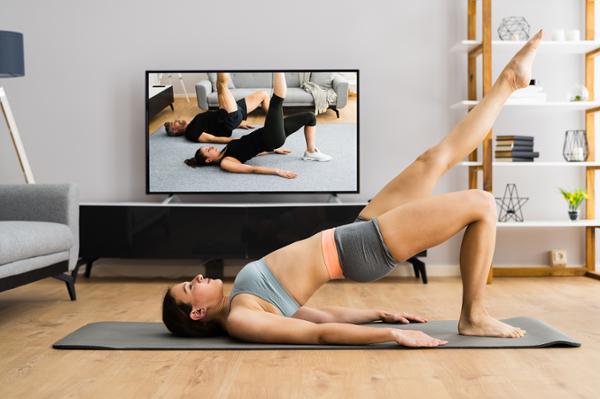
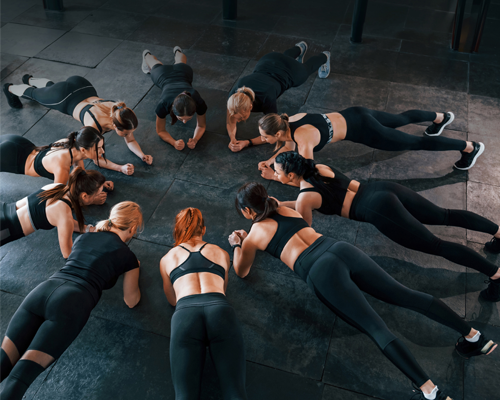
More standards are in the works for fitness instruction, launching in 2022 / photo: Lucky Business/shutterstock
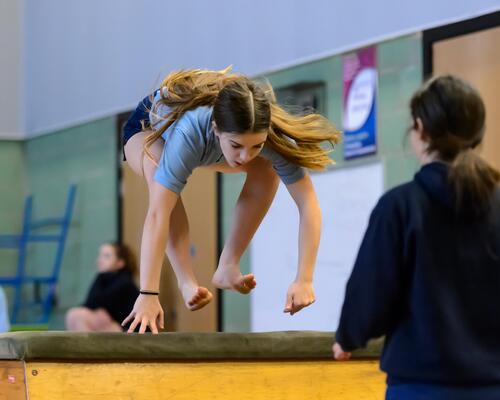
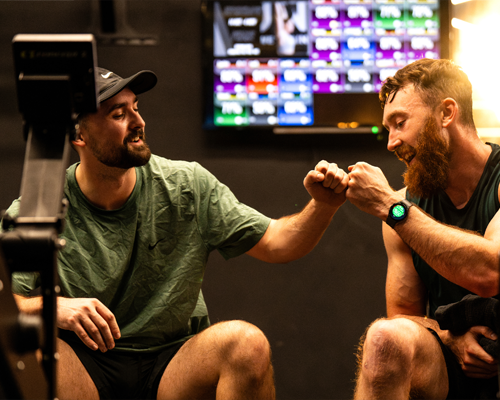
Outdoor exercise supervision will get its own standards / photo: Jacob Lund
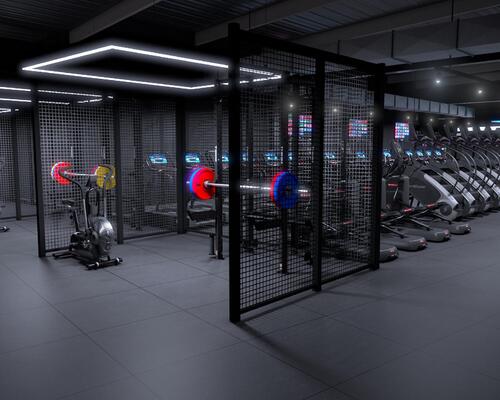
A sustainability standard is in the works, with companies such as Gold’s Gym already taking the initiative / photo: Gold’s Gym/RSG
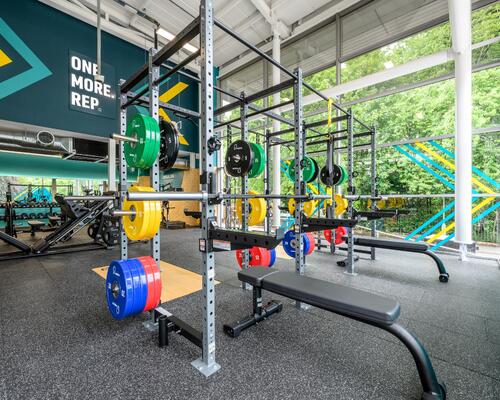
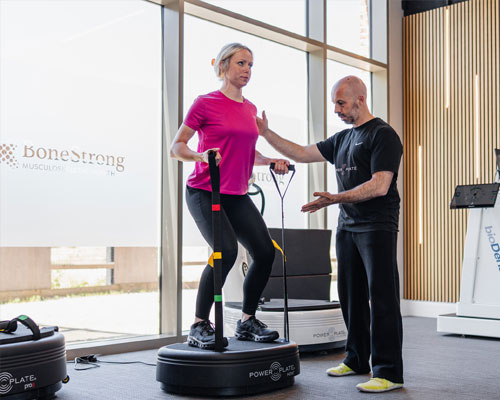
The working group is also developing standards for hybrid operations / photo: Andrey Popov
https://www.leisureopportunities.co.uk/images/2021/555072_676408.jpg
EuropeActive and the European Committee for Standardisation launch new benchmarks for health club operations
HCM magazine
HCM People

Jamie Clements

The Breath Coach
I experienced a blissful feeling of joy I hadn’t felt since I was a kid
HCM magazine
Raphael Cuomo explores the powerful link between addiction, health and behaviour change
HCM magazine
Strength training is evolving, driven by changing consumer preferences. Julie Cramer talks to innovators about how their products are meeting this demand
HCM magazine
As the entrepreneur who started Wexer, Fresh Fitness, Fitness DK and Repeat, as well as being a former elite athlete, Rasmus Ingerslev’s life looked perfect from the outside, but onthe inside it was a different story. He talks to Kath Hudson about healing old wounds
HCM magazine
Small improvements to sleep, diet and physical activity have major benefits for the heart, according to new research from the University of Sydney
HCM promotional features
Sponsored
Greg Bradley looks at the shift towards strength training in gyms and advises on how operators can create the ultimate training environment
HCM promotional features
Sponsored
Starpool supports Olympic champion Marcell Jacobs, says Riccardo Turri
HCM promotional features
Sponsored
Third Space partnered with IndigoFitness to deliver a bespoke training space for its new club at The Whiteley
HCM promotional features
Sponsored
David Lloyd is stepping up its commitment to women’s health as it continues to explore what fit-for-purpose looks like for the female population
HCM promotional features
Sponsored
SnowDome Fitness has added 50 per cent more space with cutting-edge Technogym solutions
HCM promotional features
Sponsored
Find out how your gym can tap into the corporate wellness boom
HCM promotional features
Sponsored
EGYM has opened a new HQ in Paternoster Square, London and revealed a range of new launches
HCM promotional features
Sponsored
Pulse Fitness has created a new health club delivering an elevated wellness experience
HCM promotional features
Sponsored
New launch, Salus House, elevates boutique wellness with high service levels and a partnership with Technogym
HCM promotional features
Latest News
Australia’s fast-growing fitness network, Viva Leisure, is adding a low-cost gym brand to its already ...
Latest News
Speedflex has launched a strength training programme for 10 to 16-year-olds, to make it safer, ...
Latest News
Tewinbury Farm Hotel in Hertfordshire, UK is expanding its premium leisure proposition with the launch ...
Latest News

Work is underway in Madrid on one of Europe’s most significant multi-functional complexes, ...

Latest News
PureGym is encouraging people to step away from their screens and go for a walk, ...
Latest News
Small improvements to sleep, diet quality, and physical activity, made in combination lead to a ...
Latest News
Therme Manchester’s 28-acre development, which will include interconnected glass pavilions that measure 65,000sq m, will ...
Latest News
The Yard Gym (TYG) is to become Nike Training’s official global training partner in a ...
Opinion
promotion
Strength training has moved from the margins to the mainstream.
Opinion: Building smarter strength spaces for today’s operators
Featured supplier news
Featured supplier news: Supporting long-term health: why whole body vibration belongs in clinical settings
As healthcare continues to shift towards prevention, there’s a growing focus on helping people stay active, independent and feeling good for longer.
Featured supplier news
Featured supplier news: Reaching the people most gyms miss: Bedford Gym & Swim Campaign delivers 410 new members
One of the biggest mistakes the fitness industry still makes is advertising almost exclusively to people who already look and live like gym members.
Company profiles
Company profile: Connect
Connect is a UK-based technology company redefining how the fitness and wellness industry builds digital ...
Company profiles
Company profile: Kodobi Ltd
Running a fast-paced fitness business while ensuring safety and compliance is no easy feat. That’s ...
Supplier Showcases
Supplier Showcase - Future-proofing
Catalogue Gallery
Click on a catalogue to view it online
Featured press releases
ukactive press release: Are they Fit for Office? UK Active and Technogym throw down the gauntlet to MPs
Hundreds of staff, MPs and Peers from across Westminster have signed up for the Fit for Office parliamentary physical activity challenge, which takes place throughout June and is hosted by ukactive and Technogym.
Featured press releases
Innerva press release: Lex Leisure’s power-assisted exercise suite smashes targets in record time
Crook Log Leisure Centre has more than doubled the membership target for its new power- assisted exercise suite in less than six months.
Directory
Industrial washing machines
Miele Company Limited: Industrial washing machines
Spa and beauty equipment
Living Earth Crafts: Spa and beauty equipment
Fitness tracking platform
SpiviTech: Fitness tracking platform
Hot tubs
MSpa International Ltd: Hot tubs
Lockers
Crown Sports Lockers: Lockers
Water experiences and hydrotherapy solutions
Aquaform s.r.l.: Water experiences and hydrotherapy solutions
Property & Tenders
Stratford, East London.
Lee Valley Regional Park Authority
Property & Tenders
Y Felinheli, LL56 4QN
Newmark
Property & Tenders
Diary dates
13-13 Jun 2026
Worldwide, Various,
Diary dates
21-24 Sep 2026
The Langham Huntington Pasadena , Pasadena, United States
Diary dates
06-08 Oct 2026
Messe Stuttgart, Stuttgart, Germany
Diary dates
22-22 Oct 2026
QEII Conference Centre, London,
Diary dates
26-29 Oct 2027
Koelnmesse Exhibition Centre, Cologne, Germany
Diary dates

features

Standards: Elevating the industry

EuropeActive and the European Committee for Standardisation are launching new standards for a wide range of health club operations, as Cliff Collins explains

Published in Health Club Management 2021 issue 11
The FitCert.eu scheme will prove operators’ commitment to raising standards / photo: Prostock/shutterstock
FitCert.eu is a game-changer for the European fitness sector

Standards define many parts of our lives, such as what we eat, the electrical appliances we use, the cars we drive, how we trade with other countries and the toys our children play with.

We have standards mainly because they reduce risk and in the case of the fitness sector they’re all about risk reduction for our customers, for our employees, and for the operators themselves. Most importantly, they describe and define what is currently considered to be a good practice model.

Standards are voluntary, and there’s no legal obligation to apply them, but they’re used by the legal profession and by insurers and as a result, they have a habit over time of ending up being written into national and European legislation and directives.

Country-specific standards exist – such as BSI in the UK – while at the European level, standards have a prefix of EN and internationally it’s ISO.

The design, manufacture, and installation of stationary fitness equipment in our health clubs, for example, has been covered by standards for quite some time and today these are produced under the ISO20957 Standard.

It’s not surprising, therefore, that now we have new European standards for the operation and management of health clubs, and these are known as EN17229. Even though they’re only just launching, these standards already automatically apply to just about every fitness club in Europe and the UK – all 60,000 of them.

Industry-based standards
The new EN17229 standards are industry-based and have been written by more than 25 people – including health club operators and fitness experts – all working under the direction of the European Committee for Standardisation, otherwise known as CEN (Comité Européen de Normalisation).

Finally reaching consensus and achieving ‘sign-off’ by 35 national standards bodies has taken the CEN/TC 136 Working Group Two, which has been responsible for this undertaking, over six years and there are more standards coming down the track from this hard-working group.

It’s fair to say that standards make for rather boring reading, and so it’s important to understand what they mean in practice and this is why the new European Fitness Centre Certification Scheme has been launched. It’s a game-changer for the sector because it moves the whole concept of self-certification (or Code of Practice) to a new, much higher level of independent conformity assessment and certification.

Two main components have come together to create the scheme, which is being called FitCert.eu. First is the support and buy-in from operators – this was mainly secured through EuropeActive’s Presidents’ Council of Operators – and second it needed a sponsor that could give it the quality assurance and recognition of status it needed to make it credible. In this case, the sponsor is the Netherlands National Standards Organisation (NEN).

NEN has been active in the world of standardisation for more than a hundred years, and already has experience of running other similar certification schemes in other sectors.

The third component needed comes from the ‘conformity assessment’ of clubs by international certification bodies, such as Veritas, SGS and TÜV.

All this work is done under the requirements of yet another standard – ISO 17020 – because, of course, there are even standards for how you use standards!

Launching FitCert.eu
The FitCert.eu scheme was launched at the European Health and Fitness Forum in Cologne on 3rd November and the industry reaction has been extraordinarily positive. Timing is critical and the COVID-19 experience has shown clearly that fitness needs to better define itself in the eyes of politicians and public health officials, so we can differentiate the sector from other ‘leisure’ activities.

We want the FitCert.eu scheme to help level the market, enhance the performance of the sector, to help build confidence with our users and with health professionals. We’re part of the solution and we can show through the FitCert.eu scheme that we’re professional and committed to quality.

We’ve broken the FitCert.eu scheme into five main stages:

1. Aspiring clubs make a commitment to joining the scheme

2. They go through a self-assessment process

3. Clubs achieve the EN17229 standard, and show conformity but at less than 100 per cent compliance

4. Full club certification is achieved to EN17229 through 100 per cent compliance

5. Revalidation takes place every three years

We want to make sure that clubs are supported at every step of the way and fully informed of what’s expected of them. There are no tricks, and no intention to disadvantage any club that wants to work towards getting this new Charter Mark which – over time – should become the industry’s trusted marque of quality assurance.

Each step will be clearly explained and clubs can take their time to prepare for each stage. The process will be transparent and what’s called ‘conformity assessment’ will be undertaken consistently across Europe, in national languages, using the same criteria and methods, irrespective of the size of the club or its location.

Validating the standard
NEN and the certification bodies have well-deserved reputations to protect and maintain, so they’ve asked the fitness sector to get organised and for clubs that want to be certified to show they have the right intention and understanding of what’s involved and also that they’re committed to actually using the standards in the scheme once they have the accreditation.

This means stages 1 and 2 are being directed by EuropeActive as the preliminary checker of information and commitment, before the clubs can qualify to enter the NEN certification scheme. These first stages gather the basic information about the club, its name, location, size, website, contact details and so forth.

Stage 2 – which is also called ‘lite entry’ – is based around 10 questions covering the core operational aspects of running the club. This stage also briefs clubs on the information they will be expected to provide as proof of compliance. The information for Stage 2 can be provided by web links, uploading documents, social media examples, photos and/or videos. The answers are checked by industry experts who want to be sure that the club is answering correctly and they may ask for further evidence to substantiate answers. This stage is all done online.

Health and fitness clubs that complete Stage 2 will be given a certificate to show that they’re now a ‘Recognised Club’. This validation will come from EuropeActive, together with the relevant national association (if they’re a member). Clubs will also get window stickers to show members and users that they’re in the scheme.

All this activity will be tracked through a public register of the participating clubs, so anyone can check and verify what’s going on. We positively encourage the clubs to inform their customers that they’re going through the FitCert.eu scheme.

Stage 3 is about conformity assessment to achieve the status of being a Compliant Club. There are 10 further questions to answer at this stage and assessments are done by an independent certification body, working with industry experts.

More detail required
This stage involves answering a further set of detailed questions that dig deeper into the operations and management of the facility. Assessors validate the information provided through online interviews and checks.

It’s our expectation that as the scheme gets underway, the majority of clubs will initially stay at Stage 3, but we’re a competitive sector and some will undoubtedly want to go to Stage 4, which we call the Gold Standard.

This stage is demanding, as clubs need to conform 100 per cent to all standards and the full certification process requires an on-site inspection conducted by the independent certification bodies. However – bearing in mind that the standards have been written by people in the industry – Stage 4 requirements are still entirely achievable.

Feedback from the scheme will help provide the evidence and information to make sure the FitCert.eu standards are really representative of best practice – this is why we have Stage 5 as part of the structure.

All standards are subject to review, addition, updating or change as markets develop and Stage 5 will ensure that – whether clubs are being re-validated for either Stage 3 or Stage 4 – they’re compliant with the standards prevailing at the time.

In terms of pricing, there will two tiers of charges, with reduced price to make it fair and achievable for multi-site operators.

Individual rates will be €200 for a single site where the operator is a member of a national association and €300 where they are not.

Multi-site businesses will be assessed by sampling and there’s an international standard for determining this which is based on a formula of either 10 per cent of the estate of the square root of the number of sites, whichever is the greater.

Using this calculation, a chain with nine sites would pay to have three sites assessed, while a chain with 1,000 sites would pay for 100. Sites in the sample are still paid for at the €200 or €300 rates.

Upcoming additional standards
The Working Group at CEN has also already developed a further set of standards that cover supervision in clubs – both operationally and for fitness instruction – and these will be live from the middle of 2022.

We also know that new standards will be developed for the club ‘hybrid’ model and for supervising users exercising in the outdoors. Another area of work coming down the track concerns environmental sustainability where, for example, clubs will be expected to know and understand their current carbon footprint and to plan for reduction and better sustainability.

Clubs that are in the FitCert.eu scheme will be kept informed on the progress of new standards and changes, so they have a market lead.

Take part in the pilot
To get underway the FitCert.eu scheme has entered a test and trial phase for Stage 1 and Stage 2. This is to help us check our systems and software, and to get the scheme ready for a full launch in April 2022.

We’re inviting 500 clubs to come into the test phase and to give us an evaluation of the process and they will be able to advance to Stage 3 and Stage 4 next year.

The response has been incredible, with clubs from Basic Fit, GoFit, Pure Gym, EVO, Fit for Free, Sport City and others, as well as from many hundreds of independent clubs and leisure centres already signed-up, so we’re nearly at the target of 500. These clubs will have the maximum marketing opportunity as they will lead the sector forward into the scheme as it’s rolled-out.

One thing that’s already clear is that the FitCert.eu scheme is going to be successful, and will become the industry’s recognised standard.

The expectation is that all clubs will – sooner or later – have to go through at least to Stage 3. It will be the quality standard that will give value to the clubs and much more meaning than a Google or TrustPilot review could achieve. In short, FitCert.eu is a game-changer for the European fitness sector.
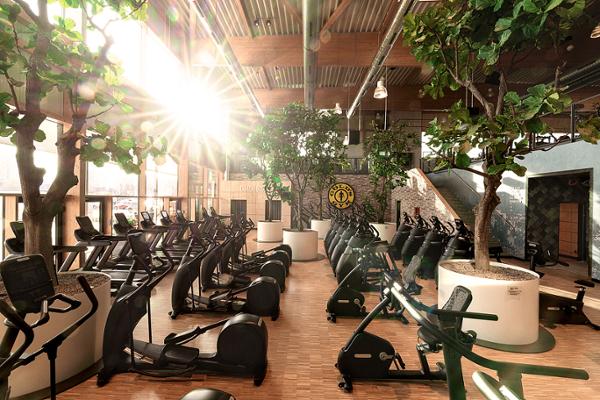
More standards are in the works for fitness instruction, launching in 2022 / photo: Lucky Business/shutterstock
Outdoor exercise supervision will get its own standards / photo: Jacob Lund
A sustainability standard is in the works, with companies such as Gold’s Gym already taking the initiative / photo: Gold’s Gym/RSG
The working group is also developing standards for hybrid operations / photo: Andrey Popov
https://www.leisureopportunities.co.uk/images/2021/555072_676408.jpg
EuropeActive and the European Committee for Standardisation launch new benchmarks for health club operations
Latest News
Australia’s fast-growing fitness network, Viva Leisure, is adding a low-cost gym brand to its already ...
Latest News
Speedflex has launched a strength training programme for 10 to 16-year-olds, to make it safer, ...
Latest News
Tewinbury Farm Hotel in Hertfordshire, UK is expanding its premium leisure proposition with the launch ...
Latest News

Work is underway in Madrid on one of Europe’s most significant multi-functional complexes, ...

Latest News
PureGym is encouraging people to step away from their screens and go for a walk, ...
Latest News
Small improvements to sleep, diet quality, and physical activity, made in combination lead to a ...
Latest News
Therme Manchester’s 28-acre development, which will include interconnected glass pavilions that measure 65,000sq m, will ...
Latest News
The Yard Gym (TYG) is to become Nike Training’s official global training partner in a ...
Latest News
Everlast Gyms' York site has reopened following a refurbishment to bring it up to the ...
Latest News
Luxury hospitality and wellness pioneer Jeremy McCarthy has launched Leisure Alchemy, a digital platform that ...
Latest News
A contrast therapy and breathwork facility called Reset has opened in Islington, London, in the ...
Opinion
promotion
Strength training has moved from the margins to the mainstream.
Opinion: Building smarter strength spaces for today’s operators
Featured supplier news
Featured supplier news: Supporting long-term health: why whole body vibration belongs in clinical settings
As healthcare continues to shift towards prevention, there’s a growing focus on helping people stay active, independent and feeling good for longer.
Featured supplier news
Featured supplier news: Reaching the people most gyms miss: Bedford Gym & Swim Campaign delivers 410 new members
One of the biggest mistakes the fitness industry still makes is advertising almost exclusively to people who already look and live like gym members.
Company profiles
Company profile: Connect
Connect is a UK-based technology company redefining how the fitness and wellness industry builds digital ...
Company profiles
Company profile: Kodobi Ltd
Running a fast-paced fitness business while ensuring safety and compliance is no easy feat. That’s ...
Supplier Showcases
Supplier Showcase - Future-proofing
Catalogue Gallery
Click on a catalogue to view it online
Featured press releases
ukactive press release: Are they Fit for Office? UK Active and Technogym throw down the gauntlet to MPs
Hundreds of staff, MPs and Peers from across Westminster have signed up for the Fit for Office parliamentary physical activity challenge, which takes place throughout June and is hosted by ukactive and Technogym.
Featured press releases
Innerva press release: Lex Leisure’s power-assisted exercise suite smashes targets in record time
Crook Log Leisure Centre has more than doubled the membership target for its new power- assisted exercise suite in less than six months.
Directory
Industrial washing machines
Miele Company Limited: Industrial washing machines
Spa and beauty equipment
Living Earth Crafts: Spa and beauty equipment
Fitness tracking platform
SpiviTech: Fitness tracking platform
Hot tubs
MSpa International Ltd: Hot tubs
Lockers
Crown Sports Lockers: Lockers
Water experiences and hydrotherapy solutions
Aquaform s.r.l.: Water experiences and hydrotherapy solutions
Property & Tenders
Stratford, East London.
Lee Valley Regional Park Authority
Property & Tenders
Y Felinheli, LL56 4QN
Newmark
Property & Tenders
Diary dates
13-13 Jun 2026
Worldwide, Various,
Diary dates
21-24 Sep 2026
The Langham Huntington Pasadena , Pasadena, United States
Diary dates
06-08 Oct 2026
Messe Stuttgart, Stuttgart, Germany
Diary dates
22-22 Oct 2026
QEII Conference Centre, London,
Diary dates
26-29 Oct 2027
Koelnmesse Exhibition Centre, Cologne, Germany
Diary dates
Search news, features & products:
Find a supplier:
Elevate Arena
Elevate Arena
Partner sites