


















GET HCM
magazine
Sign up for the FREE digital edition of HCM magazine and also get the HCM ezine and breaking news email alerts.
Not right now, thanksclose this window I've already subscribed!
Follow Health Club Management on Twitter Like Health Club Management on Facebook Join the discussion with Health Club Management on LinkedIn
FITNESS, HEALTH, WELLNESS

features

Retention series: Tracking retention

Does personal physical activity tracking impact membership retention? Dr Melvyn Hillsdon provides his insights, in the latest of his TRP 10,000 series

By Dr Melvyn Hillsdon , University of Exeter | Published in Health Club Management 2015 issue 5
Younger members are more likely to use a tracking device / photo: www.shutterstock.com/Syda Productions
Only two types of motivation were significantly higher among members who tracked their activity: appearance and enjoyment motivation

Wearable devices and phone-based applications (apps) for self-monitoring of physical activity are becoming increasingly common. However, the level of use and their effectiveness among health club members is still unknown.

Using data collected as part of the TRP 10,000 study, this article will report on what proportion of members track their physical activity using technology and whether the use of such technology is associated with motivation, visit frequency, progress and ultimately membership retention.

Data and analysis
Between July and September 2013, members completed an online questionnaire that asked them if they were using any product, app or system to track their physical activity, either inside or outside their club. Members who ticked the box to say they used an app were asked to list the app they used.

Who tracks, and with what?
Overall, 27 per cent of members reported using some tracking device, with the majority saying they used a phone or web app (15 per cent).

Slightly more males than females reported tracking their physical activity (30 per cent versus 26 per cent) and levels of tracking declined with age (40 per cent of 16- to 24-year-olds compared to 7 per cent of members aged 55 years and older). Long-standing members were also less likely to report using tracking technology compared to newer members.

Members reported an incredibly broad range of systems for tracking, but the most commonly cited was MyFitnessPal, an internet- and app-based programme designed to help people track their food and physical activity to assist with weight loss. All other tracking systems listed were used by fewer than 1 per cent of members.

Higher motivation?
So is there a difference in exercise motivation between members who do and don’t track their physical activity?

Members’ motivation for exercise was classified into four types: fitness motivation, appearance motivation, enjoyment motivation and social motivation (see also HCM July 14, p48). For each motivation type – which were not mutually exclusive – members’ level of motivation was then classed as high or not. Table 1 shows the percentage of members with high levels of motivation, broken down by type of motivation and according to whether they reported tracking their physical activity. So, for example, 62 per cent of members who used a tracker said they were highly motivated by appearance; among those who didn’t use a tracker, only 52 per cent were motivated by appearance.

In general, members who tracked their physical activity reported stronger motivation than members who did not track. But when considered together, only two types of motivation were significantly higher among members who tracked their activity: appearance and enjoyment motivation.

Visit frequency
The average visit frequency per month was 6.7 visits for members who reported using tracking technology and 6.7 for members who did not, so there is no association between tracking of physical activity and club visits.

Tracking technology & progress
Figure 1 shows the percentage of members who report they have made progress in the last three months in nine areas, according to whether they reported tracking their activity or not.

Apart from making friends, all outcomes are in favour of tracking, although differences in reported progress between members who track their activity and those who don’t is quite small. The largest difference is in weight loss, with 9 per cent more members reporting weight loss if they also reported tracking their activity. This isn’t entirely surprising given the most common method of tracking reported is MyFitnessPal – specifically designed to help people with weight loss.

Activity tracking & retention
So does tracking activity impact a member’s likelihood of retaining membership? Figure 2 shows that a lower proportion of members retain their membership over seven months of follow-up if they report tracking their physical activity compared to members who do not: 87 per cent of members who didn’t track their physical activity retained their membership at seven months, compared to 83 per cent of members who did track their activity.

The risk of cancelling during the seven-month follow-up period was 25 per cent higher in the tracking members compared to the non-tracking members.

Members who track their physical activity are younger than members who do not, so it’s possible this age difference accounts for the difference in risk of cancelling rather than the use of tracking technology – being younger and/or a more recent club joiner are characteristics that increase this risk.

However, although the additional risk of cancelling among tracking members reduces to 7 per cent when we take account of differences in age between tracking and non-tracking members, this is still statistically significant.

Further, for every 1,000 members, four extra cancel each month if they track their physical activity compared to those who don’t (see Figure 3).

Proceed with caution
Wearable technology for tracking personal behaviour attracts considerable press coverage and its use is likely to increase. It’s possible that club operators will believe that either providing their own or encouraging the use of tracking technology will have an effect on their membership retention. This is intuitively appealing.

However, the results of this study suggest operators should be cautious. Even though members who choose to use tracking systems to monitor their behaviour report slightly higher levels of exercise motivation and recent progress on appearance and weight loss, this doesn’t translate into changes in club usage or retention. At best there’s no effect; at worst it actually increases the risk of cancellation.

We’ve previously reported that progress on weight and appearance do not increase membership retention, whereas perceived social and enjoyment benefits do. There is a danger, therefore, that a focus on tracking systems may detract from a greater focus on interpersonal relationships within the club – something we have shown are strongly and consistently associated with higher retention rates in health club members of all types.

While some members will find tracking their behaviour helpful in making progress on appearance and weight loss, this alone will not improve membership retention.

Table 1 Level of motivation by use of tracking and type of motivation (row %)
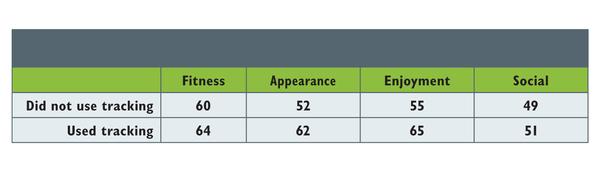
Table 1
Table 1

Figure 1 Proportion of members reporting recent
progress by use of tracking technology
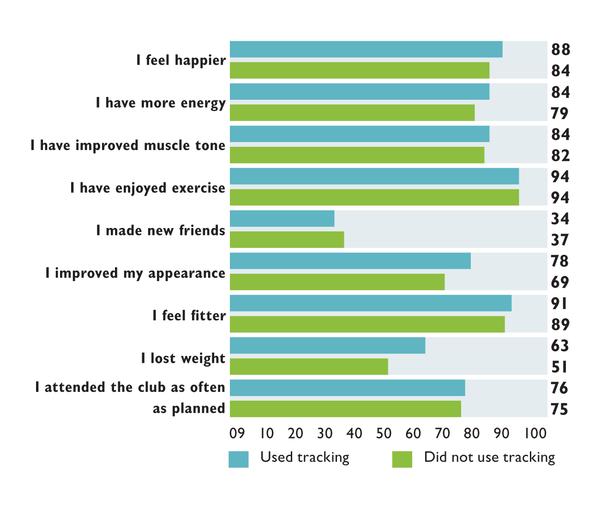
Figure 1
Figure 1

Figure 2 Retention rate by use
of tracking technology
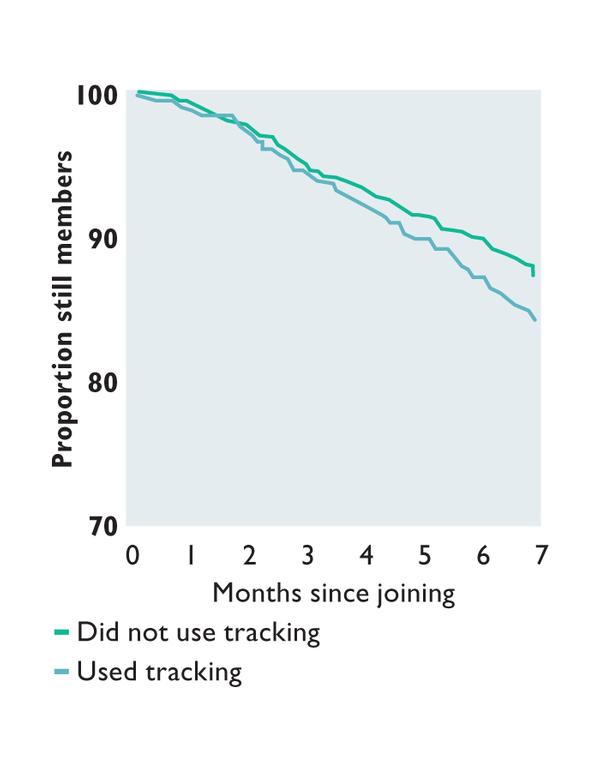
Figure 2
Figure 2

Figure 3 Rate of cancellation (per
1,000 members per month) by use
of tracking technology
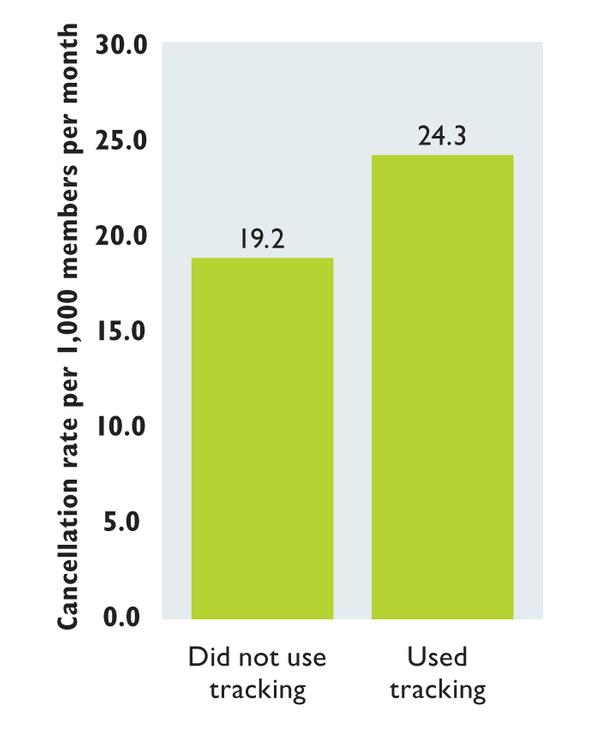
Figure 3
Figure 3

Tracking & retention – the key findings

• 27 per cent of members report using some means of self-monitoring their physical activity, with the majority using a phone-based app or website.

• The most commonly cited means of tracking physical activity was MyFitnessPal.

• Tracking physical activity was more frequently reported by newer, younger members and less so by the older and longer-standing members.

• Members who tracked their physical activity reported higher levels of motivation for exercise, particularly with regards to enjoyment and appearance, but less so for social motivation.

• Despite higher motivation levels, there was no difference in club usage between tracking and non-tracking members, suggesting that reported motivation for exercise doesn’t translate into behaviour change (it’s possible that behaviour changes away from the club).

• Small differences in recent progress were reported between tracking and non-tracking members, with greater progress reported for weight loss and appearance by tracking members – possibly reflecting the widespread use of weight loss-focused MyFitnessPal.

• Although members who reported tracking their physical activity had slightly higher motivation and reported a little more progress in some areas, they didn’t retain their membership for any longer than those who didn’t use tracking; they actually had slightly lower retention rates than members who didn’t track.

• When we adjust our analysis for differences in age and length of membership, tracking members still have an increased risk of cancellation, albeit the difference in risk is slightly reduced.

ABOUT THE AUTHOR

Since his landmark retention report in 2001 (Winning the Retention Battle), Dr Melvyn Hillsdon’s research into retention and attrition has led to the development of appropriate measures of retention, attrition and longevity that provide data for operators that can directly inform business decisions.

He will be presenting at the inaugural Retention Convention, which takes place on 14 May 2015. The event is sold out, but virtual tickets can still be purchased to join a live streaming of the convention. For more information, visit retentionguru.cleeng.com


Sign up here to get HCM's weekly ezine and every issue of HCM magazine free on digital.
More people made new friends at the gym if they didn’t use tracking devices / shutterstock.com/wavebreakmediaProductions
Tracking does not appear to change average visit frequency / www.shutterstock.com/
Nine per cent more members reported weight loss if they also reported tracking
MyFitnessPal is the most commonly cited means of tracking / photo: www.shutterstock.com/Bloomua
https://www.leisureopportunities.co.uk/images/125141_957798.jpg
Does personal activity tracking have an impact on retention of gym membership?
Dr Melvyn Hillsdon,Wearables, activity tracking, tracking, retention, technology, TRP 10,000, Melvyn Hillsdon
HCM magazine
For every member with a tripod and a big following, there are others irritated at the way equipment is being hogged or wary they’ll be in the background on someone’s Insta feed. Do influencers offer valuable, free marketing or are they just a nuisance? Kath Hudson finds out how operators are responding
HCM magazine
HCM People

Stephen Price

Founder, SP&Co Group
Working in public health over the last few years has lit up parts of my brain again
HCM magazine
I experienced a blissful feeling of joy I hadn’t felt since I was a kid
HCM magazine
Small improvements to sleep, diet and physical activity have major benefits for the heart, according to new research from the University of Sydney
HCM magazine
Collaborations with the medical profession and greater aspirations around wellbeing are creating a need for more experts in our sector. It’s time to reboot our thinking around the workforce
HCM promotional features
Sponsored
Find out how your gym can tap into the corporate wellness boom
HCM promotional features
Sponsored
David Lloyd is stepping up its commitment to women’s health as it continues to explore what fit-for-purpose looks like for the female population
HCM promotional features
Sponsored
SnowDome Fitness has added 50 per cent more space with cutting-edge Technogym solutions
HCM promotional features
Sponsored
Starpool supports Olympic champion Marcell Jacobs, says Riccardo Turri
HCM promotional features
Sponsored
Greg Bradley looks at the shift towards strength training in gyms and advises on how operators can create the ultimate training environment
HCM promotional features
Sponsored
Third Space partnered with IndigoFitness to deliver a bespoke training space for its new club at The Whiteley
HCM promotional features
Sponsored
EGYM has opened a new HQ in Paternoster Square, London and revealed a range of new launches
HCM promotional features
Sponsored
The industry is embracing consumer-facing tech. Now it’s time to streamline back-of-house systems with Orbit4, says Daniel Jones
HCM promotional features
Sponsored
Active IQ is calling for greater accountability in online fitness advice with the launch of a new trustmark
HCM promotional features
Latest News
Sea Lanes Canary Wharf has officially opened. The 50-metre, six-lane pool, which uses the natural ...
Latest News
London-based high-performance fitness club, ONE LDN, is raising funds for a multi-site expansion across London, ...
Latest News
A new brain clinic has opened in London, which uses non-invasive brain stimulation to treat ...
Latest News
Good Boost’s digital exercise programmes are helping adults with MSK at a lower cost than ...
Latest News
With Prime Minister, Keir Starmer, announcing his resignation this morning and Andy Burnham as a ...
Latest News
Koru Health Club launched recently within Luxembourg’s multi-experience destination, GRID X, which combines culture, retail ...
Latest News
Celebrating its 10th anniversary, Elevate has had its busiest show to date, with almost 200 ...
Latest News
A new report from Your Personal Training (YPT) suggests UK gym operators could be missing ...
Opinion
promotion
Strength training has moved from the margins to the mainstream.
Opinion: Building smarter strength spaces for today’s operators
Featured supplier news
Featured supplier news: Reaching the people most gyms miss: Bedford Gym & Swim Campaign delivers 410 new members
One of the biggest mistakes the fitness industry still makes is advertising almost exclusively to people who already look and live like gym members.
Featured supplier news
Featured supplier news: CoverMe extends matching service to personal training, rewriting how members and personal trainers connect
CoverMe, the global leader in fitness workforce management, today launches CoverMe PT, an on-demand personal training platform that connects the right personal trainer to the right client in under 10 seconds.
Company profiles
Company profile: Serco Leisure
Serco Leisure Operating Limited is one of the UK’s leading national operators of leisure centres, ...
Company profiles
Company profile: Swimming Teachers' Association (STA)
The Swimming Teachers’ Association (STA) is a national governing body for swimming and a UK-registered ...
Supplier Showcases
Supplier Showcase - From nightclub to health club
Supplier Showcases
Supplier Showcase - Future-proofing
Catalogue Gallery
Click on a catalogue to view it online
Featured press releases
Swimming Teachers' Association (STA) press release: The Ripple Effect delivers first success as learners qualify and secure employment
STA's The Ripple Effect initiative has reached an important milestone after learners completed the charity's first fully funded swimming teacher training programme, resulting in seven newly qualified swimming teachers.
Featured press releases
Pulse Fitness press release: Pulse Fitness’ Trakk ecosystem supports Walsall Leisure in driving community engagement and delivering measurable ROI
Pulse Fitness’ digital solution, Trakk, is helping Walsall Council transform community health engagement into measurable outcomes by combining body composition tracking with targeted physical activity interventions.
Directory
Water experiences and hydrotherapy solutions
Aquaform s.r.l.: Water experiences and hydrotherapy solutions
Lockers
Crown Sports Lockers: Lockers
Fitness tracking platform
SpiviTech: Fitness tracking platform
Hot tubs
MSpa International Ltd: Hot tubs
Spa and beauty equipment
Oakworks Inc: Spa and beauty equipment
Industrial washing machines
Miele Company Limited: Industrial washing machines
Property & Tenders
Stratford, East London.
Lee Valley Regional Park Authority
Property & Tenders
Y Felinheli, LL56 4QN
Newmark
Property & Tenders
Diary dates
21-24 Sep 2026
The Langham Huntington Pasadena , Pasadena, United States
Diary dates
06-08 Oct 2026
Messe Stuttgart, Stuttgart, Germany
Diary dates
22-22 Oct 2026
QEII Conference Centre, London,
Diary dates
26-29 Oct 2027
Koelnmesse Exhibition Centre, Cologne, Germany
Diary dates

features

Retention series: Tracking retention

Does personal physical activity tracking impact membership retention? Dr Melvyn Hillsdon provides his insights, in the latest of his TRP 10,000 series

By Dr Melvyn Hillsdon , University of Exeter | Published in Health Club Management 2015 issue 5
Younger members are more likely to use a tracking device / photo: www.shutterstock.com/Syda Productions
Only two types of motivation were significantly higher among members who tracked their activity: appearance and enjoyment motivation

Wearable devices and phone-based applications (apps) for self-monitoring of physical activity are becoming increasingly common. However, the level of use and their effectiveness among health club members is still unknown.

Using data collected as part of the TRP 10,000 study, this article will report on what proportion of members track their physical activity using technology and whether the use of such technology is associated with motivation, visit frequency, progress and ultimately membership retention.

Data and analysis
Between July and September 2013, members completed an online questionnaire that asked them if they were using any product, app or system to track their physical activity, either inside or outside their club. Members who ticked the box to say they used an app were asked to list the app they used.

Who tracks, and with what?
Overall, 27 per cent of members reported using some tracking device, with the majority saying they used a phone or web app (15 per cent).

Slightly more males than females reported tracking their physical activity (30 per cent versus 26 per cent) and levels of tracking declined with age (40 per cent of 16- to 24-year-olds compared to 7 per cent of members aged 55 years and older). Long-standing members were also less likely to report using tracking technology compared to newer members.

Members reported an incredibly broad range of systems for tracking, but the most commonly cited was MyFitnessPal, an internet- and app-based programme designed to help people track their food and physical activity to assist with weight loss. All other tracking systems listed were used by fewer than 1 per cent of members.

Higher motivation?
So is there a difference in exercise motivation between members who do and don’t track their physical activity?

Members’ motivation for exercise was classified into four types: fitness motivation, appearance motivation, enjoyment motivation and social motivation (see also HCM July 14, p48). For each motivation type – which were not mutually exclusive – members’ level of motivation was then classed as high or not. Table 1 shows the percentage of members with high levels of motivation, broken down by type of motivation and according to whether they reported tracking their physical activity. So, for example, 62 per cent of members who used a tracker said they were highly motivated by appearance; among those who didn’t use a tracker, only 52 per cent were motivated by appearance.

In general, members who tracked their physical activity reported stronger motivation than members who did not track. But when considered together, only two types of motivation were significantly higher among members who tracked their activity: appearance and enjoyment motivation.

Visit frequency
The average visit frequency per month was 6.7 visits for members who reported using tracking technology and 6.7 for members who did not, so there is no association between tracking of physical activity and club visits.

Tracking technology & progress
Figure 1 shows the percentage of members who report they have made progress in the last three months in nine areas, according to whether they reported tracking their activity or not.

Apart from making friends, all outcomes are in favour of tracking, although differences in reported progress between members who track their activity and those who don’t is quite small. The largest difference is in weight loss, with 9 per cent more members reporting weight loss if they also reported tracking their activity. This isn’t entirely surprising given the most common method of tracking reported is MyFitnessPal – specifically designed to help people with weight loss.

Activity tracking & retention
So does tracking activity impact a member’s likelihood of retaining membership? Figure 2 shows that a lower proportion of members retain their membership over seven months of follow-up if they report tracking their physical activity compared to members who do not: 87 per cent of members who didn’t track their physical activity retained their membership at seven months, compared to 83 per cent of members who did track their activity.

The risk of cancelling during the seven-month follow-up period was 25 per cent higher in the tracking members compared to the non-tracking members.

Members who track their physical activity are younger than members who do not, so it’s possible this age difference accounts for the difference in risk of cancelling rather than the use of tracking technology – being younger and/or a more recent club joiner are characteristics that increase this risk.

However, although the additional risk of cancelling among tracking members reduces to 7 per cent when we take account of differences in age between tracking and non-tracking members, this is still statistically significant.

Further, for every 1,000 members, four extra cancel each month if they track their physical activity compared to those who don’t (see Figure 3).

Proceed with caution
Wearable technology for tracking personal behaviour attracts considerable press coverage and its use is likely to increase. It’s possible that club operators will believe that either providing their own or encouraging the use of tracking technology will have an effect on their membership retention. This is intuitively appealing.

However, the results of this study suggest operators should be cautious. Even though members who choose to use tracking systems to monitor their behaviour report slightly higher levels of exercise motivation and recent progress on appearance and weight loss, this doesn’t translate into changes in club usage or retention. At best there’s no effect; at worst it actually increases the risk of cancellation.

We’ve previously reported that progress on weight and appearance do not increase membership retention, whereas perceived social and enjoyment benefits do. There is a danger, therefore, that a focus on tracking systems may detract from a greater focus on interpersonal relationships within the club – something we have shown are strongly and consistently associated with higher retention rates in health club members of all types.

While some members will find tracking their behaviour helpful in making progress on appearance and weight loss, this alone will not improve membership retention.

Table 1 Level of motivation by use of tracking and type of motivation (row %)

Table 1
Table 1

Figure 1 Proportion of members reporting recent
progress by use of tracking technology

Figure 1
Figure 1

Figure 2 Retention rate by use
of tracking technology

Figure 2
Figure 2

Figure 3 Rate of cancellation (per
1,000 members per month) by use
of tracking technology

Figure 3
Figure 3

Tracking & retention – the key findings

• 27 per cent of members report using some means of self-monitoring their physical activity, with the majority using a phone-based app or website.

• The most commonly cited means of tracking physical activity was MyFitnessPal.

• Tracking physical activity was more frequently reported by newer, younger members and less so by the older and longer-standing members.

• Members who tracked their physical activity reported higher levels of motivation for exercise, particularly with regards to enjoyment and appearance, but less so for social motivation.

• Despite higher motivation levels, there was no difference in club usage between tracking and non-tracking members, suggesting that reported motivation for exercise doesn’t translate into behaviour change (it’s possible that behaviour changes away from the club).

• Small differences in recent progress were reported between tracking and non-tracking members, with greater progress reported for weight loss and appearance by tracking members – possibly reflecting the widespread use of weight loss-focused MyFitnessPal.

• Although members who reported tracking their physical activity had slightly higher motivation and reported a little more progress in some areas, they didn’t retain their membership for any longer than those who didn’t use tracking; they actually had slightly lower retention rates than members who didn’t track.

• When we adjust our analysis for differences in age and length of membership, tracking members still have an increased risk of cancellation, albeit the difference in risk is slightly reduced.

ABOUT THE AUTHOR

Since his landmark retention report in 2001 (Winning the Retention Battle), Dr Melvyn Hillsdon’s research into retention and attrition has led to the development of appropriate measures of retention, attrition and longevity that provide data for operators that can directly inform business decisions.

He will be presenting at the inaugural Retention Convention, which takes place on 14 May 2015. The event is sold out, but virtual tickets can still be purchased to join a live streaming of the convention. For more information, visit retentionguru.cleeng.com

Sign up here to get HCM's weekly ezine and every issue of HCM magazine free on digital.
More people made new friends at the gym if they didn’t use tracking devices / shutterstock.com/wavebreakmediaProductions
Tracking does not appear to change average visit frequency / www.shutterstock.com/
Nine per cent more members reported weight loss if they also reported tracking
MyFitnessPal is the most commonly cited means of tracking / photo: www.shutterstock.com/Bloomua
https://www.leisureopportunities.co.uk/images/125141_957798.jpg
Does personal activity tracking have an impact on retention of gym membership?
Dr Melvyn Hillsdon,Wearables, activity tracking, tracking, retention, technology, TRP 10,000, Melvyn Hillsdon
Latest News
Sea Lanes Canary Wharf has officially opened. The 50-metre, six-lane pool, which uses the natural ...
Latest News
London-based high-performance fitness club, ONE LDN, is raising funds for a multi-site expansion across London, ...
Latest News
A new brain clinic has opened in London, which uses non-invasive brain stimulation to treat ...
Latest News
Good Boost’s digital exercise programmes are helping adults with MSK at a lower cost than ...
Latest News
With Prime Minister, Keir Starmer, announcing his resignation this morning and Andy Burnham as a ...
Latest News
Koru Health Club launched recently within Luxembourg’s multi-experience destination, GRID X, which combines culture, retail ...
Latest News
Celebrating its 10th anniversary, Elevate has had its busiest show to date, with almost 200 ...
Latest News
A new report from Your Personal Training (YPT) suggests UK gym operators could be missing ...


Latest News
Eighty-four per cent of consumers now say wellness is a top priority in their lives, ...
Latest News
Elevate Arena is underway at London's Excel and the hot topic of AI was the ...
Latest News
PureGym Group has announced that group chief financial officer, Alex Wood, is taking over the ...
Opinion
promotion
Strength training has moved from the margins to the mainstream.
Opinion: Building smarter strength spaces for today’s operators
Featured supplier news
Featured supplier news: Reaching the people most gyms miss: Bedford Gym & Swim Campaign delivers 410 new members
One of the biggest mistakes the fitness industry still makes is advertising almost exclusively to people who already look and live like gym members.
Featured supplier news
Featured supplier news: CoverMe extends matching service to personal training, rewriting how members and personal trainers connect
CoverMe, the global leader in fitness workforce management, today launches CoverMe PT, an on-demand personal training platform that connects the right personal trainer to the right client in under 10 seconds.
Company profiles
Company profile: Serco Leisure
Serco Leisure Operating Limited is one of the UK’s leading national operators of leisure centres, ...
Company profiles
Company profile: Swimming Teachers' Association (STA)
The Swimming Teachers’ Association (STA) is a national governing body for swimming and a UK-registered ...
Supplier Showcases
Supplier Showcase - From nightclub to health club
Supplier Showcases
Supplier Showcase - Future-proofing
Catalogue Gallery
Click on a catalogue to view it online
Featured press releases
Swimming Teachers' Association (STA) press release: The Ripple Effect delivers first success as learners qualify and secure employment
STA's The Ripple Effect initiative has reached an important milestone after learners completed the charity's first fully funded swimming teacher training programme, resulting in seven newly qualified swimming teachers.
Featured press releases
Pulse Fitness press release: Pulse Fitness’ Trakk ecosystem supports Walsall Leisure in driving community engagement and delivering measurable ROI
Pulse Fitness’ digital solution, Trakk, is helping Walsall Council transform community health engagement into measurable outcomes by combining body composition tracking with targeted physical activity interventions.
Directory
Water experiences and hydrotherapy solutions
Aquaform s.r.l.: Water experiences and hydrotherapy solutions
Lockers
Crown Sports Lockers: Lockers
Fitness tracking platform
SpiviTech: Fitness tracking platform
Hot tubs
MSpa International Ltd: Hot tubs
Spa and beauty equipment
Oakworks Inc: Spa and beauty equipment
Industrial washing machines
Miele Company Limited: Industrial washing machines
Property & Tenders
Stratford, East London.
Lee Valley Regional Park Authority
Property & Tenders
Y Felinheli, LL56 4QN
Newmark
Property & Tenders
Diary dates
21-24 Sep 2026
The Langham Huntington Pasadena , Pasadena, United States
Diary dates
06-08 Oct 2026
Messe Stuttgart, Stuttgart, Germany
Diary dates
22-22 Oct 2026
QEII Conference Centre, London,
Diary dates
26-29 Oct 2027
Koelnmesse Exhibition Centre, Cologne, Germany
Diary dates
Search news, features & products:
Find a supplier:
Partner sites