







Editor's letter


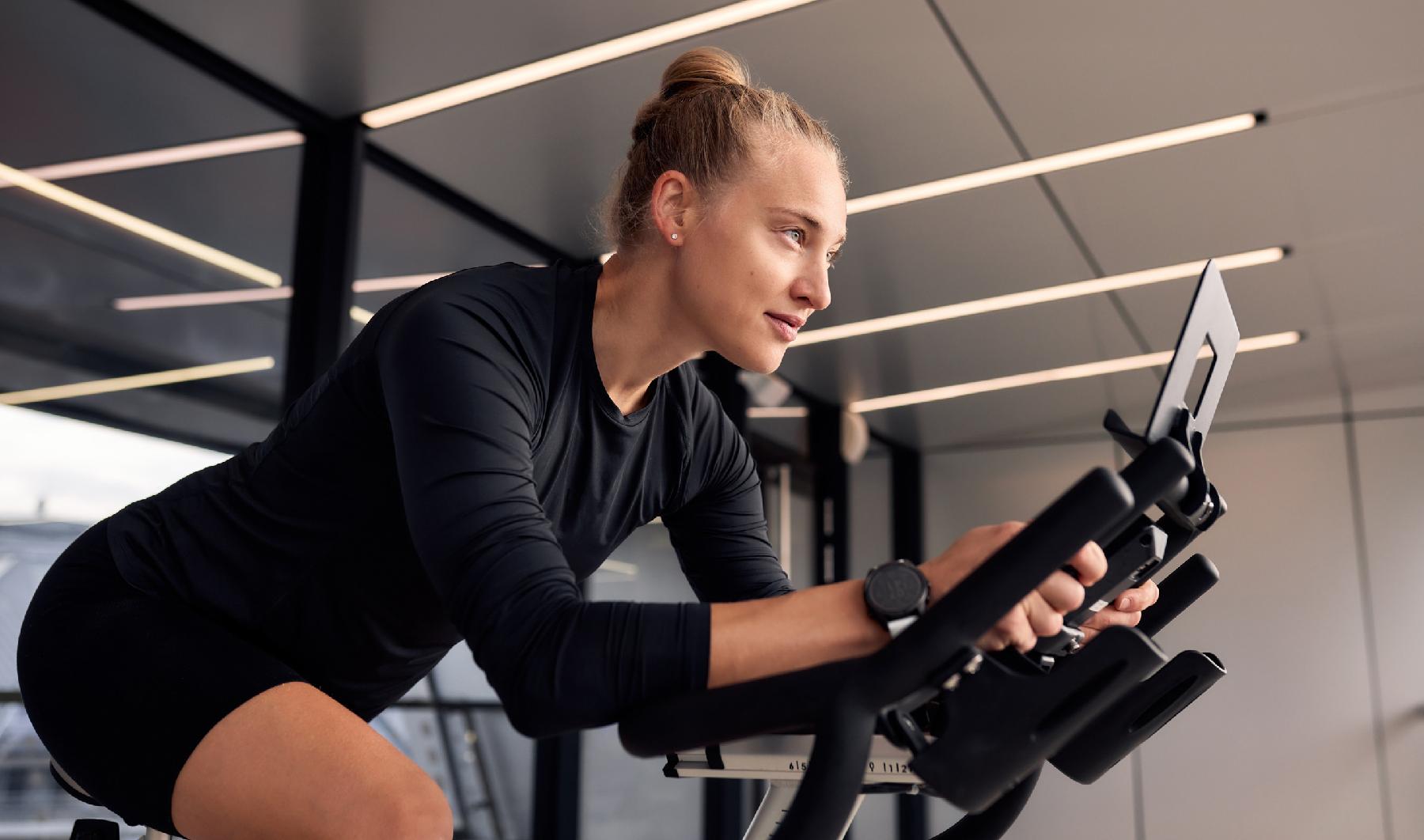
Vibrating tendons before cycling allows people to push harder without feeling the strain, according to a study.
The research was undertaken by Benjamin Pageaux, a professor in the School of Kinesiology and Physical Activity Sciences at Université de Montréal, working with researchers from Université Savoie Mont Blanc in France.
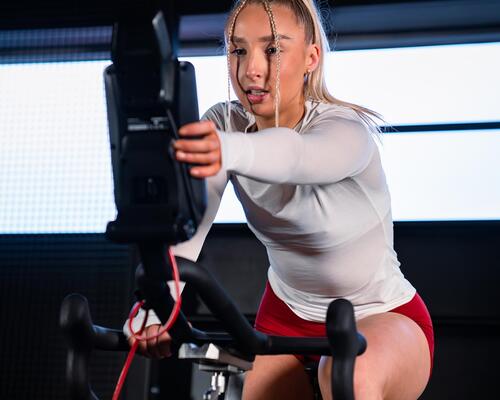
Volunteers took part in lab tests on stationary bikes. Each completed two sessions – one after tendon vibration and another without.
The device was strapped to Achilles and knee tendons and activated for 10 minutes before cycling. After that, participants cycled for three minutes at a pace they perceived as either moderate or intense, adjusting their effort to match their target.
By changing how ‘effort signals’ reach the brain, the study found people can produce more power during exercise, without feeling more exhausted
After vibration, participants produced more power and showed higher heart rates compared to sessions without the pre-exercise vibration. However, even though their bodies were working harder, their sense of effort didn’t increase.
“Depending on the amplitude and frequency of the vibration, we can excite or inhibit neurons in the spinal cord,” says Pageaux. “Prolonged vibration alters brain signalling.”
Changing ‘effort signals’
By changing these ‘effort signals’ travelling from the muscles to the brain, vibration appears to reshape how movement and exertion are perceived.
Pageaux says that this brain-body disconnect could help make exercise feel less intimidating for people who struggle to stay active.
The perception of how hard exercise is plays a role in whether people stick with it. When it feels overwhelming, they’re more likely to stop or avoid it, whereas if it feels manageable, it becomes more enjoyable and easier to continue over time.
This raises the question of whether the feeling of effort could be reduced, helping people push past the sense that exercise is too hard.
Ultimately, the goal is to develop strategies that lower perceived effort and get more people active.
More: www.hcmmag.com/vibration
Editor's letter
Feedback

HCM People

HCM People

Interview

Sponsored

Talkback
Insight
Life lessons

Sponsored
Specifier
Sponsored

Health

Trends
Supplier Showcase

Research









Private investment company Franchise Equity Partners has acquired Bravo Fit, the Planet Fitness ...

Midtown Athletic Club has launched a new community tennis initiative honouring the legacy ...

Urban Gym Group has entered the Irish market with the acquisition of Iconic ...

Total Fitness has released new research revealing how the expectations and motivations of ...














Vibrating tendons before cycling allows people to push harder without feeling the strain, according to a study.
The research was undertaken by Benjamin Pageaux, a professor in the School of Kinesiology and Physical Activity Sciences at Université de Montréal, working with researchers from Université Savoie Mont Blanc in France.
Volunteers took part in lab tests on stationary bikes. Each completed two sessions – one after tendon vibration and another without.
The device was strapped to Achilles and knee tendons and activated for 10 minutes before cycling. After that, participants cycled for three minutes at a pace they perceived as either moderate or intense, adjusting their effort to match their target.
By changing how ‘effort signals’ reach the brain, the study found people can produce more power during exercise, without feeling more exhausted
After vibration, participants produced more power and showed higher heart rates compared to sessions without the pre-exercise vibration. However, even though their bodies were working harder, their sense of effort didn’t increase.
“Depending on the amplitude and frequency of the vibration, we can excite or inhibit neurons in the spinal cord,” says Pageaux. “Prolonged vibration alters brain signalling.”
Changing ‘effort signals’
By changing these ‘effort signals’ travelling from the muscles to the brain, vibration appears to reshape how movement and exertion are perceived.
Pageaux says that this brain-body disconnect could help make exercise feel less intimidating for people who struggle to stay active.
The perception of how hard exercise is plays a role in whether people stick with it. When it feels overwhelming, they’re more likely to stop or avoid it, whereas if it feels manageable, it becomes more enjoyable and easier to continue over time.
This raises the question of whether the feeling of effort could be reduced, helping people push past the sense that exercise is too hard.
Ultimately, the goal is to develop strategies that lower perceived effort and get more people active.
More: www.hcmmag.com/vibration
Editor's letter
Feedback
HCM People
HCM People
Interview
Sponsored
Talkback
Insight
Life lessons
Sponsored
Specifier
Sponsored
Health
Trends
Supplier Showcase
Research
Private investment company Franchise Equity Partners has acquired Bravo Fit, the Planet Fitness ...
Midtown Athletic Club has launched a new community tennis initiative honouring the legacy ...
Urban Gym Group has entered the Irish market with the acquisition of Iconic ...
Total Fitness has released new research revealing how the expectations and motivations of ...