





















Follow Health Club Management on Twitter Like Health Club Management on Facebook Join the discussion with Health Club Management on LinkedIn
FITNESS, HEALTH, WELLNESS

features

Management series: Show me the money

Gyms and health clubs rise or fall on the strength of their financial control and keeping the confidence of stakeholders and shareholders. Katherine Selby asks two industry experts for their advice
By Katherine Selby | Published in Health Club Management 2014 issue 11
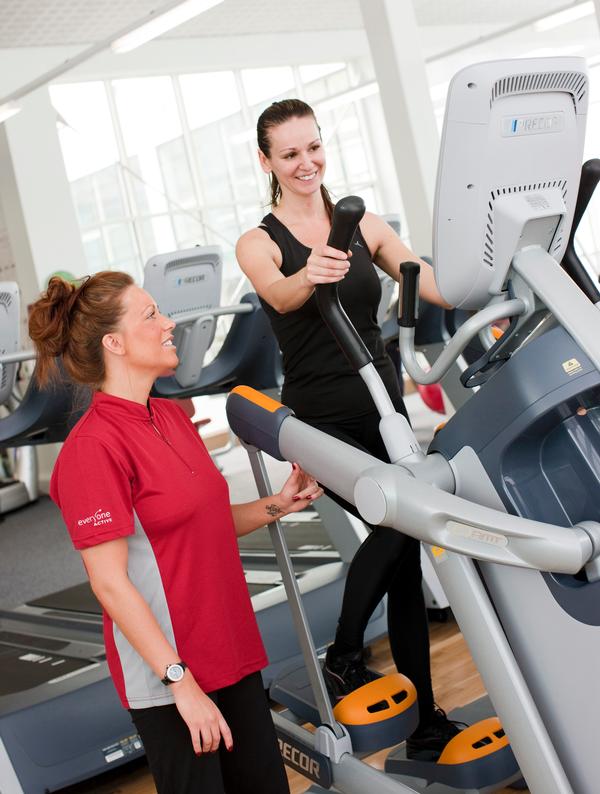
When SLM wins a new contract, Jefford starts with a three-year budget, giving the facility time to mature / all photos: www.shutterstock.com
The problem is people see budgets as a paper exercise to put in the drawer and not look at again. Our managers check their budget weekly and analyse performance daily

The iconic scene in Jerry Maguire where Tom Cruise’s sports agent character is forced to yell “show me the money” to keep his demanding athletic client happy is perhaps extreme – one hopes finance directors of health clubs and leisure centres don’t have to be quite so loud or humbled to keep stakeholders, shareholders and members on board. But they are nevertheless accountable to clear a profit and invest wisely.

Here, two leading operators speak frankly about financial control and share key insights. Duncan Jefford, south-east regional director of public sector operator SLM, trading as Everyone Active, has spent all his working life immersed in the health and fitness business. He started out as a PT and worked his way up through the ranks, supplementing this hands-on knowledge by completing various financial courses with the Institute of Directors to ensure SLM’s continued success.

Nick Harding, group finance director for énergie, has a Plc background and has worked in the fitness and leisure industry with énergie for just over three years. His accountant’s perspective and experience outside the health and fitness market allow him to bring a highly professional approach to énergie and a fresh perspective to its business.

Setting the budget
Budgeting is the backbone of financial control: if you get that right, all other aspects of the financial jigsaw can fit together. Budgets are drawn up in different ways for different facilities.
Jefford favours using historical financial data as a platform on which to plan and build the next year: although zero-based budgets – which start with a blank sheet for the coming year – can give you a sense of a clean sweep and new broom, the reality is whatever has happened in the previous year will follow you into the next year.

But when it comes to the clean sheet that comes with building a brand new facility or winning a new contract, Jefford always starts with a three-year budget, recognising that it takes this length of time for a new facility to mature and go into profit.

He explains: “We have to take a longer-term view than many private sector operators, as a typical new contract will be managed over a 10- to 25-year term. However, in reality as the facility beds in and the membership matures, things are often very different from what you initially imagined, so we keep checking the budget remains suitable and alter it if necessary.”

Harding agrees that budgets must be flexible year to year, but likes to invest the time in setting a realistic annual budget that’s both stretching and achievable. “My finance team spends up to three months in advance of the budget year working with the operations team and franchisees. That means they’re fully involved and take responsibility for the budget,” he explains. “That three-month period can be quite intense as we go back and forth on what we think is realistic and achievable, but once the budget is agreed, the year ahead is then very clear, with specific KPIs in place to monitor performance against that budget.

“The biggest problem with budgets is that people see them as a paper exercise to put in the drawer and not look at again. Our managers and franchisees are all required to check their budget weekly and analyse performance daily.”

From the ground up
To enable the network to manage their budgets, Harding runs interactive training days specific to the health and fitness industry to ensure they understand the financial aspects. “Making accountancy understandable to your workforce is of huge importance, and helps control the finances from the ground up,” he explains.

While he believes every leisure facility or group should have a commercially-focused finance director to drive through the analysis and maintain an overview across the chain or group, he’s clear that ‘top-down’ budgets agreed at board level and handed down to local managers who have had no say in the matter rarely work: “Put simply, this practice doesn’t make people accountable. Anyone operating like this should take a step back, regroup and consider how they can turn this system on its head. It takes a little getting used to, but it really works.”

Jefford also requires his centre managers to take control of their budgets, and believes they pay more attention to finances as a result. “Each site has specific requirements and considerations, so a ‘one size fits all’ budget handed down from the management team will not be helpful,” he says. “Every centre manager must put in for what he or she thinks is needed. Once it’s agreed, they head up the implementation and I offer guidance where necessary.”

Profit & loss
Income streams differ between private and public facilities, with the latter generally having more emphasis on casual exercise lines. However, managing membership income and payroll are the key to a successful business across the board, says Jefford. Both sectors are also equally accountable to their stakeholders and members and both need to be profitable, including ‘not for profit’ clubs which are obliged to invest their profit into improving their business.

As with budgeting, Jefford hands his centre managers the responsibility for their profit and loss accounts. “Many businesses run scared of giving such responsibility to their centre managers, but my view is if you can’t trust them on this, you don’t have the right person in the job,” explains Jefford. “That doesn’t mean all our centre managers have accountancy skills. Instead we have bespoke software, so all they need to do is input sales and purchases accurately as they happen. The software will do the rest. Very quickly, a good centre manager will learn how to interpret the outcomes clearly and look to address any losses that are showing. Any problems, come to me and I’ll help, but they save a lot of my time by keeping an eye on the day-to-day income and expenditure of their centre.”

Real-time tracking
Gone are the days where month-end could bring unpleasant surprises, as there’s now plenty of software available to track income versus expenditure in real time.

Jefford requires a daily income check to ensure any discrepancies or negative trends are identified and acted on early. “As with any issues, the sooner you get to them, the easier they are to solve,” he explains.

To ensure smooth running of all énergie clubs, Harding is able to access what he calls ‘fingertip information’ minute-by-minute. “énergie has built a bespoke piece of software called ORA, which tracks membership sales across the network,” says Harding. “At any given time, I can check ORA and see how the clubs are performing against their sales targets, which are obviously linked back into the budgets.”

With controlling costs just as important as selling memberships – and harder to track, as there are so many different variants – Harding also invested in software to manage the purchase order system and keep a tight rein on expenditure.

Automated systems have certainly transformed the way profit and loss are managed, but as the familiar saying goes: ‘To err is human, but to really foul things up you need a computer.’ Health and fitness clubs therefore still need a finance director in place, supported by a commercially-focused finance team analysing and assessing progress – and staying alert to any oddities created by computer (or user) error.

Forecasting
Forecasting is incredibly important to ensure the long- and short-term viability of any business. This is never more so than in the fitness sector, with its cyclical income of membership subs coming in just once a month.

“People assume forecasting is long-term crystal ball-gazing, when in fact I think it should be seen as an extension of your daily and weekly checks,” says Jefford. “Forecasting should be flexible and allow for changes that happen during the forecast period.”

“Forecasting is essential to keep our shareholders and stakeholders up to speed with our future development plans,” adds Harding. “With our future growth funded through reinvestment of our profits, forecasting is key to giving stakeholders ongoing comfort in the business.”

Collaborative approach
With the right tools, well-trained staff and strong leadership from the finance director, clubs have more scope to track and control their finances than ever before. However, training people properly and maintaining a flexible, open door policy between the finance department and the rest of the business are key to success and security.

The days of the company accountant being shut away and unreachable are numbered, with financial control not just about the figures. It’s about the people behind the figures, with social interaction and communication across the whole business key to bringing financial transparency and control.

MEET OUR EXPERTS

Duncan Jefford
Duncan Jefford
Duncan Jefford,

South-East Regional Director,

Everyone Active


Duncan Jefford, south-east regional director at Everyone Active, has 15 years’ experience in the leisure industry and has worked as a fitness trainer, group development manager and area manager. He currently looks after 41 sites within the south-east region and has accountability for over £50m.

Email: [email protected]

Web: www.everyoneactive.com

MEET OUR EXPERTS

Nick Harding
Nick Harding
Nick Harding,

Group Finance Director,

énergie


Nick Harding, group finance director at énergie, has over 12 years’ accountancy and finance experience. Over the last three years at énergie, he has provided a valuable contribution to redesigning the company strategy into what it is today. The énergie network now consists of 79 clubs with nearly 100,000 members.

Email: [email protected]

Web: www.energiefranchise.com

In a nutshell

- Budgets: Budgets are the backbone to financial stability. A balance must be struck between setting ambitious but achievable budgets, and at the same time allowing for flexibility. Crucially, budgets must be checked regularly to ensure you’re on track.

- Accountability: A finance director can maintain an overview, but every centre/gym manager must be involved in setting the targets and must be accountable for their own budgets and P&L.

- Software: A wide range of software is now available to assist staff in the financial aspects of running a club, but a commercially-focused financial team is crucial to identify human / PC-generated glitches in data.

- Forecasting: This isn’t about long-term crystal ball-gazing, but a flexible “extension of your daily and weekly checks”, with a view to keeping all stakeholders comfortable with the business.

- Collaboration: Financial control isn’t just about the figures – it’s about the people, with communication across the whole business key to success.

Sign up here to get HCM's weekly ezine and every issue of HCM magazine free on digital.
Social interaction and communication across the business are key to financial transparency and control / all photos: www.shutterstock.com
Managing membership income and payroll are key to the success of any business, whether private or public sector / photo: www.shutterstock.com/ Andrey_Popov
A strong balance sheet isn’t just about selling memberships, but about controlling costs / photo: www.shutterstock.com
https://www.leisureopportunities.co.uk/images/140318_493958.jpg
Health clubs rise and fall on the strength of their financial control and keeping the confidence of stakeholders, says Katherine Selby
Katherine Selby Duncan Jefford, south-east regional director at Everyone Active Nick Harding, group finance director at énergie,Finances, budgets, P&L, énergie, Everyone Active, SLM, Duncan Jefford, Nick Harding
HCM magazine
HCM People

Shaun Grove

Owner, Stride Fitness
My goal was to invest in where fitness is going, not where it’s already been
HCM magazine
Lisa Starr tries the Ammortal Chamber to see whether layering 10 modalities into one experience really delivers more
HCM magazine
After decades of focusing on adult audiences, operators are starting to engage young people – unlocking growth opportunities while supporting the health and wellbeing of future generations
HCM magazine
New legislation is exposing weakness and potential liabilities in the management of customer data in health clubs, says Andy Chesterman
HCM magazine
Software suppliers explain how AI, automation and connected digital experiences can work for the good of operators and consumers
HCM promotional features
Sponsored
Social fitness the missing link to member engagement, according to a new Myzone report
HCM promotional features
Sponsored
David Lloyd is stepping up its commitment to women’s health as it continues to explore what fit-for-purpose looks like for the female population
HCM promotional features
Sponsored
Starpool supports Olympic champion Marcell Jacobs, says Riccardo Turri
HCM promotional features
Sponsored
Find out how your gym can tap into the corporate wellness boom
HCM promotional features
Sponsored
Third Space partnered with IndigoFitness to deliver a bespoke training space for its new club at The Whiteley
HCM promotional features
Sponsored
Greg Bradley looks at the shift towards strength training in gyms and advises on how operators can create the ultimate training environment
HCM promotional features
Sponsored
SnowDome Fitness has added 50 per cent more space with cutting-edge Technogym solutions
HCM promotional features
Sponsored
EGYM has opened a new HQ in Paternoster Square, London and revealed a range of new launches
HCM promotional features
Latest News
Les Mills has launched a reformer Pilates workout. The 45-minute workout blends traditional reformer movements ...
Latest News
The inaugural HCM Invest event has opened applications for pitching slots ahead of its launch ...
Latest News
Girls in the UK are missing out on 280 million hours of sport every year ...
Latest News
According to research which tracked more than 147,000 people for 30 years, 90-120 minutes of ...
Latest News
Everlast Gyms expands its footprint outside of the UK this month with the imminent launch ...
Latest News
The UK's four Chief Medical Officers have published a refreshed edition of  Physical activity guidelines: ...
Latest News
Places Leisure has exchanged contracts to build and operate a flagship £60m water and wellness ...
Latest News
The Republic of Ireland will become the latest market in PureGym’s expanding international portfolio, with ...
Opinion
promotion
Strength training has moved from the margins to the mainstream.
Opinion: Building smarter strength spaces for today’s operators
Featured supplier news
Featured supplier news: Introducing a new era of Nautilus Leverage
Strength training has never been more important for member retention, facility differentiation and long-term commercial success.
Featured supplier news
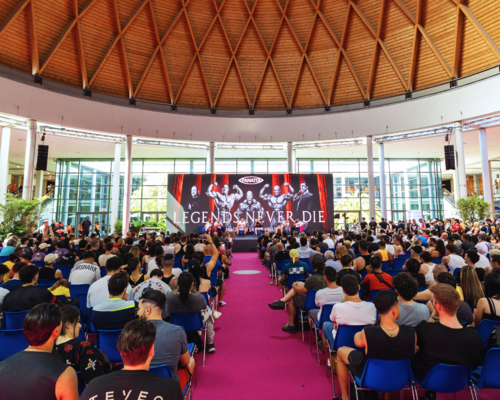
Featured supplier news: Legends never die: four legends, four philosophies of life
Panatta brought together four of the most influential figures in bodybuilding history on the stage of RiminiWellness 2026: Phil Heath, Lee Haney, Ronnie Coleman and Hany Rambod.
Company profiles
Company profile: PSLT Ltd
PSLT offer a range of new and refurbished fitness equipment being the UK supplier of ...
Company profiles
Company profile: Zynk - wellness design experts
Zynk are a team of specialist interior architects and designers with more than 25 year’s ...
Supplier Showcases
Supplier Showcase - From nightclub to health club
Supplier Showcases
Supplier Showcase - Future-proofing
Catalogue Gallery
Click on a catalogue to view it online
Featured press releases
Speedflex (UK press release: Inclusive Fitness in action: The Speedflex Blade at Gym Possible
Following the successful installation of the Speedflex Blade at Gym Possible, the UK based charity gym dedicated to making exercise accessible for people with physical disabilities, the innovative training solution has quickly become one of the facility’s
Featured press releases
BLK BOX press release: Inside the Player Gym at The Open, equipped by BLK BOX
The performance facility at Royal Birkdale gives the world’s leading golfers access to strength, conditioning, mobility and recovery equipment throughout Championship week.
Directory
Lockers
Crown Sports Lockers: Lockers
Industrial washing machines
Miele Company Limited: Industrial washing machines
Water experiences and hydrotherapy solutions
Aquaform s.r.l.: Water experiences and hydrotherapy solutions
Hot tubs
MSpa International Ltd: Hot tubs
Spa and beauty equipment
Living Earth Crafts: Spa and beauty equipment
Fitness tracking platform
SpiviTech: Fitness tracking platform
Property & Tenders
Stratford, East London.
Lee Valley Regional Park Authority
Property & Tenders
Y Felinheli, LL56 4QN
Newmark
Property & Tenders
Diary dates
21-24 Sep 2026
The Langham Huntington Pasadena , Pasadena, United States
Diary dates
06-08 Oct 2026
Messe Stuttgart, Stuttgart, Germany
Diary dates
22-22 Oct 2026
QEII Conference Centre, London,
Diary dates
26-29 Oct 2027
Koelnmesse Exhibition Centre, Cologne, Germany
Diary dates

features

Management series: Show me the money

Gyms and health clubs rise or fall on the strength of their financial control and keeping the confidence of stakeholders and shareholders. Katherine Selby asks two industry experts for their advice

By Katherine Selby | Published in Health Club Management 2014 issue 11
When SLM wins a new contract, Jefford starts with a three-year budget, giving the facility time to mature / all photos: www.shutterstock.com
The problem is people see budgets as a paper exercise to put in the drawer and not look at again. Our managers check their budget weekly and analyse performance daily

The iconic scene in Jerry Maguire where Tom Cruise’s sports agent character is forced to yell “show me the money” to keep his demanding athletic client happy is perhaps extreme – one hopes finance directors of health clubs and leisure centres don’t have to be quite so loud or humbled to keep stakeholders, shareholders and members on board. But they are nevertheless accountable to clear a profit and invest wisely.

Here, two leading operators speak frankly about financial control and share key insights. Duncan Jefford, south-east regional director of public sector operator SLM, trading as Everyone Active, has spent all his working life immersed in the health and fitness business. He started out as a PT and worked his way up through the ranks, supplementing this hands-on knowledge by completing various financial courses with the Institute of Directors to ensure SLM’s continued success.

Nick Harding, group finance director for énergie, has a Plc background and has worked in the fitness and leisure industry with énergie for just over three years. His accountant’s perspective and experience outside the health and fitness market allow him to bring a highly professional approach to énergie and a fresh perspective to its business.

Setting the budget
Budgeting is the backbone of financial control: if you get that right, all other aspects of the financial jigsaw can fit together. Budgets are drawn up in different ways for different facilities.
Jefford favours using historical financial data as a platform on which to plan and build the next year: although zero-based budgets – which start with a blank sheet for the coming year – can give you a sense of a clean sweep and new broom, the reality is whatever has happened in the previous year will follow you into the next year.

But when it comes to the clean sheet that comes with building a brand new facility or winning a new contract, Jefford always starts with a three-year budget, recognising that it takes this length of time for a new facility to mature and go into profit.

He explains: “We have to take a longer-term view than many private sector operators, as a typical new contract will be managed over a 10- to 25-year term. However, in reality as the facility beds in and the membership matures, things are often very different from what you initially imagined, so we keep checking the budget remains suitable and alter it if necessary.”

Harding agrees that budgets must be flexible year to year, but likes to invest the time in setting a realistic annual budget that’s both stretching and achievable. “My finance team spends up to three months in advance of the budget year working with the operations team and franchisees. That means they’re fully involved and take responsibility for the budget,” he explains. “That three-month period can be quite intense as we go back and forth on what we think is realistic and achievable, but once the budget is agreed, the year ahead is then very clear, with specific KPIs in place to monitor performance against that budget.

“The biggest problem with budgets is that people see them as a paper exercise to put in the drawer and not look at again. Our managers and franchisees are all required to check their budget weekly and analyse performance daily.”

From the ground up
To enable the network to manage their budgets, Harding runs interactive training days specific to the health and fitness industry to ensure they understand the financial aspects. “Making accountancy understandable to your workforce is of huge importance, and helps control the finances from the ground up,” he explains.

While he believes every leisure facility or group should have a commercially-focused finance director to drive through the analysis and maintain an overview across the chain or group, he’s clear that ‘top-down’ budgets agreed at board level and handed down to local managers who have had no say in the matter rarely work: “Put simply, this practice doesn’t make people accountable. Anyone operating like this should take a step back, regroup and consider how they can turn this system on its head. It takes a little getting used to, but it really works.”

Jefford also requires his centre managers to take control of their budgets, and believes they pay more attention to finances as a result. “Each site has specific requirements and considerations, so a ‘one size fits all’ budget handed down from the management team will not be helpful,” he says. “Every centre manager must put in for what he or she thinks is needed. Once it’s agreed, they head up the implementation and I offer guidance where necessary.”

Profit & loss
Income streams differ between private and public facilities, with the latter generally having more emphasis on casual exercise lines. However, managing membership income and payroll are the key to a successful business across the board, says Jefford. Both sectors are also equally accountable to their stakeholders and members and both need to be profitable, including ‘not for profit’ clubs which are obliged to invest their profit into improving their business.

As with budgeting, Jefford hands his centre managers the responsibility for their profit and loss accounts. “Many businesses run scared of giving such responsibility to their centre managers, but my view is if you can’t trust them on this, you don’t have the right person in the job,” explains Jefford. “That doesn’t mean all our centre managers have accountancy skills. Instead we have bespoke software, so all they need to do is input sales and purchases accurately as they happen. The software will do the rest. Very quickly, a good centre manager will learn how to interpret the outcomes clearly and look to address any losses that are showing. Any problems, come to me and I’ll help, but they save a lot of my time by keeping an eye on the day-to-day income and expenditure of their centre.”

Real-time tracking
Gone are the days where month-end could bring unpleasant surprises, as there’s now plenty of software available to track income versus expenditure in real time.

Jefford requires a daily income check to ensure any discrepancies or negative trends are identified and acted on early. “As with any issues, the sooner you get to them, the easier they are to solve,” he explains.

To ensure smooth running of all énergie clubs, Harding is able to access what he calls ‘fingertip information’ minute-by-minute. “énergie has built a bespoke piece of software called ORA, which tracks membership sales across the network,” says Harding. “At any given time, I can check ORA and see how the clubs are performing against their sales targets, which are obviously linked back into the budgets.”

With controlling costs just as important as selling memberships – and harder to track, as there are so many different variants – Harding also invested in software to manage the purchase order system and keep a tight rein on expenditure.

Automated systems have certainly transformed the way profit and loss are managed, but as the familiar saying goes: ‘To err is human, but to really foul things up you need a computer.’ Health and fitness clubs therefore still need a finance director in place, supported by a commercially-focused finance team analysing and assessing progress – and staying alert to any oddities created by computer (or user) error.

Forecasting
Forecasting is incredibly important to ensure the long- and short-term viability of any business. This is never more so than in the fitness sector, with its cyclical income of membership subs coming in just once a month.

“People assume forecasting is long-term crystal ball-gazing, when in fact I think it should be seen as an extension of your daily and weekly checks,” says Jefford. “Forecasting should be flexible and allow for changes that happen during the forecast period.”

“Forecasting is essential to keep our shareholders and stakeholders up to speed with our future development plans,” adds Harding. “With our future growth funded through reinvestment of our profits, forecasting is key to giving stakeholders ongoing comfort in the business.”

Collaborative approach
With the right tools, well-trained staff and strong leadership from the finance director, clubs have more scope to track and control their finances than ever before. However, training people properly and maintaining a flexible, open door policy between the finance department and the rest of the business are key to success and security.

The days of the company accountant being shut away and unreachable are numbered, with financial control not just about the figures. It’s about the people behind the figures, with social interaction and communication across the whole business key to bringing financial transparency and control.

MEET OUR EXPERTS

Duncan Jefford
Duncan Jefford
Duncan Jefford,

South-East Regional Director,

Everyone Active


Duncan Jefford, south-east regional director at Everyone Active, has 15 years’ experience in the leisure industry and has worked as a fitness trainer, group development manager and area manager. He currently looks after 41 sites within the south-east region and has accountability for over £50m.

Email: [email protected]

Web: www.everyoneactive.com

MEET OUR EXPERTS

Nick Harding
Nick Harding
Nick Harding,

Group Finance Director,

énergie


Nick Harding, group finance director at énergie, has over 12 years’ accountancy and finance experience. Over the last three years at énergie, he has provided a valuable contribution to redesigning the company strategy into what it is today. The énergie network now consists of 79 clubs with nearly 100,000 members.

Email: [email protected]

Web: www.energiefranchise.com

In a nutshell

- Budgets: Budgets are the backbone to financial stability. A balance must be struck between setting ambitious but achievable budgets, and at the same time allowing for flexibility. Crucially, budgets must be checked regularly to ensure you’re on track.

- Accountability: A finance director can maintain an overview, but every centre/gym manager must be involved in setting the targets and must be accountable for their own budgets and P&L.

- Software: A wide range of software is now available to assist staff in the financial aspects of running a club, but a commercially-focused financial team is crucial to identify human / PC-generated glitches in data.

- Forecasting: This isn’t about long-term crystal ball-gazing, but a flexible “extension of your daily and weekly checks”, with a view to keeping all stakeholders comfortable with the business.

- Collaboration: Financial control isn’t just about the figures – it’s about the people, with communication across the whole business key to success.

Sign up here to get HCM's weekly ezine and every issue of HCM magazine free on digital.
Social interaction and communication across the business are key to financial transparency and control / all photos: www.shutterstock.com
Managing membership income and payroll are key to the success of any business, whether private or public sector / photo: www.shutterstock.com/ Andrey_Popov
A strong balance sheet isn’t just about selling memberships, but about controlling costs / photo: www.shutterstock.com
https://www.leisureopportunities.co.uk/images/140318_493958.jpg
Health clubs rise and fall on the strength of their financial control and keeping the confidence of stakeholders, says Katherine Selby
Katherine Selby Duncan Jefford, south-east regional director at Everyone Active Nick Harding, group finance director at énergie,Finances, budgets, P&L, énergie, Everyone Active, SLM, Duncan Jefford, Nick Harding
Latest News
Les Mills has launched a reformer Pilates workout. The 45-minute workout blends traditional reformer movements ...
Latest News
The inaugural HCM Invest event has opened applications for pitching slots ahead of its launch ...
Latest News
Girls in the UK are missing out on 280 million hours of sport every year ...
Latest News
According to research which tracked more than 147,000 people for 30 years, 90-120 minutes of ...
Latest News
Everlast Gyms expands its footprint outside of the UK this month with the imminent launch ...
Latest News
The UK's four Chief Medical Officers have published a refreshed edition of  Physical activity guidelines: ...
Latest News
Places Leisure has exchanged contracts to build and operate a flagship £60m water and wellness ...
Latest News
The Republic of Ireland will become the latest market in PureGym’s expanding international portfolio, with ...
Latest News
Sophie Lawler, CEO of Total Fitness, has launched a leadership coaching business aimed at helping ...
Latest News
Anytime Fitness reaches a milestone this week with the launch of its 6000th site. The ...
Latest News
The £33.9 million Leighton Leisure and Community Centre has opened in Leighton Buzzard, UK, creating ...
Opinion
promotion
Strength training has moved from the margins to the mainstream.
Opinion: Building smarter strength spaces for today’s operators
Featured supplier news
Featured supplier news: Introducing a new era of Nautilus Leverage
Strength training has never been more important for member retention, facility differentiation and long-term commercial success.
Featured supplier news
Featured supplier news: Legends never die: four legends, four philosophies of life
Panatta brought together four of the most influential figures in bodybuilding history on the stage of RiminiWellness 2026: Phil Heath, Lee Haney, Ronnie Coleman and Hany Rambod.
Company profiles
Company profile: PSLT Ltd
PSLT offer a range of new and refurbished fitness equipment being the UK supplier of ...
Company profiles
Company profile: Zynk - wellness design experts
Zynk are a team of specialist interior architects and designers with more than 25 year’s ...
Supplier Showcases
Supplier Showcase - From nightclub to health club
Supplier Showcases
Supplier Showcase - Future-proofing
Catalogue Gallery
Click on a catalogue to view it online
Featured press releases
Speedflex (UK press release: Inclusive Fitness in action: The Speedflex Blade at Gym Possible
Following the successful installation of the Speedflex Blade at Gym Possible, the UK based charity gym dedicated to making exercise accessible for people with physical disabilities, the innovative training solution has quickly become one of the facility’s
Featured press releases
BLK BOX press release: Inside the Player Gym at The Open, equipped by BLK BOX
The performance facility at Royal Birkdale gives the world’s leading golfers access to strength, conditioning, mobility and recovery equipment throughout Championship week.
Directory
Lockers
Crown Sports Lockers: Lockers
Industrial washing machines
Miele Company Limited: Industrial washing machines
Water experiences and hydrotherapy solutions
Aquaform s.r.l.: Water experiences and hydrotherapy solutions
Hot tubs
MSpa International Ltd: Hot tubs
Spa and beauty equipment
Living Earth Crafts: Spa and beauty equipment
Fitness tracking platform
SpiviTech: Fitness tracking platform
Property & Tenders
Stratford, East London.
Lee Valley Regional Park Authority
Property & Tenders
Y Felinheli, LL56 4QN
Newmark
Property & Tenders
Diary dates
21-24 Sep 2026
The Langham Huntington Pasadena , Pasadena, United States
Diary dates
06-08 Oct 2026
Messe Stuttgart, Stuttgart, Germany
Diary dates
22-22 Oct 2026
QEII Conference Centre, London,
Diary dates
26-29 Oct 2027
Koelnmesse Exhibition Centre, Cologne, Germany
Diary dates
Search news, features & products:
Find a supplier:
Partner sites