



















Follow Health Club Management on Twitter Like Health Club Management on Facebook Join the discussion with Health Club Management on LinkedIn
FITNESS, HEALTH, WELLNESS

features

Everyone's talking about: The mid-market

There are signs the mid-market is back with a vengeance. Or did it never go away? Kath Hudson reports on the latest iteration of the space that sits between low cost and boutiques

Published in Health Club Management 2022 issue 3
Since 2018, mid-market popularity has grown again / photo: shutterstock/wavebreakmedia

For a while the mid-market became an uncomfortable place to operate. With the advent of low cost players in the late noughties, there was a lot of buzz around the concept of bargainous memberships, no contracts, a 24/7 offering and aggressive rollouts.

The likes of The Gym Group and Pure Gym were intimidating competitors, arriving in a neighbourhood and successfully luring away those members who liked something new and shiny and who didn’t use the pool.

Then the sexy boutiques came along, with luxury environments, niche offerings and specialised advice, and suddenly many mid-market operators found they were too generic for a segmented market.

A large number of mid-market independents, who hadn’t reinvested and didn’t know their USP, went to the wall. The mid-market giants endured tough times too: Fitness First was sold to DW Fitness and LA Fitness to Pure Gym. Virgin Active had to restructure, selling a third of its estate to focus on its higher-end family and racquet clubs, and Bannatyne headed upmarket by developing more of a wellness offering by integrating with its spa division.

There was a definite feeling in the industry that mid-market was an undesirable label and many operators were keen to disassociate themselves with this space. However, by 2018, entrepreneurial independents were popping up, proud to call themselves mid-market, saying it was a massive space which no one was dominating. They were picking up members who were trading up from low cost clubs – wanting a club where they could get more attention and advice - and trading down from high-end clubs, which were either too expensive or where they didn’t use all the facilities.

So is the mid-market still ‘squeezed’ or has it become viable again? We ask the experts...

Sophie Lawler
Total Fitness
There’s room for fitness providers in all segments, says Lawler / photo: SOPHIE LAWLER/total fitness

Ever since I took my first fitness job as a part-time fitness coach in a local authority leisure centre in Manchester, I’ve always been an advocate of the middle market. Since fitness is so universal in its appeal, I believe there’s room for providers at every level of the market.

While the middle may sound less attractive from a strategic perspective, it doesn’t make it any less important. Some might suggest the middle has suffered historically and I recognise this point of view, as so many of the middle market operators that were prevalent in the 2000s aren’t around anymore or have moved position. However, I don’t believe this indicated a lack of importance of the middle market, but more one of relevance and/or the desire for existing chains to differentiate from what was a new low-cost segment.

Total Fitness has always been both highly differentiated and a clear middle-market provider – by nature of the sheer size and scale of our clubs and our intent to provide as much value as possible to the communities we serve.

During the build back, we’ve demonstrated an astonishing demand for our product, both before and since the pandemic, giving us real confidence for the future. In the year preceding the first lockdown our memberships grew by 10 per cent, and since re-opening in April 2021, we’ve consistently delivered two to three times the historic joiner average every month.

We’ve also noticed some trends in our new joiners – including a high volume of joiners from low-cost clubs who are seeking both space and greater variety. Also, we’re seeing a greater volume of joiners from younger and lower-income groups, suggesting we’re seeing a shift in the relative value of fitness.

When it comes to mid-market – or any market segment – it’s about having the right value proposition, as opposed to questions of price and location. Typically, the value of your product grows significantly when you add a swimming offering into the mix, which is often where the line from low to mid-market is crossed.

There’s always been a place for the mid-market, as fitness is universal and it’s our role as a unified sector to provide choice to our communities at a proportionate value for the offer.

It’s about having the right value proposition, as opposed to questions of price and location
Lee Matthews
Fitness First
Our customers value human interaction, says Matthews / photo: fitness first

We’d argue the mid-market isn’t back – it never went away. Fitness First was pushed into what became the mid-market some 12 years ago when the low-cost operators emerged. We already had competitors in the luxury end of the market, so we had to re-evaluate our total proposition and our point of difference needed to change. That included consolidation of our estate and the locations we believed would be successful in the future. There is a very clear place for mid-market gyms to succeed if the value proposition is relevant for the customer base targeted.

Now the pandemic is hopefully coming towards an end, and the devastating effect of isolation on the nation has become evident, there’s a need for the support and expertise which full-service clubs deliver. This includes the additional support on hand from in-club teams and the extra facilities, such as wet facilities, in-gym boutique experiences and higher-spec equipment, which mid-market clubs offer. Health is wealth, and we’re seeing a new set of members coming through our doors, alongside the return of our most loyal members.

While the pricing and promotional strategy is always important, it’s not the mid-market’s key driver. It’s about the value delivered, and the service levels which go above our core offering: a motivating environment, high quality and on-trend equipment, a wide genre of classes, PT and digital content. This is underpinned with the most important part of our offering – our people. Having qualified teams on hand at all times, recruiting the best PTs and class instructors, and continuing their development via our certification journeys enables us to deliver a leading experience.

Our core customers are young professionals who value human interaction, the varied product offering and expect inspirational and fun fitness experiences. This segment is willing to invest, from a time and money perspective, in the facilities and expertise available to them, surrounded by a community of like-minded members. We see this trend even more in younger generations where the gym is a place to socialise as well as train.
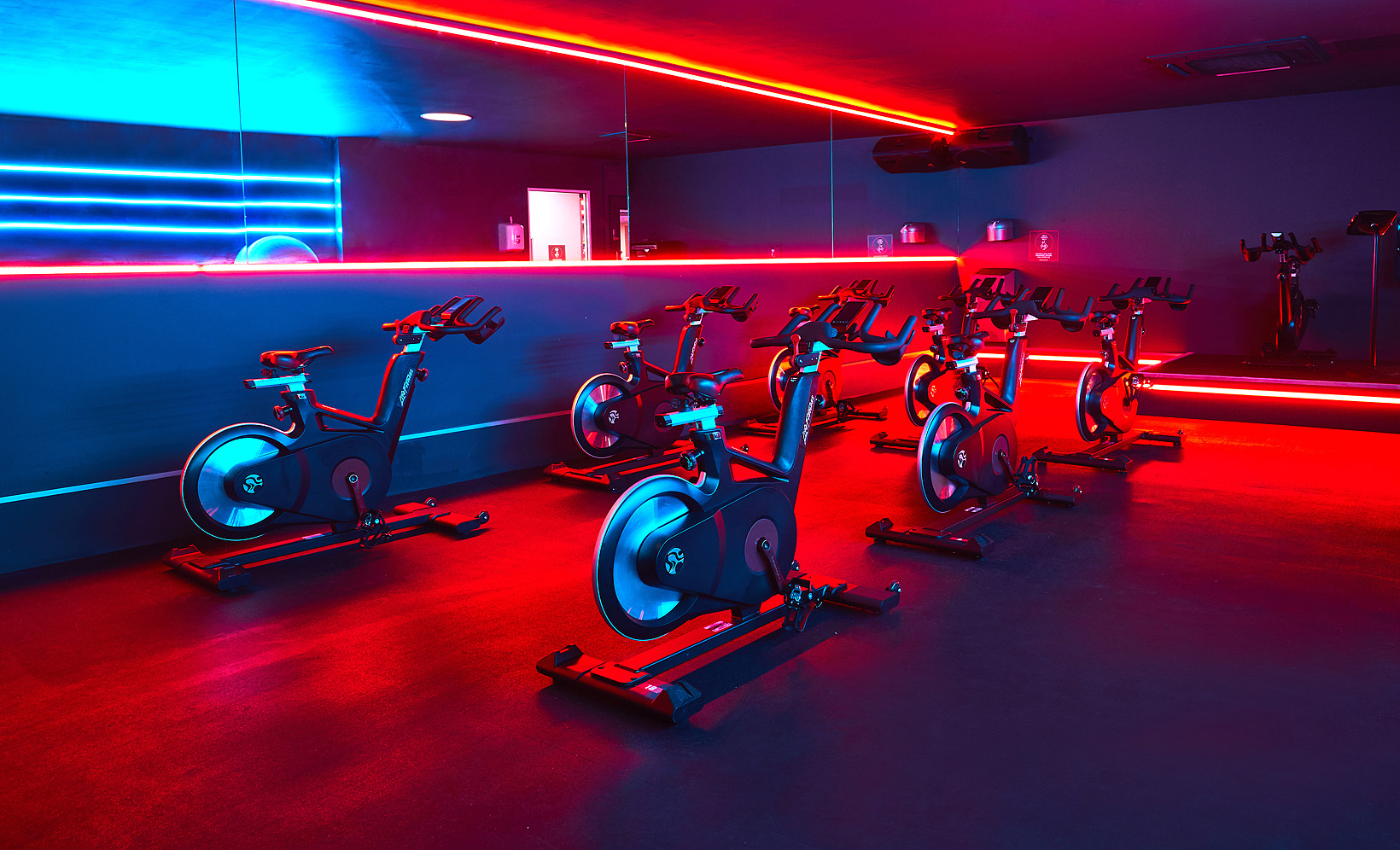

Now the pandemic is hopefully coming towards an end, there’s a need for the support and expertise which full-service clubs deliver
The mid-market segment is willing to invest in facilities and expertise
Eleonora Villari
Retrofit London
photo: eleonora villari/retrofit london

At between £129 and £169 a month we would not be seen as a mid-market offering in much of the UK, but in our South Kensington location, we are definitely mid-market as we sit alongside low-cost gyms as well as boutiques charging as much as £850 a month. We set out to target the mid-market in this area, aiming our offering at a portion of customers who were not being served. Our goal was to bridge the gap and provide a luxury offering at an affordable price, offering personalised packages, a flexible monthly contract, group exercise, top-end equipment, personal training, highly-trained staff on-site at all times, small classes and more space and luxury than the budget gyms. We also offer a community, for example, we give our members free coffee to encourage them to stay for a chat. Pre-COVID people were in too much of a rush for this, but as we build back, there’s a desire for human connection and it’s become a popular service. Retrofit London worked out what was needed to make a mid-market club successful in our location, but each one will be different and every location will have its own niche of what it can offer which isn’t being served by other clubs in the area. It’s very important to analyse the local market, understand the gap and not compromise on quality. Also, listen to feedback and be flexible to customer needs, so they feel part of the decision making.

It’s very important to analyse the local market, understand the gap and not compromise on quality
David Minton
The Leisure Database Company

The mid-market is a hidden giant. Around 70 per cent of all fitness sites in the UK fit my loose definition of mid-market. That’s around 5,000 sites across all sectors. We can define mid-market based on data collected from all 7,000+ fitness sites in our national audit, State of the UK Fitness Industry Report, which will be published this quarter.

Some of the key metrics are monthly membership price, gym equipment numbers and other facilities on offer.

In 2012, the low-cost sector was defined as charging below £20 per month. By 2018 just over half of low-cost operators were charging, on average, more than £20 per month, so a higher ceiling of £25 was created. Low-cost brands constantly test the market and often use a cheaper hook to attract members. Brands then upsell upgraded options, added value items, tempting membership options, often at a bargain busting extra £5 per month. When added together this can push the basic over £30 per month or more. These members, if not the site or the brand, are starting to move onto a mid-market package. At the other end of the spectrum, there are far fewer premium clubs, yet special offers can hook members in at around £70 per month before extras.

The mid-market also has a near-monopoly on families who can’t afford premium prices and the all-important swimming lessons, the second largest income generator after fitness. The mid-market also has a more sensitive approach to the older market, which is the largest demographic. Many sites have a more comfortable social option which encourages visits and loyalty. The so-called death or squeeze of the mid-market is over-exaggerated and we have the figures to prove it.


The so-called death or squeeze of the mid-market is over-exaggerated and we have the figures to prove it
Upsells can move budget clubs into the mid-market / photo: Fitness First
https://www.leisureopportunities.co.uk/images/2022/54762_915452.jpg
There are signs the mid market is back with a vengeance. Or did it never really go away? We ask the experts
HCM magazine
Software suppliers explain how AI, automation and connected digital experiences can work for the good of operators and consumers
HCM magazine
After decades of focusing on adult audiences, operators are starting to engage young people – unlocking growth opportunities while supporting the health and wellbeing of future generations
HCM magazine
Would you stop selling memberships to prevent your club getting overcrowded? How do you strike the balance between maximising profits and prioritising the member experience? Kath Hudson talks to the experts
HCM magazine
Fuel the debate about issues and opportunities across the industry. We’d love to hear from you. Write to [email protected]
HCM magazine
We’ve reduced the level of council investment over the last three years by 40 per cent and increased our turnover by 9 per cent
HCM promotional features
Sponsored
Social fitness the missing link to member engagement, according to a new Myzone report
HCM promotional features
Sponsored
SnowDome Fitness has added 50 per cent more space with cutting-edge Technogym solutions
HCM promotional features
Sponsored
Third Space partnered with IndigoFitness to deliver a bespoke training space for its new club at The Whiteley
HCM promotional features
Sponsored
Starpool supports Olympic champion Marcell Jacobs, says Riccardo Turri
HCM promotional features
Sponsored
Greg Bradley looks at the shift towards strength training in gyms and advises on how operators can create the ultimate training environment
HCM promotional features
Sponsored
Find out how your gym can tap into the corporate wellness boom
HCM promotional features
Sponsored
David Lloyd is stepping up its commitment to women’s health as it continues to explore what fit-for-purpose looks like for the female population
HCM promotional features
Sponsored
EGYM has opened a new HQ in Paternoster Square, London and revealed a range of new launches
HCM promotional features
Latest News
According to research which tracked more than 147,000 people for 30 years, 90-120 minutes of ...
Latest News
Everlast Gyms expands its footprint outside of the UK this month with the imminent launch ...
Latest News
The UK's four Chief Medical Officers have published a refreshed edition of  Physical activity guidelines: ...
Latest News
Places Leisure has exchanged contracts to build and operate a flagship £60m water and wellness ...
Latest News
The Republic of Ireland will become the latest market in PureGym’s expanding international portfolio, with ...
Latest News
Sophie Lawler, CEO of Total Fitness, has launched a leadership coaching business aimed at helping ...
Latest News
Anytime Fitness reaches a milestone this week with the launch of its 6000th site. The ...
Latest News
The £33.9 million Leighton Leisure and Community Centre has opened in Leighton Buzzard, UK, creating ...
Opinion
promotion
Strength training has moved from the margins to the mainstream.
Opinion: Building smarter strength spaces for today’s operators
Featured supplier news
Featured supplier news: Cornerstone Connect helps Active Blackpool tackle health inequalities
Active Blackpool is deploying Cornerstone Connect, a new digital interface allowing disparate information from multiple systems to be aggregated into one dataset, to support its focus on reducing health inequalities and improving healthy life expectancy.
Featured supplier news
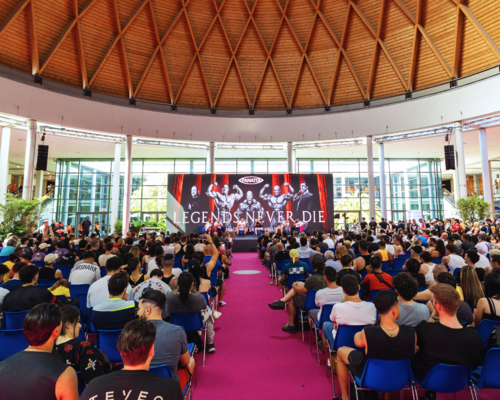
Featured supplier news: Legends never die: four legends, four philosophies of life
Panatta brought together four of the most influential figures in bodybuilding history on the stage of RiminiWellness 2026: Phil Heath, Lee Haney, Ronnie Coleman and Hany Rambod.
Company profiles
Company profile: Serco Leisure
Serco Leisure Operating Limited is one of the UK’s leading national operators of leisure centres, ...
Company profiles
Company profile: Everyone Active
Everyone Active's aim is to get communities active, engaged and entertained through our wide-ranging activities ...
Supplier Showcases
Supplier Showcase - From nightclub to health club
Supplier Showcases
Supplier Showcase - Future-proofing
Catalogue Gallery
Click on a catalogue to view it online
Featured press releases
Innerva press release: Wrightcare embeds wellness and active living into next-generation care homes
A care home provider is developing a new generation of care homes where health, wellbeing and active living are embedded into everyday life.
Featured press releases
Alliance Leisure Services (Design, Build and Fund) press release: Studio transformation completed at Burscough Wellbeing and Leisure Hub
Alliance Leisure are proud to have supported West Lancashire Borough Council to deliver a £300,000 studio transformation project at Burscough Wellbeing and Leisure Hub, creating a dedicated group exercise space designed to meet growing demand for fitness
Directory
Lockers
Crown Sports Lockers: Lockers
Industrial washing machines
Miele Company Limited: Industrial washing machines
Water experiences and hydrotherapy solutions
Aquaform s.r.l.: Water experiences and hydrotherapy solutions
Fitness tracking platform
SpiviTech: Fitness tracking platform
Hot tubs
MSpa International Ltd: Hot tubs
Spa and beauty equipment
Oakworks Inc: Spa and beauty equipment
Property & Tenders
Stratford, East London.
Lee Valley Regional Park Authority
Property & Tenders
Y Felinheli, LL56 4QN
Newmark
Property & Tenders
Diary dates
21-24 Sep 2026
The Langham Huntington Pasadena , Pasadena, United States
Diary dates
06-08 Oct 2026
Messe Stuttgart, Stuttgart, Germany
Diary dates
22-22 Oct 2026
QEII Conference Centre, London,
Diary dates
26-29 Oct 2027
Koelnmesse Exhibition Centre, Cologne, Germany
Diary dates

features

Everyone's talking about: The mid-market

There are signs the mid-market is back with a vengeance. Or did it never go away? Kath Hudson reports on the latest iteration of the space that sits between low cost and boutiques

Published in Health Club Management 2022 issue 3
Since 2018, mid-market popularity has grown again / photo: shutterstock/wavebreakmedia

For a while the mid-market became an uncomfortable place to operate. With the advent of low cost players in the late noughties, there was a lot of buzz around the concept of bargainous memberships, no contracts, a 24/7 offering and aggressive rollouts.

The likes of The Gym Group and Pure Gym were intimidating competitors, arriving in a neighbourhood and successfully luring away those members who liked something new and shiny and who didn’t use the pool.

Then the sexy boutiques came along, with luxury environments, niche offerings and specialised advice, and suddenly many mid-market operators found they were too generic for a segmented market.

A large number of mid-market independents, who hadn’t reinvested and didn’t know their USP, went to the wall. The mid-market giants endured tough times too: Fitness First was sold to DW Fitness and LA Fitness to Pure Gym. Virgin Active had to restructure, selling a third of its estate to focus on its higher-end family and racquet clubs, and Bannatyne headed upmarket by developing more of a wellness offering by integrating with its spa division.

There was a definite feeling in the industry that mid-market was an undesirable label and many operators were keen to disassociate themselves with this space. However, by 2018, entrepreneurial independents were popping up, proud to call themselves mid-market, saying it was a massive space which no one was dominating. They were picking up members who were trading up from low cost clubs – wanting a club where they could get more attention and advice - and trading down from high-end clubs, which were either too expensive or where they didn’t use all the facilities.

So is the mid-market still ‘squeezed’ or has it become viable again? We ask the experts...

Sophie Lawler
Total Fitness
There’s room for fitness providers in all segments, says Lawler / photo: SOPHIE LAWLER/total fitness

Ever since I took my first fitness job as a part-time fitness coach in a local authority leisure centre in Manchester, I’ve always been an advocate of the middle market. Since fitness is so universal in its appeal, I believe there’s room for providers at every level of the market.

While the middle may sound less attractive from a strategic perspective, it doesn’t make it any less important. Some might suggest the middle has suffered historically and I recognise this point of view, as so many of the middle market operators that were prevalent in the 2000s aren’t around anymore or have moved position. However, I don’t believe this indicated a lack of importance of the middle market, but more one of relevance and/or the desire for existing chains to differentiate from what was a new low-cost segment.

Total Fitness has always been both highly differentiated and a clear middle-market provider – by nature of the sheer size and scale of our clubs and our intent to provide as much value as possible to the communities we serve.

During the build back, we’ve demonstrated an astonishing demand for our product, both before and since the pandemic, giving us real confidence for the future. In the year preceding the first lockdown our memberships grew by 10 per cent, and since re-opening in April 2021, we’ve consistently delivered two to three times the historic joiner average every month.

We’ve also noticed some trends in our new joiners – including a high volume of joiners from low-cost clubs who are seeking both space and greater variety. Also, we’re seeing a greater volume of joiners from younger and lower-income groups, suggesting we’re seeing a shift in the relative value of fitness.

When it comes to mid-market – or any market segment – it’s about having the right value proposition, as opposed to questions of price and location. Typically, the value of your product grows significantly when you add a swimming offering into the mix, which is often where the line from low to mid-market is crossed.

There’s always been a place for the mid-market, as fitness is universal and it’s our role as a unified sector to provide choice to our communities at a proportionate value for the offer.

It’s about having the right value proposition, as opposed to questions of price and location
Lee Matthews
Fitness First
Our customers value human interaction, says Matthews / photo: fitness first

We’d argue the mid-market isn’t back – it never went away. Fitness First was pushed into what became the mid-market some 12 years ago when the low-cost operators emerged. We already had competitors in the luxury end of the market, so we had to re-evaluate our total proposition and our point of difference needed to change. That included consolidation of our estate and the locations we believed would be successful in the future. There is a very clear place for mid-market gyms to succeed if the value proposition is relevant for the customer base targeted.

Now the pandemic is hopefully coming towards an end, and the devastating effect of isolation on the nation has become evident, there’s a need for the support and expertise which full-service clubs deliver. This includes the additional support on hand from in-club teams and the extra facilities, such as wet facilities, in-gym boutique experiences and higher-spec equipment, which mid-market clubs offer. Health is wealth, and we’re seeing a new set of members coming through our doors, alongside the return of our most loyal members.

While the pricing and promotional strategy is always important, it’s not the mid-market’s key driver. It’s about the value delivered, and the service levels which go above our core offering: a motivating environment, high quality and on-trend equipment, a wide genre of classes, PT and digital content. This is underpinned with the most important part of our offering – our people. Having qualified teams on hand at all times, recruiting the best PTs and class instructors, and continuing their development via our certification journeys enables us to deliver a leading experience.

Our core customers are young professionals who value human interaction, the varied product offering and expect inspirational and fun fitness experiences. This segment is willing to invest, from a time and money perspective, in the facilities and expertise available to them, surrounded by a community of like-minded members. We see this trend even more in younger generations where the gym is a place to socialise as well as train.

Now the pandemic is hopefully coming towards an end, there’s a need for the support and expertise which full-service clubs deliver
The mid-market segment is willing to invest in facilities and expertise
Eleonora Villari
Retrofit London
photo: eleonora villari/retrofit london

At between £129 and £169 a month we would not be seen as a mid-market offering in much of the UK, but in our South Kensington location, we are definitely mid-market as we sit alongside low-cost gyms as well as boutiques charging as much as £850 a month. We set out to target the mid-market in this area, aiming our offering at a portion of customers who were not being served. Our goal was to bridge the gap and provide a luxury offering at an affordable price, offering personalised packages, a flexible monthly contract, group exercise, top-end equipment, personal training, highly-trained staff on-site at all times, small classes and more space and luxury than the budget gyms. We also offer a community, for example, we give our members free coffee to encourage them to stay for a chat. Pre-COVID people were in too much of a rush for this, but as we build back, there’s a desire for human connection and it’s become a popular service. Retrofit London worked out what was needed to make a mid-market club successful in our location, but each one will be different and every location will have its own niche of what it can offer which isn’t being served by other clubs in the area. It’s very important to analyse the local market, understand the gap and not compromise on quality. Also, listen to feedback and be flexible to customer needs, so they feel part of the decision making.

It’s very important to analyse the local market, understand the gap and not compromise on quality
David Minton
The Leisure Database Company

The mid-market is a hidden giant. Around 70 per cent of all fitness sites in the UK fit my loose definition of mid-market. That’s around 5,000 sites across all sectors. We can define mid-market based on data collected from all 7,000+ fitness sites in our national audit, State of the UK Fitness Industry Report, which will be published this quarter.

Some of the key metrics are monthly membership price, gym equipment numbers and other facilities on offer.

In 2012, the low-cost sector was defined as charging below £20 per month. By 2018 just over half of low-cost operators were charging, on average, more than £20 per month, so a higher ceiling of £25 was created. Low-cost brands constantly test the market and often use a cheaper hook to attract members. Brands then upsell upgraded options, added value items, tempting membership options, often at a bargain busting extra £5 per month. When added together this can push the basic over £30 per month or more. These members, if not the site or the brand, are starting to move onto a mid-market package. At the other end of the spectrum, there are far fewer premium clubs, yet special offers can hook members in at around £70 per month before extras.

The mid-market also has a near-monopoly on families who can’t afford premium prices and the all-important swimming lessons, the second largest income generator after fitness. The mid-market also has a more sensitive approach to the older market, which is the largest demographic. Many sites have a more comfortable social option which encourages visits and loyalty. The so-called death or squeeze of the mid-market is over-exaggerated and we have the figures to prove it.

The so-called death or squeeze of the mid-market is over-exaggerated and we have the figures to prove it
Upsells can move budget clubs into the mid-market / photo: Fitness First
https://www.leisureopportunities.co.uk/images/2022/54762_915452.jpg
There are signs the mid market is back with a vengeance. Or did it never really go away? We ask the experts

Latest News
According to research which tracked more than 147,000 people for 30 years, 90-120 minutes of ...
Latest News
Everlast Gyms expands its footprint outside of the UK this month with the imminent launch ...
Latest News
The UK's four Chief Medical Officers have published a refreshed edition of  Physical activity guidelines: ...
Latest News
Places Leisure has exchanged contracts to build and operate a flagship £60m water and wellness ...
Latest News
The Republic of Ireland will become the latest market in PureGym’s expanding international portfolio, with ...
Latest News
Sophie Lawler, CEO of Total Fitness, has launched a leadership coaching business aimed at helping ...
Latest News
Anytime Fitness reaches a milestone this week with the launch of its 6000th site. The ...
Latest News
The £33.9 million Leighton Leisure and Community Centre has opened in Leighton Buzzard, UK, creating ...
Latest News
YogaSix, the yoga brand owned by Xponential Fitness, has launched a heated, Pilates-inspired class called ...
Latest News
Walnuts Leisure Centre in Orpington, in the London Borough of Bromley, has reopened following a ...
Latest News
The Gym Group, has announced that it's sustained positive trading momentum has continued through the ...
Opinion
promotion
Strength training has moved from the margins to the mainstream.
Opinion: Building smarter strength spaces for today’s operators
Featured supplier news
Featured supplier news: Cornerstone Connect helps Active Blackpool tackle health inequalities
Active Blackpool is deploying Cornerstone Connect, a new digital interface allowing disparate information from multiple systems to be aggregated into one dataset, to support its focus on reducing health inequalities and improving healthy life expectancy.
Featured supplier news
Featured supplier news: Legends never die: four legends, four philosophies of life
Panatta brought together four of the most influential figures in bodybuilding history on the stage of RiminiWellness 2026: Phil Heath, Lee Haney, Ronnie Coleman and Hany Rambod.
Company profiles
Company profile: Serco Leisure
Serco Leisure Operating Limited is one of the UK’s leading national operators of leisure centres, ...
Company profiles
Company profile: Everyone Active
Everyone Active's aim is to get communities active, engaged and entertained through our wide-ranging activities ...
Supplier Showcases
Supplier Showcase - From nightclub to health club
Supplier Showcases
Supplier Showcase - Future-proofing
Catalogue Gallery
Click on a catalogue to view it online
Featured press releases
Innerva press release: Wrightcare embeds wellness and active living into next-generation care homes
A care home provider is developing a new generation of care homes where health, wellbeing and active living are embedded into everyday life.
Featured press releases
Alliance Leisure Services (Design, Build and Fund) press release: Studio transformation completed at Burscough Wellbeing and Leisure Hub
Alliance Leisure are proud to have supported West Lancashire Borough Council to deliver a £300,000 studio transformation project at Burscough Wellbeing and Leisure Hub, creating a dedicated group exercise space designed to meet growing demand for fitness
Directory
Lockers
Crown Sports Lockers: Lockers
Industrial washing machines
Miele Company Limited: Industrial washing machines
Water experiences and hydrotherapy solutions
Aquaform s.r.l.: Water experiences and hydrotherapy solutions
Fitness tracking platform
SpiviTech: Fitness tracking platform
Hot tubs
MSpa International Ltd: Hot tubs
Spa and beauty equipment
Oakworks Inc: Spa and beauty equipment
Property & Tenders
Stratford, East London.
Lee Valley Regional Park Authority
Property & Tenders
Y Felinheli, LL56 4QN
Newmark
Property & Tenders
Diary dates
21-24 Sep 2026
The Langham Huntington Pasadena , Pasadena, United States
Diary dates
06-08 Oct 2026
Messe Stuttgart, Stuttgart, Germany
Diary dates
22-22 Oct 2026
QEII Conference Centre, London,
Diary dates
26-29 Oct 2027
Koelnmesse Exhibition Centre, Cologne, Germany
Diary dates
Search news, features & products:
Find a supplier:
Partner sites