

















The Leisure Media Company Ltd
Follow Health Club Management on Twitter Like Health Club Management on Facebook Join the discussion with Health Club Management on LinkedIn
FITNESS, HEALTH, WELLNESS

features

Consumer trends: The Uber-all economy

Imke Schuller of The Futures Company reports on health club loyalty in the new economy
Published in Health Club Management 2015 issue 10
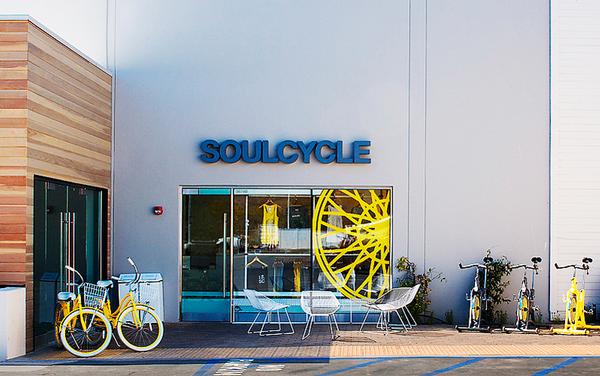
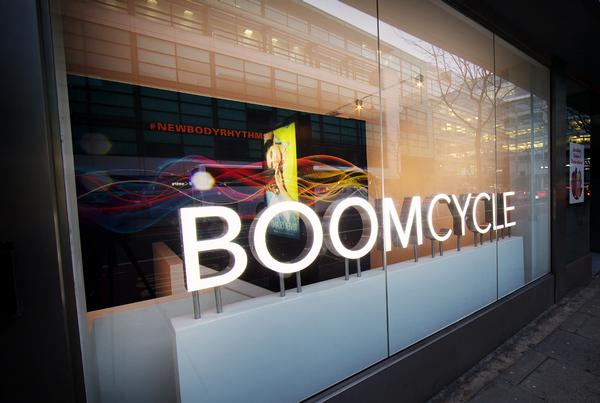
The new breed of boutique studios keep customers with their great products, not by imposing a contract
To win with those aged under 30, clubs must embrace, even encourage, a degree of promiscuity of gym membership

he world’s biggest provider of accommodation does not own a single hotel room: AirBnB. The biggest taxi company does not own a single taxi: Uber. The biggest media company does not own any content: Facebook. The world around us is changing rapidly, giving rise to new business models.

The health club industry is no exception. Increasingly sedentary lives and convenient food solutions are leading to a steady rise in obesity; it’s no surprise that health and wellbeing are increasingly heading to the top of the agenda – for the government, businesses and individuals.

Separately, people’s lives are becoming more fluid and flexible, so there’s a need for on-demand solutions in the health and fitness space. Anytime, anywhere. Consumers’ expectations are shifting, and digital technology is enabling this change.

Meanwhile the continued slow growth of the UK (and global) economy is challenging the current business model of the health club industry – particularly the squeezed, often undifferentiated, middle. To be successful in the 21st century, health clubs will need to rethink the way they engage with customers, the way they recruit new users – and ultimately, the way they do business.

At The Futures Company, we have identified two main challenges facing the fitness industry. Firstly, loyalty is no longer a given: consumers are becoming more promiscuous and less willing to sign up to loyalty programmes or subscriptions. And secondly, the new ‘uber-all economy’ redefines what consumers truly value.

Loyalty redefined
Health clubs tend to operate on a monthly or annual subscription basis – a membership model. This leads to a transactional relationship with customers: access to equipment and facilities in exchange for a fee.

With a perceived lack of emotional differentiation between different clubs’ propositions, customers become more open to shopping around to find the equipment, class, instructor or location that meets their needs for each workout.

This changing consumer mindset lies at the heart of recent ‘exercise passport’ innovations such as ClassPass and MoveGB (see p90), as well as now well established concepts such as payasUgym.com, which allow people to pick and choose locations for each workout rather than being tied to just one gym.

Indeed, this shift in mindset is key to the boutique model generally, where exercisers typically pay on a by-class basis.

Aided by technology, consumers are becoming more value-conscious, carefully choosing where to spend their money. But importantly, it’s perceived value rather than low price that’s key – consumers want a great experience. They’re keen to try and explore new things: 59 per cent of UK respondents in The Futures Company’s Global Monitor values and attitudes tracker say they “like to try new products and services”, as opposed to 41 per cent who “like to stick to products and services they know”.

The reaction from health clubs tends to be to offer discounts for longer-term memberships, free guest passes, trial periods – all with the objective of recruiting loyal customers. But is this a timely approach? Aren’t clubs fostering the transactional model even more by trying to force their customers into subscription?

Health clubs need to redefine how they provide value to their customers. In our recent Consumer Headlines report – an annual strategic planning report identifying the current debates in consumers’ lives – we identified a growing need for differentiation through reciprocal relationships. In the future, we will see even more of this kinship economy, and value will be defined by the relevance health clubs provide and the connections they create and enable.

This is particularly true for the Millennials and Centennials. Experience, human interaction, flexibility and convenience (allowing for more productive time) are high on the agenda of your potential new recruits. More importantly still, to win with those aged under 30, gym owners must embrace, even encourage, a certain degree of promiscuity of membership.

Flexible, personal, on-demand
The second challenge is how true value will be defined by health club customers in the future of our ‘uber-all economy’ – a term coined by J Walker Smith, chair of The Futures Company.

Consumers’ busy lifestyles lead to greater prioritisation of time and effort. They expect more relevant, timely and convenient solutions. Health clubs are no longer competing only with other health clubs. More flexible, personalised services are right up there: Jawbone, for example, is providing an in-app fitness coach that monitors and analyses personal data and then provides feedback and suggestions against a peer group benchmark.

With consumers’ constant connectivity and access to data and information comes an ability and willingness to research – to review, monitor and judge. Within this context, consumers will value three things in health clubs:

• Value from personalised service: ‘One size fits all’ membership does not work any more, and health clubs are no exception. How adaptable to consumer groups, needs and occasions is your offering? This goes beyond personal trainers. Technology challenges the current model, but also provides opportunities. How can the data from personal fitness trackers be used to enhance the current business model?

• On-demand solutions: Easy access to information and technology means consumers expect immediate responses and immediate solutions, wherever they are and whenever they want. However, the current health club model is still built on physical sites and fixed assets – customers generally still have to go to the health club, rather than having the health club come to the customer.

New innovations such as virtual classes streamed into the home are beginning to break down these barriers (see p72, and also HCM June 15, p70). These virtual offerings provide on-demand fitness solutions in the convenience and privacy of people’s own home, but with the benefit of social interaction with like-minded individuals. So how does your offering fit into consumers’ increasingly fluid and flexible lifestyles?

• Flexible pricing: Uber, for example, uses surge pricing – prices rise when demand is higher. How are health clubs currently using the supply-demand model to make better use of idle assets and entice customers into the club during quieter, off-peak times? Can assets or staff be dispatched to the client, rather than asking them to come to the club?

What’s your mission?
In our ever-changing world, health clubs need to adapt to new consumer demands and needs. For the younger generations, experience, social connections and ‘tribal wellness’ are high on the agenda – witness the rise of Tough Mudder, BMF, Color Runs and so on (see p38). Loyalty to a specific club is not.

Do you understand what Millennials and Centennials expect from a gym – what their drivers and motivations are?

Most health clubs lack differentiation, and consumers will find it increasingly difficult to be loyal to a club that offers nothing special. How can you better share your club’s values to attract new users? What’s the mission of your health club: to fight obesity? To be the enabler of social connections, to provide a community and a sense of belonging?

Think about how your club’s values can transform the gym from a transactional environment into a place that offers value through reciprocity and connectedness.

In our on-demand economy, busy consumers are expecting increased productivity in everything they do and engage with. How can your club be better integrated into customers’ lives? In what ways can your services be personalised to sub-groups, or even individuals – and how can digital technology enable this? The business models of tomorrow will have to be more flexible, adaptable and make better use of the supply-demand cycles, to make best use of idle assets while servicing customers any time, anywhere.

About the author

Imke Schuller
Imke Schuller

Imke Schuller is a director at strategic consultancy The Futures Company. She’s the health and beauty sector lead for the EMEA, helping clients to anticipate change in their operating environment and to find new ways of adapting to an ever-evolving business context.

[email protected]

+44 20 7955 1838

Sign up here to get HCM's weekly ezine and every issue of HCM magazine free on digital.
The new breed of boutique studios keep customers with their great products, not by imposing a contract
Millennials value flexibility – they want to use more than one gym / PHOTO: shutterstock.com
Tribal events like Tough Mudder can engender great loyalty / PHOTO: Kirsten Holst
Clubs are having to compete with the convenience of virtual fitness / PHOTO: shutterstock.com
https://www.leisureopportunities.co.uk/images/629754_118680.jpg
Health clubs must learn to embrace a degree of customer promiscuity
Imke Schuller of The Futures Company,Imke Schuller, Futures Company, flexible, flexibility, consumer trends
HCM magazine
As the entrepreneur who started Wexer, Fresh Fitness, Fitness DK and Repeat, as well as being a former elite athlete, Rasmus Ingerslev’s life looked perfect from the outside, but onthe inside it was a different story. He talks to Kath Hudson about healing old wounds
HCM magazine
HCM People

Stephen Price

Founder, SP&Co Group
Working in public health over the last few years has lit up parts of my brain again
HCM magazine
For every member with a tripod and a big following, there are others irritated at the way equipment is being hogged or wary they’ll be in the background on someone’s Insta feed. Do influencers offer valuable, free marketing or are they just a nuisance? Kath Hudson finds out how operators are responding
HCM magazine
I experienced a blissful feeling of joy I hadn’t felt since I was a kid
HCM magazine
Collaborations with the medical profession and greater aspirations around wellbeing are creating a need for more experts in our sector. It’s time to reboot our thinking around the workforce
HCM promotional features
Sponsored
Starpool supports Olympic champion Marcell Jacobs, says Riccardo Turri
HCM promotional features
Sponsored
Find out how your gym can tap into the corporate wellness boom
HCM promotional features
Sponsored
SnowDome Fitness has added 50 per cent more space with cutting-edge Technogym solutions
HCM promotional features
Sponsored
Third Space partnered with IndigoFitness to deliver a bespoke training space for its new club at The Whiteley
HCM promotional features
Sponsored
Greg Bradley looks at the shift towards strength training in gyms and advises on how operators can create the ultimate training environment
HCM promotional features
Sponsored
David Lloyd is stepping up its commitment to women’s health as it continues to explore what fit-for-purpose looks like for the female population
HCM promotional features
Sponsored
EGYM has opened a new HQ in Paternoster Square, London and revealed a range of new launches
HCM promotional features
Promotion
BLK BOX has been reimagining elite performance spaces for more than a decade. Founder and former athlete, Greg Bradley, tells us what it takes
HCM promotional features
Sponsored
The industry is embracing consumer-facing tech. Now it’s time to streamline back-of-house systems with Orbit4, says Daniel Jones
HCM promotional features
Latest News
Purpose Brands has announced its entry into the Italian market, having sold the franchise rights ...
Latest News
Fitness First UK is integrating red light therapy into its yoga and Pilates classes through ...
Latest News
Nuffield Health has told HCM that it takes its responsibilities towards its colleagues seriously and ...
Latest News
Technogym has announced the launch of the Run X World Treadmill Championship, the first world ...
Latest News
Shocked by the UK loneliness statistics, charitable trust Mytime Active has been doubling down on ...
Latest News
Portugal’s leading operator, SC Fitness, is celebrating a milestone by reaching 100 gyms.  The company ...
Latest News
Australia’s fast-growing fitness network, Viva Leisure, is adding a low-cost gym brand to its already ...
Latest News
Speedflex has launched a strength training programme for 10 to 16-year-olds, to make it safer, ...
Opinion
promotion
Strength training has moved from the margins to the mainstream.
Opinion: Building smarter strength spaces for today’s operators
Featured supplier news
Featured supplier news: W3Fit EMEA celebrates its fifth anniversary
Celebrating its milestone 5th anniversary, W3Fit EMEA returns in 2026 with an unmissable gathering of the Health & Fitness industry’s most influential leaders.
Featured supplier news
Featured supplier news: Supporting long-term health: why whole body vibration belongs in clinical settings
As healthcare continues to shift towards prevention, there’s a growing focus on helping people stay active, independent and feeling good for longer.
Company profiles
Company profile: Orbit4
Orbit4 is a digital operations platform designed to help fitness and leisure operators manage assets, ...
Company profiles
Company profile: D2F Fitness
D2F Fitness specialises in providing fitness equipment tailored to your gym’s needs, but goes further ...
Supplier Showcases
Supplier Showcase - From nightclub to health club
Supplier Showcases
Supplier Showcase - Future-proofing
Catalogue Gallery
Click on a catalogue to view it online
Featured press releases
MyZone press release: Myzone global data reveals the building blocks of consistent exercise habits
A major new report from Myzone, the global leader in motivation technology for fitness, reveals how motivation becomes habit and how that transformation drives member retention and long-term business growth.
Featured press releases
GLL press release: GLL highlights the importance of drowning prevention to kids nationally as summer holidays near
School assemblies and water safety messages as part of swim lessons.   The UK's largest public pools and swim school operator, GLL, is providing timely activities during Drowning Prevention Week (13-20 June 2026) to raise awareness of water safety ahead of kids breaking up for the summer holidays.
Directory
Hot tubs
MSpa International Ltd: Hot tubs
Fitness tracking platform
SpiviTech: Fitness tracking platform
Lockers
Crown Sports Lockers: Lockers
Spa and beauty equipment
Oakworks Inc: Spa and beauty equipment
Industrial washing machines
Miele Company Limited: Industrial washing machines
Water experiences and hydrotherapy solutions
Aquaform s.r.l.: Water experiences and hydrotherapy solutions
Property & Tenders
Stratford, East London.
Lee Valley Regional Park Authority
Property & Tenders
Y Felinheli, LL56 4QN
Newmark
Property & Tenders
Diary dates
13-13 Jun 2026
Worldwide, Various,
Diary dates
21-24 Sep 2026
The Langham Huntington Pasadena , Pasadena, United States
Diary dates
06-08 Oct 2026
Messe Stuttgart, Stuttgart, Germany
Diary dates
22-22 Oct 2026
QEII Conference Centre, London,
Diary dates
26-29 Oct 2027
Koelnmesse Exhibition Centre, Cologne, Germany
Diary dates

features

Consumer trends: The Uber-all economy

Imke Schuller of The Futures Company reports on health club loyalty in the new economy

Published in Health Club Management 2015 issue 10
The new breed of boutique studios keep customers with their great products, not by imposing a contract
To win with those aged under 30, clubs must embrace, even encourage, a degree of promiscuity of gym membership

he world’s biggest provider of accommodation does not own a single hotel room: AirBnB. The biggest taxi company does not own a single taxi: Uber. The biggest media company does not own any content: Facebook. The world around us is changing rapidly, giving rise to new business models.

The health club industry is no exception. Increasingly sedentary lives and convenient food solutions are leading to a steady rise in obesity; it’s no surprise that health and wellbeing are increasingly heading to the top of the agenda – for the government, businesses and individuals.

Separately, people’s lives are becoming more fluid and flexible, so there’s a need for on-demand solutions in the health and fitness space. Anytime, anywhere. Consumers’ expectations are shifting, and digital technology is enabling this change.

Meanwhile the continued slow growth of the UK (and global) economy is challenging the current business model of the health club industry – particularly the squeezed, often undifferentiated, middle. To be successful in the 21st century, health clubs will need to rethink the way they engage with customers, the way they recruit new users – and ultimately, the way they do business.

At The Futures Company, we have identified two main challenges facing the fitness industry. Firstly, loyalty is no longer a given: consumers are becoming more promiscuous and less willing to sign up to loyalty programmes or subscriptions. And secondly, the new ‘uber-all economy’ redefines what consumers truly value.

Loyalty redefined
Health clubs tend to operate on a monthly or annual subscription basis – a membership model. This leads to a transactional relationship with customers: access to equipment and facilities in exchange for a fee.

With a perceived lack of emotional differentiation between different clubs’ propositions, customers become more open to shopping around to find the equipment, class, instructor or location that meets their needs for each workout.

This changing consumer mindset lies at the heart of recent ‘exercise passport’ innovations such as ClassPass and MoveGB (see p90), as well as now well established concepts such as payasUgym.com, which allow people to pick and choose locations for each workout rather than being tied to just one gym.

Indeed, this shift in mindset is key to the boutique model generally, where exercisers typically pay on a by-class basis.

Aided by technology, consumers are becoming more value-conscious, carefully choosing where to spend their money. But importantly, it’s perceived value rather than low price that’s key – consumers want a great experience. They’re keen to try and explore new things: 59 per cent of UK respondents in The Futures Company’s Global Monitor values and attitudes tracker say they “like to try new products and services”, as opposed to 41 per cent who “like to stick to products and services they know”.

The reaction from health clubs tends to be to offer discounts for longer-term memberships, free guest passes, trial periods – all with the objective of recruiting loyal customers. But is this a timely approach? Aren’t clubs fostering the transactional model even more by trying to force their customers into subscription?

Health clubs need to redefine how they provide value to their customers. In our recent Consumer Headlines report – an annual strategic planning report identifying the current debates in consumers’ lives – we identified a growing need for differentiation through reciprocal relationships. In the future, we will see even more of this kinship economy, and value will be defined by the relevance health clubs provide and the connections they create and enable.

This is particularly true for the Millennials and Centennials. Experience, human interaction, flexibility and convenience (allowing for more productive time) are high on the agenda of your potential new recruits. More importantly still, to win with those aged under 30, gym owners must embrace, even encourage, a certain degree of promiscuity of membership.

Flexible, personal, on-demand
The second challenge is how true value will be defined by health club customers in the future of our ‘uber-all economy’ – a term coined by J Walker Smith, chair of The Futures Company.

Consumers’ busy lifestyles lead to greater prioritisation of time and effort. They expect more relevant, timely and convenient solutions. Health clubs are no longer competing only with other health clubs. More flexible, personalised services are right up there: Jawbone, for example, is providing an in-app fitness coach that monitors and analyses personal data and then provides feedback and suggestions against a peer group benchmark.

With consumers’ constant connectivity and access to data and information comes an ability and willingness to research – to review, monitor and judge. Within this context, consumers will value three things in health clubs:

• Value from personalised service: ‘One size fits all’ membership does not work any more, and health clubs are no exception. How adaptable to consumer groups, needs and occasions is your offering? This goes beyond personal trainers. Technology challenges the current model, but also provides opportunities. How can the data from personal fitness trackers be used to enhance the current business model?

• On-demand solutions: Easy access to information and technology means consumers expect immediate responses and immediate solutions, wherever they are and whenever they want. However, the current health club model is still built on physical sites and fixed assets – customers generally still have to go to the health club, rather than having the health club come to the customer.

New innovations such as virtual classes streamed into the home are beginning to break down these barriers (see p72, and also HCM June 15, p70). These virtual offerings provide on-demand fitness solutions in the convenience and privacy of people’s own home, but with the benefit of social interaction with like-minded individuals. So how does your offering fit into consumers’ increasingly fluid and flexible lifestyles?

• Flexible pricing: Uber, for example, uses surge pricing – prices rise when demand is higher. How are health clubs currently using the supply-demand model to make better use of idle assets and entice customers into the club during quieter, off-peak times? Can assets or staff be dispatched to the client, rather than asking them to come to the club?

What’s your mission?
In our ever-changing world, health clubs need to adapt to new consumer demands and needs. For the younger generations, experience, social connections and ‘tribal wellness’ are high on the agenda – witness the rise of Tough Mudder, BMF, Color Runs and so on (see p38). Loyalty to a specific club is not.

Do you understand what Millennials and Centennials expect from a gym – what their drivers and motivations are?

Most health clubs lack differentiation, and consumers will find it increasingly difficult to be loyal to a club that offers nothing special. How can you better share your club’s values to attract new users? What’s the mission of your health club: to fight obesity? To be the enabler of social connections, to provide a community and a sense of belonging?

Think about how your club’s values can transform the gym from a transactional environment into a place that offers value through reciprocity and connectedness.

In our on-demand economy, busy consumers are expecting increased productivity in everything they do and engage with. How can your club be better integrated into customers’ lives? In what ways can your services be personalised to sub-groups, or even individuals – and how can digital technology enable this? The business models of tomorrow will have to be more flexible, adaptable and make better use of the supply-demand cycles, to make best use of idle assets while servicing customers any time, anywhere.

About the author

Imke Schuller
Imke Schuller

Imke Schuller is a director at strategic consultancy The Futures Company. She’s the health and beauty sector lead for the EMEA, helping clients to anticipate change in their operating environment and to find new ways of adapting to an ever-evolving business context.

[email protected]

+44 20 7955 1838

Sign up here to get HCM's weekly ezine and every issue of HCM magazine free on digital.
The new breed of boutique studios keep customers with their great products, not by imposing a contract
Millennials value flexibility – they want to use more than one gym / PHOTO: shutterstock.com
Tribal events like Tough Mudder can engender great loyalty / PHOTO: Kirsten Holst
Clubs are having to compete with the convenience of virtual fitness / PHOTO: shutterstock.com
https://www.leisureopportunities.co.uk/images/629754_118680.jpg
Health clubs must learn to embrace a degree of customer promiscuity
Imke Schuller of The Futures Company,Imke Schuller, Futures Company, flexible, flexibility, consumer trends
Latest News
Purpose Brands has announced its entry into the Italian market, having sold the franchise rights ...
Latest News
Fitness First UK is integrating red light therapy into its yoga and Pilates classes through ...
Latest News
Nuffield Health has told HCM that it takes its responsibilities towards its colleagues seriously and ...
Latest News
Technogym has announced the launch of the Run X World Treadmill Championship, the first world ...
Latest News
Shocked by the UK loneliness statistics, charitable trust Mytime Active has been doubling down on ...
Latest News
Portugal’s leading operator, SC Fitness, is celebrating a milestone by reaching 100 gyms.  The company ...
Latest News
Australia’s fast-growing fitness network, Viva Leisure, is adding a low-cost gym brand to its already ...
Latest News
Speedflex has launched a strength training programme for 10 to 16-year-olds, to make it safer, ...
Latest News
Tewinbury Farm Hotel in Hertfordshire, UK is expanding its premium leisure proposition with the launch ...
Latest News

Work is underway in Madrid on one of Europe’s most significant multi-functional complexes, ...

Latest News
PureGym is encouraging people to step away from their screens and go for a walk, ...
Opinion
promotion
Strength training has moved from the margins to the mainstream.
Opinion: Building smarter strength spaces for today’s operators
Featured supplier news
Featured supplier news: W3Fit EMEA celebrates its fifth anniversary
Celebrating its milestone 5th anniversary, W3Fit EMEA returns in 2026 with an unmissable gathering of the Health & Fitness industry’s most influential leaders.
Featured supplier news
Featured supplier news: Supporting long-term health: why whole body vibration belongs in clinical settings
As healthcare continues to shift towards prevention, there’s a growing focus on helping people stay active, independent and feeling good for longer.
Company profiles
Company profile: Orbit4
Orbit4 is a digital operations platform designed to help fitness and leisure operators manage assets, ...
Company profiles
Company profile: D2F Fitness
D2F Fitness specialises in providing fitness equipment tailored to your gym’s needs, but goes further ...
Supplier Showcases
Supplier Showcase - From nightclub to health club
Supplier Showcases
Supplier Showcase - Future-proofing
Catalogue Gallery
Click on a catalogue to view it online
Featured press releases
MyZone press release: Myzone global data reveals the building blocks of consistent exercise habits
A major new report from Myzone, the global leader in motivation technology for fitness, reveals how motivation becomes habit and how that transformation drives member retention and long-term business growth.
Featured press releases
GLL press release: GLL highlights the importance of drowning prevention to kids nationally as summer holidays near
School assemblies and water safety messages as part of swim lessons.   The UK's largest public pools and swim school operator, GLL, is providing timely activities during Drowning Prevention Week (13-20 June 2026) to raise awareness of water safety ahead of kids breaking up for the summer holidays.
Directory
Hot tubs
MSpa International Ltd: Hot tubs
Fitness tracking platform
SpiviTech: Fitness tracking platform
Lockers
Crown Sports Lockers: Lockers
Spa and beauty equipment
Oakworks Inc: Spa and beauty equipment
Industrial washing machines
Miele Company Limited: Industrial washing machines
Water experiences and hydrotherapy solutions
Aquaform s.r.l.: Water experiences and hydrotherapy solutions
Property & Tenders
Stratford, East London.
Lee Valley Regional Park Authority
Property & Tenders
Y Felinheli, LL56 4QN
Newmark
Property & Tenders
Diary dates
13-13 Jun 2026
Worldwide, Various,
Diary dates
21-24 Sep 2026
The Langham Huntington Pasadena , Pasadena, United States
Diary dates
06-08 Oct 2026
Messe Stuttgart, Stuttgart, Germany
Diary dates
22-22 Oct 2026
QEII Conference Centre, London,
Diary dates
26-29 Oct 2027
Koelnmesse Exhibition Centre, Cologne, Germany
Diary dates
Search news, features & products:
Find a supplier:
The Leisure Media Company Ltd
Partner sites