















Follow Health Club Management on Twitter Like Health Club Management on Facebook Join the discussion with Health Club Management on LinkedIn
FITNESS, HEALTH, WELLNESS

features

Consumer trends: Breaking the mould

Is your business ready for post-demographic consumerism? Global trend agency trendwatching.com explains why it’s time to throw out the traditional (and tired) demographic models of consumer behaviour

Published in Health Club Management 2015 issue 8
Mandarin Oriental’s ‘Selfie in Paris’ tour for guests is a unique offer / www.shutterstock.com
The world has become too blurred, too fluid, for new innovations to remain the preserve of the young for long

Consumer behaviour can seem increasingly chaotic. In September 2014, Canada-based yoga wear brand Lululemon announced plans to open its first men’s-only store in New York. The move followed a successful Man Camp pop-up store in North Carolina and the launch of a popular Lululemon Men twitter account. In the UK, women account for the majority of video game players, and there are more gamers aged over 44 than under 18. Meanwhile, in August 2014, luxury hotel chain Mandarin Oriental launched its Selfie in Paris initiative, offering guests a tour of the French capital’s best ‘selfie’ spots with a private car and driver.

Confused? You should be: consumers are increasingly behaving in ways we least expect. These examples give glimpses into one of the most important shifts in consumerism of modern times, and one that will require a fundamental overhaul of the demographic-focused approach that businesses have used to understand and predict consumer behaviour for decades. Global trend firm trendwatching.com focuses on this topic in its Post-Demographic Consumer briefing, and here details what this means for the global wellness industry.

Welcome to post-demographic
So what’s driving this shift in consumerism? Well, we’re entering an age of post-demographic consumerism: one in which the traditional demographic segments – age, gender, income bracket, nationality and more – are becoming less meaningful as predictors of consumer behaviour. Instead, consumers are freer than ever to construct identities and lifestyles of their own choosing.

This trend will have a fundamental impact on fitness and wellness businesses that previously relied on traditional demographic models to target and connect with consumers. But it will also have a far-reaching implication for all consumer-facing businesses: namely, that few new products, services and experiences, if any, will remain the preserve of a single demographic for long.

This new era is driven by the merging of many of the mega-trends that have shaped the economy and society over the past few decades: globalisation, urbanisation, mass affluence and expanding consumer markets, widespread adoption of digital technologies and increasing socio-cultural diversity.

Why the change?
Four powerful forces are driving the shift towards post-demographic consumerism: the global brain, the decline of old social norms, increased product and service choice, and new ways of accruing and displaying status.

The emergence of an online global brain is seeing consumers from all walks of life buying and using services from the same top brands: think Facebook, Apple, Amazon and more. The worldwide reach of information has caused the emergence of a global shared consciousness and left consumers from Seattle to Shanghai lusting after the same sneakers, smartphones and sushi.

Meanwhile, urbanisation has shattered traditional social structures and values/norms such as the family unit and gender roles, giving consumers permission to live the lives they choose rather than those determined for them by age, gender, location and other traditional demographic labels. According to JWT Intelligence, 87 per cent of BRIC millennials believe the freedom and exposure of living in the city has widened their world view. The choice and freedom found in cities gives these individuals more opportunities to construct their own identities outside of the traditions of their specific demographic, and this group has become more accepting of alternative and non-mainstream lifestyles.

A greater variety in product choice and an international expansion of the global class has allowed people to personalise and express themselves through their consumptions at a greater degree than ever before. All demographics are using social media to relate and associate themselves with brands – even if they don’t necessarily use or buy the product or service.

Consumers are ignoring demographic convictions and are picking – as well as identifying with – a wide range of brands. They’re frequently stepping across demographic boundaries. As BBC Radio 1’s head of music George Ergatoudis observes: “If you look at the list of the 1,000 favourite artists for 60-year-olds and the 1,000 favourite artists for 13-year-olds, there’s a 40 per cent overlap.”

Yes, younger consumers are still the most frequent first adopters of new and compelling inventions. They’re more open, more experimental and have fewer commitments. However, the world has become too blurred, too fluid, for new innovations to remain the preserve of the young for long. Now, all demographics are taking an active role as users of new and revolutionary gadgets and inventions.

Indeed, we see this again and again when looking at the adoption of novel and supposedly niche consumption habits. A 2014 study by Crowd Companies shows that, while 48 per cent of those who had used ‘neo-sharing’ collaborative consumption platforms (such as Airbnb, Zipcar and Kickstarter) were aged 18–34 years, 33 per cent were aged 35–54 and 19 per cent were aged over 55.

Action plan
So, how should businesses respond to these shifts in consumerism? Below, we detail four axes along which wellness businesses can plot their response.

Embrace the new normal: Celebrate new racial, social, cultural and sexual norms. Coca-Cola’s (in)famous 2014 Super Bowl spot – featuring America the Beautiful sung in a wide variety of languages (including Tagalog, Hindi and Hebrew) and by people from various races, religions and families – caused controversy with its non-traditional depiction of US society. But the drinks giant knew that demographics were on its side: the US saw a 32 per cent growth in its multi-racial population between 2000 and 2010.

Similarly, in October 2013, Indian jewellery brand Tanishq promoted its wedding collection in a commercial featuring a bride with her daughter from a previous union – the first campaign of its kind in India.

Be heretical towards your brand heritage: Brands should be willing to re-interpret or even overturn decades of brand history and tradition and do the opposite of what everyone expects: a powerful way to win the attention of new customers. In 2014, the Thug Kitchen vegan diet blog abandoned the ‘new age’ image typically associated with veganism and gave itself a sweary, aggressive makeover. It now bills itself “the only website dedicated to verbally abusing you into a healthier diet”.

Another example? For decades, the Harley Davidson brand could be summed up by one word: rebel. But in October 2014 the brand went heretical: it embraced environmental responsibility by partnering with The Nature Conservancy on a pledge to plant 50 million trees by 2020.

Encourage cross-demographic fertilisation: With consumer preferences ever more universal, the opportunities to transfer innovations from an initial demographic to another have never been greater – a very potent play for health and wellness brands. Ex-wrestler Diamond Dallas Page created DDP Yoga after finding that practising yoga helped him recover from injury. Targeting men who might be sceptical of conventional spiritual yoga programmes, DDP Yoga incorporates additional muscle strengthening elements.

Similarly, CrossFit Kids – a variant of the high-intensity workout phenomenon – can now be found in over 1,800 gyms and 1,000 schools around the world.

Focus on small niches: Thanks to expanding and online markets, there’s a real opportunity for businesses to focus on small groups and fringe niches that weren’t previously accessible.

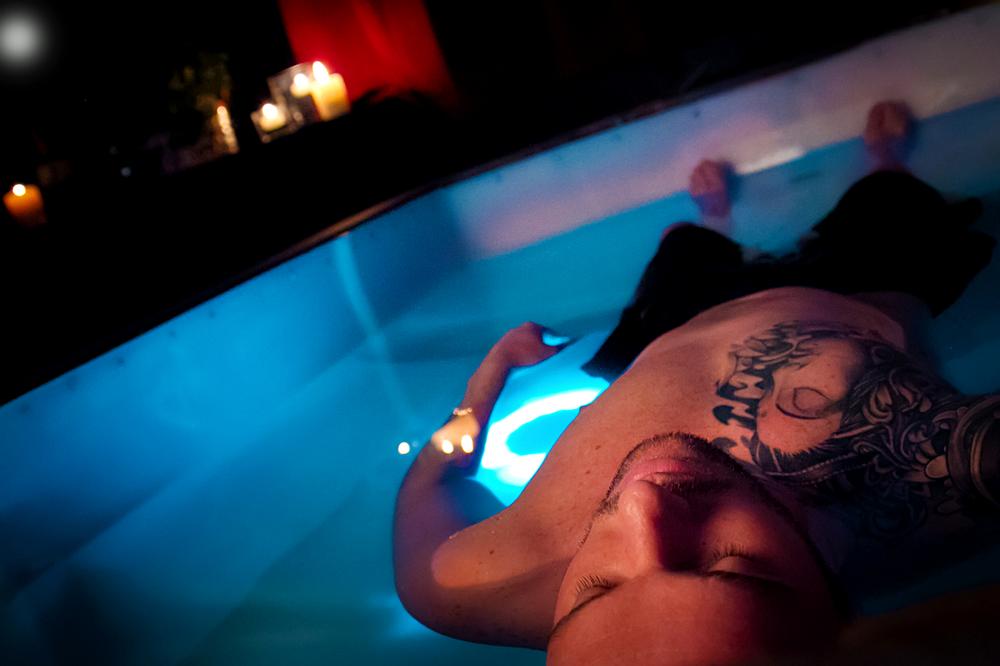
For example Kickstarter, the online crowdfunding platform, is enabling creators to pre-sell and therefore test demand for their products and services. It’s seen US$1.3bn worth of pledges to over 70,000 projects – including US$296,000 raised by Zen Float, a US-based isolation tank company that’s designed the first affordable floatation tank for the home.

Brave new world
It’s now a brave new post-demographic world, where consumer tastes and behaviours can no longer be understood by traditional demographic approaches. Successful products, services and brands will transcend their initial demographics almost instantaneously.

As a result, businesses that continue to attempt to navigate using demographic maps – with their borders defined by age, gender, location and income – will be ill-prepared for the speed, scale and direction of change.

By contrast, organisations that explore opportunities for innovation among seemingly dissimilar or even opposite demographics – and that can incorporate their learning into their strategies (no matter which demographic segment they target) – will be the most likely to succeed.

Find out more

As one of the world’s leading trend firms, trendwatching.com sends out its free, monthly Trends Briefings in nine languages to more than 160,000 subscribers. Sign up at www.trendwatching.com

This feature first appeared in the 2015 edition of the Spa Business Handbook, published in June 2015. For more information visit spahandbook.com

Sign up here to get HCM's weekly ezine and every issue of HCM magazine free on digital.
Growing urbanisation has shattered traditional social structures and values such as the family unit and gender roles / www.shutterstock.com
Crowdfunding enables companies like Zen Float to pre-test their products on the ‘new consumer’
Ex-wrestler Diamond Dallas Page aims his yoga at men
https://www.leisureopportunities.co.uk/images/927784_212361.jpg
Demographics are dead: Consumers no longer behave as they 'should'
Global trend agency trendwatching.com ,Demographics, post-demographic, trendwatching, selfie, Lululemon, Diamond Dallas Page, Zen Float, CrossFit kids, Thug Kitchen, Harley Davidson
HCM magazine
The fitness industry is mourning the passing of Les Mills, a founding father of fitness, as Kath Hudson reports
HCM magazine
As the 20th State of the Industry Report is released, LeisureDB has rebranded to Evolve, as Kath Hudson reports
HCM magazine
World Athletics president, Sebastian Coe talks to Liz Terry about the launch of Run X in partnership with Technogym
HCM magazine
Fuel the debate about issues and opportunities across the industry. We’d love to hear from you. Write to [email protected]
HCM magazine
Lisa Starr tries the Ammortal Chamber to see whether layering 10 modalities into one experience really delivers more
HCM promotional features
Sponsored
Social fitness the missing link to member engagement, according to a new Myzone report
HCM promotional features
Sponsored
SnowDome Fitness has added 50 per cent more space with cutting-edge Technogym solutions
HCM promotional features
Sponsored
Greg Bradley looks at the shift towards strength training in gyms and advises on how operators can create the ultimate training environment
HCM promotional features
Sponsored
Third Space partnered with IndigoFitness to deliver a bespoke training space for its new club at The Whiteley
HCM promotional features
Sponsored
David Lloyd is stepping up its commitment to women’s health as it continues to explore what fit-for-purpose looks like for the female population
HCM promotional features
Sponsored
Starpool supports Olympic champion Marcell Jacobs, says Riccardo Turri
HCM promotional features
Sponsored
Find out how your gym can tap into the corporate wellness boom
HCM promotional features
Sponsored
EGYM has opened a new HQ in Paternoster Square, London and revealed a range of new launches
HCM promotional features
Latest News
According to research which tracked more than 147,000 people for 30 years, 90-120 minutes of ...
Latest News
Everlast Gyms expands its footprint outside of the UK this month with the imminent launch ...
Latest News
The UK's four Chief Medical Officers have published a refreshed edition of  Physical activity guidelines: ...
Latest News
Places Leisure has exchanged contracts to build and operate a flagship £60m water and wellness ...
Latest News
The Republic of Ireland will become the latest market in PureGym’s expanding international portfolio, with ...
Latest News
Sophie Lawler, CEO of Total Fitness, has launched a leadership coaching business aimed at helping ...
Latest News
Anytime Fitness reaches a milestone this week with the launch of its 6000th site. The ...
Latest News
The £33.9 million Leighton Leisure and Community Centre has opened in Leighton Buzzard, UK, creating ...
Opinion
promotion
Strength training has moved from the margins to the mainstream.
Opinion: Building smarter strength spaces for today’s operators
Featured supplier news
Featured supplier news: Cornerstone Connect helps Active Blackpool tackle health inequalities
Active Blackpool is deploying Cornerstone Connect, a new digital interface allowing disparate information from multiple systems to be aggregated into one dataset, to support its focus on reducing health inequalities and improving healthy life expectancy.
Featured supplier news
Featured supplier news: Legends never die: four legends, four philosophies of life
Panatta brought together four of the most influential figures in bodybuilding history on the stage of RiminiWellness 2026: Phil Heath, Lee Haney, Ronnie Coleman and Hany Rambod.
Company profiles
Company profile: Perfect Gym Solutions S.A.
Perfect Gym, part of the Sport Alliance group, is a global software provider specialising in ...
Company profiles
Company profile: Energym
At Energym, we’re redefining the role of fitness in a sustainable future. Our award-winning British ...
Supplier Showcases
Supplier Showcase - From nightclub to health club
Supplier Showcases
Supplier Showcase - Future-proofing
Catalogue Gallery
Click on a catalogue to view it online
Featured press releases
Fitbench press release: Emmis Studio builds a new strength training experience with Fitbench
Boutique fitness concept combines functional strength training, premium design and coach-led programming to make strength training more accessible.
Featured press releases
Innerva press release: Wrightcare embeds wellness and active living into next-generation care homes
A care home provider is developing a new generation of care homes where health, wellbeing and active living are embedded into everyday life.
Directory
Industrial washing machines
Miele Company Limited: Industrial washing machines
Water experiences and hydrotherapy solutions
Aquaform s.r.l.: Water experiences and hydrotherapy solutions
Spa and beauty equipment
Living Earth Crafts: Spa and beauty equipment
Hot tubs
MSpa International Ltd: Hot tubs
Fitness tracking platform
SpiviTech: Fitness tracking platform
Lockers
Crown Sports Lockers: Lockers
Property & Tenders
Stratford, East London.
Lee Valley Regional Park Authority
Property & Tenders
Y Felinheli, LL56 4QN
Newmark
Property & Tenders
Diary dates
21-24 Sep 2026
The Langham Huntington Pasadena , Pasadena, United States
Diary dates
06-08 Oct 2026
Messe Stuttgart, Stuttgart, Germany
Diary dates
22-22 Oct 2026
QEII Conference Centre, London,
Diary dates
26-29 Oct 2027
Koelnmesse Exhibition Centre, Cologne, Germany
Diary dates

features

Consumer trends: Breaking the mould

Is your business ready for post-demographic consumerism? Global trend agency trendwatching.com explains why it’s time to throw out the traditional (and tired) demographic models of consumer behaviour

Published in Health Club Management 2015 issue 8
Mandarin Oriental’s ‘Selfie in Paris’ tour for guests is a unique offer / www.shutterstock.com
The world has become too blurred, too fluid, for new innovations to remain the preserve of the young for long

Consumer behaviour can seem increasingly chaotic. In September 2014, Canada-based yoga wear brand Lululemon announced plans to open its first men’s-only store in New York. The move followed a successful Man Camp pop-up store in North Carolina and the launch of a popular Lululemon Men twitter account. In the UK, women account for the majority of video game players, and there are more gamers aged over 44 than under 18. Meanwhile, in August 2014, luxury hotel chain Mandarin Oriental launched its Selfie in Paris initiative, offering guests a tour of the French capital’s best ‘selfie’ spots with a private car and driver.

Confused? You should be: consumers are increasingly behaving in ways we least expect. These examples give glimpses into one of the most important shifts in consumerism of modern times, and one that will require a fundamental overhaul of the demographic-focused approach that businesses have used to understand and predict consumer behaviour for decades. Global trend firm trendwatching.com focuses on this topic in its Post-Demographic Consumer briefing, and here details what this means for the global wellness industry.

Welcome to post-demographic
So what’s driving this shift in consumerism? Well, we’re entering an age of post-demographic consumerism: one in which the traditional demographic segments – age, gender, income bracket, nationality and more – are becoming less meaningful as predictors of consumer behaviour. Instead, consumers are freer than ever to construct identities and lifestyles of their own choosing.

This trend will have a fundamental impact on fitness and wellness businesses that previously relied on traditional demographic models to target and connect with consumers. But it will also have a far-reaching implication for all consumer-facing businesses: namely, that few new products, services and experiences, if any, will remain the preserve of a single demographic for long.

This new era is driven by the merging of many of the mega-trends that have shaped the economy and society over the past few decades: globalisation, urbanisation, mass affluence and expanding consumer markets, widespread adoption of digital technologies and increasing socio-cultural diversity.

Why the change?
Four powerful forces are driving the shift towards post-demographic consumerism: the global brain, the decline of old social norms, increased product and service choice, and new ways of accruing and displaying status.

The emergence of an online global brain is seeing consumers from all walks of life buying and using services from the same top brands: think Facebook, Apple, Amazon and more. The worldwide reach of information has caused the emergence of a global shared consciousness and left consumers from Seattle to Shanghai lusting after the same sneakers, smartphones and sushi.

Meanwhile, urbanisation has shattered traditional social structures and values/norms such as the family unit and gender roles, giving consumers permission to live the lives they choose rather than those determined for them by age, gender, location and other traditional demographic labels. According to JWT Intelligence, 87 per cent of BRIC millennials believe the freedom and exposure of living in the city has widened their world view. The choice and freedom found in cities gives these individuals more opportunities to construct their own identities outside of the traditions of their specific demographic, and this group has become more accepting of alternative and non-mainstream lifestyles.

A greater variety in product choice and an international expansion of the global class has allowed people to personalise and express themselves through their consumptions at a greater degree than ever before. All demographics are using social media to relate and associate themselves with brands – even if they don’t necessarily use or buy the product or service.

Consumers are ignoring demographic convictions and are picking – as well as identifying with – a wide range of brands. They’re frequently stepping across demographic boundaries. As BBC Radio 1’s head of music George Ergatoudis observes: “If you look at the list of the 1,000 favourite artists for 60-year-olds and the 1,000 favourite artists for 13-year-olds, there’s a 40 per cent overlap.”

Yes, younger consumers are still the most frequent first adopters of new and compelling inventions. They’re more open, more experimental and have fewer commitments. However, the world has become too blurred, too fluid, for new innovations to remain the preserve of the young for long. Now, all demographics are taking an active role as users of new and revolutionary gadgets and inventions.

Indeed, we see this again and again when looking at the adoption of novel and supposedly niche consumption habits. A 2014 study by Crowd Companies shows that, while 48 per cent of those who had used ‘neo-sharing’ collaborative consumption platforms (such as Airbnb, Zipcar and Kickstarter) were aged 18–34 years, 33 per cent were aged 35–54 and 19 per cent were aged over 55.

Action plan
So, how should businesses respond to these shifts in consumerism? Below, we detail four axes along which wellness businesses can plot their response.

Embrace the new normal: Celebrate new racial, social, cultural and sexual norms. Coca-Cola’s (in)famous 2014 Super Bowl spot – featuring America the Beautiful sung in a wide variety of languages (including Tagalog, Hindi and Hebrew) and by people from various races, religions and families – caused controversy with its non-traditional depiction of US society. But the drinks giant knew that demographics were on its side: the US saw a 32 per cent growth in its multi-racial population between 2000 and 2010.

Similarly, in October 2013, Indian jewellery brand Tanishq promoted its wedding collection in a commercial featuring a bride with her daughter from a previous union – the first campaign of its kind in India.

Be heretical towards your brand heritage: Brands should be willing to re-interpret or even overturn decades of brand history and tradition and do the opposite of what everyone expects: a powerful way to win the attention of new customers. In 2014, the Thug Kitchen vegan diet blog abandoned the ‘new age’ image typically associated with veganism and gave itself a sweary, aggressive makeover. It now bills itself “the only website dedicated to verbally abusing you into a healthier diet”.

Another example? For decades, the Harley Davidson brand could be summed up by one word: rebel. But in October 2014 the brand went heretical: it embraced environmental responsibility by partnering with The Nature Conservancy on a pledge to plant 50 million trees by 2020.

Encourage cross-demographic fertilisation: With consumer preferences ever more universal, the opportunities to transfer innovations from an initial demographic to another have never been greater – a very potent play for health and wellness brands. Ex-wrestler Diamond Dallas Page created DDP Yoga after finding that practising yoga helped him recover from injury. Targeting men who might be sceptical of conventional spiritual yoga programmes, DDP Yoga incorporates additional muscle strengthening elements.

Similarly, CrossFit Kids – a variant of the high-intensity workout phenomenon – can now be found in over 1,800 gyms and 1,000 schools around the world.

Focus on small niches: Thanks to expanding and online markets, there’s a real opportunity for businesses to focus on small groups and fringe niches that weren’t previously accessible.

For example Kickstarter, the online crowdfunding platform, is enabling creators to pre-sell and therefore test demand for their products and services. It’s seen US$1.3bn worth of pledges to over 70,000 projects – including US$296,000 raised by Zen Float, a US-based isolation tank company that’s designed the first affordable floatation tank for the home.

Brave new world
It’s now a brave new post-demographic world, where consumer tastes and behaviours can no longer be understood by traditional demographic approaches. Successful products, services and brands will transcend their initial demographics almost instantaneously.

As a result, businesses that continue to attempt to navigate using demographic maps – with their borders defined by age, gender, location and income – will be ill-prepared for the speed, scale and direction of change.

By contrast, organisations that explore opportunities for innovation among seemingly dissimilar or even opposite demographics – and that can incorporate their learning into their strategies (no matter which demographic segment they target) – will be the most likely to succeed.

Find out more

As one of the world’s leading trend firms, trendwatching.com sends out its free, monthly Trends Briefings in nine languages to more than 160,000 subscribers. Sign up at www.trendwatching.com

This feature first appeared in the 2015 edition of the Spa Business Handbook, published in June 2015. For more information visit spahandbook.com

Sign up here to get HCM's weekly ezine and every issue of HCM magazine free on digital.
Growing urbanisation has shattered traditional social structures and values such as the family unit and gender roles / www.shutterstock.com
Crowdfunding enables companies like Zen Float to pre-test their products on the ‘new consumer’
Ex-wrestler Diamond Dallas Page aims his yoga at men
https://www.leisureopportunities.co.uk/images/927784_212361.jpg
Demographics are dead: Consumers no longer behave as they 'should'
Global trend agency trendwatching.com ,Demographics, post-demographic, trendwatching, selfie, Lululemon, Diamond Dallas Page, Zen Float, CrossFit kids, Thug Kitchen, Harley Davidson
Latest News
According to research which tracked more than 147,000 people for 30 years, 90-120 minutes of ...

Latest News
Everlast Gyms expands its footprint outside of the UK this month with the imminent launch ...
Latest News
The UK's four Chief Medical Officers have published a refreshed edition of  Physical activity guidelines: ...
Latest News
Places Leisure has exchanged contracts to build and operate a flagship £60m water and wellness ...
Latest News
The Republic of Ireland will become the latest market in PureGym’s expanding international portfolio, with ...
Latest News
Sophie Lawler, CEO of Total Fitness, has launched a leadership coaching business aimed at helping ...
Latest News
Anytime Fitness reaches a milestone this week with the launch of its 6000th site. The ...
Latest News
The £33.9 million Leighton Leisure and Community Centre has opened in Leighton Buzzard, UK, creating ...
Latest News
YogaSix, the yoga brand owned by Xponential Fitness, has launched a heated, Pilates-inspired class called ...
Latest News
Walnuts Leisure Centre in Orpington, in the London Borough of Bromley, has reopened following a ...
Latest News
The Gym Group, has announced that it's sustained positive trading momentum has continued through the ...
Opinion
promotion
Strength training has moved from the margins to the mainstream.
Opinion: Building smarter strength spaces for today’s operators
Featured supplier news
Featured supplier news: Cornerstone Connect helps Active Blackpool tackle health inequalities
Active Blackpool is deploying Cornerstone Connect, a new digital interface allowing disparate information from multiple systems to be aggregated into one dataset, to support its focus on reducing health inequalities and improving healthy life expectancy.
Featured supplier news
Featured supplier news: Legends never die: four legends, four philosophies of life
Panatta brought together four of the most influential figures in bodybuilding history on the stage of RiminiWellness 2026: Phil Heath, Lee Haney, Ronnie Coleman and Hany Rambod.
Company profiles
Company profile: Perfect Gym Solutions S.A.
Perfect Gym, part of the Sport Alliance group, is a global software provider specialising in ...
Company profiles
Company profile: Energym
At Energym, we’re redefining the role of fitness in a sustainable future. Our award-winning British ...
Supplier Showcases
Supplier Showcase - From nightclub to health club
Supplier Showcases
Supplier Showcase - Future-proofing
Catalogue Gallery
Click on a catalogue to view it online
Featured press releases
Fitbench press release: Emmis Studio builds a new strength training experience with Fitbench
Boutique fitness concept combines functional strength training, premium design and coach-led programming to make strength training more accessible.
Featured press releases
Innerva press release: Wrightcare embeds wellness and active living into next-generation care homes
A care home provider is developing a new generation of care homes where health, wellbeing and active living are embedded into everyday life.
Directory
Industrial washing machines
Miele Company Limited: Industrial washing machines
Water experiences and hydrotherapy solutions
Aquaform s.r.l.: Water experiences and hydrotherapy solutions
Spa and beauty equipment
Living Earth Crafts: Spa and beauty equipment
Hot tubs
MSpa International Ltd: Hot tubs
Fitness tracking platform
SpiviTech: Fitness tracking platform
Lockers
Crown Sports Lockers: Lockers
Property & Tenders
Stratford, East London.
Lee Valley Regional Park Authority
Property & Tenders
Y Felinheli, LL56 4QN
Newmark
Property & Tenders
Diary dates
21-24 Sep 2026
The Langham Huntington Pasadena , Pasadena, United States
Diary dates
06-08 Oct 2026
Messe Stuttgart, Stuttgart, Germany
Diary dates
22-22 Oct 2026
QEII Conference Centre, London,
Diary dates
26-29 Oct 2027
Koelnmesse Exhibition Centre, Cologne, Germany
Diary dates
Search news, features & products:
Find a supplier:
Partner sites