























Follow Health Club Management on Twitter Like Health Club Management on Facebook Join the discussion with Health Club Management on LinkedIn
FITNESS, HEALTH, WELLNESS

features

Consumer research: Growth opportunities

Michael Oliver outlines the findings of Mintel’s 2013 health, fitness and leisure reports, and offers his thoughts on the opportunities to further extend the sector’s reach

By Michael Oliver, Mintel | Published in Health Club Management 2014 issue 1

Mintel’s latest research into the leisure industry – Leisure Review 2013, published in October 2013 – paints a positive picture for health and fitness, highlighting consumers’ reluctance to cut back their leisure centre usage, private health and fitness club membership and participation in sports.

As for many sectors, the main issue for the leisure industry has been the squeeze on consumer incomes being exerted by the combination of high inflation and low earnings growth, which means people are becoming worse off in real terms month by month.

However, the report highlights a resilient industry. Despite tough economic conditions, as many as half (48 per cent) of respondents are spending the same on using private sector health clubs now as they were 12 months ago, while 16 per cent of respondents are spending more.

In the public sector, 50 per cent are spending about the same, and 10 per cent are spending more.

Overall, roughly three in 10 Brits (30 per cent) have used a private health and fitness club in the past 12 months, with just under one in 10 (8 per cent) using one on a weekly basis, and one in 20 (5 per cent) on a monthly basis.

Wooing women
However, research finds there remains a notable disparity in health club usage between women and men in the UK – a point highlighted in the June 2013 Health and Fitness Clubs UK report. This is something that’s not evident in the US, where there’s broad parity of usage. One of the reasons for this is likely to be that health club membership is considerably cheaper on average in the US than the UK, and women tend to be more cautious than men when it comes to making financial commitments. The rapid expansion of the budget health club sector in the UK should go a long way towards tackling this.

Other opportunities also exist to increase female membership. The main factors that potential female users say would motivate them to start using a health club are – aside from general health/wellness – losing weight, looking better and feeling better about themselves. Unsurprisingly then, when asked what would encourage them to join or rejoin a health club, women were much more likely than men to be influenced by appearance-driven factors – an unflattering remark about their appearance or fitness, for example, or an unflattering holiday photo – indicating that marketing activity focused on the physical and emotional benefits of losing weight, looking and feeling good remains a strong platform for clubs to promote themselves to potential female users.

Women are most likely to be influenced by a free trial or a pay as you go option, echoing the findings noted above regarding women’s higher levels of caution in financial matters. Research findings suggest that potential female users have a particular concern about committing to a contract with a club, only to find they don’t like it or don’t use it as much as they thought they would.

Additionally, women are notably more likely than men to agree that they have, or would have, a hard time getting motivated to go to a club – but also that they would be more interested in using a health club if they had someone to work out with. This suggests some potential for developing memberships for people who work out together, such as a Best Friends deal or similar where, as long as they both visit together or each work out a certain number of times a month, they are entitled to a discounted rate. Visiting and working out together would help with motivation and improve retention rates.

‘Budget plus’
With a continued squeeze on incomes, affordability remains a significant barrier to more people joining health clubs at the moment. The current crop of budget clubs are addressing this issue pretty well and it’s hard to see how else the services they provide could be delivered for less money.

The only other way would be to ‘disaggregate’ each aspect and specialise – as is the case with the emerging crop of microgym operators – or for more operators to offer ‘disaggregated’ memberships, so that if people just want to swim or to do classes, they pay only for that service and nothing else.

Another area where there could be potential would be a category of ‘budget plus’ clubs, where a slightly different positioning is adopted to broaden the appeal. There could, for example, be an opportunity for a budget club format to be developed with the aim of appealing primarily to the family market, with memberships sold on a per family or per household basis, entitling all members of a family to use the facilities and offering activities and classes which the whole family could do together. This could have the effect of establishing good (exercise) habits early on in the life of children, while at the same time ensuring that older family members look after their bodies as they grow older.

Exercise is medicine
Overall, the industry has benefited from the growing ‘exercise is medicine’ trend, with people being prescribed physical activity as an alternative to drugs to combat diseases, illnesses and ailments. Many gym and leisure facility operators have launched dedicated programmes, along with specific memberships for those recovering from illness.

In March 2012, cancer patients at hospitals run by North Bristol NHS Trust were offered exercise classes to reduce the risk of the disease spreading or returning. The classes were devised by hospital physiotherapists for patients who had completed their medical course of treatment for cancer. Meanwhile, Aquaterra Leisure’s cancer survivorship programme is free to patients registered with an Islington GP. On completion of the 12-week plan, participants are entitled to a significantly discounted membership at Aquaterra’s leisure centres.

There is significant opportunity for further growth in this medical arena.

Potential members
Finally, the report looks at potential users. Future users of private health and fitness clubs can be divided into two main groups: those who have been users previously, but who have let their membership lapse; and those who have never been users but say they would like to be. Lapsed users are a large group consisting mainly of under-45s, whereas those who have never been users are concentrated among the 16- to 24-year-old age range.

For lapsed users, the main reason why they stopped using a health club was that they felt they couldn’t afford it. Logically, they are most likely to respond to a membership deal that’s too good to turn down; this is most likely to come from one of the budget club operators.

Cost is also likely to be the main barrier for those who have never been users, who are most likely to be from the C2 socio-economic group and to describe their current financial situation as ‘struggling’.

Related to cost, flexible payment options are likely to prove a key determining factor, with strong interest among potential users in free trials or pay as you go options.

Removing as many potential objections as possible – which some operators, in particular in the budget sector, have done by offering things such as day passes, no-contract monthly memberships and an option to freeze membership – is the best way for operators to encourage potential users through the doors.

Michael Oliver is senior leisure analyst for Mintel. Mintel’s latest Health and Fitness Clubs UK report was published in June 2013, with the Leisure Review 2013 published in October 2013.

Website: www.mintel.com
Twitter: www.twitter.com/mintelnews
LinkedIn: http://www.linkedin.com/groups?mostPopular=&gid=1888954


Sign up here to get HCM's weekly ezine and every issue of HCM magazine free on digital.
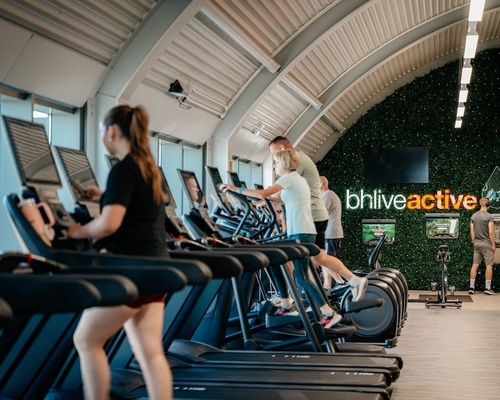
As many as half of respondents are spending the same on using health clubs and leisure centres now as they were a year ago / all Photo: Shutterstock.com
Gender disparity: In the UK, more men than women work out at gyms / all Photo: Shutterstock.com
Many women prefer to have a workout companion – so clubs might consider a Best Friends discount / all Photo: Shutterstock.com
https://www.leisureopportunities.co.uk/images/HCM2014_1research.gif
Michael Oliver outlines the findings of Mintel's 2013 health, fitness and leisure reports, and offers his views on future opportunities
Michael Oliver is senior leisure analyst for Mintel,Mintel, research, Leisure Review 2013, 2013 Health & Fitness Clubs UK, women, budget clubs, new members
HCM magazine
Small improvements to sleep, diet and physical activity have major benefits for the heart, according to new research from the University of Sydney
HCM magazine
Strength training is evolving, driven by changing consumer preferences. Julie Cramer talks to innovators about how their products are meeting this demand
HCM magazine
As the entrepreneur who started Wexer, Fresh Fitness, Fitness DK and Repeat, as well as being a former elite athlete, Rasmus Ingerslev’s life looked perfect from the outside, but onthe inside it was a different story. He talks to Kath Hudson about healing old wounds
HCM magazine
HCM People

Stephen Price

Founder, SP&Co Group
Working in public health over the last few years has lit up parts of my brain again
HCM magazine
Collaborations with the medical profession and greater aspirations around wellbeing are creating a need for more experts in our sector. It’s time to reboot our thinking around the workforce
HCM promotional features
Sponsored
SnowDome Fitness has added 50 per cent more space with cutting-edge Technogym solutions
HCM promotional features
Sponsored
Find out how your gym can tap into the corporate wellness boom
HCM promotional features
Sponsored
David Lloyd is stepping up its commitment to women’s health as it continues to explore what fit-for-purpose looks like for the female population
HCM promotional features
Sponsored
Third Space partnered with IndigoFitness to deliver a bespoke training space for its new club at The Whiteley
HCM promotional features
Sponsored
Greg Bradley looks at the shift towards strength training in gyms and advises on how operators can create the ultimate training environment
HCM promotional features
Sponsored
Starpool supports Olympic champion Marcell Jacobs, says Riccardo Turri
HCM promotional features
Sponsored
EGYM has opened a new HQ in Paternoster Square, London and revealed a range of new launches
HCM promotional features
Promotion
Performance Health Systems, manufacturer of Power Plate, has a new CEO, with an ambitious vision for the company
HCM promotional features
Sponsored
The industry is embracing consumer-facing tech. Now it’s time to streamline back-of-house systems with Orbit4, says Daniel Jones
HCM promotional features
Latest News
US high-value, low-price chain, Eos Fitness, has announced plans to pilot reformer Pilates in three ...
Latest News
Preventive healthcare company Neko Health has added body composition analysis to its full-body health scan ...
Latest News
Chequan Lewis is the new CEO of Crunch Fitness, taking over from Jim Rowley, who ...
Latest News
Sea Lanes Canary Wharf has officially opened. The 50-metre, six-lane pool, which uses the natural ...
Latest News
London-based high-performance fitness club, ONE LDN, is raising funds for a multi-site expansion across London, ...
Latest News
A new brain clinic has opened in London, which uses non-invasive brain stimulation to treat ...
Latest News
Good Boost’s digital exercise programmes are helping adults with MSK at a lower cost than ...
Latest News
With Prime Minister, Keir Starmer, announcing his resignation this morning and Andy Burnham as a ...
Opinion
promotion
Strength training has moved from the margins to the mainstream.
Opinion: Building smarter strength spaces for today’s operators
Featured supplier news
Featured supplier news: Cornerstone Connect helps Active Blackpool tackle health inequalities
Active Blackpool is deploying Cornerstone Connect, a new digital interface allowing disparate information from multiple systems to be aggregated into one dataset, to support its focus on reducing health inequalities and improving healthy life expectancy.
Featured supplier news
Featured supplier news: CoverMe extends matching service to personal training, rewriting how members and personal trainers connect
CoverMe, the global leader in fitness workforce management, today launches CoverMe PT, an on-demand personal training platform that connects the right personal trainer to the right client in under 10 seconds.
Company profiles
Company profile: Parkwood Leisure
Parkwood Leisure provides bespoke management and professional support services for leisure, cultural, and health and ...
Company profiles
Company profile: CET CryoSpas
CET have developed ice baths specifically for the fitness and wellness sectors in addition to ...
Supplier Showcases
Supplier Showcase - Future-proofing
Catalogue Gallery
Click on a catalogue to view it online
Featured press releases
CoverMe press release: CoverMe and Jobs In. Fitness partner to create end-to-end talent solution
CoverMe, the UK’s leading fitness workforce management and recruitment platform, now gives operators access to talent for every level of their business, thanks to a new strategic partnership with Jobs In. Fitness.
Featured press releases
BLK BOX press release: Inside the build: Salt 
To bring their concept to life, Salt partnered with BLK BOX to design and equip a facility that would deliver a premium training experience while supporting the needs of a diverse and growing community.
Directory
Lockers
Crown Sports Lockers: Lockers
Fitness tracking platform
SpiviTech: Fitness tracking platform
Industrial washing machines
Miele Company Limited: Industrial washing machines
Spa and beauty equipment
Living Earth Crafts: Spa and beauty equipment
Water experiences and hydrotherapy solutions
Aquaform s.r.l.: Water experiences and hydrotherapy solutions
Hot tubs
MSpa International Ltd: Hot tubs
Property & Tenders
Stratford, East London.
Lee Valley Regional Park Authority
Property & Tenders
Y Felinheli, LL56 4QN
Newmark
Property & Tenders
Diary dates
21-24 Sep 2026
The Langham Huntington Pasadena , Pasadena, United States
Diary dates
06-08 Oct 2026
Messe Stuttgart, Stuttgart, Germany
Diary dates
22-22 Oct 2026
QEII Conference Centre, London,
Diary dates
26-29 Oct 2027
Koelnmesse Exhibition Centre, Cologne, Germany
Diary dates

features

Consumer research: Growth opportunities

Michael Oliver outlines the findings of Mintel’s 2013 health, fitness and leisure reports, and offers his thoughts on the opportunities to further extend the sector’s reach

By Michael Oliver, Mintel | Published in Health Club Management 2014 issue 1

Mintel’s latest research into the leisure industry – Leisure Review 2013, published in October 2013 – paints a positive picture for health and fitness, highlighting consumers’ reluctance to cut back their leisure centre usage, private health and fitness club membership and participation in sports.

As for many sectors, the main issue for the leisure industry has been the squeeze on consumer incomes being exerted by the combination of high inflation and low earnings growth, which means people are becoming worse off in real terms month by month.

However, the report highlights a resilient industry. Despite tough economic conditions, as many as half (48 per cent) of respondents are spending the same on using private sector health clubs now as they were 12 months ago, while 16 per cent of respondents are spending more.

In the public sector, 50 per cent are spending about the same, and 10 per cent are spending more.

Overall, roughly three in 10 Brits (30 per cent) have used a private health and fitness club in the past 12 months, with just under one in 10 (8 per cent) using one on a weekly basis, and one in 20 (5 per cent) on a monthly basis.

Wooing women
However, research finds there remains a notable disparity in health club usage between women and men in the UK – a point highlighted in the June 2013 Health and Fitness Clubs UK report. This is something that’s not evident in the US, where there’s broad parity of usage. One of the reasons for this is likely to be that health club membership is considerably cheaper on average in the US than the UK, and women tend to be more cautious than men when it comes to making financial commitments. The rapid expansion of the budget health club sector in the UK should go a long way towards tackling this.

Other opportunities also exist to increase female membership. The main factors that potential female users say would motivate them to start using a health club are – aside from general health/wellness – losing weight, looking better and feeling better about themselves. Unsurprisingly then, when asked what would encourage them to join or rejoin a health club, women were much more likely than men to be influenced by appearance-driven factors – an unflattering remark about their appearance or fitness, for example, or an unflattering holiday photo – indicating that marketing activity focused on the physical and emotional benefits of losing weight, looking and feeling good remains a strong platform for clubs to promote themselves to potential female users.

Women are most likely to be influenced by a free trial or a pay as you go option, echoing the findings noted above regarding women’s higher levels of caution in financial matters. Research findings suggest that potential female users have a particular concern about committing to a contract with a club, only to find they don’t like it or don’t use it as much as they thought they would.

Additionally, women are notably more likely than men to agree that they have, or would have, a hard time getting motivated to go to a club – but also that they would be more interested in using a health club if they had someone to work out with. This suggests some potential for developing memberships for people who work out together, such as a Best Friends deal or similar where, as long as they both visit together or each work out a certain number of times a month, they are entitled to a discounted rate. Visiting and working out together would help with motivation and improve retention rates.

‘Budget plus’
With a continued squeeze on incomes, affordability remains a significant barrier to more people joining health clubs at the moment. The current crop of budget clubs are addressing this issue pretty well and it’s hard to see how else the services they provide could be delivered for less money.

The only other way would be to ‘disaggregate’ each aspect and specialise – as is the case with the emerging crop of microgym operators – or for more operators to offer ‘disaggregated’ memberships, so that if people just want to swim or to do classes, they pay only for that service and nothing else.

Another area where there could be potential would be a category of ‘budget plus’ clubs, where a slightly different positioning is adopted to broaden the appeal. There could, for example, be an opportunity for a budget club format to be developed with the aim of appealing primarily to the family market, with memberships sold on a per family or per household basis, entitling all members of a family to use the facilities and offering activities and classes which the whole family could do together. This could have the effect of establishing good (exercise) habits early on in the life of children, while at the same time ensuring that older family members look after their bodies as they grow older.

Exercise is medicine
Overall, the industry has benefited from the growing ‘exercise is medicine’ trend, with people being prescribed physical activity as an alternative to drugs to combat diseases, illnesses and ailments. Many gym and leisure facility operators have launched dedicated programmes, along with specific memberships for those recovering from illness.

In March 2012, cancer patients at hospitals run by North Bristol NHS Trust were offered exercise classes to reduce the risk of the disease spreading or returning. The classes were devised by hospital physiotherapists for patients who had completed their medical course of treatment for cancer. Meanwhile, Aquaterra Leisure’s cancer survivorship programme is free to patients registered with an Islington GP. On completion of the 12-week plan, participants are entitled to a significantly discounted membership at Aquaterra’s leisure centres.

There is significant opportunity for further growth in this medical arena.

Potential members
Finally, the report looks at potential users. Future users of private health and fitness clubs can be divided into two main groups: those who have been users previously, but who have let their membership lapse; and those who have never been users but say they would like to be. Lapsed users are a large group consisting mainly of under-45s, whereas those who have never been users are concentrated among the 16- to 24-year-old age range.

For lapsed users, the main reason why they stopped using a health club was that they felt they couldn’t afford it. Logically, they are most likely to respond to a membership deal that’s too good to turn down; this is most likely to come from one of the budget club operators.

Cost is also likely to be the main barrier for those who have never been users, who are most likely to be from the C2 socio-economic group and to describe their current financial situation as ‘struggling’.

Related to cost, flexible payment options are likely to prove a key determining factor, with strong interest among potential users in free trials or pay as you go options.

Removing as many potential objections as possible – which some operators, in particular in the budget sector, have done by offering things such as day passes, no-contract monthly memberships and an option to freeze membership – is the best way for operators to encourage potential users through the doors.

Michael Oliver is senior leisure analyst for Mintel. Mintel’s latest Health and Fitness Clubs UK report was published in June 2013, with the Leisure Review 2013 published in October 2013.

Website: www.mintel.com
Twitter: www.twitter.com/mintelnews
LinkedIn: http://www.linkedin.com/groups?mostPopular=&gid=1888954

Sign up here to get HCM's weekly ezine and every issue of HCM magazine free on digital.
As many as half of respondents are spending the same on using health clubs and leisure centres now as they were a year ago / all Photo: Shutterstock.com
Gender disparity: In the UK, more men than women work out at gyms / all Photo: Shutterstock.com
Many women prefer to have a workout companion – so clubs might consider a Best Friends discount / all Photo: Shutterstock.com
https://www.leisureopportunities.co.uk/images/HCM2014_1research.gif
Michael Oliver outlines the findings of Mintel's 2013 health, fitness and leisure reports, and offers his views on future opportunities
Michael Oliver is senior leisure analyst for Mintel,Mintel, research, Leisure Review 2013, 2013 Health & Fitness Clubs UK, women, budget clubs, new members
Latest News
US high-value, low-price chain, Eos Fitness, has announced plans to pilot reformer Pilates in three ...
Latest News
Preventive healthcare company Neko Health has added body composition analysis to its full-body health scan ...
Latest News
Chequan Lewis is the new CEO of Crunch Fitness, taking over from Jim Rowley, who ...
Latest News
Sea Lanes Canary Wharf has officially opened. The 50-metre, six-lane pool, which uses the natural ...
Latest News
London-based high-performance fitness club, ONE LDN, is raising funds for a multi-site expansion across London, ...
Latest News
A new brain clinic has opened in London, which uses non-invasive brain stimulation to treat ...
Latest News
Good Boost’s digital exercise programmes are helping adults with MSK at a lower cost than ...
Latest News
With Prime Minister, Keir Starmer, announcing his resignation this morning and Andy Burnham as a ...
Latest News
Koru Health Club launched recently within Luxembourg’s multi-experience destination, GRID X, which combines culture, retail ...
Latest News
Celebrating its 10th anniversary, Elevate has had its busiest show to date, with almost 200 ...
Latest News
A new report from Your Personal Training (YPT) suggests UK gym operators could be missing ...
Opinion
promotion
Strength training has moved from the margins to the mainstream.
Opinion: Building smarter strength spaces for today’s operators
Featured supplier news
Featured supplier news: Cornerstone Connect helps Active Blackpool tackle health inequalities
Active Blackpool is deploying Cornerstone Connect, a new digital interface allowing disparate information from multiple systems to be aggregated into one dataset, to support its focus on reducing health inequalities and improving healthy life expectancy.
Featured supplier news
Featured supplier news: CoverMe extends matching service to personal training, rewriting how members and personal trainers connect
CoverMe, the global leader in fitness workforce management, today launches CoverMe PT, an on-demand personal training platform that connects the right personal trainer to the right client in under 10 seconds.
Company profiles
Company profile: Parkwood Leisure
Parkwood Leisure provides bespoke management and professional support services for leisure, cultural, and health and ...
Company profiles
Company profile: CET CryoSpas
CET have developed ice baths specifically for the fitness and wellness sectors in addition to ...
Supplier Showcases
Supplier Showcase - Future-proofing
Catalogue Gallery
Click on a catalogue to view it online
Featured press releases
CoverMe press release: CoverMe and Jobs In. Fitness partner to create end-to-end talent solution
CoverMe, the UK’s leading fitness workforce management and recruitment platform, now gives operators access to talent for every level of their business, thanks to a new strategic partnership with Jobs In. Fitness.
Featured press releases
BLK BOX press release: Inside the build: Salt 
To bring their concept to life, Salt partnered with BLK BOX to design and equip a facility that would deliver a premium training experience while supporting the needs of a diverse and growing community.
Directory
Lockers
Crown Sports Lockers: Lockers
Fitness tracking platform
SpiviTech: Fitness tracking platform
Industrial washing machines
Miele Company Limited: Industrial washing machines
Spa and beauty equipment
Living Earth Crafts: Spa and beauty equipment
Water experiences and hydrotherapy solutions
Aquaform s.r.l.: Water experiences and hydrotherapy solutions
Hot tubs
MSpa International Ltd: Hot tubs
Property & Tenders
Stratford, East London.
Lee Valley Regional Park Authority
Property & Tenders
Y Felinheli, LL56 4QN
Newmark
Property & Tenders
Diary dates
21-24 Sep 2026

The Langham Huntington Pasadena , Pasadena, United States
Diary dates
06-08 Oct 2026
Messe Stuttgart, Stuttgart, Germany
Diary dates
22-22 Oct 2026
QEII Conference Centre, London,
Diary dates
26-29 Oct 2027
Koelnmesse Exhibition Centre, Cologne, Germany
Diary dates
Search news, features & products:
Find a supplier:
Partner sites