






















Follow Health Club Management on Twitter Like Health Club Management on Facebook Join the discussion with Health Club Management on LinkedIn
FITNESS, HEALTH, WELLNESS

features

Yield management: Revenue booster

Demand-based pricing, appointing a revenue manager, and promoting ‘spare space’. Our panel of experts talk to Kate Cracknell about improving yield in health clubs

By Kate Cracknell | Published in Health Club Management 2016 issue 5

A hardcore of morning exercisers, a lunchtime influx and then the predictable evening rush hour. Sound like a familiar pattern of attendance at your gym? Meanwhile, facilities lie all but empty during off-peak daytime hours – but rent, utilities and staff costs still need to be paid.

True, new offerings such as virtual group exercise allow for studios to be made use of off-peak, when instructor-led classes aren’t cost-effective. And there are some operators who offer things like senior sessions during quieter times, or who open their doors to schools so kids can use their facilities for PE lessons. But surely there’s more the fitness sector could be doing to drive usage of its facilities during quieter times, and with it extract maximum value from them?

Other sectors – notably the airlines – have strong yield management models, making sure as many seats as possible are filled on each flight. But, while the fitness sector is finally seeing some innovation in this area thanks to newcomers like Dibs – founded in New York in June 2015, which is helping studios fill classes and boost revenue via dynamic pricing – there’s still a long way to go for health club operators.

We ask the experts for their advice on how to improve yield management in the health and fitness sector.

Neil King,

MD,

1Life, UK

Neil King
Neil King

Variable pricing is one of the areas in which the leisure industry – including the fitness sector – currently lags behind other comparable sectors involved in the ‘space selling game’.

Once a time slot has gone – be it in a gym, swimming pool, sports hall, hotel room or cinema seat – you can never sell that space again. The moment is over and it’s gone forever. So why doesn’t our sector embrace the concept of variable pricing, given that one of the things that we all have is empty space?

We don’t need to worry about our peak time usage – this sells itself – but when faced with a daily utilisation figure of approximately 35 per cent in a four-badminton-court sports hall, there are clearly opportunities.

Attempts have been made with the introduction of off-peak pricing and concessionary pricing, but these were all solutions for the pre-digital age. Online bookings, social media and electronic ticketing all provide new opportunities to do things differently and more effectively. Via push notifications, we can now inform customers of when and where we have ‘spare space’. Add to that a variable pricing model, either real-time or via advanced discounted booking rates, and we could create a very different business – more flexible, higher occupancy, more commercial and one that’s really designed to encourage more people to be more active more often.

From an operator perspective, several forward-thinking companies would already like to sell my space for me, but how little thought and effort might it take for me to do this myself?

Variable pricing is therefore something 1Life is considering at the moment; we’re looking at ways we can be more innovative when it comes to the pricing of our products and services. If we get it right, it should hit two buttons: our commercial objectives and our social objectives.

“Once a time slot has gone – be it in a gym, a swimming pool, a sports hall, a hotel room or a cinema seat – you can never sell that space again” - Neil King

Alicia Thomas,

CEO & co-founder,

Dibs, US

Alicia Thomas
Alicia Thomas

Group fitness is the fastest-growing segment of the fitness industry, and yet over 40 per cent of group exercise classes go unfilled, leaving millions in unrealised revenue.

Mature industries like travel and retail have multiple channels and vehicles to offer variable discounts. By contrast, group fitness has subsisted on all-inclusive memberships or static pricing, combined with blunt discount platforms that devalue the brand – none of which accurately reflects the true demand.

For example, a Monday 7.30am group cycling class very likely has a much higher demand than the Thursday 2.30pm cycling class – yet the price is a constant.

The travel industry was the first to experiment with yield management in the 1970s, and it quickly became adopted industry-wide. More recently, the MLB applied yield management to sporting events, resulting in a revenue increase of 30 per cent.

With the fitness sector now shifting away from its traditional territory of monthly memberships, thanks to the emergence of boutique studios offering à la carte fitness classes, our model is becoming increasingly relevant and showing how yield management can also be applied to fitness.

With fitness studios, Dibs uses its proprietary algorithm to increase average revenue paid per seat by 30–50 per cent. Studios simply set the minimum and maximum prices they are willing to offer on classes, and our algorithm does the rest. The algorithm observes demand factors such as location, day of week, time of day, instructor, class type, historical fill rate and seasonality to determine the optimal price. As the class books out, the price of the class generally scales upwards so it incentivises users to book earlier to ensure the best spot and price.

As we expand our network of studio partners, we expect to see studios able to fill their classes to a minimum of 60–70 per cent utilisation – but more importantly, the studio will see a topline revenue lift of 30 per cent or more.

“With fitness studios, Dibs uses its algorithm to increase average revenue paid per seat by 30–50 per cent” - Alicia Thomas

As class prices scale up, Dibs users are incentivised to book early / PHOTOS: Shutterstock.com

Dave Courteen ,

MD,

Mosaic Spa & Health Clubs, UK

Dave Courteen
Dave Courteen

The critical factor within yield management is to maximise the revenue from a limited resource. Within our spas, this is therefore all about maximising the revenue we can generate from the therapist hours we have scheduled and the number of treatments we have available.

For health clubs, I would suggest the key is to yield the maximum revenue per member. There’s always a temptation to discount membership – especially with the significant growth of the budget gyms who, by definition, compete on price.

But while discounts may be a necessary part of the marketing mix, it’s important to ensure that over-eager sales staff aren’t focused purely on piling people in, but rather on signing up members who are paying the published price. A real focus on ‘value added’ membership, rather than simply a cheaper price, needs to be at the heart of any yield management strategy in the health club.

It’s also worth looking at the traditional industry practice of offering an off-peak membership at a reduced rate. While it’s recognised that this helps attract members into the club during quiet times, it could equally be argued that these off-peak members get an enhanced experience when using the facilities, with less waiting time for equipment and greater attention from staff – yet they pay less for it. Over the last few years, we’ve managed to reduce the gap between the peak and off-peak memberships at our Mosaic Clubs by putting up our off-peak prices by a greater amount than our peak.

New developments in technology also mean an opportunity exists for the health club to increase its yield by extending its services beyond the walls of its facility. Support for programmes and activities taken outside the health club by members, and monitored through a variety of wearables and fitness apps, not only allows the club to improve member retention, but also allows for greater yield management by charging for a complete wellness management service.

“For health clubs, I would suggest the key is to yield the maximum revenue per member” - Dave Courteen

Off-peak members can often get a better experience, so should they pay more, not less? / PHOTOS: Shutterstock.com

Anne Hawkins,

Executive vice president,,

STR, US

Anne Hawkins
Anne Hawkins

Every business is perpetually confronted with a key question: what is the price that should be offered to a customer depending on where, when and how the product/service is sold?

STR has witnessed the hotel industry respond to this question with increasingly sophisticated yield management practices.

Today, most hotels have a dedicated role – the revenue manager – whose primary job is to maximise yield for the property. The revenue manager must deal with numerous variables to set pricing that maximises yield: for example, how to price weekends versus weekdays; how to price transient/leisure travellers versus group/business travellers; how to price peak periods (eg New Year’s Eve) versus times of low demand; and how to think about direct bookings versus reservations made through a third party, where the hotel loses some margin.

Similar to hotels, health clubs deal with periods of peak demand and low demand. On a typical weekday, clubs tend to have peak periods in the morning and evening when workers aren’t at the office, as well as during lunch. A club might be somewhat idle during off-peak weekday hours. The opportunity exists for clubs to adopt yield management to shift demand to off-peak hours, which may have the added benefit of increasing customer satisfaction thanks to the quieter environment and lower off-peak prices.

The time might have come for health club operators to invest in revenue managers in the same way as hotels.

“Most hotels have a dedicated role – the revenue manager – whose primary job is to maximise yield for the property” - Anne Hawkins

Hotels charge different prices for different types of traveller – could gyms also segment more? / PHOTOS: Shutterstock.com

Tim Baker,

Chair,

Touchstone Partners, UK

Tim Baker
Tim Baker

Yield management – or price surging, as the modern lingo has it – is nothing new. It first came to my attention with the launch of airline easyJet, which is now celebrating 20 years of operation. This article explains how airlines do it: www.health-club.co.uk/airlines

Anyone who ever travels by rail is familiar with the core principle (peak, off-peak, advance tickets etc) and on the face of it, it seems odd that Uber is attracting so much negative attention for using a price surge algorithm. But taxi rides are more likely to be distress purchase items, and applying cold economic principles when emotions may be running high inevitably attracts accusations of exploitation, cold-heartedness and cynicism.

In other worlds, however, price surging doesn’t attract the same problems. It’s not just airlines and trains – hotels, holiday resorts and some leisure attractions all use price surging to manage a finite resource, so it doesn’t break at peak times and empty space is (hopefully) filled where there’s spare capacity. Guests understand this. So why wouldn’t gym members?

Indeed, it offers an opportunity to provide a better service in a more relaxed environment, and health clubs wouldn’t need the same complexity of algorithm used by the airlines and Uber.

However, the different price levels must be carefully considered. Explain that you’re providing a better service in a more relaxed environment for a carefully considered additional price. Get the ‘better service’ mix right and tell people about it: service items to shout about could include easier access to equipment and/or PTs, dedicated lockers, free use of towels and free use of usually paid-for items. ?

“Price surging allows clubs to provide a better service in a more relaxed environment” - Tim Baker


Sign up here to get HCM's weekly ezine and every issue of HCM magazine free on digital.
GLL is on board with Spice –people can use Time Credits to access its facilities
Time Credits “give people the opportunity to do something they wouldn’t normally consider”
https://www.leisureopportunities.co.uk/images/HCM2016_5yield.jpg
Lessons in driving revenue by managing yield at your gym
Neil King, MD, 1Life, UK Alicia Thomas, CEO & co-founder, Dibs, US Dave Courteen, MD, Mosaic Spa & Health Clubs, UK Tim Baker, Chair, Touchstone Partners, UK Anne Hawkins, Executive vice president, STR, US,Yield management, revenue, Neil King, Alicia Thomas, Dibs, Dave Courteen, 1Life, Mosaic, Anne Hawkins, STR, Tim Baker, Touchstone, pricing, price surging, Kate Cracknell
HCM magazine
HCM People

Stephen Price

Founder, SP&Co Group
Working in public health over the last few years has lit up parts of my brain again
HCM magazine
Collaborations with the medical profession and greater aspirations around wellbeing are creating a need for more experts in our sector. It’s time to reboot our thinking around the workforce
HCM magazine
I experienced a blissful feeling of joy I hadn’t felt since I was a kid
HCM magazine
If the health service is to survive, we must recognise that it is a disease service – and that wellbeing rests with us, says the activity advocate and healthy ageing champion. He talks to Kate Cracknell
HCM magazine
Small improvements to sleep, diet and physical activity have major benefits for the heart, according to new research from the University of Sydney
HCM promotional features
Sponsored
Starpool supports Olympic champion Marcell Jacobs, says Riccardo Turri
HCM promotional features
Sponsored
Greg Bradley looks at the shift towards strength training in gyms and advises on how operators can create the ultimate training environment
HCM promotional features
Sponsored
Third Space partnered with IndigoFitness to deliver a bespoke training space for its new club at The Whiteley
HCM promotional features
Sponsored
Find out how your gym can tap into the corporate wellness boom
HCM promotional features
Sponsored
SnowDome Fitness has added 50 per cent more space with cutting-edge Technogym solutions
HCM promotional features
Sponsored
David Lloyd is stepping up its commitment to women’s health as it continues to explore what fit-for-purpose looks like for the female population
HCM promotional features
Sponsored
EGYM has opened a new HQ in Paternoster Square, London and revealed a range of new launches
HCM promotional features
Promotion
Performance Health Systems, manufacturer of Power Plate, has a new CEO, with an ambitious vision for the company
HCM promotional features
Sponsored
New launch, Salus House, elevates boutique wellness with high service levels and a partnership with Technogym
HCM promotional features
Latest News
Celebrating its 10th anniversary, Elevate has had its busiest show to date, with almost 200 ...
Latest News
A new report from Your Personal Training (YPT) suggests UK gym operators could be missing ...
Latest News
Eighty-four per cent of consumers now say wellness is a top priority in their lives, ...
Latest News
Elevate Arena is underway at London's Excel and the hot topic of AI was the ...
Latest News
PureGym Group has announced that group chief financial officer, Alex Wood, is taking over the ...
Latest News
Independent operator, Fitness Worx Gyms, is introducing private blood testing as a service to members. ...
Latest News
International industry lobbying associations are calling for physical activity and strength training to be deeply ...
Latest News
Global group exercise specialist, Les Mills, is inviting operators to sign up to its Workout ...
Opinion
promotion
Strength training has moved from the margins to the mainstream.
Opinion: Building smarter strength spaces for today’s operators
Featured supplier news
Featured supplier news: Reaching the people most gyms miss: Bedford Gym & Swim Campaign delivers 410 new members
One of the biggest mistakes the fitness industry still makes is advertising almost exclusively to people who already look and live like gym members.
Featured supplier news
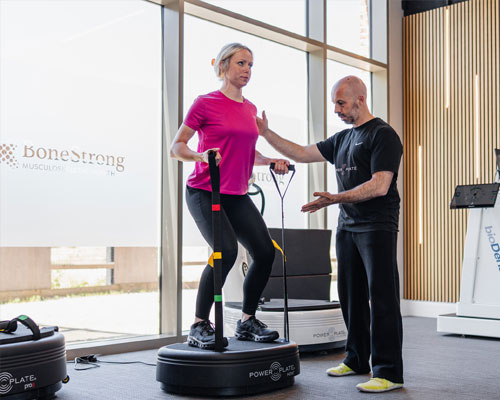
Featured supplier news: Supporting long-term health: why whole body vibration belongs in clinical settings
As healthcare continues to shift towards prevention, there’s a growing focus on helping people stay active, independent and feeling good for longer.
Company profiles
Company profile: Epassi UK
For the last 23 years they have been on a mission to create a fitter, ...
Company profiles
Company profile: Balanced Body
Founded nearly 50 years ago, Balanced Body works with the highest quality materials, and pride ...
Supplier Showcases
Supplier Showcase - From nightclub to health club
Supplier Showcases
Supplier Showcase - Future-proofing
Catalogue Gallery
Click on a catalogue to view it online
Featured press releases
Create PT press release: Create sets a new standard with its new personal training diploma
Create's new Personal Training Diploma is built on the depth, real-client practice and coaching judgement that turn a qualification into genuine readiness - taught as one continuous course so that every skill is reinforced and applied, not cleared once and forgotten.
Featured press releases
Leisure Energy press release: Studley Leisure Centre solar panel installation project begins
Stratford-on-Avon District Council is delighted to announce a new solar panel installation project at Studley Leisure Centre, marking an important step towards improving the sustainability of this valued community facility.
Directory
Hot tubs
MSpa International Ltd: Hot tubs
Lockers
Crown Sports Lockers: Lockers
Spa and beauty equipment
Living Earth Crafts: Spa and beauty equipment
Industrial washing machines
Miele Company Limited: Industrial washing machines
Fitness tracking platform
SpiviTech: Fitness tracking platform
Water experiences and hydrotherapy solutions
Aquaform s.r.l.: Water experiences and hydrotherapy solutions
Property & Tenders
Stratford, East London.
Lee Valley Regional Park Authority
Property & Tenders
Y Felinheli, LL56 4QN
Newmark
Property & Tenders
Diary dates
22-23 Jun 2026
WX Wakefield , Wakefield, United Kingdom
Diary dates
21-24 Sep 2026
The Langham Huntington Pasadena , Pasadena, United States
Diary dates
06-08 Oct 2026
Messe Stuttgart, Stuttgart, Germany
Diary dates
22-22 Oct 2026
QEII Conference Centre, London,
Diary dates
26-29 Oct 2027
Koelnmesse Exhibition Centre, Cologne, Germany
Diary dates

features

Yield management: Revenue booster

Demand-based pricing, appointing a revenue manager, and promoting ‘spare space’. Our panel of experts talk to Kate Cracknell about improving yield in health clubs

By Kate Cracknell | Published in Health Club Management 2016 issue 5

A hardcore of morning exercisers, a lunchtime influx and then the predictable evening rush hour. Sound like a familiar pattern of attendance at your gym? Meanwhile, facilities lie all but empty during off-peak daytime hours – but rent, utilities and staff costs still need to be paid.

True, new offerings such as virtual group exercise allow for studios to be made use of off-peak, when instructor-led classes aren’t cost-effective. And there are some operators who offer things like senior sessions during quieter times, or who open their doors to schools so kids can use their facilities for PE lessons. But surely there’s more the fitness sector could be doing to drive usage of its facilities during quieter times, and with it extract maximum value from them?

Other sectors – notably the airlines – have strong yield management models, making sure as many seats as possible are filled on each flight. But, while the fitness sector is finally seeing some innovation in this area thanks to newcomers like Dibs – founded in New York in June 2015, which is helping studios fill classes and boost revenue via dynamic pricing – there’s still a long way to go for health club operators.

We ask the experts for their advice on how to improve yield management in the health and fitness sector.

Neil King,

MD,

1Life, UK

Neil King
Neil King

Variable pricing is one of the areas in which the leisure industry – including the fitness sector – currently lags behind other comparable sectors involved in the ‘space selling game’.

Once a time slot has gone – be it in a gym, swimming pool, sports hall, hotel room or cinema seat – you can never sell that space again. The moment is over and it’s gone forever. So why doesn’t our sector embrace the concept of variable pricing, given that one of the things that we all have is empty space?

We don’t need to worry about our peak time usage – this sells itself – but when faced with a daily utilisation figure of approximately 35 per cent in a four-badminton-court sports hall, there are clearly opportunities.

Attempts have been made with the introduction of off-peak pricing and concessionary pricing, but these were all solutions for the pre-digital age. Online bookings, social media and electronic ticketing all provide new opportunities to do things differently and more effectively. Via push notifications, we can now inform customers of when and where we have ‘spare space’. Add to that a variable pricing model, either real-time or via advanced discounted booking rates, and we could create a very different business – more flexible, higher occupancy, more commercial and one that’s really designed to encourage more people to be more active more often.

From an operator perspective, several forward-thinking companies would already like to sell my space for me, but how little thought and effort might it take for me to do this myself?

Variable pricing is therefore something 1Life is considering at the moment; we’re looking at ways we can be more innovative when it comes to the pricing of our products and services. If we get it right, it should hit two buttons: our commercial objectives and our social objectives.

“Once a time slot has gone – be it in a gym, a swimming pool, a sports hall, a hotel room or a cinema seat – you can never sell that space again” - Neil King

Alicia Thomas,

CEO & co-founder,

Dibs, US

Alicia Thomas
Alicia Thomas

Group fitness is the fastest-growing segment of the fitness industry, and yet over 40 per cent of group exercise classes go unfilled, leaving millions in unrealised revenue.

Mature industries like travel and retail have multiple channels and vehicles to offer variable discounts. By contrast, group fitness has subsisted on all-inclusive memberships or static pricing, combined with blunt discount platforms that devalue the brand – none of which accurately reflects the true demand.

For example, a Monday 7.30am group cycling class very likely has a much higher demand than the Thursday 2.30pm cycling class – yet the price is a constant.

The travel industry was the first to experiment with yield management in the 1970s, and it quickly became adopted industry-wide. More recently, the MLB applied yield management to sporting events, resulting in a revenue increase of 30 per cent.

With the fitness sector now shifting away from its traditional territory of monthly memberships, thanks to the emergence of boutique studios offering à la carte fitness classes, our model is becoming increasingly relevant and showing how yield management can also be applied to fitness.

With fitness studios, Dibs uses its proprietary algorithm to increase average revenue paid per seat by 30–50 per cent. Studios simply set the minimum and maximum prices they are willing to offer on classes, and our algorithm does the rest. The algorithm observes demand factors such as location, day of week, time of day, instructor, class type, historical fill rate and seasonality to determine the optimal price. As the class books out, the price of the class generally scales upwards so it incentivises users to book earlier to ensure the best spot and price.

As we expand our network of studio partners, we expect to see studios able to fill their classes to a minimum of 60–70 per cent utilisation – but more importantly, the studio will see a topline revenue lift of 30 per cent or more.

“With fitness studios, Dibs uses its algorithm to increase average revenue paid per seat by 30–50 per cent” - Alicia Thomas

As class prices scale up, Dibs users are incentivised to book early / PHOTOS: Shutterstock.com

Dave Courteen ,

MD,

Mosaic Spa & Health Clubs, UK

Dave Courteen
Dave Courteen

The critical factor within yield management is to maximise the revenue from a limited resource. Within our spas, this is therefore all about maximising the revenue we can generate from the therapist hours we have scheduled and the number of treatments we have available.

For health clubs, I would suggest the key is to yield the maximum revenue per member. There’s always a temptation to discount membership – especially with the significant growth of the budget gyms who, by definition, compete on price.

But while discounts may be a necessary part of the marketing mix, it’s important to ensure that over-eager sales staff aren’t focused purely on piling people in, but rather on signing up members who are paying the published price. A real focus on ‘value added’ membership, rather than simply a cheaper price, needs to be at the heart of any yield management strategy in the health club.

It’s also worth looking at the traditional industry practice of offering an off-peak membership at a reduced rate. While it’s recognised that this helps attract members into the club during quiet times, it could equally be argued that these off-peak members get an enhanced experience when using the facilities, with less waiting time for equipment and greater attention from staff – yet they pay less for it. Over the last few years, we’ve managed to reduce the gap between the peak and off-peak memberships at our Mosaic Clubs by putting up our off-peak prices by a greater amount than our peak.

New developments in technology also mean an opportunity exists for the health club to increase its yield by extending its services beyond the walls of its facility. Support for programmes and activities taken outside the health club by members, and monitored through a variety of wearables and fitness apps, not only allows the club to improve member retention, but also allows for greater yield management by charging for a complete wellness management service.

“For health clubs, I would suggest the key is to yield the maximum revenue per member” - Dave Courteen

Off-peak members can often get a better experience, so should they pay more, not less? / PHOTOS: Shutterstock.com

Anne Hawkins,

Executive vice president,,

STR, US

Anne Hawkins
Anne Hawkins

Every business is perpetually confronted with a key question: what is the price that should be offered to a customer depending on where, when and how the product/service is sold?

STR has witnessed the hotel industry respond to this question with increasingly sophisticated yield management practices.

Today, most hotels have a dedicated role – the revenue manager – whose primary job is to maximise yield for the property. The revenue manager must deal with numerous variables to set pricing that maximises yield: for example, how to price weekends versus weekdays; how to price transient/leisure travellers versus group/business travellers; how to price peak periods (eg New Year’s Eve) versus times of low demand; and how to think about direct bookings versus reservations made through a third party, where the hotel loses some margin.

Similar to hotels, health clubs deal with periods of peak demand and low demand. On a typical weekday, clubs tend to have peak periods in the morning and evening when workers aren’t at the office, as well as during lunch. A club might be somewhat idle during off-peak weekday hours. The opportunity exists for clubs to adopt yield management to shift demand to off-peak hours, which may have the added benefit of increasing customer satisfaction thanks to the quieter environment and lower off-peak prices.

The time might have come for health club operators to invest in revenue managers in the same way as hotels.

“Most hotels have a dedicated role – the revenue manager – whose primary job is to maximise yield for the property” - Anne Hawkins

Hotels charge different prices for different types of traveller – could gyms also segment more? / PHOTOS: Shutterstock.com

Tim Baker,

Chair,

Touchstone Partners, UK

Tim Baker
Tim Baker

Yield management – or price surging, as the modern lingo has it – is nothing new. It first came to my attention with the launch of airline easyJet, which is now celebrating 20 years of operation. This article explains how airlines do it: www.health-club.co.uk/airlines

Anyone who ever travels by rail is familiar with the core principle (peak, off-peak, advance tickets etc) and on the face of it, it seems odd that Uber is attracting so much negative attention for using a price surge algorithm. But taxi rides are more likely to be distress purchase items, and applying cold economic principles when emotions may be running high inevitably attracts accusations of exploitation, cold-heartedness and cynicism.

In other worlds, however, price surging doesn’t attract the same problems. It’s not just airlines and trains – hotels, holiday resorts and some leisure attractions all use price surging to manage a finite resource, so it doesn’t break at peak times and empty space is (hopefully) filled where there’s spare capacity. Guests understand this. So why wouldn’t gym members?

Indeed, it offers an opportunity to provide a better service in a more relaxed environment, and health clubs wouldn’t need the same complexity of algorithm used by the airlines and Uber.

However, the different price levels must be carefully considered. Explain that you’re providing a better service in a more relaxed environment for a carefully considered additional price. Get the ‘better service’ mix right and tell people about it: service items to shout about could include easier access to equipment and/or PTs, dedicated lockers, free use of towels and free use of usually paid-for items. ?

“Price surging allows clubs to provide a better service in a more relaxed environment” - Tim Baker
Sign up here to get HCM's weekly ezine and every issue of HCM magazine free on digital.
GLL is on board with Spice –people can use Time Credits to access its facilities
Time Credits “give people the opportunity to do something they wouldn’t normally consider”
https://www.leisureopportunities.co.uk/images/HCM2016_5yield.jpg
Lessons in driving revenue by managing yield at your gym
Neil King, MD, 1Life, UK Alicia Thomas, CEO & co-founder, Dibs, US Dave Courteen, MD, Mosaic Spa & Health Clubs, UK Tim Baker, Chair, Touchstone Partners, UK Anne Hawkins, Executive vice president, STR, US,Yield management, revenue, Neil King, Alicia Thomas, Dibs, Dave Courteen, 1Life, Mosaic, Anne Hawkins, STR, Tim Baker, Touchstone, pricing, price surging, Kate Cracknell
Latest News
Celebrating its 10th anniversary, Elevate has had its busiest show to date, with almost 200 ...
Latest News
A new report from Your Personal Training (YPT) suggests UK gym operators could be missing ...
Latest News
Eighty-four per cent of consumers now say wellness is a top priority in their lives, ...

Latest News
Elevate Arena is underway at London's Excel and the hot topic of AI was the ...
Latest News
PureGym Group has announced that group chief financial officer, Alex Wood, is taking over the ...
Latest News
Independent operator, Fitness Worx Gyms, is introducing private blood testing as a service to members. ...
Latest News
International industry lobbying associations are calling for physical activity and strength training to be deeply ...
Latest News
Global group exercise specialist, Les Mills, is inviting operators to sign up to its Workout ...
Latest News
Global luxury hospitality brand, Six Senses, has partnered with longevity healthcare provider, HUM2N, to launch ...
Latest News
Premium London health club, KX Chelsea, is gearing up to unveil its most significant redevelopment ...
Latest News
Researchers in the US have identified an antibody which could greatly reduce the loss of ...
Opinion
promotion
Strength training has moved from the margins to the mainstream.
Opinion: Building smarter strength spaces for today’s operators
Featured supplier news
Featured supplier news: Reaching the people most gyms miss: Bedford Gym & Swim Campaign delivers 410 new members
One of the biggest mistakes the fitness industry still makes is advertising almost exclusively to people who already look and live like gym members.
Featured supplier news
Featured supplier news: Supporting long-term health: why whole body vibration belongs in clinical settings
As healthcare continues to shift towards prevention, there’s a growing focus on helping people stay active, independent and feeling good for longer.
Company profiles
Company profile: Epassi UK
For the last 23 years they have been on a mission to create a fitter, ...
Company profiles
Company profile: Balanced Body
Founded nearly 50 years ago, Balanced Body works with the highest quality materials, and pride ...
Supplier Showcases
Supplier Showcase - From nightclub to health club
Supplier Showcases
Supplier Showcase - Future-proofing
Catalogue Gallery
Click on a catalogue to view it online
Featured press releases
Create PT press release: Create sets a new standard with its new personal training diploma
Create's new Personal Training Diploma is built on the depth, real-client practice and coaching judgement that turn a qualification into genuine readiness - taught as one continuous course so that every skill is reinforced and applied, not cleared once and forgotten.
Featured press releases
Leisure Energy press release: Studley Leisure Centre solar panel installation project begins
Stratford-on-Avon District Council is delighted to announce a new solar panel installation project at Studley Leisure Centre, marking an important step towards improving the sustainability of this valued community facility.
Directory
Hot tubs
MSpa International Ltd: Hot tubs
Lockers
Crown Sports Lockers: Lockers
Spa and beauty equipment
Living Earth Crafts: Spa and beauty equipment
Industrial washing machines
Miele Company Limited: Industrial washing machines
Fitness tracking platform
SpiviTech: Fitness tracking platform
Water experiences and hydrotherapy solutions
Aquaform s.r.l.: Water experiences and hydrotherapy solutions
Property & Tenders
Stratford, East London.
Lee Valley Regional Park Authority
Property & Tenders
Y Felinheli, LL56 4QN
Newmark
Property & Tenders
Diary dates
22-23 Jun 2026
WX Wakefield , Wakefield, United Kingdom
Diary dates
21-24 Sep 2026
The Langham Huntington Pasadena , Pasadena, United States
Diary dates
06-08 Oct 2026
Messe Stuttgart, Stuttgart, Germany
Diary dates
22-22 Oct 2026
QEII Conference Centre, London,
Diary dates
26-29 Oct 2027
Koelnmesse Exhibition Centre, Cologne, Germany
Diary dates
Search news, features & products:
Find a supplier:
Partner sites