





















GET HCM
magazine
Sign up for the FREE digital edition of HCM magazine and also get the HCM ezine and breaking news email alerts.
Not right now, thanksclose this window I've already subscribed!
Elevate Arena
Elevate Arena
Elevate Arena
Follow Health Club Management on Twitter Like Health Club Management on Facebook Join the discussion with Health Club Management on LinkedIn
FITNESS, HEALTH, WELLNESS

features

Value and identity

Record market penetration in the UK fitness sector masks a deeper shift around consumer engagement, according to a report from Grant Thornton and UK Active. Liz Terry reports

Published in HCM Handbook 2026 issue 1
Women stretching
Visitation is rising faster than membership / Shutterstock/PeopleImages

The UK fitness sector reached a new milestone in 2025, with penetration climbing to 18 per cent (from 16.9 per cent in 2024 and 16 per cent in 2023) – the highest level recorded to date, according to the UK Health & Fitness Market Report 2025.

The numbers highlight a trend of sustained growth, with participation rising steadily across the three years, reinforcing the sector’s resilience and its increasing relevance to consumers.

The trajectory points to solid momentum, but the drivers show a shift in emphasis – this is not only about adding members, it’s also about increasing engagement, delivering value per user and broadening routes into participation.

One of the most striking indicators in the report is throughput and across multiple segments of the market, visitation is rising faster than membership.

In the private sector, it grew by 12.8 per cent year-on-year, compared to 7.8 per cent membership growth, suggesting members are not just joining, but that they’re using the gym more frequently and driving more sustained engagement. Across the whole sector, visitation increased by 10.3 per cent in 2025 compared to 2024.

Appearance peaks as a motivational factor only among 35- to 44-year-olds

THE MARKET IS EVOLVING

Growth is increasingly being driven by this frequency of member engagement, as well as by how operators generate value-per-user and how effectively the sector aligns with broader health, lifestyle and societal trends. This is significant, because increased usage correlates with stronger retention, higher secondary spend and greater perceived value – all of which underpin pricing power, with the 4 per cent increase in income per private-sector member reinforcing this.

GROWTH WITH OPPORTUNITY

Fitness is becoming less discretionary and more embedded in consumers’ lives, even in the face of cost-of-living pressures, meaning the industry is well on the way to achieving its Vision 2030 target of engaging 20 per cent of the population by 2030.

However, beneath the headlines lies a complex story that raises questions about who the sector is serving.

The industry is increasingly looking beyond commercial success towards broader recognition from healthcare and government and this new data suggests there is an increasingly powerful case.

The report shows improving customer propositions and a stronger perception of value among active users, as well as expanded estates, diversified offerings and continued investment.

However, the gains are not evenly distributed. Those on lower incomes remain the most impacted by inflation, with financial pressures limiting participation.

Socio-economic divides are becoming more pronounced, with higher-income (ABC1) groups less affected by price increases, while lower-income (C2DE) consumers are more likely to downgrade, shift to pay-as-you-go or cancel altogether. This tension between growth and accessibility is emerging as one of the defining challenges for the sector.

Man lifting weight
Members will accept price increases when value is clear / Shutterstock / PeopleImages

THE VALUE EQUATION

Price alone does not determine participation, explains the report, saying: “Cost is not simply a question of price – it’s fundamentally a question of perceived value,” says Grant Thornton. Members will accept price increases when value is clear – through well-maintained facilities, reliable equipment, supportive staff and safe, welcoming environments.

On the flip side, even affordable memberships can feel too expensive if they fail to deliver on relevance. This is borne out by non-member sentiment in the report, with 46 per cent saying they don’t need to join a health club and 47 per cent saying that they’re not interested in the activities that gyms offer.

Fear of judgement remains a significant issue, with 35 per cent reporting concerns about this, while 19 per cent say they believe they would feel unsafe in a health club due to risks of harassment or intimidation and 46 per cent cite a lack of confidence as a barrier. The implication is that growth will increasingly depend on the industry finding ways to reduce psychological as well as financial barriers.

Growth is no longer just about opening more clubs – it’s about creating experiences that people value and broadening services

A shift towards more inclusive, human-led design is also underway. Operators are rethinking layouts, programming and onboarding protocols to create environments that are easier to navigate and more welcoming for new and less-confident users. Beginner-friendly spaces, structured inductions and clearer guidance are all essential to enabling consumers to embed long-term habits and the report says early experiences matter – poor first impressions can permanently deter people from coming back.

There’s also an evolution in facility design, with strength-first layouts, larger functional training zones and more visible, confidence-building spaces for women and new users, while recovery and healthspan services are moving into the mainstream, reflecting a shift in consumer priorities towards wellbeing.

CHANGING MOTIVATIONS

The most significant shift comes in why people exercise, with a move away from aesthetics-led messaging towards strength, wellbeing and healthy ageing.

It’s important to note that improving appearance as a motivating factor is dwindling. Only those aged 35-44 rated it as important (86 per cent). This is the only age group where appearance matches ‘improving or maintaining strength’ and ‘fitness’ as a driver.

Younger cohorts are redefining the role of the gym altogether. Membership levels are highest among those aged 25-34, showing an 11 per cent increase, closely followed by 16- to 24-year-olds.

Younger groups are the most likely to attend a health club or exercise class away from home at least twice a week and are more likely to do so than engage in home-based activity. For many, membership is tied to their sense of self-identity and facilities are becoming ‘third spaces’ – to train, socialise, recover and work.

In contrast, older adults are more likely to exercise at home and are less engaged with traditional membership models. Membership rates drop significantly from age 45 onwards, and nearly 60 per cent of those aged 65 and over have never held a membership, highlighting a substantial untapped market.

Expense is a key reason for attrition, particularly among those aged 45-54, with this often linked to under-usage of facilities in this group, which undermines the perceived value.

As the market matures, competition is shifting. Rather than relying on discounting and churn, operators are focusing on differentiation and co-existence to grow the overall market and the seven M&A deals recorded highlight ongoing consolidation in the market as well.

BROADENING APPEAL

Inclusivity will be critical going forward. Broadening appeal to older adults, lower-income groups and under-represented users will require clearer communication, flexible pricing and environments designed for psychological as well as physical comfort.

Provision for children and young people is also expected to grow, with new formats designed to build early engagement and lifelong habits.

Independent operators are playing a key role in this evolution. They often trial new concepts at a smaller scale, refining them and paving the way for wider adoption. They also report some of the highest levels of member retention, driven by personalised communication and strong community engagement. The independents are also the most exposed to rising costs, with tighter margins and less capacity to absorb financial shocks.

Across the sector, cost pressures remain – from energy to water and from National Insurance to minimum wage uplifts and business rates. These headwinds are forcing operators to continually sharpen their value propositions while also improving operational efficiency.

HUMANITY COMES FIRST

Technology adoption continues to accelerate, but the findings suggest a clear boundary, with digital tools most effective when they complement, rather than replace, human interaction.

Members still prefer personal trainers over AI-generated programmes, particularly for confidence-building and guidance in technique.

At the same time, social media is playing a growing role in shaping health behaviours – not always positively. This is increasing the pressure on operators to provide accurate, trustworthy information.

The integration of wearable data and digital ecosystems remains a challenge, particularly in public leisure, where fragmented systems can limit the user experience. The strongest retention outcomes are seen where technology and human support are combined into a seamless, personalised journey.

Looking ahead, the industry’s next phase of growth will be defined less by expansion and more by experience. “Growth is no longer just about opening more clubs – it’s about creating experiences that people value, encouraging them to visit more often and broadening the services offered once they are inside,” says Grant Thornton.

KEY FINDINGS

Key opportunities lie in deeper integration with healthcare – particularly in weight management, rehabilitation and mental health – alongside trends such as GLP-1s, which present both challenges and opportunities for engagement with a wide range of consumer groups.

There is also increasing emphasis on social value, with calls for more consistent and comparable reporting across the sector.

The sector’s progress is relentless – participation is rising, facilities are busier and the offer is more diverse than ever, but the next challenge is more demanding, says the report – proving relevance to those who remain on the sidelines, while demonstrating value to policymakers and healthcare systems.

If the industry can meet that challenge, it will not only achieve its Vision 2030 targets, but also secure its place as a central pillar of public health. 

More: www.ukactive.com

Women getting ready for gym class
There’s a move away from exercising for strength, wellbeing and healthy ageing / shutterstock/peopleimages
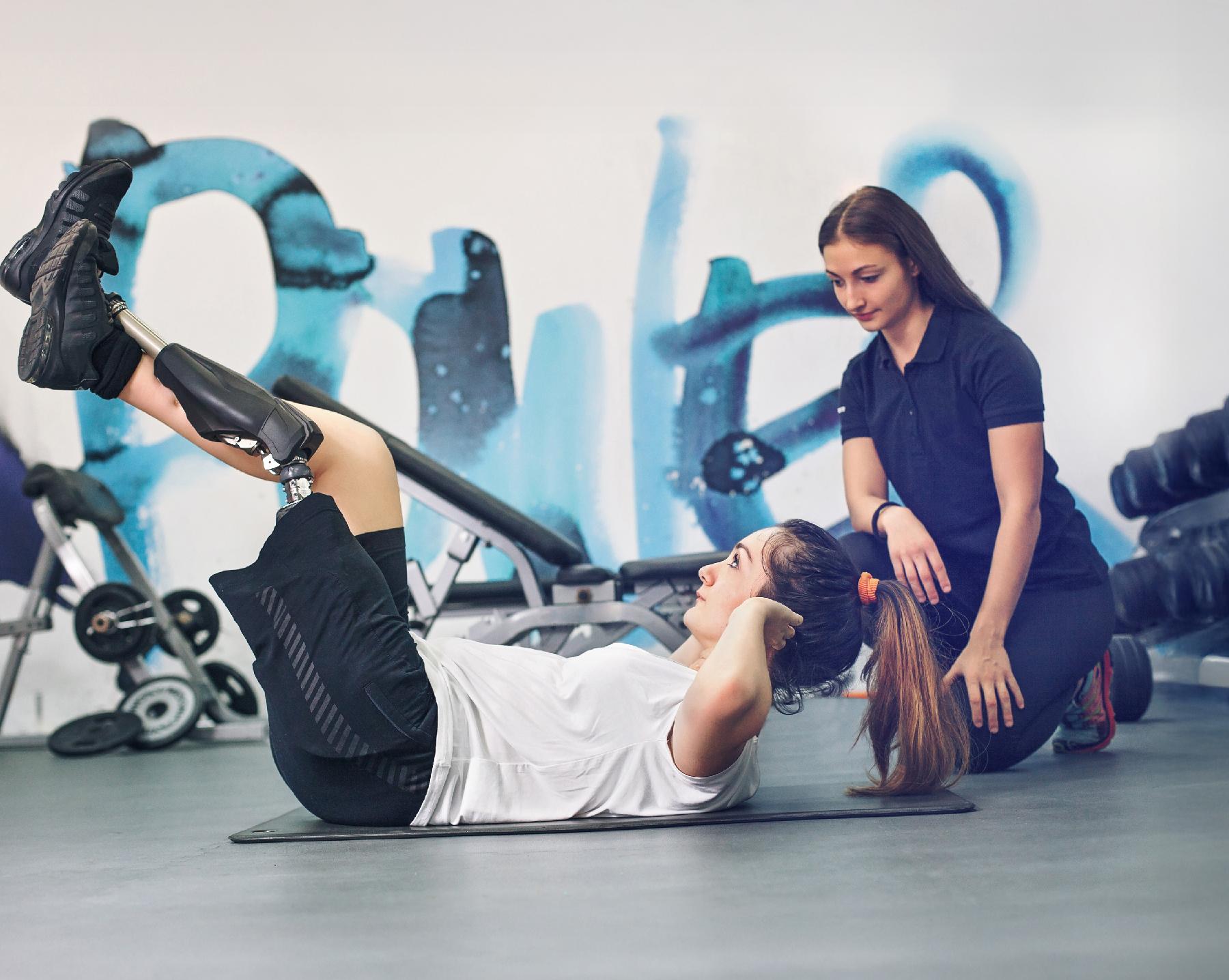
Woman doing crunches watched by instructor
Inclusivity will be a key to growth moving forward / Shutterstock / SaMBa
Findings from the second UK Health and Fitness Market Report, undertaken by Grant Thornton, which showed that penetration has achieved record levels
HCM magazine
Raphael Cuomo explores the powerful link between addiction, health and behaviour change
HCM magazine
HCM People

Stephen Price

Founder, SP&Co Group
Working in public health over the last few years has lit up parts of my brain again
HCM magazine
For every member with a tripod and a big following, there are others irritated at the way equipment is being hogged or wary they’ll be in the background on someone’s Insta feed. Do influencers offer valuable, free marketing or are they just a nuisance? Kath Hudson finds out how operators are responding
HCM magazine
Small improvements to sleep, diet and physical activity have major benefits for the heart, according to new research from the University of Sydney
HCM magazine
Collaborations with the medical profession and greater aspirations around wellbeing are creating a need for more experts in our sector. It’s time to reboot our thinking around the workforce
HCM promotional features
Sponsored
Greg Bradley looks at the shift towards strength training in gyms and advises on how operators can create the ultimate training environment
HCM promotional features
Sponsored
Find out how your gym can tap into the corporate wellness boom
HCM promotional features
Sponsored
SnowDome Fitness has added 50 per cent more space with cutting-edge Technogym solutions
HCM promotional features
Sponsored
David Lloyd is stepping up its commitment to women’s health as it continues to explore what fit-for-purpose looks like for the female population
HCM promotional features
Sponsored
Starpool supports Olympic champion Marcell Jacobs, says Riccardo Turri
HCM promotional features
Sponsored
Third Space partnered with IndigoFitness to deliver a bespoke training space for its new club at The Whiteley
HCM promotional features
Sponsored
EGYM has opened a new HQ in Paternoster Square, London and revealed a range of new launches
HCM promotional features
Sponsored
Active IQ is calling for greater accountability in online fitness advice with the launch of a new trustmark
HCM promotional features
Sponsored
Pulse Fitness has created a new health club delivering an elevated wellness experience
HCM promotional features
Latest News
Global group exercise specialist, Les Mills, is inviting operators to sign up to its Workout ...
Latest News
Global luxury hospitality brand, Six Senses, has partnered with longevity healthcare provider, HUM2N, to launch ...
Latest News
Premium London health club, KX Chelsea, is gearing up to unveil its most significant redevelopment ...
Latest News
Researchers in the US have identified an antibody which could greatly reduce the loss of ...
Latest News
Peloton has made the strategic acquisition of Pilates start-up, Skōp, to support the expansion of ...
Latest News
Crunch Fitness has announced the launch of Crunch Reform Pilates – its own reformer concept ...
Latest News
The 20th State of the Industry Report from LeisureDB has revealed a resilient, expanding and ...
Latest News
Purpose Brands has announced its entry into the Italian market, having sold the franchise rights ...
Opinion
promotion
Strength training has moved from the margins to the mainstream.
Opinion: Building smarter strength spaces for today’s operators
Featured supplier news
Featured supplier news: Supporting long-term health: why whole body vibration belongs in clinical settings
As healthcare continues to shift towards prevention, there’s a growing focus on helping people stay active, independent and feeling good for longer.
Featured supplier news
Featured supplier news: Elevate 2026 to mark 10-year anniversary with biggest ever waterfront drinks reception
Elevate is set to celebrate its 10th anniversary in style this June, with organisers confirming the event’s largest-ever drinks reception as registrations continue to run more than 10% ahead of last year.
Company profiles
Company profile: Matrix Fitness
Matrix provides equipment to facilities in all market sectors including private health clubs, residential housing, ...
Company profiles
Company profile: Total Vibration Solutions Ltd (TVS Group)
TVS Group includes TVS Sports Surfaces, TVS Gym Flooring, TVS Play Surfaces and TVS Acoustics. ...
Supplier Showcases
Supplier Showcase - From nightclub to health club
Supplier Showcases
Supplier Showcase - Future-proofing
Catalogue Gallery
Click on a catalogue to view it online
Featured press releases
ukactive press release: UK Active launches next phase of Digital Futures to support digital maturity across the physical activity sector
UK Active has announced the next phase of its Digital Futures programme, supporting organisations across the physical activity sector to develop their digital capability.
Featured press releases
The Fitness Group press release: The Fitness Group partners with Serco Leisure to deliver education and career pathways across UK leisure facilities
The Fitness Group, the UK's leading fitness education training provider, has announced a strategic partnership with Serco Leisure, one of the UK's leading national operators of leisure centres, destination venues and elite sporting facilities.
Directory
Lockers
Crown Sports Lockers: Lockers
Industrial washing machines
Miele Company Limited: Industrial washing machines
Water experiences and hydrotherapy solutions
Aquaform s.r.l.: Water experiences and hydrotherapy solutions
Fitness tracking platform
SpiviTech: Fitness tracking platform
Hot tubs
MSpa International Ltd: Hot tubs
Spa and beauty equipment
Oakworks Inc: Spa and beauty equipment
Property & Tenders
Stratford, East London.
Lee Valley Regional Park Authority
Property & Tenders
Y Felinheli, LL56 4QN
Newmark
Property & Tenders
Diary dates
13-13 Jun 2026
Worldwide, Various,
Diary dates
21-24 Sep 2026
The Langham Huntington Pasadena , Pasadena, United States
Diary dates
06-08 Oct 2026
Messe Stuttgart, Stuttgart, Germany
Diary dates
22-22 Oct 2026
QEII Conference Centre, London,
Diary dates
26-29 Oct 2027
Koelnmesse Exhibition Centre, Cologne, Germany
Diary dates

features

Value and identity

Record market penetration in the UK fitness sector masks a deeper shift around consumer engagement, according to a report from Grant Thornton and UK Active. Liz Terry reports

Published in HCM Handbook 2026 issue 1
Women stretching
Visitation is rising faster than membership / Shutterstock/PeopleImages

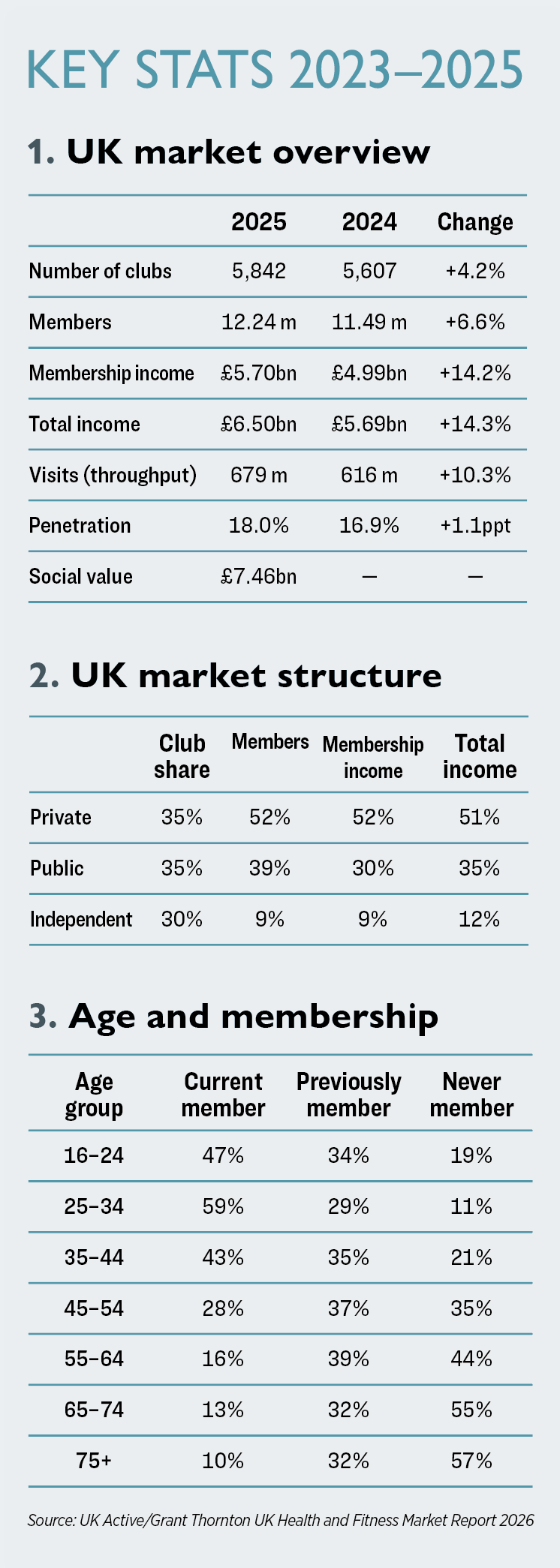
The UK fitness sector reached a new milestone in 2025, with penetration climbing to 18 per cent (from 16.9 per cent in 2024 and 16 per cent in 2023) – the highest level recorded to date, according to the UK Health & Fitness Market Report 2025.

The numbers highlight a trend of sustained growth, with participation rising steadily across the three years, reinforcing the sector’s resilience and its increasing relevance to consumers.

The trajectory points to solid momentum, but the drivers show a shift in emphasis – this is not only about adding members, it’s also about increasing engagement, delivering value per user and broadening routes into participation.

One of the most striking indicators in the report is throughput and across multiple segments of the market, visitation is rising faster than membership.

In the private sector, it grew by 12.8 per cent year-on-year, compared to 7.8 per cent membership growth, suggesting members are not just joining, but that they’re using the gym more frequently and driving more sustained engagement. Across the whole sector, visitation increased by 10.3 per cent in 2025 compared to 2024.

Appearance peaks as a motivational factor only among 35- to 44-year-olds

THE MARKET IS EVOLVING

Growth is increasingly being driven by this frequency of member engagement, as well as by how operators generate value-per-user and how effectively the sector aligns with broader health, lifestyle and societal trends. This is significant, because increased usage correlates with stronger retention, higher secondary spend and greater perceived value – all of which underpin pricing power, with the 4 per cent increase in income per private-sector member reinforcing this.

GROWTH WITH OPPORTUNITY

Fitness is becoming less discretionary and more embedded in consumers’ lives, even in the face of cost-of-living pressures, meaning the industry is well on the way to achieving its Vision 2030 target of engaging 20 per cent of the population by 2030.

However, beneath the headlines lies a complex story that raises questions about who the sector is serving.

The industry is increasingly looking beyond commercial success towards broader recognition from healthcare and government and this new data suggests there is an increasingly powerful case.

The report shows improving customer propositions and a stronger perception of value among active users, as well as expanded estates, diversified offerings and continued investment.

However, the gains are not evenly distributed. Those on lower incomes remain the most impacted by inflation, with financial pressures limiting participation.

Socio-economic divides are becoming more pronounced, with higher-income (ABC1) groups less affected by price increases, while lower-income (C2DE) consumers are more likely to downgrade, shift to pay-as-you-go or cancel altogether. This tension between growth and accessibility is emerging as one of the defining challenges for the sector.

Man lifting weight
Members will accept price increases when value is clear / Shutterstock / PeopleImages

THE VALUE EQUATION

Price alone does not determine participation, explains the report, saying: “Cost is not simply a question of price – it’s fundamentally a question of perceived value,” says Grant Thornton. Members will accept price increases when value is clear – through well-maintained facilities, reliable equipment, supportive staff and safe, welcoming environments.

On the flip side, even affordable memberships can feel too expensive if they fail to deliver on relevance. This is borne out by non-member sentiment in the report, with 46 per cent saying they don’t need to join a health club and 47 per cent saying that they’re not interested in the activities that gyms offer.

Fear of judgement remains a significant issue, with 35 per cent reporting concerns about this, while 19 per cent say they believe they would feel unsafe in a health club due to risks of harassment or intimidation and 46 per cent cite a lack of confidence as a barrier. The implication is that growth will increasingly depend on the industry finding ways to reduce psychological as well as financial barriers.

Growth is no longer just about opening more clubs – it’s about creating experiences that people value and broadening services

A shift towards more inclusive, human-led design is also underway. Operators are rethinking layouts, programming and onboarding protocols to create environments that are easier to navigate and more welcoming for new and less-confident users. Beginner-friendly spaces, structured inductions and clearer guidance are all essential to enabling consumers to embed long-term habits and the report says early experiences matter – poor first impressions can permanently deter people from coming back.

There’s also an evolution in facility design, with strength-first layouts, larger functional training zones and more visible, confidence-building spaces for women and new users, while recovery and healthspan services are moving into the mainstream, reflecting a shift in consumer priorities towards wellbeing.

CHANGING MOTIVATIONS

The most significant shift comes in why people exercise, with a move away from aesthetics-led messaging towards strength, wellbeing and healthy ageing.

It’s important to note that improving appearance as a motivating factor is dwindling. Only those aged 35-44 rated it as important (86 per cent). This is the only age group where appearance matches ‘improving or maintaining strength’ and ‘fitness’ as a driver.

Younger cohorts are redefining the role of the gym altogether. Membership levels are highest among those aged 25-34, showing an 11 per cent increase, closely followed by 16- to 24-year-olds.

Younger groups are the most likely to attend a health club or exercise class away from home at least twice a week and are more likely to do so than engage in home-based activity. For many, membership is tied to their sense of self-identity and facilities are becoming ‘third spaces’ – to train, socialise, recover and work.

In contrast, older adults are more likely to exercise at home and are less engaged with traditional membership models. Membership rates drop significantly from age 45 onwards, and nearly 60 per cent of those aged 65 and over have never held a membership, highlighting a substantial untapped market.

Expense is a key reason for attrition, particularly among those aged 45-54, with this often linked to under-usage of facilities in this group, which undermines the perceived value.

As the market matures, competition is shifting. Rather than relying on discounting and churn, operators are focusing on differentiation and co-existence to grow the overall market and the seven M&A deals recorded highlight ongoing consolidation in the market as well.

BROADENING APPEAL

Inclusivity will be critical going forward. Broadening appeal to older adults, lower-income groups and under-represented users will require clearer communication, flexible pricing and environments designed for psychological as well as physical comfort.

Provision for children and young people is also expected to grow, with new formats designed to build early engagement and lifelong habits.

Independent operators are playing a key role in this evolution. They often trial new concepts at a smaller scale, refining them and paving the way for wider adoption. They also report some of the highest levels of member retention, driven by personalised communication and strong community engagement. The independents are also the most exposed to rising costs, with tighter margins and less capacity to absorb financial shocks.

Across the sector, cost pressures remain – from energy to water and from National Insurance to minimum wage uplifts and business rates. These headwinds are forcing operators to continually sharpen their value propositions while also improving operational efficiency.

HUMANITY COMES FIRST

Technology adoption continues to accelerate, but the findings suggest a clear boundary, with digital tools most effective when they complement, rather than replace, human interaction.

Members still prefer personal trainers over AI-generated programmes, particularly for confidence-building and guidance in technique.

At the same time, social media is playing a growing role in shaping health behaviours – not always positively. This is increasing the pressure on operators to provide accurate, trustworthy information.

The integration of wearable data and digital ecosystems remains a challenge, particularly in public leisure, where fragmented systems can limit the user experience. The strongest retention outcomes are seen where technology and human support are combined into a seamless, personalised journey.

Looking ahead, the industry’s next phase of growth will be defined less by expansion and more by experience. “Growth is no longer just about opening more clubs – it’s about creating experiences that people value, encouraging them to visit more often and broadening the services offered once they are inside,” says Grant Thornton.

KEY FINDINGS

Key opportunities lie in deeper integration with healthcare – particularly in weight management, rehabilitation and mental health – alongside trends such as GLP-1s, which present both challenges and opportunities for engagement with a wide range of consumer groups.

There is also increasing emphasis on social value, with calls for more consistent and comparable reporting across the sector.

The sector’s progress is relentless – participation is rising, facilities are busier and the offer is more diverse than ever, but the next challenge is more demanding, says the report – proving relevance to those who remain on the sidelines, while demonstrating value to policymakers and healthcare systems.

If the industry can meet that challenge, it will not only achieve its Vision 2030 targets, but also secure its place as a central pillar of public health. 

More: www.ukactive.com
Women getting ready for gym class
There’s a move away from exercising for strength, wellbeing and healthy ageing / shutterstock/peopleimages

Woman doing crunches watched by instructor
Inclusivity will be a key to growth moving forward / Shutterstock / SaMBa
Findings from the second UK Health and Fitness Market Report, undertaken by Grant Thornton, which showed that penetration has achieved record levels
Latest News
Global group exercise specialist, Les Mills, is inviting operators to sign up to its Workout ...
Latest News
Global luxury hospitality brand, Six Senses, has partnered with longevity healthcare provider, HUM2N, to launch ...
Latest News
Premium London health club, KX Chelsea, is gearing up to unveil its most significant redevelopment ...
Latest News
Researchers in the US have identified an antibody which could greatly reduce the loss of ...
Latest News
Peloton has made the strategic acquisition of Pilates start-up, Skōp, to support the expansion of ...
Latest News
Crunch Fitness has announced the launch of Crunch Reform Pilates – its own reformer concept ...
Latest News
The 20th State of the Industry Report from LeisureDB has revealed a resilient, expanding and ...
Latest News
Purpose Brands has announced its entry into the Italian market, having sold the franchise rights ...
Latest News
Fitness First UK is integrating red light therapy into its yoga and Pilates classes through ...
Latest News
Nuffield Health has told HCM that it takes its responsibilities towards its colleagues seriously and ...
Latest News
Technogym has announced the launch of the Run X World Treadmill Championship, the first world ...
Opinion
promotion
Strength training has moved from the margins to the mainstream.
Opinion: Building smarter strength spaces for today’s operators
Featured supplier news
Featured supplier news: Supporting long-term health: why whole body vibration belongs in clinical settings
As healthcare continues to shift towards prevention, there’s a growing focus on helping people stay active, independent and feeling good for longer.
Featured supplier news
Featured supplier news: Elevate 2026 to mark 10-year anniversary with biggest ever waterfront drinks reception
Elevate is set to celebrate its 10th anniversary in style this June, with organisers confirming the event’s largest-ever drinks reception as registrations continue to run more than 10% ahead of last year.
Company profiles
Company profile: Matrix Fitness
Matrix provides equipment to facilities in all market sectors including private health clubs, residential housing, ...
Company profiles
Company profile: Total Vibration Solutions Ltd (TVS Group)
TVS Group includes TVS Sports Surfaces, TVS Gym Flooring, TVS Play Surfaces and TVS Acoustics. ...
Supplier Showcases
Supplier Showcase - From nightclub to health club
Supplier Showcases
Supplier Showcase - Future-proofing
Catalogue Gallery
Click on a catalogue to view it online
Featured press releases
ukactive press release: UK Active launches next phase of Digital Futures to support digital maturity across the physical activity sector
UK Active has announced the next phase of its Digital Futures programme, supporting organisations across the physical activity sector to develop their digital capability.
Featured press releases
The Fitness Group press release: The Fitness Group partners with Serco Leisure to deliver education and career pathways across UK leisure facilities
The Fitness Group, the UK's leading fitness education training provider, has announced a strategic partnership with Serco Leisure, one of the UK's leading national operators of leisure centres, destination venues and elite sporting facilities.
Directory
Lockers
Crown Sports Lockers: Lockers
Industrial washing machines
Miele Company Limited: Industrial washing machines
Water experiences and hydrotherapy solutions
Aquaform s.r.l.: Water experiences and hydrotherapy solutions
Fitness tracking platform
SpiviTech: Fitness tracking platform
Hot tubs
MSpa International Ltd: Hot tubs
Spa and beauty equipment
Oakworks Inc: Spa and beauty equipment
Property & Tenders
Stratford, East London.
Lee Valley Regional Park Authority
Property & Tenders
Y Felinheli, LL56 4QN
Newmark
Property & Tenders
Diary dates
13-13 Jun 2026
Worldwide, Various,
Diary dates
21-24 Sep 2026
The Langham Huntington Pasadena , Pasadena, United States
Diary dates
06-08 Oct 2026
Messe Stuttgart, Stuttgart, Germany
Diary dates
22-22 Oct 2026
QEII Conference Centre, London,
Diary dates
26-29 Oct 2027
Koelnmesse Exhibition Centre, Cologne, Germany
Diary dates
Search news, features & products:
Find a supplier:
Elevate Arena
Elevate Arena
Partner sites