











GET HCM
magazine
Sign up for the FREE digital edition of HCM magazine and also get the HCM ezine and breaking news email alerts.
Not right now, thanksclose this window I've already subscribed!
Elevate Arena
Elevate Arena
Elevate Arena
Follow Health Club Management on Twitter Like Health Club Management on Facebook Join the discussion with Health Club Management on LinkedIn
FITNESS, HEALTH, WELLNESS

features

Interview: Paul Juris

Incorporating fitness into climbing, with new tech that gives your workout an efficiency score. The director of sports science at Brooklyn Boulders, and part of the team behind the new BKBX boutique, speaks to Kate Cracknell

By Kate Cracknell | Published in Health Club Management 2019 issue 10
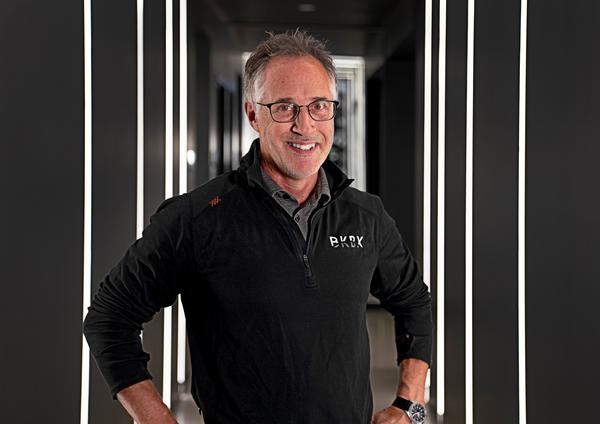
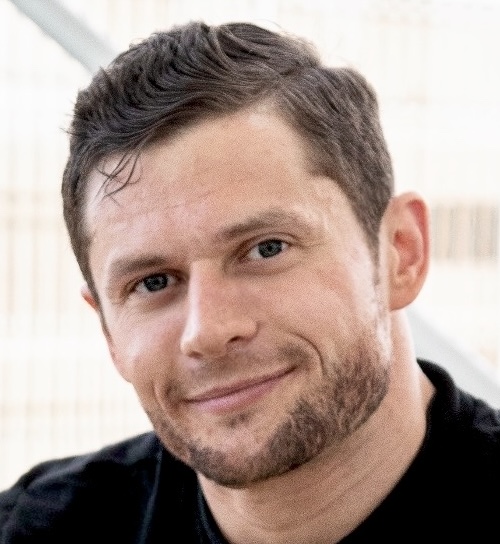
Paul Juris
Paul Juris
people are together on the climbing walls, cheering each other on, coaching each other, interacting, laughing and enjoying each other’s company. It’s a completely different environment from anything I’ve ever seen

What’s your background?
I’m a research scientist, so my pathway through the fitness industry has focused on the academic and the scientific. I’ve always been keen to push the envelope and induce a positive, constant change in what we do as a sector.

I previously ran the Cybex Research Institute – a biomechanics research laboratory conceived not only to support the equipment Cybex developed, but even more importantly as a traditional, academic research laboratory. The kinds of questions we were asking transcended equipment development. We were looking at human movement, trying to better understand how and why we move the way we do.

When did you join Brooklyn Boulders, and why?
When I left Cybex, I started a consulting business and was pretty happy doing that. But when I was approached by Brooklyn Boulders in 2017, I saw an interesting opportunity to help a company that really wanted to do things differently.

I’ve spent more than three decades in the fitness industry and, while it’s growing overall, I still look at it as a niche business. It’s catering to a very clearly defined, relatively small market: those who are dedicated to their own fitness. It hasn’t yet found a way to entice everyone else in the population to lead healthy, active lifestyles. Brooklyn Boulders was different even before I came onboard.

How would you describe the Brooklyn Boulders concept?
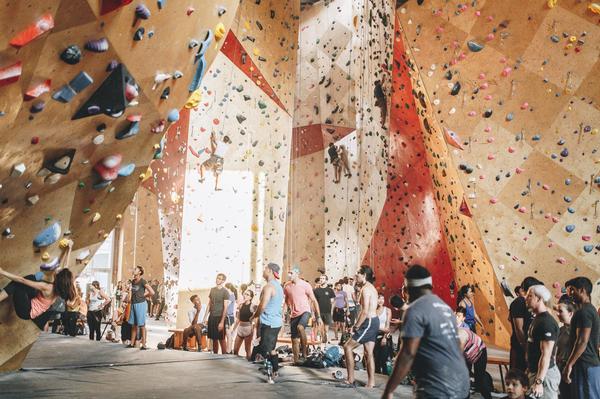
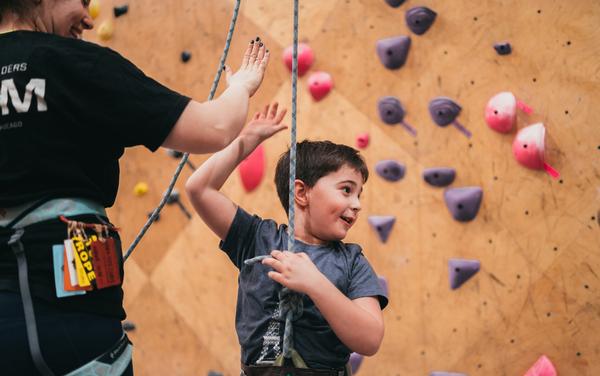
For me, there are two key aspects to Brooklyn Boulders. Firstly, the offering is focused on climbing, with huge climbing walls – and this is a fun, engaging and curious recreational activity that appeals to so many different audiences. People are happy to just give it a try. I think fun is a big part of what we need to provide for people if we want to engage them.

The second aspect is a strong focus on community interaction and engagement. In a traditional gym, everyone’s wearing headphones, in their own personal space, focused on themselves, and the energy you feel is mostly from the music on the AV system – there’s very little inter-human interaction. Meanwhile, at Brooklyn Boulders, people are together on the climbing walls, cheering each other on, coaching each other, laughing and enjoying each other’s company. It’s a completely different environment from anything I’ve ever seen.

It’s also very inclusive. Whenever you go in, you really do see people from all walks of life.

Have you evolved the model?
There was already a fitness component at Brooklyn Boulders, but there was a desire among the management team to expand it. They acknowledged that, while climbing is gaining a lot of traction as a recreational activity, other opportunities were needed to attract those who might end up climbing but who might initially be drawn to the facility by something else.

Fitness was seen as something that could do this, and something that would also provide a reason – among those who might otherwise just come for fun every few months – to come more regularly.

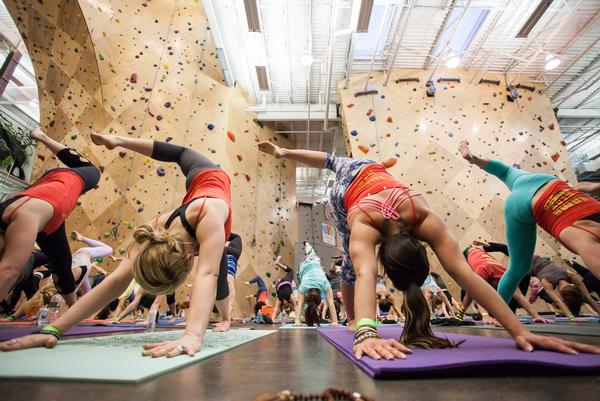
We now have classes designed to support the climbing community: Climber Core, Yoga for Climbers, Bootcamp for Climbers. It creates a link between climbing and fitness, driving more engagement in our fitness activities, and the classes are very popular – they’re always full.

But we’re able to push people both ways. For those already interested in fitness, and who might come in to climb on a day pass, we can now demonstrate that we have all the fitness tools they need to satisfy that interest – classes, functional training spaces, some cardio equipment – as well as that extra dimension where they can also drive their fitness through climbing.

Once the word really gets out, I think we’ll find ourselves actively attracting fitness aficionados. I think it will even get to the point that, rather than having a gym membership and also attending classes at a boutique, people will see Brooklyn Boulders as the one place they need: that feels like home, with everything they need in front of them.

What’s the ethos behind your offering?
I was very keen to create an accessible fitness experience and felt that if we could harness the elements of fun recreation, human interaction and inclusive engagement already present at Brooklyn Boulders, we could build a fitness model around it that would be more attractive to the general population.

Our team is key here. We place a huge focus on staff training, both in the science – that’s important to me – but also in the customer journey. We don’t just get people in the door and leave them to their own devices. Our consumer journey is continually supported, with ongoing interaction. It’s a very nurturing environment.

So that’s the climbing side of the business – our Brooklyn Boulders-branded facilities – but there’s also a new side to the business that’s more focused on fitness.

Tell us more about the fitness-focused business…
Shortly after I joined the company in October 2017, there was a move to get into the fitness business directly via a new boutique concept.

The new business is called BKBX – BKB being Brooklyn Boulders, plus an X signalling ‘expedition’. It’s about making fitness an adventure, as opposed to making it just about fitness. It does still have climbing elements – it always will, because that’s core to our business and our philosophy – but this one is clearly a fitness play.

The first site opened in March 2019 in Boston, Massachusetts, adjacent to the Harvard University campus. It offers three distinct spaces. The first is a 2,000sq ft studio that plays host to an adaptable, multi-modality, interval-based fitness class; one of the things I recognised when I first came to Brooklyn Boulders was the popularity of the bootcamp classes, so with BKBX I set out to create the best bootcamp experience possible.

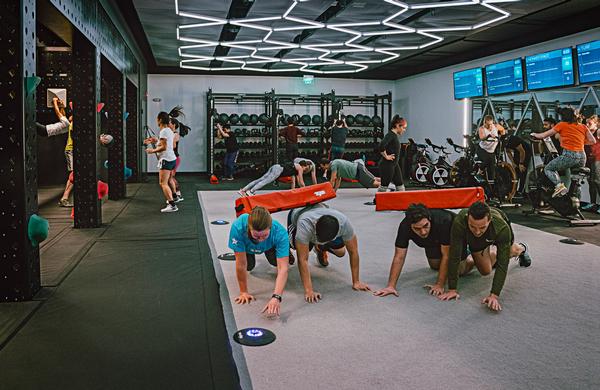
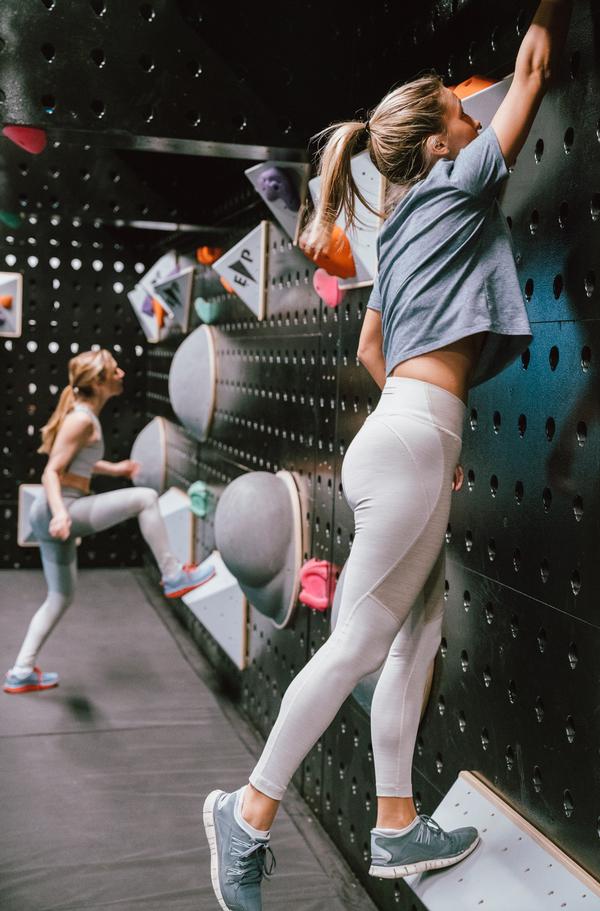
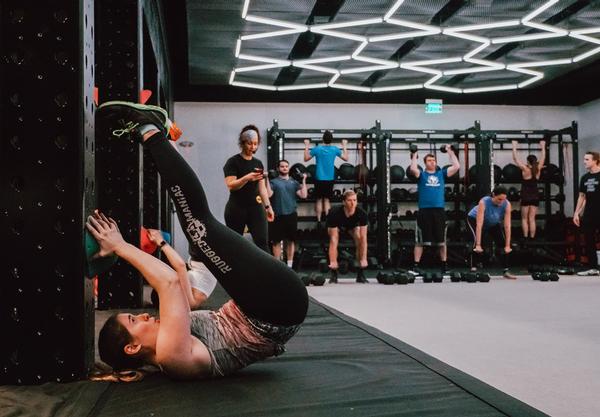
The studio features some traditional elements – a rig, free weights, some cardio equipment – but there are a lot of interactive components too, which makes it really engaging, challenging and fun. There are programmable lighting systems, interactive cognitive problem solving, gamification. There’s also a deconstructed climbing zone, by which I mean we take the elements of climbing and make a fitness application of it. You don’t have to get into special gear and it’s all done in an enclosed space, but it gets people off the ground, swinging around and moving around on walls. It’s like a really sophisticated jungle gym, or monkey bars in the playground.

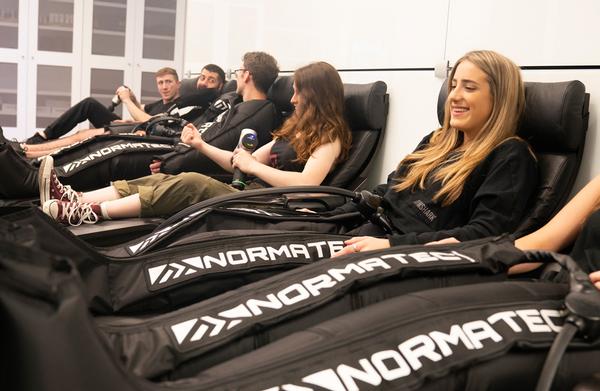
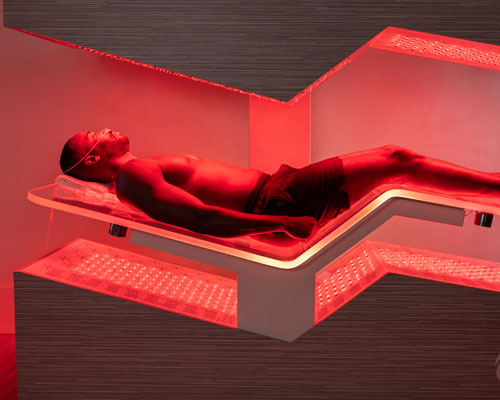
The other two areas are a 90ft bouldering wall and a 1,500sq ft recovery space featuring cryotherapy, an infra-red sauna, compression sleeves, vibrating rollers and so on. It’s all designed to keep people moving – to keep them active, but also to give them an opportunity to recover, rejuvenate, feel good and then to continue to do this on a regular basis.

We also use some very advanced technology that nobody else has, including proprietary analytics software. Nowadays everyone wears some type of activity monitor, but my question is always: so what? How are we using that information? Do we understand not just what people have done, but how well they’ve done it and what they should therefore do tomorrow?

At BKBX, our activity monitoring is best in class, and the information we generate is used for prescriptive purposes.

So, just how advanced is your technology?
Today, everyone measures heart rate, which basically tells you your level of exertion: the harder you’re working, the higher your heart rate. But what people don’t know is the result of that exertion. What’s the outcome if you exert yourself like that?

We decided to develop a system through which we could show people the benefit, or the detriment, of their levels of exertion.

There are, in theory, four conditions. If you have a very high heart rate but also a very high output, you’re working really hard physiologically but you’re performing at a very high level at the same time. That’s potentially a good thing.

If you have a very high heart rate and a very low performance output, that’s a bad thing: it means you’re over-exerting yourself and your output is suffering as a result.

Then there’s very low heart rate and very low output, which basically means you’re not trying.

And then the last one, which is the most optimal: a relatively low heart rate but a very high output. What that means is you’re super-efficient, able to perform at a very high level without pushing yourself too hard.

To measure output, we use triaxial accelerometers and convert measures of acceleration to force – the force that people are producing while doing our workouts. It allows us to create what we call an AQ – an Adventure Quotient – for each individual, which is essentially an efficiency score. It’s your force production relative to your heart rate response; the higher that value, the better your performance.

We track this in real time, so instructors can offer the right advice over the course of a workout, guiding people as to whether the effort they’re putting in is productive. Is your heart rate going up and your force production going down? Then you’re over-exerting and you need to back off. Is your heart rate higher than we’d usually like, but your force production good? Then keep going, keep pushing yourself.

We’re trying to help people understand exactly how much effort they need to apply in order to get the best outcome, so they can do it over a long period of time and not burn out in the process. The overall training effect is then much, much better.

How has BKBX performed so far?
I think we’ll cap membership at 500 – we only need around 250 members to break even – and we’ve sold 100 memberships so far; our location means we have a transient student population, with many leaving for the summer. However, our six classes a day are already about 80 per cent full and are getting great reviews.
We charge US$35 for a one-off bootcamp class – less for bouldering and recovery – through to an unlimited monthly membership of US$199.

What are your expansion plans?
The first Brooklyn Boulders opened in 2009 and there are now four locations in New York, Chicago and Boston. These are huge spaces: the club in Boston is 45,000sq ft. You stand at one end and look toward the other and you’re literally in a canyon. It’s visually stunning.

But of course, in urban environments, it isn’t always possible to find 45,000sq ft spaces with 60ft ceilings! We are opening new gyms, including in new markets – we’re putting a second club in Chicago and we’re looking at Washington DC and Miami – but clearly, the smaller BKBX clubs are easier to roll out. So, we’re looking to aggressively expand BKBX, with plans for one or two new openings a year.

You say ‘aggressive’ growth, but is one or two sites a year really aggressive?
As anyone with any experience in this sector knows, the biggest limitation is talent acquisition and development. If you try and expand too quickly, without finding suitable talent at all levels in the organisation – and I don’t just mean your instructors but also front desk personnel, maintenance staff, everyone – it’s much more challenging to make your business work. Ours is a customer service business: if you can’t provide an exceptional member experience at all levels of the business, you’re going to struggle.

I’m convinced, after all these years, that it really does come down to the people and the service that’s delivered: the quality of the individual leading the experience for the member, how well trained they are, how knowledgeable, how good at both answering and asking questions.

Will the BKBX model differ in future sites?
We have a lot of flexibility in terms of the programming and product mix. We’ll see what becomes available in the different markets into which we want to move, and only then decide which model to put in there.

For example, where the first BKBX is very much a boutique – a total footprint of 8,500sq ft – the next venture will be a very high-end, multi-modality, hybrid fitness business. This facility – a 27,000sq ft site in Brooklyn, New York – doesn’t have 60ft ceilings, so it isn’t amenable to a big climbing facility, but it is a significant space. It will have three boutique studios, plus traditional group fitness, an open gym area so people can just come and work out when they want to, and a recovery space.

One boutique space will offer a very novel climbing experience that we’re designing at the moment. The other two will be bootcamp-style – one being the same as our first site in Boston, and the other something we’re still working on. This new club will open at the end of this year.

Any other plans for future evolution?
I’m heavily invested in technology right now.

I’m keeping a close eye on virtual fitness, seeing how that evolves over time and what role we may have there. I love the idea of it, but even though you’re in a virtual community, you’re still exercising in your own individual space. It misses out on the human interaction and connection of Brooklyn Boulders. So at the moment, I’m still standing back and observing.

I’m also developing more algorithms so we can expand how we use monitoring technology to curate lifestyle experiences for people, getting even more into the prescriptive side. We want to make personalised recommendations whenever a member comes in – to be able to say, for example: ‘We know you’re planning to do a workout today, but actually you’re really stressed and you could over-exert yourself, so let’s go and do a recovery session with you instead.’

I can’t give too much detail yet, but we’re looking at motion capture, sleep analysis, recovery, bringing together more information about each individual than they can get anywhere else – all as the basis for a really robust, intelligent assessment model that we use regularly in order to track change.

We don’t want to be afraid to say: ‘You know, we’ve been doing this and it’s not really working, so let’s try something else.’ I think that’s the deathly fear of a lot of fitness providers: they don’t want to do continuous testing in case people don’t improve and realise they’re wasting their money. We want to have enough confidence in what we do to say: ‘We’re going to track everything and if it isn’t all working well for someone, we’ll get rid of the things that don’t work and really start to push towards those that do.’
Sign up here to get HCM's weekly ezine and every issue of HCM magazine free on digital.
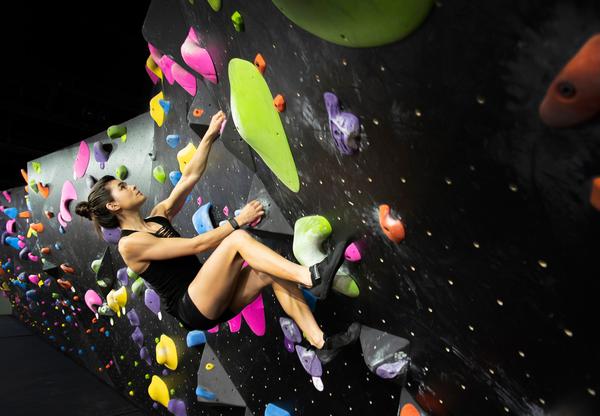
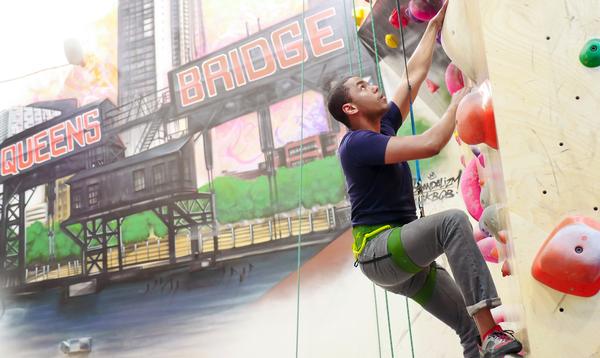
The Brooklyn Boulders concept appeals to many audiences.
There are four Brookyn Boulders clubs across the US
Juris wanted to show casual climbers that the clubs have a wider fitness offering
The original Brooklyn Boulders sites are huge spaces with 60ft ceilings, but the new BKBX clubs will be smaller and easier to roll out. 
The company has had investment backing from North Castle Partners
The original Brooklyn Boulders sites are huge spaces with 60ft ceilings, but the new BKBX clubs will be smaller and easier to roll out. The company has had investment backing from North Castle Partners
Juris says he’s focused on using the most advanced technology to help members train and perform better, in a way that’s tailored to each individual
The Brooklyn Boulders sites offer fitness classes designed to support the climbing community, such as Yoga for Climbers, Climber Core and Bootcamp for Climbers
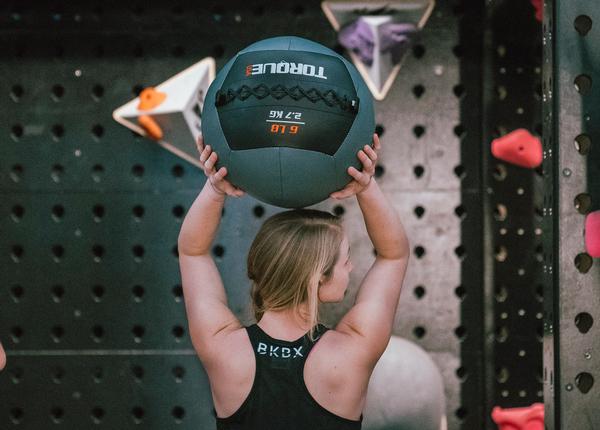
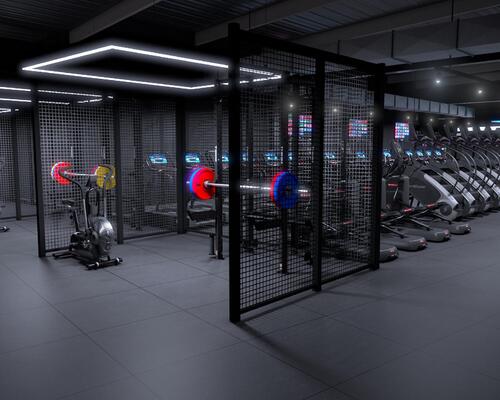
The BKBX club offers climbing elements alongside more traditional fitness equipment
BKBX features a recovery space with cryotherapy and infra-red sauna
BKBX features a recovery space with compression sleeves
A new club in Brooklyn, New York will be a high-end, multi-modality hybrid facility, with three boutique studios, traditional group fitness, an open gym area and a recovery space, plus a climbing experience
https://www.leisureopportunities.co.uk/images/imagesX/713145_991512.jpg
Brooklyn Boulders’ director of sports science tells how the climbing brand is incorporating fitness into its offering, with tech that gives a workout efficiency score
Brooklyn Boulders, Paul Juris,climbing, bouldering, activity monitor, activity monitoring, Brooklyn Boulders, Paul Juris
HCM magazine
As the entrepreneur who started Wexer, Fresh Fitness, Fitness DK and Repeat, as well as being a former elite athlete, Rasmus Ingerslev’s life looked perfect from the outside, but onthe inside it was a different story. He talks to Kath Hudson about healing old wounds
HCM magazine
Raphael Cuomo explores the powerful link between addiction, health and behaviour change
HCM magazine
Strength training is evolving, driven by changing consumer preferences. Julie Cramer talks to innovators about how their products are meeting this demand
HCM magazine
I experienced a blissful feeling of joy I hadn’t felt since I was a kid
HCM magazine
Collaborations with the medical profession and greater aspirations around wellbeing are creating a need for more experts in our sector. It’s time to reboot our thinking around the workforce
HCM promotional features
Sponsored
Third Space partnered with IndigoFitness to deliver a bespoke training space for its new club at The Whiteley
HCM promotional features
Sponsored
SnowDome Fitness has added 50 per cent more space with cutting-edge Technogym solutions
HCM promotional features
Sponsored
Find out how your gym can tap into the corporate wellness boom
HCM promotional features
Sponsored
Greg Bradley looks at the shift towards strength training in gyms and advises on how operators can create the ultimate training environment
HCM promotional features
Sponsored
David Lloyd is stepping up its commitment to women’s health as it continues to explore what fit-for-purpose looks like for the female population
HCM promotional features
Sponsored
Starpool supports Olympic champion Marcell Jacobs, says Riccardo Turri
HCM promotional features
Sponsored
EGYM has opened a new HQ in Paternoster Square, London and revealed a range of new launches
HCM promotional features
Sponsored
Pulse Fitness has created a new health club delivering an elevated wellness experience
HCM promotional features
Sponsored
New launch, Salus House, elevates boutique wellness with high service levels and a partnership with Technogym
HCM promotional features
Latest News
Australia’s fast-growing fitness network, Viva Leisure, is adding a low-cost gym brand to its already ...
Latest News
Speedflex has launched a strength training programme for 10 to 16-year-olds, to make it safer, ...
Latest News
Tewinbury Farm Hotel in Hertfordshire, UK is expanding its premium leisure proposition with the launch ...
Latest News

Work is underway in Madrid on one of Europe’s most significant multi-functional complexes, ...

Latest News
PureGym is encouraging people to step away from their screens and go for a walk, ...
Latest News
Small improvements to sleep, diet quality, and physical activity, made in combination lead to a ...
Latest News
Therme Manchester’s 28-acre development, which will include interconnected glass pavilions that measure 65,000sq m, will ...
Latest News
The Yard Gym (TYG) is to become Nike Training’s official global training partner in a ...
Opinion
promotion
Strength training has moved from the margins to the mainstream.
Opinion: Building smarter strength spaces for today’s operators
Featured supplier news
Featured supplier news: Supporting long-term health: why whole body vibration belongs in clinical settings
As healthcare continues to shift towards prevention, there’s a growing focus on helping people stay active, independent and feeling good for longer.
Featured supplier news
Featured supplier news: Elevate 2026 to mark 10-year anniversary with biggest ever waterfront drinks reception
Elevate is set to celebrate its 10th anniversary in style this June, with organisers confirming the event’s largest-ever drinks reception as registrations continue to run more than 10% ahead of last year.
Company profiles
Company profile: Total Vibration Solutions Ltd (TVS Group)
TVS Group includes TVS Sports Surfaces, TVS Gym Flooring, TVS Play Surfaces and TVS Acoustics. ...
Company profiles
Company profile: Kodobi Ltd
Running a fast-paced fitness business while ensuring safety and compliance is no easy feat. That’s ...
Supplier Showcases
Supplier Showcase - Future-proofing
Catalogue Gallery
Click on a catalogue to view it online
Featured press releases
ukactive press release: Are they Fit for Office? UK Active and Technogym throw down the gauntlet to MPs
Hundreds of staff, MPs and Peers from across Westminster have signed up for the Fit for Office parliamentary physical activity challenge, which takes place throughout June and is hosted by ukactive and Technogym.
Featured press releases
Innerva press release: Lex Leisure’s power-assisted exercise suite smashes targets in record time
Crook Log Leisure Centre has more than doubled the membership target for its new power- assisted exercise suite in less than six months.
Directory
Industrial washing machines
Miele Company Limited: Industrial washing machines
Spa and beauty equipment
Living Earth Crafts: Spa and beauty equipment
Water experiences and hydrotherapy solutions
Aquaform s.r.l.: Water experiences and hydrotherapy solutions
Fitness tracking platform
SpiviTech: Fitness tracking platform
Hot tubs
MSpa International Ltd: Hot tubs
Lockers
Crown Sports Lockers: Lockers
Property & Tenders
Stratford, East London.
Lee Valley Regional Park Authority
Property & Tenders
Y Felinheli, LL56 4QN
Newmark
Property & Tenders
Diary dates
13-13 Jun 2026
Worldwide, Various,
Diary dates
21-24 Sep 2026
The Langham Huntington Pasadena , Pasadena, United States
Diary dates
06-08 Oct 2026
Messe Stuttgart, Stuttgart, Germany
Diary dates
22-22 Oct 2026
QEII Conference Centre, London,
Diary dates
26-29 Oct 2027
Koelnmesse Exhibition Centre, Cologne, Germany
Diary dates

features

Interview: Paul Juris

Incorporating fitness into climbing, with new tech that gives your workout an efficiency score. The director of sports science at Brooklyn Boulders, and part of the team behind the new BKBX boutique, speaks to Kate Cracknell

By Kate Cracknell | Published in Health Club Management 2019 issue 10
Paul Juris
Paul Juris
people are together on the climbing walls, cheering each other on, coaching each other, interacting, laughing and enjoying each other’s company. It’s a completely different environment from anything I’ve ever seen

What’s your background?
I’m a research scientist, so my pathway through the fitness industry has focused on the academic and the scientific. I’ve always been keen to push the envelope and induce a positive, constant change in what we do as a sector.

I previously ran the Cybex Research Institute – a biomechanics research laboratory conceived not only to support the equipment Cybex developed, but even more importantly as a traditional, academic research laboratory. The kinds of questions we were asking transcended equipment development. We were looking at human movement, trying to better understand how and why we move the way we do.

When did you join Brooklyn Boulders, and why?
When I left Cybex, I started a consulting business and was pretty happy doing that. But when I was approached by Brooklyn Boulders in 2017, I saw an interesting opportunity to help a company that really wanted to do things differently.

I’ve spent more than three decades in the fitness industry and, while it’s growing overall, I still look at it as a niche business. It’s catering to a very clearly defined, relatively small market: those who are dedicated to their own fitness. It hasn’t yet found a way to entice everyone else in the population to lead healthy, active lifestyles. Brooklyn Boulders was different even before I came onboard.

How would you describe the Brooklyn Boulders concept?
For me, there are two key aspects to Brooklyn Boulders. Firstly, the offering is focused on climbing, with huge climbing walls – and this is a fun, engaging and curious recreational activity that appeals to so many different audiences. People are happy to just give it a try. I think fun is a big part of what we need to provide for people if we want to engage them.

The second aspect is a strong focus on community interaction and engagement. In a traditional gym, everyone’s wearing headphones, in their own personal space, focused on themselves, and the energy you feel is mostly from the music on the AV system – there’s very little inter-human interaction. Meanwhile, at Brooklyn Boulders, people are together on the climbing walls, cheering each other on, coaching each other, laughing and enjoying each other’s company. It’s a completely different environment from anything I’ve ever seen.

It’s also very inclusive. Whenever you go in, you really do see people from all walks of life.

Have you evolved the model?
There was already a fitness component at Brooklyn Boulders, but there was a desire among the management team to expand it. They acknowledged that, while climbing is gaining a lot of traction as a recreational activity, other opportunities were needed to attract those who might end up climbing but who might initially be drawn to the facility by something else.

Fitness was seen as something that could do this, and something that would also provide a reason – among those who might otherwise just come for fun every few months – to come more regularly.

We now have classes designed to support the climbing community: Climber Core, Yoga for Climbers, Bootcamp for Climbers. It creates a link between climbing and fitness, driving more engagement in our fitness activities, and the classes are very popular – they’re always full.

But we’re able to push people both ways. For those already interested in fitness, and who might come in to climb on a day pass, we can now demonstrate that we have all the fitness tools they need to satisfy that interest – classes, functional training spaces, some cardio equipment – as well as that extra dimension where they can also drive their fitness through climbing.

Once the word really gets out, I think we’ll find ourselves actively attracting fitness aficionados. I think it will even get to the point that, rather than having a gym membership and also attending classes at a boutique, people will see Brooklyn Boulders as the one place they need: that feels like home, with everything they need in front of them.

What’s the ethos behind your offering?
I was very keen to create an accessible fitness experience and felt that if we could harness the elements of fun recreation, human interaction and inclusive engagement already present at Brooklyn Boulders, we could build a fitness model around it that would be more attractive to the general population.

Our team is key here. We place a huge focus on staff training, both in the science – that’s important to me – but also in the customer journey. We don’t just get people in the door and leave them to their own devices. Our consumer journey is continually supported, with ongoing interaction. It’s a very nurturing environment.

So that’s the climbing side of the business – our Brooklyn Boulders-branded facilities – but there’s also a new side to the business that’s more focused on fitness.

Tell us more about the fitness-focused business…
Shortly after I joined the company in October 2017, there was a move to get into the fitness business directly via a new boutique concept.

The new business is called BKBX – BKB being Brooklyn Boulders, plus an X signalling ‘expedition’. It’s about making fitness an adventure, as opposed to making it just about fitness. It does still have climbing elements – it always will, because that’s core to our business and our philosophy – but this one is clearly a fitness play.

The first site opened in March 2019 in Boston, Massachusetts, adjacent to the Harvard University campus. It offers three distinct spaces. The first is a 2,000sq ft studio that plays host to an adaptable, multi-modality, interval-based fitness class; one of the things I recognised when I first came to Brooklyn Boulders was the popularity of the bootcamp classes, so with BKBX I set out to create the best bootcamp experience possible.

The studio features some traditional elements – a rig, free weights, some cardio equipment – but there are a lot of interactive components too, which makes it really engaging, challenging and fun. There are programmable lighting systems, interactive cognitive problem solving, gamification. There’s also a deconstructed climbing zone, by which I mean we take the elements of climbing and make a fitness application of it. You don’t have to get into special gear and it’s all done in an enclosed space, but it gets people off the ground, swinging around and moving around on walls. It’s like a really sophisticated jungle gym, or monkey bars in the playground.

The other two areas are a 90ft bouldering wall and a 1,500sq ft recovery space featuring cryotherapy, an infra-red sauna, compression sleeves, vibrating rollers and so on. It’s all designed to keep people moving – to keep them active, but also to give them an opportunity to recover, rejuvenate, feel good and then to continue to do this on a regular basis.

We also use some very advanced technology that nobody else has, including proprietary analytics software. Nowadays everyone wears some type of activity monitor, but my question is always: so what? How are we using that information? Do we understand not just what people have done, but how well they’ve done it and what they should therefore do tomorrow?

At BKBX, our activity monitoring is best in class, and the information we generate is used for prescriptive purposes.

So, just how advanced is your technology?
Today, everyone measures heart rate, which basically tells you your level of exertion: the harder you’re working, the higher your heart rate. But what people don’t know is the result of that exertion. What’s the outcome if you exert yourself like that?

We decided to develop a system through which we could show people the benefit, or the detriment, of their levels of exertion.

There are, in theory, four conditions. If you have a very high heart rate but also a very high output, you’re working really hard physiologically but you’re performing at a very high level at the same time. That’s potentially a good thing.

If you have a very high heart rate and a very low performance output, that’s a bad thing: it means you’re over-exerting yourself and your output is suffering as a result.

Then there’s very low heart rate and very low output, which basically means you’re not trying.

And then the last one, which is the most optimal: a relatively low heart rate but a very high output. What that means is you’re super-efficient, able to perform at a very high level without pushing yourself too hard.

To measure output, we use triaxial accelerometers and convert measures of acceleration to force – the force that people are producing while doing our workouts. It allows us to create what we call an AQ – an Adventure Quotient – for each individual, which is essentially an efficiency score. It’s your force production relative to your heart rate response; the higher that value, the better your performance.

We track this in real time, so instructors can offer the right advice over the course of a workout, guiding people as to whether the effort they’re putting in is productive. Is your heart rate going up and your force production going down? Then you’re over-exerting and you need to back off. Is your heart rate higher than we’d usually like, but your force production good? Then keep going, keep pushing yourself.

We’re trying to help people understand exactly how much effort they need to apply in order to get the best outcome, so they can do it over a long period of time and not burn out in the process. The overall training effect is then much, much better.

How has BKBX performed so far?
I think we’ll cap membership at 500 – we only need around 250 members to break even – and we’ve sold 100 memberships so far; our location means we have a transient student population, with many leaving for the summer. However, our six classes a day are already about 80 per cent full and are getting great reviews.
We charge US$35 for a one-off bootcamp class – less for bouldering and recovery – through to an unlimited monthly membership of US$199.

What are your expansion plans?
The first Brooklyn Boulders opened in 2009 and there are now four locations in New York, Chicago and Boston. These are huge spaces: the club in Boston is 45,000sq ft. You stand at one end and look toward the other and you’re literally in a canyon. It’s visually stunning.

But of course, in urban environments, it isn’t always possible to find 45,000sq ft spaces with 60ft ceilings! We are opening new gyms, including in new markets – we’re putting a second club in Chicago and we’re looking at Washington DC and Miami – but clearly, the smaller BKBX clubs are easier to roll out. So, we’re looking to aggressively expand BKBX, with plans for one or two new openings a year.

You say ‘aggressive’ growth, but is one or two sites a year really aggressive?
As anyone with any experience in this sector knows, the biggest limitation is talent acquisition and development. If you try and expand too quickly, without finding suitable talent at all levels in the organisation – and I don’t just mean your instructors but also front desk personnel, maintenance staff, everyone – it’s much more challenging to make your business work. Ours is a customer service business: if you can’t provide an exceptional member experience at all levels of the business, you’re going to struggle.

I’m convinced, after all these years, that it really does come down to the people and the service that’s delivered: the quality of the individual leading the experience for the member, how well trained they are, how knowledgeable, how good at both answering and asking questions.

Will the BKBX model differ in future sites?
We have a lot of flexibility in terms of the programming and product mix. We’ll see what becomes available in the different markets into which we want to move, and only then decide which model to put in there.

For example, where the first BKBX is very much a boutique – a total footprint of 8,500sq ft – the next venture will be a very high-end, multi-modality, hybrid fitness business. This facility – a 27,000sq ft site in Brooklyn, New York – doesn’t have 60ft ceilings, so it isn’t amenable to a big climbing facility, but it is a significant space. It will have three boutique studios, plus traditional group fitness, an open gym area so people can just come and work out when they want to, and a recovery space.

One boutique space will offer a very novel climbing experience that we’re designing at the moment. The other two will be bootcamp-style – one being the same as our first site in Boston, and the other something we’re still working on. This new club will open at the end of this year.

Any other plans for future evolution?
I’m heavily invested in technology right now.

I’m keeping a close eye on virtual fitness, seeing how that evolves over time and what role we may have there. I love the idea of it, but even though you’re in a virtual community, you’re still exercising in your own individual space. It misses out on the human interaction and connection of Brooklyn Boulders. So at the moment, I’m still standing back and observing.

I’m also developing more algorithms so we can expand how we use monitoring technology to curate lifestyle experiences for people, getting even more into the prescriptive side. We want to make personalised recommendations whenever a member comes in – to be able to say, for example: ‘We know you’re planning to do a workout today, but actually you’re really stressed and you could over-exert yourself, so let’s go and do a recovery session with you instead.’

I can’t give too much detail yet, but we’re looking at motion capture, sleep analysis, recovery, bringing together more information about each individual than they can get anywhere else – all as the basis for a really robust, intelligent assessment model that we use regularly in order to track change.

We don’t want to be afraid to say: ‘You know, we’ve been doing this and it’s not really working, so let’s try something else.’ I think that’s the deathly fear of a lot of fitness providers: they don’t want to do continuous testing in case people don’t improve and realise they’re wasting their money. We want to have enough confidence in what we do to say: ‘We’re going to track everything and if it isn’t all working well for someone, we’ll get rid of the things that don’t work and really start to push towards those that do.’
Sign up here to get HCM's weekly ezine and every issue of HCM magazine free on digital.
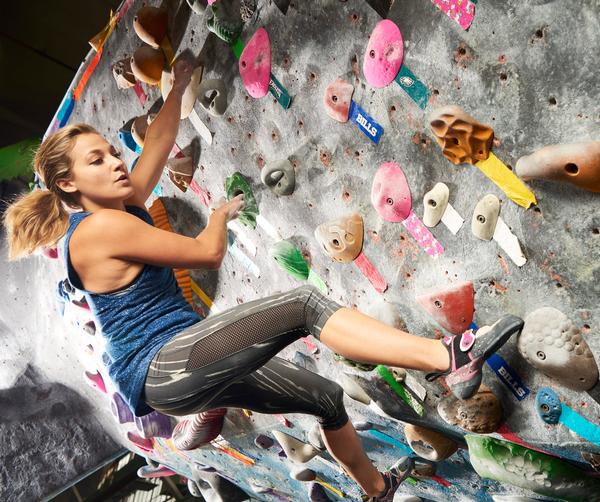
The Brooklyn Boulders concept appeals to many audiences.
There are four Brookyn Boulders clubs across the US
Juris wanted to show casual climbers that the clubs have a wider fitness offering
The original Brooklyn Boulders sites are huge spaces with 60ft ceilings, but the new BKBX clubs will be smaller and easier to roll out. 
The company has had investment backing from North Castle Partners
The original Brooklyn Boulders sites are huge spaces with 60ft ceilings, but the new BKBX clubs will be smaller and easier to roll out. The company has had investment backing from North Castle Partners
Juris says he’s focused on using the most advanced technology to help members train and perform better, in a way that’s tailored to each individual
The Brooklyn Boulders sites offer fitness classes designed to support the climbing community, such as Yoga for Climbers, Climber Core and Bootcamp for Climbers
The BKBX club offers climbing elements alongside more traditional fitness equipment
BKBX features a recovery space with cryotherapy and infra-red sauna
BKBX features a recovery space with compression sleeves
A new club in Brooklyn, New York will be a high-end, multi-modality hybrid facility, with three boutique studios, traditional group fitness, an open gym area and a recovery space, plus a climbing experience
https://www.leisureopportunities.co.uk/images/imagesX/713145_991512.jpg
Brooklyn Boulders’ director of sports science tells how the climbing brand is incorporating fitness into its offering, with tech that gives a workout efficiency score

Brooklyn Boulders, Paul Juris,climbing, bouldering, activity monitor, activity monitoring, Brooklyn Boulders, Paul Juris
Latest News
Australia’s fast-growing fitness network, Viva Leisure, is adding a low-cost gym brand to its already ...
Latest News
Speedflex has launched a strength training programme for 10 to 16-year-olds, to make it safer, ...
Latest News
Tewinbury Farm Hotel in Hertfordshire, UK is expanding its premium leisure proposition with the launch ...
Latest News

Work is underway in Madrid on one of Europe’s most significant multi-functional complexes, ...

Latest News
PureGym is encouraging people to step away from their screens and go for a walk, ...
Latest News
Small improvements to sleep, diet quality, and physical activity, made in combination lead to a ...
Latest News
Therme Manchester’s 28-acre development, which will include interconnected glass pavilions that measure 65,000sq m, will ...
Latest News
The Yard Gym (TYG) is to become Nike Training’s official global training partner in a ...
Latest News
Everlast Gyms' York site has reopened following a refurbishment to bring it up to the ...
Latest News
Luxury hospitality and wellness pioneer Jeremy McCarthy has launched Leisure Alchemy, a digital platform that ...
Latest News
A contrast therapy and breathwork facility called Reset has opened in Islington, London, in the ...
Opinion
promotion
Strength training has moved from the margins to the mainstream.
Opinion: Building smarter strength spaces for today’s operators
Featured supplier news
Featured supplier news: Supporting long-term health: why whole body vibration belongs in clinical settings
As healthcare continues to shift towards prevention, there’s a growing focus on helping people stay active, independent and feeling good for longer.
Featured supplier news
Featured supplier news: Elevate 2026 to mark 10-year anniversary with biggest ever waterfront drinks reception
Elevate is set to celebrate its 10th anniversary in style this June, with organisers confirming the event’s largest-ever drinks reception as registrations continue to run more than 10% ahead of last year.
Company profiles
Company profile: Total Vibration Solutions Ltd (TVS Group)
TVS Group includes TVS Sports Surfaces, TVS Gym Flooring, TVS Play Surfaces and TVS Acoustics. ...
Company profiles
Company profile: Kodobi Ltd
Running a fast-paced fitness business while ensuring safety and compliance is no easy feat. That’s ...
Supplier Showcases
Supplier Showcase - Future-proofing
Catalogue Gallery
Click on a catalogue to view it online
Featured press releases
ukactive press release: Are they Fit for Office? UK Active and Technogym throw down the gauntlet to MPs
Hundreds of staff, MPs and Peers from across Westminster have signed up for the Fit for Office parliamentary physical activity challenge, which takes place throughout June and is hosted by ukactive and Technogym.
Featured press releases
Innerva press release: Lex Leisure’s power-assisted exercise suite smashes targets in record time
Crook Log Leisure Centre has more than doubled the membership target for its new power- assisted exercise suite in less than six months.
Directory
Industrial washing machines
Miele Company Limited: Industrial washing machines
Spa and beauty equipment
Living Earth Crafts: Spa and beauty equipment
Water experiences and hydrotherapy solutions
Aquaform s.r.l.: Water experiences and hydrotherapy solutions
Fitness tracking platform
SpiviTech: Fitness tracking platform
Hot tubs
MSpa International Ltd: Hot tubs
Lockers
Crown Sports Lockers: Lockers
Property & Tenders
Stratford, East London.
Lee Valley Regional Park Authority
Property & Tenders
Y Felinheli, LL56 4QN
Newmark
Property & Tenders
Diary dates
13-13 Jun 2026
Worldwide, Various,
Diary dates
21-24 Sep 2026
The Langham Huntington Pasadena , Pasadena, United States
Diary dates
06-08 Oct 2026
Messe Stuttgart, Stuttgart, Germany
Diary dates
22-22 Oct 2026
QEII Conference Centre, London,
Diary dates
26-29 Oct 2027
Koelnmesse Exhibition Centre, Cologne, Germany
Diary dates
Search news, features & products:
Find a supplier:
Elevate Arena
Elevate Arena
Partner sites