



















GET HCM
magazine
Sign up for the FREE digital edition of HCM magazine and also get the HCM ezine and breaking news email alerts.
Not right now, thanksclose this window I've already subscribed!
Elevate Arena
Elevate Arena
Elevate Arena
Follow Health Club Management on Twitter Like Health Club Management on Facebook Join the discussion with Health Club Management on LinkedIn
FITNESS, HEALTH, WELLNESS

features

Interview – Magnus Lindkvist: Magnus Lindkvist

The author, trendspotter and futurologist offers Kate Cracknell his thoughts on the future of the fitness industry
By Kate Cracknell | Published in Health Club Management 2015 issue 2
Magnus Lindkvist
Magnus Lindkvist
The key of disruption is that your competition doesn’t outcompete you by being better or more beautiful... but by being completely inferior

The coming decade in the fitness industry will be more exciting than the last three put together,” says Magnus Lindkvist, the Swedish-born trendspotter and futurologist.

“In the last three decades it was a continuum. We saw more and more people become engaged and go to fitness clubs. We went from serious bodybuilders in very manly clubs to a more feminine, cool, hip nightclub-like atmosphere – sometimes in a budget environment, sometimes in a premium model – but physically going to a health club was the thing.

“Now for the first time we see what life could be without clubs. Because a fitness club is essentially one thing: packaged knowledge. A machine is packaged knowledge. A personal trainer is packaged knowledge. The club and how it’s laid out is packaged knowledge. And similarly an app is packaged knowledge. So you can get it from a person, an app or a room – it doesn’t really matter, as long as you get the knowledge.”

A DISRUPTIVE INFLUENCE
He continues: “Disruption is very interesting. The key of disruption is that your competition doesn’t outcompete you by being better or more beautiful or more fancy than you are. Your competition outcompetes you by being completely inferior.

“I’ve probably spent at least €2,000 a year in fitness clubs. I’m now spending €30 a year for an app and a wristband. And it’s not as good as my fitness club or my PT, but my god it saves time and money. I don’t spent two hours getting ready, travelling to the gym, working out, getting back again… I spend 20 minutes. So even though it’s inferior, I’m doing it instead. I’m giving my money to a completely new category of company that are actually inferior. That means they’re earning money, which means they can spend money to improve themselves, and that’s how disruption happens.

“What are fitness clubs going to do about this? I don’t know, but they should probably disrupt themselves – by which I mean building an inferior alternative of themselves. That’s the first point of disruption that Clayton Christensen talks about. I know many of us are unwilling to do that, because we don’t like to destroy when something is good. We want to take care of our customers, provide good service, find new revenue opportunities, so selling something inferior is counter-intuitive – but it’s the only thing we’ve found that works.”

Didn’t the budget clubs already do this, I ask, by creating a stripped-back, low-cost version of the full-service gym?

“If we compare health clubs to the airline sector, if a normal club is British Airways or Lufthansa, the budget clubs are Germanwings or Ryanair. You’re still spending the same length of time in the air, but now you’re doing it without a blanket or food, and the people are threatening to charge you to use the toilet. Meanwhile wearable technology and apps offer a teleportation machine: instead of spending nine hours flying across the Atlantic, you can do it in two hours. That’s the magic of a disruption – it changes the game and the rules of the game.

“Interestingly, I would say everyone knows exactly what the problem is, what the challenges are, but they do nothing about it. That’s not because they’re lazy or stupid or blind. Quite the opposite: they actively decide to do nothing about it. It’s something Don Sull, a researcher at London Business School, has coined ‘active inertia’.

“When I speak to fitness club owners about wearable technology, some of them will just dismiss it as a fad, saying what they do is much better. But that’s exactly my point: wearable tech is an inferior piece of work, which is precisely why you should worry.”

FAILURE AS A SUCCESS
So has the fitness sector not been very good at responding to warning signs generally over the years? At face value Lindkvist’s view on this is a bit of a kick in the gut: “Actually there have been so many failures in the fitness sector.” However, it quickly transpires that in his mind this is a good thing.

“I think one of the reasons we see so much diversity in the world of fitness today is that it’s a highly experimental sector with a high rate of failure. I think the brands that have succeeded are the brands that have been experimental, not monolithic – not ‘this is the way we do things’. If you look at the successful clubs, they’ve taken a bit from here and a bit from there and there’s something for everyone – and you also know that most of what they offer will look different three years from now.

“You can look back at individual trends in fitness over the years and wonder ‘what were we thinking?’ – but to single out failures is to miss the point. I think that kind of experimental playfulness, with a high failure rate, is actually one of the key strengths of the leisure sector.

“Any personal trainer I’ve worked with has always said, if you’re not failing, you’re not working out hard enough. You’re only training conveniently. Similarly, if you run a business and you don’t have failures, you’re probably not operating in the full space that’s available to you.”

LOOK BACK TO LOOK FORWARD
So is there anything else on the horizon that Lindkvist believes could mark a turning point for the fitness sector, or indeed for business as a whole?

“We live in a kind of cash bubble at the moment. There’s an unbelievable amount of cash around, which means that things are becoming ridiculously expensive. Urban space and rent is one example, as is the price of luxury and premium products. It seems like there’s no upper limit. But I think we have to take into account that there will be a readjustment of the economy yet again in the coming few years – possibly even more severe than 2008 – and this will give a lot of problems to premium providers.

“We’re also running out of emerging market runway. For the past 10 years, many big brands could afford to be quite lazy, because there was always some city in China with some money laying around where you could open an outlet. We’re now running out of that runway.

“But if we look specifically at the fitness sector, if we put together the technological opportunities and the macro economic landscape, the coming 10 years can be quite transformational if we want them to be.

“However, we mustn’t forget that people are analogue creatures. We enjoy drinking fermented grape juice, just like the Romans did. We enjoy killing animals and barbecuing them like the Vikings did. A lot of what we do doesn’t change, so we must be careful not to see the gym of the future as some kind of white, space-age facility with droids and wearable tech. A lot of fitness will still be about sweating and feeling pain. It’s very unlikely we’ll get away from that. When I speak to pharma companies today, I always like to ask them: ‘Will we be able to work out by taking a pill?’ And they tell me no, because fitness doesn’t have one molecule or one chemical, so it can’t be about one pill, one cure.

“In fact I believe, when the world changes, you can always retreat to the ancient, and this is something I took from Nassim Taleb’s book Antifragile. An idea that’s been around for 700 years is likely to be around for 700 more years. An idea that’s been around for 20 years is unlikely to be around in another 700 years. You can use the very old to evaluate the long-term future.”

So if Lindkvist had to offer the fitness sector one piece of advice, what would it be? “Think Finland! That’s my advice. Radically the most crazy, creative country in the world. They have ‘carry your wife’ world championships. They have air guitar world championships. They have Angry Birds, they have Supercell – Clash of Clans. It’s the way they come up with ideas and the kind of ideas they come up with – that crazy creativity anyone can benefit from. Think Finland, immerse yourself in Finland. Go to Finland. That’s my advice.”

WHAT IS FUTUROLOGY?

‘‘Simply put, a futurologist is someone who tries to figure out what the future may hold and suggest how we could possibly shape it,” explains Lindkvist. “But I would say that there are two kinds of futurologists: those who can predict the future, and who are therefore ridiculously rich, and the rest of us.

“My view is that we can speculate broadly and accurately about the world over the next 30 years. We see urbanisation happening – we can take a 30- or 40-year view on that. We know exactly how many 90-year-olds there will be in 30 years – they’re already here but they’re 60. So we can make quite broad portraits of the coming few decades.

“But we can never know how many ideas a girl being born today will have in 17 years’ time, or what they will be. We can never predict how a confused 19-year-old guy carrying a knife might change world history on Tuesday afternoon in June next year. We shouldn’t even try, because for me futurology isn’t about accurately predicting things. It’s exploring how we think about the future – trying to get people to rewrite their own first drafts of the future.

“Because we all make assumptions that the future is probably X. My role as a futurologist is to say: ‘What if it’s not X? What if it’s everything but X?’ That’s what intrigues me. Even though it sounds like futurology is only about the future, it’s not. It’s intellectual acupuncture. It’s exploring opposites and contrarian ideas and changing my own mind and maybe other people’s too.

“People tend only to notice trends in what I call the ‘suddenly moment’ – the moment when something dramatic happens, like a business going bust or the Berlin Wall falling – but trends actually come gradually, and identifying them before the ‘suddenly moment’ is key.

“However, if we’re going to have a chance to think about the gradually part, we can’t just live in the here and now. We have to start looking at archives. We have to start zooming out on Google Earth to see what earth looks like at night, to discover urbanisation and how it’s spreading around the world. We have to start thinking in terms of secrets, because most new ideas are secrets before they’re articulated and become a trend: they might hide in a laboratory somewhere, or in the head of an entrepreneur.

“So I would argue that, if you want to be a successful, long-term trendspotter and possibly forecaster, you should live less in the here and now and start looking for secrets, looking at long-term shifts, going more to the library than the newsagent and so on.”

WANT TO HEAR MORE?

Magnus Lindkvist will be speaking at the IHRSA International Convention & Trade Show, which takes place in Los Angeles next month – his keynote is on Thursday 12 March.

For more information visit www.ihrsa.org/convention

Sign up here to get HCM's weekly ezine and every issue of HCM magazine free on digital.
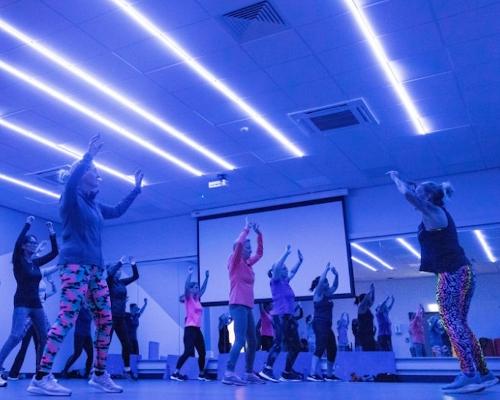
Lindkvist says we’re starting to see what life could be without health clubs, because apps can package the same knowledge / photo: www.shutterstock.com
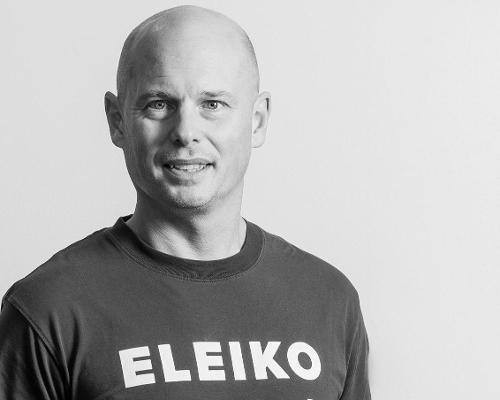
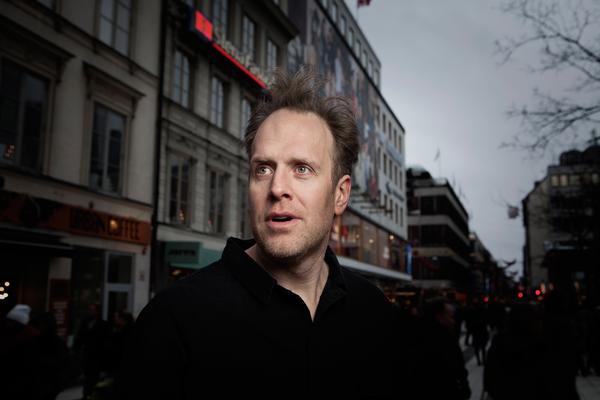
Lindkvist: Futurology gets people to rewrite their own first draft of the future / photo: Patrik Engström
Lindkvist predicts a ‘financial adjustment’ in the coming years that could challenge premium providers like microgyms
To uncover the secrets that drive long-term trends, we should stop reading newspapers and go to the library instead / photo: www.shutterstock.com/press master
https://www.leisureopportunities.co.uk/images/313866_903501.jpg
The author, trendspotter and futurologist offers Kate Cracknell his thoughts on the future of the health and fitness industry
Kate Cracknell, HCM, Journalist Magnus Lindkvist, The author, trendspotter and futurologist ,Magnus Lindkvist, Kate Cracknell, futurology, disruption, wearable tech, apps, trends
HCM magazine
Raphael Cuomo explores the powerful link between addiction, health and behaviour change
HCM magazine
As the entrepreneur who started Wexer, Fresh Fitness, Fitness DK and Repeat, as well as being a former elite athlete, Rasmus Ingerslev’s life looked perfect from the outside, but onthe inside it was a different story. He talks to Kath Hudson about healing old wounds
HCM magazine
I experienced a blissful feeling of joy I hadn’t felt since I was a kid
HCM magazine
HCM People

Stephen Price

Founder, SP&Co Group
Working in public health over the last few years has lit up parts of my brain again
HCM magazine
Small improvements to sleep, diet and physical activity have major benefits for the heart, according to new research from the University of Sydney
HCM promotional features
Sponsored
Starpool supports Olympic champion Marcell Jacobs, says Riccardo Turri
HCM promotional features
Sponsored
Find out how your gym can tap into the corporate wellness boom
HCM promotional features
Sponsored
Third Space partnered with IndigoFitness to deliver a bespoke training space for its new club at The Whiteley
HCM promotional features
Sponsored
Greg Bradley looks at the shift towards strength training in gyms and advises on how operators can create the ultimate training environment
HCM promotional features
Sponsored
David Lloyd is stepping up its commitment to women’s health as it continues to explore what fit-for-purpose looks like for the female population
HCM promotional features
Sponsored
SnowDome Fitness has added 50 per cent more space with cutting-edge Technogym solutions
HCM promotional features
Sponsored
EGYM has opened a new HQ in Paternoster Square, London and revealed a range of new launches
HCM promotional features
Sponsored
The industry is embracing consumer-facing tech. Now it’s time to streamline back-of-house systems with Orbit4, says Daniel Jones
HCM promotional features
Sponsored
New launch, Salus House, elevates boutique wellness with high service levels and a partnership with Technogym
HCM promotional features
Latest News
PureGym Group has announced that group chief financial officer, Alex Wood, is taking over the ...
Latest News
Independent operator, Fitness Worx Gyms, is introducing private blood testing as a service to members. ...
Latest News
International industry lobbying associations are calling for physical activity and strength training to be deeply ...
Latest News
Global group exercise specialist, Les Mills, is inviting operators to sign up to its Workout ...
Latest News
Global luxury hospitality brand, Six Senses, has partnered with longevity healthcare provider, HUM2N, to launch ...
Latest News
Premium London health club, KX Chelsea, is gearing up to unveil its most significant redevelopment ...
Latest News
Researchers in the US have identified an antibody which could greatly reduce the loss of ...
Latest News
Peloton has made the strategic acquisition of Pilates start-up, Skōp, to support the expansion of ...
Opinion
promotion
Strength training has moved from the margins to the mainstream.
Opinion: Building smarter strength spaces for today’s operators
Featured supplier news
Featured supplier news: Reaching the people most gyms miss: Bedford Gym & Swim Campaign delivers 410 new members
One of the biggest mistakes the fitness industry still makes is advertising almost exclusively to people who already look and live like gym members.
Featured supplier news
Featured supplier news: Supporting long-term health: why whole body vibration belongs in clinical settings
As healthcare continues to shift towards prevention, there’s a growing focus on helping people stay active, independent and feeling good for longer.
Company profiles
Company profile: FIBO
FIBO pursues the vision of a strong and healthy society and as a global network ...
Company profiles
Company profile: Energym
At Energym, we’re redefining the role of fitness in a sustainable future. Our award-winning British ...
Supplier Showcases
Supplier Showcase - From nightclub to health club
Supplier Showcases
Supplier Showcase - Future-proofing
Catalogue Gallery
Click on a catalogue to view it online
Featured press releases
Alliance Leisure Services (Design, Build and Fund) press release: Alliance Leisure completes £15m transformation at Doncaster Dome
Alliance Leisure are excited to announce the completion of works to the Lagoons at Doncaster Dome, on behalf of Doncaster Culture and Leisure Trust, funded by City of Doncaster Council.
Featured press releases
BLK BOX press release: Inside the build: Aberdeen Sports Village
When Aberdeen Sports Village set out to upgrade its gym offering, the goal was to create a more motivating, versatile and high-performing training environment for its diverse member base.
Directory
Lockers
Crown Sports Lockers: Lockers
Water experiences and hydrotherapy solutions
Aquaform s.r.l.: Water experiences and hydrotherapy solutions
Hot tubs
MSpa International Ltd: Hot tubs
Spa and beauty equipment
Living Earth Crafts: Spa and beauty equipment
Fitness tracking platform
SpiviTech: Fitness tracking platform
Industrial washing machines
Miele Company Limited: Industrial washing machines
Property & Tenders
Stratford, East London.
Lee Valley Regional Park Authority
Property & Tenders
Y Felinheli, LL56 4QN
Newmark
Property & Tenders
Diary dates
22-23 Jun 2026
WX Wakefield , Wakefield, United Kingdom
Diary dates
21-24 Sep 2026
The Langham Huntington Pasadena , Pasadena, United States
Diary dates
06-08 Oct 2026
Messe Stuttgart, Stuttgart, Germany
Diary dates
22-22 Oct 2026
QEII Conference Centre, London,
Diary dates
26-29 Oct 2027
Koelnmesse Exhibition Centre, Cologne, Germany
Diary dates

features

Interview – Magnus Lindkvist: Magnus Lindkvist

The author, trendspotter and futurologist offers Kate Cracknell his thoughts on the future of the fitness industry

By Kate Cracknell | Published in Health Club Management 2015 issue 2
Magnus Lindkvist
Magnus Lindkvist
The key of disruption is that your competition doesn’t outcompete you by being better or more beautiful... but by being completely inferior

The coming decade in the fitness industry will be more exciting than the last three put together,” says Magnus Lindkvist, the Swedish-born trendspotter and futurologist.

“In the last three decades it was a continuum. We saw more and more people become engaged and go to fitness clubs. We went from serious bodybuilders in very manly clubs to a more feminine, cool, hip nightclub-like atmosphere – sometimes in a budget environment, sometimes in a premium model – but physically going to a health club was the thing.

“Now for the first time we see what life could be without clubs. Because a fitness club is essentially one thing: packaged knowledge. A machine is packaged knowledge. A personal trainer is packaged knowledge. The club and how it’s laid out is packaged knowledge. And similarly an app is packaged knowledge. So you can get it from a person, an app or a room – it doesn’t really matter, as long as you get the knowledge.”

A DISRUPTIVE INFLUENCE
He continues: “Disruption is very interesting. The key of disruption is that your competition doesn’t outcompete you by being better or more beautiful or more fancy than you are. Your competition outcompetes you by being completely inferior.

“I’ve probably spent at least €2,000 a year in fitness clubs. I’m now spending €30 a year for an app and a wristband. And it’s not as good as my fitness club or my PT, but my god it saves time and money. I don’t spent two hours getting ready, travelling to the gym, working out, getting back again… I spend 20 minutes. So even though it’s inferior, I’m doing it instead. I’m giving my money to a completely new category of company that are actually inferior. That means they’re earning money, which means they can spend money to improve themselves, and that’s how disruption happens.

“What are fitness clubs going to do about this? I don’t know, but they should probably disrupt themselves – by which I mean building an inferior alternative of themselves. That’s the first point of disruption that Clayton Christensen talks about. I know many of us are unwilling to do that, because we don’t like to destroy when something is good. We want to take care of our customers, provide good service, find new revenue opportunities, so selling something inferior is counter-intuitive – but it’s the only thing we’ve found that works.”

Didn’t the budget clubs already do this, I ask, by creating a stripped-back, low-cost version of the full-service gym?

“If we compare health clubs to the airline sector, if a normal club is British Airways or Lufthansa, the budget clubs are Germanwings or Ryanair. You’re still spending the same length of time in the air, but now you’re doing it without a blanket or food, and the people are threatening to charge you to use the toilet. Meanwhile wearable technology and apps offer a teleportation machine: instead of spending nine hours flying across the Atlantic, you can do it in two hours. That’s the magic of a disruption – it changes the game and the rules of the game.

“Interestingly, I would say everyone knows exactly what the problem is, what the challenges are, but they do nothing about it. That’s not because they’re lazy or stupid or blind. Quite the opposite: they actively decide to do nothing about it. It’s something Don Sull, a researcher at London Business School, has coined ‘active inertia’.

“When I speak to fitness club owners about wearable technology, some of them will just dismiss it as a fad, saying what they do is much better. But that’s exactly my point: wearable tech is an inferior piece of work, which is precisely why you should worry.”

FAILURE AS A SUCCESS
So has the fitness sector not been very good at responding to warning signs generally over the years? At face value Lindkvist’s view on this is a bit of a kick in the gut: “Actually there have been so many failures in the fitness sector.” However, it quickly transpires that in his mind this is a good thing.

“I think one of the reasons we see so much diversity in the world of fitness today is that it’s a highly experimental sector with a high rate of failure. I think the brands that have succeeded are the brands that have been experimental, not monolithic – not ‘this is the way we do things’. If you look at the successful clubs, they’ve taken a bit from here and a bit from there and there’s something for everyone – and you also know that most of what they offer will look different three years from now.

“You can look back at individual trends in fitness over the years and wonder ‘what were we thinking?’ – but to single out failures is to miss the point. I think that kind of experimental playfulness, with a high failure rate, is actually one of the key strengths of the leisure sector.

“Any personal trainer I’ve worked with has always said, if you’re not failing, you’re not working out hard enough. You’re only training conveniently. Similarly, if you run a business and you don’t have failures, you’re probably not operating in the full space that’s available to you.”

LOOK BACK TO LOOK FORWARD
So is there anything else on the horizon that Lindkvist believes could mark a turning point for the fitness sector, or indeed for business as a whole?

“We live in a kind of cash bubble at the moment. There’s an unbelievable amount of cash around, which means that things are becoming ridiculously expensive. Urban space and rent is one example, as is the price of luxury and premium products. It seems like there’s no upper limit. But I think we have to take into account that there will be a readjustment of the economy yet again in the coming few years – possibly even more severe than 2008 – and this will give a lot of problems to premium providers.

“We’re also running out of emerging market runway. For the past 10 years, many big brands could afford to be quite lazy, because there was always some city in China with some money laying around where you could open an outlet. We’re now running out of that runway.

“But if we look specifically at the fitness sector, if we put together the technological opportunities and the macro economic landscape, the coming 10 years can be quite transformational if we want them to be.

“However, we mustn’t forget that people are analogue creatures. We enjoy drinking fermented grape juice, just like the Romans did. We enjoy killing animals and barbecuing them like the Vikings did. A lot of what we do doesn’t change, so we must be careful not to see the gym of the future as some kind of white, space-age facility with droids and wearable tech. A lot of fitness will still be about sweating and feeling pain. It’s very unlikely we’ll get away from that. When I speak to pharma companies today, I always like to ask them: ‘Will we be able to work out by taking a pill?’ And they tell me no, because fitness doesn’t have one molecule or one chemical, so it can’t be about one pill, one cure.

“In fact I believe, when the world changes, you can always retreat to the ancient, and this is something I took from Nassim Taleb’s book Antifragile. An idea that’s been around for 700 years is likely to be around for 700 more years. An idea that’s been around for 20 years is unlikely to be around in another 700 years. You can use the very old to evaluate the long-term future.”

So if Lindkvist had to offer the fitness sector one piece of advice, what would it be? “Think Finland! That’s my advice. Radically the most crazy, creative country in the world. They have ‘carry your wife’ world championships. They have air guitar world championships. They have Angry Birds, they have Supercell – Clash of Clans. It’s the way they come up with ideas and the kind of ideas they come up with – that crazy creativity anyone can benefit from. Think Finland, immerse yourself in Finland. Go to Finland. That’s my advice.”

WHAT IS FUTUROLOGY?

‘‘Simply put, a futurologist is someone who tries to figure out what the future may hold and suggest how we could possibly shape it,” explains Lindkvist. “But I would say that there are two kinds of futurologists: those who can predict the future, and who are therefore ridiculously rich, and the rest of us.

“My view is that we can speculate broadly and accurately about the world over the next 30 years. We see urbanisation happening – we can take a 30- or 40-year view on that. We know exactly how many 90-year-olds there will be in 30 years – they’re already here but they’re 60. So we can make quite broad portraits of the coming few decades.

“But we can never know how many ideas a girl being born today will have in 17 years’ time, or what they will be. We can never predict how a confused 19-year-old guy carrying a knife might change world history on Tuesday afternoon in June next year. We shouldn’t even try, because for me futurology isn’t about accurately predicting things. It’s exploring how we think about the future – trying to get people to rewrite their own first drafts of the future.

“Because we all make assumptions that the future is probably X. My role as a futurologist is to say: ‘What if it’s not X? What if it’s everything but X?’ That’s what intrigues me. Even though it sounds like futurology is only about the future, it’s not. It’s intellectual acupuncture. It’s exploring opposites and contrarian ideas and changing my own mind and maybe other people’s too.

“People tend only to notice trends in what I call the ‘suddenly moment’ – the moment when something dramatic happens, like a business going bust or the Berlin Wall falling – but trends actually come gradually, and identifying them before the ‘suddenly moment’ is key.

“However, if we’re going to have a chance to think about the gradually part, we can’t just live in the here and now. We have to start looking at archives. We have to start zooming out on Google Earth to see what earth looks like at night, to discover urbanisation and how it’s spreading around the world. We have to start thinking in terms of secrets, because most new ideas are secrets before they’re articulated and become a trend: they might hide in a laboratory somewhere, or in the head of an entrepreneur.

“So I would argue that, if you want to be a successful, long-term trendspotter and possibly forecaster, you should live less in the here and now and start looking for secrets, looking at long-term shifts, going more to the library than the newsagent and so on.”

WANT TO HEAR MORE?

Magnus Lindkvist will be speaking at the IHRSA International Convention & Trade Show, which takes place in Los Angeles next month – his keynote is on Thursday 12 March.

For more information visit www.ihrsa.org/convention

Sign up here to get HCM's weekly ezine and every issue of HCM magazine free on digital.
Lindkvist says we’re starting to see what life could be without health clubs, because apps can package the same knowledge / photo: www.shutterstock.com
Lindkvist: Futurology gets people to rewrite their own first draft of the future / photo: Patrik Engström
Lindkvist predicts a ‘financial adjustment’ in the coming years that could challenge premium providers like microgyms
To uncover the secrets that drive long-term trends, we should stop reading newspapers and go to the library instead / photo: www.shutterstock.com/press master
https://www.leisureopportunities.co.uk/images/313866_903501.jpg
The author, trendspotter and futurologist offers Kate Cracknell his thoughts on the future of the health and fitness industry
Kate Cracknell, HCM, Journalist Magnus Lindkvist, The author, trendspotter and futurologist ,Magnus Lindkvist, Kate Cracknell, futurology, disruption, wearable tech, apps, trends
Latest News
PureGym Group has announced that group chief financial officer, Alex Wood, is taking over the ...
Latest News
Independent operator, Fitness Worx Gyms, is introducing private blood testing as a service to members. ...
Latest News
International industry lobbying associations are calling for physical activity and strength training to be deeply ...
Latest News
Global group exercise specialist, Les Mills, is inviting operators to sign up to its Workout ...
Latest News
Global luxury hospitality brand, Six Senses, has partnered with longevity healthcare provider, HUM2N, to launch ...
Latest News
Premium London health club, KX Chelsea, is gearing up to unveil its most significant redevelopment ...
Latest News
Researchers in the US have identified an antibody which could greatly reduce the loss of ...
Latest News
Peloton has made the strategic acquisition of Pilates start-up, Skōp, to support the expansion of ...


Latest News
Crunch Fitness has announced the launch of Crunch Reform Pilates – its own reformer concept ...
Latest News
The 20th State of the Industry Report from LeisureDB has revealed a resilient, expanding and ...
Latest News
Purpose Brands has announced its entry into the Italian market, having sold the franchise rights ...
Opinion

promotion

Strength training has moved from the margins to the mainstream.
Opinion: Building smarter strength spaces for today’s operators
Featured supplier news
Featured supplier news: Reaching the people most gyms miss: Bedford Gym & Swim Campaign delivers 410 new members
One of the biggest mistakes the fitness industry still makes is advertising almost exclusively to people who already look and live like gym members.
Featured supplier news
Featured supplier news: Supporting long-term health: why whole body vibration belongs in clinical settings
As healthcare continues to shift towards prevention, there’s a growing focus on helping people stay active, independent and feeling good for longer.
Company profiles
Company profile: FIBO
FIBO pursues the vision of a strong and healthy society and as a global network ...
Company profiles
Company profile: Energym
At Energym, we’re redefining the role of fitness in a sustainable future. Our award-winning British ...
Supplier Showcases
Supplier Showcase - From nightclub to health club
Supplier Showcases
Supplier Showcase - Future-proofing
Catalogue Gallery
Click on a catalogue to view it online
Featured press releases
Alliance Leisure Services (Design, Build and Fund) press release: Alliance Leisure completes £15m transformation at Doncaster Dome
Alliance Leisure are excited to announce the completion of works to the Lagoons at Doncaster Dome, on behalf of Doncaster Culture and Leisure Trust, funded by City of Doncaster Council.
Featured press releases
BLK BOX press release: Inside the build: Aberdeen Sports Village
When Aberdeen Sports Village set out to upgrade its gym offering, the goal was to create a more motivating, versatile and high-performing training environment for its diverse member base.
Directory
Lockers
Crown Sports Lockers: Lockers
Water experiences and hydrotherapy solutions
Aquaform s.r.l.: Water experiences and hydrotherapy solutions
Hot tubs
MSpa International Ltd: Hot tubs
Spa and beauty equipment
Living Earth Crafts: Spa and beauty equipment
Fitness tracking platform
SpiviTech: Fitness tracking platform
Industrial washing machines
Miele Company Limited: Industrial washing machines
Property & Tenders
Stratford, East London.
Lee Valley Regional Park Authority
Property & Tenders
Y Felinheli, LL56 4QN
Newmark
Property & Tenders
Diary dates
22-23 Jun 2026
WX Wakefield , Wakefield, United Kingdom
Diary dates
21-24 Sep 2026
The Langham Huntington Pasadena , Pasadena, United States
Diary dates
06-08 Oct 2026
Messe Stuttgart, Stuttgart, Germany
Diary dates
22-22 Oct 2026
QEII Conference Centre, London,
Diary dates
26-29 Oct 2027
Koelnmesse Exhibition Centre, Cologne, Germany
Diary dates
Search news, features & products:
Find a supplier:
Elevate Arena
Elevate Arena
Partner sites