


















Elevate Arena
Elevate Arena
Elevate Arena
Follow Health Club Management on Twitter Like Health Club Management on Facebook Join the discussion with Health Club Management on LinkedIn
FITNESS, HEALTH, WELLNESS

features

IHRSA update: Asia Pacific

The Asia Pacific health club market is now worth US$16.8 billion, according to an exceptional new report. IHRSA’s Kristen Walsh shares some of the highlights

By Kristen Walsh, IHRSA | Published in Health Club Management 2018 issue 6
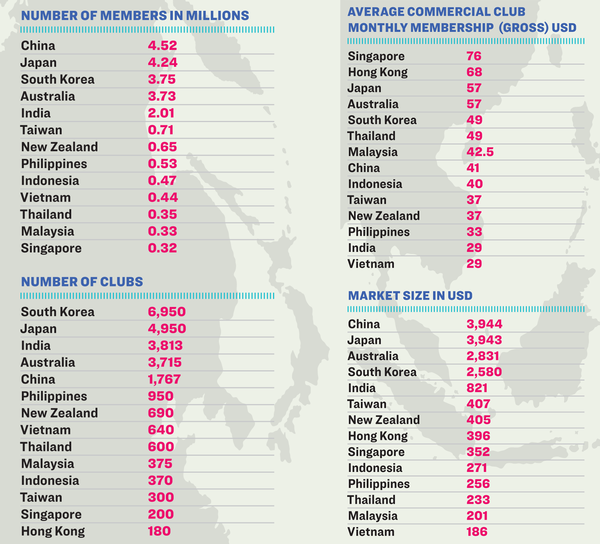
China has the most members in Asia at 4.52 million
Driven by the momentum of economic growth, the fitness market in the Asia-Pacific region has shown steady growth, with a positive outlook going forward - Alan MacCharles, Deloitte China

The second edition of the IHRSA Asia-Pacific Health Club Report was released recently in collaboration with Deloitte.

It demonstrates that the health and fitness industry in the Asia-Pacific region is in good shape – fueled by growing economies and with significant potential for continued growth.

Deloitte says only two markets in the region are considered mature, these being Australia and New Zealand, which have the highest penetration rates at 15.3 per cent and 13.6 per cent, respectively.

While the fitness market shows signs of rapid growth and professionalisation in terms of penetration rates in Hong Kong (5.85 per cent), Singapore (5.8 per cent), and Japan (3.3 per cent), significant opportunities for growth still remain in less developmed markets, such as the Philippines (0.53 per cent), Thailand (0.5 per cent), Indonesia (0.18 per cent) and India (0.15 per cent).

Along with such growth opportunities come challenges. Real estate costs, limited rental availability, infrastructure underdevelopment, lack of professionalised services and increasing competition are just some of the realities club operators face when working in Asia-Pacific markets. However, a favorable economic outlook, along with increasing health awareness and demand for group exercise and personalised training are expected to spur expansion.

“Driven by the momentum of economic prosperity, the fitness market in the Asia-Pacific region has shown steady growth, with a positive outlook going forward,” says Alan MacCharles, partner at Deloitte China. “Overall market penetration is on an upward trajectory, reflecting an increasing awareness of the importance of good health and the role a club membership can play in this.”

According to MacCharles, the region’s fitness market remains stratified due to varying stages of development, which can be categorised into three tiers:

Tier 1: Australia and New Zealand
Market penetration rates
Australia 15.3 per cent
New Zealand 13.6 per cent
These are relatively established markets, with higher penetration rates than their neighbours. However, the mature and professionalised markets in these countries indicate limited growth potential; labor and real estate costs have also constrained growth here.

Tier 2: Hong Kong, Singapore, Japan and Taiwan
Market penetration rates
Hong Kong 5.85 per cent
Singapore 5.8 per cent
Japan 3.3 per cent
Taiwan 3.0 per cent
These locations belong to the fast-expanding and maturing second-tier markets. This segment features gradually professionalising services, expanding consumer bases, and high concentration of leading players.
With room for growth, already fierce competition is expected to continue in the future.

Tier 3: Rest of Asia Pacific
Market penetration rates
Malaysia 1.04 per cent
China’s top 10 cities 0.97 per cent
Philippines 0.53 per cent
Thailand 0.5 per cent
Vietnam 0.5 per cent
Indonesia 0.18 per cent
India 0.15 per cent

The remaining seven Asia Pacific markets assessed by Deloitte are still in a comparatively early stage in their lifecycle, as a result of slower economic development and low awareness of personal health as a priority.

The fitness industry in these countries is typically concentrated in the capital city and also the first-tier cities, where markets are mainly led by the larger, commercial fitness club chains.

The markets in second-tier (and under) cities are dominated by standalone players that are mostly lower-end single site, independently owned operators, due to infrastructure underdevelopment, low purchasing power and low awareness of personalised training.

The underdeveloped regions in these countries demonstrate high growth potential – especially as rapid infrastructure development improves the accessibility and connectivity of these locations.

Impact of Gym Contracts
Laws relating to the way gym contracts are configured have an impact on the way markets develop. For example, in New Zealand, up-front payment for a long-term membership is forbidden by law, while in Singapore, some clubs collect one- and two-year contracts up-front.

Australia

“The Australian fitness market has experienced rapid expansion in the past three years, led primarily by the growth of fitness franchises. F45 has opened 200 new clubs; Anytime Fitness has added 70; Jetts Fitness has added 60; and Plus Fitness has increased by 45 clubs.”

China

“Independent market research indicates that less than 20 per cent of all clubs in China are profitable, while at least 60 per cent are experiencing losses.”

India

“Retention rates are low in the Indian fitness club market. From a cultural standpoint, members treat fitness as a goal to be achieved and have yet to see it as a lifestyle to be maintained or to act on this as an aspiration.”

Indonesia

“Because the provision of sidewalks is limited in Jakarta, running outdoors is not a fitness option for people in the city, so fitness centres have become lifestyle destinations for people who want to exercise in safety.”

Japan

“The ratio of public to commercial gyms is close to 50:50. In spite of this, public gyms are not seen as competitors to commercial gyms and the two co-exist.”

Malaysia

“Fitness activities are typically male-focused in Malaysia, largely for cultural reasons. An estimated 60 per cent of fitness members are male in the capital, Kuala Lumpur, while the level is at least 70 per cent elsewhere.”

New Zealand

“Growing awareness of the importance of healthy living has led to an increase in the penetration rate, up from 1.38 per cent in 2014 to 13.6 per cent in 2017. 24-hour gyms are the fastest- growing sector.”

The Philippines

“The Philippines has achieved one of the highest increases in fitness club penetration over the past three years, due primarily to the rise of affordable gyms which have opened up the market.”

Singapore

“Bulky equipment is being replaced by open space and group exercise is becoming popular. A medium to small gym size suits the cost-saving strategy for operators and also better fits customers’ needs.”

South Korea

“Due to high rental costs, fitness clubs are generally smaller in size in South Korea compared to most of the counterparts in other Asia Pacific countries, excluding Hong Kong and Japan.”

Taiwan

“The top five players claim 77% of the overall market in terms of number of gyms.”

Thailand

“Most Thais still prefer to exercise in public parks, at home, or not at all.”

Vietnam

“The fitness club market was worth US$186 million in 2017, and is expected to expand rapidly in the next three years as Vietnamese investors start focusing on the industry.”

The Asia Pacific health club market

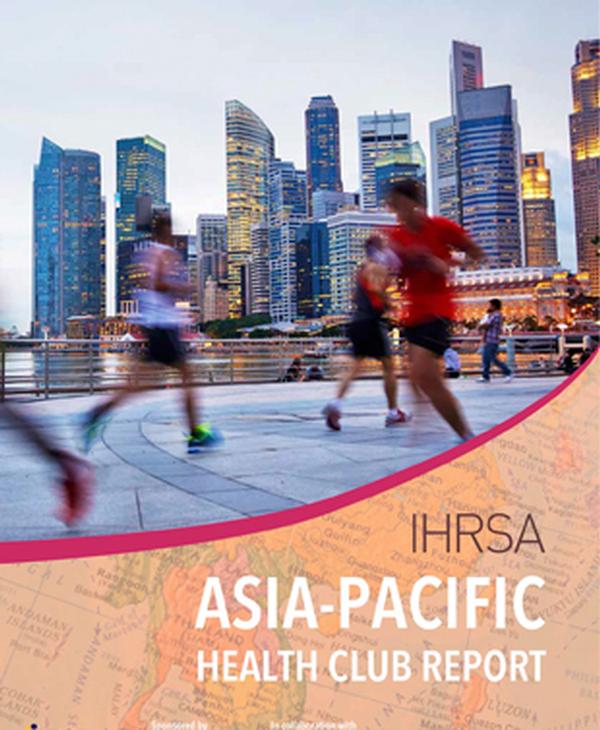
Access the report

The full report is available at a price of US$299 for IHRSA members and US$599 for non-members from ihrsa.org/publications. Contact
[email protected] with questions. Perfect Gym sponsored the report.
The full report
The full report
Sign up here to get HCM's weekly ezine and every issue of HCM magazine free on digital.
China has huge room for growth in both participation and profitability
https://www.leisureopportunities.co.uk/images/571941_495185.jpg
The latest Asia Pacific research from IHRSA and Deloitte shows significant growth potential for the fitness market in Asia, where penetration rates range widely from 0.15 to 15.3 per cent.
Kristen Walsh, IHRSA,IHRSA, Asia Pacific research, Deloitte,
HCM magazine
For every member with a tripod and a big following, there are others irritated at the way equipment is being hogged or wary they’ll be in the background on someone’s Insta feed. Do influencers offer valuable, free marketing or are they just a nuisance? Kath Hudson finds out how operators are responding
HCM magazine
HCM People

Stephen Price

Founder, SP&Co Group
Working in public health over the last few years has lit up parts of my brain again
HCM magazine
Small improvements to sleep, diet and physical activity have major benefits for the heart, according to new research from the University of Sydney
HCM magazine
Strength training is evolving, driven by changing consumer preferences. Julie Cramer talks to innovators about how their products are meeting this demand
HCM magazine
Collaborations with the medical profession and greater aspirations around wellbeing are creating a need for more experts in our sector. It’s time to reboot our thinking around the workforce
HCM promotional features
Sponsored
David Lloyd is stepping up its commitment to women’s health as it continues to explore what fit-for-purpose looks like for the female population
HCM promotional features
Sponsored
Starpool supports Olympic champion Marcell Jacobs, says Riccardo Turri
HCM promotional features
Sponsored
SnowDome Fitness has added 50 per cent more space with cutting-edge Technogym solutions
HCM promotional features
Sponsored
Third Space partnered with IndigoFitness to deliver a bespoke training space for its new club at The Whiteley
HCM promotional features
Sponsored
Find out how your gym can tap into the corporate wellness boom
HCM promotional features
Sponsored
Greg Bradley looks at the shift towards strength training in gyms and advises on how operators can create the ultimate training environment
HCM promotional features
Sponsored
EGYM has opened a new HQ in Paternoster Square, London and revealed a range of new launches
HCM promotional features
Sponsored
Active IQ is calling for greater accountability in online fitness advice with the launch of a new trustmark
HCM promotional features
Sponsored
New launch, Salus House, elevates boutique wellness with high service levels and a partnership with Technogym
HCM promotional features
Latest News
Nuffield Health has told HCM that it takes its responsibilities towards its colleagues seriously and ...
Latest News
Technogym has announced the launch of the Run X World Treadmill Championship, the first world ...
Latest News
Shocked by the UK loneliness statistics, charitable trust Mytime Active has been doubling down on ...
Latest News
Portugal’s leading operator, SC Fitness, is celebrating a milestone by reaching 100 gyms.  The company ...
Latest News
Australia’s fast-growing fitness network, Viva Leisure, is adding a low-cost gym brand to its already ...
Latest News
Speedflex has launched a strength training programme for 10 to 16-year-olds, to make it safer, ...
Latest News
Tewinbury Farm Hotel in Hertfordshire, UK is expanding its premium leisure proposition with the launch ...
Latest News

Work is underway in Madrid on one of Europe’s most significant multi-functional complexes, ...

Opinion
promotion
Strength training has moved from the margins to the mainstream.
Opinion: Building smarter strength spaces for today’s operators
Featured supplier news
Featured supplier news: W3Fit EMEA celebrates its fifth anniversary
Celebrating its milestone 5th anniversary, W3Fit EMEA returns in 2026 with an unmissable gathering of the Health & Fitness industry’s most influential leaders.
Featured supplier news
Featured supplier news: Reaching the people most gyms miss: Bedford Gym & Swim Campaign delivers 410 new members
One of the biggest mistakes the fitness industry still makes is advertising almost exclusively to people who already look and live like gym members.
Company profiles
Company profile: Escape Fitness Ltd
Escape Fitness has driven fitness innovation for 20+ years. Founded by engineer Richard Januszek and ...
Company profiles
Company profile: Eleiko Group AB
Eleiko continues to innovate and craft world-class strength equipment designed to help people perform better ...
Supplier Showcases
Supplier Showcase - Future-proofing
Catalogue Gallery
Click on a catalogue to view it online
Featured press releases
GYMNATION press release: Massive ‘Good Luck’ message appears in Saudi Desert as Green Falcons head to World Cup
Passengers flying out of Riyadh this week have been treated to an extraordinary sight from the skies after GymNation unveiled a giant desert sand mural supporting the Saudi Arabia National Football Team ahead of the FIFA World Cup in the United States.
Featured press releases
BLK BOX press release: BLK BOX strengthens European growth with the appointment of Germany country manager Timo Garrels
BLK BOX is proud to welcome Timo Garrels as Germany country manager, marking another important step in the brand’s continued growth across Europe.
Directory
Hot tubs
MSpa International Ltd: Hot tubs
Fitness tracking platform
SpiviTech: Fitness tracking platform
Spa and beauty equipment
Oakworks Inc: Spa and beauty equipment
Lockers
Crown Sports Lockers: Lockers
Industrial washing machines
Miele Company Limited: Industrial washing machines
Water experiences and hydrotherapy solutions
Aquaform s.r.l.: Water experiences and hydrotherapy solutions
Property & Tenders
Stratford, East London.
Lee Valley Regional Park Authority
Property & Tenders
Y Felinheli, LL56 4QN
Newmark
Property & Tenders
Diary dates
13-13 Jun 2026
Worldwide, Various,
Diary dates
21-24 Sep 2026
The Langham Huntington Pasadena , Pasadena, United States
Diary dates
06-08 Oct 2026
Messe Stuttgart, Stuttgart, Germany
Diary dates
22-22 Oct 2026
QEII Conference Centre, London,
Diary dates
26-29 Oct 2027
Koelnmesse Exhibition Centre, Cologne, Germany
Diary dates

features

IHRSA update: Asia Pacific

The Asia Pacific health club market is now worth US$16.8 billion, according to an exceptional new report. IHRSA’s Kristen Walsh shares some of the highlights

By Kristen Walsh, IHRSA | Published in Health Club Management 2018 issue 6
China has the most members in Asia at 4.52 million
Driven by the momentum of economic growth, the fitness market in the Asia-Pacific region has shown steady growth, with a positive outlook going forward - Alan MacCharles, Deloitte China

The second edition of the IHRSA Asia-Pacific Health Club Report was released recently in collaboration with Deloitte.

It demonstrates that the health and fitness industry in the Asia-Pacific region is in good shape – fueled by growing economies and with significant potential for continued growth.

Deloitte says only two markets in the region are considered mature, these being Australia and New Zealand, which have the highest penetration rates at 15.3 per cent and 13.6 per cent, respectively.

While the fitness market shows signs of rapid growth and professionalisation in terms of penetration rates in Hong Kong (5.85 per cent), Singapore (5.8 per cent), and Japan (3.3 per cent), significant opportunities for growth still remain in less developmed markets, such as the Philippines (0.53 per cent), Thailand (0.5 per cent), Indonesia (0.18 per cent) and India (0.15 per cent).

Along with such growth opportunities come challenges. Real estate costs, limited rental availability, infrastructure underdevelopment, lack of professionalised services and increasing competition are just some of the realities club operators face when working in Asia-Pacific markets. However, a favorable economic outlook, along with increasing health awareness and demand for group exercise and personalised training are expected to spur expansion.

“Driven by the momentum of economic prosperity, the fitness market in the Asia-Pacific region has shown steady growth, with a positive outlook going forward,” says Alan MacCharles, partner at Deloitte China. “Overall market penetration is on an upward trajectory, reflecting an increasing awareness of the importance of good health and the role a club membership can play in this.”

According to MacCharles, the region’s fitness market remains stratified due to varying stages of development, which can be categorised into three tiers:

Tier 1: Australia and New Zealand
Market penetration rates
Australia 15.3 per cent
New Zealand 13.6 per cent
These are relatively established markets, with higher penetration rates than their neighbours. However, the mature and professionalised markets in these countries indicate limited growth potential; labor and real estate costs have also constrained growth here.

Tier 2: Hong Kong, Singapore, Japan and Taiwan
Market penetration rates
Hong Kong 5.85 per cent
Singapore 5.8 per cent
Japan 3.3 per cent
Taiwan 3.0 per cent
These locations belong to the fast-expanding and maturing second-tier markets. This segment features gradually professionalising services, expanding consumer bases, and high concentration of leading players.
With room for growth, already fierce competition is expected to continue in the future.

Tier 3: Rest of Asia Pacific
Market penetration rates
Malaysia 1.04 per cent
China’s top 10 cities 0.97 per cent
Philippines 0.53 per cent
Thailand 0.5 per cent
Vietnam 0.5 per cent
Indonesia 0.18 per cent
India 0.15 per cent

The remaining seven Asia Pacific markets assessed by Deloitte are still in a comparatively early stage in their lifecycle, as a result of slower economic development and low awareness of personal health as a priority.

The fitness industry in these countries is typically concentrated in the capital city and also the first-tier cities, where markets are mainly led by the larger, commercial fitness club chains.

The markets in second-tier (and under) cities are dominated by standalone players that are mostly lower-end single site, independently owned operators, due to infrastructure underdevelopment, low purchasing power and low awareness of personalised training.

The underdeveloped regions in these countries demonstrate high growth potential – especially as rapid infrastructure development improves the accessibility and connectivity of these locations.

Impact of Gym Contracts
Laws relating to the way gym contracts are configured have an impact on the way markets develop. For example, in New Zealand, up-front payment for a long-term membership is forbidden by law, while in Singapore, some clubs collect one- and two-year contracts up-front.

Australia

“The Australian fitness market has experienced rapid expansion in the past three years, led primarily by the growth of fitness franchises. F45 has opened 200 new clubs; Anytime Fitness has added 70; Jetts Fitness has added 60; and Plus Fitness has increased by 45 clubs.”

China

“Independent market research indicates that less than 20 per cent of all clubs in China are profitable, while at least 60 per cent are experiencing losses.”

India

“Retention rates are low in the Indian fitness club market. From a cultural standpoint, members treat fitness as a goal to be achieved and have yet to see it as a lifestyle to be maintained or to act on this as an aspiration.”

Indonesia

“Because the provision of sidewalks is limited in Jakarta, running outdoors is not a fitness option for people in the city, so fitness centres have become lifestyle destinations for people who want to exercise in safety.”

Japan

“The ratio of public to commercial gyms is close to 50:50. In spite of this, public gyms are not seen as competitors to commercial gyms and the two co-exist.”

Malaysia

“Fitness activities are typically male-focused in Malaysia, largely for cultural reasons. An estimated 60 per cent of fitness members are male in the capital, Kuala Lumpur, while the level is at least 70 per cent elsewhere.”

New Zealand

“Growing awareness of the importance of healthy living has led to an increase in the penetration rate, up from 1.38 per cent in 2014 to 13.6 per cent in 2017. 24-hour gyms are the fastest- growing sector.”

The Philippines

“The Philippines has achieved one of the highest increases in fitness club penetration over the past three years, due primarily to the rise of affordable gyms which have opened up the market.”

Singapore

“Bulky equipment is being replaced by open space and group exercise is becoming popular. A medium to small gym size suits the cost-saving strategy for operators and also better fits customers’ needs.”

South Korea

“Due to high rental costs, fitness clubs are generally smaller in size in South Korea compared to most of the counterparts in other Asia Pacific countries, excluding Hong Kong and Japan.”

Taiwan

“The top five players claim 77% of the overall market in terms of number of gyms.”

Thailand

“Most Thais still prefer to exercise in public parks, at home, or not at all.”

Vietnam

“The fitness club market was worth US$186 million in 2017, and is expected to expand rapidly in the next three years as Vietnamese investors start focusing on the industry.”

The Asia Pacific health club market

Access the report

The full report is available at a price of US$299 for IHRSA members and US$599 for non-members from ihrsa.org/publications. Contact
[email protected] with questions. Perfect Gym sponsored the report.

The full report
The full report
Sign up here to get HCM's weekly ezine and every issue of HCM magazine free on digital.
China has huge room for growth in both participation and profitability
https://www.leisureopportunities.co.uk/images/571941_495185.jpg
The latest Asia Pacific research from IHRSA and Deloitte shows significant growth potential for the fitness market in Asia, where penetration rates range widely from 0.15 to 15.3 per cent.
Kristen Walsh, IHRSA,IHRSA, Asia Pacific research, Deloitte,
Latest News
Nuffield Health has told HCM that it takes its responsibilities towards its colleagues seriously and ...
Latest News
Technogym has announced the launch of the Run X World Treadmill Championship, the first world ...
Latest News
Shocked by the UK loneliness statistics, charitable trust Mytime Active has been doubling down on ...
Latest News
Portugal’s leading operator, SC Fitness, is celebrating a milestone by reaching 100 gyms.  The company ...
Latest News
Australia’s fast-growing fitness network, Viva Leisure, is adding a low-cost gym brand to its already ...
Latest News
Speedflex has launched a strength training programme for 10 to 16-year-olds, to make it safer, ...
Latest News
Tewinbury Farm Hotel in Hertfordshire, UK is expanding its premium leisure proposition with the launch ...
Latest News

Work is underway in Madrid on one of Europe’s most significant multi-functional complexes, ...

Latest News
PureGym is encouraging people to step away from their screens and go for a walk, ...
Latest News
Small improvements to sleep, diet quality, and physical activity, made in combination lead to a ...
Latest News
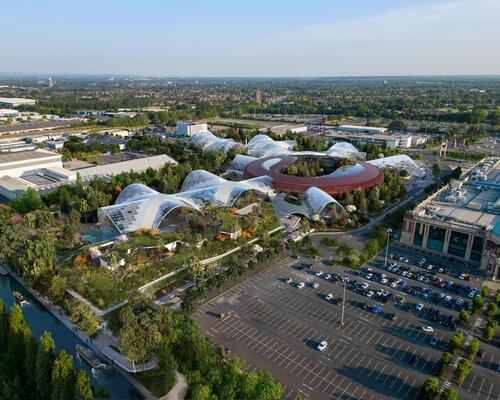
Therme Manchester’s 28-acre development, which will include interconnected glass pavilions that measure 65,000sq m, will ...
Opinion
promotion
Strength training has moved from the margins to the mainstream.
Opinion: Building smarter strength spaces for today’s operators
Featured supplier news
Featured supplier news: W3Fit EMEA celebrates its fifth anniversary
Celebrating its milestone 5th anniversary, W3Fit EMEA returns in 2026 with an unmissable gathering of the Health & Fitness industry’s most influential leaders.
Featured supplier news
Featured supplier news: Reaching the people most gyms miss: Bedford Gym & Swim Campaign delivers 410 new members
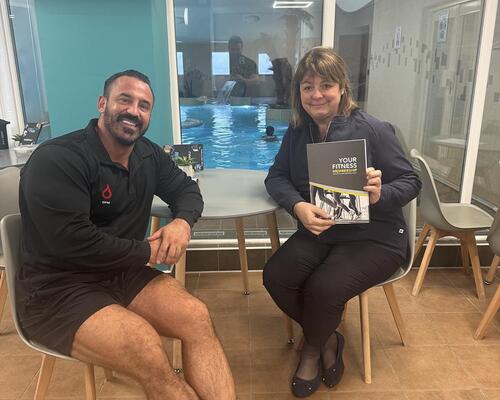
One of the biggest mistakes the fitness industry still makes is advertising almost exclusively to people who already look and live like gym members.
Company profiles
Company profile: Escape Fitness Ltd
Escape Fitness has driven fitness innovation for 20+ years. Founded by engineer Richard Januszek and ...
Company profiles
Company profile: Eleiko Group AB
Eleiko continues to innovate and craft world-class strength equipment designed to help people perform better ...
Supplier Showcases
Supplier Showcase - Future-proofing
Catalogue Gallery
Click on a catalogue to view it online
Featured press releases
GYMNATION press release: Massive ‘Good Luck’ message appears in Saudi Desert as Green Falcons head to World Cup
Passengers flying out of Riyadh this week have been treated to an extraordinary sight from the skies after GymNation unveiled a giant desert sand mural supporting the Saudi Arabia National Football Team ahead of the FIFA World Cup in the United States.
Featured press releases
BLK BOX press release: BLK BOX strengthens European growth with the appointment of Germany country manager Timo Garrels
BLK BOX is proud to welcome Timo Garrels as Germany country manager, marking another important step in the brand’s continued growth across Europe.
Directory
Hot tubs
MSpa International Ltd: Hot tubs
Fitness tracking platform
SpiviTech: Fitness tracking platform
Spa and beauty equipment
Oakworks Inc: Spa and beauty equipment
Lockers
Crown Sports Lockers: Lockers
Industrial washing machines
Miele Company Limited: Industrial washing machines
Water experiences and hydrotherapy solutions
Aquaform s.r.l.: Water experiences and hydrotherapy solutions
Property & Tenders
Stratford, East London.
Lee Valley Regional Park Authority
Property & Tenders
Y Felinheli, LL56 4QN
Newmark
Property & Tenders
Diary dates
13-13 Jun 2026
Worldwide, Various,
Diary dates
21-24 Sep 2026
The Langham Huntington Pasadena , Pasadena, United States
Diary dates
06-08 Oct 2026
Messe Stuttgart, Stuttgart, Germany
Diary dates
22-22 Oct 2026
QEII Conference Centre, London,
Diary dates
26-29 Oct 2027
Koelnmesse Exhibition Centre, Cologne, Germany
Diary dates
Search news, features & products:
Find a supplier:
Elevate Arena
Elevate Arena
Partner sites