





















Elevate Arena
Elevate Arena
Elevate Arena
Follow Health Club Management on Twitter Like Health Club Management on Facebook Join the discussion with Health Club Management on LinkedIn
FITNESS, HEALTH, WELLNESS

features

Global health trends: The wellness opportunity

Tomi Isaacs gives an overview of the health and wellbeing landscape as captured by The Futures Company’s latest Global MONITOR studies

By Tomi Isaacs , The Futures Company | Published in Health Club Management 2013 issue 11
Companies that support consumers in navigating the wellbeing landscape will unlock new areas of growth for decades

Responsibility for healthcare is increasingly being pushed onto the public. With public spending under pressure and greater concern over the social and economic costs of both dealing with and not dealing with health, governments progressively nudge us to take better care of ourselves – creating challenges and opportunities to shape the global health and wellbeing landscape.

Increased longevity has always been seen as the ideal, but many are now beginning to question whether life expectancy should be the main focus of our assessment of the quality of life, which inevitably declines as the ageing process takes place. In addition, with the cost of an extra year of life estimated to increase from US$100,000 to US$300,000 in the US by 2050, we will see growing debates over who has the right to decide whether treatment is viable. This issue is highly polarising, and we could see decisions about who receives healthcare shift from the healthcare providers to those patients who can afford to pay for it.

In the meantime, WHO estimates that 388 million people will die worldwide from chronic disease over the next 10 years, at an unsustainable cost of approximately 3 per cent of global GDP. However, it also estimates that 36 million of these deaths could be averted through better lifestyle choices, with data showing the two most common causes of death in the world to be lifestyle diseases – namely heart disease and stroke.

The positive financial implications of lowering the incidence of lifestyle disease by encouraging people to take responsibility for their health would be significant: if there were a modest 10 per cent reduction in mortality from heart disease and cancer, it could save US$10.4trn in the US alone on an annual basis – which, among other benefits, could potentially mean funding being directed to more cost-effective healthcare interventions for non-lifestyle related diseases.

Unlocking new markets
The imperative to take care of ourselves is heightened when we consider that, for the first time ever, diseases associated with obesity are a greater global health burden than those associated with lack of nutrition.

Globally, over 40 million preschool children were overweight or obese in 2008, and excess weight among the adult population is also significant: global sales of weight management-positioned food and beverages amounted to a staggering US$163bn in 2012, and we expect this to grow.

However, this represents a big opportunity for the health and fitness industry, with a huge proportion of the global population wanting to lose or manage their weight. Rather than allowing people to simply turn to diet for the solution, better education is required regarding the calories in:calories out equation, whereby physical activity also plays a role.

Indeed, helping consumers across all age groups to make choices that lead to living healthier lifestyles is a challenge the fitness industry needs to accept, focusing on driving innovation, creating incentives and inspiring motivation. Companies and brands that support consumers in navigating the wellbeing landscape will unlock new sources of growth for decades and inspire consumer loyalty.

The consumer response
Part of consumers’ increased responsibility over their individual health is the recognition that emotional and spiritual health are as important as physical health in achieving overall wellness. This holistic approach to wellness has led consumers to adopt a wide range of measures with the aim of making themselves feel happy, healthy and strong.

Global MONITOR (see above) data reveals that just over half (52 per cent) of people take steps to improve their health, regardless of whether they feel ill or not: a self-managing approach to wellbeing that echoes the preventative mindset we’re now seeing on the rise across the majority of global markets. However, despite this, fewer than half of consumers worldwide say they are satisfied with their emotional and physical wellbeing.

Understanding consumers’ approaches to health can be complicated, as they are often very personal and heavily influenced by cultural nuances. Global MONITOR uses a metaphor to explore this complexity and visualise the potential strategies people may use. We ask consumers: ‘How do you think of your body?’ and offer them three options.

The Car is the metaphor for those people who see their body as a machine in which the component parts can be fixed. Among this group, strategies tend to be short-term and reactive.

Those who identify with the Fortress see their body as something they have to strengthen and defend against external attack. This is also short-term, but predominantly a proactive approach.

Finally, the Tree is for those who see their body as something they nurture, taking an ongoing holistic approach to managing health. This is a much more long-term, proactive strategy.

It is this final option, with its holistic approach to managing health, that’s here to stay: the percentage of Global MONITOR respondents identifying with the tree rose from 50 per cent in 2006 to 56 per cent in 2013 (car fell from 20 to 15 per cent, while fortress went up just 1 per cent, from 28 to 29 per cent).

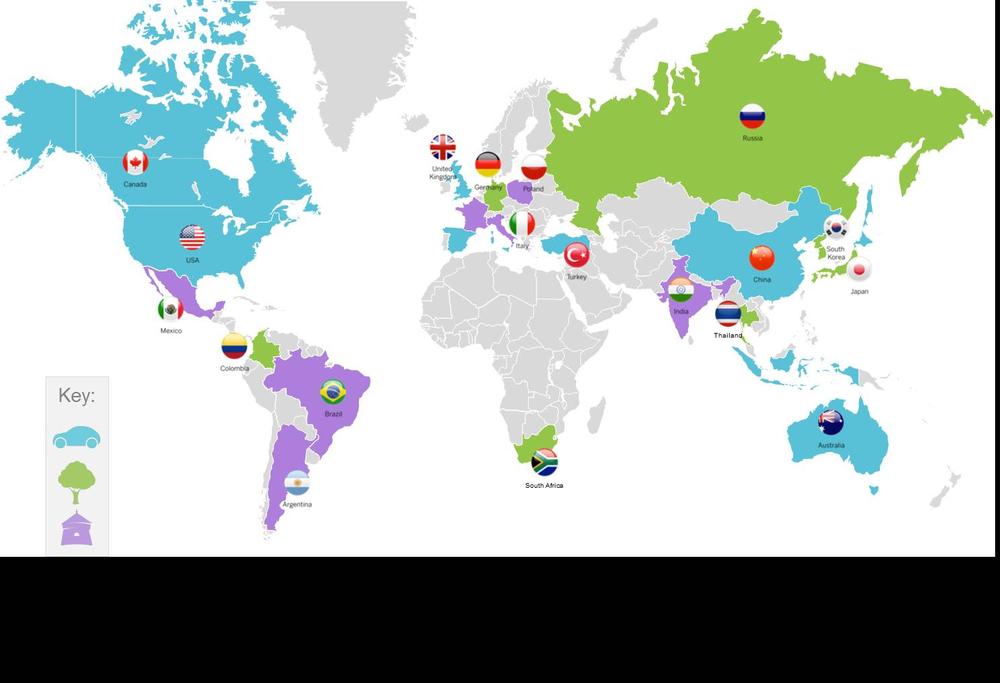
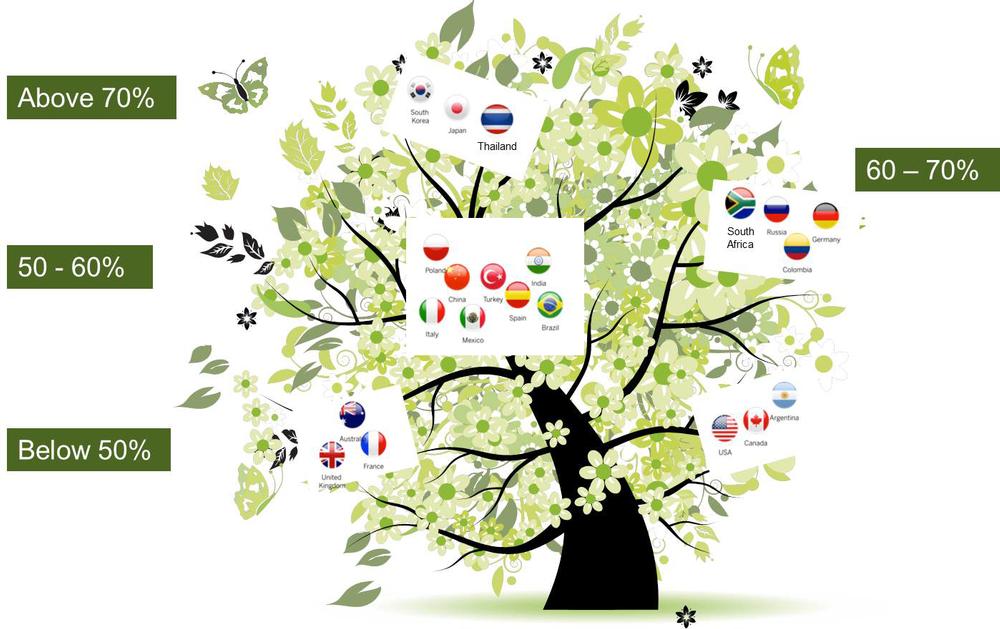
This growing interest in a holistic approach is evident across all markets, although there remain big differences: in Thailand, Japan and South Korea, over 70 per cent of people picked tree; in South Africa, Colombia and Germany, tree came in at 60–70 per cent. (See Figure 1, above)

Meanwhile in Spain, Italy, Brazil and India, tree registered between 50 and 60 per cent, but with fortress also important; in China, tree was also 50–60 per cent but car came out above average; and markets including the UK, US, Canada and Australia remained below 50 per cent for tree, with car above average. Interestingly, tree logged above average responses in Russia. (See Figure 2, p58)

One of the big shifts registered in the above findings has occurred in some Asian markets, where a holistic approach was traditionally more of a culturally embedded behaviour. We’re beginning to see movement towards a more defensive strategy, however: a 10 per cent shift from tree to fortress in India, for example, indicating a more mixed approach to self-health management. We suspect this could this be a response to recent risks of contracting foreign-derived viruses such as bird flu.

The market response
Whether consumers view their bodies as cars, fortresses or trees, opportunities abound to support those working to optimise their overall wellbeing. There has been significant innovation in this space, with some of the emerging hotspots including innovations that help people to manage their mental acuity, boost the body’s renewal processes and protect themselves against disease.

Current innovations in the market include Kinohimistu, a lutein drink from Japan that claims to preserve optical health; from the US, drinks that (once ingested) help to keep skin looking young while asleep; and Vigo, a chewing gum from Sweden that’s said to increase mental performance – to mention a few.

Meanwhile, in the space of self-monitoring, devices such as Fitband and Fuelband can help consumers to track and potentially optimise their health and fitness levels. However, the full impact of such devices will only be realised if consumers are motivated by improving their records rather than passively reading the data fed back to them.

At the Israel Institute of Technology, professor Hossam Haick is developing an artificial nose that can detect molecules in human breath that are symptomatic of head, neck and lung cancers. If this product gets to market, it could give consumers even more insight and control over their healthcare.

Also, 3D printing of bespoke transplant organs is on the horizon in the UK – a capability that could support those who take more of a ‘car’ approach to their personal maintenance.

Future opportunities
The business landscape is changing, with an opportunity to reframe wellbeing and move brands into the lifestyle choice space, where there are more points to connect, serve and support consumers in their quest for better health.

We will see an increase in corporate wellness schemes as employers take an active interest in employees’ wellbeing as part of a commercial agenda – as well as their duty of care.

Meanwhile, our ability to collect and analyse big data about individual health indicators will deliver solutions at mass and personalised levels. With the cost of decoding an individual genome likely to fall from between US$10,000 and US$25,000 to just US$1,000 within the next two years, we can expect to see the personalised health market explode.

Our message to companies and brands is simple: seize the opportunity. There has never been a better time for brands to shape the future of wellness and assist consumers in their quest to live better and healthier lives.

The global momentum behind wellness is poised to impact everything about the way we live our lives, from the products we buy to the places we work and play.

About Global MONITOR

Global MONITOR is a comprehensive set of resources for global foresights and trends that provides insight into the global and local forces shaping the business environment, consumers and brands. The resource includes data and analysis from a consumer survey that covers 28,000 respondents across 21 countries.

The Futures Company is an award-winning global strategic insight and innovation consultancy with expertise in foresight and futures. It unlocks new sources of growth for its clients through consultancy, global insight and a range of subscription solutions. The Futures Company is a Kantar company within WPP, with teams in Europe, North America, Latin America and Asia, and was formed through the integration of The Henley Centre, Yankelovich and TRU.

Twitter @FuturesCo
Web www.thefuturescompany.com

Sign up here to get HCM's weekly ezine and every issue of HCM magazine free on digital.
Traditionally holistic Asian markets are adopting defensive health strategies / ©iStockphoto.com/Pikoso.kz
Figure 1 – The appeal of holistic health
Percentages of national populations feeling ‘tree’ best 
describes their body – something to be nurtured as part of an ongoing holistic approach to health
Figure 1 – The appeal of holistic health Percentages of national populations feeling ‘tree’ best describes their body – something to be nurtured as part of an ongoing holistic approach to health
Figure 2 - Health strategies around the world 
Which of the following best describes how you think of your body – car, fortress, tree? (indices highlighting above average market differences)
Figure 2 - Health strategies around the world Which of the following best describes how you think of your body – car, fortress, tree? (indices highlighting above average market differences)
The future will see an increase in corporate wellness offers / ©iStockphoto.com/
https://www.leisureopportunities.co.uk/images/HCm2013_11globalT.gif
The latest Global MONITOR report from The Futures Company presents the trends and opportunities in wellness
The Futures Company,,Global MONITOR, The Futures Company, wellness, healthcare, holistic health
HCM magazine
As the entrepreneur who started Wexer, Fresh Fitness, Fitness DK and Repeat, as well as being a former elite athlete, Rasmus Ingerslev’s life looked perfect from the outside, but onthe inside it was a different story. He talks to Kath Hudson about healing old wounds
HCM magazine
Collaborations with the medical profession and greater aspirations around wellbeing are creating a need for more experts in our sector. It’s time to reboot our thinking around the workforce
HCM magazine
HCM People

Stephen Price

Founder, SP&Co Group
Working in public health over the last few years has lit up parts of my brain again
HCM magazine
Small improvements to sleep, diet and physical activity have major benefits for the heart, according to new research from the University of Sydney
HCM magazine
Raphael Cuomo explores the powerful link between addiction, health and behaviour change
HCM promotional features
Sponsored
Third Space partnered with IndigoFitness to deliver a bespoke training space for its new club at The Whiteley
HCM promotional features
Sponsored
David Lloyd is stepping up its commitment to women’s health as it continues to explore what fit-for-purpose looks like for the female population
HCM promotional features
Sponsored
Greg Bradley looks at the shift towards strength training in gyms and advises on how operators can create the ultimate training environment
HCM promotional features
Sponsored
Starpool supports Olympic champion Marcell Jacobs, says Riccardo Turri
HCM promotional features
Sponsored
Find out how your gym can tap into the corporate wellness boom
HCM promotional features
Sponsored
SnowDome Fitness has added 50 per cent more space with cutting-edge Technogym solutions
HCM promotional features
Sponsored
EGYM has opened a new HQ in Paternoster Square, London and revealed a range of new launches
HCM promotional features
Sponsored
New launch, Salus House, elevates boutique wellness with high service levels and a partnership with Technogym
HCM promotional features
Promotion
BLK BOX has been reimagining elite performance spaces for more than a decade. Founder and former athlete, Greg Bradley, tells us what it takes
HCM promotional features
Latest News
Peloton has made the strategic acquisition of Pilates start-up, Skōp, to support the expansion of ...
Latest News
Crunch Fitness has announced the launch of Crunch Reform Pilates – its own reformer concept ...
Latest News
The 20th State of the Industry Report from LeisureDB has revealed a resilient, expanding and ...
Latest News
Purpose Brands has announced its entry into the Italian market, having sold the franchise rights ...
Latest News
Fitness First UK is integrating red light therapy into its yoga and Pilates classes through ...
Latest News
Nuffield Health has told HCM that it takes its responsibilities towards its colleagues seriously and ...
Latest News
Technogym has announced the launch of the Run X World Treadmill Championship, the first world ...
Latest News
Shocked by the UK loneliness statistics, charitable trust Mytime Active has been doubling down on ...
Opinion
promotion
Strength training has moved from the margins to the mainstream.
Opinion: Building smarter strength spaces for today’s operators
Featured supplier news
Featured supplier news: Supporting long-term health: why whole body vibration belongs in clinical settings
As healthcare continues to shift towards prevention, there’s a growing focus on helping people stay active, independent and feeling good for longer.
Featured supplier news
Featured supplier news: Reaching the people most gyms miss: Bedford Gym & Swim Campaign delivers 410 new members
One of the biggest mistakes the fitness industry still makes is advertising almost exclusively to people who already look and live like gym members.
Company profiles
Company profile: Precor
Precor provides fitness and wellness equipment to all market segments, including commercial clubs/facilities, Hospitality, Residential, ...
Company profiles
Company profile: GLL
GLL
As the UK’s leading provider of both leisure centres and libraries we operate 379 locations ...
Supplier Showcases
Supplier Showcase - Future-proofing
Catalogue Gallery
Click on a catalogue to view it online
Featured press releases
GLL press release: GLL joins National Year of Reading as research reveals books beat social media for post-exercise recovery
GLL, the charitable social enterprise operating Libraries and Leisure Centres across the UK, has today (9 June 2026) announced that it will be supporting the National Year of Reading as a major campaign partner alongside national organisations, including BBC Sport, Audible, DC Thomson and Tesco.
Featured press releases
BLK BOX press release: Inside the build: Ironbound. Turning an empty underground space into a thriving functional fitness facility
When brothers Patrick and Kevin first approached BLK BOX, they had a vision and an unusual space. Beneath a building in Embrach, Switzerland, sat an underground facility with huge potential. What it needed was the right layout, the right equipment, and a partner who understood functional fitness.
Directory
Spa and beauty equipment
Living Earth Crafts: Spa and beauty equipment
Lockers
Crown Sports Lockers: Lockers
Fitness tracking platform
SpiviTech: Fitness tracking platform
Water experiences and hydrotherapy solutions
Aquaform s.r.l.: Water experiences and hydrotherapy solutions
Industrial washing machines
Miele Company Limited: Industrial washing machines
Hot tubs
MSpa International Ltd: Hot tubs
Property & Tenders
Stratford, East London.
Lee Valley Regional Park Authority
Property & Tenders
Y Felinheli, LL56 4QN
Newmark
Property & Tenders
Diary dates
13-13 Jun 2026
Worldwide, Various,
Diary dates
21-24 Sep 2026
The Langham Huntington Pasadena , Pasadena, United States
Diary dates
06-08 Oct 2026
Messe Stuttgart, Stuttgart, Germany
Diary dates
22-22 Oct 2026
QEII Conference Centre, London,
Diary dates
26-29 Oct 2027
Koelnmesse Exhibition Centre, Cologne, Germany
Diary dates

features

Global health trends: The wellness opportunity

Tomi Isaacs gives an overview of the health and wellbeing landscape as captured by The Futures Company’s latest Global MONITOR studies

By Tomi Isaacs , The Futures Company | Published in Health Club Management 2013 issue 11
Companies that support consumers in navigating the wellbeing landscape will unlock new areas of growth for decades

Responsibility for healthcare is increasingly being pushed onto the public. With public spending under pressure and greater concern over the social and economic costs of both dealing with and not dealing with health, governments progressively nudge us to take better care of ourselves – creating challenges and opportunities to shape the global health and wellbeing landscape.

Increased longevity has always been seen as the ideal, but many are now beginning to question whether life expectancy should be the main focus of our assessment of the quality of life, which inevitably declines as the ageing process takes place. In addition, with the cost of an extra year of life estimated to increase from US$100,000 to US$300,000 in the US by 2050, we will see growing debates over who has the right to decide whether treatment is viable. This issue is highly polarising, and we could see decisions about who receives healthcare shift from the healthcare providers to those patients who can afford to pay for it.

In the meantime, WHO estimates that 388 million people will die worldwide from chronic disease over the next 10 years, at an unsustainable cost of approximately 3 per cent of global GDP. However, it also estimates that 36 million of these deaths could be averted through better lifestyle choices, with data showing the two most common causes of death in the world to be lifestyle diseases – namely heart disease and stroke.

The positive financial implications of lowering the incidence of lifestyle disease by encouraging people to take responsibility for their health would be significant: if there were a modest 10 per cent reduction in mortality from heart disease and cancer, it could save US$10.4trn in the US alone on an annual basis – which, among other benefits, could potentially mean funding being directed to more cost-effective healthcare interventions for non-lifestyle related diseases.

Unlocking new markets
The imperative to take care of ourselves is heightened when we consider that, for the first time ever, diseases associated with obesity are a greater global health burden than those associated with lack of nutrition.

Globally, over 40 million preschool children were overweight or obese in 2008, and excess weight among the adult population is also significant: global sales of weight management-positioned food and beverages amounted to a staggering US$163bn in 2012, and we expect this to grow.

However, this represents a big opportunity for the health and fitness industry, with a huge proportion of the global population wanting to lose or manage their weight. Rather than allowing people to simply turn to diet for the solution, better education is required regarding the calories in:calories out equation, whereby physical activity also plays a role.

Indeed, helping consumers across all age groups to make choices that lead to living healthier lifestyles is a challenge the fitness industry needs to accept, focusing on driving innovation, creating incentives and inspiring motivation. Companies and brands that support consumers in navigating the wellbeing landscape will unlock new sources of growth for decades and inspire consumer loyalty.

The consumer response
Part of consumers’ increased responsibility over their individual health is the recognition that emotional and spiritual health are as important as physical health in achieving overall wellness. This holistic approach to wellness has led consumers to adopt a wide range of measures with the aim of making themselves feel happy, healthy and strong.

Global MONITOR (see above) data reveals that just over half (52 per cent) of people take steps to improve their health, regardless of whether they feel ill or not: a self-managing approach to wellbeing that echoes the preventative mindset we’re now seeing on the rise across the majority of global markets. However, despite this, fewer than half of consumers worldwide say they are satisfied with their emotional and physical wellbeing.

Understanding consumers’ approaches to health can be complicated, as they are often very personal and heavily influenced by cultural nuances. Global MONITOR uses a metaphor to explore this complexity and visualise the potential strategies people may use. We ask consumers: ‘How do you think of your body?’ and offer them three options.

The Car is the metaphor for those people who see their body as a machine in which the component parts can be fixed. Among this group, strategies tend to be short-term and reactive.

Those who identify with the Fortress see their body as something they have to strengthen and defend against external attack. This is also short-term, but predominantly a proactive approach.

Finally, the Tree is for those who see their body as something they nurture, taking an ongoing holistic approach to managing health. This is a much more long-term, proactive strategy.

It is this final option, with its holistic approach to managing health, that’s here to stay: the percentage of Global MONITOR respondents identifying with the tree rose from 50 per cent in 2006 to 56 per cent in 2013 (car fell from 20 to 15 per cent, while fortress went up just 1 per cent, from 28 to 29 per cent).

This growing interest in a holistic approach is evident across all markets, although there remain big differences: in Thailand, Japan and South Korea, over 70 per cent of people picked tree; in South Africa, Colombia and Germany, tree came in at 60–70 per cent. (See Figure 1, above)

Meanwhile in Spain, Italy, Brazil and India, tree registered between 50 and 60 per cent, but with fortress also important; in China, tree was also 50–60 per cent but car came out above average; and markets including the UK, US, Canada and Australia remained below 50 per cent for tree, with car above average. Interestingly, tree logged above average responses in Russia. (See Figure 2, p58)

One of the big shifts registered in the above findings has occurred in some Asian markets, where a holistic approach was traditionally more of a culturally embedded behaviour. We’re beginning to see movement towards a more defensive strategy, however: a 10 per cent shift from tree to fortress in India, for example, indicating a more mixed approach to self-health management. We suspect this could this be a response to recent risks of contracting foreign-derived viruses such as bird flu.

The market response
Whether consumers view their bodies as cars, fortresses or trees, opportunities abound to support those working to optimise their overall wellbeing. There has been significant innovation in this space, with some of the emerging hotspots including innovations that help people to manage their mental acuity, boost the body’s renewal processes and protect themselves against disease.

Current innovations in the market include Kinohimistu, a lutein drink from Japan that claims to preserve optical health; from the US, drinks that (once ingested) help to keep skin looking young while asleep; and Vigo, a chewing gum from Sweden that’s said to increase mental performance – to mention a few.

Meanwhile, in the space of self-monitoring, devices such as Fitband and Fuelband can help consumers to track and potentially optimise their health and fitness levels. However, the full impact of such devices will only be realised if consumers are motivated by improving their records rather than passively reading the data fed back to them.

At the Israel Institute of Technology, professor Hossam Haick is developing an artificial nose that can detect molecules in human breath that are symptomatic of head, neck and lung cancers. If this product gets to market, it could give consumers even more insight and control over their healthcare.

Also, 3D printing of bespoke transplant organs is on the horizon in the UK – a capability that could support those who take more of a ‘car’ approach to their personal maintenance.

Future opportunities
The business landscape is changing, with an opportunity to reframe wellbeing and move brands into the lifestyle choice space, where there are more points to connect, serve and support consumers in their quest for better health.

We will see an increase in corporate wellness schemes as employers take an active interest in employees’ wellbeing as part of a commercial agenda – as well as their duty of care.

Meanwhile, our ability to collect and analyse big data about individual health indicators will deliver solutions at mass and personalised levels. With the cost of decoding an individual genome likely to fall from between US$10,000 and US$25,000 to just US$1,000 within the next two years, we can expect to see the personalised health market explode.

Our message to companies and brands is simple: seize the opportunity. There has never been a better time for brands to shape the future of wellness and assist consumers in their quest to live better and healthier lives.

The global momentum behind wellness is poised to impact everything about the way we live our lives, from the products we buy to the places we work and play.

About Global MONITOR

Global MONITOR is a comprehensive set of resources for global foresights and trends that provides insight into the global and local forces shaping the business environment, consumers and brands. The resource includes data and analysis from a consumer survey that covers 28,000 respondents across 21 countries.

The Futures Company is an award-winning global strategic insight and innovation consultancy with expertise in foresight and futures. It unlocks new sources of growth for its clients through consultancy, global insight and a range of subscription solutions. The Futures Company is a Kantar company within WPP, with teams in Europe, North America, Latin America and Asia, and was formed through the integration of The Henley Centre, Yankelovich and TRU.

Twitter @FuturesCo
Web www.thefuturescompany.com
Sign up here to get HCM's weekly ezine and every issue of HCM magazine free on digital.
Traditionally holistic Asian markets are adopting defensive health strategies / ©iStockphoto.com/Pikoso.kz
Figure 1 – The appeal of holistic health
Percentages of national populations feeling ‘tree’ best 
describes their body – something to be nurtured as part of an ongoing holistic approach to health
Figure 1 – The appeal of holistic health Percentages of national populations feeling ‘tree’ best describes their body – something to be nurtured as part of an ongoing holistic approach to health
Figure 2 - Health strategies around the world 
Which of the following best describes how you think of your body – car, fortress, tree? (indices highlighting above average market differences)
Figure 2 - Health strategies around the world Which of the following best describes how you think of your body – car, fortress, tree? (indices highlighting above average market differences)
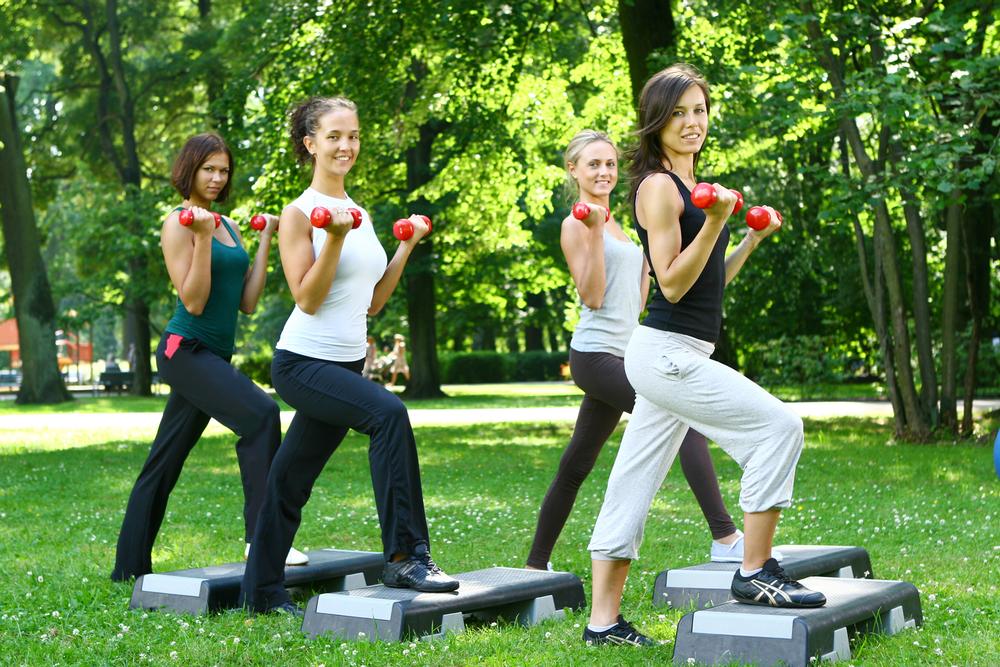
The future will see an increase in corporate wellness offers / ©iStockphoto.com/
https://www.leisureopportunities.co.uk/images/HCm2013_11globalT.gif
The latest Global MONITOR report from The Futures Company presents the trends and opportunities in wellness

The Futures Company,,Global MONITOR, The Futures Company, wellness, healthcare, holistic health
Latest News
Peloton has made the strategic acquisition of Pilates start-up, Skōp, to support the expansion of ...
Latest News
Crunch Fitness has announced the launch of Crunch Reform Pilates – its own reformer concept ...

Latest News
The 20th State of the Industry Report from LeisureDB has revealed a resilient, expanding and ...
Latest News
Purpose Brands has announced its entry into the Italian market, having sold the franchise rights ...
Latest News
Fitness First UK is integrating red light therapy into its yoga and Pilates classes through ...
Latest News
Nuffield Health has told HCM that it takes its responsibilities towards its colleagues seriously and ...
Latest News
Technogym has announced the launch of the Run X World Treadmill Championship, the first world ...
Latest News
Shocked by the UK loneliness statistics, charitable trust Mytime Active has been doubling down on ...
Latest News
Portugal’s leading operator, SC Fitness, is celebrating a milestone by reaching 100 gyms.  The company ...
Latest News
Australia’s fast-growing fitness network, Viva Leisure, is adding a low-cost gym brand to its already ...
Latest News
Speedflex has launched a strength training programme for 10 to 16-year-olds, to make it safer, ...
Opinion
promotion
Strength training has moved from the margins to the mainstream.
Opinion: Building smarter strength spaces for today’s operators
Featured supplier news
Featured supplier news: Supporting long-term health: why whole body vibration belongs in clinical settings
As healthcare continues to shift towards prevention, there’s a growing focus on helping people stay active, independent and feeling good for longer.
Featured supplier news
Featured supplier news: Reaching the people most gyms miss: Bedford Gym & Swim Campaign delivers 410 new members
One of the biggest mistakes the fitness industry still makes is advertising almost exclusively to people who already look and live like gym members.
Company profiles
Company profile: Precor
Precor provides fitness and wellness equipment to all market segments, including commercial clubs/facilities, Hospitality, Residential, ...
Company profiles
Company profile: GLL
GLL
As the UK’s leading provider of both leisure centres and libraries we operate 379 locations ...
Supplier Showcases
Supplier Showcase - Future-proofing
Catalogue Gallery
Click on a catalogue to view it online
Featured press releases
GLL press release: GLL joins National Year of Reading as research reveals books beat social media for post-exercise recovery
GLL, the charitable social enterprise operating Libraries and Leisure Centres across the UK, has today (9 June 2026) announced that it will be supporting the National Year of Reading as a major campaign partner alongside national organisations, including BBC Sport, Audible, DC Thomson and Tesco.
Featured press releases
BLK BOX press release: Inside the build: Ironbound. Turning an empty underground space into a thriving functional fitness facility
When brothers Patrick and Kevin first approached BLK BOX, they had a vision and an unusual space. Beneath a building in Embrach, Switzerland, sat an underground facility with huge potential. What it needed was the right layout, the right equipment, and a partner who understood functional fitness.
Directory
Spa and beauty equipment
Living Earth Crafts: Spa and beauty equipment
Lockers
Crown Sports Lockers: Lockers
Fitness tracking platform
SpiviTech: Fitness tracking platform
Water experiences and hydrotherapy solutions
Aquaform s.r.l.: Water experiences and hydrotherapy solutions
Industrial washing machines
Miele Company Limited: Industrial washing machines
Hot tubs
MSpa International Ltd: Hot tubs
Property & Tenders
Stratford, East London.
Lee Valley Regional Park Authority
Property & Tenders
Y Felinheli, LL56 4QN
Newmark
Property & Tenders
Diary dates
13-13 Jun 2026
Worldwide, Various,
Diary dates
21-24 Sep 2026
The Langham Huntington Pasadena , Pasadena, United States
Diary dates
06-08 Oct 2026
Messe Stuttgart, Stuttgart, Germany
Diary dates
22-22 Oct 2026
QEII Conference Centre, London,
Diary dates
26-29 Oct 2027
Koelnmesse Exhibition Centre, Cologne, Germany
Diary dates
Search news, features & products:
Find a supplier:
Elevate Arena
Elevate Arena
Partner sites