





















features
Environment: Cutting carbon
With skillful management and investment, it’s possible to cut running costs in swimming pools, while also reducing their carbon footprint, as Abi Harris reports



With many of the UK’s leisure buildings dating back to the 1970s, finding innovative ways to reduce their carbon footprint and cut energy costs has never been more vital.
This is especially true for swimming pools, which are energy-intensive and expensive to operate.
As part of an initiative to make swimming more sustainable, money from Sport England’s £63 million Swimming Pool Support Fund (SPSF) was distributed to more than 300 pools and leisure centres at the start of 2024 to support energy efficiency projects.
As part of the programme, environmental audits were undertaken on the centres by Right Directions, the health, safety and quality management company.
Environmental culture
The aim was to ensure facilities had an environmental management culture in place, as well as policies and procedures to safeguard their long-term viability, contributing to improvements in the sector’s overall sustainability.
Caroline Constantine, MD of Right Directions says the results of the audit were unexpected: “The top sites scored better than we’d predicted and the lowest performed less well,” she says. “We anticipated scores between 40 and 80 per cent, but they were extremely wide ranging, from the teens through to the 90s…
“Understandably, organisations where designated staff have environmental management responsibilities generally scored higher,” she explained, “however, many had never been through an environmental audit, so the questions were new to them and the process gave them the opportunity to learn what they needed to change to be more sustainable and cut their energy bills.”
The audit identified areas of competence and those that need improvement: “The highest-scoring questions related to health, safety and general maintenance procedures,” notes Constantine. “These are areas where we would expect operators to score well.”
Areas requiring attention mainly related to measures managers could action themselves, “although many aren’t,” said Constantine. The exception to this was ‘discharge consent’ – where operators require a permit to release waste water.
Additional desk-based review
The lowest 150 performing sites have now undergone a further review – this time, desk-based – and shown a significant increase in scores, following actions taken based on the initial feedback.
“The opportunity for facilities to improve in the follow-up review is considerable, as the majority of areas requiring change – such as optimising lighting levels – don’t need significant spend ,” says Constantine. “In one leisure centre, the natural light was already the recommended 300 Lux, yet despite this, all the lights were switched on, taking the meter reading to 960 Lux.”
Back to school
|“We also saw an opportunity for operators to improve quality management systems generally,” adds Constantine. “Getting teams on board through awareness training is an easy win, but it’s not happening enough, with many staff not receiving training, so this only scored 52 per cent as a result.
“However, this isn’t just about how lack of staff training is affecting the bottom line, it’s about staff understanding the impact their actions have on the planet and how we can all make a difference,” she explains.
“Environmental achievements also weren’t being recognised, meaning there wasn’t a culture of staff logging and reviewing their positive environmental actions,” she said.
“By officially recognising these achievements internally, operators can demonstrate their actions to staff, to stakeholders and to the public, which improves overall experience and satisfaction.”
The question ‘are public awareness initiatives in place?’ only scored 50 per cent, but is – according to Constantine – another easy win: “If you don’t tell staff and customers you’re taking the environment seriously, there’s no pressure for them to follow suit,” she explains.

"The environmental audits gave operators the opportunity to learn what they needed to change to cut their energy bills"
– Caroline Constantine

Formby Pool scored highly across the board in its audit, achieving 92 per cent – joint third highest in the country – including 100 per cent for its public awareness initiatives.
“Public awareness reinforces transparency and accountability, demonstrating the trust is actively working towards sustainability, which creates a ripple effect beyond the facility,” says David Kiernan, CEO of the Formby Pool Trust.
Formby Pool Trust’s investments have reduced electricity consumption by 68 per cent when compared to 2008/09
“An environmental board in reception showcases our objectives and achievements, while providing real-time information on the energy we generate on-site, the amount drawn from the grid and how we utilise surplus – such as charging our electric maintenance van,” he explains.
“It’s a great tool for engaging staff, members and visitors, fostering awareness and encouraging sustainability.”
Formby Pool was awarded £57,905 for additional solar panels by the SPSF, offsetting grid electricity by a further 11 per cent and reducing CO2 emissions by 11.5 tonnes per annum. Kiernan says: “The Sport England funding has empowered us to accelerate our transition to renewable energy, significantly increasing our on-site generation capacity. We’re now well-positioned to achieve our target of generating 50 per cent of total energy consumption from renewables by 2028. It’s part of a strategy to be carbon neutral by 2030.”

The audits covered 31 questions across:
- Facility observations
- Environmental policies and planning
- Staff involvement in environmental management
- Leisure operations
- Maintenance
- Environmental emergencies
- Environmental measure and review
Leisure-specific and maintenance questions ascertained whether equipment is being used efficiently to reduce consumption and well maintained to prolong lifespan
Topics included whether:
- Environmental hazards are identified and controlled
- Hazardous waste is disposed of responsibly
- Public awareness initiatives are in place
- The facility has environmental objectives and targets
- A single-use plastics policy is in place
- Suppliers are assessed for green credentials.
The auditors also explored what the facility managers would do in an environmental emergency and how they measure and review successes
Highest scoring
- 85% – Are you responsibly disposing of hazardous waste?
- 83% – Do you have a planned preventative maintenance schedule?
- 77% – Do you assess environmental risks in your procedures?
Lowest scoring
- 40% – Are discharge consents to water courses or sewers in place?
- 40% – Is lighting set within recommended Lux levels?
- 42% – Do you have a single-use plastics policy?
- 42% – Are staff recognised for environmental achievements?
All centres audited
- Original audit score average – 61%
- Average score following reviews – 71%
- Improvement = 10%
Review centres only
- Original audit score average – 49%
- Review audit score average – 66%
- Improvement = 17%
- Electricity consumption down 68 per cent vs 2008/09 and gas by 50 per cent vs 2015/16
- Environmental board with real-time information
- Charging electric vehicles with surplus energy

Move Urmston scored 90 per cent in its environment audit. The centre is managed by Trafford Leisure, which is experienced in leveraging technology to drive sustainability across environmental, social and economic areas of the operation.
The community interest company was one of the first to upgrade to LED lighting 15 years ago. It also uses locally-sourced salt to treat pools through electro-chlorination and was also one of the first in England to adopt energy-efficient microfiltration systems.
Sustainability efforts make business sense – you retain staff, improve profit and improve how people see your brand
Its latest centre refurbishments are fossil fuel-free, with air-source heat pumps and solar photovoltaic systems. Plans have been approved for a Deep Green data centre in Move Urmston’s grounds, which will transform heat from its servers into hot water, reducing energy bills by an estimated £80,000 a year.
“Sustainability efforts just make business sense. Fundamentally you retain staff, improve profit and improve how people view your brand,” says CEO, Jo Cherrett. “The next generation is proactively searching for what type of company you are. It’s about making the right decisions for the longer term.
“For me this is a non-negotiable. We know not every innovation is going to work, but there’s never been a more important time to have these conversations, to share and to learn.”

- Fossil-fuel free facilities
- Deep Green data centre
- LED lighting
- Air source heat pumps
- Solar photovoltaic systems
- Electro-chlorination using locally-sourced salt

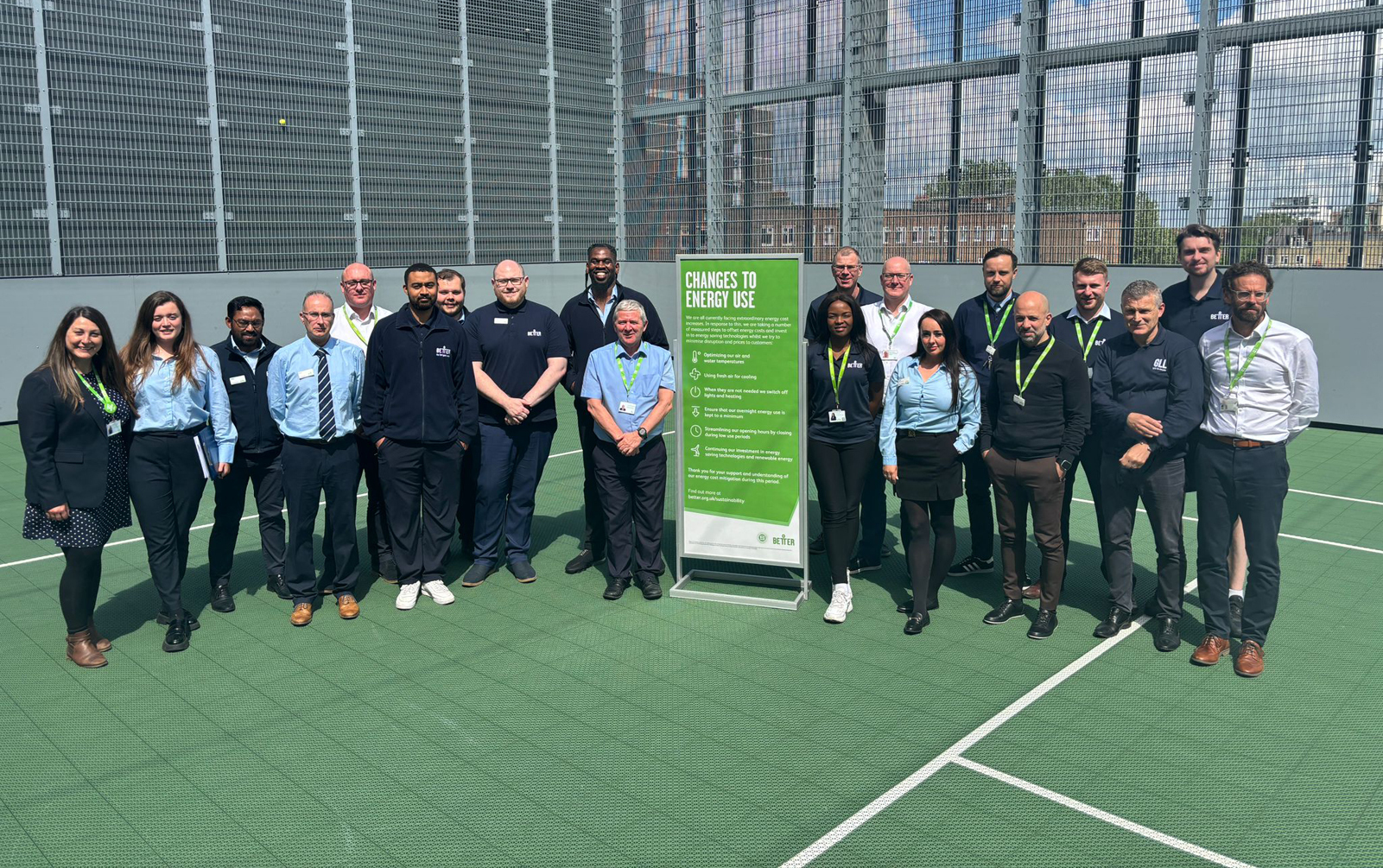
GLL went through audits at six facilities and came out with the two highest performing sites in the country, including Clissold Leisure Centre, which scored 95 per cent.
“The majority of GLL’s policies and procedures are driven centrally, based on the ISO 14001:2015 Standard and using learnings from Quest’s environmental module, implemented locally,” says national sustainability manager, Jeremy Gould. “It’s the only way to manage environmental compliance across such a large, varied organisation.
We’re two and a half years into a strategy, which is embedding sustainable practices across GLL’s teams
“We’re two and a half years into a sustainability strategy, which covers core areas, including energy and carbon reduction, waste and recycling, transport, sustainable procurement and embedding sustainable practices across GLL’s teams,” he explains.
“Environmental audits are a major positive for the sector, as they raise awareness of the obligations organisations have around good practice. They’ve given us reassurance that we’re doing the right things, while highlighting areas we can improve,” he says.

- ISO 14001:2015-compliant policies
- Energy and carbon reduction
- Waste and recycling
- Sustainable procurement
- Embedded sustainable practices

Marl Pits Leisure Centre scored just 29 per cent on its initial SPSF audit. Six months on, the score jumped to 54 per cent following its review.
“The audit gave us a roadmap to creating positive change, with lots of small actions that made big differences,” says head of operations, Phillip Holden. “We’d been on the right path towards energy efficiency; this enabled us to fast-track our thinking to get to a better place.
We’d been on the right path towards energy efficiency; this just enabled us to fast-track our thinking
“We implemented team environmental awareness training, changed our building management system and put in procedures around the use of air conditioning units and heating systems – all things within our immediate control. The longer-term goals are to make changes to the infrastructure.
“The whole experience was very positive. Even though it’s a potentially sensitive issue due to an external auditor asking questions, we were able to have honest and open conversations that gave us clear objectives and enabled us to more directly focus on environmental matters.”

- Team environmental training
- Building management systems
- New air con and heating procedures
- Goal of infrastructure upgrades
The Admiral Swimming Centre

This small, popular pool in Brixham, Devon, is run as a charity. It scored 39 per cent in its initial audit but jumped to 62 per cent in its review.
“With just two full-time staff, we don’t have admin, HR or IT departments and didn’t have a paper trail for our policies and procedures, so the audit was eye-opening,” says pool manager, Phil Thomas.
“The auditor suggested we create an Environmental Improvement Plan and prioritise achievable actions. This gave us a clear way forward. We focussed on reducing electricity consumption and CO2 emissions, single use plastic and waste to landfill, as well as testing environmentally-friendly products, getting staff on board with our objectives and making customers aware of our efforts.
“It paid off! Producing written evidence of what we do, including policy statements, website updates and social media posts, as well as environmental posters and maintenance schedules, helped raise our score the most, along with assessing major supplier contracts for ‘green’ credentials and monitoring light and noise levels.
Producing written evidence of what we do, including policy statements, helped raise our score
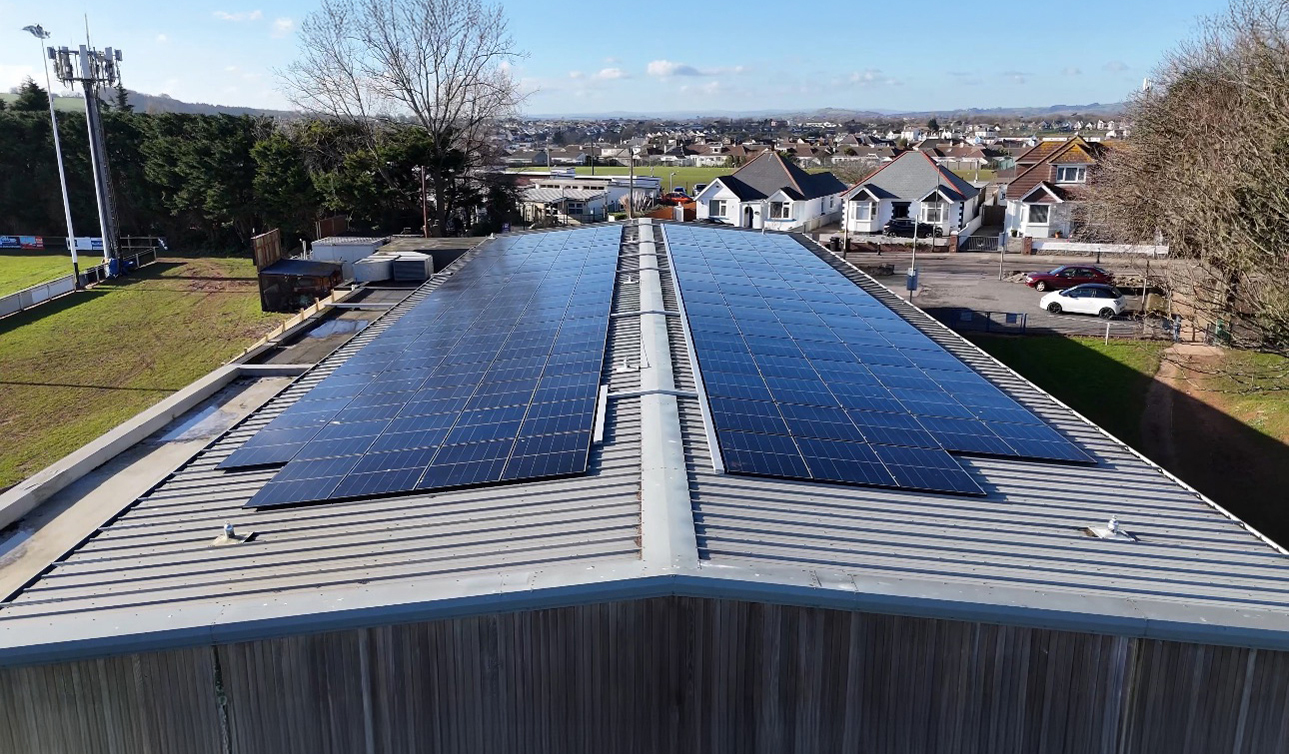
“Our aim is to reach Net Zero by 2030. Our current pool heating system needs replacing and pool modernisation will cost £200,000, but thanks to the SPSF funding and audit, we now have solar panels and environmental policies in place, and are in a stronger position to apply for grants in the future.”

- Environmental Improvement Plan
- Solar panels
- Initiatives to reduce electricity consumption
- Reduced CO2 emissions
- Ban on single use plastic
- Reduced waste to landfill
- Adoption of environmentally-friendly products
- Staff training
- Customers awareness initiatives