
















Follow Health Club Management on Twitter Like Health Club Management on Facebook Join the discussion with Health Club Management on LinkedIn
FITNESS, HEALTH, WELLNESS

features

Consumer insights: Taking action

The latest Health and Fitness Omnibus Survey (HAFOS) report, produced by industry insight specialist Leisure-net, suggests that public attitudes towards physical activity have changed over the last five years. Director of Leisure-net Mike Hill reports

By Mike Hill, Leisure-net Solutions | Published in Health Club Management 2017 issue 8
The report shows that most people know that exercising is important / SHUTTERSTOCK.COM
People’s activity levels have moved up a tier since 2012, with some progressing from no activity to some, and others moving from some activity to regular – Mike Hill

The recently published 2016 HAFOS report indicates that the majority of the UK population understands the importance of regular physical activity. This viewpoint was reported by 96 per cent of 2,309 members of the public surveyed last year, indicating that the challenge currently faced by the fitness sector relates to creating action rather than convincing people that being more active is worthwhile.

Indeed, 47 per cent of the survey respondents said they weren’t as active as they wished – a figure up six per cent from 41 per cent in 2012. This suggests that more people than ever are not happy with their current activity levels. However this is not the only figure that has risen over the last five years. In 2016, the number of people claiming to exercise on more than five days a week was seven per cent higher than in 2012, at 23 and 16 per cent, respectively. In contrast, those doing no physical activity weekly fell by more than half in 2016 compared to 2012. This implies that, at least to some degree, people’s activity levels have moved up a tier since 2012, with some progressing from no activity to some, and others moving from some activity to regular.

While this is clearly positive news, and may be a result of increased awareness, publicity and possibly the influence of the London Olympic Games in 2012, we must be mindful that research has shown that self-reported activity levels are significantly overestimated.

A QUESTION OF QUANTITY
In terms of the quantity of exercise done weekly, 61 per cent of respondents stated they always do at least 30 minutes of moderate intensity each week, with 38 per cent claiming they "always" undertake the recommended 150 minutes of moderate intensity activity or 75 minutes of vigorous activity weekly. It’s also encouraging that more than half of the population reported "always or usually" undertaking 150 minutes of moderate or 75 minutes of vigorous activity each week. Furthermore, 68 per cent said they do three or more 30-minute sessions per week – up from only 52 per cent in 2012.

Of the respondents who reported currently participating in three or more activity sessions per week, a third said they use a leisure centre or health club. Walking is the most popular form of independent activity for those not using a leisure centre or health club (73 per cent), followed by gardening.

The desire to do more activity is relatively high – more than half (54 per cent) of respondents said they would like to be more active, citing improvement or maintenance of general health as their main motivation, followed by a desire to improve or maintain body tone and shape.

However, other research by Leisure-net suggests that the desire to exercise to improve body tone/shape is under-reported, and is a significantly greater driver of participation in physical activity than these figures suggest. Operators should, therefore, avoid underestimating just how much body appearance motivates a large percentage of the population.

FAILURE TO EXERCISE
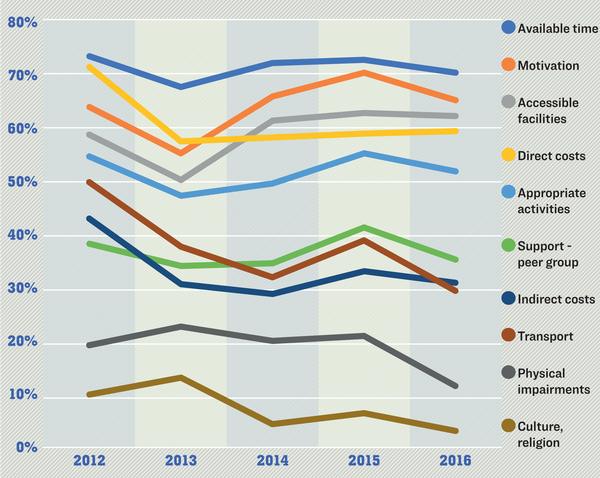
The survey findings also show that while the majority of respondents exercise on a regular basis, a respective 14 and 15 per cent of respondents never or rarely undertake the recommended weekly amount of activity. A lack of time, arising primarily from work (41 per cent), childcare (16 per cent) and household pressures (13 per cent), was the main barrier to activity cited by respondents. This perceived lack of time has always been the top barrier to physical activity, which suggests that initiatives for increasing public uptake of exercise must address how members of the public prioritise exercise in their day-to-day activities.

Sport England’s latest strategy, Towards an Active Nation, is partly based upon a behaviour change model looking at how ready people are to introduce physical activity into their lives. HAFOS also attempted to assess this readiness for change by asking respondents how likely they were to increase their activity level soon – regardless of other commitments, barriers or current fitness levels. Just over half (52 per cent) of all those interviewed during 2016 said they were not likely to increase their activity levels, 10 per cent were very likely, 18 per cent were quite likely and 20 per cent were likely to increase their activity levels soon.

USING LEISURE FACILITIES
While the desire to exercise and the proportion of people regularly exercising appear to have risen since 2012, the opposite trend was observed when willingness to use local leisure facilities was assessed. More than a third of respondents (39 per cent) said they would consider using their local leisure centre – 13 per cent lower than the 52 per cent who made the same claim back in 2012. This is surprising, given the investment that has been made in many local public sector facilities; however, it may reflect the impact of independent outdoor activities, such as cycling and running, as well as the ongoing rise in the popularity of budget gyms.

When respondents taking part in the study were asked what would encourage them to use these facilities, 61 per cent cited reduced fees.

While lower costs are always the most quoted encouragement factor given by respondents, detailed analysis and qualitative research has shown that lowering pricing makes no difference, as price is closely related to value for money. For example, a gym membership is only perceived as an expensive thing when it’s not being used on a regular basis.

RISING TO THE CHALLENGE
The 2016 HAFOS report reveals interesting changes in people’s attitudes and perceptions towards exercise, but more than anything it shows the huge opportunity the physical activity sector currently has at its fingertips. The majority of people appear to recognise that they are not active enough and have the desire to do more. The challenge we now face involves how to create opportunities for people to be more active, while ensuring these are realistic, attractive and sustainable.

47% of UK respondents are not as active as they wish

No. of UK respondents who would consider using their local leisure centre 2012 v 2016 52% v 39%

61% of UK respondents say reduced prices would motivate them to use local leisure centres

TRENDS IN IMPORTANCE FACTORS 2012-2016
ABOUT THE AUTHOR

Mike Hill
Mike Hill

Mike Hill has more than 25 years’ senior management experience in the private and public active leisure sector. In 1999, he set up Leisure-net Solutions to improve the industry’s knowledge base and understanding of its customers.

[email protected]

@_leisurenet

www.leisure-net.org

• To access the full HAFOS 2016 report, email: [email protected]

Sign up here to get HCM's weekly ezine and every issue of HCM magazine free on digital.
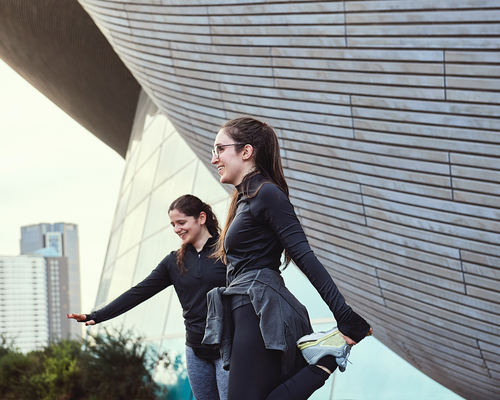
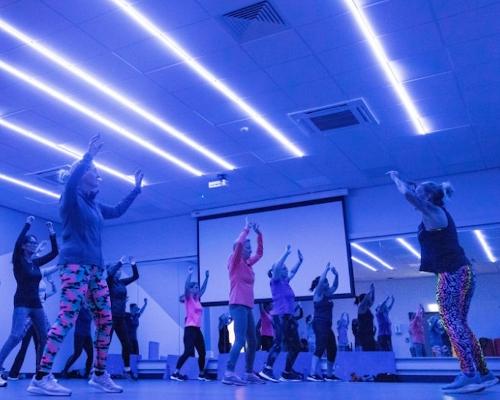
Staying healthy is the most common reason cited for doing physical activity / SHUTTERSTOCK.COM
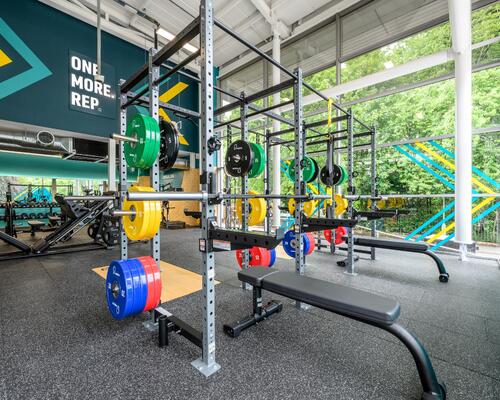
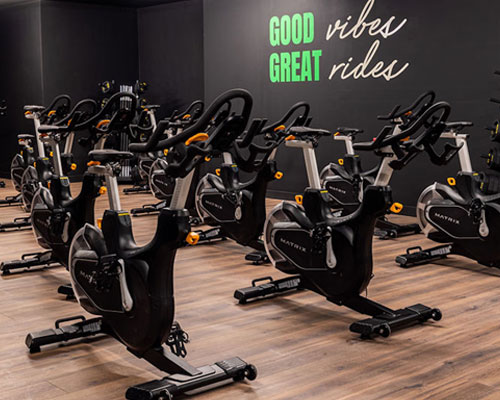
Many leisure centres have improved their facilites in recent years / SHUTTERSTOCK.COM
https://www.leisureopportunities.co.uk/images/433842_725613.jpg
The latest Health and Fitness Omnibus Survey report shows that public attitudes towards physical activity have changed over the last 5 years. We take a closer look...
Mike Hill, Director, Leisure-net,Health and Fitness Omnibus Survey, physical activity, Leisure-net, public attitudes, Sport England,
HCM magazine
A new report puts physical activity at the heart of healthcare, says Muir Gray
HCM magazine
HCM People

Shaun Grove

Owner, Stride Fitness
My goal was to invest in where fitness is going, not where it’s already been
HCM magazine
People on weight loss drugs reduce their activity levels, according to a team at St John’s Hospital Illinois
HCM magazine
The new CEO of UK Active talks to HCM about the gym-curious and why he believes the sector can double in size by the end of the next decade
HCM magazine
Fuel the debate about issues and opportunities across the industry. We’d love to hear from you. Write to [email protected]
HCM promotional features
Sponsored
Social fitness the missing link to member engagement, according to a new Myzone report
HCM promotional features
Sponsored
David Lloyd is stepping up its commitment to women’s health as it continues to explore what fit-for-purpose looks like for the female population
HCM promotional features
Sponsored
Greg Bradley looks at the shift towards strength training in gyms and advises on how operators can create the ultimate training environment
HCM promotional features
Sponsored
Find out how your gym can tap into the corporate wellness boom
HCM promotional features
Sponsored
Starpool supports Olympic champion Marcell Jacobs, says Riccardo Turri
HCM promotional features
Sponsored
Third Space partnered with IndigoFitness to deliver a bespoke training space for its new club at The Whiteley
HCM promotional features
Sponsored
SnowDome Fitness has added 50 per cent more space with cutting-edge Technogym solutions
HCM promotional features
Sponsored
EGYM has opened a new HQ in Paternoster Square, London and revealed a range of new launches
HCM promotional features
Latest News
The UK's four Chief Medical Officers have published a refreshed edition of  Physical activity guidelines: ...
Latest News
Places Leisure has exchanged contracts to build and operate a flagship £60m water and wellness ...
Latest News
The Republic of Ireland will become the latest market in PureGym’s expanding international portfolio, with ...
Latest News
Sophie Lawler, CEO of Total Fitness, has launched a leadership coaching business aimed at helping ...
Latest News
Anytime Fitness opened more than one club a day in 2025 and is on track ...
Latest News
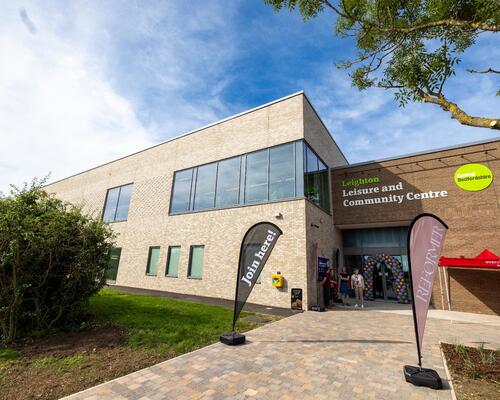
The £33.9 million Leighton Leisure and Community Centre has opened in Leighton Buzzard, UK, creating ...
Latest News
YogaSix, the yoga brand owned by Xponential Fitness, has launched a heated, Pilates-inspired class called ...
Latest News
Walnuts Leisure Centre in Orpington, in the London Borough of Bromley, has reopened following a ...
Opinion
promotion
Strength training has moved from the margins to the mainstream.
Opinion: Building smarter strength spaces for today’s operators
Featured supplier news
Featured supplier news: Cornerstone Connect helps Active Blackpool tackle health inequalities
Active Blackpool is deploying Cornerstone Connect, a new digital interface allowing disparate information from multiple systems to be aggregated into one dataset, to support its focus on reducing health inequalities and improving healthy life expectancy.
Featured supplier news
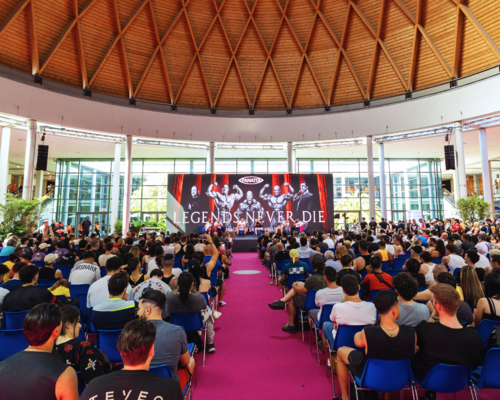
Featured supplier news: Legends never die: four legends, four philosophies of life
Panatta brought together four of the most influential figures in bodybuilding history on the stage of RiminiWellness 2026: Phil Heath, Lee Haney, Ronnie Coleman and Hany Rambod.
Company profiles
Company profile: Pure Energy Music
Pure Energy Music is a specialist music service built specifically for the fitness industry. Our ...
Company profiles
Company profile: Connect
Connect is a UK-based technology company redefining how the fitness and wellness industry builds digital ...
Supplier Showcases
Supplier Showcase - Future-proofing
Catalogue Gallery
Click on a catalogue to view it online
Featured press releases
Alliance Leisure Services (Design, Build and Fund) press release: Studio transformation completed at Burscough Wellbeing and Leisure Hub
Alliance Leisure are proud to have supported West Lancashire Borough Council to deliver a £300,000 studio transformation project at Burscough Wellbeing and Leisure Hub, creating a dedicated group exercise space designed to meet growing demand for fitness
Featured press releases
Pure Energy Music press release: Could you be the last one standing? The new 3½-minute fitness challenge everyone's talking about
#HoldThatBody is a new 3½-minute fitness challenge inviting people everywhere to put their strength, determination and staying power to the test. All you need is a squat or a press- up, one specially engineered soundtrack and the determination not to give up.
Directory
Hot tubs
MSpa International Ltd: Hot tubs
Water experiences and hydrotherapy solutions
Aquaform s.r.l.: Water experiences and hydrotherapy solutions
Lockers
Crown Sports Lockers: Lockers
Fitness tracking platform
SpiviTech: Fitness tracking platform
Industrial washing machines
Miele Company Limited: Industrial washing machines
Spa and beauty equipment
Oakworks Inc: Spa and beauty equipment
Property & Tenders
Stratford, East London.
Lee Valley Regional Park Authority
Property & Tenders
Y Felinheli, LL56 4QN
Newmark
Property & Tenders
Diary dates
21-24 Sep 2026
The Langham Huntington Pasadena , Pasadena, United States
Diary dates
06-08 Oct 2026
Messe Stuttgart, Stuttgart, Germany
Diary dates
22-22 Oct 2026
QEII Conference Centre, London,
Diary dates
26-29 Oct 2027
Koelnmesse Exhibition Centre, Cologne, Germany
Diary dates

features

Consumer insights: Taking action

The latest Health and Fitness Omnibus Survey (HAFOS) report, produced by industry insight specialist Leisure-net, suggests that public attitudes towards physical activity have changed over the last five years. Director of Leisure-net Mike Hill reports

By Mike Hill, Leisure-net Solutions | Published in Health Club Management 2017 issue 8
The report shows that most people know that exercising is important / SHUTTERSTOCK.COM
People’s activity levels have moved up a tier since 2012, with some progressing from no activity to some, and others moving from some activity to regular – Mike Hill

The recently published 2016 HAFOS report indicates that the majority of the UK population understands the importance of regular physical activity. This viewpoint was reported by 96 per cent of 2,309 members of the public surveyed last year, indicating that the challenge currently faced by the fitness sector relates to creating action rather than convincing people that being more active is worthwhile.

Indeed, 47 per cent of the survey respondents said they weren’t as active as they wished – a figure up six per cent from 41 per cent in 2012. This suggests that more people than ever are not happy with their current activity levels. However this is not the only figure that has risen over the last five years. In 2016, the number of people claiming to exercise on more than five days a week was seven per cent higher than in 2012, at 23 and 16 per cent, respectively. In contrast, those doing no physical activity weekly fell by more than half in 2016 compared to 2012. This implies that, at least to some degree, people’s activity levels have moved up a tier since 2012, with some progressing from no activity to some, and others moving from some activity to regular.

While this is clearly positive news, and may be a result of increased awareness, publicity and possibly the influence of the London Olympic Games in 2012, we must be mindful that research has shown that self-reported activity levels are significantly overestimated.

A QUESTION OF QUANTITY
In terms of the quantity of exercise done weekly, 61 per cent of respondents stated they always do at least 30 minutes of moderate intensity each week, with 38 per cent claiming they "always" undertake the recommended 150 minutes of moderate intensity activity or 75 minutes of vigorous activity weekly. It’s also encouraging that more than half of the population reported "always or usually" undertaking 150 minutes of moderate or 75 minutes of vigorous activity each week. Furthermore, 68 per cent said they do three or more 30-minute sessions per week – up from only 52 per cent in 2012.

Of the respondents who reported currently participating in three or more activity sessions per week, a third said they use a leisure centre or health club. Walking is the most popular form of independent activity for those not using a leisure centre or health club (73 per cent), followed by gardening.

The desire to do more activity is relatively high – more than half (54 per cent) of respondents said they would like to be more active, citing improvement or maintenance of general health as their main motivation, followed by a desire to improve or maintain body tone and shape.

However, other research by Leisure-net suggests that the desire to exercise to improve body tone/shape is under-reported, and is a significantly greater driver of participation in physical activity than these figures suggest. Operators should, therefore, avoid underestimating just how much body appearance motivates a large percentage of the population.

FAILURE TO EXERCISE
The survey findings also show that while the majority of respondents exercise on a regular basis, a respective 14 and 15 per cent of respondents never or rarely undertake the recommended weekly amount of activity. A lack of time, arising primarily from work (41 per cent), childcare (16 per cent) and household pressures (13 per cent), was the main barrier to activity cited by respondents. This perceived lack of time has always been the top barrier to physical activity, which suggests that initiatives for increasing public uptake of exercise must address how members of the public prioritise exercise in their day-to-day activities.

Sport England’s latest strategy, Towards an Active Nation, is partly based upon a behaviour change model looking at how ready people are to introduce physical activity into their lives. HAFOS also attempted to assess this readiness for change by asking respondents how likely they were to increase their activity level soon – regardless of other commitments, barriers or current fitness levels. Just over half (52 per cent) of all those interviewed during 2016 said they were not likely to increase their activity levels, 10 per cent were very likely, 18 per cent were quite likely and 20 per cent were likely to increase their activity levels soon.

USING LEISURE FACILITIES
While the desire to exercise and the proportion of people regularly exercising appear to have risen since 2012, the opposite trend was observed when willingness to use local leisure facilities was assessed. More than a third of respondents (39 per cent) said they would consider using their local leisure centre – 13 per cent lower than the 52 per cent who made the same claim back in 2012. This is surprising, given the investment that has been made in many local public sector facilities; however, it may reflect the impact of independent outdoor activities, such as cycling and running, as well as the ongoing rise in the popularity of budget gyms.

When respondents taking part in the study were asked what would encourage them to use these facilities, 61 per cent cited reduced fees.

While lower costs are always the most quoted encouragement factor given by respondents, detailed analysis and qualitative research has shown that lowering pricing makes no difference, as price is closely related to value for money. For example, a gym membership is only perceived as an expensive thing when it’s not being used on a regular basis.

RISING TO THE CHALLENGE
The 2016 HAFOS report reveals interesting changes in people’s attitudes and perceptions towards exercise, but more than anything it shows the huge opportunity the physical activity sector currently has at its fingertips. The majority of people appear to recognise that they are not active enough and have the desire to do more. The challenge we now face involves how to create opportunities for people to be more active, while ensuring these are realistic, attractive and sustainable.

47% of UK respondents are not as active as they wish

No. of UK respondents who would consider using their local leisure centre 2012 v 2016 52% v 39%

61% of UK respondents say reduced prices would motivate them to use local leisure centres

TRENDS IN IMPORTANCE FACTORS 2012-2016

ABOUT THE AUTHOR

Mike Hill
Mike Hill

Mike Hill has more than 25 years’ senior management experience in the private and public active leisure sector. In 1999, he set up Leisure-net Solutions to improve the industry’s knowledge base and understanding of its customers.

[email protected]

@_leisurenet

www.leisure-net.org

• To access the full HAFOS 2016 report, email: [email protected]

Sign up here to get HCM's weekly ezine and every issue of HCM magazine free on digital.
Staying healthy is the most common reason cited for doing physical activity / SHUTTERSTOCK.COM
Many leisure centres have improved their facilites in recent years / SHUTTERSTOCK.COM
https://www.leisureopportunities.co.uk/images/433842_725613.jpg
The latest Health and Fitness Omnibus Survey report shows that public attitudes towards physical activity have changed over the last 5 years. We take a closer look...
Mike Hill, Director, Leisure-net,Health and Fitness Omnibus Survey, physical activity, Leisure-net, public attitudes, Sport England,
Latest News
The UK's four Chief Medical Officers have published a refreshed edition of  Physical activity guidelines: ...
Latest News
Places Leisure has exchanged contracts to build and operate a flagship £60m water and wellness ...
Latest News
The Republic of Ireland will become the latest market in PureGym’s expanding international portfolio, with ...
Latest News
Sophie Lawler, CEO of Total Fitness, has launched a leadership coaching business aimed at helping ...
Latest News
Anytime Fitness opened more than one club a day in 2025 and is on track ...
Latest News
The £33.9 million Leighton Leisure and Community Centre has opened in Leighton Buzzard, UK, creating ...
Latest News
YogaSix, the yoga brand owned by Xponential Fitness, has launched a heated, Pilates-inspired class called ...
Latest News
Walnuts Leisure Centre in Orpington, in the London Borough of Bromley, has reopened following a ...
Latest News
The Gym Group, has announced that it's sustained positive trading momentum has continued through the ...
Latest News
Hyrox has announced it will be working with a second charity in the upcoming season ...
Latest News
US low-cost operator, Amped Fitness, has launched a flagship location in Texas, debuting its multi-sensory ...
Opinion
promotion
Strength training has moved from the margins to the mainstream.
Opinion: Building smarter strength spaces for today’s operators
Featured supplier news
Featured supplier news: Cornerstone Connect helps Active Blackpool tackle health inequalities
Active Blackpool is deploying Cornerstone Connect, a new digital interface allowing disparate information from multiple systems to be aggregated into one dataset, to support its focus on reducing health inequalities and improving healthy life expectancy.
Featured supplier news
Featured supplier news: Legends never die: four legends, four philosophies of life
Panatta brought together four of the most influential figures in bodybuilding history on the stage of RiminiWellness 2026: Phil Heath, Lee Haney, Ronnie Coleman and Hany Rambod.
Company profiles
Company profile: Pure Energy Music
Pure Energy Music is a specialist music service built specifically for the fitness industry. Our ...
Company profiles
Company profile: Connect
Connect is a UK-based technology company redefining how the fitness and wellness industry builds digital ...
Supplier Showcases
Supplier Showcase - Future-proofing
Catalogue Gallery
Click on a catalogue to view it online
Featured press releases
Alliance Leisure Services (Design, Build and Fund) press release: Studio transformation completed at Burscough Wellbeing and Leisure Hub
Alliance Leisure are proud to have supported West Lancashire Borough Council to deliver a £300,000 studio transformation project at Burscough Wellbeing and Leisure Hub, creating a dedicated group exercise space designed to meet growing demand for fitness
Featured press releases
Pure Energy Music press release: Could you be the last one standing? The new 3½-minute fitness challenge everyone's talking about
#HoldThatBody is a new 3½-minute fitness challenge inviting people everywhere to put their strength, determination and staying power to the test. All you need is a squat or a press- up, one specially engineered soundtrack and the determination not to give up.
Directory
Hot tubs
MSpa International Ltd: Hot tubs
Water experiences and hydrotherapy solutions
Aquaform s.r.l.: Water experiences and hydrotherapy solutions
Lockers
Crown Sports Lockers: Lockers
Fitness tracking platform
SpiviTech: Fitness tracking platform
Industrial washing machines
Miele Company Limited: Industrial washing machines
Spa and beauty equipment
Oakworks Inc: Spa and beauty equipment
Property & Tenders
Stratford, East London.
Lee Valley Regional Park Authority
Property & Tenders
Y Felinheli, LL56 4QN
Newmark
Property & Tenders
Diary dates
21-24 Sep 2026
The Langham Huntington Pasadena , Pasadena, United States
Diary dates
06-08 Oct 2026
Messe Stuttgart, Stuttgart, Germany
Diary dates
22-22 Oct 2026
QEII Conference Centre, London,
Diary dates
26-29 Oct 2027
Koelnmesse Exhibition Centre, Cologne, Germany
Diary dates
Search news, features & products:
Find a supplier:
Partner sites