
























Follow Health Club Management on Twitter Like Health Club Management on Facebook Join the discussion with Health Club Management on LinkedIn
FITNESS, HEALTH, WELLNESS

features

Ask an expert: Aggregators -To aggregate or not to aggregate, that is the question

The health and fitness industry has been slow to adopt aggregators. Are clubs right to be cautious, or are they missing out on business? Kath Hudson finds out more…

By Kath Hudson | Published in Health Club Management 2018 issue 9
Aggregators can bring new audiences into 
the fitness industry
Aggregators can bring new audiences into the fitness industry

If you’ve ever used an aggregator service, such as Expedia or lastminute.com, to book a flight or find a holiday, you’ll know from a consumer’s point of view how useful they can be to both find what you want and get a good deal: they make the information transparent and give the benefit of customer reviews, special offers and consolidated services.

However, the health and fitness industry is very different from travel. One’s global, while the other is local. People are motivated to go on holiday, but can be resistant to exercise. Health clubs want to build day-to-day loyalty and relationships, while the travel industry is less concerned with this.

There are a number of other reasons to be cautious, including the fear of losing control of data and the customer base, and concerns about paying a commission to get the same customers or being forced into discounting.

However, if you always do what you always did, you always get what you’ve always had, so if the industry wants to increase penetration rates, it needs to start looking for different ways to mobilise new audiences.

Aggregators bring extra marketing budgets and new technology to the table, which can translate into different customers being brought into the industry, so they’re definitely worth consideration.

If you’re thinking about giving aggregators a go, shop around first. There are a number of different choices in terms of business model and you need to know whether they focus on B2C or B2B.

Choose one that cares about growing the market and as Nishal Desai, co-founder of imin says: “Go forward with your eyes open and hands on the steering wheel. Choose to work with those companies in a way that puts you firmly in control and keeps you there.”

Peter Fitzboydon,null,

MD,

Parkwood Leisure

Peter Fitzboydon
Peter Fitzboydon

I have experience on both sides: being involved with the set up of OpenActive while I was chief executive of London Sport, as well as now running one of the UK’s largest leisure operators. I’m a massive fan of open data, but that doesn’t mean to say that all of its uses are going to be positive immediately. At the moment I think it’s too early to say what impact aggregators will have on the health and fitness industry, as they still need to show more innovation to really get operators interested.

Health and fitness is a low margin business, so it isn’t viable for aggregators to follow the model of the travel industry by simply offering price comparison websites. Neither will it work if they just appeal to the people who are already active. For aggregators to gain a foothold they will either need to add value to the customer experience, or start mobilising the inactive population and grow the market for health clubs. If they successfully do this it will be a win-win, but they need to be more creative to make this happen.

“If aggregators can successfully grow the market, it will be a win-win, but they need to be more creative to make this happen” - Peter Fitzboydon MD Parkwood Leisure

Neil Harmsworth,

PayAsUGym

Neil Harmsworth
Neil Harmsworth

The consumer experience always improves in markets where aggregators exist because customers love the transparency and independence they provide through the reviews they carry.

We’re seeing real momentum in this area at the moment: we even had one of the board members of one of our largest operators logging in daily, so he knew exactly what was going on in the clubs and could make sure the GMs knew what they needed to improve.

Operators need to take the time to understand the variations before deciding which model is right for their business.

Since the fitness sector is late to adopt aggregators there are lots of reference points in other industries, making it easier to compare models. As the first company, globally, to attempt to aggregate fitness, PayAsUGym benefitted from being able to study models in other sectors to understand best practise. We believe it’s important to always focus on developing a fair, collaborative and sustainable version of aggregation, which grows the market and builds trust with our operator partners.

Going forward, a split of opinion regarding aggregators is likely to remain. Operators who embrace consumer choice, recognise the desire for increased flexibility and are confident their services will stand up to public scrutiny will proactively engage with aggregators, which will result in them reaching new customers and growing their business. Opponents of aggregators will spread fear, uncertainty and doubt into the market, in the hope of maintaining the status quo. Ultimately the customer will decide how they wish to engage with fitness and we can see evidence of this within our own sector.

“We believe it’s important to always focus on developing a fair, collaborative and sustainable version of aggregation” - Neil Harmsworth PayAsUGym

Nishal Desai,null,

Co-founde,

imin

Nishal Desai
Nishal Desai

When compared with other industries, the health and fitness sector is being cautious with its adoption of aggregators, especially on the public side.

This caution is understandable: operators want to avoid becoming powerless and being reduced to only being the supply side of a marketing partnership.

They’re concerned about the cannibalisation of their user base and being moved further away from direct digital interaction with the consumer.

We understand why they feel this way, because the hospitality industry hasn’t necessarily had a good time at the hands of aggregators. Among a few things, the price transparency has hurt undifferentiated hotels. While undifferentiated health clubs could potentially be hurt in the same way, the fact that fitness searches are generally hyper-local, as opposed to global, means there is possibly less of a threat.

One advantage of aggregators is that they are thinking creatively about the end user, and how to create engagement tools and active online communities. They should be seen as another marketing channel, to be controlled and measured in the same way as all other marketing channels. They can help operators to find those people who never go to gyms.

To this end, Public Health England is doing some innovative work around the Change4Life campaign, having just launched an activity finder powered by open data and ditching static databases.

We’re only at the very early stages of finding out what aggregators could do for the industry and I believe that, when used correctly, they have so much potential to create value, as long as operators find ways of staying in control.

“We’re only at the very early stages of finding out what aggregators could do for the industry” - Nishal Desai co-founder imin

Colin Waggett,

CEO,

The Third Space

Colin Waggett
Colin Waggett

The advantage of aggregators is that they can bring new people to your front door. The disadvantage is that they weaken the relationship between club and customer and, through aggressive discounting to acquire customers, dilute the yield, which leads to lower profitability, service and re-investment levels.

Aggregators fit more comfortably with PAYG type models, where customers are more likely to shop around. In this case they can add value by offering convenience and value to customers, by providing a single buying/booking platform.

There’s much talk in our industry about improving retention. At the heart of this lies giving people great value for money and building a relationship with them, not making one-off sales, as with an airline.

As long as the plane goes from A to B, I’m happy to choose the option that best suits me from a price, quality or timing point of view. In this scenario aggregators add genuine value, by making a complex choice simpler. This isn’t the case with health clubs, so the long-term added value of aggregators to the customers in our sector is less clear to me.

The jury is also out on whether they’ll be profitable in the long term. As a generalisation, they’re trying to build scale and market share by discounting. In doing so, they’re distorting the market in what’s essentially a fixed-cost business.

I doubt many will invest in the fabric of clubs, or the people and talent needed to sustain great experiences for members.

My view on this might change, if and when market leaders emerge who charge a consistent level of pricing that reflects the cost of delivery of good service, but net-net, I don’t think aggregators are a positive thing for the industry.

“Net-net, I do not think aggregators are a positive thing for the industry” - Colin Waggett , CEO The Third Space

David Minton,

Director,

Leisuredb

David Minton
David Minton

We all accept and use aggregators to book restaurants, flights and hotels so why not also use them for fitness and sports activities?

Sports, particularly, and fitness – until the low cost brands arrived – were not very transparent to the consumer, so it was only natural that entrepreneurs looked at what was being achieved in other leisure sectors and tried to emulate it.

Most came up with business plans that put them between the consumer and operators, but it’s difficult for the relationship to flourish in an industry where operators don’t often have live inventory feeds or the ability to connect the aggregator into their booking system.

We’re currently tracking around 20 aggregators and most will either fail or need to change their business plan.

It’s difficult to find the sweet spot, so consumer, operator and aggregator are all happy. Some will find the magic formula, and will help drive new business and in return they’ll survive and thrive. There needs to be a win-win-win and you don’t get that by deep discounting.

“There needs to be a win-win-win for the consumer, operators and aggregators and you don’t get that by deep discounting” - David Minton director Leisuredb

Outlining the options

We navigate the complex world of aggregators, looking at some of the options available if you want to take the plunge

Gympass

null,Currently partnering with more than 1,500 fitness facilities in the UK, Gympass is a corporate wellness company that targets inactive people, by engaging with companies who are willing to subsidise fitness activities for their employees to improve their health.

As 80 per cent of Gympass users were not enrolled at a gym or a sports centre up to 12 months before joining, and their visit is subsidised by their employers, this is a good way of attracting new members.

Gympass works with organsiations to build wellness programmes that are widely communicated to employees and have been successful in mobilising 30 to 40 per cent of employees.

GymPass works with employees to build wellness programmes for staff using local facilities / PHOTO: SHUTTERSTOCK.COM

ClassPass

ClassPass has more than 10,000 partners in 50 cities worldwide and a 96 per cent retention rate among partners. It leverages proprietary technology to enable the booking of fitness classes, so clubs can monetise unsold time, at a discount on the usual rate.
Customers pay a monthly subscription fee, so there’s no charge to clubs.

ClassPass says its customers like variety, and are willing to take their chances with not being able to get into a class in return for the option of trying many workouts at a lower rate. The company says it unlocks new markets, as more than half its members are either new, or not regular users of clubs.

PayAsUGym

PayAsUGym works with more than 2,700 gyms in the UK. It offers customers the variety of going to lots of different gyms – ideal if they move around with work, or like to have a choice.

The advantage for gyms is access to high volumes of incremental customers who would not otherwise visit.
There’s no fee for clubs to be listed, it works on a success basis via a 20 per cent commission. Prices paid by customers are controlled by the clubs, with membership rates set at a premium. PayAsUGym says clubs typically see a 5 to 10 per cent EBITDA growth through using its service.

Incorpore

null,Incorpore runs a programme called GymFlex, working with operators who are willing to provide low corporate annual membership rates. Employees can then buy a membership via a salary sacrifice scheme, and make savings on their National Insurance payments.
Established in 2001, Incorpore serves more than two million employees from 1,000 companies. Clubs benefit from a different type of clientele, employers get a healthier workforce and employees a cheap gym membership.

MoveGB

Offering 35,000 activities across 5,500 venues, MoveGB offers a wide choice, including activities like climbing, dance, aerial yoga and African drumming.

Founded by Alister Rollins, the mission was to create new audiences and generate leads. MoveGB has a 99 per cent partner retention rate.
Clubs set their own commercial terms when they list on the MoveGB platform, and retain complete control over how they engage with the service.

Listing services on MoveGB is free for operators and the price for customers varies according to location.

By using technology to nudge users to join clubs they’ve tried, MoveGB also encourages its customers to become health club members.

MoveGB offers 35,000 activities across 5,500 venues, including everything from climbing to African drumming / PHOTO: SHUTTERSTOCK.COM

Urban Sports Club

Working with 2,000 venues in 24 cities across Germany, as well as more than 300 in Paris, Urban Sports Club offers consumers a wide range of activities without a long-term commitment. The company works with its operator partners to set an appropriate pricing structure in order to create a win-win-win situation for all parties – the aggregator, the club and the member.

It offers visibility, and reaches new customers through its sales and marketing initiatives, which are targeted at smaller clubs with limited marketing budgets. It also promotes clubs to companies via a corporate offer.

imin

The imin service sits between operators and aggregators, enabling operators find the right aggregator partner.

A real time database, imin plugs into booking systems and extracts a live view, which is shared with aggregators.

Operators can see the impact of the aggregators they’re working with and have the control to manage and monitor them.

imin is working with around 250 operators, which are offering 1.3m activities a year. Operators include leisure centres, smaller private clubs, The Good Gym and Our Parks. The service is free to clubs, as aggregators are charged.


Sign up here to get HCM's weekly ezine and every issue of HCM magazine free on digital.
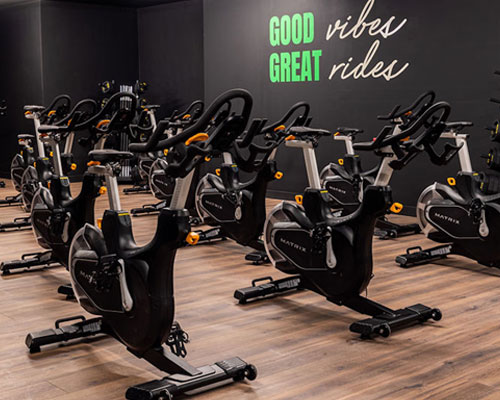
Aggregators can create value for the industry, so long as operators find ways to retain control / IMAGE COURTESY OF CLASSPASS
Aggregators are more likely to succeed if they can find a win-win-win between their business, operators and consumers / IMAGE COURTESY OF CLASSPASS
https://www.leisureopportunities.co.uk/images/410011_678766.jpg
Some health club operators are wary of using aggregators - we ask if their fears are founded in Health Club Management magazine
Kath Hudson, Journalist, Leisure Media Peter Fitzboydon MD Parkwood Leisure Nishal Desai co-founder imin Neil Harmsworth PayAsUGym Colin Waggett, CEO The Third Space David Minton director Leisuredb
HCM magazine
Small improvements to sleep, diet and physical activity have major benefits for the heart, according to new research from the University of Sydney
HCM magazine
Collaborations with the medical profession and greater aspirations around wellbeing are creating a need for more experts in our sector. It’s time to reboot our thinking around the workforce
HCM magazine
For every member with a tripod and a big following, there are others irritated at the way equipment is being hogged or wary they’ll be in the background on someone’s Insta feed. Do influencers offer valuable, free marketing or are they just a nuisance? Kath Hudson finds out how operators are responding
HCM magazine
Strength training is evolving, driven by changing consumer preferences. Julie Cramer talks to innovators about how their products are meeting this demand
HCM magazine
HCM People

Stephen Price

Founder, SP&Co Group
Working in public health over the last few years has lit up parts of my brain again
HCM promotional features
Sponsored
Starpool supports Olympic champion Marcell Jacobs, says Riccardo Turri
HCM promotional features
Sponsored
SnowDome Fitness has added 50 per cent more space with cutting-edge Technogym solutions
HCM promotional features
Sponsored
Find out how your gym can tap into the corporate wellness boom
HCM promotional features
Sponsored
David Lloyd is stepping up its commitment to women’s health as it continues to explore what fit-for-purpose looks like for the female population
HCM promotional features
Sponsored
Greg Bradley looks at the shift towards strength training in gyms and advises on how operators can create the ultimate training environment
HCM promotional features
Sponsored
Third Space partnered with IndigoFitness to deliver a bespoke training space for its new club at The Whiteley
HCM promotional features
Sponsored
EGYM has opened a new HQ in Paternoster Square, London and revealed a range of new launches
HCM promotional features
Sponsored
Active IQ is calling for greater accountability in online fitness advice with the launch of a new trustmark
HCM promotional features
Sponsored
Pulse Fitness has created a new health club delivering an elevated wellness experience
HCM promotional features
Latest News
Celebrating its 10th anniversary, Elevate has had its busiest show to date, with almost 200 ...
Latest News
A new report from Your Personal Training (YPT) suggests UK gym operators could be missing ...
Latest News
Eighty-four per cent of consumers now say wellness is a top priority in their lives, ...
Latest News
Elevate Arena is underway at London's Excel and the hot topic of AI was the ...
Latest News
PureGym Group has announced that group chief financial officer, Alex Wood, is taking over the ...
Latest News
Independent operator, Fitness Worx Gyms, is introducing private blood testing as a service to members. ...
Latest News
International industry lobbying associations are calling for physical activity and strength training to be deeply ...
Latest News
Global group exercise specialist, Les Mills, is inviting operators to sign up to its Workout ...
Opinion
promotion
Strength training has moved from the margins to the mainstream.
Opinion: Building smarter strength spaces for today’s operators
Featured supplier news
Featured supplier news: Cornerstone Connect helps Active Blackpool tackle health inequalities
Active Blackpool is deploying Cornerstone Connect, a new digital interface allowing disparate information from multiple systems to be aggregated into one dataset, to support its focus on reducing health inequalities and improving healthy life expectancy.
Featured supplier news
Featured supplier news: CoverMe extends matching service to personal training, rewriting how members and personal trainers connect
CoverMe, the global leader in fitness workforce management, today launches CoverMe PT, an on-demand personal training platform that connects the right personal trainer to the right client in under 10 seconds.
Company profiles
Company profile: Power Plate
Power Plate's range of products include whole body vibration platforms, targeted vibration products and the ...
Company profiles
Company profile: CET CryoSpas
CET have developed ice baths specifically for the fitness and wellness sectors in addition to ...
Supplier Showcases
Supplier Showcase - From nightclub to health club
Supplier Showcases
Supplier Showcase - Future-proofing
Catalogue Gallery
Click on a catalogue to view it online
Featured press releases
Create PT press release: Create sets a new standard with its new personal training diploma
Create's new Personal Training Diploma is built on the depth, real-client practice and coaching judgement that turn a qualification into genuine readiness - taught as one continuous course so that every skill is reinforced and applied, not cleared once and forgotten.
Featured press releases
Leisure Energy press release: Studley Leisure Centre solar panel installation project begins
Stratford-on-Avon District Council is delighted to announce a new solar panel installation project at Studley Leisure Centre, marking an important step towards improving the sustainability of this valued community facility.
Directory
Spa and beauty equipment
Oakworks Inc: Spa and beauty equipment
Lockers
Crown Sports Lockers: Lockers
Water experiences and hydrotherapy solutions
Aquaform s.r.l.: Water experiences and hydrotherapy solutions
Industrial washing machines
Miele Company Limited: Industrial washing machines
Fitness tracking platform
SpiviTech: Fitness tracking platform
Hot tubs
MSpa International Ltd: Hot tubs
Property & Tenders
Stratford, East London.
Lee Valley Regional Park Authority
Property & Tenders
Y Felinheli, LL56 4QN
Newmark
Property & Tenders
Diary dates
22-23 Jun 2026
WX Wakefield , Wakefield, United Kingdom
Diary dates
21-24 Sep 2026
The Langham Huntington Pasadena , Pasadena, United States
Diary dates
06-08 Oct 2026
Messe Stuttgart, Stuttgart, Germany
Diary dates
22-22 Oct 2026
QEII Conference Centre, London,
Diary dates
26-29 Oct 2027
Koelnmesse Exhibition Centre, Cologne, Germany
Diary dates

features

Ask an expert: Aggregators -To aggregate or not to aggregate, that is the question

The health and fitness industry has been slow to adopt aggregators. Are clubs right to be cautious, or are they missing out on business? Kath Hudson finds out more…

By Kath Hudson | Published in Health Club Management 2018 issue 9
Aggregators can bring new audiences into 
the fitness industry
Aggregators can bring new audiences into the fitness industry

If you’ve ever used an aggregator service, such as Expedia or lastminute.com, to book a flight or find a holiday, you’ll know from a consumer’s point of view how useful they can be to both find what you want and get a good deal: they make the information transparent and give the benefit of customer reviews, special offers and consolidated services.

However, the health and fitness industry is very different from travel. One’s global, while the other is local. People are motivated to go on holiday, but can be resistant to exercise. Health clubs want to build day-to-day loyalty and relationships, while the travel industry is less concerned with this.

There are a number of other reasons to be cautious, including the fear of losing control of data and the customer base, and concerns about paying a commission to get the same customers or being forced into discounting.

However, if you always do what you always did, you always get what you’ve always had, so if the industry wants to increase penetration rates, it needs to start looking for different ways to mobilise new audiences.

Aggregators bring extra marketing budgets and new technology to the table, which can translate into different customers being brought into the industry, so they’re definitely worth consideration.

If you’re thinking about giving aggregators a go, shop around first. There are a number of different choices in terms of business model and you need to know whether they focus on B2C or B2B.

Choose one that cares about growing the market and as Nishal Desai, co-founder of imin says: “Go forward with your eyes open and hands on the steering wheel. Choose to work with those companies in a way that puts you firmly in control and keeps you there.”

Peter Fitzboydon,null,

MD,

Parkwood Leisure

Peter Fitzboydon
Peter Fitzboydon

I have experience on both sides: being involved with the set up of OpenActive while I was chief executive of London Sport, as well as now running one of the UK’s largest leisure operators. I’m a massive fan of open data, but that doesn’t mean to say that all of its uses are going to be positive immediately. At the moment I think it’s too early to say what impact aggregators will have on the health and fitness industry, as they still need to show more innovation to really get operators interested.

Health and fitness is a low margin business, so it isn’t viable for aggregators to follow the model of the travel industry by simply offering price comparison websites. Neither will it work if they just appeal to the people who are already active. For aggregators to gain a foothold they will either need to add value to the customer experience, or start mobilising the inactive population and grow the market for health clubs. If they successfully do this it will be a win-win, but they need to be more creative to make this happen.

“If aggregators can successfully grow the market, it will be a win-win, but they need to be more creative to make this happen” - Peter Fitzboydon MD Parkwood Leisure

Neil Harmsworth,

PayAsUGym

Neil Harmsworth
Neil Harmsworth

The consumer experience always improves in markets where aggregators exist because customers love the transparency and independence they provide through the reviews they carry.

We’re seeing real momentum in this area at the moment: we even had one of the board members of one of our largest operators logging in daily, so he knew exactly what was going on in the clubs and could make sure the GMs knew what they needed to improve.

Operators need to take the time to understand the variations before deciding which model is right for their business.

Since the fitness sector is late to adopt aggregators there are lots of reference points in other industries, making it easier to compare models. As the first company, globally, to attempt to aggregate fitness, PayAsUGym benefitted from being able to study models in other sectors to understand best practise. We believe it’s important to always focus on developing a fair, collaborative and sustainable version of aggregation, which grows the market and builds trust with our operator partners.

Going forward, a split of opinion regarding aggregators is likely to remain. Operators who embrace consumer choice, recognise the desire for increased flexibility and are confident their services will stand up to public scrutiny will proactively engage with aggregators, which will result in them reaching new customers and growing their business. Opponents of aggregators will spread fear, uncertainty and doubt into the market, in the hope of maintaining the status quo. Ultimately the customer will decide how they wish to engage with fitness and we can see evidence of this within our own sector.

“We believe it’s important to always focus on developing a fair, collaborative and sustainable version of aggregation” - Neil Harmsworth PayAsUGym

Nishal Desai,null,

Co-founde,

imin

Nishal Desai
Nishal Desai

When compared with other industries, the health and fitness sector is being cautious with its adoption of aggregators, especially on the public side.

This caution is understandable: operators want to avoid becoming powerless and being reduced to only being the supply side of a marketing partnership.

They’re concerned about the cannibalisation of their user base and being moved further away from direct digital interaction with the consumer.

We understand why they feel this way, because the hospitality industry hasn’t necessarily had a good time at the hands of aggregators. Among a few things, the price transparency has hurt undifferentiated hotels. While undifferentiated health clubs could potentially be hurt in the same way, the fact that fitness searches are generally hyper-local, as opposed to global, means there is possibly less of a threat.

One advantage of aggregators is that they are thinking creatively about the end user, and how to create engagement tools and active online communities. They should be seen as another marketing channel, to be controlled and measured in the same way as all other marketing channels. They can help operators to find those people who never go to gyms.

To this end, Public Health England is doing some innovative work around the Change4Life campaign, having just launched an activity finder powered by open data and ditching static databases.

We’re only at the very early stages of finding out what aggregators could do for the industry and I believe that, when used correctly, they have so much potential to create value, as long as operators find ways of staying in control.

“We’re only at the very early stages of finding out what aggregators could do for the industry” - Nishal Desai co-founder imin

Colin Waggett,

CEO,

The Third Space

Colin Waggett
Colin Waggett

The advantage of aggregators is that they can bring new people to your front door. The disadvantage is that they weaken the relationship between club and customer and, through aggressive discounting to acquire customers, dilute the yield, which leads to lower profitability, service and re-investment levels.

Aggregators fit more comfortably with PAYG type models, where customers are more likely to shop around. In this case they can add value by offering convenience and value to customers, by providing a single buying/booking platform.

There’s much talk in our industry about improving retention. At the heart of this lies giving people great value for money and building a relationship with them, not making one-off sales, as with an airline.

As long as the plane goes from A to B, I’m happy to choose the option that best suits me from a price, quality or timing point of view. In this scenario aggregators add genuine value, by making a complex choice simpler. This isn’t the case with health clubs, so the long-term added value of aggregators to the customers in our sector is less clear to me.

The jury is also out on whether they’ll be profitable in the long term. As a generalisation, they’re trying to build scale and market share by discounting. In doing so, they’re distorting the market in what’s essentially a fixed-cost business.

I doubt many will invest in the fabric of clubs, or the people and talent needed to sustain great experiences for members.

My view on this might change, if and when market leaders emerge who charge a consistent level of pricing that reflects the cost of delivery of good service, but net-net, I don’t think aggregators are a positive thing for the industry.

“Net-net, I do not think aggregators are a positive thing for the industry” - Colin Waggett , CEO The Third Space

David Minton,

Director,

Leisuredb

David Minton
David Minton

We all accept and use aggregators to book restaurants, flights and hotels so why not also use them for fitness and sports activities?

Sports, particularly, and fitness – until the low cost brands arrived – were not very transparent to the consumer, so it was only natural that entrepreneurs looked at what was being achieved in other leisure sectors and tried to emulate it.

Most came up with business plans that put them between the consumer and operators, but it’s difficult for the relationship to flourish in an industry where operators don’t often have live inventory feeds or the ability to connect the aggregator into their booking system.

We’re currently tracking around 20 aggregators and most will either fail or need to change their business plan.

It’s difficult to find the sweet spot, so consumer, operator and aggregator are all happy. Some will find the magic formula, and will help drive new business and in return they’ll survive and thrive. There needs to be a win-win-win and you don’t get that by deep discounting.

“There needs to be a win-win-win for the consumer, operators and aggregators and you don’t get that by deep discounting” - David Minton director Leisuredb

Outlining the options

We navigate the complex world of aggregators, looking at some of the options available if you want to take the plunge

Gympass

null,Currently partnering with more than 1,500 fitness facilities in the UK, Gympass is a corporate wellness company that targets inactive people, by engaging with companies who are willing to subsidise fitness activities for their employees to improve their health.

As 80 per cent of Gympass users were not enrolled at a gym or a sports centre up to 12 months before joining, and their visit is subsidised by their employers, this is a good way of attracting new members.

Gympass works with organsiations to build wellness programmes that are widely communicated to employees and have been successful in mobilising 30 to 40 per cent of employees.

GymPass works with employees to build wellness programmes for staff using local facilities / PHOTO: SHUTTERSTOCK.COM

ClassPass

ClassPass has more than 10,000 partners in 50 cities worldwide and a 96 per cent retention rate among partners. It leverages proprietary technology to enable the booking of fitness classes, so clubs can monetise unsold time, at a discount on the usual rate.
Customers pay a monthly subscription fee, so there’s no charge to clubs.

ClassPass says its customers like variety, and are willing to take their chances with not being able to get into a class in return for the option of trying many workouts at a lower rate. The company says it unlocks new markets, as more than half its members are either new, or not regular users of clubs.

PayAsUGym

PayAsUGym works with more than 2,700 gyms in the UK. It offers customers the variety of going to lots of different gyms – ideal if they move around with work, or like to have a choice.

The advantage for gyms is access to high volumes of incremental customers who would not otherwise visit.
There’s no fee for clubs to be listed, it works on a success basis via a 20 per cent commission. Prices paid by customers are controlled by the clubs, with membership rates set at a premium. PayAsUGym says clubs typically see a 5 to 10 per cent EBITDA growth through using its service.

Incorpore

null,Incorpore runs a programme called GymFlex, working with operators who are willing to provide low corporate annual membership rates. Employees can then buy a membership via a salary sacrifice scheme, and make savings on their National Insurance payments.
Established in 2001, Incorpore serves more than two million employees from 1,000 companies. Clubs benefit from a different type of clientele, employers get a healthier workforce and employees a cheap gym membership.

MoveGB

Offering 35,000 activities across 5,500 venues, MoveGB offers a wide choice, including activities like climbing, dance, aerial yoga and African drumming.

Founded by Alister Rollins, the mission was to create new audiences and generate leads. MoveGB has a 99 per cent partner retention rate.
Clubs set their own commercial terms when they list on the MoveGB platform, and retain complete control over how they engage with the service.

Listing services on MoveGB is free for operators and the price for customers varies according to location.

By using technology to nudge users to join clubs they’ve tried, MoveGB also encourages its customers to become health club members.

MoveGB offers 35,000 activities across 5,500 venues, including everything from climbing to African drumming / PHOTO: SHUTTERSTOCK.COM

Urban Sports Club

Working with 2,000 venues in 24 cities across Germany, as well as more than 300 in Paris, Urban Sports Club offers consumers a wide range of activities without a long-term commitment. The company works with its operator partners to set an appropriate pricing structure in order to create a win-win-win situation for all parties – the aggregator, the club and the member.

It offers visibility, and reaches new customers through its sales and marketing initiatives, which are targeted at smaller clubs with limited marketing budgets. It also promotes clubs to companies via a corporate offer.

imin

The imin service sits between operators and aggregators, enabling operators find the right aggregator partner.

A real time database, imin plugs into booking systems and extracts a live view, which is shared with aggregators.

Operators can see the impact of the aggregators they’re working with and have the control to manage and monitor them.

imin is working with around 250 operators, which are offering 1.3m activities a year. Operators include leisure centres, smaller private clubs, The Good Gym and Our Parks. The service is free to clubs, as aggregators are charged.
Sign up here to get HCM's weekly ezine and every issue of HCM magazine free on digital.
Aggregators can create value for the industry, so long as operators find ways to retain control / IMAGE COURTESY OF CLASSPASS
Aggregators are more likely to succeed if they can find a win-win-win between their business, operators and consumers / IMAGE COURTESY OF CLASSPASS
https://www.leisureopportunities.co.uk/images/410011_678766.jpg
Some health club operators are wary of using aggregators - we ask if their fears are founded in Health Club Management magazine
Kath Hudson, Journalist, Leisure Media Peter Fitzboydon MD Parkwood Leisure Nishal Desai co-founder imin Neil Harmsworth PayAsUGym Colin Waggett, CEO The Third Space David Minton director Leisuredb
Latest News
Celebrating its 10th anniversary, Elevate has had its busiest show to date, with almost 200 ...
Latest News
A new report from Your Personal Training (YPT) suggests UK gym operators could be missing ...
Latest News
Eighty-four per cent of consumers now say wellness is a top priority in their lives, ...
Latest News
Elevate Arena is underway at London's Excel and the hot topic of AI was the ...
Latest News
PureGym Group has announced that group chief financial officer, Alex Wood, is taking over the ...
Latest News
Independent operator, Fitness Worx Gyms, is introducing private blood testing as a service to members. ...
Latest News
International industry lobbying associations are calling for physical activity and strength training to be deeply ...
Latest News
Global group exercise specialist, Les Mills, is inviting operators to sign up to its Workout ...
Latest News
Global luxury hospitality brand, Six Senses, has partnered with longevity healthcare provider, HUM2N, to launch ...
Latest News
Premium London health club, KX Chelsea, is gearing up to unveil its most significant redevelopment ...
Latest News
Researchers in the US have identified an antibody which could greatly reduce the loss of ...
Opinion
promotion
Strength training has moved from the margins to the mainstream.
Opinion: Building smarter strength spaces for today’s operators
Featured supplier news
Featured supplier news: Cornerstone Connect helps Active Blackpool tackle health inequalities
Active Blackpool is deploying Cornerstone Connect, a new digital interface allowing disparate information from multiple systems to be aggregated into one dataset, to support its focus on reducing health inequalities and improving healthy life expectancy.
Featured supplier news
Featured supplier news: CoverMe extends matching service to personal training, rewriting how members and personal trainers connect
CoverMe, the global leader in fitness workforce management, today launches CoverMe PT, an on-demand personal training platform that connects the right personal trainer to the right client in under 10 seconds.
Company profiles
Company profile: Power Plate
Power Plate's range of products include whole body vibration platforms, targeted vibration products and the ...
Company profiles
Company profile: CET CryoSpas
CET have developed ice baths specifically for the fitness and wellness sectors in addition to ...
Supplier Showcases
Supplier Showcase - From nightclub to health club
Supplier Showcases
Supplier Showcase - Future-proofing
Catalogue Gallery
Click on a catalogue to view it online
Featured press releases
Create PT press release: Create sets a new standard with its new personal training diploma
Create's new Personal Training Diploma is built on the depth, real-client practice and coaching judgement that turn a qualification into genuine readiness - taught as one continuous course so that every skill is reinforced and applied, not cleared once and forgotten.
Featured press releases
Leisure Energy press release: Studley Leisure Centre solar panel installation project begins
Stratford-on-Avon District Council is delighted to announce a new solar panel installation project at Studley Leisure Centre, marking an important step towards improving the sustainability of this valued community facility.
Directory
Spa and beauty equipment
Oakworks Inc: Spa and beauty equipment
Lockers
Crown Sports Lockers: Lockers
Water experiences and hydrotherapy solutions
Aquaform s.r.l.: Water experiences and hydrotherapy solutions
Industrial washing machines
Miele Company Limited: Industrial washing machines
Fitness tracking platform
SpiviTech: Fitness tracking platform
Hot tubs
MSpa International Ltd: Hot tubs
Property & Tenders
Stratford, East London.
Lee Valley Regional Park Authority
Property & Tenders
Y Felinheli, LL56 4QN
Newmark
Property & Tenders
Diary dates
22-23 Jun 2026
WX Wakefield , Wakefield, United Kingdom
Diary dates
21-24 Sep 2026
The Langham Huntington Pasadena , Pasadena, United States
Diary dates
06-08 Oct 2026
Messe Stuttgart, Stuttgart, Germany
Diary dates
22-22 Oct 2026
QEII Conference Centre, London,
Diary dates
26-29 Oct 2027
Koelnmesse Exhibition Centre, Cologne, Germany
Diary dates
Search news, features & products:
Find a supplier:
Partner sites