






















people
Interview: Alun Peacock
As JD Gyms celebrates the opening of its 100th club, its CEO reflects on the story so far and outlines plans for continued growth. He speaks to Kate Cracknell


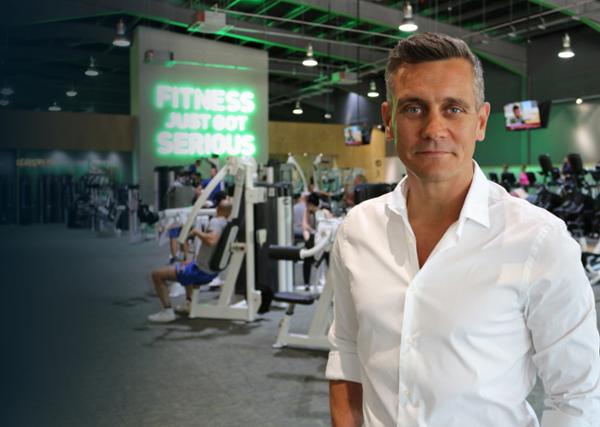
Last time HCM interviewed Alun Peacock was in the depths of the pandemic, when JD Gyms had stepped forward as others were retrenching, acquiring Xercise4Less “at a time when everything was shut and the world was saying people wouldn’t go back to the gym”.
The bet paid off, says Peacock: “We were a 28-club estate that bought 50 clubs out of administration in the middle of lockdown, ultimately keeping and converting 35 of them. It was bold, but we were confident we’d bounce back stronger.”
And so it proved, with rapid post-COVID recovery, “we surpassed pre-pandemic member numbers within three months of re-opening,” says Peacock – a 100th club has just opened and the latest annual report reflecting what Peacock believes to be sector-leading metrics in a hugely competitive market. Here, we catch up with progress.
Have you continued to grow via acquisition?
Our more recent focus has been on organic growth, yet we still acquired four Simply Gyms from Bay Leisure in Q2 2024: three in south Wales and one in Uxbridge. Those locations may appear to represent a fragmented estate, but it was a great strategic fit for us: JD Gyms was already enjoying some success in south Wales and saw the opportunity for further growth in the region, while Uxbridge gave us a test-bed site within the M25.
We then acquired three strategically important sites from Lifestyle Fitness in April 2025: Carlisle, which had been a target location for us for some time; Ballymena, giving us our second gym in Northern Ireland (with more in the pipeline); and Middlesbrough, which at 12,000sq ft became our smallest club.
Strategic acquisition is still very much part of our growth strategy and we continue to explore opportunities. However, as with our organic rollout, it’s very much a quality over quantity approach with criteria we won’t compromise on.
We look at potential cannibalisation of our existing estate, length of leases, the level of investment required to convert to a JD Gyms experience and so on; each of the sites I’ve just mentioned received significant investments.
We review each opportunity, not only based on its performance, but also on what we expect it to deliver as a JD Gyms site. We’re very disciplined and only acquire when we find that sweet spot. We’ve been delighted with the performance of our acquisitions.
Tell us about club 100
It opened in Enfield on 11 November 2025 and is our first organic JD Gyms site within the M25.
We often open in areas where we already have gyms, with strong traction and brand awareness, but that wasn’t the case here. We genuinely felt we were going into an area where people didn’t really know about us, understanding the JD brand purely as a sports fashion retailer, so the strong response has been particularly encouraging. Pre-sale delivered significantly more sign-ups than our forecast opening member number.
This follows on from our Uxbridge test-bed club, where the demographic has – as expected – been very supportive of our product and the conversion of people to the JD Gyms product has been really well received.
It unlocks a lot of exciting new locations for us, with significant white space in the outer boroughs of London that we believe are prime for JD Gyms.
How has your product evolved since club #1?
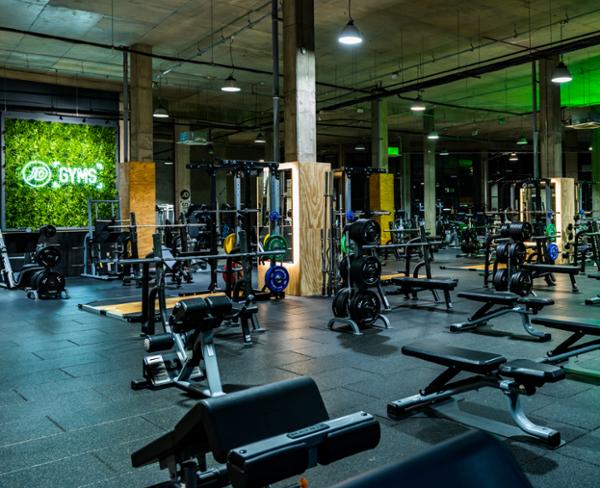
Each year, we reinvest millions into our estate. It’s a fascinating and involved process. Our clubs from 10 or 11 years ago – JD Gyms ‘version one’ – raised the bar at the time but didn’t reflect our current brand experience as strongly when we revisited them.
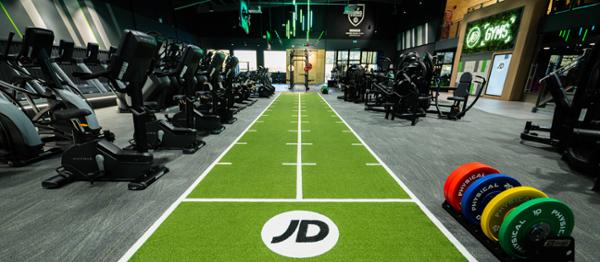
Now in our upgrade cycle we’re getting to the clubs we built six, seven, eight years ago and they still look and feel very current. That’s really pleasing and testament to a model we felt was ahead of its time. All we’re really having to do is upgrade equipment and alter spaces slightly to allow for people’s changing training patterns.
Group exercise is one of the main things we’ve been looking at. We want every element of our real estate to sweat all day and among our core audience, we’ve seen reduced demand for conventional classes and increased demand for gym space.
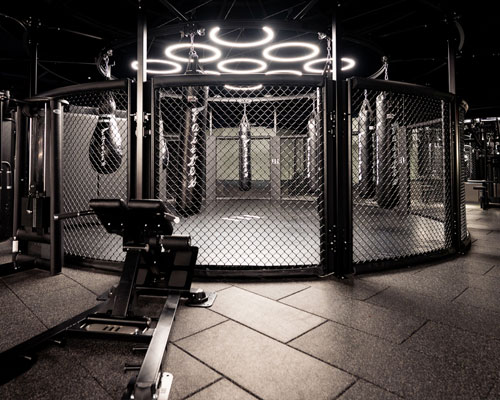
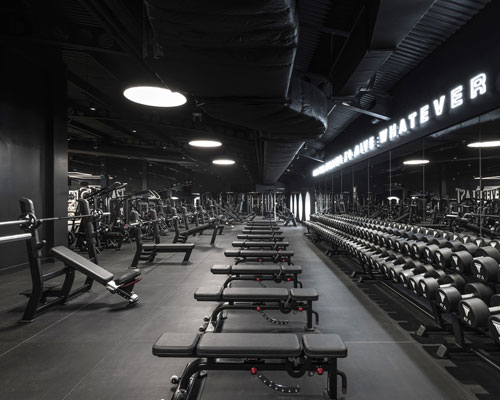
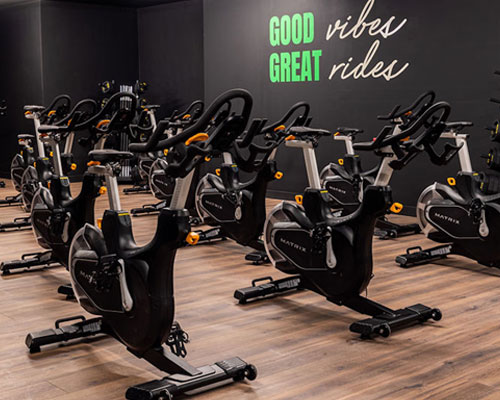
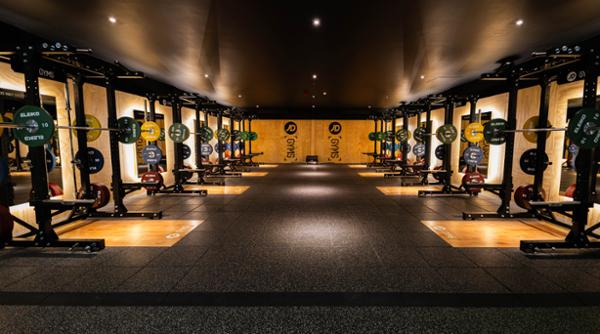
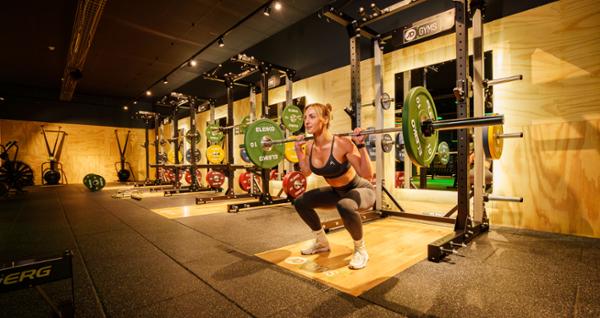
So in some gyms, we’ve removed some under-performing studios – particularly indoor cycling – and reallocated the space to high-volume activities, such as dedicated glute zones and lifting rooms with multiple platforms. These areas are now busy all day, with the throughput of members often exponentially greater than when they were used as dedicated indoor cycling spaces.
Group exercise still has a part to play in our overall experience, with most clubs still featuring studio spaces offering Les Mills, in-house classes and Zumba, but it’s centred around the changing demands of our members: new programmes in the studios alongside functional-based group exercise on the gym floor.
Crucially, the programming is primarily results-focused. Many of our customers are Gen Z and fitness, strength and general conditioning are huge priorities for them. Our group exercise offering goes beyond wellbeing and enjoyment. It’s about measurable progress, performance and results.
Any more innovations up your sleeve?
Tech is an important element of our future investment plans, particularly given the digital literacy of our core audience. We want our digital experience to mirror the innovation we put into our gym experience, so we’ll be launching a new member app in 2026 that shapes the way our members connect with us across all aspects of the business.
We’re also moving to 24/7 operations wherever physically practical, including all new openings. We have a handful of existing clubs – deep within shopping centres or beneath hotels – where it won’t happen, but 87 sites already open 24/7, and another three are due to switch next year.
Recovery is a trend we’re actively observing; we have saunas in both male and female changing rooms in the majority of our gyms and we’re seeing increased use of those. However, our real estate concept is so well-honed that any innovations would have to be incredibly compelling to justify reducing our provision elsewhere. We also have to be confident we can lead in any new discipline we introduce. We never want to just take part.
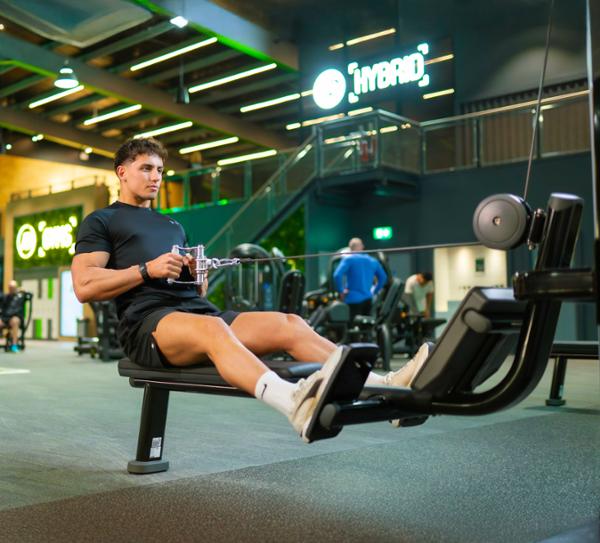
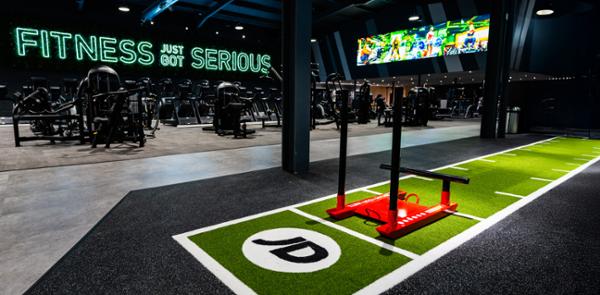
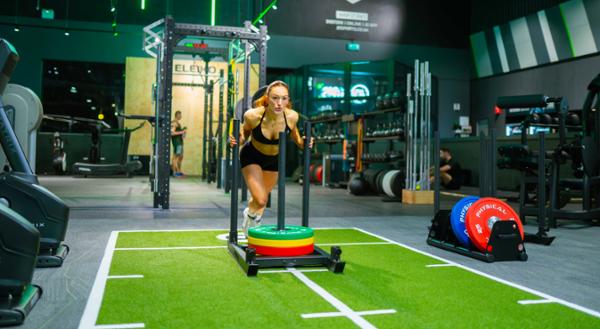
It’s why we continue to double down on free weight, functional and strength provision, which have set us apart from day one. We see people trying to copy us. It’s flattering, but means we must work to stay ahead in areas that have been the cornerstone of our offering.
Tell us about your metrics
We’ve just submitted our annual accounts to Companies House for our financial year ending 1 February 2025. They show that the business delivered a record pre-tax profit, up 42 per cent on the previous year, with revenue up 21 per cent. Membership numbers also grew by 36,000, from 536,000 to 572,000.
JD Gyms’ EBITDA averaged circa 50 per cent at gym level and over a two-year period, turnover in the business has increased by 51 per cent.
I believe these numbers represent sector-leading metrics and we’re delivering this performance in the UK, which is arguably one of the most competitive markets in the world for health and fitness operations.
What’s driving this performance?
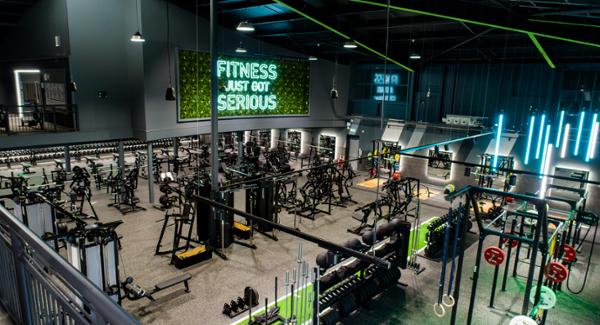
JD Gyms builds great gyms in great locations, with stylish décor and premium equipment – and we’ve developed a method that means we can deliver this cost-effectively, consistently maintaining a low cost per square foot. In the background, robust systems enable us to operate competitively and efficiently.
We’ve created a fantastic brand identity that people understand and embrace; I receive so many emails from members of the public asking if we’ll open a JD Gyms in their home town.
Our high-performing team consistently goes above and beyond. Many of them have been with us since the early days when they bought into the concept. They’ve now been rewarded with senior positions and a long-term career with a brilliant company and I’m very proud of that.
We also have loyal members who have bought into the JD Gyms story. We’re clear who they are, we’ve created an environment where they feel at home and we don’t attempt to appeal to everyone. The young are at our core, as well as the young-at-heart who are serious about their fitness and wellbeing – my very young-at-heart mum, for example, who trains with us four times a week.
Oh, and we sell in very high volumes. The JD Gyms model is in high demand wherever we go. Yield per member has also risen by around £3 a month over the last 18 months, although average fees still sit below £30. The increased price has had a minor impact on volumes – predominantly impacting inactive members – but pleasingly, that’s been more than offset by the yield upside.
Interestingly, total usage has risen at the same time, with our committed members coming more frequently than ever before.
I’ve said it before, but we genuinely believe JD Gyms occupies a unique space in the market. Our offering doesn’t fit neatly into traditional categories such as low-cost or mid-market and that’s intentional. We’re focused on delivering a gym experience that stands up against any operator, not only in terms of value, but also in the quality of the environment, equipment and atmosphere. It isn’t just good for the price. It’s good, full stop.
What’s your growth strategy?
Organically, we’ll open 10–15 sites a year moving forward, with further strategic acquisitions on top of this where we feel the JD Gyms footprint can be successfully overlaid.
For 2026, those 10–15 new openings will be weighted towards the south of England, where we’re getting tremendous traction and see significant white space for our model.
Rent and property availability mean our model tends to look slightly different in the south-east: primarily retail park locations with 10,000–12,000sq ft on the ground floor, with a full-cover mezzanine to achieve our usual 20,000–24,000sq sq ft. Our ideal location still has two-thirds to three-quarters of that space on the ground floor, with lots of parking, but adding the 10,000sq ft mezzanine model to our portfolio has opened up great opportunities. It will form a core part of our rollout.
Having made a success of our small gym pilot in Middlesbrough, we’ll also add an organic small-footprint club in Edinburgh in 2026. This more compact format aims to deliver a JD Gyms experience to more urban communities in a flexible, space-conscious way.
There’s plenty of opportunity elsewhere, too. We already have five JD Gyms in Liverpool, for example. There are other cities where we could do something similar. In Manchester, Leeds and Bristol, for example, where we’re already successful, but have room to grow.
I’m not going to put a total number on our growth potential, but with only a light footprint inside the M25, lots of white space in the south-east, growth opportunities in south Wales and Northern Ireland and room to expand in our existing cities, there’s plenty to go after.
The whole team is committed to making sure this business becomes what it deserves to be. I want to be able to reply to more of those emails I receive to say ‘actually, we already have a club in the pipeline for your town’.
But it will be with a continued focus on quality over quantity. Maintaining discipline is key for us. We’re very proud of our sector-leading metrics around member numbers and profitability and won’t risk that by accelerating faster than we need to.

"I’d been in the fitness industry for 15 years when I spotted a gap in the market: for a gym model aimed at a cost-conscious younger, fitter, more engaged audience,” says JD Gyms CEO, Alun Peacock. “I strongly believed a lower-cost model didn’t have to mean stripped back, without personality, almost deliberately no-frills. I also believed I had a way to efficiently build and run what I was envisaging.”
He continues: “I didn’t approach JD Sports, though. I had initially intended to go in a different direction when I happened to meet the JD Sports chair through a mutual contact. We ended up discussing my idea and he was keen to back the concept.
“JD Sports provided the seed capital and allowed me to use the JD brand. That was a pivotal decision when it came to the instant credibility it gave us in new markets. Throughout, JD has backed the vision fully and afforded me the autonomy to deliver.”
The first JD Gyms club opened in a former Fitness First site in Hull in 2014.
“There were multiple competitors,” says Peacock, “and the compromised location meant we had to ensure our operating systems were perfect.
“If we’d picked an amazing site the first time around and it had flown, I don’t think we’d have been as tight across our operating processes today.”
By the end of 2015, two more sites had allowed for the model to be developed further. “The following year, we opened an additional five clubs. Their performance hugely exceeded our expectations and we knew then that we had a very exciting blueprint to build from: the design, the size of the clubs, the way we ran our pre-sale.
“It was a lightbulb moment. We weren’t caught up in what everyone else was saying about how a gym should look, operate and feel. We were bold and doubled down on our way of doing things.”
Peacock has continued to lead from the front at JD Gyms, spearheading the brand’s growth towards 100 clubs and beyond.
He remains a minority shareholder as well as the CEO, with JD Sports being the majority shareholder.



Private investment company Franchise Equity Partners has acquired Bravo Fit, the Planet Fitness ...

Midtown Athletic Club has launched a new community tennis initiative honouring the legacy ...

Urban Gym Group has entered the Irish market with the acquisition of Iconic ...
Total Fitness has released new research revealing how the expectations and motivations of ...