
















Follow Health Club Management on Twitter Like Health Club Management on Facebook Join the discussion with Health Club Management on LinkedIn
FITNESS, HEALTH, WELLNESS

features

Vitamin D: Rise and shine

Oliver Gillie reports on how the ‘sunshine vitamin’ is making top athletes more competitive

By Oliver Gillie | Published in Health Club Management 2013 issue 1
the vitamin D levels of 61 athletes from the worlds of rugby, soccer and horse racing were tested. two-thirds of them had inadequate blood levels of vitamin d in the winter months

Can you think of a powerful hormone that boosts athletic performance and is not only perfectly legal but also free if you train outdoors in a good climate? The word is going round, but still a lot of athletes and sports people do not know the answer. It is vitamin D, the sunshine vitamin, available from health stores – or for free if you can train in a sunny climate exposing a lot of skin to the midday sun.

Unfortunately the British Isles are far north and cloudy, so we don’t get enough sun. Most of us, including many athletes, are short of vitamin D – even in the summer. In 2012 we had an exceptionally bad summer, meaning vitamin D levels among the population are unusually low. Athletes who train inside or use lots of sunscreen are particularly likely to have low blood levels of vitamin D: sunscreen blocks UVB rays from the sun, and it is these that make vitamin D in the skin.

Body controls
Vitamin D itself is a pre-hormone which is processed in the liver and kidney, and also in most organs and tissues of the body, into a potent hormone called 1,25 hydroxy vitamin D. Feedback mechanisms that control the processing of vitamin D ensure that the body does not get too much of this active product – but in fact, as noted above, most of us in the UK and other northern countries get too little vitamin D. This is because of our long winters, when the sun is not strong enough to make vitamin in the skin; because our cloudy summer weather blocks out sunshine; and because cancer scares have instilled in us a fear of the sun.

Diet is not the answer, because the best balanced diet will not give you more than about 10 per cent of the optimal level of vitamin D.

Appliance of science
The East Germans and the Russians have known about the benefits of vitamin D for athletes since the 1930s, when knowledge of vitamin D and the benefits of sun in producing the vitamin was first discovered by science. Now, very late in the day, athletes in Europe, the US and other advanced industrial nations are beginning to learn about its benefits. Top athletes and football players have started taking vitamin D in the last two or three years, and based on the findings of scientific studies (more on that shortly), it’s possible that this will have made an important but unheralded contribution to the UK’s success in the Olympics – more important for the Brits than for other nationalities because of our climate.

Critical observations and experiments by Graham Close and colleagues at the Research Institute for Sport and Exercise Sciences at Liverpool John Moores University in the UK show that vitamin D is important for muscle strength. They tested the vitamin D levels of 61 athletes from the worlds of rugby, soccer and horse racing. All the athletes were in full-time training or competing six days a week. Two-thirds of the athletes had inadequate blood levels of vitamin D in the winter months and only one athlete, a rugby player, had an optimal level. Two soccer players and two flat jockeys were severely deficient.

The John Moores scientists went on to test the athletic ability of one group of football players who took a daily dose of 5,000 IUs of vitamin D compared with another group of players who took a dummy tablet. After only eight weeks, the group taking vitamin D performed better in both a vertical jump test and a 10-metre sprint. This is a startling result for a trial that continued for a relatively short time and involved only 10 players. It has been written up in a recent article in the Journal of Sport Sciences.

The John Moores result is news for us here in the UK, but it should not be. In 1938, Russian scientists reported that UV radiation treatment improved the speed of students by 7.4 per cent in the 100m dash compared with matched controls. And in 1944, German researchers found that medical students irradiated twice a week for six weeks improved their performance on a bicycle ergometer by 13 per cent compared with controls who showed no improvement. These are just two details from a masterly article by Jon Cannell and others reviewing this early pioneering work (Medicine and Science in Sports and Exercise 2009).

Risk vs reward
But the benefits of vitamin D go way beyond muscular performance. Another important benefit for sports people is resistance to infection during the winter season, when vitamin D levels plummet in those who do not take a supplement. Training is stressful and may make an athlete more subject to infection, while vitamin D has been shown to protect against infections such as flu, TB and others. The sunshine vitamin stimulates immunity and induces the formation of active molecules which defend against infection. Other known benefits include a reduction in the risk of certain diseases such as diabetes, arthritis and certain cancers. Sports people should aim to get their blood level of the vitamin up to at least 100 nmols (nanomoles) per litre.

Unfortunately, advice from Cancer Research UK and the government has made many people afraid of the sun, to the point that they avoid it altogether by staying indoors or using sunscreen. The same reasoning led to the removal of sunbeds from many sports facilities. In fact, the risk of diseases caused by insufficient vitamin D has been found to be some 10 times greater than the risk of melanoma, the acute form of skin cancer.

Of course, people do not want to burn – but so long as you do not burn, there is no serious risk of skin cancer. My advice would therefore be that sunscreen should not generally be used without allowing some previous exposure to the sun, so that vitamin D can be made. If you are not used to the sun, a few minutes may be all you can tolerate to begin with, but gradually increase the time you spend in the sun. Use sunscreen only when there is a risk of burning and you cannot wear more clothing or a hat, or cannot move into the shade.

The sun is free, so enjoy it. If you get at least half an hour of full sun on bare shoulders, arms and legs three or four times a week in the middle of the day in summer, you need not take any vitamin D until the days shorten in October.

ABOUT THE AUTHOR

Oliver Gillie is a scientist and writer. He is former medical correspondent of The Sunday Times and former health editor of The Independent. He has won 17 awards for his scientific and medical writing in national newspapers. Most recently, he was elected health champion of the year by the Medical Journalists’ Association, for his campaign to inform the public and professionals about vitamin D insufficiency disease.

He has also set up The Vitamin D Company, supplying vitamin D products – easy to take and suitable for all user groups – that offer the dose used in the John Moores trial.

Web www.vitDco.com Tel +44 (0)7761 379 939

Sign up here to get HCM's weekly ezine and every issue of HCM magazine free on digital.
The body will make vitamin D if bare, sunscreen-free skin is exposed to the sun / © conrado/shutterstock.com
Athletes taking 5,000 IUs of vitamin D a day performed significantly better than those taking a dummy tablet / © Herbert Kratky/shutterstock.com
https://www.leisureopportunities.co.uk/images/HCM2013_1vitiam.gif
Oliver Gillie reports on the benefits of the 'sunshine vitamin' - vitamin D - and how it is helping top athletes to improve their performance and be more competitive
Oliver Gillie,'sunshine vitamin', vitamin D
HCM magazine
For every member with a tripod and a big following, there are others irritated at the way equipment is being hogged or wary they’ll be in the background on someone’s Insta feed. Do influencers offer valuable, free marketing or are they just a nuisance? Kath Hudson finds out how operators are responding
HCM magazine
Strength training is evolving, driven by changing consumer preferences. Julie Cramer talks to innovators about how their products are meeting this demand
HCM magazine
Collaborations with the medical profession and greater aspirations around wellbeing are creating a need for more experts in our sector. It’s time to reboot our thinking around the workforce
HCM magazine
If the health service is to survive, we must recognise that it is a disease service – and that wellbeing rests with us, says the activity advocate and healthy ageing champion. He talks to Kate Cracknell
HCM magazine
HCM People

Stephen Price

Founder, SP&Co Group
Working in public health over the last few years has lit up parts of my brain again
HCM promotional features
Sponsored
Third Space partnered with IndigoFitness to deliver a bespoke training space for its new club at The Whiteley
HCM promotional features
Sponsored
Starpool supports Olympic champion Marcell Jacobs, says Riccardo Turri
HCM promotional features
Sponsored
Find out how your gym can tap into the corporate wellness boom
HCM promotional features
Sponsored
SnowDome Fitness has added 50 per cent more space with cutting-edge Technogym solutions
HCM promotional features
Sponsored
David Lloyd is stepping up its commitment to women’s health as it continues to explore what fit-for-purpose looks like for the female population
HCM promotional features
Sponsored
Greg Bradley looks at the shift towards strength training in gyms and advises on how operators can create the ultimate training environment
HCM promotional features
Sponsored
EGYM has opened a new HQ in Paternoster Square, London and revealed a range of new launches
HCM promotional features
Promotion
BLK BOX has been reimagining elite performance spaces for more than a decade. Founder and former athlete, Greg Bradley, tells us what it takes
HCM promotional features
Sponsored
Active IQ is calling for greater accountability in online fitness advice with the launch of a new trustmark
HCM promotional features
Latest News
People taking GLP-1 weight loss medications such as Ozempic, Wegovy, Mounjaro and Zepbound may be ...
Latest News
Low-cost gym operator, PureGym, is trialling recovery zones at two of its UK sites, democratising ...
Latest News
In a milestone moment, mental health has become a core part of CIMSPA’s occupational professional ...
Latest News
US high-value, low-price chain, Eos Fitness, has announced plans to pilot reformer Pilates in three ...
Latest News
Preventive healthcare company Neko Health has added body composition analysis to its full-body health scan ...
Latest News
Chequan Lewis is the new CEO of Crunch Fitness, taking over from Jim Rowley, who ...
Latest News
Sea Lanes Canary Wharf has officially opened. The 50-metre, six-lane pool, which uses the natural ...
Latest News
London-based high-performance fitness club, ONE LDN, is raising funds for a multi-site expansion across London, ...
Opinion
promotion
Strength training has moved from the margins to the mainstream.
Opinion: Building smarter strength spaces for today’s operators
Featured supplier news
Featured supplier news: CoverMe extends matching service to personal training, rewriting how members and personal trainers connect
CoverMe, the global leader in fitness workforce management, today launches CoverMe PT, an on-demand personal training platform that connects the right personal trainer to the right client in under 10 seconds.
Featured supplier news
Featured supplier news: Cornerstone Connect helps Active Blackpool tackle health inequalities
Active Blackpool is deploying Cornerstone Connect, a new digital interface allowing disparate information from multiple systems to be aggregated into one dataset, to support its focus on reducing health inequalities and improving healthy life expectancy.
Company profiles
Company profile: Swimming Teachers' Association (STA)
The Swimming Teachers’ Association (STA) is a national governing body for swimming and a UK-registered ...
Company profiles
Company profile: We Work Well Inc
We Work Well is a global premier hosted buyer event company, connecting high-level executives from ...
Supplier Showcases
Supplier Showcase - From nightclub to health club
Supplier Showcases
Supplier Showcase - Future-proofing
Catalogue Gallery
Click on a catalogue to view it online
Featured press releases
Swim England press release: Swim England launches new Learn to Swim Growth Plan to support aquatic programme expansion
Swim England has strengthened its sector-leading Business Solutions offer with the launch of its Learn to Swim Growth Plan, designed to help aquatic providers unlock sustainable programme growth.
Featured press releases
CoverMe Ltd press release: CoverMe and Jobs In. Fitness partner to create end-to-end talent solution
CoverMe, the UK’s leading fitness workforce management and recruitment platform, has partnered with Jobs In. Fitness, the specialist executive search and advisory firm for the fitness and wellbeing sector, to give operators a single route to talent at every level – from frontline staffing to C-suite.
Directory
Lockers
Crown Sports Lockers: Lockers
Hot tubs
MSpa International Ltd: Hot tubs
Industrial washing machines
Miele Company Limited: Industrial washing machines
Water experiences and hydrotherapy solutions
Aquaform s.r.l.: Water experiences and hydrotherapy solutions
Spa and beauty equipment
Oakworks Inc: Spa and beauty equipment
Fitness tracking platform
SpiviTech: Fitness tracking platform
Property & Tenders
Stratford, East London.
Lee Valley Regional Park Authority
Property & Tenders
Y Felinheli, LL56 4QN
Newmark
Property & Tenders
Diary dates
21-24 Sep 2026
The Langham Huntington Pasadena , Pasadena, United States
Diary dates
06-08 Oct 2026
Messe Stuttgart, Stuttgart, Germany
Diary dates
22-22 Oct 2026
QEII Conference Centre, London,
Diary dates
26-29 Oct 2027
Koelnmesse Exhibition Centre, Cologne, Germany
Diary dates

features

Vitamin D: Rise and shine

Oliver Gillie reports on how the ‘sunshine vitamin’ is making top athletes more competitive

By Oliver Gillie | Published in Health Club Management 2013 issue 1
the vitamin D levels of 61 athletes from the worlds of rugby, soccer and horse racing were tested. two-thirds of them had inadequate blood levels of vitamin d in the winter months

Can you think of a powerful hormone that boosts athletic performance and is not only perfectly legal but also free if you train outdoors in a good climate? The word is going round, but still a lot of athletes and sports people do not know the answer. It is vitamin D, the sunshine vitamin, available from health stores – or for free if you can train in a sunny climate exposing a lot of skin to the midday sun.

Unfortunately the British Isles are far north and cloudy, so we don’t get enough sun. Most of us, including many athletes, are short of vitamin D – even in the summer. In 2012 we had an exceptionally bad summer, meaning vitamin D levels among the population are unusually low. Athletes who train inside or use lots of sunscreen are particularly likely to have low blood levels of vitamin D: sunscreen blocks UVB rays from the sun, and it is these that make vitamin D in the skin.

Body controls
Vitamin D itself is a pre-hormone which is processed in the liver and kidney, and also in most organs and tissues of the body, into a potent hormone called 1,25 hydroxy vitamin D. Feedback mechanisms that control the processing of vitamin D ensure that the body does not get too much of this active product – but in fact, as noted above, most of us in the UK and other northern countries get too little vitamin D. This is because of our long winters, when the sun is not strong enough to make vitamin in the skin; because our cloudy summer weather blocks out sunshine; and because cancer scares have instilled in us a fear of the sun.

Diet is not the answer, because the best balanced diet will not give you more than about 10 per cent of the optimal level of vitamin D.

Appliance of science
The East Germans and the Russians have known about the benefits of vitamin D for athletes since the 1930s, when knowledge of vitamin D and the benefits of sun in producing the vitamin was first discovered by science. Now, very late in the day, athletes in Europe, the US and other advanced industrial nations are beginning to learn about its benefits. Top athletes and football players have started taking vitamin D in the last two or three years, and based on the findings of scientific studies (more on that shortly), it’s possible that this will have made an important but unheralded contribution to the UK’s success in the Olympics – more important for the Brits than for other nationalities because of our climate.

Critical observations and experiments by Graham Close and colleagues at the Research Institute for Sport and Exercise Sciences at Liverpool John Moores University in the UK show that vitamin D is important for muscle strength. They tested the vitamin D levels of 61 athletes from the worlds of rugby, soccer and horse racing. All the athletes were in full-time training or competing six days a week. Two-thirds of the athletes had inadequate blood levels of vitamin D in the winter months and only one athlete, a rugby player, had an optimal level. Two soccer players and two flat jockeys were severely deficient.

The John Moores scientists went on to test the athletic ability of one group of football players who took a daily dose of 5,000 IUs of vitamin D compared with another group of players who took a dummy tablet. After only eight weeks, the group taking vitamin D performed better in both a vertical jump test and a 10-metre sprint. This is a startling result for a trial that continued for a relatively short time and involved only 10 players. It has been written up in a recent article in the Journal of Sport Sciences.

The John Moores result is news for us here in the UK, but it should not be. In 1938, Russian scientists reported that UV radiation treatment improved the speed of students by 7.4 per cent in the 100m dash compared with matched controls. And in 1944, German researchers found that medical students irradiated twice a week for six weeks improved their performance on a bicycle ergometer by 13 per cent compared with controls who showed no improvement. These are just two details from a masterly article by Jon Cannell and others reviewing this early pioneering work (Medicine and Science in Sports and Exercise 2009).

Risk vs reward
But the benefits of vitamin D go way beyond muscular performance. Another important benefit for sports people is resistance to infection during the winter season, when vitamin D levels plummet in those who do not take a supplement. Training is stressful and may make an athlete more subject to infection, while vitamin D has been shown to protect against infections such as flu, TB and others. The sunshine vitamin stimulates immunity and induces the formation of active molecules which defend against infection. Other known benefits include a reduction in the risk of certain diseases such as diabetes, arthritis and certain cancers. Sports people should aim to get their blood level of the vitamin up to at least 100 nmols (nanomoles) per litre.

Unfortunately, advice from Cancer Research UK and the government has made many people afraid of the sun, to the point that they avoid it altogether by staying indoors or using sunscreen. The same reasoning led to the removal of sunbeds from many sports facilities. In fact, the risk of diseases caused by insufficient vitamin D has been found to be some 10 times greater than the risk of melanoma, the acute form of skin cancer.

Of course, people do not want to burn – but so long as you do not burn, there is no serious risk of skin cancer. My advice would therefore be that sunscreen should not generally be used without allowing some previous exposure to the sun, so that vitamin D can be made. If you are not used to the sun, a few minutes may be all you can tolerate to begin with, but gradually increase the time you spend in the sun. Use sunscreen only when there is a risk of burning and you cannot wear more clothing or a hat, or cannot move into the shade.

The sun is free, so enjoy it. If you get at least half an hour of full sun on bare shoulders, arms and legs three or four times a week in the middle of the day in summer, you need not take any vitamin D until the days shorten in October.

ABOUT THE AUTHOR

Oliver Gillie is a scientist and writer. He is former medical correspondent of The Sunday Times and former health editor of The Independent. He has won 17 awards for his scientific and medical writing in national newspapers. Most recently, he was elected health champion of the year by the Medical Journalists’ Association, for his campaign to inform the public and professionals about vitamin D insufficiency disease.

He has also set up The Vitamin D Company, supplying vitamin D products – easy to take and suitable for all user groups – that offer the dose used in the John Moores trial.

Web www.vitDco.com Tel +44 (0)7761 379 939
Sign up here to get HCM's weekly ezine and every issue of HCM magazine free on digital.
The body will make vitamin D if bare, sunscreen-free skin is exposed to the sun / © conrado/shutterstock.com
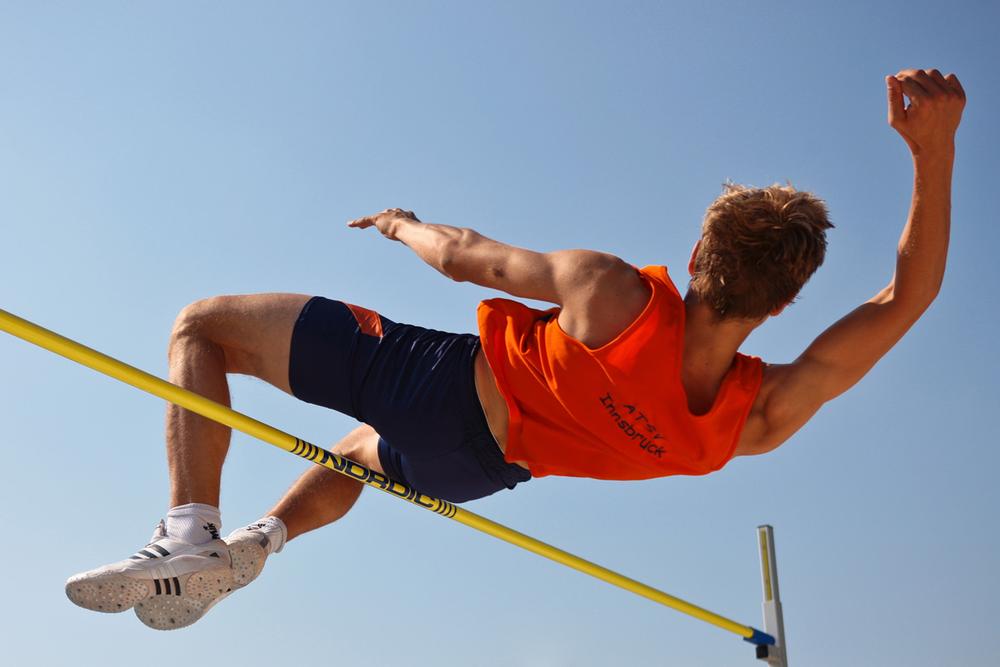
Athletes taking 5,000 IUs of vitamin D a day performed significantly better than those taking a dummy tablet / © Herbert Kratky/shutterstock.com
https://www.leisureopportunities.co.uk/images/HCM2013_1vitiam.gif
Oliver Gillie reports on the benefits of the 'sunshine vitamin' - vitamin D - and how it is helping top athletes to improve their performance and be more competitive
Oliver Gillie,'sunshine vitamin', vitamin D
Latest News
People taking GLP-1 weight loss medications such as Ozempic, Wegovy, Mounjaro and Zepbound may be ...
Latest News
Low-cost gym operator, PureGym, is trialling recovery zones at two of its UK sites, democratising ...
Latest News
In a milestone moment, mental health has become a core part of CIMSPA’s occupational professional ...
Latest News
US high-value, low-price chain, Eos Fitness, has announced plans to pilot reformer Pilates in three ...
Latest News
Preventive healthcare company Neko Health has added body composition analysis to its full-body health scan ...
Latest News
Chequan Lewis is the new CEO of Crunch Fitness, taking over from Jim Rowley, who ...
Latest News
Sea Lanes Canary Wharf has officially opened. The 50-metre, six-lane pool, which uses the natural ...
Latest News
London-based high-performance fitness club, ONE LDN, is raising funds for a multi-site expansion across London, ...
Latest News
A new brain clinic has opened in London, which uses non-invasive brain stimulation to treat ...
Latest News
Good Boost’s digital exercise programmes are helping adults with MSK at a lower cost than ...
Latest News
With Prime Minister, Keir Starmer, announcing his resignation this morning and Andy Burnham as a ...
Opinion
promotion
Strength training has moved from the margins to the mainstream.
Opinion: Building smarter strength spaces for today’s operators
Featured supplier news
Featured supplier news: CoverMe extends matching service to personal training, rewriting how members and personal trainers connect
CoverMe, the global leader in fitness workforce management, today launches CoverMe PT, an on-demand personal training platform that connects the right personal trainer to the right client in under 10 seconds.
Featured supplier news
Featured supplier news: Cornerstone Connect helps Active Blackpool tackle health inequalities
Active Blackpool is deploying Cornerstone Connect, a new digital interface allowing disparate information from multiple systems to be aggregated into one dataset, to support its focus on reducing health inequalities and improving healthy life expectancy.
Company profiles
Company profile: Swimming Teachers' Association (STA)
The Swimming Teachers’ Association (STA) is a national governing body for swimming and a UK-registered ...
Company profiles
Company profile: We Work Well Inc
We Work Well is a global premier hosted buyer event company, connecting high-level executives from ...
Supplier Showcases
Supplier Showcase - From nightclub to health club
Supplier Showcases
Supplier Showcase - Future-proofing
Catalogue Gallery
Click on a catalogue to view it online
Featured press releases
Swim England press release: Swim England launches new Learn to Swim Growth Plan to support aquatic programme expansion
Swim England has strengthened its sector-leading Business Solutions offer with the launch of its Learn to Swim Growth Plan, designed to help aquatic providers unlock sustainable programme growth.
Featured press releases
CoverMe Ltd press release: CoverMe and Jobs In. Fitness partner to create end-to-end talent solution
CoverMe, the UK’s leading fitness workforce management and recruitment platform, has partnered with Jobs In. Fitness, the specialist executive search and advisory firm for the fitness and wellbeing sector, to give operators a single route to talent at every level – from frontline staffing to C-suite.
Directory
Lockers
Crown Sports Lockers: Lockers
Hot tubs
MSpa International Ltd: Hot tubs
Industrial washing machines
Miele Company Limited: Industrial washing machines
Water experiences and hydrotherapy solutions
Aquaform s.r.l.: Water experiences and hydrotherapy solutions
Spa and beauty equipment
Oakworks Inc: Spa and beauty equipment
Fitness tracking platform
SpiviTech: Fitness tracking platform
Property & Tenders
Stratford, East London.
Lee Valley Regional Park Authority
Property & Tenders
Y Felinheli, LL56 4QN
Newmark
Property & Tenders
Diary dates
21-24 Sep 2026
The Langham Huntington Pasadena , Pasadena, United States
Diary dates
06-08 Oct 2026
Messe Stuttgart, Stuttgart, Germany
Diary dates
22-22 Oct 2026
QEII Conference Centre, London,
Diary dates
26-29 Oct 2027
Koelnmesse Exhibition Centre, Cologne, Germany
Diary dates
Search news, features & products:
Find a supplier:
Partner sites