










Les Mills
Les Mills
Les Mills
Follow Health Club Management on Twitter Like Health Club Management on Facebook Join the discussion with Health Club Management on LinkedIn
FITNESS, HEALTH, WELLNESS

features

Urban design: The only way is up

Kate Cracknell talks to professors Alfredo Brillembourg and Hubert Klumpner of Urban-Think Tank, the team behind the revolutionary Vertical Gym concept

By Kate Cracknell | Published in Health Club Management 2013 issue 10

Q What sort of company is Urban-Think Tank (U-TT)?
U-TT is an interdisciplinary design practice dedicated to high-level research and design in architecture and urbanism. It’s partnered with ETH Zurich, the university where we both lecture on architecture and urban design.

The point of departure for our research is architecture’s failure to define informal urban settlements (shantytowns) and their effects on the city. Our current research and our work over the past decade aim to increase understanding of the informal city from three perspectives.

Firstly, from a humanitarian standpoint, urban shantytowns are wracked with problems, not least of which are poverty and a lack of support from professionals. Secondly is the theoretical standpoint. What defines an urban environment? Who are the actors at work in determining what draws people to urban areas? What are the different sectors within a city and which demographics have settled in each? All of these are questions we ask ourselves before engaging with projects on the ground. Finally, from a design standpoint, informality allows for innovation: while there are set rules governing much of the formal realm of design, there’s no such rulebook in the informal sector.

We operate under an experimental research and teaching methodology that rethinks the former physical limitations of contemporary architecture, shifting the emphasis from form-driven to purpose-orientated social architecture.

We aim to merge the methodologies and the expertise of previously separated fields with the ultimate goal of improved urbanism: politics, design, research, education, NGOs, community leaders, international finance groups. These actors are all at play within the city and have a hand in its successes or its failings, and we seek to integrate them all the way through the decision-making process.

Q What sort of projects does U-TT get involved with?
We close ourselves off to nothing. That said, we specialise in designs particularly for urban slums. Our most extensive work has been focused in Latin America, but we also have projects in the US, Netherlands, Trinidad and Tobago, and have several European-based projects in the pipeline.

We focus on slums because informal communities are where we’re seeing the most rapid urban growth at the moment. Mega-cities like Athens are shrinking as people flock to mid-sized cities. These mid-sized cities are ill-prepared for such surges in population, and as a result informal communities spring up that are easily expandable. If these are the current and future sites of growth and urbanism, we want to be right there in the throes of it all.

Along with a clear and pressing need for urban design, these areas tend to be swept under the rug by those who have the tools to bring about the most change for good. There’s plenty of research being done and policy being created for the formal sectors, but as the formal city shrinks and the informal balloons, we can’t ignore the call for a shift of interest. We hope researchers and developers see our work and are inspired to follow us into the informal city, working to blur the dividing lines between the ‘haves’ and the ‘have-nots’.

Q One of your concepts is the Vertical Gym. What is this?
The Vertical Gym (Gimnasio Vertical) is a replicable prototype – a kit of parts that can be assembled in custom contexts and modified to fit different programming, financial and ecological demands. It consists of three floors and a rooftop court that provide an extremely efficient variety of spaces for different recreational activities.

We came up with the idea when we were both studying at Columbia University in New York City. The university gym was built underground, going down through several floors to make an efficient use of space in the dense urban environment. Vertical Gym takes this thinking and adapts it for the informal sector, using a frame and a set of materials that are feasible for lower-cost, informal sector construction.

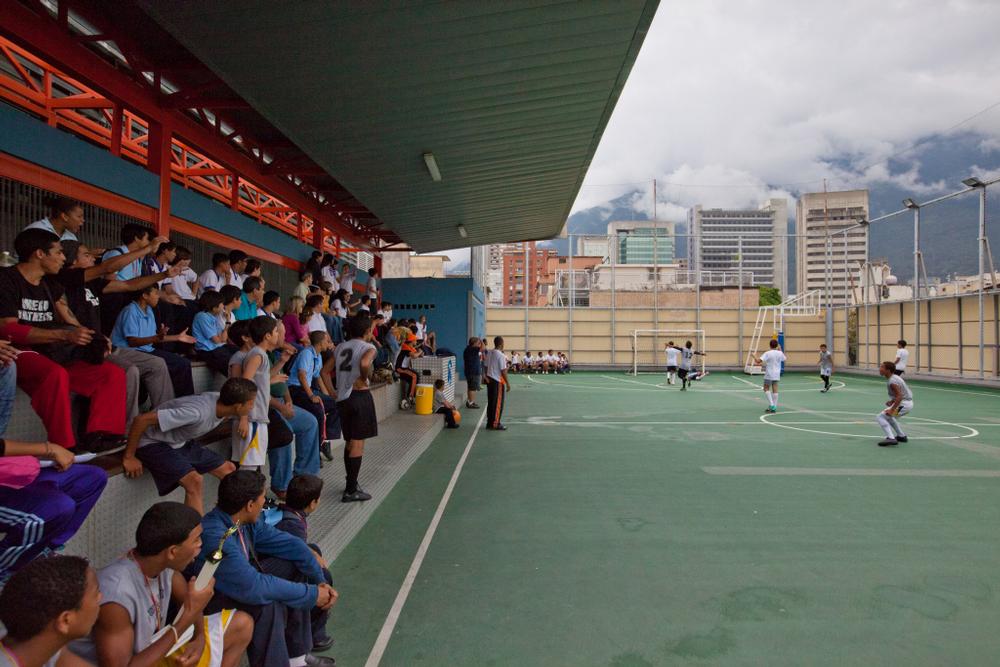
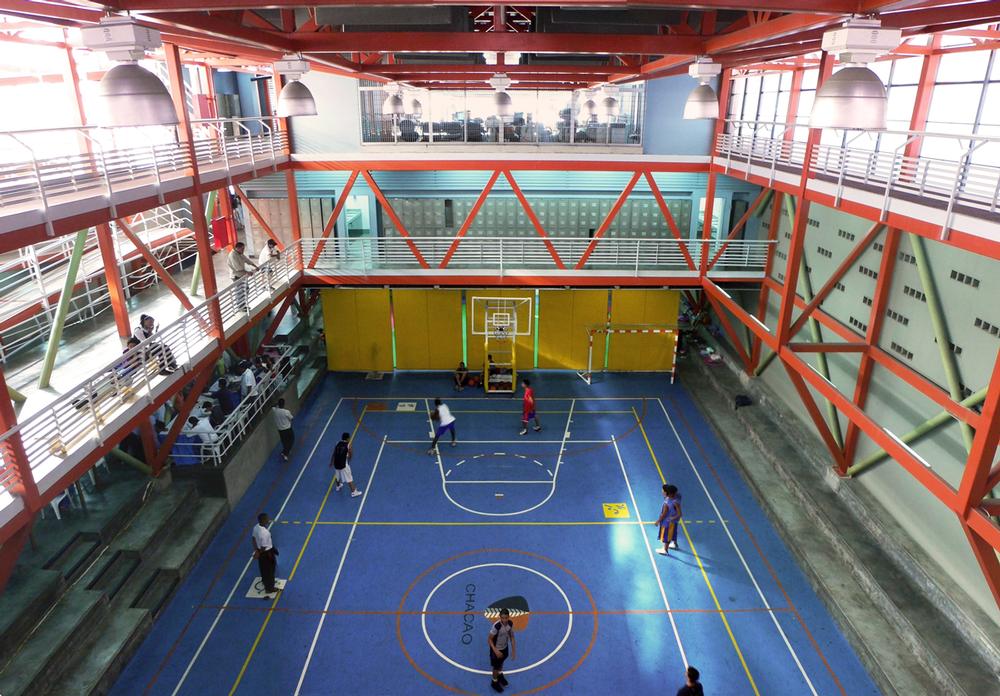
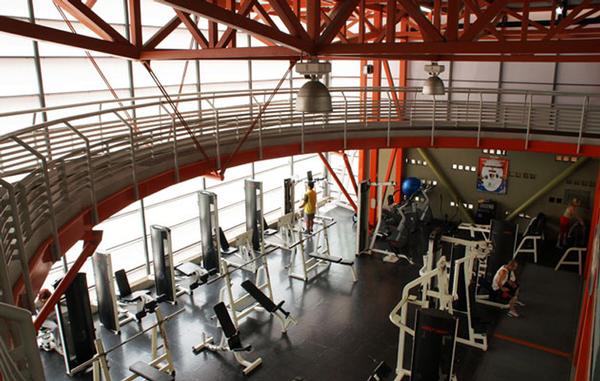
Our pilot Vertical Gym opened in 2004 in Barrio La Cruz, Caracas, Venezuela. It transformed the site of a former makeshift soccer field into a fitness complex with a total floorspace of 1,000sq m, offering basketball courts, a dance studio, weights, a running track, a rock-climbing wall and an open-air soccer field.

The former training ground was located at street level, and due to the densely built surroundings could not expand outwards. The solution was to build upwards. The first of its kind, this Vertical Gymnasium now bustles with activity day and night, and currently welcomes an average of 15,000 visitors a month. We’ve been particularly happy to find out that it’s helped lower the crime rate in this barrio by more than 30 per cent since its inauguration.

All of our Vertical Gyms are non-profit entities. That said, the cost to users varies depending on the municipality in charge of the complex. In the case of our Barrio La Cruz pilot, use of the soccer complex is completely free, and there’s a very low membership fee for use of the gym equipment on the upper floors. All costs bring in revenue to the body running the complex, but not to the extent of running a profit.

Q What does it cost to build a Vertical Gym?
The gym itself is a highly adaptable prototype that can be easily replicated and altered for the needs of the locale or the client. One of our prototypes features a steel frame, while another uses both steel and concrete. Choice of materials will alter costs a bit, but excluding the cost of land, building each gym has so far come in at about US$2m.

The gyms we’ve constructed in South America have been financed by a combination of private investment and city mayors. These sites function primarily to serve low-income communities and provide public space, so they don’t directly generate profit from the end users.

That’s not to say the design couldn’t cater for a different crowd and generate high returns. A high-end version could easily be retrofitted into New York’s Upper Eastside, for example. The model is malleable to the desire of the client.

Q How did you engage the inhabitants of Barrio La Cruz in physical activity?
Little persuasion is needed. These people want to play football, to release the day’s tension by going for a run, to impress their girlfriends with their muscle definition. They want what any formal community wants. If you build a gym in the formal sector with next to no barriers to entry, you don’t have to beg people to use the facilities.

However, the key to maximising use of the facility is to engage in community involvement from the beginning of the design process. We were on the ground asking residents of the barrio exactly what they wanted and what their neighbours needed most. This practice gives the community a stake in the construction and design of the structure. As a result, they own a piece of its success as well as its condition in the future. A sense of collective ownership and responsibility is very much a part of the positive benefits – such as the reduced crime rates – and high frequency use that we’ve seen with our Caracas gym.

Q Are there any other Vertical Gyms yet?
There are four Vertical Gyms in Venezuela, either complete or under construction. We also have a proposal for one in Amman, Jordan, as well as New York City. They all differ slightly: some incorporate a swimming pool, while others are attached to larger infrastructure stations such as Metro Cable stations. The variations are based on the needs of the community, or what municipal bodies financing the projects deem most useful for their districts.

Q What are the biggest challenges when creating a Vertical Gym?
When working with municipalities, there’s regular turnover of people involved in a project. What one mayor might prioritise, his/her successor may not and a project gets put on the backburner. We haven’t had to face this situation too frequently. Nonetheless, politics tends to be a big challenge in urban developments around the world.

Q How can cities can become healthier places to live, work and play?
The problem of inactivity is so heavily concentrated in cities. We believe encouraging people to live more active lives comes down to two things: convenience and enjoyment.

People often make the less active decision – driving to work rather than biking, for example – simply because it’s more convenient. If we make active choices just as convenient for urban dwellers, if not more convenient, we believe they’ll make the healthier choice.

Additionally, no-one dislikes having fun! Designers should try and incorporate as many elements for fun into everyday active design as possible. If you could take a series of slides and stairs from your office to your home, high above the busy city streets, your inner child would not be able to resist and you would make the more active decision – not that we’re proposing such a mode of mass transit infrastructure, but you see our point.

Q Do you have plans to further evolve the vertical model?
Right now we’re particularly interested in adaptable social housing. We’re looking at options for retrofitting existing infrastructure, such as multi-storey car parks, with modular design tools to incorporate aspects of city-living – dry cleaners, housing, parks, dining – into a single vertical structure. We’re experimenting with the possibilities that present themselves when you take the street and its functions into the sky.
Sign up here to get HCM's weekly ezine and every issue of HCM magazine free on digital.
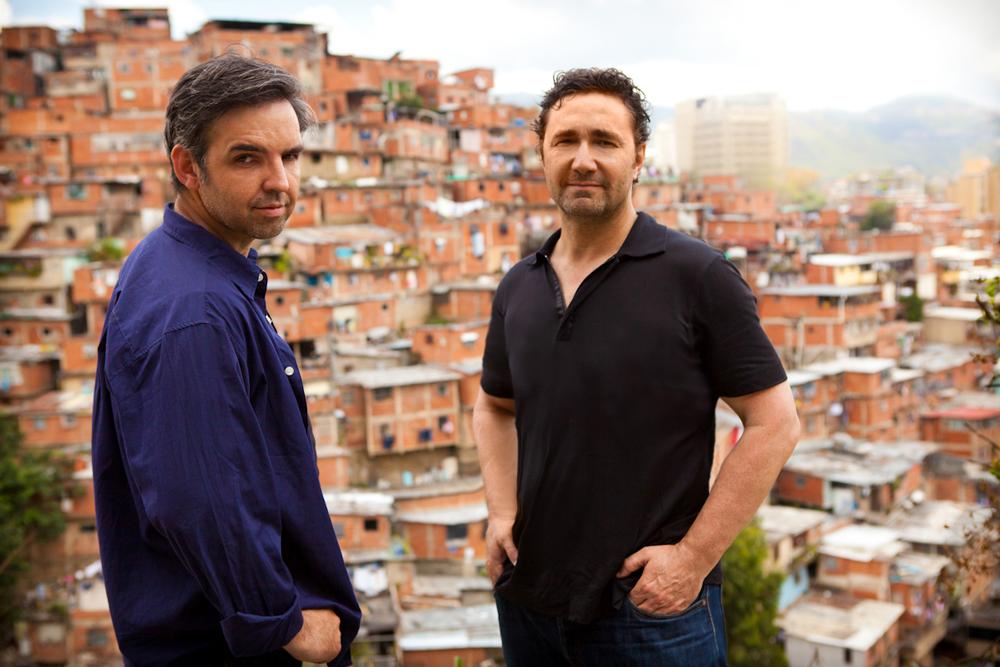
Hubert Klumpner (left) and Alfredo Brillembourg (right) of U-TT
The Vertical Gym is a kit model adaptable to many environments
There are currently four Vertical Gyms in Venezuela, either complete or under construction, including the site in Chacao
https://www.leisureopportunities.co.uk/images/HCM2013_10urban.gif
Professors Alfredo Brillembourg and Hubert Klumpner of Urban-Think Tank talk to Kate Cracknell about their revolutionary and socially cohesive Vertical Gym concept
Alfredo Brillembourg, Hubert Klumpner, Urban-Think Tank,Alfredo Brillembourg, Hubert Klumpner, Urban-Think Tank, Vertical Gym, urban, Venezuela, Caracas, New York
HCM magazine
HCM People

Jamie Clements

The Breath Coach
I experienced a blissful feeling of joy I hadn’t felt since I was a kid
HCM magazine
Collaborations with the medical profession and greater aspirations around wellbeing are creating a need for more experts in our sector. It’s time to reboot our thinking around the workforce
HCM magazine
Raphael Cuomo explores the powerful link between addiction, health and behaviour change
HCM magazine
Small improvements to sleep, diet and physical activity have major benefits for the heart, according to new research from the University of Sydney
HCM magazine
Strength training is evolving, driven by changing consumer preferences. Julie Cramer talks to innovators about how their products are meeting this demand
HCM promotional features
Sponsored
Starpool supports Olympic champion Marcell Jacobs, says Riccardo Turri
HCM promotional features
Sponsored
Greg Bradley looks at the shift towards strength training in gyms and advises on how operators can create the ultimate training environment
HCM promotional features
Sponsored
Find out how your gym can tap into the corporate wellness boom
HCM promotional features
Sponsored
David Lloyd is stepping up its commitment to women’s health as it continues to explore what fit-for-purpose looks like for the female population
HCM promotional features
Sponsored
SnowDome Fitness has added 50 per cent more space with cutting-edge Technogym solutions
HCM promotional features
Sponsored
Third Space partnered with IndigoFitness to deliver a bespoke training space for its new club at The Whiteley
HCM promotional features
Sponsored
EGYM has opened a new HQ in Paternoster Square, London and revealed a range of new launches
HCM promotional features
Promotion
BLK BOX has been reimagining elite performance spaces for more than a decade. Founder and former athlete, Greg Bradley, tells us what it takes
HCM promotional features
Sponsored
Active IQ is calling for greater accountability in online fitness advice with the launch of a new trustmark
HCM promotional features
Latest News
Nuffield Health has told HCM that it takes its responsibilities towards its colleagues seriously and ...
Latest News
Technogym has announced the launch of the Run X World Treadmill Championship, the first world ...
Latest News
Shocked by the UK loneliness statistics, charitable trust Mytime Active has been doubling down on ...
Latest News
Portugal’s leading operator, SC Fitness, is celebrating a milestone by reaching 100 gyms.  The company ...
Latest News
Australia’s fast-growing fitness network, Viva Leisure, is adding a low-cost gym brand to its already ...
Latest News
Speedflex has launched a strength training programme for 10 to 16-year-olds, to make it safer, ...
Latest News
Tewinbury Farm Hotel in Hertfordshire, UK is expanding its premium leisure proposition with the launch ...
Latest News

Work is underway in Madrid on one of Europe’s most significant multi-functional complexes, ...

Opinion
promotion
Strength training has moved from the margins to the mainstream.
Opinion: Building smarter strength spaces for today’s operators
Featured supplier news
Featured supplier news: Supporting long-term health: why whole body vibration belongs in clinical settings
As healthcare continues to shift towards prevention, there’s a growing focus on helping people stay active, independent and feeling good for longer.
Featured supplier news
Featured supplier news: W3Fit EMEA celebrates its fifth anniversary
Celebrating its milestone 5th anniversary, W3Fit EMEA returns in 2026 with an unmissable gathering of the Health & Fitness industry’s most influential leaders.
Company profiles
Company profile: Active IQ
The UK’s leading Ofqual-recognised awarding organisation for the physical activity sector, Active IQ offers over ...
Company profiles
Company profile: Wellhub
Wellhub acts as a corporate sales channel, bringing new, highquality members to your business, by ...
Supplier Showcases
Supplier Showcase - From nightclub to health club
Supplier Showcases
Supplier Showcase - Future-proofing
Catalogue Gallery
Click on a catalogue to view it online
Featured press releases
GYMNATION press release: Massive ‘Good Luck’ message appears in Saudi Desert as Green Falcons head to World Cup
Passengers flying out of Riyadh this week have been treated to an extraordinary sight from the skies after GymNation unveiled a giant desert sand mural supporting the Saudi Arabia National Football Team ahead of the FIFA World Cup in the United States.
Featured press releases
BLK BOX press release: BLK BOX strengthens European growth with the appointment of Germany country manager Timo Garrels
BLK BOX is proud to welcome Timo Garrels as Germany country manager, marking another important step in the brand’s continued growth across Europe.
Directory
Lockers
Crown Sports Lockers: Lockers
Fitness tracking platform
SpiviTech: Fitness tracking platform
Hot tubs
MSpa International Ltd: Hot tubs
Industrial washing machines
Miele Company Limited: Industrial washing machines
Water experiences and hydrotherapy solutions
Aquaform s.r.l.: Water experiences and hydrotherapy solutions
Spa and beauty equipment
Living Earth Crafts: Spa and beauty equipment
Property & Tenders
Stratford, East London.
Lee Valley Regional Park Authority
Property & Tenders
Y Felinheli, LL56 4QN
Newmark
Property & Tenders
Diary dates
13-13 Jun 2026
Worldwide, Various,
Diary dates
21-24 Sep 2026
The Langham Huntington Pasadena , Pasadena, United States
Diary dates
06-08 Oct 2026
Messe Stuttgart, Stuttgart, Germany
Diary dates
22-22 Oct 2026
QEII Conference Centre, London,
Diary dates
26-29 Oct 2027
Koelnmesse Exhibition Centre, Cologne, Germany
Diary dates

features

Urban design: The only way is up

Kate Cracknell talks to professors Alfredo Brillembourg and Hubert Klumpner of Urban-Think Tank, the team behind the revolutionary Vertical Gym concept

By Kate Cracknell | Published in Health Club Management 2013 issue 10

Q What sort of company is Urban-Think Tank (U-TT)?
U-TT is an interdisciplinary design practice dedicated to high-level research and design in architecture and urbanism. It’s partnered with ETH Zurich, the university where we both lecture on architecture and urban design.

The point of departure for our research is architecture’s failure to define informal urban settlements (shantytowns) and their effects on the city. Our current research and our work over the past decade aim to increase understanding of the informal city from three perspectives.

Firstly, from a humanitarian standpoint, urban shantytowns are wracked with problems, not least of which are poverty and a lack of support from professionals. Secondly is the theoretical standpoint. What defines an urban environment? Who are the actors at work in determining what draws people to urban areas? What are the different sectors within a city and which demographics have settled in each? All of these are questions we ask ourselves before engaging with projects on the ground. Finally, from a design standpoint, informality allows for innovation: while there are set rules governing much of the formal realm of design, there’s no such rulebook in the informal sector.

We operate under an experimental research and teaching methodology that rethinks the former physical limitations of contemporary architecture, shifting the emphasis from form-driven to purpose-orientated social architecture.

We aim to merge the methodologies and the expertise of previously separated fields with the ultimate goal of improved urbanism: politics, design, research, education, NGOs, community leaders, international finance groups. These actors are all at play within the city and have a hand in its successes or its failings, and we seek to integrate them all the way through the decision-making process.

Q What sort of projects does U-TT get involved with?
We close ourselves off to nothing. That said, we specialise in designs particularly for urban slums. Our most extensive work has been focused in Latin America, but we also have projects in the US, Netherlands, Trinidad and Tobago, and have several European-based projects in the pipeline.

We focus on slums because informal communities are where we’re seeing the most rapid urban growth at the moment. Mega-cities like Athens are shrinking as people flock to mid-sized cities. These mid-sized cities are ill-prepared for such surges in population, and as a result informal communities spring up that are easily expandable. If these are the current and future sites of growth and urbanism, we want to be right there in the throes of it all.

Along with a clear and pressing need for urban design, these areas tend to be swept under the rug by those who have the tools to bring about the most change for good. There’s plenty of research being done and policy being created for the formal sectors, but as the formal city shrinks and the informal balloons, we can’t ignore the call for a shift of interest. We hope researchers and developers see our work and are inspired to follow us into the informal city, working to blur the dividing lines between the ‘haves’ and the ‘have-nots’.

Q One of your concepts is the Vertical Gym. What is this?
The Vertical Gym (Gimnasio Vertical) is a replicable prototype – a kit of parts that can be assembled in custom contexts and modified to fit different programming, financial and ecological demands. It consists of three floors and a rooftop court that provide an extremely efficient variety of spaces for different recreational activities.

We came up with the idea when we were both studying at Columbia University in New York City. The university gym was built underground, going down through several floors to make an efficient use of space in the dense urban environment. Vertical Gym takes this thinking and adapts it for the informal sector, using a frame and a set of materials that are feasible for lower-cost, informal sector construction.

Our pilot Vertical Gym opened in 2004 in Barrio La Cruz, Caracas, Venezuela. It transformed the site of a former makeshift soccer field into a fitness complex with a total floorspace of 1,000sq m, offering basketball courts, a dance studio, weights, a running track, a rock-climbing wall and an open-air soccer field.

The former training ground was located at street level, and due to the densely built surroundings could not expand outwards. The solution was to build upwards. The first of its kind, this Vertical Gymnasium now bustles with activity day and night, and currently welcomes an average of 15,000 visitors a month. We’ve been particularly happy to find out that it’s helped lower the crime rate in this barrio by more than 30 per cent since its inauguration.

All of our Vertical Gyms are non-profit entities. That said, the cost to users varies depending on the municipality in charge of the complex. In the case of our Barrio La Cruz pilot, use of the soccer complex is completely free, and there’s a very low membership fee for use of the gym equipment on the upper floors. All costs bring in revenue to the body running the complex, but not to the extent of running a profit.

Q What does it cost to build a Vertical Gym?
The gym itself is a highly adaptable prototype that can be easily replicated and altered for the needs of the locale or the client. One of our prototypes features a steel frame, while another uses both steel and concrete. Choice of materials will alter costs a bit, but excluding the cost of land, building each gym has so far come in at about US$2m.

The gyms we’ve constructed in South America have been financed by a combination of private investment and city mayors. These sites function primarily to serve low-income communities and provide public space, so they don’t directly generate profit from the end users.

That’s not to say the design couldn’t cater for a different crowd and generate high returns. A high-end version could easily be retrofitted into New York’s Upper Eastside, for example. The model is malleable to the desire of the client.

Q How did you engage the inhabitants of Barrio La Cruz in physical activity?
Little persuasion is needed. These people want to play football, to release the day’s tension by going for a run, to impress their girlfriends with their muscle definition. They want what any formal community wants. If you build a gym in the formal sector with next to no barriers to entry, you don’t have to beg people to use the facilities.

However, the key to maximising use of the facility is to engage in community involvement from the beginning of the design process. We were on the ground asking residents of the barrio exactly what they wanted and what their neighbours needed most. This practice gives the community a stake in the construction and design of the structure. As a result, they own a piece of its success as well as its condition in the future. A sense of collective ownership and responsibility is very much a part of the positive benefits – such as the reduced crime rates – and high frequency use that we’ve seen with our Caracas gym.

Q Are there any other Vertical Gyms yet?
There are four Vertical Gyms in Venezuela, either complete or under construction. We also have a proposal for one in Amman, Jordan, as well as New York City. They all differ slightly: some incorporate a swimming pool, while others are attached to larger infrastructure stations such as Metro Cable stations. The variations are based on the needs of the community, or what municipal bodies financing the projects deem most useful for their districts.

Q What are the biggest challenges when creating a Vertical Gym?
When working with municipalities, there’s regular turnover of people involved in a project. What one mayor might prioritise, his/her successor may not and a project gets put on the backburner. We haven’t had to face this situation too frequently. Nonetheless, politics tends to be a big challenge in urban developments around the world.

Q How can cities can become healthier places to live, work and play?
The problem of inactivity is so heavily concentrated in cities. We believe encouraging people to live more active lives comes down to two things: convenience and enjoyment.

People often make the less active decision – driving to work rather than biking, for example – simply because it’s more convenient. If we make active choices just as convenient for urban dwellers, if not more convenient, we believe they’ll make the healthier choice.

Additionally, no-one dislikes having fun! Designers should try and incorporate as many elements for fun into everyday active design as possible. If you could take a series of slides and stairs from your office to your home, high above the busy city streets, your inner child would not be able to resist and you would make the more active decision – not that we’re proposing such a mode of mass transit infrastructure, but you see our point.

Q Do you have plans to further evolve the vertical model?
Right now we’re particularly interested in adaptable social housing. We’re looking at options for retrofitting existing infrastructure, such as multi-storey car parks, with modular design tools to incorporate aspects of city-living – dry cleaners, housing, parks, dining – into a single vertical structure. We’re experimenting with the possibilities that present themselves when you take the street and its functions into the sky.
Sign up here to get HCM's weekly ezine and every issue of HCM magazine free on digital.
Hubert Klumpner (left) and Alfredo Brillembourg (right) of U-TT
The Vertical Gym is a kit model adaptable to many environments
There are currently four Vertical Gyms in Venezuela, either complete or under construction, including the site in Chacao
https://www.leisureopportunities.co.uk/images/HCM2013_10urban.gif
Professors Alfredo Brillembourg and Hubert Klumpner of Urban-Think Tank talk to Kate Cracknell about their revolutionary and socially cohesive Vertical Gym concept
Alfredo Brillembourg, Hubert Klumpner, Urban-Think Tank,Alfredo Brillembourg, Hubert Klumpner, Urban-Think Tank, Vertical Gym, urban, Venezuela, Caracas, New York
Latest News
Nuffield Health has told HCM that it takes its responsibilities towards its colleagues seriously and ...
Latest News
Technogym has announced the launch of the Run X World Treadmill Championship, the first world ...
Latest News
Shocked by the UK loneliness statistics, charitable trust Mytime Active has been doubling down on ...
Latest News
Portugal’s leading operator, SC Fitness, is celebrating a milestone by reaching 100 gyms.  The company ...
Latest News
Australia’s fast-growing fitness network, Viva Leisure, is adding a low-cost gym brand to its already ...
Latest News
Speedflex has launched a strength training programme for 10 to 16-year-olds, to make it safer, ...
Latest News
Tewinbury Farm Hotel in Hertfordshire, UK is expanding its premium leisure proposition with the launch ...
Latest News

Work is underway in Madrid on one of Europe’s most significant multi-functional complexes, ...

Latest News
PureGym is encouraging people to step away from their screens and go for a walk, ...
Latest News
Small improvements to sleep, diet quality, and physical activity, made in combination lead to a ...
Latest News
Therme Manchester’s 28-acre development, which will include interconnected glass pavilions that measure 65,000sq m, will ...
Opinion
promotion
Strength training has moved from the margins to the mainstream.
Opinion: Building smarter strength spaces for today’s operators
Featured supplier news
Featured supplier news: Supporting long-term health: why whole body vibration belongs in clinical settings
As healthcare continues to shift towards prevention, there’s a growing focus on helping people stay active, independent and feeling good for longer.
Featured supplier news
Featured supplier news: W3Fit EMEA celebrates its fifth anniversary
Celebrating its milestone 5th anniversary, W3Fit EMEA returns in 2026 with an unmissable gathering of the Health & Fitness industry’s most influential leaders.
Company profiles
Company profile: Active IQ
The UK’s leading Ofqual-recognised awarding organisation for the physical activity sector, Active IQ offers over ...
Company profiles
Company profile: Wellhub
Wellhub acts as a corporate sales channel, bringing new, highquality members to your business, by ...
Supplier Showcases
Supplier Showcase - From nightclub to health club
Supplier Showcases
Supplier Showcase - Future-proofing
Catalogue Gallery
Click on a catalogue to view it online
Featured press releases
GYMNATION press release: Massive ‘Good Luck’ message appears in Saudi Desert as Green Falcons head to World Cup
Passengers flying out of Riyadh this week have been treated to an extraordinary sight from the skies after GymNation unveiled a giant desert sand mural supporting the Saudi Arabia National Football Team ahead of the FIFA World Cup in the United States.
Featured press releases
BLK BOX press release: BLK BOX strengthens European growth with the appointment of Germany country manager Timo Garrels
BLK BOX is proud to welcome Timo Garrels as Germany country manager, marking another important step in the brand’s continued growth across Europe.
Directory
Lockers
Crown Sports Lockers: Lockers
Fitness tracking platform
SpiviTech: Fitness tracking platform
Hot tubs
MSpa International Ltd: Hot tubs
Industrial washing machines
Miele Company Limited: Industrial washing machines
Water experiences and hydrotherapy solutions
Aquaform s.r.l.: Water experiences and hydrotherapy solutions
Spa and beauty equipment
Living Earth Crafts: Spa and beauty equipment
Property & Tenders
Stratford, East London.
Lee Valley Regional Park Authority
Property & Tenders
Y Felinheli, LL56 4QN
Newmark
Property & Tenders
Diary dates
13-13 Jun 2026
Worldwide, Various,
Diary dates
21-24 Sep 2026
The Langham Huntington Pasadena , Pasadena, United States
Diary dates
06-08 Oct 2026
Messe Stuttgart, Stuttgart, Germany
Diary dates
22-22 Oct 2026
QEII Conference Centre, London,
Diary dates
26-29 Oct 2027
Koelnmesse Exhibition Centre, Cologne, Germany
Diary dates
Search news, features & products:
Find a supplier:
Les Mills
Les Mills
Partner sites