













Follow Health Club Management on Twitter Like Health Club Management on Facebook Join the discussion with Health Club Management on LinkedIn
FITNESS, HEALTH, WELLNESS

features

Tech: Conversations about the future

Dr Tim Anstiss is developing coachbots that are supporting positive behaviour change for operators such as Life Leisure and KA Leisure

Published in Health Club Management 2024 issue 6
Coachbots are chatbots that are programmed to support behaviour change / photo: Shutterstock / ImageFlow
Each coachbot focuses on supporting a positive behaviour – for example, becoming more active or stopping smoking

An article in last month’s edition of HCM looked at research which found the three top AI chatbots – Google Bard, ChatGPT and Llama 2 – were unable to determine people’s ‘readiness to change’ from the language they used during chatbot conversations.

‘Readiness to change’ is described in the five motivational stages of behaviour change – see Table 1.

The research also suggested that even if a chatbot is able to determine a person’s ‘stage of change’, it mainly provides them with information to help them change – even though a recent review paper indicates that information provision alone is one of the least effective ways of supporting a person in changing their behaviour.

In addition, when chatbots rely on data gathered from the internet, the quality of the answers they return can be questionable. Sometimes they even make up scientific references that don’t exist.

The good news is that all this may not matter very much, as generative AI models are not the only ways to develop chatbots.

Background insight
I’ve spent much of my career as a doctor working in the physical activity and health field, including helping the UK’s Department of Health develop the ‘Let’s Get Moving’ National Physical Activity Pathway.

I’ve trained thousands of health and leisure professionals in motivational interviewing and brief interventions for physical activity, most recently helping the Faculty of Sports and Exercise Medicine with its Moving Medicine Initiative – specifically its Active Conversations course (www.hcmmag.com/activeconversations).

I’ve become curious about the role chatbots can play in helping people become more active – including people with health problems.

This interest started while I was delivering staff training in health coaching for an initiative called ‘Derby, a city on the move’, a Sport England-funded project in the East Midlands.

The project lead asked if I could create a chatbot to help people become more active. We developed one with a coaching style and called it a coachbot. It was added to the project’s website and since then, interest in this technology has taken off.

The growth of coachbots
Over the last few years, we’ve developed phone-, tablet- and PC-based coachbots – chatbots that coach, but don’t instruct – for a range of clients, including NHS England, The London Borough of Southwark and Respiratory Innovation Wales.

We’ve also worked with a social prescribing programme, a public health institute, some NHS Trusts, health charities and talking therapy providers.

Each coachbot focuses on supporting different positive behaviours – for example, becoming more active, stopping smoking, drinking less, taking up health screening, losing weight, improving mental health and wellbeing and even being better prepared for an upcoming health-related appointment.

We’ve developed coachbots in Arabic, German and Slovenian, as well as English – and even developed one as the interface for a tiny robot!

To date our coachbots have delivered over 10,000 chats. Here are some of the things the users of these have told us:

• “It was clear, concise and easy to use”

• “I found it very fast and responsive”

• “It gives you the space to think and not be judged”

• “I found it very helpful and supportive”

• “It made me think of ways to handle situations”

• “It’s good to get instant help”

• “It makes you think about things in a structured way”

• “This feels like a friendly conversation”

The results
One independent study of our coachbots in a busy talking therapies service found many clients developed a positive relationship with the coachbot, saying it helped them to think more clearly, helped reduce their anxiety and provided them with ideas to help themselves. Some particularly appreciated the anonymity the coachbot provided.

Working with Life Leisure
We’re currently working with John Oxley and LifeLeisure in Stockport, developing a suite of bespoke coachbots aimed at increasing uptake, engagement and outcomes from LifeLeisure’s Exercise on Referral programme, improve the onboarding process for new members and supporting existing members in getting the most from their membership – including helping them design and implement a personalised wellbeing plan that goes beyond physical activity.

We’ll also be assessing the impact of these coachbots on membership retention.

Both KA Leisure in North Ayrshire and Leisure Focus are also exploring the role co-designed coachbots can play in engaging local communities, guiding people towards self-directed healthy change and integrating with local health systems, all while pivoting to wellbeing.

Recognising that a coachbot can help people become better prepared for an appointment and more ready to engage in a programme, we’ve also started working with Stuart Stokes at ReferAll to explore how the solution can best be integrated into its self-referral platform.

Further research
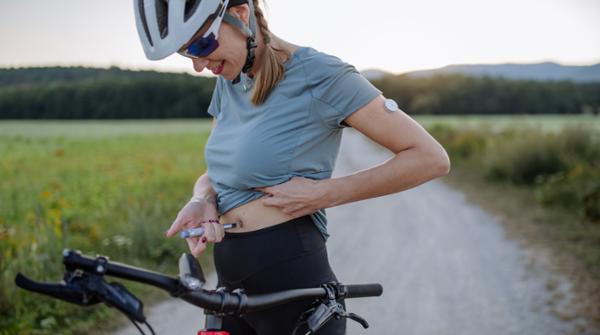
King’s College London is seeking research funding to explore how coachbots might help people with Type 2 diabetes make changes to reduce their risk of renal failure – changes that might involve getting support to become more active.

Keele University is helping us explore the role coachbots might play in helping people with multiple long-term conditions take steps towards improved health and wellbeing, as well as increasing uptake rates for a cardiovascular screening service.

The Faculty of Sports and Exercise Medicine is helping explore the development of an automated, conversational, quality-assured screening and guidance process to help people with health conditions become active safely – knowing that many people need reassurance.

Reflecting on the past
Ten years ago I wrote a couple of articles in HCM magazine – one on health coaching and the other on wellbeing coaching. At the time I said:

“If all health and fitness professionals were trained in proven methods of health coaching, such as motivational interviewing, more members would achieve their health goals, retention figures would climb, and the health of the nation might just improve.”

And, “Without wishing to understate the importance of doctors, psychologists and other mental health professionals in helping people with psychological health problems get well, I believe many of us would benefit from evidence-based wellbeing coaching by a professional. This service is best offered in non-clinical settings such as health clubs and leisure centres.”

So it was fantastic to read in last month’s HCM about all the great work going on around the country as operators make progress with their pivots to active wellbeing.

Where next?
My prediction is that this trend will be accompanied by an increased use of friendly, smart conversational agents such as coachbots. These agents won’t replace conversations with skilled professionals, but will augment and complement them, enabling the delivery of ‘hybrid’ or ‘blended’ health and wellbeing coaching to many more thousands of people, at pace and scale and at a low cost per session.

People will have increased choice when it comes to how they engage, get help navigating the system to more quickly find and access the services they want and need, while experiencing a NICE-compliant intervention designed to increase their readiness to change and engage in more and better self-care.

Operators will be able to generate and act on unique behavioural insight data about what matters to people, their reasons for changing, their plans and any additional help they might need, while pressure on local health systems will fall, if only a little.

At Virtual Health Labs we feel we’re just getting started on our mission of helping a million people a day take steps towards improved health and wellbeing.

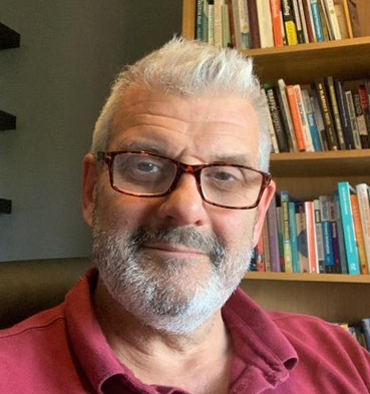
Dr Tim Anstiss is a medical doctor, educator and coach and founder of Virtual Health Labs.

More: www.virtualhealthlabs.com

"Coachbots won’t replace skilled professionals, but will augment them, enabling the delivery of hybrid coaching at pace and scale" – Dr Tim Anstiss

Table 1: The five motivational stages of behaviour change
1. Precontemplation

Not thinking about change

2. Contemplation

Thinking about change but not yet decided. Ambivalent. Mixed Feelings.

3. Preparation

Getting ready to change.

4. Action

Changing the behaviour.

5. Maintenance

Keeping up the new behaviour.

Coachbots have also been developed in Arabic, Slovenian and German / photo: Shutterstock / Bojan Milinkov
Kings College London is seeking funding to explore diabetes interventions, including exercise / photo: Shutterstock / halfpoint
https://www.leisureopportunities.co.uk/images/2024/998127_530274.jpg
Dr Tim Anstiss talks to HCM about the ‘coachbots’ he’s developing to help clubs successfully support behaviour change in members
HCM magazine
Shaping the future of the sector with a clear mission, unified voice and open channels of communication. This is the ambition of UK Active’s new chair
HCM magazine
The fitness industry is mourning the passing of Les Mills, a founding father of fitness, as Kath Hudson reports
HCM magazine
Fuel the debate about issues and opportunities across the industry. We’d love to hear from you. Write to [email protected]
HCM magazine
People on weight loss drugs reduce their activity levels, according to a team at St John’s Hospital Illinois
HCM magazine
Lisa Starr tries the Ammortal Chamber to see whether layering 10 modalities into one experience really delivers more
HCM promotional features
Sponsored
Social fitness the missing link to member engagement, according to a new Myzone report
HCM promotional features
Sponsored
Starpool supports Olympic champion Marcell Jacobs, says Riccardo Turri
HCM promotional features
Sponsored
Greg Bradley looks at the shift towards strength training in gyms and advises on how operators can create the ultimate training environment
HCM promotional features
Sponsored
Find out how your gym can tap into the corporate wellness boom
HCM promotional features
Sponsored
Third Space partnered with IndigoFitness to deliver a bespoke training space for its new club at The Whiteley
HCM promotional features
Sponsored
SnowDome Fitness has added 50 per cent more space with cutting-edge Technogym solutions
HCM promotional features
Sponsored
David Lloyd is stepping up its commitment to women’s health as it continues to explore what fit-for-purpose looks like for the female population
HCM promotional features
Sponsored
EGYM has opened a new HQ in Paternoster Square, London and revealed a range of new launches
HCM promotional features
Latest News

Urban Gym Group has entered the Irish market with the acquisition of Iconic ...

Latest News

Total Fitness has released new research revealing how the expectations and motivations of ...

Latest News
Wattbike has announced a new integration with EGYM, which enables the bikes to contribute to ...
Latest News
Les Mills has launched a reformer Pilates workout. The 45-minute workout blends traditional reformer movements ...
Latest News
The inaugural HCM Invest event has opened applications for pitching slots ahead of its launch ...
Latest News
Girls in the UK are missing out on 280 million hours of sport every year ...
Latest News
According to research which tracked more than 147,000 people for 30 years, 90-120 minutes of ...
Latest News
Everlast Gyms expands its footprint outside of the UK this month with the imminent launch ...
Opinion
promotion
Strength training has moved from the margins to the mainstream.
Opinion: Building smarter strength spaces for today’s operators
Featured supplier news
Featured supplier news: Legends never die: four legends, four philosophies of life
Panatta brought together four of the most influential figures in bodybuilding history on the stage of RiminiWellness 2026: Phil Heath, Lee Haney, Ronnie Coleman and Hany Rambod.
Featured supplier news
Featured supplier news: Introducing a new era of Nautilus Leverage
Strength training has never been more important for member retention, facility differentiation and long-term commercial success.
Company profiles
Company profile: Xplor Fitness & Leisure
Today’s fitness and leisure brands need technology that powers standout fitness experiences and keeps pace ...
Company profiles
Company profile: Gantner
Gantner optimizes and simplifies the organisation of fitness clubs. Using touchless RFID/NFC credentials (member cards, ...
Supplier Showcases
Supplier Showcase - From nightclub to health club
Supplier Showcases
Supplier Showcase - Future-proofing
Catalogue Gallery
Click on a catalogue to view it online
Featured press releases
Alliance Leisure press release: Community-funded refurbishment secures future of SpArC Swimming Pool
A swimming pool built through public subscription more than 50 years ago has reopened following a major refurbishment programme delivered by Alliance Leisure and made possible by a huge community fundraising effort and investment from Shropshire Council.
Featured press releases
MyZone press release: Myzone Go expands operator opportunity with Garmin integration
Myzone has announced a significant expansion of its MoTech (Motivation Technology) platform, as Myzone Go integration with Garmin goes live.
Directory
Industrial washing machines
Miele Company Limited: Industrial washing machines
Spa and beauty equipment
Oakworks Inc: Spa and beauty equipment
Lockers
Crown Sports Lockers: Lockers
Hot tubs
MSpa International Ltd: Hot tubs
Fitness tracking platform
SpiviTech: Fitness tracking platform
Water experiences and hydrotherapy solutions
Aquaform s.r.l.: Water experiences and hydrotherapy solutions
Property & Tenders
Stratford, East London.
Lee Valley Regional Park Authority
Property & Tenders
Y Felinheli, LL56 4QN
Newmark
Property & Tenders
Diary dates
21-24 Sep 2026
The Langham Huntington Pasadena , Pasadena, United States
Diary dates
28-29 Sep 2026
Grand Ballroom, METT Singapore, Singapore
Diary dates
06-08 Oct 2026
Messe Stuttgart, Stuttgart, Germany
Diary dates
22-22 Oct 2026
QEII Conference Centre, London,
Diary dates
29-31 Oct 2026
Impact Exhibition & Convention Center Bangkok,Thailand, Bangkok, Thailand
Diary dates
29-31 Oct 2026
IMPACT Exhibition Center, Bangkok, Thailand , Bangkok, Thailand
Diary dates
14-15 Nov 2026
The Kromhouthal , Amsterdam, Netherlands
Diary dates
26-29 Oct 2027
Koelnmesse Exhibition Centre, Cologne, Germany
Diary dates

features

Tech: Conversations about the future

Dr Tim Anstiss is developing coachbots that are supporting positive behaviour change for operators such as Life Leisure and KA Leisure

Published in Health Club Management 2024 issue 6
Coachbots are chatbots that are programmed to support behaviour change / photo: Shutterstock / ImageFlow
Each coachbot focuses on supporting a positive behaviour – for example, becoming more active or stopping smoking

An article in last month’s edition of HCM looked at research which found the three top AI chatbots – Google Bard, ChatGPT and Llama 2 – were unable to determine people’s ‘readiness to change’ from the language they used during chatbot conversations.

‘Readiness to change’ is described in the five motivational stages of behaviour change – see Table 1.

The research also suggested that even if a chatbot is able to determine a person’s ‘stage of change’, it mainly provides them with information to help them change – even though a recent review paper indicates that information provision alone is one of the least effective ways of supporting a person in changing their behaviour.

In addition, when chatbots rely on data gathered from the internet, the quality of the answers they return can be questionable. Sometimes they even make up scientific references that don’t exist.

The good news is that all this may not matter very much, as generative AI models are not the only ways to develop chatbots.

Background insight
I’ve spent much of my career as a doctor working in the physical activity and health field, including helping the UK’s Department of Health develop the ‘Let’s Get Moving’ National Physical Activity Pathway.

I’ve trained thousands of health and leisure professionals in motivational interviewing and brief interventions for physical activity, most recently helping the Faculty of Sports and Exercise Medicine with its Moving Medicine Initiative – specifically its Active Conversations course (www.hcmmag.com/activeconversations).

I’ve become curious about the role chatbots can play in helping people become more active – including people with health problems.

This interest started while I was delivering staff training in health coaching for an initiative called ‘Derby, a city on the move’, a Sport England-funded project in the East Midlands.

The project lead asked if I could create a chatbot to help people become more active. We developed one with a coaching style and called it a coachbot. It was added to the project’s website and since then, interest in this technology has taken off.

The growth of coachbots
Over the last few years, we’ve developed phone-, tablet- and PC-based coachbots – chatbots that coach, but don’t instruct – for a range of clients, including NHS England, The London Borough of Southwark and Respiratory Innovation Wales.

We’ve also worked with a social prescribing programme, a public health institute, some NHS Trusts, health charities and talking therapy providers.

Each coachbot focuses on supporting different positive behaviours – for example, becoming more active, stopping smoking, drinking less, taking up health screening, losing weight, improving mental health and wellbeing and even being better prepared for an upcoming health-related appointment.

We’ve developed coachbots in Arabic, German and Slovenian, as well as English – and even developed one as the interface for a tiny robot!

To date our coachbots have delivered over 10,000 chats. Here are some of the things the users of these have told us:

• “It was clear, concise and easy to use”

• “I found it very fast and responsive”

• “It gives you the space to think and not be judged”

• “I found it very helpful and supportive”

• “It made me think of ways to handle situations”

• “It’s good to get instant help”

• “It makes you think about things in a structured way”

• “This feels like a friendly conversation”

The results
One independent study of our coachbots in a busy talking therapies service found many clients developed a positive relationship with the coachbot, saying it helped them to think more clearly, helped reduce their anxiety and provided them with ideas to help themselves. Some particularly appreciated the anonymity the coachbot provided.

Working with Life Leisure
We’re currently working with John Oxley and LifeLeisure in Stockport, developing a suite of bespoke coachbots aimed at increasing uptake, engagement and outcomes from LifeLeisure’s Exercise on Referral programme, improve the onboarding process for new members and supporting existing members in getting the most from their membership – including helping them design and implement a personalised wellbeing plan that goes beyond physical activity.

We’ll also be assessing the impact of these coachbots on membership retention.

Both KA Leisure in North Ayrshire and Leisure Focus are also exploring the role co-designed coachbots can play in engaging local communities, guiding people towards self-directed healthy change and integrating with local health systems, all while pivoting to wellbeing.

Recognising that a coachbot can help people become better prepared for an appointment and more ready to engage in a programme, we’ve also started working with Stuart Stokes at ReferAll to explore how the solution can best be integrated into its self-referral platform.

Further research
King’s College London is seeking research funding to explore how coachbots might help people with Type 2 diabetes make changes to reduce their risk of renal failure – changes that might involve getting support to become more active.

Keele University is helping us explore the role coachbots might play in helping people with multiple long-term conditions take steps towards improved health and wellbeing, as well as increasing uptake rates for a cardiovascular screening service.

The Faculty of Sports and Exercise Medicine is helping explore the development of an automated, conversational, quality-assured screening and guidance process to help people with health conditions become active safely – knowing that many people need reassurance.

Reflecting on the past
Ten years ago I wrote a couple of articles in HCM magazine – one on health coaching and the other on wellbeing coaching. At the time I said:

“If all health and fitness professionals were trained in proven methods of health coaching, such as motivational interviewing, more members would achieve their health goals, retention figures would climb, and the health of the nation might just improve.”

And, “Without wishing to understate the importance of doctors, psychologists and other mental health professionals in helping people with psychological health problems get well, I believe many of us would benefit from evidence-based wellbeing coaching by a professional. This service is best offered in non-clinical settings such as health clubs and leisure centres.”

So it was fantastic to read in last month’s HCM about all the great work going on around the country as operators make progress with their pivots to active wellbeing.

Where next?
My prediction is that this trend will be accompanied by an increased use of friendly, smart conversational agents such as coachbots. These agents won’t replace conversations with skilled professionals, but will augment and complement them, enabling the delivery of ‘hybrid’ or ‘blended’ health and wellbeing coaching to many more thousands of people, at pace and scale and at a low cost per session.

People will have increased choice when it comes to how they engage, get help navigating the system to more quickly find and access the services they want and need, while experiencing a NICE-compliant intervention designed to increase their readiness to change and engage in more and better self-care.

Operators will be able to generate and act on unique behavioural insight data about what matters to people, their reasons for changing, their plans and any additional help they might need, while pressure on local health systems will fall, if only a little.

At Virtual Health Labs we feel we’re just getting started on our mission of helping a million people a day take steps towards improved health and wellbeing.

Dr Tim Anstiss is a medical doctor, educator and coach and founder of Virtual Health Labs.
More: www.virtualhealthlabs.com

"Coachbots won’t replace skilled professionals, but will augment them, enabling the delivery of hybrid coaching at pace and scale" – Dr Tim Anstiss

Table 1: The five motivational stages of behaviour change
1. Precontemplation

Not thinking about change

2. Contemplation

Thinking about change but not yet decided. Ambivalent. Mixed Feelings.

3. Preparation

Getting ready to change.

4. Action

Changing the behaviour.

5. Maintenance

Keeping up the new behaviour.

Coachbots have also been developed in Arabic, Slovenian and German / photo: Shutterstock / Bojan Milinkov
Kings College London is seeking funding to explore diabetes interventions, including exercise / photo: Shutterstock / halfpoint
https://www.leisureopportunities.co.uk/images/2024/998127_530274.jpg
Dr Tim Anstiss talks to HCM about the ‘coachbots’ he’s developing to help clubs successfully support behaviour change in members
Latest News

Urban Gym Group has entered the Irish market with the acquisition of Iconic ...

Latest News

Total Fitness has released new research revealing how the expectations and motivations of ...
Latest News
Wattbike has announced a new integration with EGYM, which enables the bikes to contribute to ...
Latest News
Les Mills has launched a reformer Pilates workout. The 45-minute workout blends traditional reformer movements ...
Latest News
The inaugural HCM Invest event has opened applications for pitching slots ahead of its launch ...
Latest News
Girls in the UK are missing out on 280 million hours of sport every year ...
Latest News
According to research which tracked more than 147,000 people for 30 years, 90-120 minutes of ...
Latest News
Everlast Gyms expands its footprint outside of the UK this month with the imminent launch ...
Latest News
The UK's four Chief Medical Officers have published a refreshed edition of  Physical activity guidelines: ...
Latest News
Places Leisure has exchanged contracts to build and operate a flagship £60m water and wellness ...
Latest News
The Republic of Ireland will become the latest market in PureGym’s expanding international portfolio, with ...
Opinion
promotion
Strength training has moved from the margins to the mainstream.
Opinion: Building smarter strength spaces for today’s operators
Featured supplier news
Featured supplier news: Legends never die: four legends, four philosophies of life
Panatta brought together four of the most influential figures in bodybuilding history on the stage of RiminiWellness 2026: Phil Heath, Lee Haney, Ronnie Coleman and Hany Rambod.
Featured supplier news
Featured supplier news: Introducing a new era of Nautilus Leverage
Strength training has never been more important for member retention, facility differentiation and long-term commercial success.
Company profiles
Company profile: Xplor Fitness & Leisure
Today’s fitness and leisure brands need technology that powers standout fitness experiences and keeps pace ...
Company profiles
Company profile: Gantner
Gantner optimizes and simplifies the organisation of fitness clubs. Using touchless RFID/NFC credentials (member cards, ...
Supplier Showcases
Supplier Showcase - From nightclub to health club
Supplier Showcases
Supplier Showcase - Future-proofing
Catalogue Gallery
Click on a catalogue to view it online
Featured press releases
Alliance Leisure press release: Community-funded refurbishment secures future of SpArC Swimming Pool
A swimming pool built through public subscription more than 50 years ago has reopened following a major refurbishment programme delivered by Alliance Leisure and made possible by a huge community fundraising effort and investment from Shropshire Council.
Featured press releases
MyZone press release: Myzone Go expands operator opportunity with Garmin integration
Myzone has announced a significant expansion of its MoTech (Motivation Technology) platform, as Myzone Go integration with Garmin goes live.
Directory
Industrial washing machines
Miele Company Limited: Industrial washing machines
Spa and beauty equipment
Oakworks Inc: Spa and beauty equipment
Lockers
Crown Sports Lockers: Lockers
Hot tubs
MSpa International Ltd: Hot tubs
Fitness tracking platform
SpiviTech: Fitness tracking platform
Water experiences and hydrotherapy solutions
Aquaform s.r.l.: Water experiences and hydrotherapy solutions
Property & Tenders
Stratford, East London.
Lee Valley Regional Park Authority
Property & Tenders
Y Felinheli, LL56 4QN
Newmark
Property & Tenders
Diary dates
21-24 Sep 2026
The Langham Huntington Pasadena , Pasadena, United States
Diary dates
28-29 Sep 2026
Grand Ballroom, METT Singapore, Singapore
Diary dates
06-08 Oct 2026
Messe Stuttgart, Stuttgart, Germany
Diary dates
22-22 Oct 2026
QEII Conference Centre, London,
Diary dates
29-31 Oct 2026
Impact Exhibition & Convention Center Bangkok,Thailand, Bangkok, Thailand
Diary dates
29-31 Oct 2026
IMPACT Exhibition Center, Bangkok, Thailand , Bangkok, Thailand
Diary dates
14-15 Nov 2026
The Kromhouthal , Amsterdam, Netherlands
Diary dates
26-29 Oct 2027
Koelnmesse Exhibition Centre, Cologne, Germany
Diary dates
Search news, features & products:
Find a supplier:
Partner sites