
























GET HCM
magazine
Sign up for the FREE digital edition of HCM magazine and also get the HCM ezine and breaking news email alerts.
Not right now, thanksclose this window I've already subscribed!
We Work Well Events
We Work Well Events
We Work Well Events
Follow Health Club Management on Twitter Like Health Club Management on Facebook Join the discussion with Health Club Management on LinkedIn
FITNESS, HEALTH, WELLNESS

features

Talking point - property: Site insight

How is the fitness sector is faring when it comes to securing good locations for gyms and health clubs? Niamh Madigan finds out

By Niamh Madigan | Published in Health Club Management 2016 issue 4

here’s good news for fitness operators looking to grow: the property market for gyms is expanding, with landlords and developers seeing fitness as a relatively safe bet. New developments and the re-emergence of the high street are also offering more opportunities to gym groups searching for sites.

But in the UK at least, a major challenge remains: Under England’s planning use classes framework – which hasn’t been updated since 1987 – gyms and leisure centres can only occupy buildings designated under the Class D2 category, whereas shops and retail outlets sit in the far more abundant Class A1 category of building. Many big name operators have told Health Club Management in recent months that obtaining suitable properties is one of the biggest barriers to expansion.

Nevertheless, with landlords coming on-side, there are now more locations to choose from than previously. So how do operators pick the right one?

On the one hand, people’s habits are becoming more local; big supermarkets have already recognised this in their shift towards smaller, local sites. Tim Baker, chair of Touchstone Partners, says: “The places where people are going – and where they’re therefore wanting to use health clubs – are becoming more local. Operators need to acknowledge this.”

But on the other hand, increasing competition for prime floor space is beginning to push some health club operations into thinking outside the box. Retailers with a large footprint have been looking to downsize or share space, thus creating new opportunities for some gym groups to launch in-store health clubs – in the UK, for example, Xercise4Less has partnered with Tesco to do exactly this. “A clever operator should be talking to developers about ways it can complement other businesses in retail parks,” Baker adds.

So what are the changes, challenges and opportunities in the fitness property market? We ask our panel of operators for their thoughts.

Sandy Macaskill,

Co-owner,

Barry’s Bootcamp London

Sandy Macaskill
Sandy Macaskill

Fitness studios used to be a hard sell to landlords, as they viewed us more like leisure centres than vibrant retail hubs that drive footfall and add value to buildings. The success of our business and others like it has helped change this.

Boutique studios – with their retail offering, juice bars and the fact they sell spaces in classes rather than relying on a membership model – have more in common with hairdressers and other A1-classified businesses than they do with the leisure centres the Class D2 category was originally created for.

However, we still face the major hurdle of planning committees frequently blocking applications to convert A1 spaces into fitness studios. It’s as if the 2012 Olympic legacy didn’t happen – councils are telling everyone to be more active, but then they don’t want to see fitness studios on the high street. They’d rather see a furniture shop or mobile phone shop.

I’ve asked ukactive to raise the planning issue on behalf of the industry. We’ve won the landlords over in terms of the benefits that fitness businesses can offer. Now it’s time for the government to make good on its calls for us all to do more exercise, by supporting the businesses that are trying to make this happen.

"Councils are telling everyone to be more active, but they don’t want to see fitness studios on the high street – they’d rather see a mobile phone shop" - Sandy Macaskill

Brian Morris,

Co-founder & CEO,

Aspria

Brian Morris
Brian Morris

There have been a number of changes in the fitness sector property market over recent years.

One trend has been towards sale and leaseback deals: we’ve seen it happen in hotels and it’s now hit the leisure sector. It tends to occur in operators with larger format or standalone facilities – David Lloyd Leisure is one example. Either you’re an operator or you’re a property owner/investor, but you aren’t both – real estate ownership has become separated from the business operation itself. This OpCo/PropCo split frees up capital and allows the operating company to be much more nimble.

We’re also seeing a lot of consolidation in the market. That’s key, because the more clubs you have in one group, the stronger the covenant – and that not only makes you a more interesting prospect for landlords, but also for investors. In turn, that begins to put leisure on the same footing as retail, offices and so on – the asset class of leisure becomes more recognised, which boosts property opportunities.

Meanwhile, with a growth in the number of operators and facilities, the size of properties has changed. There’s been a resurgence of the smaller operating format across Europe: 10,000–25,000sq ft boxes with an almost retail-style model. Urban centres are currently readjusting rental prices accordingly. However, retail hasn’t had that much of a resurgence in Europe, so isn’t a major threat in terms of securing new sites in the markets where we operate. People like spending in the UK, but less so on the continent.

Real estate is an expensive component of any operation, so it can make sense to share the footfall with a compatible partner. The idea of putting retail and leisure in one location may work, for example. However, I would still assert that out-of-town superstores aren’t sufficiently accessible locations for members wanting to visit their club several times a week.

In terms of our own expansion, we’re looking at other countries in Europe to broaden our network. The difficulties are around planning departments, plus an ownership structure that has yet to recognise leisure as a bona fide sector in itself. The size of property we require is also difficult to find: our clubs range from 100,000sq ft to 187,000sq ft.

On a more positive note, in Germany – where we have four clubs – investors have a more conservative, long-term perspective when it comes to real estate. They have lower yield expectations, which plays out in our favour in terms of securing good sites.

"Real estate ownership has become separated from the operation itself, allowing the operating company to be much more nimble" - Brian Morris

Aspria has four clubs in Germany, where investors have lower yield expectations

Jonathan Spaven,

Property director,

The Gym Group
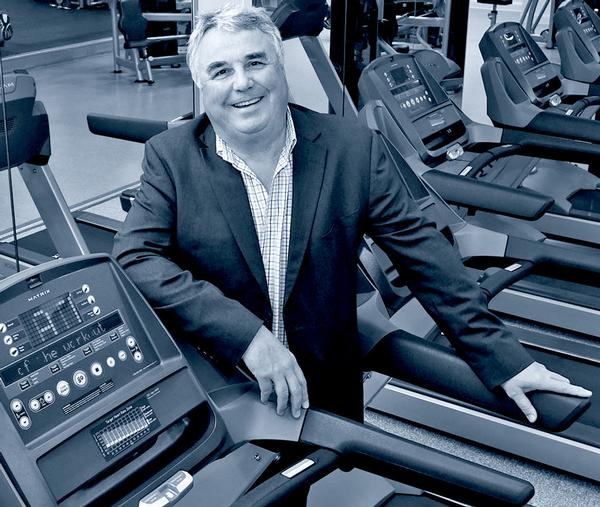
Jonathan Spaven
Jonathan Spaven

The property market fluctuates, with supply and demand vying to outdo each other. The glut of low-hanging fruit post-Lehman and the subprime mortgage crisis has been snapped up over the last three years – yet different opportunities now come forward.

Development is back, particularly in London. Large residential and mixed-use schemes are coming through the planning stage and are starting to get off the ground. These will provide opportunity for a wide variety of leisure occupiers.

The re-consolidation of large space users in the supermarket and DIY sectors has also brought new vacant space to the market. This will continue through 2016 and particularly suits the larger space leisure operators; the new trend of trampoline parks will benefit and proliferate, with a peak still to come.

Yet prime space will remain highly sought after. As some landlords begin to seek primary prices for tertiary space, there will be those who pay the price now and run the risk of literally paying the price later. It will be difficult for smaller chains and new entrants, who will find that the best sites will go to the best covenants.

"Development is back, particularly in London. Large residential and mixed-use schemes will provide opportunity for a variety of leisure occupiers" - Jonathan Spaven

Stephen Rought-Whitta,

Head of property,

Anytime Fitness

Stephen Rought-Whitta

Anytime Fitness has 73 clubs in the UK, while locations in Europe include Spain, the Netherlands and Belgium. Looking back to the bad days of the recession, it was the mid-market that really suffered in fitness. The top end was unaffected and dozens of discount gyms emerged. That said, there’s still buoyancy in the mid-market and we see ourselves as the only serious player in it.

We face two big challenges when it comes to finding property. One is competition for sites from other fitness groups. The other is our own self-imposed restrictions in terms of finding sites that offer convenience to gym-goers – our model is all about convenience, both in terms of location and 24/7 access. This narrows down the places we can go.

The re-emergence of the residential and office market is causing us a lot of problems. In the past, we were able to take first floor space over shops, but this space is now more valuable to landlords and developers as residential or office space. So we now need to look for different types of floor space.

We would marry up with supermarkets. We keep our eyes open for businesses that have too much floor space and who may be looking to downsize. But beyond that, there are no quick wins.

The number of gyms opening in Europe has increased dramatically, but overall revenue figures have only risen moderately. This suggests it’s the discounters that are doing all the new club openings. That’s who we’re competing against in Europe, but there’s room for a lot of growth too – particularly Eastern Europe has big potential.

Our ultimate target is to have 700 franchises in the UK by 2025. I anticipate that the country will be getting close to saturation point in terms of the number of gym groups operating in that market by then.

"In the past, we were able to take first floor space over shops, but this space is now more valuable to landlords and developers as residential or office space" - Stephen Rought-Whitta

Paul Lorimer-Wing,

Co-founder & CEO,

easyGym

Paul Lorimer-Wing
Paul Lorimer-Wing

We see ourselves as a convenience model: we’re located in highly pedestrianised footfall areas close to people’s homes or work. So there are lots of opportunities for low-cost operators when it comes to finding properties in the UK and Europe.

Historically, fitness hasn’t been the most attractive in terms of property investment, because operators don’t pay high levels of rent. However, it fills big spaces that are sometimes difficult to lease. I think it’s currently a good market for fitness operators to pick up properties – but things can change. There will always be competition, whether within low-cost or against occupiers from other industries.

In terms of our own expansion, easyGym would consider a partnership with a retailer to launch an in-store gym, but it would come down to convenience, prominence and if the store were well attended by the local community.

We’re also looking to expand into Europe. Following a period of over-development, it’s possible to obtain property in Spain at good terms. This has been on our radar for a while and will be our first step into Europe. I appreciate that rents can be expensive in other markets, but I still believe there are opportunities, certainly in Western Europe.

For smaller low-cost operators, as well as new start-ups such as the niche/boutique operators, it’s tough going up against the bigger brands that are able to command much cheaper property deals. Looking specifically at the low-cost sector, I believe there will eventually be four or five players as consolidation is inevitable, but the market is a little way off saturation.

Fitness clubs can fill big spaces that landlords find hard to lease

Simon Tutt,

CCO,

Xercise4Less

Simon Tutt
Simon Tutt

We believe location isn’t actually as important as the overall quality of a product offered to the member. Health club operators who offer what customers want – whether that’s the best value, a niche product, a good environment and equipment – are typically performing well.

Retail rents are probably increasing, but are a long way behind what they were at the peak of 2006/07. The rents are symptoms of supply and demand and risk management. With growth in consumer spending, the risks associated with most tenants have fallen, and this is offsetting the yield required by landlords.

I think smaller property developments are always likely to favour retail. That said, budget health club operators are now driving higher footfall levels and are more able to compete for space.

Our biggest challenge is undoubtedly managing change-of-use planning applications, which affect approximately half of the sites we review.

Meanwhile, most retailers operating on very large footprints of 80,000sq ft have been looking at options to downsize over the last 24 months. They want to do this in a way that will drive rental income and additional footfall. We formed a partnership with Tesco to launch our first in-store gym in 2013 and we will open similar sites in the near future.

Finally, I would say the market is a long way off saturation: Mintel data suggests that up to 80 per cent of adults would consider using a health club, but only 14 per cent are currently members. There’s still plenty of room for expansion.

However, the management teams of fitness clubs will know the impact that expanding too quickly can have on a business. This is particularly relevant to rent levels and the level of acceptable operational gearing. Nevertheless, a good business with a strong model and supportive stakeholders can still roll out quickly and profitably.


Sign up here to get HCM's weekly ezine and every issue of HCM magazine free on digital.
The club and other donors are transforming the lives of 40,000 people across nine different villages
The project in Ethiopia is providing fresh, and readily accessible, drinking water for the villagers
Close proximity to water means time reclaimed in activities such as farming
https://www.leisureopportunities.co.uk/images/HCM2016_4talking.jpg
We round up the hot topics in the area of fitness real estate
Sandy Macaskill, Co-owner, Barry’s Bootcamp London Brian Morris, Co-founder & CEO, Aspria Jonathan Spaven, Property director, The Gym Group Stephen Rought-Whitta, Head of property, Anytime Fitness Paul Lorimer-Wing, Co-founder & CEO, easyGym Simon Tutt, CCO, Xercise4Less Niamh Madigan,Property, location, Sandy Macaskill, Barry’s Bootcamp, Brian Morris, Aspria, PropCo/OpCo, Jonathan Spaven, Gym Group, Paul Lorimer-Wing, easyGym, Stephen Rought-Whitta, Anytime Fitness, Simon Tutt, Xercise4Less
HCM magazine
If the health service is to survive, we must recognise that it is a disease service – and that wellbeing rests with us, says the activity advocate and healthy ageing champion. He talks to Kate Cracknell
HCM magazine
For every member with a tripod and a big following, there are others irritated at the way equipment is being hogged or wary they’ll be in the background on someone’s Insta feed. Do influencers offer valuable, free marketing or are they just a nuisance? Kath Hudson finds out how operators are responding
HCM magazine
I experienced a blissful feeling of joy I hadn’t felt since I was a kid
HCM magazine
Small improvements to sleep, diet and physical activity have major benefits for the heart, according to new research from the University of Sydney
HCM magazine
Collaborations with the medical profession and greater aspirations around wellbeing are creating a need for more experts in our sector. It’s time to reboot our thinking around the workforce
HCM promotional features
Sponsored
Third Space partnered with IndigoFitness to deliver a bespoke training space for its new club at The Whiteley
HCM promotional features
Sponsored
David Lloyd is stepping up its commitment to women’s health as it continues to explore what fit-for-purpose looks like for the female population
HCM promotional features
Sponsored
Greg Bradley looks at the shift towards strength training in gyms and advises on how operators can create the ultimate training environment
HCM promotional features
Sponsored
Find out how your gym can tap into the corporate wellness boom
HCM promotional features
Sponsored
Starpool supports Olympic champion Marcell Jacobs, says Riccardo Turri
HCM promotional features
Sponsored
SnowDome Fitness has added 50 per cent more space with cutting-edge Technogym solutions
HCM promotional features
Sponsored
EGYM has opened a new HQ in Paternoster Square, London and revealed a range of new launches
HCM promotional features
Sponsored
The industry is embracing consumer-facing tech. Now it’s time to streamline back-of-house systems with Orbit4, says Daniel Jones
HCM promotional features
Sponsored
Active IQ is calling for greater accountability in online fitness advice with the launch of a new trustmark
HCM promotional features
Latest News
Crunch Fitness has announced the launch of Crunch Reform Pilates – its own reformer concept ...
Latest News
The 20th State of the Industry Report reveals a resilient, expanding and competitive sector, the ...
Latest News
Purpose Brands has announced its entry into the Italian market, having sold the franchise rights ...
Latest News
Fitness First UK is integrating red light therapy into its yoga and Pilates classes through ...
Latest News
Nuffield Health has told HCM that it takes its responsibilities towards its colleagues seriously and ...
Latest News
Technogym has announced the launch of the Run X World Treadmill Championship, the first world ...
Latest News
Shocked by the UK loneliness statistics, charitable trust Mytime Active has been doubling down on ...
Latest News
Portugal’s leading operator, SC Fitness, is celebrating a milestone by reaching 100 gyms.  The company ...
Opinion
promotion
Strength training has moved from the margins to the mainstream.
Opinion: Building smarter strength spaces for today’s operators
Featured supplier news
Featured supplier news: W3Fit EMEA celebrates its fifth anniversary
Celebrating its milestone 5th anniversary, W3Fit EMEA returns in 2026 with an unmissable gathering of the Health & Fitness industry’s most influential leaders.
Featured supplier news
Featured supplier news: Elevate 2026 to mark 10-year anniversary with biggest ever waterfront drinks reception
Elevate is set to celebrate its 10th anniversary in style this June, with organisers confirming the event’s largest-ever drinks reception as registrations continue to run more than 10% ahead of last year.
Company profiles
Company profile: Wattbike
Wattbike’s mission is to make Wattbike the ultimate training partner for improving health and performance. ...
Company profiles
Company profile: Pure Energy Music
Pure Energy Music is a specialist music service built specifically for the fitness industry. Our ...
Supplier Showcases
Supplier Showcase - From nightclub to health club
Supplier Showcases
Supplier Showcase - Future-proofing
Catalogue Gallery
Click on a catalogue to view it online
Featured press releases
MyZone press release: Myzone global data reveals the building blocks of consistent exercise habits
A major new report from Myzone, the global leader in motivation technology for fitness, reveals how motivation becomes habit and how that transformation drives member retention and long-term business growth.
Featured press releases
GLL press release: GLL highlights the importance of drowning prevention to kids nationally as summer holidays near
School assemblies and water safety messages as part of swim lessons.   The UK's largest public pools and swim school operator, GLL, is providing timely activities during Drowning Prevention Week (13-20 June 2026) to raise awareness of water safety ahead of kids breaking up for the summer holidays.
Directory
Spa and beauty equipment
Living Earth Crafts: Spa and beauty equipment
Industrial washing machines
Miele Company Limited: Industrial washing machines
Fitness tracking platform
SpiviTech: Fitness tracking platform
Hot tubs
MSpa International Ltd: Hot tubs
Lockers
Crown Sports Lockers: Lockers
Water experiences and hydrotherapy solutions
Aquaform s.r.l.: Water experiences and hydrotherapy solutions
Property & Tenders
Stratford, East London.
Lee Valley Regional Park Authority
Property & Tenders
Y Felinheli, LL56 4QN
Newmark
Property & Tenders
Diary dates
13-13 Jun 2026
Worldwide, Various,
Diary dates
21-24 Sep 2026
The Langham Huntington Pasadena , Pasadena, United States
Diary dates
06-08 Oct 2026
Messe Stuttgart, Stuttgart, Germany
Diary dates
22-22 Oct 2026
QEII Conference Centre, London,
Diary dates
26-29 Oct 2027
Koelnmesse Exhibition Centre, Cologne, Germany
Diary dates

features

Talking point - property: Site insight

How is the fitness sector is faring when it comes to securing good locations for gyms and health clubs? Niamh Madigan finds out

By Niamh Madigan | Published in Health Club Management 2016 issue 4

here’s good news for fitness operators looking to grow: the property market for gyms is expanding, with landlords and developers seeing fitness as a relatively safe bet. New developments and the re-emergence of the high street are also offering more opportunities to gym groups searching for sites.

But in the UK at least, a major challenge remains: Under England’s planning use classes framework – which hasn’t been updated since 1987 – gyms and leisure centres can only occupy buildings designated under the Class D2 category, whereas shops and retail outlets sit in the far more abundant Class A1 category of building. Many big name operators have told Health Club Management in recent months that obtaining suitable properties is one of the biggest barriers to expansion.

Nevertheless, with landlords coming on-side, there are now more locations to choose from than previously. So how do operators pick the right one?

On the one hand, people’s habits are becoming more local; big supermarkets have already recognised this in their shift towards smaller, local sites. Tim Baker, chair of Touchstone Partners, says: “The places where people are going – and where they’re therefore wanting to use health clubs – are becoming more local. Operators need to acknowledge this.”

But on the other hand, increasing competition for prime floor space is beginning to push some health club operations into thinking outside the box. Retailers with a large footprint have been looking to downsize or share space, thus creating new opportunities for some gym groups to launch in-store health clubs – in the UK, for example, Xercise4Less has partnered with Tesco to do exactly this. “A clever operator should be talking to developers about ways it can complement other businesses in retail parks,” Baker adds.

So what are the changes, challenges and opportunities in the fitness property market? We ask our panel of operators for their thoughts.

Sandy Macaskill,

Co-owner,

Barry’s Bootcamp London

Sandy Macaskill
Sandy Macaskill

Fitness studios used to be a hard sell to landlords, as they viewed us more like leisure centres than vibrant retail hubs that drive footfall and add value to buildings. The success of our business and others like it has helped change this.

Boutique studios – with their retail offering, juice bars and the fact they sell spaces in classes rather than relying on a membership model – have more in common with hairdressers and other A1-classified businesses than they do with the leisure centres the Class D2 category was originally created for.

However, we still face the major hurdle of planning committees frequently blocking applications to convert A1 spaces into fitness studios. It’s as if the 2012 Olympic legacy didn’t happen – councils are telling everyone to be more active, but then they don’t want to see fitness studios on the high street. They’d rather see a furniture shop or mobile phone shop.

I’ve asked ukactive to raise the planning issue on behalf of the industry. We’ve won the landlords over in terms of the benefits that fitness businesses can offer. Now it’s time for the government to make good on its calls for us all to do more exercise, by supporting the businesses that are trying to make this happen.

"Councils are telling everyone to be more active, but they don’t want to see fitness studios on the high street – they’d rather see a mobile phone shop" - Sandy Macaskill

Brian Morris,

Co-founder & CEO,

Aspria

Brian Morris
Brian Morris

There have been a number of changes in the fitness sector property market over recent years.

One trend has been towards sale and leaseback deals: we’ve seen it happen in hotels and it’s now hit the leisure sector. It tends to occur in operators with larger format or standalone facilities – David Lloyd Leisure is one example. Either you’re an operator or you’re a property owner/investor, but you aren’t both – real estate ownership has become separated from the business operation itself. This OpCo/PropCo split frees up capital and allows the operating company to be much more nimble.

We’re also seeing a lot of consolidation in the market. That’s key, because the more clubs you have in one group, the stronger the covenant – and that not only makes you a more interesting prospect for landlords, but also for investors. In turn, that begins to put leisure on the same footing as retail, offices and so on – the asset class of leisure becomes more recognised, which boosts property opportunities.

Meanwhile, with a growth in the number of operators and facilities, the size of properties has changed. There’s been a resurgence of the smaller operating format across Europe: 10,000–25,000sq ft boxes with an almost retail-style model. Urban centres are currently readjusting rental prices accordingly. However, retail hasn’t had that much of a resurgence in Europe, so isn’t a major threat in terms of securing new sites in the markets where we operate. People like spending in the UK, but less so on the continent.

Real estate is an expensive component of any operation, so it can make sense to share the footfall with a compatible partner. The idea of putting retail and leisure in one location may work, for example. However, I would still assert that out-of-town superstores aren’t sufficiently accessible locations for members wanting to visit their club several times a week.

In terms of our own expansion, we’re looking at other countries in Europe to broaden our network. The difficulties are around planning departments, plus an ownership structure that has yet to recognise leisure as a bona fide sector in itself. The size of property we require is also difficult to find: our clubs range from 100,000sq ft to 187,000sq ft.

On a more positive note, in Germany – where we have four clubs – investors have a more conservative, long-term perspective when it comes to real estate. They have lower yield expectations, which plays out in our favour in terms of securing good sites.

"Real estate ownership has become separated from the operation itself, allowing the operating company to be much more nimble" - Brian Morris

Aspria has four clubs in Germany, where investors have lower yield expectations

Jonathan Spaven,

Property director,

The Gym Group

Jonathan Spaven
Jonathan Spaven

The property market fluctuates, with supply and demand vying to outdo each other. The glut of low-hanging fruit post-Lehman and the subprime mortgage crisis has been snapped up over the last three years – yet different opportunities now come forward.

Development is back, particularly in London. Large residential and mixed-use schemes are coming through the planning stage and are starting to get off the ground. These will provide opportunity for a wide variety of leisure occupiers.

The re-consolidation of large space users in the supermarket and DIY sectors has also brought new vacant space to the market. This will continue through 2016 and particularly suits the larger space leisure operators; the new trend of trampoline parks will benefit and proliferate, with a peak still to come.

Yet prime space will remain highly sought after. As some landlords begin to seek primary prices for tertiary space, there will be those who pay the price now and run the risk of literally paying the price later. It will be difficult for smaller chains and new entrants, who will find that the best sites will go to the best covenants.

"Development is back, particularly in London. Large residential and mixed-use schemes will provide opportunity for a variety of leisure occupiers" - Jonathan Spaven

Stephen Rought-Whitta,

Head of property,

Anytime Fitness

Stephen Rought-Whitta

Anytime Fitness has 73 clubs in the UK, while locations in Europe include Spain, the Netherlands and Belgium. Looking back to the bad days of the recession, it was the mid-market that really suffered in fitness. The top end was unaffected and dozens of discount gyms emerged. That said, there’s still buoyancy in the mid-market and we see ourselves as the only serious player in it.

We face two big challenges when it comes to finding property. One is competition for sites from other fitness groups. The other is our own self-imposed restrictions in terms of finding sites that offer convenience to gym-goers – our model is all about convenience, both in terms of location and 24/7 access. This narrows down the places we can go.

The re-emergence of the residential and office market is causing us a lot of problems. In the past, we were able to take first floor space over shops, but this space is now more valuable to landlords and developers as residential or office space. So we now need to look for different types of floor space.

We would marry up with supermarkets. We keep our eyes open for businesses that have too much floor space and who may be looking to downsize. But beyond that, there are no quick wins.

The number of gyms opening in Europe has increased dramatically, but overall revenue figures have only risen moderately. This suggests it’s the discounters that are doing all the new club openings. That’s who we’re competing against in Europe, but there’s room for a lot of growth too – particularly Eastern Europe has big potential.

Our ultimate target is to have 700 franchises in the UK by 2025. I anticipate that the country will be getting close to saturation point in terms of the number of gym groups operating in that market by then.

"In the past, we were able to take first floor space over shops, but this space is now more valuable to landlords and developers as residential or office space" - Stephen Rought-Whitta

Paul Lorimer-Wing,

Co-founder & CEO,

easyGym

Paul Lorimer-Wing
Paul Lorimer-Wing

We see ourselves as a convenience model: we’re located in highly pedestrianised footfall areas close to people’s homes or work. So there are lots of opportunities for low-cost operators when it comes to finding properties in the UK and Europe.

Historically, fitness hasn’t been the most attractive in terms of property investment, because operators don’t pay high levels of rent. However, it fills big spaces that are sometimes difficult to lease. I think it’s currently a good market for fitness operators to pick up properties – but things can change. There will always be competition, whether within low-cost or against occupiers from other industries.

In terms of our own expansion, easyGym would consider a partnership with a retailer to launch an in-store gym, but it would come down to convenience, prominence and if the store were well attended by the local community.

We’re also looking to expand into Europe. Following a period of over-development, it’s possible to obtain property in Spain at good terms. This has been on our radar for a while and will be our first step into Europe. I appreciate that rents can be expensive in other markets, but I still believe there are opportunities, certainly in Western Europe.

For smaller low-cost operators, as well as new start-ups such as the niche/boutique operators, it’s tough going up against the bigger brands that are able to command much cheaper property deals. Looking specifically at the low-cost sector, I believe there will eventually be four or five players as consolidation is inevitable, but the market is a little way off saturation.

Fitness clubs can fill big spaces that landlords find hard to lease

Simon Tutt,

CCO,

Xercise4Less

Simon Tutt
Simon Tutt

We believe location isn’t actually as important as the overall quality of a product offered to the member. Health club operators who offer what customers want – whether that’s the best value, a niche product, a good environment and equipment – are typically performing well.

Retail rents are probably increasing, but are a long way behind what they were at the peak of 2006/07. The rents are symptoms of supply and demand and risk management. With growth in consumer spending, the risks associated with most tenants have fallen, and this is offsetting the yield required by landlords.

I think smaller property developments are always likely to favour retail. That said, budget health club operators are now driving higher footfall levels and are more able to compete for space.

Our biggest challenge is undoubtedly managing change-of-use planning applications, which affect approximately half of the sites we review.

Meanwhile, most retailers operating on very large footprints of 80,000sq ft have been looking at options to downsize over the last 24 months. They want to do this in a way that will drive rental income and additional footfall. We formed a partnership with Tesco to launch our first in-store gym in 2013 and we will open similar sites in the near future.

Finally, I would say the market is a long way off saturation: Mintel data suggests that up to 80 per cent of adults would consider using a health club, but only 14 per cent are currently members. There’s still plenty of room for expansion.

However, the management teams of fitness clubs will know the impact that expanding too quickly can have on a business. This is particularly relevant to rent levels and the level of acceptable operational gearing. Nevertheless, a good business with a strong model and supportive stakeholders can still roll out quickly and profitably.

Sign up here to get HCM's weekly ezine and every issue of HCM magazine free on digital.
The club and other donors are transforming the lives of 40,000 people across nine different villages
The project in Ethiopia is providing fresh, and readily accessible, drinking water for the villagers
Close proximity to water means time reclaimed in activities such as farming
https://www.leisureopportunities.co.uk/images/HCM2016_4talking.jpg
We round up the hot topics in the area of fitness real estate
Sandy Macaskill, Co-owner, Barry’s Bootcamp London Brian Morris, Co-founder & CEO, Aspria Jonathan Spaven, Property director, The Gym Group Stephen Rought-Whitta, Head of property, Anytime Fitness Paul Lorimer-Wing, Co-founder & CEO, easyGym Simon Tutt, CCO, Xercise4Less Niamh Madigan,Property, location, Sandy Macaskill, Barry’s Bootcamp, Brian Morris, Aspria, PropCo/OpCo, Jonathan Spaven, Gym Group, Paul Lorimer-Wing, easyGym, Stephen Rought-Whitta, Anytime Fitness, Simon Tutt, Xercise4Less
Latest News
Crunch Fitness has announced the launch of Crunch Reform Pilates – its own reformer concept ...
Latest News
The 20th State of the Industry Report reveals a resilient, expanding and competitive sector, the ...
Latest News
Purpose Brands has announced its entry into the Italian market, having sold the franchise rights ...
Latest News
Fitness First UK is integrating red light therapy into its yoga and Pilates classes through ...
Latest News
Nuffield Health has told HCM that it takes its responsibilities towards its colleagues seriously and ...
Latest News
Technogym has announced the launch of the Run X World Treadmill Championship, the first world ...
Latest News
Shocked by the UK loneliness statistics, charitable trust Mytime Active has been doubling down on ...
Latest News
Portugal’s leading operator, SC Fitness, is celebrating a milestone by reaching 100 gyms.  The company ...
Latest News
Australia’s fast-growing fitness network, Viva Leisure, is adding a low-cost gym brand to its already ...
Latest News
Speedflex has launched a strength training programme for 10 to 16-year-olds, to make it safer, ...
Latest News
Tewinbury Farm Hotel in Hertfordshire, UK is expanding its premium leisure proposition with the launch ...
Opinion
promotion
Strength training has moved from the margins to the mainstream.
Opinion: Building smarter strength spaces for today’s operators
Featured supplier news
Featured supplier news: W3Fit EMEA celebrates its fifth anniversary
Celebrating its milestone 5th anniversary, W3Fit EMEA returns in 2026 with an unmissable gathering of the Health & Fitness industry’s most influential leaders.
Featured supplier news
Featured supplier news: Elevate 2026 to mark 10-year anniversary with biggest ever waterfront drinks reception
Elevate is set to celebrate its 10th anniversary in style this June, with organisers confirming the event’s largest-ever drinks reception as registrations continue to run more than 10% ahead of last year.
Company profiles
Company profile: Wattbike
Wattbike’s mission is to make Wattbike the ultimate training partner for improving health and performance. ...
Company profiles
Company profile: Pure Energy Music
Pure Energy Music is a specialist music service built specifically for the fitness industry. Our ...
Supplier Showcases
Supplier Showcase - From nightclub to health club
Supplier Showcases
Supplier Showcase - Future-proofing
Catalogue Gallery
Click on a catalogue to view it online
Featured press releases
MyZone press release: Myzone global data reveals the building blocks of consistent exercise habits
A major new report from Myzone, the global leader in motivation technology for fitness, reveals how motivation becomes habit and how that transformation drives member retention and long-term business growth.
Featured press releases
GLL press release: GLL highlights the importance of drowning prevention to kids nationally as summer holidays near
School assemblies and water safety messages as part of swim lessons.   The UK's largest public pools and swim school operator, GLL, is providing timely activities during Drowning Prevention Week (13-20 June 2026) to raise awareness of water safety ahead of kids breaking up for the summer holidays.
Directory
Spa and beauty equipment
Living Earth Crafts: Spa and beauty equipment
Industrial washing machines
Miele Company Limited: Industrial washing machines
Fitness tracking platform
SpiviTech: Fitness tracking platform
Hot tubs
MSpa International Ltd: Hot tubs
Lockers
Crown Sports Lockers: Lockers
Water experiences and hydrotherapy solutions
Aquaform s.r.l.: Water experiences and hydrotherapy solutions
Property & Tenders
Stratford, East London.
Lee Valley Regional Park Authority
Property & Tenders
Y Felinheli, LL56 4QN
Newmark
Property & Tenders
Diary dates
13-13 Jun 2026
Worldwide, Various,
Diary dates
21-24 Sep 2026
The Langham Huntington Pasadena , Pasadena, United States
Diary dates
06-08 Oct 2026
Messe Stuttgart, Stuttgart, Germany
Diary dates
22-22 Oct 2026
QEII Conference Centre, London,
Diary dates
26-29 Oct 2027
Koelnmesse Exhibition Centre, Cologne, Germany
Diary dates
Search news, features & products:
Find a supplier:
We Work Well Events
We Work Well Events
Partner sites