

















Follow Health Club Management on Twitter Like Health Club Management on Facebook Join the discussion with Health Club Management on LinkedIn
FITNESS, HEALTH, WELLNESS

features

Talking point: 300% growth

According to fitness industry consultant Bryan O’Rourke, the health and fitness industry is set for explosive growth over the next decade and could grow by 300 per cent. Wearable technology, smartphone apps and better use of data will all inspire the consumer to think about their wellbeing and lead to industry growth. Are these figures realistic and how can gym operators be part of the boom? Kath Hudson asks the experts

By Kath Hudson | Published in Health Club Management 2016 issue 8
Digital will create huge growth in the market, by helping people experience fitness in new ways / PHOTO: SHUTTERSTOCK.COM

Bryan O’Rourke,

CEO,

Fitness Industry Technology Council (FIT-C)

Bryan O’Rourke
Bryan O’Rourke

We believe the fitness market will reach one billion users by 2025.

We’re currently undertaking research into the size and shape of the health and fitness market around the world – and that’s no small task, because what we’re measuring is constantly changing as technological developments continue at pace. However, at this stage in the research we’re fairly confident in saying there are currently 360 million digital fitness users around the world – whether devices, apps or both. We define users not just as people who’ve bought a device or downloaded an app, as many people stop after a few months, but who use the technology at least once a week to help them with their fitness.

Meanwhile, IHRSA estimates the global health club market to service 155 million members. We think that figure is a bit low: there are over 12,000 CrossFit locations globally alone, and then there are all the yoga studios and so on.

Of these club members, ACE research suggests one in five also uses digital fitness technology – although that percentage is likely to increase.

In terms of digital adoption, all population groups will see growth – it’s just a case of when and how, which will depend above all on disposable household income. You can’t assume adoption rates based on demographics any more: almost 40 per cent of wearables are owned by 35- to 54-year-olds. The early adopters might be younger, but this then matriculates through the population. And with a little over 2 billion smartphones now out there, of which 32 per cent have some sort of health and fitness app on them, the growth potential is huge.

When you look at this picture, it’s clear it isn’t just about gyms any more. It’s about customers having their health and fitness needs serviced, with market growth driven by the evolution of fitness offerings to meet these needs. Digital is going to grow the market by helping people experience fitness in a different way.

As a result, traditional bricks and mortar will diminish as a percentage of delivery, although clubs will still have a role; Amazon and the online retailers still account for only around 12 per cent of total sales. The brands that do survive and thrive in the fitness sector will be the hybrids that integrate physical and digital delivery, and even more importantly that create a true customer experience – brands like Barry’s Bootcamp and SoulCycle. Aesthetics and facility design will be more important than ever.

A combination of factors will lead to further growth. Fitness as lifestyle – as a status symbol – will be a key driver, while the arrival of AI (artificial intelligence) will broaden the appeal of fitness devices by morphing them into virtual coaches. Digital will also enable a variety of apps, wearables, hybrid models and medically integrated platforms to serve many more people more effectively, while ‘private pay’ integrated wellness will see huge growth. Mindfulness will also become a trillion dollar industry in the next few years.

David Minton,

Director,

The Leisure Database Company (TLDC)

David Minton
David Minton

It’s currently the most exciting time to be in the fitness industry in terms of innovation, growth and potential. Three hundred per cent growth is definitely possible: the industry needs to think big. Globally we should be aiming for half a billion members.

Penetration rates are very low in the global fitness industry at present – still in the low single figures in lots of countries – so the potential is enormous, especially in Asia and the developing world. However, there’s still huge potential for the market in the UK too, which has grown by two million members since 2007 to achieve 14.3 per cent population penetration.

Two factors will drive future growth: education and experience. Operators need to focus on improving both. Following the lead of the hotel industry, they need to keep investing in the product and innovating.

They also need to get better at using data to connect with current and potential members. Although we’re definitely seeing improvements, historically the industry has been poor at finding out how often members come, what they do and what they spend.

Change will happen across all ages and demographics. However, certainly in the UK I don’t see a huge growth coming from the healthcare sector at the moment because, to engage with the NHS, the industry will need to become far more professional, start talking the same language and take part in clinical trials.

Steven Ward,

Executive director,

ukactive

Steven Ward
Steven Ward

With the mega trends impacting the industry, I think we’re well on course for a 300 per cent growth globally in the next decade. Health and fitness has never been so centre of attention: we’re seeing a boom in health-conscious consumers; some of the world’s biggest brands like Google and Apple are embedding physical activity in their product development; and fashion and fitness are fusing like never before.

All demographics will contribute to this growth: there’s a cast iron case for health and fitness from cradle to grave.

Today’s children are growing up in an age where physical activity is an aspirational, normalised part of youth culture, while in an ageing society, more and more people are looking at how they can stay healthy in later life.

In developing nations there’s huge potential for growth, while in mature markets like the UK the growth will come through programmes, products and services to support the 13 million inactive people to become active.

In the future, we’ll see a technology-enabled, personalised service that delivers enjoyment and progress whatever path the individual is on. Fitness businesses will have to inhabit many different environments – portable, physical and digital – to meet the needs of each individual.

Going forward, operators must carry on listening to the consumer, tailoring products and enhancing their services through technology. They mustn’t stop their efforts to raise the bar in terms of the quality of either service or facilities.

Karsten Hollasch,

Partner financial advisory (head of sport business Germany),

Deloitte

Karsten Hollasch
Karsten Hollasch

I’m not able to comment on the 300 per cent growth, as I’m not sure how this calculation has been done, but I think EuropeActive’s estimate of 80 million members by 2025 is definitely achievable. This figure represents a sound calculation based on history and future growth assumptions.

The industry has evolved and the offer has broadened, which has created more demand. Many people who have never trained, or who stopped training because they didn’t get the results they were after, are now exercising. 

The demographic pyramid is changing and I think the biggest growth will be from 60- to 75-year-olds. To adapt to this, operators need to create an offering and atmosphere that makes older people feel comfortable, such as employing older staff and bringing in the right classes and equipment.

The market offering is also likely to become broader, with more specialised training options – EMS, functional training and so on – and tailored training for specific needs and user groups. The online market and other complementary offerings to the traditional club concepts will also fuel future growth. 

What would really help grow the market would be more recognition from the healthcare sector about how being active could help prevent diseases and other medical problems.

In addition, if VAT for clubs were reduced or they received public funding to enable them to embrace a wider market, it could be a game-changer for the health and fitness industry.

Sign up here to get HCM's weekly ezine and every issue of HCM magazine free on digital.
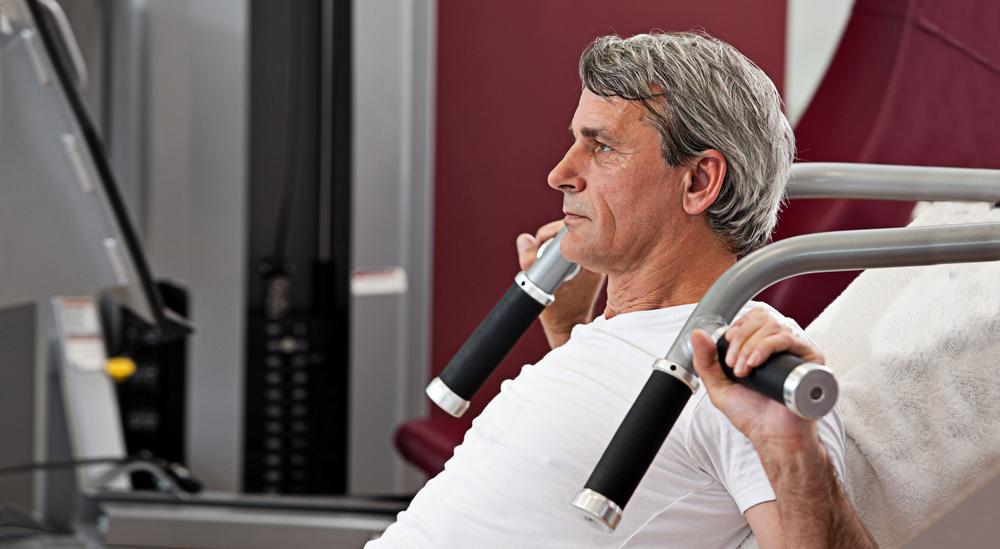
In our ageing society, older generations are looking at how they can stay healthy in later life / PHOTO: SHUTTERSTOCK.COM
https://www.leisureopportunities.co.uk/images/915567_502266.jpg
Want to know how the fitness market can grow by 300%?
Bryan O’Rourke, CEO, Fitness Industry Technology Council (FIT-C) David Minton, Director, The Leisure Database Company (TLDC) Steven Ward, Executive director, ukactive Karsten Hollasch, Partner financial advisory (head of sport business Germany), Deloitte ,Technology, digital, apps, Bryan O’Rourke, David Minton, Steven Ward, Karsten Hollasch, Deloitte, ukactive, Kath Hudson
HCM magazine
For every member with a tripod and a big following, there are others irritated at the way equipment is being hogged or wary they’ll be in the background on someone’s Insta feed. Do influencers offer valuable, free marketing or are they just a nuisance? Kath Hudson finds out how operators are responding
HCM magazine
Small improvements to sleep, diet and physical activity have major benefits for the heart, according to new research from the University of Sydney
HCM magazine
As the entrepreneur who started Wexer, Fresh Fitness, Fitness DK and Repeat, as well as being a former elite athlete, Rasmus Ingerslev’s life looked perfect from the outside, but onthe inside it was a different story. He talks to Kath Hudson about healing old wounds
HCM magazine
Strength training is evolving, driven by changing consumer preferences. Julie Cramer talks to innovators about how their products are meeting this demand
HCM magazine
I experienced a blissful feeling of joy I hadn’t felt since I was a kid
HCM promotional features
Sponsored
Find out how your gym can tap into the corporate wellness boom
HCM promotional features
Sponsored
Third Space partnered with IndigoFitness to deliver a bespoke training space for its new club at The Whiteley
HCM promotional features
Sponsored
Greg Bradley looks at the shift towards strength training in gyms and advises on how operators can create the ultimate training environment
HCM promotional features
Sponsored
Starpool supports Olympic champion Marcell Jacobs, says Riccardo Turri
HCM promotional features
Sponsored
SnowDome Fitness has added 50 per cent more space with cutting-edge Technogym solutions
HCM promotional features
Sponsored
David Lloyd is stepping up its commitment to women’s health as it continues to explore what fit-for-purpose looks like for the female population
HCM promotional features
Sponsored
EGYM has opened a new HQ in Paternoster Square, London and revealed a range of new launches
HCM promotional features
Sponsored
Active IQ is calling for greater accountability in online fitness advice with the launch of a new trustmark
HCM promotional features
Promotion
BLK BOX has been reimagining elite performance spaces for more than a decade. Founder and former athlete, Greg Bradley, tells us what it takes
HCM promotional features
Latest News
Preventive healthcare company Neko Health has added body composition analysis to its full-body health scan ...
Latest News
Chequan Lewis is the new CEO of Crunch Fitness, taking over from Jim Rowley, who ...
Latest News
Sea Lanes Canary Wharf has officially opened. The 50-metre, six-lane pool, which uses the natural ...
Latest News
London-based high-performance fitness club, ONE LDN, is raising funds for a multi-site expansion across London, ...
Latest News
A new brain clinic has opened in London, which uses non-invasive brain stimulation to treat ...
Latest News
Good Boost’s digital exercise programmes are helping adults with MSK at a lower cost than ...
Latest News
With Prime Minister, Keir Starmer, announcing his resignation this morning and Andy Burnham as a ...
Latest News
Koru Health Club launched recently within Luxembourg’s multi-experience destination, GRID X, which combines culture, retail ...
Opinion
promotion
Strength training has moved from the margins to the mainstream.
Opinion: Building smarter strength spaces for today’s operators
Featured supplier news
Featured supplier news: Cornerstone Connect helps Active Blackpool tackle health inequalities
Active Blackpool is deploying Cornerstone Connect, a new digital interface allowing disparate information from multiple systems to be aggregated into one dataset, to support its focus on reducing health inequalities and improving healthy life expectancy.
Featured supplier news
Featured supplier news: Reaching the people most gyms miss: Bedford Gym & Swim Campaign delivers 410 new members
One of the biggest mistakes the fitness industry still makes is advertising almost exclusively to people who already look and live like gym members.
Company profiles
Company profile: Brass Monkey
Brass Monkey designs and builds the world’s finest commercial-grade ice baths, working with leading gyms ...
Company profiles
Company profile: Escape Fitness Ltd
Escape Fitness has driven fitness innovation for 20+ years. Founded by engineer Richard Januszek and ...
Supplier Showcases
Supplier Showcase - From nightclub to health club
Supplier Showcases
Supplier Showcase - Future-proofing
Catalogue Gallery
Click on a catalogue to view it online
Featured press releases
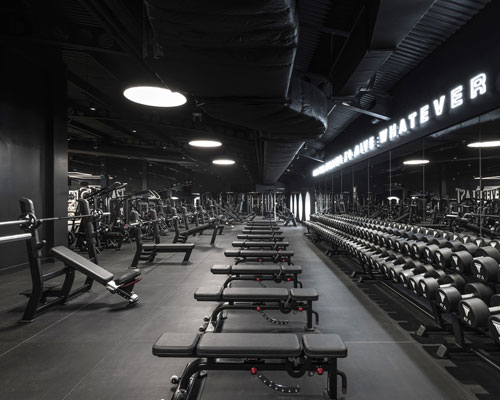
BLK BOX press release: Inside the build: Salt 
To bring their concept to life, Salt partnered with BLK BOX to design and equip a facility that would deliver a premium training experience while supporting the needs of a diverse and growing community.
Featured press releases
Swimming Teachers' Association (STA) press release: The Ripple Effect delivers first success as learners qualify and secure employment
STA's The Ripple Effect initiative has reached an important milestone after learners completed the charity's first fully funded swimming teacher training programme, resulting in seven newly qualified swimming teachers.
Directory
Water experiences and hydrotherapy solutions
Aquaform s.r.l.: Water experiences and hydrotherapy solutions
Industrial washing machines
Miele Company Limited: Industrial washing machines
Hot tubs
MSpa International Ltd: Hot tubs
Spa and beauty equipment
Living Earth Crafts: Spa and beauty equipment
Lockers
Crown Sports Lockers: Lockers
Fitness tracking platform
SpiviTech: Fitness tracking platform
Property & Tenders
Stratford, East London.
Lee Valley Regional Park Authority
Property & Tenders
Y Felinheli, LL56 4QN
Newmark
Property & Tenders
Diary dates
21-24 Sep 2026
The Langham Huntington Pasadena , Pasadena, United States
Diary dates
06-08 Oct 2026
Messe Stuttgart, Stuttgart, Germany
Diary dates
22-22 Oct 2026
QEII Conference Centre, London,
Diary dates
26-29 Oct 2027
Koelnmesse Exhibition Centre, Cologne, Germany
Diary dates

features

Talking point: 300% growth

According to fitness industry consultant Bryan O’Rourke, the health and fitness industry is set for explosive growth over the next decade and could grow by 300 per cent. Wearable technology, smartphone apps and better use of data will all inspire the consumer to think about their wellbeing and lead to industry growth. Are these figures realistic and how can gym operators be part of the boom? Kath Hudson asks the experts

By Kath Hudson | Published in Health Club Management 2016 issue 8
Digital will create huge growth in the market, by helping people experience fitness in new ways / PHOTO: SHUTTERSTOCK.COM

Bryan O’Rourke,

CEO,

Fitness Industry Technology Council (FIT-C)

Bryan O’Rourke
Bryan O’Rourke

We believe the fitness market will reach one billion users by 2025.

We’re currently undertaking research into the size and shape of the health and fitness market around the world – and that’s no small task, because what we’re measuring is constantly changing as technological developments continue at pace. However, at this stage in the research we’re fairly confident in saying there are currently 360 million digital fitness users around the world – whether devices, apps or both. We define users not just as people who’ve bought a device or downloaded an app, as many people stop after a few months, but who use the technology at least once a week to help them with their fitness.

Meanwhile, IHRSA estimates the global health club market to service 155 million members. We think that figure is a bit low: there are over 12,000 CrossFit locations globally alone, and then there are all the yoga studios and so on.

Of these club members, ACE research suggests one in five also uses digital fitness technology – although that percentage is likely to increase.

In terms of digital adoption, all population groups will see growth – it’s just a case of when and how, which will depend above all on disposable household income. You can’t assume adoption rates based on demographics any more: almost 40 per cent of wearables are owned by 35- to 54-year-olds. The early adopters might be younger, but this then matriculates through the population. And with a little over 2 billion smartphones now out there, of which 32 per cent have some sort of health and fitness app on them, the growth potential is huge.

When you look at this picture, it’s clear it isn’t just about gyms any more. It’s about customers having their health and fitness needs serviced, with market growth driven by the evolution of fitness offerings to meet these needs. Digital is going to grow the market by helping people experience fitness in a different way.

As a result, traditional bricks and mortar will diminish as a percentage of delivery, although clubs will still have a role; Amazon and the online retailers still account for only around 12 per cent of total sales. The brands that do survive and thrive in the fitness sector will be the hybrids that integrate physical and digital delivery, and even more importantly that create a true customer experience – brands like Barry’s Bootcamp and SoulCycle. Aesthetics and facility design will be more important than ever.

A combination of factors will lead to further growth. Fitness as lifestyle – as a status symbol – will be a key driver, while the arrival of AI (artificial intelligence) will broaden the appeal of fitness devices by morphing them into virtual coaches. Digital will also enable a variety of apps, wearables, hybrid models and medically integrated platforms to serve many more people more effectively, while ‘private pay’ integrated wellness will see huge growth. Mindfulness will also become a trillion dollar industry in the next few years.

David Minton,

Director,

The Leisure Database Company (TLDC)

David Minton
David Minton

It’s currently the most exciting time to be in the fitness industry in terms of innovation, growth and potential. Three hundred per cent growth is definitely possible: the industry needs to think big. Globally we should be aiming for half a billion members.

Penetration rates are very low in the global fitness industry at present – still in the low single figures in lots of countries – so the potential is enormous, especially in Asia and the developing world. However, there’s still huge potential for the market in the UK too, which has grown by two million members since 2007 to achieve 14.3 per cent population penetration.

Two factors will drive future growth: education and experience. Operators need to focus on improving both. Following the lead of the hotel industry, they need to keep investing in the product and innovating.

They also need to get better at using data to connect with current and potential members. Although we’re definitely seeing improvements, historically the industry has been poor at finding out how often members come, what they do and what they spend.

Change will happen across all ages and demographics. However, certainly in the UK I don’t see a huge growth coming from the healthcare sector at the moment because, to engage with the NHS, the industry will need to become far more professional, start talking the same language and take part in clinical trials.

Steven Ward,

Executive director,

ukactive

Steven Ward
Steven Ward

With the mega trends impacting the industry, I think we’re well on course for a 300 per cent growth globally in the next decade. Health and fitness has never been so centre of attention: we’re seeing a boom in health-conscious consumers; some of the world’s biggest brands like Google and Apple are embedding physical activity in their product development; and fashion and fitness are fusing like never before.

All demographics will contribute to this growth: there’s a cast iron case for health and fitness from cradle to grave.

Today’s children are growing up in an age where physical activity is an aspirational, normalised part of youth culture, while in an ageing society, more and more people are looking at how they can stay healthy in later life.

In developing nations there’s huge potential for growth, while in mature markets like the UK the growth will come through programmes, products and services to support the 13 million inactive people to become active.

In the future, we’ll see a technology-enabled, personalised service that delivers enjoyment and progress whatever path the individual is on. Fitness businesses will have to inhabit many different environments – portable, physical and digital – to meet the needs of each individual.

Going forward, operators must carry on listening to the consumer, tailoring products and enhancing their services through technology. They mustn’t stop their efforts to raise the bar in terms of the quality of either service or facilities.

Karsten Hollasch,

Partner financial advisory (head of sport business Germany),

Deloitte

Karsten Hollasch
Karsten Hollasch

I’m not able to comment on the 300 per cent growth, as I’m not sure how this calculation has been done, but I think EuropeActive’s estimate of 80 million members by 2025 is definitely achievable. This figure represents a sound calculation based on history and future growth assumptions.

The industry has evolved and the offer has broadened, which has created more demand. Many people who have never trained, or who stopped training because they didn’t get the results they were after, are now exercising. 

The demographic pyramid is changing and I think the biggest growth will be from 60- to 75-year-olds. To adapt to this, operators need to create an offering and atmosphere that makes older people feel comfortable, such as employing older staff and bringing in the right classes and equipment.

The market offering is also likely to become broader, with more specialised training options – EMS, functional training and so on – and tailored training for specific needs and user groups. The online market and other complementary offerings to the traditional club concepts will also fuel future growth. 

What would really help grow the market would be more recognition from the healthcare sector about how being active could help prevent diseases and other medical problems.

In addition, if VAT for clubs were reduced or they received public funding to enable them to embrace a wider market, it could be a game-changer for the health and fitness industry.

Sign up here to get HCM's weekly ezine and every issue of HCM magazine free on digital.
In our ageing society, older generations are looking at how they can stay healthy in later life / PHOTO: SHUTTERSTOCK.COM
https://www.leisureopportunities.co.uk/images/915567_502266.jpg
Want to know how the fitness market can grow by 300%?
Bryan O’Rourke, CEO, Fitness Industry Technology Council (FIT-C) David Minton, Director, The Leisure Database Company (TLDC) Steven Ward, Executive director, ukactive Karsten Hollasch, Partner financial advisory (head of sport business Germany), Deloitte ,Technology, digital, apps, Bryan O’Rourke, David Minton, Steven Ward, Karsten Hollasch, Deloitte, ukactive, Kath Hudson
Latest News
Preventive healthcare company Neko Health has added body composition analysis to its full-body health scan ...
Latest News
Chequan Lewis is the new CEO of Crunch Fitness, taking over from Jim Rowley, who ...
Latest News
Sea Lanes Canary Wharf has officially opened. The 50-metre, six-lane pool, which uses the natural ...
Latest News
London-based high-performance fitness club, ONE LDN, is raising funds for a multi-site expansion across London, ...
Latest News
A new brain clinic has opened in London, which uses non-invasive brain stimulation to treat ...
Latest News
Good Boost’s digital exercise programmes are helping adults with MSK at a lower cost than ...
Latest News
With Prime Minister, Keir Starmer, announcing his resignation this morning and Andy Burnham as a ...
Latest News
Koru Health Club launched recently within Luxembourg’s multi-experience destination, GRID X, which combines culture, retail ...
Latest News
Celebrating its 10th anniversary, Elevate has had its busiest show to date, with almost 200 ...
Latest News
A new report from Your Personal Training (YPT) suggests UK gym operators could be missing ...
Latest News
Eighty-four per cent of consumers now say wellness is a top priority in their lives, ...
Opinion
promotion
Strength training has moved from the margins to the mainstream.
Opinion: Building smarter strength spaces for today’s operators
Featured supplier news
Featured supplier news: Cornerstone Connect helps Active Blackpool tackle health inequalities
Active Blackpool is deploying Cornerstone Connect, a new digital interface allowing disparate information from multiple systems to be aggregated into one dataset, to support its focus on reducing health inequalities and improving healthy life expectancy.
Featured supplier news
Featured supplier news: Reaching the people most gyms miss: Bedford Gym & Swim Campaign delivers 410 new members
One of the biggest mistakes the fitness industry still makes is advertising almost exclusively to people who already look and live like gym members.

Company profiles
Company profile: Brass Monkey
Brass Monkey designs and builds the world’s finest commercial-grade ice baths, working with leading gyms ...
Company profiles
Company profile: Escape Fitness Ltd
Escape Fitness has driven fitness innovation for 20+ years. Founded by engineer Richard Januszek and ...
Supplier Showcases
Supplier Showcase - From nightclub to health club
Supplier Showcases
Supplier Showcase - Future-proofing
Catalogue Gallery
Click on a catalogue to view it online
Featured press releases
BLK BOX press release: Inside the build: Salt 
To bring their concept to life, Salt partnered with BLK BOX to design and equip a facility that would deliver a premium training experience while supporting the needs of a diverse and growing community.
Featured press releases
Swimming Teachers' Association (STA) press release: The Ripple Effect delivers first success as learners qualify and secure employment
STA's The Ripple Effect initiative has reached an important milestone after learners completed the charity's first fully funded swimming teacher training programme, resulting in seven newly qualified swimming teachers.
Directory
Water experiences and hydrotherapy solutions
Aquaform s.r.l.: Water experiences and hydrotherapy solutions
Industrial washing machines
Miele Company Limited: Industrial washing machines
Hot tubs
MSpa International Ltd: Hot tubs
Spa and beauty equipment
Living Earth Crafts: Spa and beauty equipment
Lockers
Crown Sports Lockers: Lockers
Fitness tracking platform
SpiviTech: Fitness tracking platform
Property & Tenders
Stratford, East London.
Lee Valley Regional Park Authority
Property & Tenders
Y Felinheli, LL56 4QN
Newmark
Property & Tenders
Diary dates
21-24 Sep 2026
The Langham Huntington Pasadena , Pasadena, United States
Diary dates
06-08 Oct 2026
Messe Stuttgart, Stuttgart, Germany
Diary dates
22-22 Oct 2026
QEII Conference Centre, London,
Diary dates
26-29 Oct 2027
Koelnmesse Exhibition Centre, Cologne, Germany
Diary dates
Search news, features & products:
Find a supplier:
Partner sites