







Editor's letter




Gyms are already using a lot of the techniques that we see in elite sport, such as hot and cold therapy, percussion and compression. However, one modality I expect to see more of in mainstream health clubs is the use of hyperbarics.
Breathing 96-97 per cent oxygen in a pressurised environment is increasingly being used to reduce inflammation and accelerate recovery. We’ve seen hyperbarics move out of the scuba diving community – where it’s a way of helping someone recover from accelerated return to surface where they’d get the bends – to being used in advanced head injury clinics, to being used in bone and wound healing and with ever more intelligent soft shell units at a lower price point, there’s now an opportunity for mainstream gyms.
One modality I expect to see more of in mainstream health clubs is the use of hyperbarics
The single biggest opportunity to recover is sleep and gyms can support this, either with services, such as sleep coaching and sleep optimisation programmes, or products, such as eye masks, magnesium supplementation and aromatherapy oils, for example.
Red light therapy and infrared sauna will continue to grow in popularity as recovery modalities. They offer a more accessible thermal experience to engage people who’ve historically not enjoyed the sheer dry heat of the sauna at 80 degrees plus.
If I was going to a modern health club that looked like an elite performance centre, it might have a hyperbaric chamber, an infrared sauna, compression and percussion and it would be educating me on sleep, with products that encourage the behaviours we know sit at the bedrock of good, physical recovery.


Recovery is both a performance tool and a business strategy. For gym members, the benefits of good recovery are tangible – more consistent attendance, better session-to-session performance, improved sleep and better mood regulation. For a health club operator, recovery is a retention lever. Members are far more likely to stay with a facility when they consistently feel energised rather than chronically drained.
In high-performance environments, we define recovery as restoring readiness across three domains. Physiologically, you’re restoring muscle tissue, replenishing glycogen, managing inflammation and shifting the nervous system from the sympathetic – fight or flight – state back toward parasympathetic dominance, which is critical after high-intensity or hybrid training.
Neural recovery allows the consolidation of coordination, motor learning and movement efficiency. Sleep plays a major role here.
And psychological recovery: managing stress, emotional load and perceived fatigue. Most gym members carry significant life stress before they even start training and if we don’t address that, we’re only solving half the problem.
One key principle we use in elite sporting environments is matching the recovery modality to the objective. If the goal is rapid readiness for another session tomorrow, cold water immersion can help reduce soreness and perceived fatigue.
However, if the goal is long-term adaptation, such as strength development, cold plunging can slow progress.
Heat can support relaxation, cardiovascular adaptations and parasympathetic activation, so for general members, a sauna session combined with hydration and breathwork may provide an accessible and highly effective recovery option.
The most effective recovery strategies are embedded in the session design
Protein is the foundation for recovery, because it provides the building blocks for the repairing and remodelling muscle tissue after training. For general gym members training two to three times per week, a target of around 1.4–1.6 grams per kilo of bodyweight per day is typically sufficient.
For those lifting heavier loads, training at higher volumes, or combining strength and conditioning work, intake may be better placed closer to 1.6–2.2 grams per kilo each day, distributed across multiple meals throughout the day.
Sessions should have an on-ramp and off-ramp, as the most effective recovery strategies are embedded in the session design. If a class finishes with participants highly stimulated and they immediately transition to work stress, screens and caffeine, recovery never truly begins. What’s needed are structured cooldowns, low-intensity aerobic flush work, mobility and two to five minutes of guided slow breathing at the end of high-intensity classes.
Alternating high-demand days with lower-demand sessions across the week is also a form of programmed recovery. When recovery is integrated into the architecture of training, rather than positioned as an optional add-on, outcomes improve and compliance increases. Finally, recovery is not one-size-fits-all and one of the most effective ways to quantify readiness for higher stress training is to track heart rate variability.
Dr Adam Storey is a research fellow at the Sports Performance Research Institute New Zealand at AUT University and a Hyrox Sports Science Advisory Council Member


Training is a stressor and recovery is where adaptation happens. When recovery is inadequate, the body doesn’t respond to the training load and instead of becoming stronger and more resilient, tissues become irritated, the nervous system remains in a heightened state and performance plateaus or declines.
Clinically, this often presents as tendon pain, joint irritation, poor sleep, reduced motivation or a sense that the body ‘isn’t responding like it used to’. Elite sport recognised this shift years ago and now treats recovery as being just as important as training itself and approaches it systematically.
Recovery is not a single process, being the interaction between multiple systems. At tissue level, recovery relies on inflammation control, bloodflow and cellular repair. At a nervous system level, it depends on the ability to shift out of a constant state of high alert into a parasympathetic, restorative mode. Sleep quality, stress exposure and overall health influence how effectively this happens.
Elite teams also use tissue-level recovery modalities, including shockwave therapy, laser and electromagnetic therapies
Within musculoskeletal practice there’s been a shift towards understanding pain, injury and performance holistically. Recovery, sleep, nervous system regulation and overall load are now recognised as primary factors, rather than secondary considerations.
A major focus in elite sport is nervous system regulation, using breathwork, sleep optimisation and neuromodulation technologies to support parasympathetic recovery and improve sleep quality. Elite teams also use tissue-level recovery modalities, including shockwave therapy, laser and electromagnetic therapies, to enhance healing at a cellular level, reduce inflammation and manage load across joints and tendons. These tools are not only used after injury, but also to support recovery during intense training periods.
This recovery-first mindset is increasingly reflected in progressive clinical practice. In my own clinic, we integrate tissue-based recovery modalities alongside physiotherapy and in the last year we’ve introduced Nesa X-Signal neuromodulation to support sleep, recovery and nervous system regulation. These approaches benefit people managing pain or injury, as well as high-performing individuals who want to train consistently, avoid breakdown and perform at their best.
One of the biggest opportunities for health clubs lies in how recovery is programmed. This may include delivering recovery and relaxation classes, such as stretching, breathwork, mobility and restorative sessions; the creation of recovery-focused spaces and encouraging members to pay attention to sleep, stress and readiness, rather than simply training harder.

Recovery isn’t the absence of training, it’s the phase in which training adaptations occur. Without adequate recovery, the stimulus from exercise can’t translate into improvements in strength, fitness, health or performance. For our members, recovery is what enables them to train frequently, safely and progressively over years and is also a key element in strong psychological wellbeing and health.
We’ve introduced multiple modalities that enable recovery. All our clubs offer Normatec compression for legs, hips and arms, as well as Hyperice percussion and motorised myofascial release on our gym floors. We also have extensive sauna and steam, as well as hydrotherapy pools, all of which speed up recovery.
At the Recovery Spas at Canary Wharf, The Whiteley, and soon our new club in Chelsea, we also have red light beds, cryotherapy and vibracoustic beds.
It is important that our PTs understand when a recovery modality is appropriate, versus when it’s unnecessary or counterproductive. This demands strong foundations in exercise physiology, load management, coaching communication and behaviour change coaching.
Our world-class, three-year education pathway covers performance and physiology and in collaboration with physiologist, Oli Patrick, we also deliver education around sleep science, stress resilience and breathwork.
Sleep, training quality and nutrition must come first, with modalities second
The interest in recovery is evident in the increasing demand from our members for information and facilities that allow them to weave this element into their life. The biggest risk in the recovery space is an over-emphasis on modalities at the expense of the fundamentals. Sleep, training quality and nutrition must come first, with modalities second. This approach protects credibility, aligns with scientific rigour and reinforces our positioning as a brand that prioritises results and longevity, not trends.

Ultimately, recovery works on a number of levels – the nervous system, the musculoskeletal system, the cardio and respiratory system, as well as psychological and emotional states – so different recovery methods need to be used.
This means that if we’re looking to improve physical health, coaches and trainers need to address the role that other stressors play as well.
If someone has had back-to-back meetings all day, for example, their psychological functional state is likely to be depressed, so we’ll use methods to re-establish a homeostatic rhythm in the psychological systems, such as breathwork, meditation or journaling. These are all modalities which have been shown to be effective at reducing stress.
A two-minute conversation at the start of a workout to outline the path ahead gives clients permission to drop whatever’s going on for them outside of the gym and lays a foundation for them to be more present. At the end, we also use breathwork to get them ready to re-engage with daily life.
A two-minute conversation at the start of a workout to outline the path ahead gives clients permission to drop whatever’s going on for them outside of the gym
Although there are dozens of tools and methods to help recovery, the number one place where adaptation happens is while sleeping and second to that is fuelling. Making sure that people have consistent access to sleep and good nutrition that supports anti-inflammatory processes and recovery are the first places that we go.
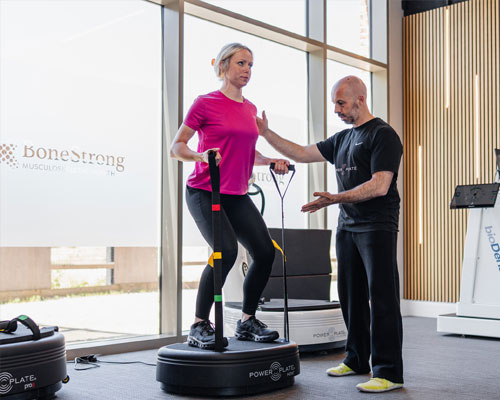
We also work with Power Plate’s whole body vibration platforms, which is a versatile recovery tool. There’s been a lot of research on the effect of harmonic whole body vibration and the way the body responds to it. In lower training ages and in populations that have lower levels of bone mineral density, vibration can have really positive effects on strength, speed, power and bone mineral density.
We’ve found Power Plate is one of the most versatile tools for recovery in functional state across the neural, mechanical and metabolic systems.
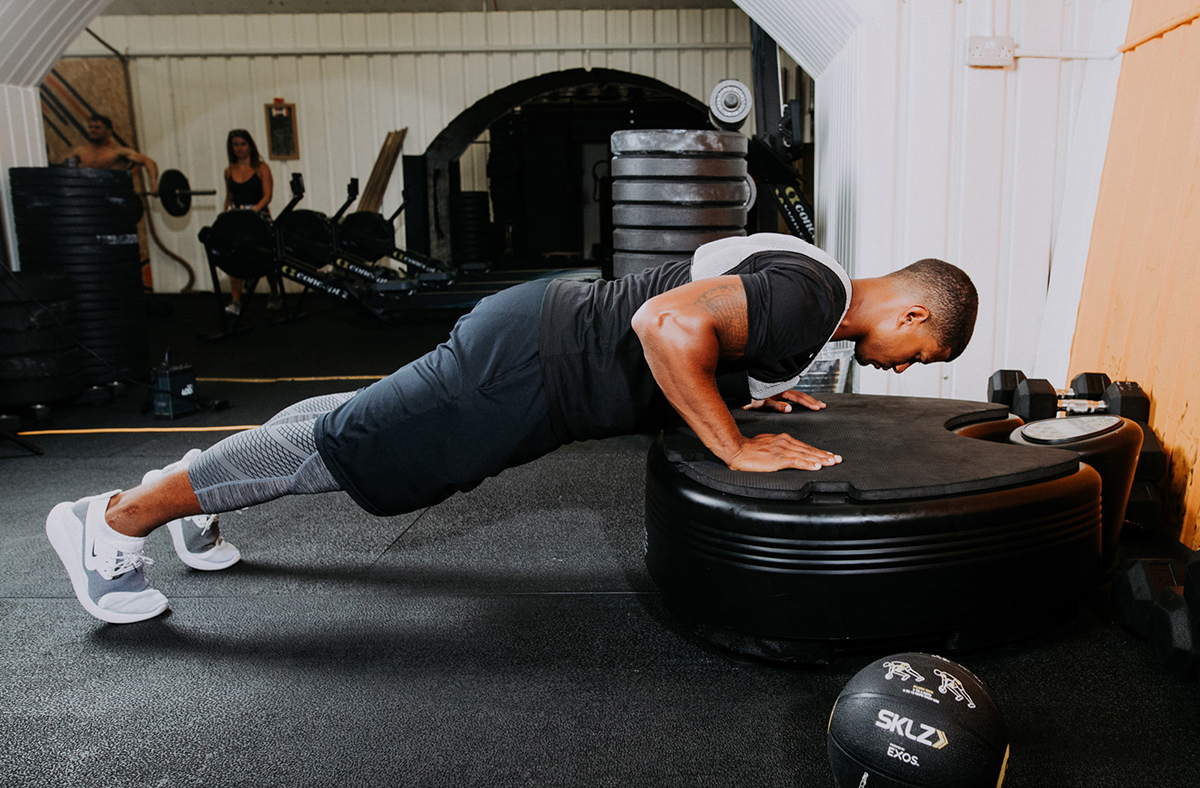
The plate can help stimulate a reflexive relaxation of muscles when doing static stretching and elicit deeper levels of activation during a resistance type exercise, such as a push-up or a bodyweight squat. Stretching on it helps to extend the range of motion and lying on it feels like a big massage gun.
Cold tubs also increase parasympathetic nervous system activity and decrease blood markers of inflammation and perceptions of soreness. However, cold limits the adaptations you get from strength or cardiovascular training, so you have to be selective about when you use it.
Hot tubs feel good and activate heat shock proteins that have cascading effects down the line. but they don’t provide the same recovery stimulus as cold.
More on EXOS and Power Plate www.hcmmag.com/EXOSPP

Many of the most decorated athletes of recent times, including Simone Biles, Allyson Felix and Roger Federer have accredited their sustained success to placing significant emphasis on recovery.
After the stress of training, recovery is the process of repairing the damage and it requires adequate rest, sleep, fuel and nutrients, which takes 24-72 hours, depending on the intensity of exercise. When recovery is inadequate – often from repeating high intensity sessions without sufficient time in between – maladaptive responses are produced, including decreases in performance, preservation rather than loss of fat stores, low mood and increased risk of injury.
One of the most exciting emerging areas in recovery is nervous system regulation. While competition and challenging training sessions require effective sympathetic – fight or flight – activation, the sooner and more sustained an athlete can achieve parasympathetic – rest and digest mode – the faster they will recover and be able to take on the next challenge. As the vagus nerve controls the parasympathetic nervous system, vagus nerve stimulation (VNS) is increasingly being used by athletes looking to gain a performance edge.
Although the science is still developing, there is evidence for a number of ways that VNS can support athletic performance. These include faster recovery from exertion, including reduced lactic acid and fatigue and normalisation of heart rate and blood pressure: improved regulation of the inflammatory response, reducing chronic or excessive inflammation which can lead to injury and impair muscle regeneration: improved sleep quality, enhanced cognitive performance and potential mitigation of travel fatigue.
There are many ways to activate the vagus nerve, including breath work, meditation, cold plunge, gargling and even singing. Non-invasive VNS devices, like yojo.health, are set to be the next big wearable health device because they can be used passively and fit around daily life.
There are many ways to activate the vagus nerve, including breath work, meditation, cold plunge, gargling and even singing
Recovery sessions – such as zone 1-2 cardio, or yoga – should be part of a training schedule and recovery also needs to be built into the sessions, for example between five and 20 minutes of low intensity cardio, flexibility and mobility work, and breathing exercises at the end of every hard workout.
One of the biggest challenges that PTs face is that clients often equate the value of a PT session with leaving the session feeling exhausted, or euphoric, from pushing beyond what they would do on their own, and many clients are unfamiliar with and unmotivated towards recovery-focused activities. I would encourage PTs to familiarise themselves with the science of nervous system balance so they can share some simple VNS techniques.
Also wearables that measure heart rate variability (HRV) can provide an indicator of the client’s physical readiness for their workout, but this always needs to be balanced with how the client feels, and adapted.

Editor's letter
HCM People
HCM People
Interview
Sponsored
Talkback
Sponsored

Insight

Policy

Promotion

Sponsored
Life Lessons
Sponsored

Specifier

Sponsored
Recovery
Research






















Gyms are already using a lot of the techniques that we see in elite sport, such as hot and cold therapy, percussion and compression. However, one modality I expect to see more of in mainstream health clubs is the use of hyperbarics.
Breathing 96-97 per cent oxygen in a pressurised environment is increasingly being used to reduce inflammation and accelerate recovery. We’ve seen hyperbarics move out of the scuba diving community – where it’s a way of helping someone recover from accelerated return to surface where they’d get the bends – to being used in advanced head injury clinics, to being used in bone and wound healing and with ever more intelligent soft shell units at a lower price point, there’s now an opportunity for mainstream gyms.
One modality I expect to see more of in mainstream health clubs is the use of hyperbarics
The single biggest opportunity to recover is sleep and gyms can support this, either with services, such as sleep coaching and sleep optimisation programmes, or products, such as eye masks, magnesium supplementation and aromatherapy oils, for example.
Red light therapy and infrared sauna will continue to grow in popularity as recovery modalities. They offer a more accessible thermal experience to engage people who’ve historically not enjoyed the sheer dry heat of the sauna at 80 degrees plus.
If I was going to a modern health club that looked like an elite performance centre, it might have a hyperbaric chamber, an infrared sauna, compression and percussion and it would be educating me on sleep, with products that encourage the behaviours we know sit at the bedrock of good, physical recovery.
Recovery is both a performance tool and a business strategy. For gym members, the benefits of good recovery are tangible – more consistent attendance, better session-to-session performance, improved sleep and better mood regulation. For a health club operator, recovery is a retention lever. Members are far more likely to stay with a facility when they consistently feel energised rather than chronically drained.
In high-performance environments, we define recovery as restoring readiness across three domains. Physiologically, you’re restoring muscle tissue, replenishing glycogen, managing inflammation and shifting the nervous system from the sympathetic – fight or flight – state back toward parasympathetic dominance, which is critical after high-intensity or hybrid training.
Neural recovery allows the consolidation of coordination, motor learning and movement efficiency. Sleep plays a major role here.
And psychological recovery: managing stress, emotional load and perceived fatigue. Most gym members carry significant life stress before they even start training and if we don’t address that, we’re only solving half the problem.
One key principle we use in elite sporting environments is matching the recovery modality to the objective. If the goal is rapid readiness for another session tomorrow, cold water immersion can help reduce soreness and perceived fatigue.
However, if the goal is long-term adaptation, such as strength development, cold plunging can slow progress.
Heat can support relaxation, cardiovascular adaptations and parasympathetic activation, so for general members, a sauna session combined with hydration and breathwork may provide an accessible and highly effective recovery option.
The most effective recovery strategies are embedded in the session design
Protein is the foundation for recovery, because it provides the building blocks for the repairing and remodelling muscle tissue after training. For general gym members training two to three times per week, a target of around 1.4–1.6 grams per kilo of bodyweight per day is typically sufficient.
For those lifting heavier loads, training at higher volumes, or combining strength and conditioning work, intake may be better placed closer to 1.6–2.2 grams per kilo each day, distributed across multiple meals throughout the day.
Sessions should have an on-ramp and off-ramp, as the most effective recovery strategies are embedded in the session design. If a class finishes with participants highly stimulated and they immediately transition to work stress, screens and caffeine, recovery never truly begins. What’s needed are structured cooldowns, low-intensity aerobic flush work, mobility and two to five minutes of guided slow breathing at the end of high-intensity classes.
Alternating high-demand days with lower-demand sessions across the week is also a form of programmed recovery. When recovery is integrated into the architecture of training, rather than positioned as an optional add-on, outcomes improve and compliance increases. Finally, recovery is not one-size-fits-all and one of the most effective ways to quantify readiness for higher stress training is to track heart rate variability.
Dr Adam Storey is a research fellow at the Sports Performance Research Institute New Zealand at AUT University and a Hyrox Sports Science Advisory Council Member
Training is a stressor and recovery is where adaptation happens. When recovery is inadequate, the body doesn’t respond to the training load and instead of becoming stronger and more resilient, tissues become irritated, the nervous system remains in a heightened state and performance plateaus or declines.
Clinically, this often presents as tendon pain, joint irritation, poor sleep, reduced motivation or a sense that the body ‘isn’t responding like it used to’. Elite sport recognised this shift years ago and now treats recovery as being just as important as training itself and approaches it systematically.
Recovery is not a single process, being the interaction between multiple systems. At tissue level, recovery relies on inflammation control, bloodflow and cellular repair. At a nervous system level, it depends on the ability to shift out of a constant state of high alert into a parasympathetic, restorative mode. Sleep quality, stress exposure and overall health influence how effectively this happens.
Elite teams also use tissue-level recovery modalities, including shockwave therapy, laser and electromagnetic therapies
Within musculoskeletal practice there’s been a shift towards understanding pain, injury and performance holistically. Recovery, sleep, nervous system regulation and overall load are now recognised as primary factors, rather than secondary considerations.
A major focus in elite sport is nervous system regulation, using breathwork, sleep optimisation and neuromodulation technologies to support parasympathetic recovery and improve sleep quality. Elite teams also use tissue-level recovery modalities, including shockwave therapy, laser and electromagnetic therapies, to enhance healing at a cellular level, reduce inflammation and manage load across joints and tendons. These tools are not only used after injury, but also to support recovery during intense training periods.
This recovery-first mindset is increasingly reflected in progressive clinical practice. In my own clinic, we integrate tissue-based recovery modalities alongside physiotherapy and in the last year we’ve introduced Nesa X-Signal neuromodulation to support sleep, recovery and nervous system regulation. These approaches benefit people managing pain or injury, as well as high-performing individuals who want to train consistently, avoid breakdown and perform at their best.
One of the biggest opportunities for health clubs lies in how recovery is programmed. This may include delivering recovery and relaxation classes, such as stretching, breathwork, mobility and restorative sessions; the creation of recovery-focused spaces and encouraging members to pay attention to sleep, stress and readiness, rather than simply training harder.
Recovery isn’t the absence of training, it’s the phase in which training adaptations occur. Without adequate recovery, the stimulus from exercise can’t translate into improvements in strength, fitness, health or performance. For our members, recovery is what enables them to train frequently, safely and progressively over years and is also a key element in strong psychological wellbeing and health.
We’ve introduced multiple modalities that enable recovery. All our clubs offer Normatec compression for legs, hips and arms, as well as Hyperice percussion and motorised myofascial release on our gym floors. We also have extensive sauna and steam, as well as hydrotherapy pools, all of which speed up recovery.
At the Recovery Spas at Canary Wharf, The Whiteley, and soon our new club in Chelsea, we also have red light beds, cryotherapy and vibracoustic beds.
It is important that our PTs understand when a recovery modality is appropriate, versus when it’s unnecessary or counterproductive. This demands strong foundations in exercise physiology, load management, coaching communication and behaviour change coaching.
Our world-class, three-year education pathway covers performance and physiology and in collaboration with physiologist, Oli Patrick, we also deliver education around sleep science, stress resilience and breathwork.
Sleep, training quality and nutrition must come first, with modalities second
The interest in recovery is evident in the increasing demand from our members for information and facilities that allow them to weave this element into their life. The biggest risk in the recovery space is an over-emphasis on modalities at the expense of the fundamentals. Sleep, training quality and nutrition must come first, with modalities second. This approach protects credibility, aligns with scientific rigour and reinforces our positioning as a brand that prioritises results and longevity, not trends.
Ultimately, recovery works on a number of levels – the nervous system, the musculoskeletal system, the cardio and respiratory system, as well as psychological and emotional states – so different recovery methods need to be used.
This means that if we’re looking to improve physical health, coaches and trainers need to address the role that other stressors play as well.
If someone has had back-to-back meetings all day, for example, their psychological functional state is likely to be depressed, so we’ll use methods to re-establish a homeostatic rhythm in the psychological systems, such as breathwork, meditation or journaling. These are all modalities which have been shown to be effective at reducing stress.
A two-minute conversation at the start of a workout to outline the path ahead gives clients permission to drop whatever’s going on for them outside of the gym and lays a foundation for them to be more present. At the end, we also use breathwork to get them ready to re-engage with daily life.
A two-minute conversation at the start of a workout to outline the path ahead gives clients permission to drop whatever’s going on for them outside of the gym
Although there are dozens of tools and methods to help recovery, the number one place where adaptation happens is while sleeping and second to that is fuelling. Making sure that people have consistent access to sleep and good nutrition that supports anti-inflammatory processes and recovery are the first places that we go.
We also work with Power Plate’s whole body vibration platforms, which is a versatile recovery tool. There’s been a lot of research on the effect of harmonic whole body vibration and the way the body responds to it. In lower training ages and in populations that have lower levels of bone mineral density, vibration can have really positive effects on strength, speed, power and bone mineral density.
We’ve found Power Plate is one of the most versatile tools for recovery in functional state across the neural, mechanical and metabolic systems.
The plate can help stimulate a reflexive relaxation of muscles when doing static stretching and elicit deeper levels of activation during a resistance type exercise, such as a push-up or a bodyweight squat. Stretching on it helps to extend the range of motion and lying on it feels like a big massage gun.
Cold tubs also increase parasympathetic nervous system activity and decrease blood markers of inflammation and perceptions of soreness. However, cold limits the adaptations you get from strength or cardiovascular training, so you have to be selective about when you use it.
Hot tubs feel good and activate heat shock proteins that have cascading effects down the line. but they don’t provide the same recovery stimulus as cold.
More on EXOS and Power Plate www.hcmmag.com/EXOSPP
Many of the most decorated athletes of recent times, including Simone Biles, Allyson Felix and Roger Federer have accredited their sustained success to placing significant emphasis on recovery.
After the stress of training, recovery is the process of repairing the damage and it requires adequate rest, sleep, fuel and nutrients, which takes 24-72 hours, depending on the intensity of exercise. When recovery is inadequate – often from repeating high intensity sessions without sufficient time in between – maladaptive responses are produced, including decreases in performance, preservation rather than loss of fat stores, low mood and increased risk of injury.
One of the most exciting emerging areas in recovery is nervous system regulation. While competition and challenging training sessions require effective sympathetic – fight or flight – activation, the sooner and more sustained an athlete can achieve parasympathetic – rest and digest mode – the faster they will recover and be able to take on the next challenge. As the vagus nerve controls the parasympathetic nervous system, vagus nerve stimulation (VNS) is increasingly being used by athletes looking to gain a performance edge.
Although the science is still developing, there is evidence for a number of ways that VNS can support athletic performance. These include faster recovery from exertion, including reduced lactic acid and fatigue and normalisation of heart rate and blood pressure: improved regulation of the inflammatory response, reducing chronic or excessive inflammation which can lead to injury and impair muscle regeneration: improved sleep quality, enhanced cognitive performance and potential mitigation of travel fatigue.
There are many ways to activate the vagus nerve, including breath work, meditation, cold plunge, gargling and even singing. Non-invasive VNS devices, like yojo.health, are set to be the next big wearable health device because they can be used passively and fit around daily life.
There are many ways to activate the vagus nerve, including breath work, meditation, cold plunge, gargling and even singing
Recovery sessions – such as zone 1-2 cardio, or yoga – should be part of a training schedule and recovery also needs to be built into the sessions, for example between five and 20 minutes of low intensity cardio, flexibility and mobility work, and breathing exercises at the end of every hard workout.
One of the biggest challenges that PTs face is that clients often equate the value of a PT session with leaving the session feeling exhausted, or euphoric, from pushing beyond what they would do on their own, and many clients are unfamiliar with and unmotivated towards recovery-focused activities. I would encourage PTs to familiarise themselves with the science of nervous system balance so they can share some simple VNS techniques.
Also wearables that measure heart rate variability (HRV) can provide an indicator of the client’s physical readiness for their workout, but this always needs to be balanced with how the client feels, and adapted.
Editor's letter
HCM People
HCM People
Interview
Sponsored
Talkback
Sponsored
Insight
Policy
Promotion
Sponsored
Life Lessons
Sponsored
Specifier
Sponsored
Recovery
Research